Thursday, December 25, 2025
Home Blog Page 75

Probe discloses Israeli Air Force failed to act on warning signs before Oct. 7 events

Israel Army

The findings surfaced days before the release of an official report by the Turgeman Committee, which is examining the broader military and intelligence failures surrounding the events.

According to Israeli Channel 14, Air Force monitoring units detected “unusual signals and movements” from Hamas drones in the hours leading up to the Oct. 7 events, but the information “remained inside the Air Force” and was never passed to the army command or the chief of staff.

Operations officers exchanged calls at 2:30 am after receiving alerts of “abnormal activity” in Gaza, and some officers were told to prepare, but no field measures were taken. Air Force commander Tomer Bar “remained asleep until 5 am without receiving a single call,” the channel added.

The internal investigation also documented visible transmission signals from Hamas at several locations inside Gaza, detected in real time, but the data “stayed inside the Air Force intelligence system” and triggered no alert level upgrade, the broadcaster said.

The data “was enough to raise the army’s alert status,” yet emergency orders were not activated, planes and crews were not put on standby, and the army was “caught in unprecedented dormancy” when the attack began, the channel said.

According to the outlet, the first version of the probe, presented to Air Force commanders in early 2024, caused “internal shock” because of its direct language about negligence and the evidence it contained of negligence and shortcomings in information transfer, but most of its content was later deleted, and a “cleaner, softer” version was opened.

The Oct. 7 events have been widely labeled in Israel as a political, military, and intelligence failure. Multiple officials have acknowledged responsibility for the failure to detect the attack.

Former Chief of Staff Herzi Halevi was previously heard in leaked audio praising the “deception” Hamas used. Current Chief of Staff Eyal Zamir said last month the army “failed in its mission to protect the state and its citizens” that day.

Prime Minister Benjamin Netanyahu is pushing for an official inquiry committee, but insists it must not assign him personal responsibility, while his opponents accuse him of “hysterical attempts to escape accountability.”

A civilian investigative panel in May said the government failed to protect its citizens and concluded Netanyahu “led the country into the greatest disaster in its history,” according to Israeli media.

A subsequent brutal offensive launched by Israel has killed nearly 69,000 Palestinians, mostly women and children, injured over 170,000 others, and left the Gaza Strip uninhabitable.


Iran refutes start of negotiations with US

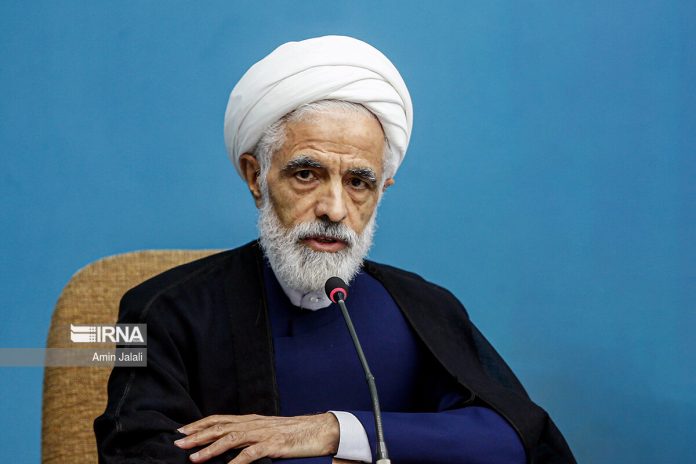
Esmael Baghaei

Speaking at his weekly press conference on Monday, Esmail Baqaei said that while intermediaries may exchange messages, this does not signify the beginning of a negotiation process between Iran and the US.

Regarding Iran’s conditions for dialogue, Baqaei emphasized that the rights and interests of the Iranian nation must be respected, and the other parties must acknowledge Iran’s undeniable rights.

He added that Iran will not unilaterally give up its legitimate rights in any negotiation.

“If such understanding and realism are achieved, one can say that conditions will be suitable for dialogue — but at present, we are not at that stage,” he noted.

In response to a question about the Iranian foreign minister’s recent remark that “Iran is in no rush to negotiate with the US,” Baqaei said: “When the other side seeks excessive demands, would you authorize your negotiators to enter talks under such circumstances?”

Asked what conditions must be met for Iran and the US to begin talks, Baqaei replied: “One must remember that during a diplomatic process, Iran was attacked by the US, and Israel’s assault took place with American collaboration. Iranians cannot forget that.”

The spokesman added that discussions on the principles and prerequisites for negotiations between the two sides can only take place when both parties recognize the existence of shared interests and concerns.

Baqaei pointed out that the United States still insists on pursuing its demands and ambitions unilaterally, without regard for the other side’s interests and concerns.

“Such an approach cannot work with Iran,” he said, “because that is not negotiation — it is dictation.”


Lebanese military mobilizes troops in south after Israeli army movements near border

According to the Lebanese state news agency NNA, Israeli army forces were placed on alert inside the occupied territories next to Kroum al-Marah neighborhood, east of Meiss El-Jabal, prompting the Lebanese army to mobilize and deploy vehicles and troops in the area.

The development comes days after Lebanese President Joseph Aoun on Thursday ordered the army to confront any Israeli military incursions into liberated Lebanese territories in the south.

His order followed an Israeli raid that left a municipal employee dead inside the Blida municipality building in southern Lebanon.

Tensions have been mounting in southern Lebanon for weeks, with the Israeli army intensifying near-daily air raids inside Lebanese territory despite the ceasefire that has been in place since November 2024.

On Friday, Israel’s public broadcaster KAN reported that Tel Aviv is considering escalating its military operations in Lebanon, citing the need to counter Hezbollah’s efforts to boost its capabilities.

The Israeli army has killed more than 4,000 people and injured nearly 17,000 in its attacks on Lebanon, which began in October 2023 and turned into a full-scale offensive in September 2024.

Under the ceasefire, the Israeli army was supposed to withdraw from southern Lebanon this January, but it only partially pulled out and continues to maintain a military presence at five border outposts.


Kremlin says ‘no need’ for Trump-Putin summit

“Hypothetically speaking, (a meeting) is possible, but at this point there is no need for it,” Peskov told the Russian state news agency TASS.

“There is a need for very painstaking work on the details of the (peace) settlement issue.”

When Putin called Trump on Oct. 16, the U.S. leader stated that he would meet Putin in Budapest and talked about “progress” being allegedly made in peace talks.

However, the plans for a Putin-Trump meeting were shelved on Oct. 21, with the U.S. president saying that he did not want a “wasted meeting” with Putin. He said that a key problem was Moscow’s refusal to cease fighting along the current front line.

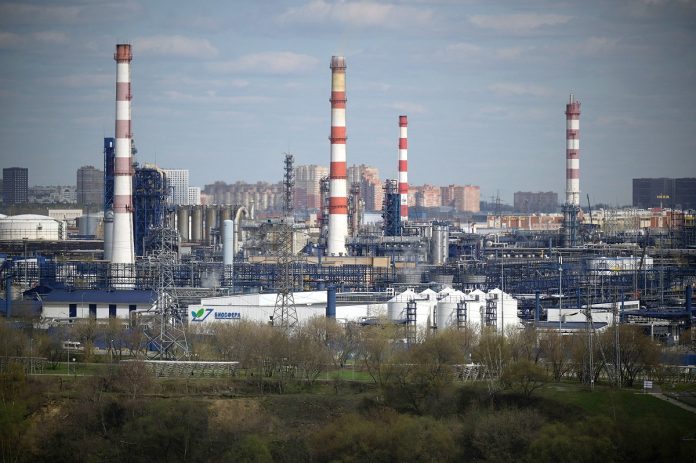
Trump went even further on Oct. 22, when he imposed sanctions on Russia’s two largest oil companies, Rosneft and Lukoil.

On Oct. 23, White House Press Secretary Karoline Leavitt said a Trump–Putin summit remained “not completely off the table.”

Putin’s special envoy Kirill Dmitriev claimed on Oct. 24 that Russia and Ukraine were close to reaching a deal to end the war with U.S. mediation.

The claim contradicts Moscow’s actual stance, as Russia continues to reject any compromise and insists on its maximalist demands, including Ukraine’s surrender of the entire Donetsk Oblast as a precondition for peace.

Trump also noted on Oct. 25 that he did not plan to meet Putin unless he saw a clear path to a peace agreement between Russia and Ukraine.

“We’re going to have to know that we’re going to make a deal,” Trump told reporters aboard Air Force One.

“I’ve always had a great relationship with Vladimir Putin, but this has been very disappointing,” he added.


Iran’s Leader: Dispute with US inherent, not tactical

Addressing thousands of students and academics ahead of National Student Day and the anniversary of the 1979 US Embassy takeover in Tehran, Ayatollah Khamenei said the long-standing tensions stem from a “clash of interests and nature,” not from slogans such as “Death to America.”

“The US hostility toward the Iranian nation began long before 1979. It started with the 1953 coup against the government of Mohammad Mossadegh,” he said, referring to the US-, and UK-engineered coup against the democratically-elected prime minister of Iran.

“Our conflict with America is not tactical or situational; it is rooted in the nature of their hegemonic behavior and our independence.”

Ayatollah Khamenei described the takeover of the US Embassy in 1979 as both a “day of pride” and a “historic revelation” that exposed the “true face of the arrogant American government.”

He urged that the event be preserved in Iran’s national memory, calling it a defining moment for the identity of the Islamic Revolution.

Criticizing American interventionism, the Leader said Washington continues to impose its will on other nations through military and economic pressure.

“If the US genuinely seeks dialogue, it must first abandon its backing of the Zionist regime, remove its bases from the Middle East, and end its interference in regional affairs,” he said.

Undermining the US-led Western sanctions, Ayatollah Khamenei emphasized that Iran’s path to progress lies in strengthening its domestic capabilities rather than relying on foreign powers.

“The solution to many problems is to become stronger, in management, science, defense, and national motivation,” he said, urging the government, armed forces, and youth to act decisively toward self-reliance and innovation.

He also called on students to enhance their political and historical awareness, accelerate scientific advancement, and preserve moral and religious values. “A strong and faithful youth is the real shield of this nation,” he noted.

Ayatollah Khamenei concluded that Iran’s independence and strength would ensure its security, adding, “No power can bring this nation to its knees.”

Ukraine says received Patriot air defense systems from Germany

“We have strengthened the ‘Patriot’ component of our Ukrainian air defense,” the president wrote on social media.

“I thank Germany and personally Federal Chancellor Friedrich Merz for this joint step to protect human lives from Russian terror. For some time, we have been preparing this reinforcement of our air defense, and now the agreements reached have been implemented.”

The announcement comes just over a month after German Defense Minister Boris Pistoruis said that Berlin would provide Ukraine with two Patriot systems by the end of 2025.

Russian aerial attacks against Ukraine have escalated in scope and intensity since the spring of 2025. The Kremlin’s current campaign against energy infrastructure ahead of winter has raised the stakes even further, causing frequent large-scale blackouts.

“Russian air strikes are (Russian President Vladimir) Putin’s main stake in this war — through terror he tries to compensate for his inability to achieve his insane goals on the ground,” Zelensky said.

“Therefore, every strengthening of our air defense literally brings us closer to the end of the war that we are all waiting for.”

A U.S.-made Patriot air defense system — also called a battery — consists of radar units for target detection and tracking, a fire control center, missile launchers, and support equipment such as power supplies and communications systems.

Depending on its configuration, a typical battery includes between four and eight launchers, capable of firing a range of missiles designed to intercept ballistic and cruise missiles, as well as aircraft.

Advanced air defense systems like the Patriot remain in short supply globally, with some components taking years to produce.

Germany has previously supplied Ukraine with three Patriot systems. The additional batteries have been provided under an agreement with the U.S. manufacturer to quickly replenish Germany’s stocks.

The deal comes after U.S. President Donald Trump in July announced the creation of the PURL (Priority Ukraine Requirements List) program, a NATO- and EU-backed initiative under which alliance members will purchase U.S.-made weapons systems for Ukraine.

Zelensky stated that there would be “further results” regarding Ukraine’s air defenses and that additional deals were underway.

Iranian wrestling legends Yazdani, Movahed among greatest freestyle wrestlers in history

The list, which highlights 30 of the most accomplished athletes in freestyle wrestling history without ranking order, places the two Iranian champions alongside global legends such as Aleksandr Medved of the former Soviet Union and John Smith of the United States.

Abdollah Movahed, the 1968 Olympic gold medalist and multiple world champion, is celebrated as one of the pioneers who elevated Iranian wrestling to global prominence.

Known for his unmatched technique and sportsmanship, Movahed remains a member of the World Wrestling Hall of Fame.

Hassan Yazdani, often referred to as “The King,” continues Iran’s wrestling legacy in the modern era. A three-time Olympic medalist, including gold at Rio 2016, and a multiple-time world champion, Yazdani’s dynamic style and relentless determination have earned him global respect.

Other prominent names featured in the list include Buvaisar Saitiev (Russia), Bruce Baumgartner (USA), Arsen Fadzaev (USSR), Jordan Burroughs (USA), and Makharbek Khadartsev (USSR), underscoring the sport’s rich global history and Iran’s lasting contribution to it.

Transfer of Tomahawk missiles to Ukraine not considered: US

“No,” the US leader said when asked whether the White House administration will deliver such missiles to Kiev.

This position may change but he is not doing that at present, Trump added.

He made the remarks after CNN reported that the Pentagon had given the White House approval to supply Tomahawks to Ukraine, after concluding that the move would not deplete US stockpiles.

Trump has long promised to mediate an end to the conflict between Russia and Ukraine and revived direct negotiations with Russia earlier this year. However, no breakthroughs were achieved during his summit with Russian President Vladimir Putin in Alaska in August or in the renewed Russia-Ukraine talks in Istanbul.

Trump recently postponed a planned summit with Putin in the Hungarian capital, Budapest, and imposed additional sanctions on Russia’s oil trade. At the same time, he rejected Ukrainian leader Vladimir Zelensky’s request for Tomahawks, saying the US needs them “to protect our country.” Trump also stated that Ukrainian troops would have to undergo extensive training to operate the missiles. “We know how to use it, and we’re not going to be teaching other people,” he said.

Putin warned last month that he would consider the delivery of Tomahawks to be a further escalation and promised a “very strong response.”


US warns of ‘consequences’ if China invades Taiwan

In an interview on CBS News’s “60 Minutes,” correspondent Norah O’Donnell asked the president whether he would defend Taiwan if China moved on the island. Trump avoided making any direct threats but said he was confident that would not happen.

“You’ll find out if it happens, and he understands the answer to that,” Trump responded in the interview.

Trump and Chinese President Xi Jinping met on Thursday for the first time in six years. The leaders touted key agreements struck between the countries against the backdrop of economic tensions spurred by trade and Trump’s announcement that America would resume nuclear testing.

Trump said in the interview, which was taped Friday, that the two leaders did not discuss Taiwan during their historic meeting last week.

“This never even came up yesterday as a subject. He never brought it up,” Trump continued, adding, “People were a little surprised at that. He never brought it up because he understands it, and he understands it very well.”

O’Donnell pressed Trump on why he wouldn’t say publicly what he insisted Xi understands “very well” about the consequences of hypothetical military action against Taiwan.

“I don’t want to give away, I can’t give away my secrets. I don’t want to be one of these guys that tells you exactly what’s going to happen if something happens. The other side knows, but I’m not somebody that tells you everything because you’re asking me a question,” Trump responded.

“But they understand what’s going to happen,” Trump continued.

“And he has openly said, and his people have openly said at meetings, ‘We would never do anything while President Trump is president,’ because they know the consequences.”

Liu Pengyu, a spokesman for the Chinese Embassy in Washington, DC, did not respond directly to a query about whether Trump has received any assurances from Xi or Chinese officials about Taiwan. He insisted in a statement that China “will never allow any person or force to separate Taiwan from China in any way”.

“The Taiwan question is China’s internal affair, and it is the core of China’s core interests. How to resolve the Taiwan question is a matter for the Chinese people ourselves, and only the Chinese people can decide it,” the statement added.

The White House also did not provide further details about when Xi or Chinese officials conveyed to Trump that military action on Taiwan was off the table for the duration of the Republican’s presidency.


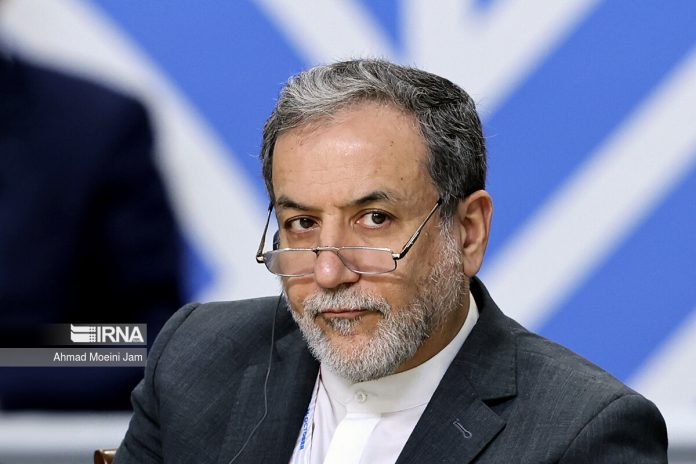
Iran’s FM says Israel achieved none of its goals during 12-day war

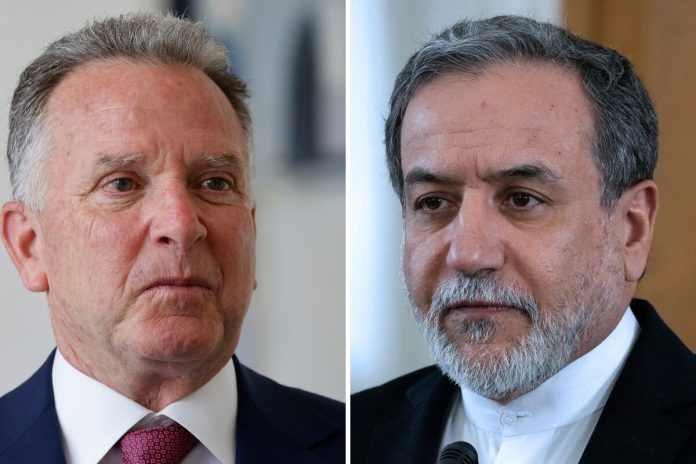
Abbas Araghchi

In an interview with Al Jazeera, Araqchi said, “We are more prepared this time, especially since we have clearly identified our own weaknesses and the enemy’s weaknesses during the 12-day war, and now we can act with greater strength.”

Araqchi said, “We have no interest in war or expanding the war. But we are facing a warmongering regime — a regime ready to drag the war to all parts of the region.”

Referring to Israeli attacks on Qatar, Syria, Lebanon and Yemen and threats against other regional countries, he added that the regime talks about a “Greater Israel,” which means laying claim to the territory of many countries in the region.

Responding to a question about Israeli claims that they do not seek a new war against Iran, he said, “We do not trust anything said by Israeli officials and always consider the possibility of deception.”

He also emphasized that Iran is confident about the peaceful nature of its nuclear program and is willing to negotiate with any country to demonstrate that.

“If there are questions or concerns, we should address them through negotiation and by reaching reassuring solutions,” he said.

Araqchi stated: “We are still prepared to enter negotiations based on mutual interests. The formula used in 2015 can still be applied. That formula was: Iran builds confidence regarding its nuclear program and, in return, sanctions are lifted.”

The foreign minister insisted: “We will not negotiate our missile capability with anyone. There is no reason to negotiate our security with anyone.”

He added: “Zero enrichment is impossible. Enrichment is the achievement of Iranian scientists and we worked on it for years; our scientists were assassinated in the past. Now that we once fought for this enrichment — a 12-day war was imposed on us and we suffered more than a thousand martyrs — what reason do we have to accept zero enrichment?”

On the missile issue he said: “No sensible person disarms themselves. Why should we negotiate about our missiles when this twelve-day war proved that Iran’s defence depends on our missiles, and our missiles played an important role in defending Iran?”

Answering a question about the extent of damage from the US attack on Iran’s nuclear facilities, he said: “The damage is significant — buildings were destroyed, our equipment and machinery were lost — but the technology was not destroyed. You cannot destroy technology with bombs. More importantly, our will was not broken; it has even strengthened since the war.”