Monday, December 29, 2025
Home Blog Page 708

Beirut suburb experiences ‘heaviest night of attacks’ with 30 air raid by Israel

Lebanon War

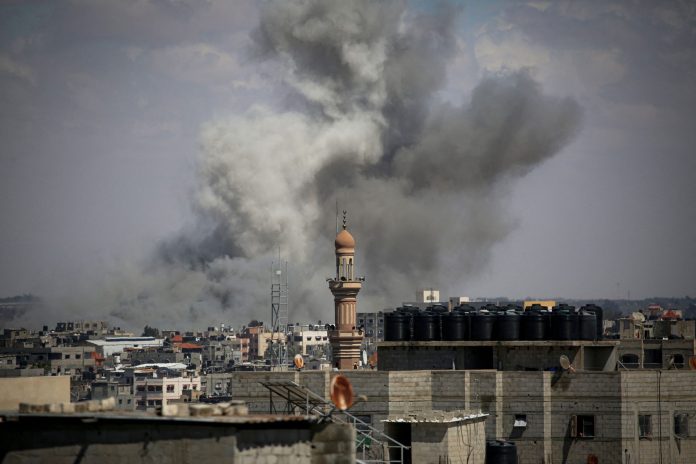
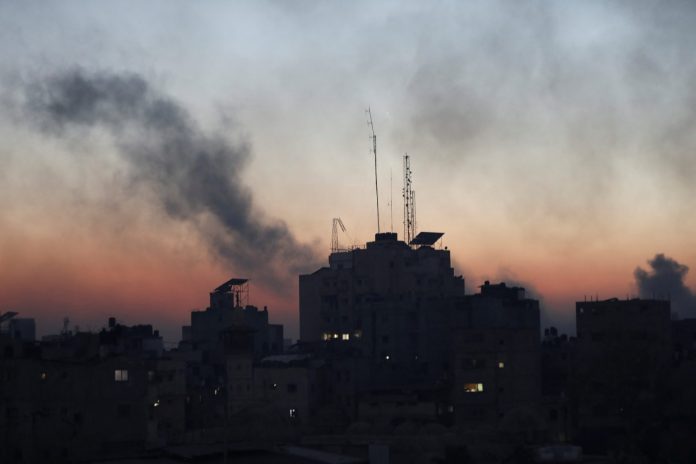
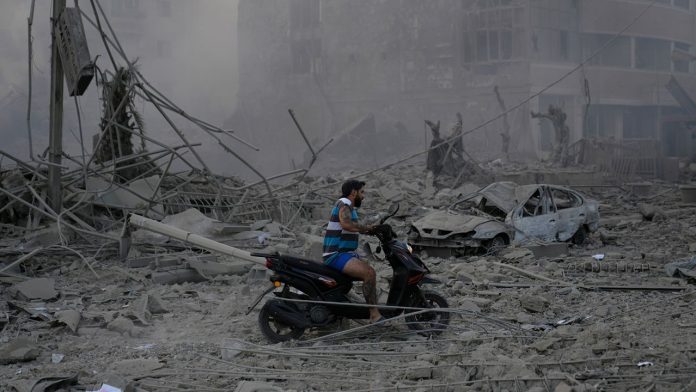
Lebanon’s official National News Agency reported on Sunday that the strikes targeted various locations across Beirut’s southern suburbs, resulting in widespread damage and a thick cloud of smoke that covered the area. The air raids were heard across the capital, Beirut.

According to the report, the attacks hit several areas, including a gas station near Airport Road, a building on Barjaoui Street in the Ghobeiry district, and other locations in Safir and Burj al-Barajneh.

The NNA reported that Beirut has “witnessed the most violent night” since the beginning of Israel’s aggression on the country.

Israeli attacks across Lebanon on Saturday killed 23 people and injured 93, the Lebanese health ministry announced on Sunday.

People were killed in strikes that targeted cities and villages in southern and northern Lebanon, including in Nabatieh, Bekaa, Baalbek and Mount Lebanon, the ministry added.

Hezbollah and Israel have been engaged in cross-border warfare since the start of Israel’s war on the Gaza Strip, which has killed over 41,800 people, most of them women and children, following an attack by the Palestinian group Hamas last October.

At least 2,100 people have since been killed, over 9,500 injured, and 1.2 million others displaced, according to Lebanese authorities.

The international community has warned that Israeli attacks in Lebanon could escalate the Gaza conflict into a wider regional war.
Hezbollah hits out at report that contact ‘lost’ with Nasrallah’s presumed successor

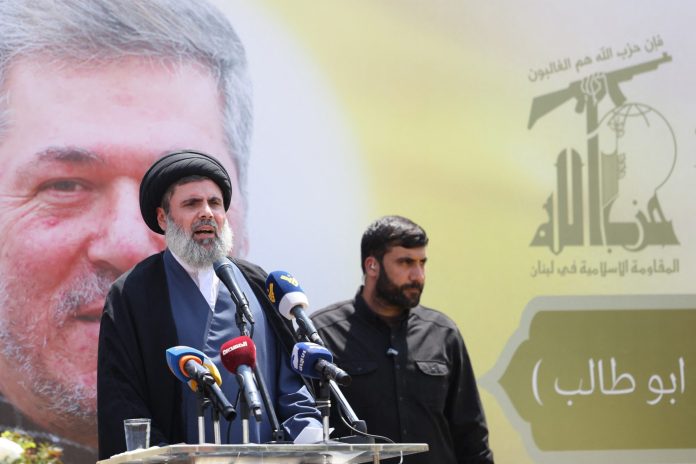
Hashem Safieddine

Despite Hezbollah’s pushback at the reporting, it doesn’t confirm or deny whether contact with Safieddine has been lost.

Unnamed Israeli sources told Sky News Arabia that Safieddine was killed in a heavy airstrike on Beirut’s southern suburbs overnight Thursday-Friday.

The Israel Defense Forces has announced that the attack in Beirut targeted Hezbollah’s intelligence headquarters. The military did not disclose who was at the underground bunker.

Lebanese security sources also told Reuters that Safieddine, widely expected to succeed Nasrallah, has been “unreachable” since the strike targeting an underground bunker in the Lebanese capital.

Three Lebanese security sources told the news agency that Israeli air strikes on Beirut’s southern suburbs since Friday have kept rescue workers from searching the site of the raid suspected to have killed Safieddine.

Israel carried out a series of massive air attacks on Thursday and Friday in the densely populated southern suburbs of Beirut, including the international airport’s perimeter.

Israeli media reported that the target of the attacks was Safieddine. The regime has repeatedly attacked southern Beirut neighbourhoods such as Dahiyeh, a stronghold of support for Hezbollah, since it escalated its conflict with the group.

Hezbollah and Israel have been engaged in cross-border warfare since the start of Israel’s war on Gaza, which has killed more than 41,800 people, most of them women and children, following an attack by the Palestinian group Hamas last October.

More than 2,000 people have been killed and about 9,500 wounded in Lebanon in almost a year of cross-border fighting, with most of the deaths occurring in the past weeks.

The international community has warned that Israeli attacks in Lebanon could escalate the Gaza conflict into a wider regional war.
At least 25 Israeli personnel killed since ground offensive in southern Lebanon: Hezbollah

Israel Army

“These numbers have been partially acknowledged by the enemy, and the coming days will reveal what they have hidden from their audience,” the Lebanese group wrote on Telegram.

Hezbollah and Israel have been engaged in cross-border warfare since the start of Israel’s war on Gaza, which has killed more than 41,800 victims, most of them women and children, following an attack by the Palestinian resistance group, Hamas, last October.

At least 2,000 victims have since been killed from Israeli attacks, over 9,500 injured and 1.2 million displaced in Lebanon, according to Lebanese authorities.

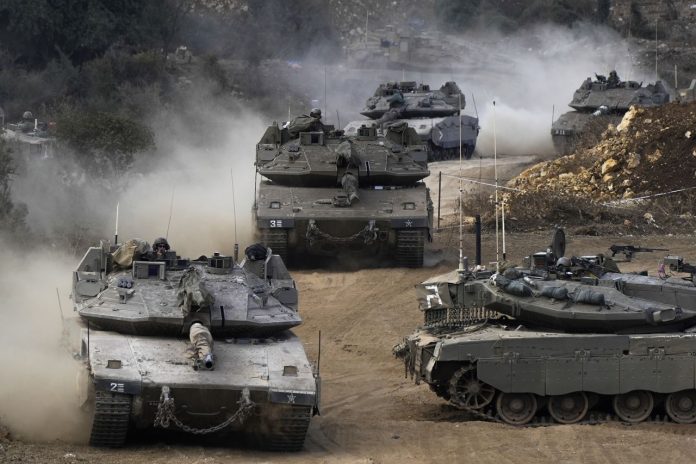
Israeli Prime Minister Benjamin Netanyahu has claimed that the army has managed to destroy a large part of Hezbollah’s arsenal and to turn the tide of the war.

Rear Adm. Daniel Hagari also claimed Israeli forces have so far destroyed more than 2,000 Hezbollah targets in Lebanon — including weapons, military buildings and underground infrastructures — according to the spokesperson for Israel’s military,

Hagari said Hezbollah had “invested many efforts and resources to locate its military means under the ground and inside civilian buildings in villages adjacent to the border. Now, we are fiercely operating to dismantle those”.

He added some Hezbollah operatives had been killed in close-quarters combat, and asserted that some 440 Hezbollah fighters had been killed in ground combat or from the air, including about 30 commanders of various ranks.

Hagari claimed that Hezbollah’s chain of command had been “severely hit … (and) this is painful to the Iranian leadership”.

Source: Iran ready to respond to any Israeli attack

Iran Missile

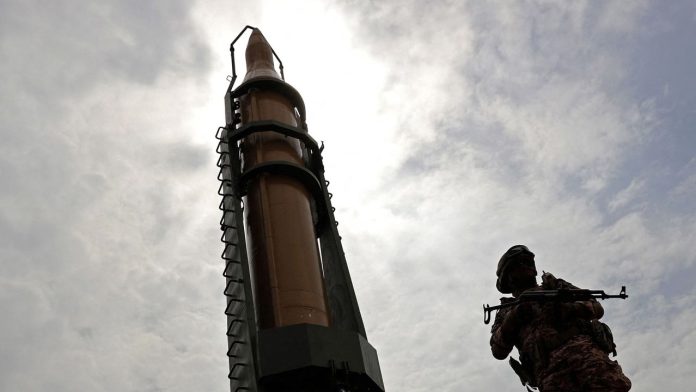
The source, speaking to Tasnim News Agency, emphasized, “There is no doubt about the operational readiness of Iran’s retaliatory strike if Israel makes any move.”

“Iran’s response plan includes multiple types of specific retaliatory strikes, with immediate decisions to be made based on the nature of Israel’s actions,” according to the source.

The source highlighted that Iran has a comprehensive target bank in Israel, asserting that Operation True Promise II staged by Iran against Israel on Tuesday demonstrated Iran’s capability to level any designated point.

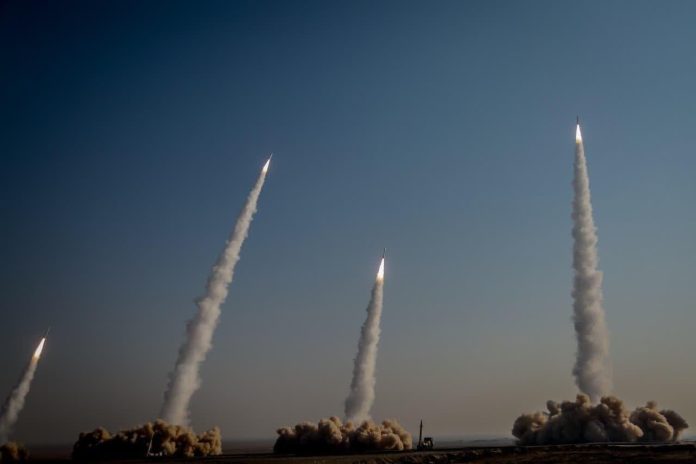
Iran’s Islamic Revolution Guard Corps (IRGC) fired 200 ballistic missiles at various locations within Israeli-occupied territories in retaliation for the assassination of resistance leaders.

Ninety percent of the missiles reportedly bypassed Israeli air defenses and hit their targets, including three main Israeli Air Force bases of Nevatim, Hatzerim, and Tel Nof.

Israeli Prime Minister Benjamin Netanyahu described the attack as the largest missile strike in the regime’s history and vowed a response.

The IRGC utilized Qadr ballistic missiles with a range of 2000 kilometers, Emad missiles with a range of 1700 kilometers, and Fattah missiles with a range of 1400 kilometers.

This marked the first use of hypersonic Fattah missiles by the IRGC.

814 mosques, 3 churches, 19 cemeteries destroyed by Israel in Gaza: Report

Gaza War

Another 148 mosques were damaged in the attacks, it said, adding that the estimated financial cost of the damage to the ministry’s properties is $350m.

The ministry said the Israeli army was also guilty of desecrating graves, exhuming bodies and committing acts of violence against those who died, such as stealing their remains and mutilating them. In addition, 11 administrative and educational facilities under its authority were destroyed, accounting for 79 percent of such structures in Gaza.

The ministry added that Israeli forces killed 238 of its employees and detained 19 others during ground offensives in the territory.

Israel has continued its brutal offensive on the Gaza Strip following an attack by the Palestinian group Hamas last Oct. 7, despite a UN Security Council resolution calling for an immediate cease-fire.

More than 41,800 people have since been killed, mostly women and children, and over 96,900 others injured, according to local health authorities.

The Israeli onslaught has displaced almost the entire population of the territory amid an ongoing blockade that has led to severe shortages of food, clean water, and medicine.

Israel faces a genocide case at the International Court of Justice for its actions in Gaza.

At least 24 Palestinians killed, over 90 injured in Israeli attacks on Gaza mosque, school

Gaza War

Gaza’s Government Media Office accused Israeli forces of committing “two brutal massacres” overnight by bombing a mosque and a school-turned-shelter and killing at least 24 Palestinians.

Some 93 others were wounded in the attacks in central Gaza, it said on Telegram.

The targeted buildings were identified as the Al-Aqsa Mosque and the Ibn Rushd School. Both were housing hundreds of displaced people, the media office added.

Israel has continued its brutal offensive on the Gaza Strip following an attack by the Palestinian group Hamas last Oct. 7, despite a UN Security Council resolution calling for an immediate cease-fire.

More than 41,800 people have since been killed, mostly women and children, and over 96,900 others injured, according to local health authorities.

The Israeli onslaught has displaced almost the entire population of the territory amid an ongoing blockade that has led to severe shortages of food, clean water, and medicine.

Israel faces a genocide case at the International Court of Justice for its actions in Gaza.

Families of Israeli captives accuse Netanyahu of abandoning loved ones for political survival

Israel Hostage

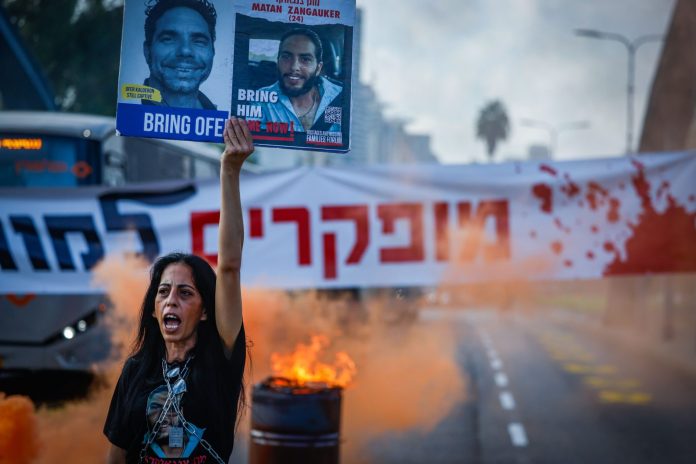
The criticisms were voiced during a news conference outside the Defense Ministry, or Kirya, in Tel Aviv that was broadcast by the Kan channel, ahead of the one-year mark of an attack by Hamas.

“Netanyahu has consciously chosen to sacrifice the lives of the hostages to remain in power,” they said, adding, “The captives have become hostages in Netanyahu’s war for political survival.”

The families also expressed that Netanyahu “not only fails to take responsibility but also deliberately ignores their plight”.

Tel Aviv estimates that there are 101 hostages in the besieged enclave out of at least 239 Israelis who were taken captive Oct. 7, 2023.

Some were exchanged with Tel Aviv during a temporary cease-fire last November, while the Palestinian resistance group has reported the deaths of dozens more because of indiscriminate Israeli airstrikes.

Indirect negotiations between Tel Aviv and Hamas, mediated by Egypt and Qatar with support from the US, have reached a critical stage because of Netanyahu’s insistence on continuing the war in Gaza.

He remains committed to holding strategic positions in the Philadelphia and Netzarim areas in southern and central Gaza, while Hamas demands a complete Israeli withdrawal from Gaza and the unhindered return of displaced individuals.

Israel has continued a brutal offensive on Gaza following an attack by Hamas last October, despite a UN Security Council resolution calling for an immediate cease-fire.

More than 41,800 victims have since been killed, mostly women and children, and over 96,800 injured, according to local health authorities.

The Israeli onslaught has displaced almost the entire population of the territory amid an ongoing blockade that has led to severe shortages of food, clean water and medicine.

Israel faces a genocide case at the International Court of Justice for its actions in Gaza.

Israel military admits Iranian missiles hit 2 air bases

Iran Missile

Rear Admiral Daniel Hagari claimed that neither aircraft nor Israeli air force capabilities were damaged in the attack.

“The Nevatim and Tel Nof air force bases were hit, leaving no aircraft or air force capabilities affected. Both bases remain fully operational,” Hagari told reporters.

On Tuesday, Iran launched 200 missiles towards Israeli military and intelligence bases all over the occupied territories as part of Operation True Promise II in response to the Israeli regime’s deadly aggression against the country and other regional nations.

The aggression that prompted the retaliation had, among other things, led to the martyrdom of Hamas’s political leader Ismail Haniyeh, Hezbollah’s leader Sayyed Hassan Nasrallah, and Abbas Nilforoushan, a senior commander of Iran’s Islamic Revolution Guards Corps (IRGC).

Tehran has vowed to respond to potential repetition of the regime’s aggression against the country with multiple magnitude, targeting all of the regime’s infrastructures.

Back in April too, the country had fired more than 300 missiles and drones against the territories in an operation codenamed True Promise in reprisal for deadly aggression by the regime against Iranian diplomatic facilities in the Syrian capital of Damascus.

Police chief: Iran to deport 2 million illegal immigrants by mid-March

Afghan Refugee in Iran

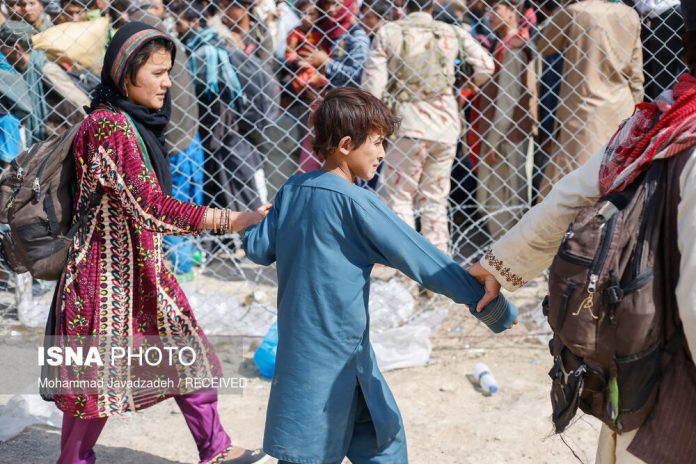
General Ahmadreza Radan stated on Sunday that Iran aims to deport up to 2 million illegal immigrants by the end of the current Iranian year on March 20.

So far, over 500,000 Afghans have been arrested and deported, with an additional 250,000 voluntarily returning to their home country, General Radan said.

He emphasized that illegal immigrants will not be allowed to work or reside in Iran, warning business owners and landlords that employing or housing illegal immigrants is a criminal offense.

“The police are committed to ensuring the security of legal immigrants, but there will be no tolerance for those who enter the country unlawfully,” the senior commander explained.

He noted that the firm stance taken by the authorities has led to an increase in the voluntary return of illegal immigrants, whose number is unofficially estimated at about 10 million.

The move is part of a broader effort to control illegal immigration and ensure that only those who comply with the law can stay and work in Iran.

Iran has a long history of hosting refugees, particularly from neighboring Afghanistan, spanning over four decades.

While Iran has been praised for its inclusive policies, such as allowing Afghan children to attend school regardless of their documentation status, it has also faced criticism from within society for its leniency towards undocumented immigrants.

Half of artillery shells used by Russia in Ukraine supplied by North Korea: Report

Putin Kim

According to the newspaper, around 3 million a year are being shipped from Pyongyang to Moscow, though a large number are believed to be faulty.

Despite this, The Times reports the sheer number of shells supplied have played a crucial role in Russia’s grinding advances in eastern Ukraine, most recently the capture of Vuhledar in Donetsk Oblast earlier this week.

With Russian ammunition stocks running low due to extensive use in Ukraine, North Korea has been shaping up as Russia’s leading outside weapons supplier.

In August, Yonhap reported that North Korea sent containers presumably to Russia that could contain as many as more than 6 million artillery shells.

In exchange for the ammunition, Russia reportedly provided North Korea with technology to help it deploy spy satellites as well as tanks and aircraft.

In late June, Russian President Vladimir Putin visited Pyongyang, where he signed a partnership agreement with North Korean leader Kim Jong Un, which pledged to provide aid to one another if either will be attacked.

Shin Won-sik, South Korean Defense Minister, said in June that Pyongyang also sent dozens of ballistic missiles that Moscow’s troops launch against Ukraine.

But their reliability has also been questioned — around half of the North Korean missiles fired at Ukraine by Russia have malfunctioned and exploded in mid-air, Reuters reported in early May, citing Ukraine’s Prosecutor General’s Office.