Monday, December 29, 2025
Home Blog Page 707

Iran reformist daily hails appointment of first Sunni governor in Iran’s Kordestan

Iran’s Shargh daily, in an article on Monday, has praised the development and given a historical account of appointing Sunni minorities to key posts in Iran, noting since the early years following the 1979 Islamic Revolution, no Sunni individual had been appointed as governor until 2024.

The initial three years post-Revolution saw four Sunni governors, but from the mid-1980s, restrictions were imposed on employing Sunnis in cultural, academic, and political roles, including border county governors, it added.

The reform era beginning in 1997 gradually reversed the restrictions, leading to the appointment of the first Sunni governor in Divandarreh. The trend continued, with Sunnis being appointed as deputy governors and county governors.

During Hassan Rouhani’s presidency, Sunnis were appointed to key positions such as directors general of culture and agriculture ministries, and heads of universities.

The new administration of President Massoud Pezeshkian has intensified the trend, appointing several Sunnis as deputy ministers and other key roles, including the governor of Kordestan.

This inclusive approach aims to enhance national cohesion and increase Sunni participation in the political structure. However, addressing the developmental challenges of Kordestan Province requires more than just appointing Sunni officials, Shargh argues.

“The province faces significant developmental issues, including poor transportation infrastructure and high unemployment, especially among educated individuals.”

“Addressing these challenges necessitates a comprehensive development plan, adequate budgeting, and oversight. Additionally, leveraging Kordestan’s potential for foreign trade with Iraq, tourism, and industrial and agricultural development is crucial,” it noted.

The reformist newspaper wrote reducing the government-people gap also requires political and security reforms, suggesting “with the 2022 incidents, reconciliation and judicial reviews are essential for fostering unity.”

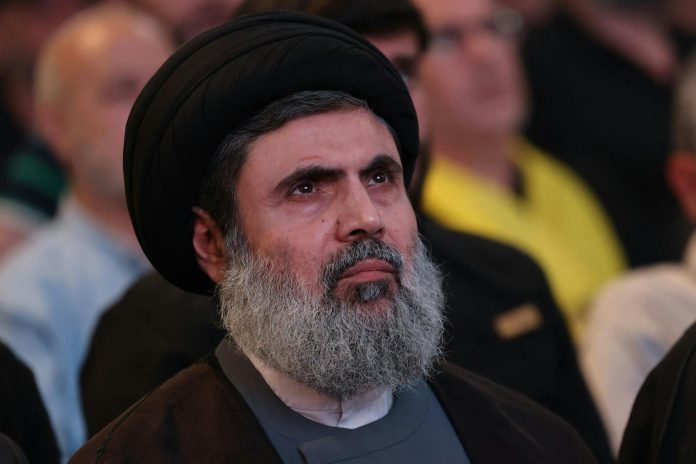
Hezbollah attacks Israel’s Haifa in first direct hit on strategic city

Hezbollah Attack Haifa

Hezbollah announced it launched a salvo of Fadi 1 missiles at the Carmel base, south of Haifa, and carried out a rocket attack on the Nimra base, west of Tiberias.

Israeli media reported 10 people were wounded in Haifa and Tiberias.

“This was the first real hit in the city,” stated its mayor, Yona Yahav.

Israel’s military said five rockets were launched at Haifa from Lebanon, adding, “Interceptors were fired. Fallen projectiles were identified in the area. The incident is under review.”

It noted 15 other rockets were fired at Tiberias, some of them intercepted.

Police in Haifa say several buildings and properties were damaged, with several reports of minor injuries and some people taken to a nearby hospital.

Israel’s military has also announced that fighter jets hit targets belonging to Hezbollah’s intelligence headquarters in Beirut, including intelligence-gathering means, command centres, and additional infrastructure sites.

Over the past few hours, the airstrikes struck Hezbollah weapons storage facilities in the area of Beirut, the military said, adding that secondary explosions were identified following the strikes, indicating the presence of weaponry.

Israeli warplanes also hit Hezbollah targets in southern Lebanon and the Beqaa area, including weapons storage facilities, infrastructure sites, a command centre, and a launcher, the military noted.

Hezbollah and Israel have been engaged in cross-border warfare since the start of Israel’s war on the Gaza Strip, which has killed over 41,800 people, most of them women and children, following an attack by the Palestinian group Hamas last October.

At least 2,100 people have since been killed, over 9,500 injured, and 1.2 million others displaced, according to Lebanese authorities.

The international community has warned that Israeli attacks in Lebanon could escalate the Gaza conflict into a wider regional war.

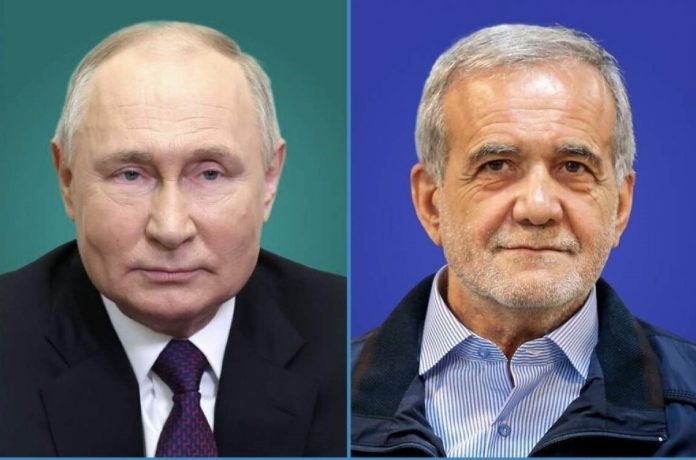
Iran president says Tehran not favoring war

Masoud Pezeshkian

In a telephone conversation with Dutch Prime Minister Dick Schoof on Sunday, Pezeshkian stated Iran seeks to develop balanced relations with all countries, including Western states, and has no intention to wage war and create tensions.

He noted that Iran’s recent missile attack on Israel was aimed at stopping the regime’s crimes and establishing peace in the region.

Pezeshkian added Iran carried out the missile attack in order to curb Israel’s brutality, stop its efforts to spread conflicts in the region and establish peace and tranquility.

The operation was in accordance with the United Nations Charter and based on international legal frameworks and only hit military targets, he continued.

Pezeshkian emphasized that Iran had refrained from giving an immediate response to Israel’s terrorist crime in assassinating Hamas leader Ismail Haniyeh in Tehran and violating its national sovereignty in the hope that diplomatic bids would lead to the establishment of a ceasefire in the Gaza Strip.

Israel assassinated Haniyeh in Tehran with the purpose of making up for its failures in the Gaza Strip, he noted, criticizing Western countries and the US for refusing to condemn the regime’s terrorist crimes.

The Dutch prime minister, for his part, said his country strongly believes that the region cannot bear more tensions and has called on all parties to prevent the escalation of conflicts.

Schoof added that the Netherlands has urged Israel to accept a ceasefire agreement in the Gaza Strip and has supported the US proposal for the establishment of a ceasefire in Lebanon.

On October 1, Iran responded to the Israeli assassination of Hamas political bureau chief Ismail Haniyeh, Hezbollah Secretary General Seyed Hassan Nasrallah, and IRGC general Abbas Nilforoushan by launching as many as 200 ballistic missiles toward the Zionist regime’s military and intelligence bases all over the occupied Palestinian territories.

Russia claims Kursk attack cost Ukraine 20,000 soldiers

Russia Ukraine War

The total number of Ukrainian soldiers killed in the fighting in the Russian border region has exceeded 20,800, the ministry claimed. Kiev has also lost over 130 tanks, 66 infantry fighting vehicles, and almost 100 armored personnel carriers during the operation, which was launched in early August, according to the Russian military’s estimates.

Ukrainian officials have stated that the main goals of the attack were to sway public opinion in Russia and gain a better position for eventual peace talks with Moscow. Ukrainian troops made some initial progress in the early days of August but were quickly contained. Russian troops have been gradually pushing the invading force away from the region ever since.

Since the start of the incursion nearly two months ago, the Russian military has won back more than a dozen settlements. Moscow said it has not ruled out negotiations with Kiev, but that talks can only begin after all Ukrainian troops have left Russian territory.

Earlier this week, the head of Russia’s Federal Security Service (FSB), Aleksandr Bortnikov, stated that Ukraine’s Kursk “foray” has failed, adding that the operation did not distract Moscow from its offensive in Donbass, where its troops have been steadily gaining ground since February.

The Russian military has regularly published videos showing Ukrainian hardware, including Western-supplied heavy armor, being destroyed as Russian territory is reclaimed.

Iran’s army chief commander warns Israel against committing further crimes

Iranian Army Chief Abdolrahim Mousavi

In a ceremony commemorating Seyyed Hassan Nasrallah, the martyred Secretary-General of Lebanon’s Hezbollah movement, Major General Mousavi remarked that the Islamic Republic of Iran has always acted on what it has said.

Maj. Gen. Mousavi, rejecting the Zionists’ claim of eliminating three ranks of Hezbollah, emphasized that Hezbollah has dealt severe blows to the Zionists in recent days and will continue to act in this way in the future.

He pointed to the Zionist crime of assassinating Nasrallah, adding that those who have caused this grief to the resistance, freedom seekers, and Muslims of the world will soon pay a heavy price.

Last Tuesday, in response to the Zionists’ crimes in assassinating the Secretary-General of Hezbollah, as well as Abbas Nilforoushan, Iran’s senior military advisor in Beirut, and the assassination of Hamas’ leader in Tehran on July 31, Iran’s armed forces targeted several Israeli military and security centers with 200 ballistic missiles.

Major General Mousavi, referring to Iran’s restraint in responding to the crimes of the Zionist regime, added, “Iran may endure the bitterness of restraint for some time, but it will definitely act.”

Gaza government media reports more than 3,650 Israeli massacres since October 2023

Gaza War

According to a statements, 25,973 children are now without one or both parents due to what they describe as a war of extermination by Israel.

Additionally, the report said that 34 hospitals and 80 health centers have been rendered inoperable as a result of the Israel’s war on Gaza.

Furthermore, it added that 162 health facilities and 131 ambulances have been targeted by Israel since the onset of the onslaught.

Israeli forces have killed at least 41,870 people, including at least 17,000 children and 11,487 women, according to the statement.

At least 171 babies born were killed by Israeli troops, it said, adding some 710 infants under the age of one have been killed by Israeli forces.

Israel has continued its brutal offensive on the Gaza Strip following an attack by the Palestinian group Hamas last Oct. 7, despite a United Nations Security Council resolution calling for an immediate cease-fire.

Nearly 42,000 people have since been killed, mostly women and children, and at least 97,000 others injured, according to local health authorities.

The Israeli onslaught has displaced almost the entire population of the territory amid an ongoing blockade that has led to severe shortages of food, clean water, and medicine.

Israel faces a genocide case at the International Court of Justice for its actions in Gaza.

Reuters: IRGC Quds Force chief missing since Israeli attack on Beirut

General Esmaeel Qahani

Qaani had traveled to Lebanon following the assassination of Hezbollah leader Seyyed Hassan Nasrallah in an Israeli air raid last month.

Sources indicate he was in the Dahiyeh area during the strikes on Thursday, which reportedly aimed at Hezbollah official Hashem Safieddine, but he was not meeting with Safieddine at the time.

Since the attacks, Iran and Hezbollah have lost contact with Qaani.

Notably, Brigadier General Abbas Nilforoushan, another senior figure with the IRGC, was killed alongside Nasrallah during the Israeli bombing of their bunker in late September.

Iran raps Zionists’ deadly raids on Gaza mosque, Lebanon

Lebanon War

Esmail Baghaei reminded that the recent attacks by the Zionist regime carried out with U.S.-supplied weaponry against sacred sites, schools, mosques, and medical facilities in Palestine and Lebanon, evoke memories of the crimes of Daesh.

He added the massacre of civilians and the destruction of civilian sites and infrastructure are inextricably linked to the ideology of Zionism and Takfirism.

Baghaei said it is incumbent upon the international community to take serious and effective action against the new Hitler of our time, Israeli Prime Minister Benjamin Netanyahu, and the “criminal leaders” of the Zionist regime.

He noted that inaction in the face of these crimes will have irreparable consequences for all countries in the region and beyond.

Baghaei underscored that the Islamic Republic of Iran once again calls upon all nations, particularly Muslim countries, to use all available means and the vast capacities at their disposal to immediately send humanitarian aid to the defenseless and displaced people in Gaza and Lebanon.

Heavy consecutive strikes hit Beirut’s southern suburbs from late Saturday into Sunday.

Meanwhile Gaza’s civil defence agency said 24 people were killed and dozens wounded in an Israeli airstrike on a mosque in central Gaza early on Sunday.

Ayatollah Khamenei awards IRGC top commander with Fath Medal following missile attacks on Israel

Ayatollah Khamenei Hajizadeh

This honor was bestowed in recognition of the successful execution of the Operation True Promise which saw extensive missile attacks on Israel.

The Fath (which means Conquest in Persian) Medal symbolizes the victorious operations of Islamic warriors and the commanders of these missions.

On Tuesday, the IRGC fired some 200 missiles at the Israeli regime’s security and military bases in retaliation for an Israeli airstrike that killed Hezbollah chief Sayyed Hassan Nasrallah and IRGC top general Abbas Nilforushan in Beirut as well as the regime’s assassination of Ismail Haniyeh, the former Hamas leader in Tehran on July 31.

It was Iran’s second direct attack on the Israeli regime in six months, after a missile and drone assault in April in retaliation for a deadly strike on Iran’s consulate in Damascus, which Tehran blamed on the regime.

Iranian daily urges Pres. Pezeshkian to counter Taliban influence in Iran

Taliban

The Jomhouri Eslami newspaper accused Taliban sympathizers of falsely portraying the group’s opponents as warmongers, suggesting that this narrative is part of a larger conspiracy aimed at backing the Taliban.

The report highlighted the Taliban’s refusal to meet its legal obligations regarding Iran’s water rights from the Helmand River, its disrespect toward Iran’s national anthem, its hostility toward Persian speakers, and the erasure of Persian from Afghan universities and other educational institutions.

Additionally, according to the daily, the closure of Iranian relief centers and charities, along with terror attacks and unrest orchestrated by Taliban agents within Iran, all suggest that the group is pursuing a colonialist agenda under U.S. influence, aimed at increasing pressure on Iran.

The newspaper also points to the existence of “factions within Iran that share interests with the Taliban”, accusing them of supporting the group to protect their own illegitimate gains.

It urges President Pezeshkian to establish a robust mechanism to deal with unauthorized Afghan nationals, particularly Taliban members who have been deliberately sent to Iran.

The newspaper further calls for the immediate and uncompromising expulsion of illegal and undocumented Afghan individuals and the dismantling of domestic “networks that enable the Taliban’s growing influence in the country.”

The Iranian government has yet to comment on the report.