Tuesday, December 30, 2025
Home Blog Page 692

Ukraine’s NATO membership on ‘irreversible path’: G7 defense chiefs

“We support Ukraine on its irreversible path to full Euro-Atlantic integration, including NATO membership,” the statement said.

The ministers also pledged continued military assistance to Ukraine, both in the short and long term, and emphasized the importance of training and educational support for the Ukrainian Defense Forces.

“We welcome the respective efforts of NATO and the EU under the NATO Security Assistance and Training Program for Ukraine and the EU Military Assistance Mission,” the document added.

The ministers also confirmed their goal of achieving a “comprehensive, just, and lasting peace” that respects Ukraine’s sovereignty and territorial integrity, as set out by international law.

However, the White House’s position regarding Ukraine’s accession has been that the invitation to NATO will likely not come in the short term, citing the need for reforms and fulfillment of security conditions.

“We are not at the stage where the Alliance is discussing issuing an invitation in the short term,” US Ambassador to NATO Julianne Smith said ahead of a NATO defense ministers meeting in Brussels, Voice of America reported.

“But, as always, we will continue talks with our friends in Ukraine about how they can move toward the Alliance,” Smith added.

Embassy confirms killing of Iranian woman in Israeli strike in Lebanon

Lebanon War

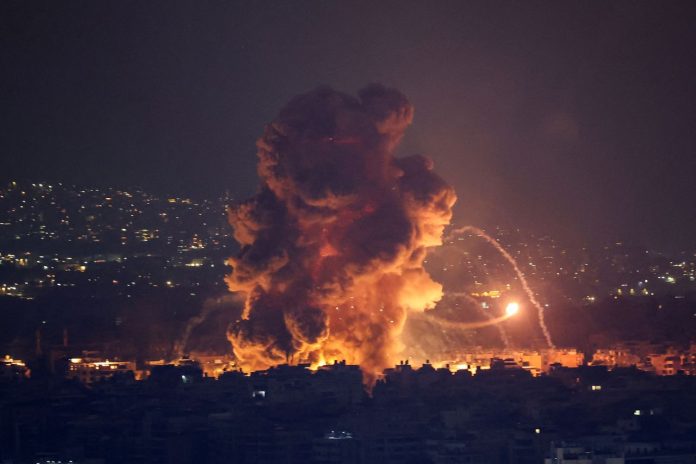
The embassy released a statement on Sunday to confirm that Masoumeh Karbasi, an Iranian citizen living in Lebanon, and her Lebanese husband lost their lives in an Israeli drone attack on Saturday evening.

The embassy rebuked the “inhumane drone attack by the Zionist regime on a public place in the Jounieh region of Lebanon.”

The embassy expressed condolences to the children and relatives of the couple and called on the international community to take practical, immediate and effective measures to protect the lives of civilians who are under constant threat amid the aggravating situation in Lebanon due to the Israeli regime’s invasion.

According to reports, an Israeli drone fired a missile towards the Karbasi’s car which missed the targets by a few meters. Karbasi’s husband, Reza Abbas Awadah, took her out of the car, but they both got killed in a drone attack.

Narges Ghadirian, the wife of the Iranian ambassador in Lebanon, took to X social media platform to condemn the killing, noting that the couple are survived by five children.

Source: Three advanced Israeli fighter jets destroyed in Iran’s Operation True Promise II against Israel

Iran Missile Attack Israel

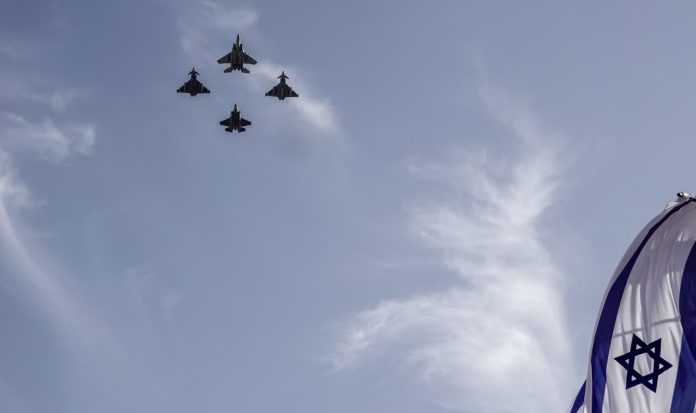
Although Israel had repositioned a significant number of its fighter jets in neighboring countries’ airbases before the operation, the operation inflicted substantial damage, the anonymous source said.

Satellite imagery also confirmed the damage to an F-35 hangar at the Nevatim airbase in the Negev Desert, with IntelSky verifying that at least 40 points at the strategic base were hit.

The Middlebury Institute reported that at least three F-35 shelters were struck during the missile operation.

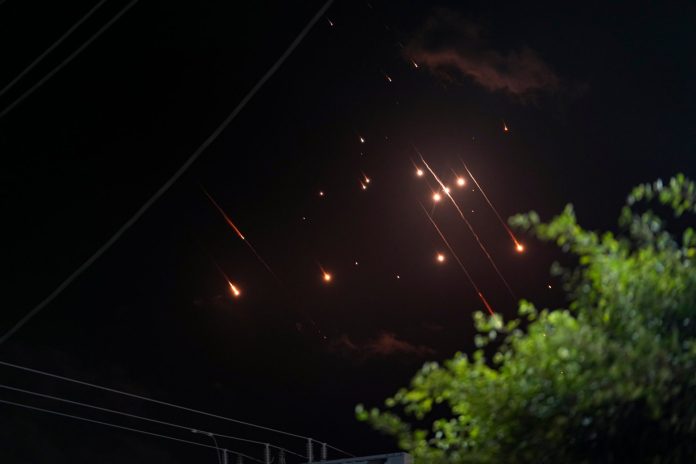
Operation True Promise II was carried out on October 1 in two three-minute phases, during which nearly 200 ballistic missiles were launched with a 90 percent accuracy rate, sources say.

Military affairs expert Abdolreza Sadegh told FARS that Iran used less than one-fifth of its missile capability in this operation, suggesting Iran can launch at least 7,000 missiles within 24 hours if necessary.

Iran said it targeted three major Israeli air force bases of Nevatim, Hatzerim, and Tel Nof with Emad, Qadr, Kheibar Shekan, and Fattah 1 missiles in retaliation for Israeli assassination of resistance leaders including Hamas chief Ismail Haniyeh in Tehran on July 31.

The conflict has seen numerous escalations in recent months, with both sides engaging in military operations and cyber warfare.

All potential targets identified: Iran warns Israel

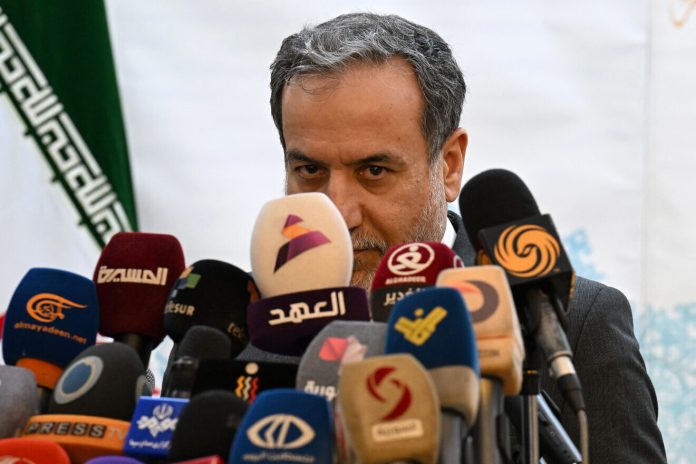
In an interview with CNN Turk, Araghchi mentioned that during Iran’s recent missile strike on Israel, it deliberately avoided targeting economic installations or civilian areas. However, all those sites have now been identified and would be attacked if Israel initiates aggression against Iran.

The minister emphasized that any aggression against Iran would be seen as a violation of the Islamic Republic’s red lines. Any assault on Iran’s nuclear facilities would trigger a proportional response.

He also described the United States as a close ally of Israel, warning that in the event of a larger war involving Israel, the US would inevitably be drawn into the conflict, something Iran does not seek.

The Iranian diplomat further stated that Israel cannot commit crimes in the Gaza Strip and Lebanon without US support, noting that the United States supplies all weapons used in these regions.

On October 1, Iran fired nearly 200 ballistic missiles at Israel in response to the war in the Gaza Strip and Lebanon and the assassinations of top members of pro-Palestinian groups Hamas and Hezbollah.

Chief commander of the Islamic Revolution Guards Corps (IRGC) Major General Hossein Salami stated that the military operation served just as a warning to Israel, stressing that it was only a small part of Iran’s power.

While the Israeli regime has threatened to retaliate, Iranian officials have warned that Tehran is “ready” to respond to any adventurism.

Iran’s economy minister: Internet filtering has limited, slowed economic activities in cyberspace

Iran Internet Mobile

In an interview with ILNA news agency on Sunday, Abdolnasser Hemmati addressed the issue of internet filtering and its impacts on internet-based economic activities in Iran.

He stated, “My personal opinion is that filtering has had no effect, except for limiting and slowing down economic activities in cyberspace. Therefore, it is natural that resolving the issue is a priority.”

Hemmati noted that the filtering, which has been used by the government particularly since the 2009 protests as a tool to control information flow and maintain security, is not within his purview as the minister of economy and expressed hope that the relevant authorities would follow up on the issue.

The economy minister’s comments highlight the ongoing debate about the balance between regulations and economic freedom in the digital age in the country.

Internet filtering in Iran has been a contentious issue, with many arguing that it stifles innovation and economic growth.

It has also led to widespread use of VPNs and other circumvention tools, creating additional challenges including financial burden on internet users.

The government’s stance on filtering has fluctuated, with some officials advocating for stricter controls and others calling for more open access to support economic development.

Australia to review dozens of military export permits to Israel: Report

The licenses are being weighed up by the Department of Defense on a case-by-case basis, and considering how it fits with Australia’s international obligations, including with regard to human rights.

“As circumstances in the Middle East evolve, Australia continues to scrutinize pre-existing export permits to Israel to ensure they align with our calibrated approach,” the newspaper cited an unnamed defense spokesperson as saying.

The review comes after an application from the Australian Centre for International Justice to Defense Minister Richard Marles in April, calling for annulment of all current export permits to Tel Aviv and to other countries which might later make them available to Israel.

Canberra has repeatedly announced it has not supplied weapons or ammunition to Israel since the war broke out, and it continues to maintain that position.

The federal government, however, has faced criticism for failing to be transparent about what each permit covers.

Canberra has also defended its supply of parts for the global supply chain for the F-35 fighter aircraft. Israel has used F-35 aircraft in Gaza, where it has killed more than 42,000 people since the Hamas cross-border incursion and reduced the enclave to a rubble.

According to the Defense Ministry, Australia is not a major defense exporter to Israel, but permits are required for a range of items, including IT equipment, software, radios, electronic components and dual-use goods.

Australia has issued about 247 permits that relate to Israel since 2019, of which about 66 remain active, according to officials.

The Greens, Australia’s third-largest political party, has demanded an end to all two-way military trade with Israel, with the party’s defense spokesperson, David Shoebridge, saying Australia must not do anything to “embolden Israel to continue the genocide.”

But the government of Prime Minister Anthony Albanese has pushed back at the idea of ending contracts with Israeli companies that supply goods for use by the Australian Defense Force and police.

The Australian Centre for International Justice welcomed the review, saying the development is the result of a sustained pressure from the protest movement, and the public to cut exports to the “rogue” state.

“For the past 12 months, the Australian government has been put on notice from the ICJ, the ICC, UN bodies, and countless international organisations about Israel’s long catalogue of violations of international law. We’re calling for a full arms embargo, no imports, no exports, no transfers,” the center said in a statement posted on X.

Human rights defender Rawan Arraf stated: “For 12 months the Govt has been happy to muddy the waters & feed misinformation on its arms exports regime to the rogue state.”

“There is no excuse for the long delay in reviewing current arms exports. The review must also include scrutiny of exports that are ending up in Israel,” she wrote on X.


Hezbollah behind drone attack on Netanyahu’s residence: Iran

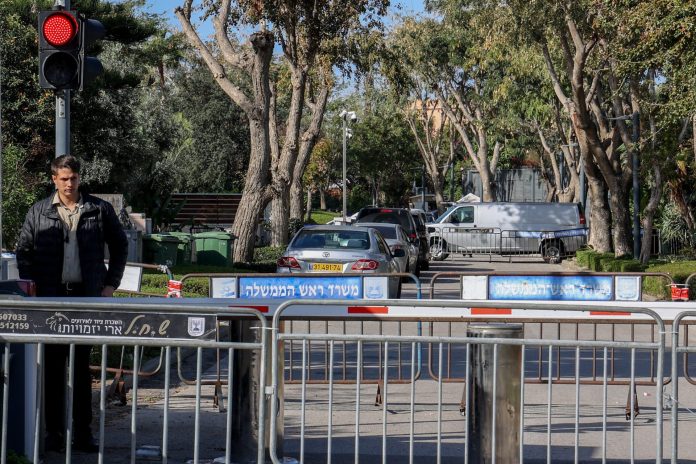
A drone targeted the residence of Netanyahu on Saturday, though no casualties were reported. The Prime Minister’s Office confirmed that Netanyahu’s private residence in Caesarea was the target but announced that neither he nor his wife was home at the time of the attack.

Netanyahu has claimed that “agents of Iran” were behind the attack and would “pay a heavy price”.

But the Iranian permanent mission to the United Nations dismissed the claim, saying Iran had “already responded to the Israeli regime”.

Responding to a question about the attack on Netanyahu’s residence, it added, “The action in question has been carried out by Hezbollah in Lebanon.”

Lebanon and Israel have been regularly exchanging fire since October 2023.

Female Iranian journalists ordered to turn themselves in for prison sentence

Journalists Nilufar Hamedi (l) and Elaheh Mohammadi (r)

The lawyer for Elaheh Mohammadi, 37, on Sunday denounced the decision by the judiciary to return his client to prison as a clear violation of the law and the Leader’s pardon directive.

Shahabuddin Mirlohi revealed in an interview with Hammihan news website that Mohammadi has been summoned to serve a five-year prison sentence and given only five days to turn herself in.

He emphasized that both charges against her, namely conspiracy against national security and propaganda against the government, were covered by the Leader’s amnesty in 2022.

Mirlohi called on the heads of the judiciary and the government to personally intervene to ensure the law is upheld and the case is closed.

He expressed disappointment that despite the president’s campaign promises and the Leader’s emphasis on unity and avoiding conflict, the judiciary’s recent actions suggest continued legal irregularities in this case.

Lawyers of the other Iranian journalist Niloufar Hamedi, 31, who has similarly been summoned for a five-year prison sentence, argue that her case should be closed according to the Leader’s pardon.

The head of Iran’s reformist front called for a halt to the journalists’ prison sentences.

Azar Mansouri took to X social media platform to censure the sentencing of the two journalists, writing, “Journalists who fulfill their professional duties should not be imprisoned.”

“We expect the government and judiciary to prevent the execution of the five-year prison sentences for #Niloufar_Hamedi and #Elaheh_Mohammadi,” she demanded.

The Iranian judiciary has yet to comment on these remarks.

Leaked US intelligence files show Israel plans to attack Iran: Report

Pentagon

The apparent security breach occurred amid an intense standoff between Iran and Israel – which has vowed to respond to a barrage of missiles fired by Tehran earlier this month.

On Friday, two documents were posted to the anonymous Telegram channel Middle East Spectator, which covers events in the region and is critical of Israel.

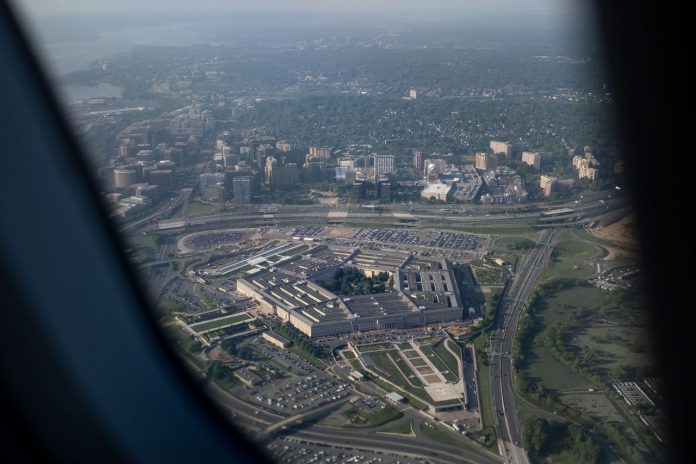
The first of the files, apparently prepared by the Pentagon’s National Geospatial-Intelligence Agency, says the Israel Defense Forces (IDF) “continued key munitions preparations and covert UAV activity on October 16 almost certainly for a strike on Iran”.

The second document contains a detailed report about a “large-force employment exercise” conducted by the Israeli Air Force on October 15-16.

An unnamed US official confirmed the authenticity of the documents to CNN, describing the leak as “deeply concerning”. The official told the network that the ongoing probe is aimed at determining who had access to the top secret files that eventually made their way to social media.

The Telegram channel which published the documents released a statement on Saturday, claiming that it had received the files from “an anonymous source on Telegram who refused to identify himself”. The channel further claimed that it had “no connection to the original leaker”.

On October 1, Iran fired nearly 200 ballistic missiles at Israel in response to the war in Gaza and the assassinations of top members of pro-Palestinian groups Hamas and Hezbollah.

Israel did not specify how and when it would retaliate, with some reports saying that the IDF was planning to strike military targets in Iran, rather than nuclear or oil facilities. Israel would make “final decisions based on our national interest”, Prime Minister Benjamin Netanyahu’s office announced on Thursday.

Anti-government Israeli protesters demand a deal to release Gaza-held hostages

In Tel Aviv, people protested outside the Israel Defense Forces’ headquarters, blocking traffic and chanting anti-government slogans.

Eran Nissan, a peace activist from the progressive Israeli group Mehazkim, has been attending anti-government rallies since January last year. On Saturday, he was handing out T-shirts and stickers with derogatory messages about Israel’s far-right security minister Itamar Ben Gvir.

Nissan said a ceasefire-for-hostages deal was the central demand of the protests.

“The issue of hostages is the first, the second and the third priority,” he told CNN, adding that he believed the killing of Hamas leader Yahya Sinwar on Wednesday presented an opportunity to finally agree to an agreement.

“There’s a solid majority and consensus in the Israeli society on this, 105 hostages have (already) been brought back in a deal,” he continued, in a reference to the weeklong ceasefire and hostage exchange that took place last November.

There are 101 hostages still held in Gaza, Israeli authorities say, but as many as one-third of them are thought to be dead.

He stated that he believed the current government had an interest in prolonging the war.

“They know that once the war is over, they will have to answer questions about how they were complicit in bringing Israel to the October 7 (terror attack), and that there is going to be a national inquiry, and that there is going to be a demand for elections. And any poll that you see right now shows they’re going to be hit hard,” he stressed.

The large-scale protests Saturday were among the first since the government banned large gatherings citing security concerns following the October 1 Iranian ballistic missile attack.