Tuesday, December 30, 2025
Home Blog Page 691

Prominent communication scholars urge Iran Judiciary chief to halt sentences of journalists

Niloufar Hamedi & Elaheh Mohammadi

The letter was published on Monday, a day after the lawyers for Niloufar Hamedi and Elaheh Mohammadi announced that they have received notices to report to prison within five days to begin serving their five-year sentences despite having been pardoned by the Leader.

The letter reads, “We, a group of seasoned journalism teachers, hope that with your favorable order, the execution of these sentences will be halted, and the slight hope that has been created will not turn into despair.”

The letter further emphasizes that the request extends to all imprisoned journalists, noting that “undoubtedly, we and you believe that the place of a writer is not in prison, and a journalist is merely narrating events.”

The signatories of the letter include Ali Akbar Qazizadeh, Hadi Khaniki, Mohammad Mehdi Forghani, Behrouz Behzadi, Bijan Nafisi, and Hassan Namak Doust.

The head of Iran’s reformist front, Azar Mansouri, also called on Sunday for a halt to the journalists’ prison sentences.

The Iranian judiciary has not yet commented on the request.

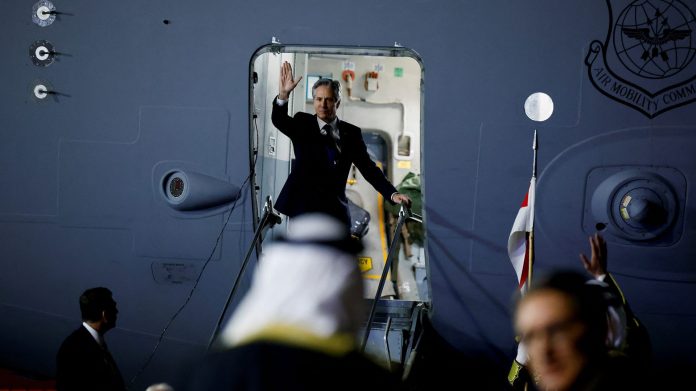
Blinken to depart for a high-stakes trip to Middle East

Blinken

US officials, including President Joe Biden, have stressed to their Israeli counterparts to capitalize on the Hamas leaders’ killing to bring the more than year-long conflict to a conclusion. Biden announced last week that he would dispatch his top diplomat to the region with those aims.

Still, questions remain about the impact of Sinwar’s death on the hostage and ceasefire negotiations — discussions that had all but collapsed mere weeks ago — and it remains to be seen whether Prime Minister Benjamin Netanyahu or Hamas is truly prepared to end the war.

“Now is the time to move on — move on, move towards a ceasefire in Gaza, make sure that we move in a direction that we’re going to be in a position to make things better for the whole world,” Biden said he told Israeli Prime Minister Benjamin Netanyahu in a phone call last week.

“Today, evil has suffered a heavy blow, but the task before us is not yet complete,” the Israeli PM stated in remarks following Sinwar’s death.

Moreover, the specter of Israel’s response to Iran for Tehran’s missile attack’s earlier this month still looms large, bringing with it the potential for regional conflagration.

That risk of escalation is compounded as Israel has continued its heavy military campaign in Lebanon against Hezbollah.

Blinken plans to “discuss the need to reach a diplomatic resolution to the conflict between Israel and Hezbollah”, the State Department announced in an announcement about his trip.

Netanyahu’s spokesperson has said that “new ideas” for a captives deal in Gaza were considered during a high-level security cabinet meeting overnight.

“During the meeting, new ideas were brought up to examine their feasibility for a hostage release proposal,” the spokesperson added.

It has been a year since the Hamas-led attack on Israel in which 1,200 people were killed and about 250 captured and taken to the Gaza Strip. Nearly half the captives have been released. Others are still in captivity with some confirmed or feared dead. Tel Aviv estimates that there are 100 hostages in Gaza.

Since October 7, 2023, Israel has killed more than 42,600 people in its genocide of the Palestinians in the besieged enclave.

The Israeli onslaught has displaced almost the entire population of the territory amid an ongoing blockade that has led to severe shortages of food, clean water and medicine.

Israel faces a genocide case at the International Court of Justice for its actions in Gaza.

Mediation efforts to reach a Gaza ceasefire and prisoner swap agreement between Israel and Hamas have failed over Netanyahu’s refusal to halt the war.

While cross-border warfare between Israel and Hezbollah continued since the Gaza war last October, Tel Aviv escalated its offensive in Lebanon late last month, killing Hezbollah leader Seyyed Hassan Nasrallah and many other commanders.

The extensive air attacks, followed by a ground invasion, have killed more than 1,800, injured over 9,300 and displaced around 1.3 million people.

Iran shrugs off Israel’s threat to strike nuclear facilities

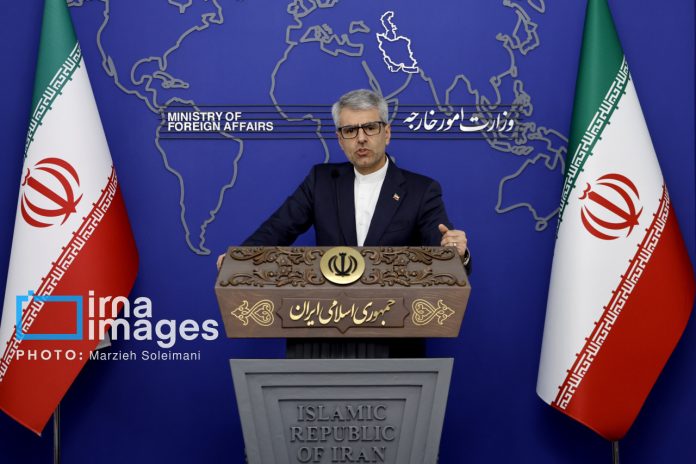
Esmail Baghaei

During his press conference on Monday, Baghaei stated that the Islamic Republic had submitted a detailed memo to the International Atomic Energy Agency, outlining Iran’s position.

He also emphasized that Iran is addressing the issue through the UN Security Council, making it clear that the country will use every opportunity to expose the Zionist regime’s violations of international law.

The Israeli regime issued threats of an attack on Iran after the Islamic Republic launched a retaliatory missile strike on Israel. This was in response to Israel’s assassination of former Hamas political leader, Ismail Haniyeh, in Tehran, as well as an Iranian military advisor and Hezbollah leader Seyyed Hassan Nasrallah during an air raid in Southern Beirut, Lebanon.

Tehran has warned that any attack by Israel will be met with a severe response, “beyond the Israeli regime’s imagination”.

Referring to Israel’s continued crimes in Palestine and Lebanon, the spokesperson stated that stopping Israeli genocide and atrocities is a moral, humanitarian, and Islamic obligation, grounded in international law.

He also reiterated Iran’s commitment to regional peace, emphasizing the country’s policy of good relations with its neighbors and its opposition to foreign interference.

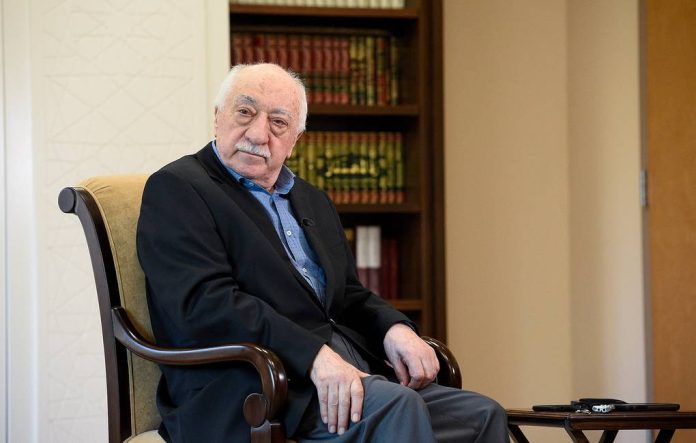
Fethullah Gulen, US-based cleric accused of orchestrating Turkish coup, dies

Herkul, a website which publishes Gulen’s sermons, said on its X account that Gulen had died on Sunday evening in the US hospital where he was being treated.

Gulen was a one-time ally of Erdogan but they fell out spectacularly, and Erdogan held him responsible for the 2016 attempted coup in which rogue soldiers commandeered warplanes, tanks and helicopters. Some 250 people were killed in the bid to seize power.

Gulen, who had lived in self-imposed exile in the United States since 1999, denied involvement in the putsch.

According to its followers, Gulen’s movement – known as “Hizmet” which means “service” in Turkish – seeks to spread a moderate brand of Islam that promotes Western-style education, free markets and interfaith communication.

Since the failed coup, his movement has been systematically dismantled in Turkey and its influence has declined internationally.

Known to his supporters as Hodjaefendi, or respected teacher, Gulen was born in a village in the eastern Turkish province of Erzurum in 1941. The son of an imam, or Islamic preacher, he studied the Koran from infancy.

In 1959, Gulen was appointed as a mosque imam in the northwestern city of Edirne and began to come to prominence as a preacher in the 1960s in the western province of Izmir, where he set up student dormitories and would go to tea houses to preach.

These student houses marked the start of an informal network which would spread over the following decades through education, business, media and state institutions, giving his supporters extensive influence.

This influence also spread beyond Turkey’s borders to the Turkic republics of Central Asia, the Balkans, Africa and the West through a network of schools.

Gulen had been a close ally of Erdogan and his AK Party, but growing tensions in their relationship exploded in December 2013 when corruption investigations targeting ministers and officials close to Erdogan came to light.

Prosecutors and police from Gulen’s Hizmet movement were widely believed to be behind the investigations and an arrest warrant was issued for Gulen in 2014, with his movement designated as a terrorist group two years later.

Soon after the 2016 coup, Erdogan described Gulen’s network as traitors and “like a cancer”, vowing to root them out wherever they are. Hundreds of schools, companies, media outlets and associations linked to him were shut down and assets seized.

Gulen condemned the coup attempt “in the strongest terms”.

“As someone who suffered under multiple military coups during the past five decades, it is especially insulting to be accused of having any link to such an attempt,” he announced in a statement.

In a crackdown after the failed putsch, which the government said targeted Gulen’s followers, at least 77,000 people were arrested and 150,000 state workers including teachers, judges and soldiers suspended under emergency rule.

Companies and media outlets regarded as linked to Gulen were seized by the state or closed down. The Turkish government noted its actions were justified by the gravity of the threat posed to the state by the coup.

Gulen also became an isolated figure within Turkey, reviled by Erdogan’s supporters and shunned by the opposition which saw his network as having conspired over decades to undermine the secular foundations of the republic.

Ankara long sought to have him extradited from the United States.

Speaking in his gated compound in Pennsylvania’s Pocono Mountains, Gulen stated in a 2017 Reuters interview he had no plans to flee the United States to avoid extradition. Even then, he appeared frail, walking with a shuffle and keeping his longtime doctor close at hand.

Gulen had travelled to the United States for medical treatment but remained there as he faced a criminal investigation in Turkey.

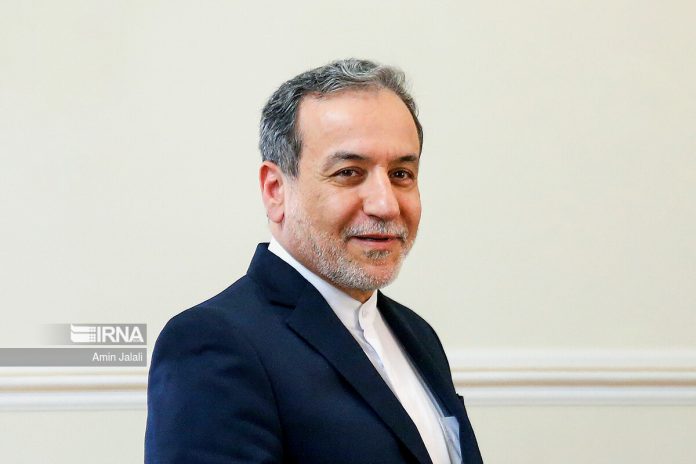
Iran’s foreign minister visiting Bahrain, Kuwait within hours: Spokesperson

Speaking to reporters at a weekly presser on Monday, Baghaei stressed that the bottom line in all trips that the Iranian foreign minister has paid to several regional countries in the past two weeks was the common concern about the threats and consequences of the Israeli regime’s carnage in Gaza and Lebanon.

Stressing the need for all countries to mount pressure on Israel to stop the massacre of people, he said Russia and China can play a significant role in this regard.

The Iranian spokesman added Moscow and Beijing have expressed explicit stances by deploring the continuation of Israeli acts of aggression against Gaza and Lebanon.

He stated that Iran’s main priority at present is to prevent an escalation of regional tensions, noting that no country is excluded from the process of negotiations.

“It is a public duty to protect peace and security in the region. It’s now the time for countries to indicate a willingness to take steps in this course,” he continued.

The spokesman stated that Iran will proceed with the efforts to end the Israeli onslaught on Gaza and Lebanon, saying Araghchi is going to start a tour of Kuwait and Bahrain today.

The Iranian foreign minister has stepped up diplomatic efforts in recent weeks to address the regional conflicts and put an end to the Israeli regime’s crimes in Gaza and Lebanon.

He has visited Lebanon, Syria, Saudi Arabia, Qatar, Iraq, Oman, Jordan, Egypt and Turkey in the past two weeks.

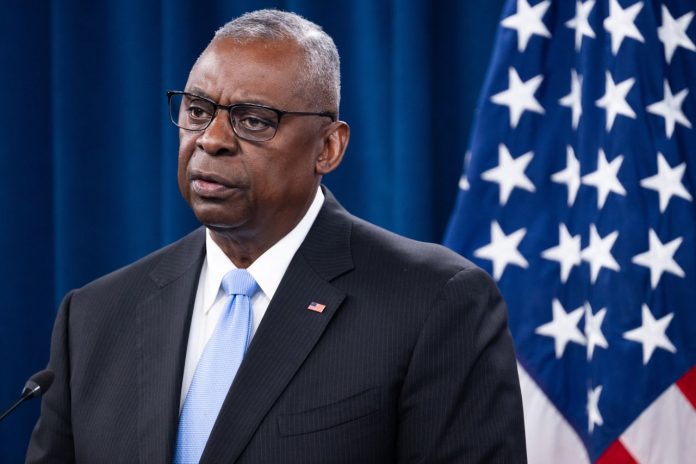
Pentagon chief arrives in Kyiv in surprise visit

Austin’s visit comes only a few days after US President Joe Biden arrived in Berlin to meet the leaders of the UK, Germany, and France to discuss continued support for Ukraine and Kyiv’s five-step victory plan.

The US defense chief is expected to meet his Ukrainian counterpart, Rustem Umerov, to discuss Ukraine’s battlefield needs. The visit will also serve as a chance to “step back” and assess the US-Ukrainian relationship over the course of the full-scale war.

Ukraine finds itself in an increasingly difficult position. Despite Washington’s support, Russian forces keep grinding on in the country’s east while Ukraine braces for fresh strikes against the energy grid with the coming winter.

The situation may soon deteriorate further as the US presidential election on Nov. 5 can have a profound impact on Washington’s support.

Former president and Republican nominee Donald Trump recently made critical comments toward Biden and Ukraine’s President Volodymyr Zelensky, saying they carry the blame for the outbreak of the full-scale war.

There are fears that if Trump beats his Democratic challenger, Vice President Kamala Harris, and returns to the White House, he might withdraw US support for Ukraine and force the country toward painful concessions.

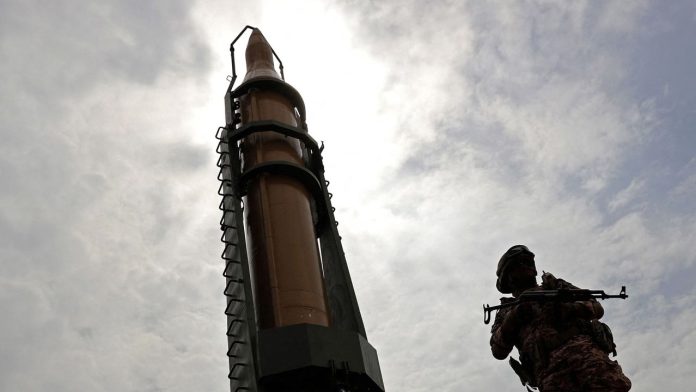
‘Finger on the trigger’; Iranian military source issues stern warning to Israel

Iran Missile

The anonymous source told Tasnim News Agency that if Israel targets Iran’s military sites, the response from Iran will be ‘definite’ and ‘beyond the Zionists’ estimation.’

The source further stated that if Israel targets nuclear facilities, Iran will not only respond but also reconsider its nuclear policies.

Emphasizing that Iran’s ‘finger is on the trigger,’ the source warned if Israel’s possible military actions impact Iranian infrastructure in any way, Iran has made no commitments to maintain the scope, type, or intensity of its responses.

“This is a clear message to Israel, and they will certainly understand its meaning,” the military source emphasized.

“Iran neither hesitates nor rushes; however, the punishment for the madmen will be such that each time they will be caught off guard even more,” the source stressed.

The longstanding tensions between Iran and Israel have often resulted in threats and counter-threats, especially since Israel’s strikes on Iranian diplomatic mission in Damascus in April which led to Iran’s missile and drone operations, dubbed True Promise I and II later in the month and October respectively.

Iran conducted Operation True Promise II, following Israel’s assassination of former Hamas leader Ismail Haniyeh in Tehran on July 31, and an Iranian military advisor in Lebanon alongside Hezbollah chief, Sayyed Hassan Nasrallah in an air strike in southern Beirut.

Israel conducts air attacks on ‘Hezbollah’s financial arm’, as Lebanese flee homes

The organisation has 30 branches in Lebanon, including 15 in densely populated areas of Beirut.

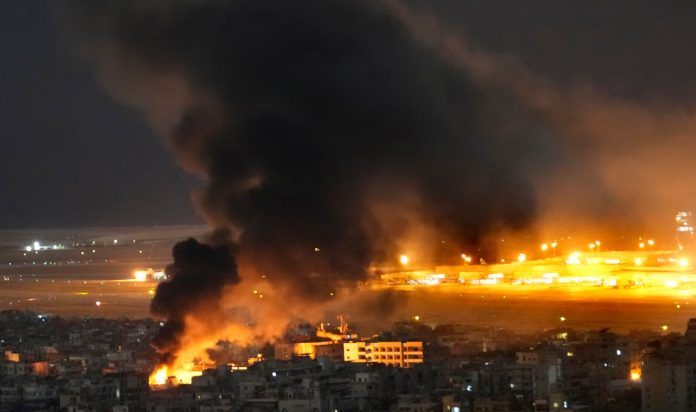
Several Israeli air raids have been reported in Beirut’s southern suburbs, according to Lebanese media.

A video shared on social media appears to show an Israeli airstrike hitting a building near the airport, after which the whole building collapses.

Another video shows a fire at a building in a residential area of southern Beirut. A sign in Arabic on the front of the building reads “Al-Qard Al-Hasan Association”.

Lebanon’s National News Agency reported at least three branches of al-Qard al-Hassan were struck in southern Beirut and Hermel.

Across Lebanon, people who live near branches have been fleeing their homes.

Israeli Defence Minister Yoav Gallant has claimed the army was “destroying” Hezbollah. He stated the Israeli military not only “defeating the enemy [Hezbollah], but we are destroying them in all the villages along the border, in the places that Hezbollah planned to use as launchpads for attacks against Israel”.

While cross-border warfare between Israel and Hezbollah continued since the Gaza war last October, Tel Aviv escalated its offensive in Lebanon late last month, killing Hezbollah leader Seyyed Hassan Nasrallah and many other commanders.

The extensive air attacks, followed by a ground invasion, have killed more than 1,800, injured over 9,300 and displaced around 1.3 million people.

Israel may be destroying Palestinian population in northern Gaza through “death and displacement”: UN

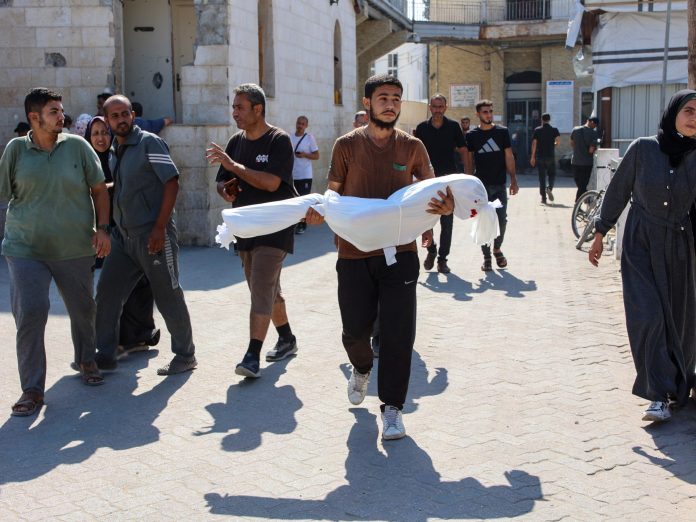
The statement by OHCHR Sunday is the latest in a string of warnings from UN agencies about the dire humanitarian situation in Gaza, where Israeli military operations have intensified in recent weeks following a year of bombardment that has killed more than 42,500 people and left swathes of the territory in ruins.

Since October 6, the Israeli military has made life in northern Gaza “impossible for Palestinians,” many of whom were already facing starvation and repeated displacement, OHCHR said.

“While the Israeli military has demanded that all civilians leave north Gaza, it has continued to relentlessly bomb and attack the area, especially in and around Jabalya Camp,” it said.

The manner of the Israeli hostilities, “may be causing the destruction of the Palestinian population in Gaza’s northernmost governate through death and displacement”, OHCHR added.

“This is particularly the case around Jabalya, Beit Lahiya and Beit Hanoun.”

OHCHR noted provisional measures ordered by the International Court of Justice in January that stated Israel “must take all measures within its power” to prevent “genocide in relation to Palestinians in Gaza”.

The warning came after at least 87 people were killed and more than 40 injured in an Israeli strike on Beit Lahia in northern Gaza, according to the enclave’s ministry of health.

The UN’s special coordinator for the peace process in the Middle East, Tor Wennesland, said in a statement, “The nightmare in Gaza is intensifying. Horrifying scenes are unfolding in the northern Strip amidst conflict, relentless Israeli strikes and an ever-worsening humanitarian crisis.”

The UN official stressed that “civilians must be protected wherever they are”.

Israel launched its renewed military operation in northern Gaza after claiming it had seen signs of Hamas regrouping there, despite a year of heavy fighting and widespread bombardment there.

Hundreds of thousands of Palestinians in the north of the enclave face starvation, and the latest Israeli incursion has left hundreds dead, according to Gazan officials.

Israel has continued its offensive on Gaza following a cross-border attack by the Palestinian group Hamas last year, despite a UN Security Council resolution calling for an immediate cease-fire.

More than 42,600 people have since been killed, mostly women and children, and nearly 99,800 injured, according to local health authorities.

The Israeli onslaught has displaced almost the entire population of Gaza amid an ongoing blockade that has led to severe shortages of food, clean water, and medicine.

Israel faces a genocide case at the International Court of Justice for its actions in Gaza.

UN Special Rapporteur Francesca Albanese said that in the Gaza Strip, “the collective shame of the century continues unabated and unstopped, in defiance of every norm of international law”.

Writing on X, Albanese stated that Palestinians in the besieged coastal enclave have been abandoned and subjected to Israeli summary executions, mass forced displacements, and other egregious abuses.

Albanese called it “a disgraceful testament to our global failure to protect basic human rights”.

“The United Nations, once a believed beacon of hope and a force for peace, [is] crumbling under the weight of this shame – and the pressure of the inaction or complicity of its most powerful member states,” she added.

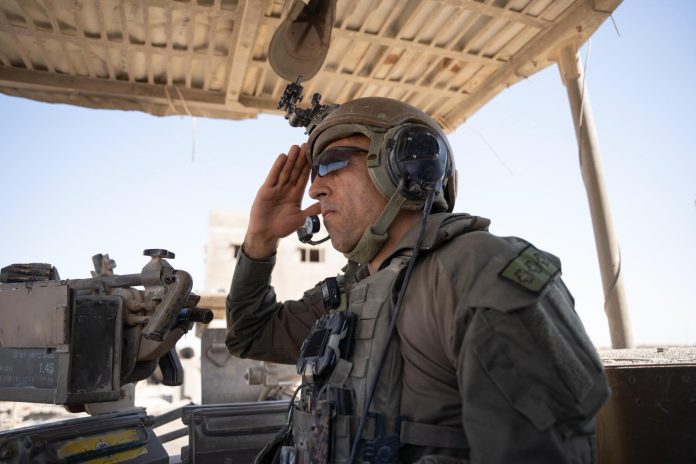
Israeli army says colonel killed in northern Gaza

Colonel Ehsan Daqsa, 41, was killed after his tank and another tank were hit by explosive devices during military operations in Jabalia refugee camp.

Another Israeli soldier was seriously wounded during the same incident.

Daqsa has been described in Israeli media as one of the most senior officers to have been killed since the war on Gaza began over a year ago.

He became commander of the 401st brigade in June.

The 41-year-old is from Daliyat al-Karmel, a Druze town in Israel’s Haifa district. He enlisted in Israel’s armoured corps in 2001.

Haaretz reported that he was considered to be a prominent and respected field comamnder within the Israeli army.

In the 2006 Lebanon War, Daqsa commanded an independent armoured force under the Paratroopers Brigade.

The Israeli military has published the names of over 750 troops killed since the war began in October last year, including more than 350 who were killed during ground operations in Gaza.

At least 43 Israeli troops have been killed in attacks and ground operations on the northern front of the war along the Lebanese border.