Thursday, January 1, 2026
Home Blog Page 615

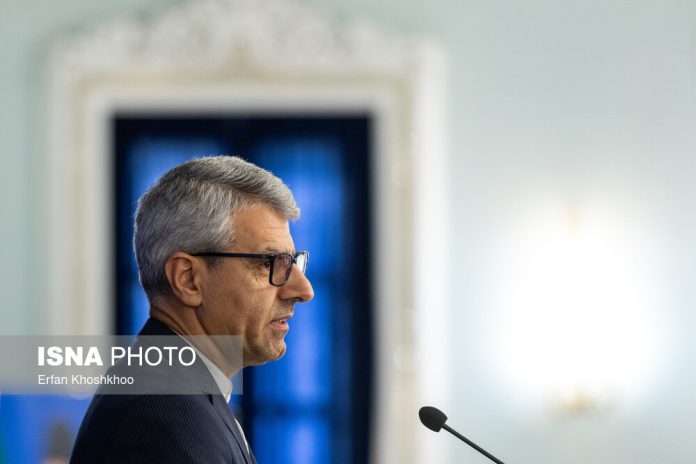
Iran slams PGCC final statement as non-constructive 

Esmael baghaei

Baqaei expressed regret over the repetition of statements that contradict international law and the principle of good neighborliness.

He reaffirmed Iran’s principled and unchangeable policy on the three Iranian islands of Abu Musa, Greater Tunb, and Lesser Tunb, saying they are inseparable and eternal parts of Iran’s territory.

He added that Tehran treats any claim to these islands by others as violation of Iran’s sovereignty and territorial integrity.

Baqaei stated it’s obvious that repeating baseless and interventionist claims will not change historical or geographical facts.

He stressed, the Islamic Republic of Iran considers the comments made in the statement regarding residential construction, the travel of state and military officials to islands belonging to Iran, and the holding of military exercises within Iran’s territorial borders as interference in its sovereign affairs, and it condemns those statements.

The Iranian Foreign Ministry spokesman underscored that Iran’s missile capacity is framed within its defense doctrine and is aimed at safeguarding national security and maintaining peace and stability in the region in line with international norms and law.

He pointed out that the real threat to regional security and stability is posed by the military presence of extra-regional actors, their military bases, and the Israeli regime, which is considered the root cause of all insecurity and a threat to Islamic countries and this is proved by Tel Aviv’s occupation, aggression, and genocide against an Islamic nation.

The Foreign Ministry spokesman also said the Islamic will continue its constructive cooperation with the International Atomic Energy Agency, IAEA.

Baqaei further reiterated Iran’s determination to continue the policy and principle of good neighborliness.

Presence of terror groups in Syria to affect neighbors’ security: Iran FM

Araghchi and Fidan

Speaking at a joint press conference with his Turkish counterpart in Ankara on Monday, Araqchi expressed concern over the reactivation of Takfiri terrorist groups in Northern Syria and their attacks on various regions, including Aleppo.

He stated that destabilizing Syria could lead to civil war, civilian casualties, economic damage, and broader regional instability, directly affecting neighboring states.

Araqchi highlighted an agreement with Turkish officials on the need to prevent Syria from becoming a safe haven for extremist Takfiri groups again.

He also pointed out there are close ties between these terrorist groups and the US and Israel, adding they use such groups to divert attention from Israeli crimes in Palestine and Lebanon while compensating for the Zionists’ defeats in the face of the resistance forces.

The foreign minister called on Syria’s neighboring countries to take immediate and effective measures to preserve the country’s political and security stability.

He reiterated that Iran, as in the past, remains committed to supporting the Syrian government, military, and people.

Additionally, Araqchi highlighted shared views between Iran and Turkey on various regional and international issues, including the necessity of a sustainable ceasefire in Lebanon, halting Israeli crimes in Gaza, and sending humanitarian aid to those areas.

Iran president, Qatar emir discuss ways to settle Syria’s crisis

Pezeshkian Qatari Emir

In a phone call with Sheikh Tamim on Monday, Pezeshkian said, “We seek a secure region that preserves the sovereignty and territorial integrity of Islamic countries, allowing all nations in the region to live in peace and tranquility.”

The Iranian president made the comments amid the resurgence of terrorist groups in northern Syria.

He noted that the spread of insecurity and terrorism benefits no country, stressing that all regional nations should cooperate to confront this “evil phenomenon” and protest the regional security before any foreign intervention.

The Iranian president also appreciated Qatar’s pivotal role as a mediator in regional crises, especially concerning Gaza, stating, “We hope your determination to create peace in the region will continue, and together we can enhance unity and cohesion among Islamic countries while improving peace and security in the region.”

The president also denounced the role of the Zionist regime in spreading insecurity and terrorism in the Islamic world, saying Israel does not want Muslim nations to be in peace and tranquility, which makes it “necessary and important” for the Islamic Ummah to avoid disputes and get united.

He further referred to the very good relations between Iran and Qatar and called for speeding up the implementation of the agreements reached during his recent visit to Doha.

The emir of Qatar, for his part, emphasized that Tehran and Doha share common stances on regional issues, especially on Gaza and Lebanon as well as the necessity of preserving Syria’s territorial integrity.

Stressing the need for the cooperation and consultations between Iran and Qatar to help resolve regional issues, he added, “We believe what is happening in Syria shows that stability and security cannot be achieved there without dialogue and a political solution. In this regard, we are fully prepared to play a role in establishing peace in Syria through a political agreement.”

The Qatari emir also stressed the high level of bilateral relations between Iran and Qatar, and expressed satisfaction with the agreements reached during President Pezeshkian’s recent visit to Doha.

He stated that the agreements are promising a bright future for relations between the two sides.

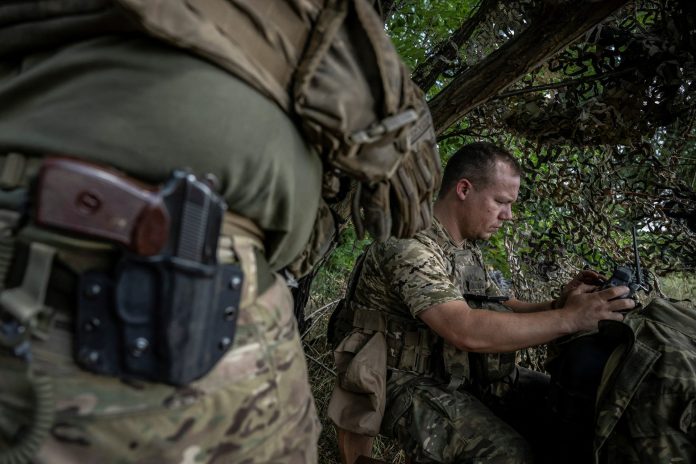
Zelensky confirms Ukraine too weak to retake territory

Russia Ukraine War

In an interview with Kyodo News on Monday, the Ukrainian leader signaled that Kiev wants to end the conflict as soon as possible and retake Crimea, Donetsk, Lugansk, Kherson, and Zaporozhye regions after the prospects of joining NATO become clear.

He acknowledged, however, that this will not be easy, stating, “Our army lacks the strength to do that… We do have to find diplomatic solutions.”

At the same time, diplomacy will have a chance “only when we know that we are strong enough” and Russia is prevented from launching new offensives, Zelensky added.

The Ukrainian leader went on to say that US President-elect Donald Trump, who will be sworn in in January, is well aware of the details of his ‘victory plan’, adding that this initiative will put Ukraine in a “strong position” for negotiations. The plan, which was unveiled by Zelensky in October, demands an immediate invitation to join NATO, unrestricted Western military support, and placing conventional deterrence measures in Ukraine to keep Russia at bay. Moscow has rejected the plan as a “set of incoherent slogans” and a recipe for escalation.

The Trump team, the Ukrainian leader claimed, is “studying the plan and we are going to hear from them… But there will be no capitulation from the side of Ukraine”.

While Zelensky has ruled out “bargaining” over territory, he signaled last week that Kiev could be ready for a ceasefire with Moscow if Ukraine is allowed in its current form to join NATO. He added, however, that this deal has never been on the table.

Russia has signaled that it is ready for talks over Ukraine, but insists that any settlement must take into account the territorial realities on the ground. Moscow has also ruled out the option of freezing the conflict, stressing that all of the goals of its military operation – including Ukrainian neutrality, denazification, and demilitarization – must be achieved.

Foreign ministry spokesman says Iran’s nuclear program to remain peaceful

Esmail Baghaei

Asked about recent comments by Iranian Foreign Minister Abbas Araqchi about the possibility of a change in Iran’s nuclear doctrine, Baqaei told reporters at a press conference in Tehran on Monday, “Iran’s nuclear policy is unchanged and Iran’s nuclear program will remain peaceful”.

The spokesman said what the foreign minister expressed in a recent interview with The Guardian was “a warning against the unconstructive approaches of a number of Western countries.”

He explained that the Western policies have resulted in the formation of a discourse among the public that maybe Iran has not taken the correct course regarding the nuclear issue.

Baqaei added Araqchi was pointing to the creation of such a dialogue among the experts, saying the minister has emphasized that Iran will maintain its peaceful nuclear program on the basis of a religious fatwa and considering the assessments of national security.

The spokesman also lashed out at the US for playing a destructive role and making attempts to disrupt the process of interaction between Iran and the International Atomic Energy Agency (IAEA).

On the recent developments in West Asia, the spokesperson warned that insecurity in Syria won’t remain confined to the Arab country as terrorism will plague the other areas if it is not fought.

Baqaei pointed to the negotiations that Araqchi has been holding during visits to Damascus and Ankara, saying, “We all have come to the conclusion that any sort of insecurity in Syria won’t be limited to Syria alone.”

“We are all aware of the fact that terrorism would not be concentrated in a single place and spreads to other areas,” he warned.

Describing Turkey as an influential actor in the region, Baqaei stated the Syrian foreign minister has made it clear that Turkey has nothing to do with the eruption of the crisis in Syria.

“Our Turkish friends are as much concerned as we are about the course of developments in Syria,” the spokesman added.

He said Turkey is a major neighbor of Iran and Syria that has played a “key role” in the Astana peace process. Baqaei also hailed Turkey for playing a “fruitful and constructive role” in de-escalation of tensions in Syria.

The Iranian spokesman described the Astana format as the “most durable and successful mechanism” for controlling the crisis in Syria, saying the three guarantor states (Iran, Turkey and Russia) have pushed to contain the tensions.

“The Astana process is still alive and the international community is mindful of its influence. We are still committed to that process and believe that the other effective countries hold the same view as well,” he added.

Baqaei further denounced the unlawful presence of the US forces in Syria as an act of violation, saying, “It is clear that one of the reasons for the sedimentation of terrorism in Syria has been the occupation (of Syria) by the American military forces.”

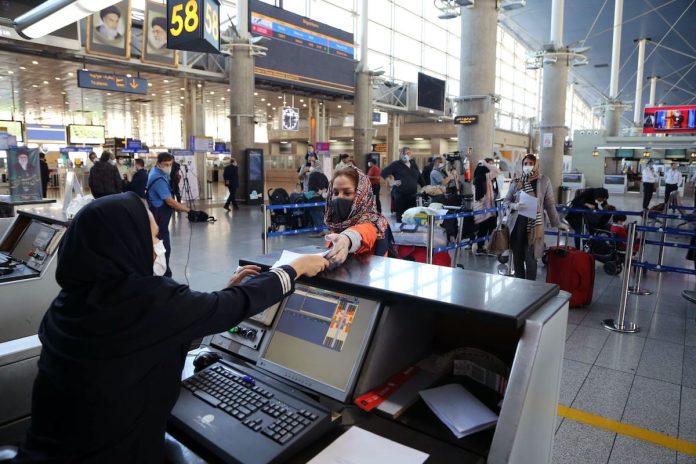
Iran increases weekly flights to Persian Gulf island disputed with UAE to assert ownership

Imam Khomeini Airport

As of December 7, the number of flights operated by Iran Air to Abu Musa will increase from one to four per week, the airlines public relations office announced on Monday.

The move was made “in response to the growing demand for air travel and to facilitate the movement of passengers and improve services for residents,” it stated.

The Iran-owned strategic Abu Musa island, along with the Greater and Lesser Tunb islands, have been a longstanding point of contention between Iran and the UAE.

These islands have been under Iranian control since 1971 following the British withdrawal from the region.

However, the UAE continues to claim sovereignty over them, supported by other Persian Gulf states, which Iran has undermined on several occasions as baseless.

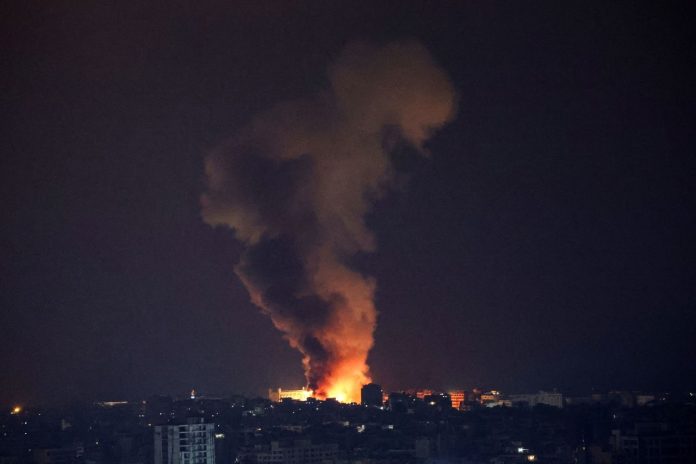
France says Israel violated Lebanon ceasefire over 50 times

Lebanon War

The Israeli military continues to strike Lebanon despite a ceasefire agreement with the Hezbollah resistance movement, striking residential buildings in the south.

Lebanon’s National News Agency (NNA) reported on Monday that Israel used machine guns to fire at houses in the town of Naqoura, situated on the border with the occupied territories.

This is not the first time that the Tel Aviv regime breached the truce that went into effect last week.

Israel was forced to accept the ceasefire with Hezbollah after suffering heavy losses following almost 14 months of fighting and failing to achieve its goals in its aggression on Lebanon.

The truce deal came into effect before dawn on Wednesday. It will last for 60 days in the hope of reaching a permanent cessation of hostilities.

Under the agreement, an international monitoring committee, headed by the US, is tasked with overseeing the implementation of the ceasefire.

France has announced that Israel had violated the ceasefire 52 times.

Citing French officials, Israel’s Ynet news site reported that Israel had waged its attacks without consulting the truce committee and that the regime’s actions risk undermining the fragile cessation of hostilities.

Meanwhile, Israeli officials claimed that the monitoring body would not be fully operational until Monday or Tuesday.

Israeli raids killed almost 4,000 people in Lebanon, displaced over a million people, and caused more than $8.5 billion in damage to the country, according to the World Bank.

Hezbollah opened a support front for Palestinians in Gaza only a day after Israel unleashed its war against the besieged territory in October 2023, launching numerous retaliatory attacks against Israeli targets in the occupied lands.

Iran detains head of team related to “Sahab” terrorist group

Iran Police

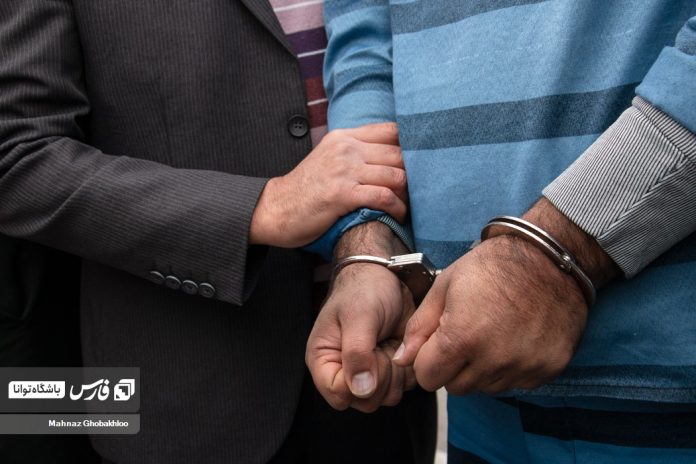
Mahdi Shams Abadi, the public and revolutionary prosecutor of the Sistan and Baluchestan province, stated in continuation of the “Martyrs of Security” exercise currently underway in the region, the provincial intelligence department, the Quds regional headquarters affiliated with the Islamic Revolution Guard Corps (IRGC), and the police managed to arrest an individual known as “Davood,” also known as Mehran, the leader of the terrorist team linked to the ethnic separatist group Sahab and foreign intelligence services, along with two others, and to eliminate four armed terrorist forces.

He added that in this operation, significant quantities of ammunition and weapons were discovered and confiscated.

The judicial official stated that this terrorist team was formed under the guidance of the leader of the ethnic separatist group called “Sahab” and with comprehensive support from European intelligence services, to destabilize the region and disrupt the development process of the Makran coasts.

This official noted that setting fire to public vehicles, armed kidnapping of engineers and contractors involved in development projects for extortion and income generation, preventive actions against the development of the Makran coasts, and recruiting forces to be sent to some neighboring countries for training for terrorist activities have been among the future missions of this terrorist team.

German Chancellor arrives in Ukraine, pledges $680mn in military support

Olaf Scholz

“I would like to make it clear here on the ground that Germany will remain Ukraine’s strongest supporter in Europe,” Scholz said upon his arrival, promising additional arms supplies worth 650 million euros ($680 million) in December, N-TV reported.

This marks Scholz’s first visit to Ukraine’s capital in two and a half years. The chancellor’s arrival comes shortly after his controversial phone call with Russian President Vladimir Putin, which drew criticism from Kyiv.

Scholz previously visited Kyiv in June 2022 alongside French President Emmanuel Macron and then-Italian Prime Minister Mario Draghi, marking the first visit by the three European leaders since the outbreak of the full-scale war.

Under Scholz’s leadership, Germany has become Ukraine’s second-largest military donor after the U.S. The chancellor was nevertheless often criticized for cautious approach on some key issues, such as his refusal to provide Taurus long-range cruise missiles to Ukraine.

Recently, Scholz criticized Friedrich Merz, the CDU/CSU party leader who will seek to unseat the chancellor in the February snap elections, for the latter’s willingness to provide Taurus missiles to Ukraine.

“All I can say is: be careful! You don’t play Russian roulette with Germany’s security,” Scholz stated at his party conference in Berlin.

Merz, whose party is currently leading in the polls, previously proposed issuing an ultimatum to Putin to end his aggression. Should the Russian leader refuse, Kyiv’s partners would lift all restrictions on already provided weapons, and only then would Berlin approve the delivery of Taurus missiles.

Israeli settler councils drafting plan for annexation of West Bank ahead of Trump inauguration: Report

West Bank settlements

According to a report in the Hebrew newspaper Israel Hayom, one of the plan’s most important aspects relates to future control and annexation of Palestinian territories.

The goal is to create “an operational strategy ready for implementation during a potential Trump administration”.

A high-level meeting on the matter was recently attended by Avihai Boaron, a parliament member from the ruling Likud party of Israeli Prime Minister Benjamin Netanyahu and several other settler councils to advance the scheme.

“We are at a critical juncture – a window of opportunity that we can utilize either wisely or squander. Taking the foolish path would merely result in 700,000 residents and additional housing units four years from now,” Boaron said at the meeting.

“The wise approach would establish conditions to make West Bank and the Jordan Valley inseparable from Israel – not just by creating demographic facts on the ground, but by fundamentally transforming the region’s administrative framework,” he added.

The plan includes widening the authority of settler councils to extend across regional council areas, effectively giving local authorities control over interconnecting areas, not just their settlement areas, in order to strengthen administration.

Dissolving the Palestinian Authority (PA) is essential to this plan, which would see Arab villages fall under complete Israeli jurisdiction.

“The two-state solution must be permanently removed from consideration through clear political directives,” Boaron adds.

The Likud member also aims to ensure that “American policy doesn’t simply resume from where the Deal of the Century left off, which effectively sought to constrain settlement growth.”

The plan also includes the erection of new cities, including “dedicated communities” for the Druze and ultra-Orthodox Jews.

“This demographic shift would fundamentally alter the region’s character, ultimately leading to sovereignty,” an involved source told Israel Hayom daily.

Trump’s victory in the US election has given Israel’s far-right extremist settler movements, who dominate the Netanyahu far-right cabinet, hope for their plans to annex the West Bank.

Haaretz reported in June that Trump received a pledge from Miriam Adelson, the widow of late US businessman Sheldon Adelson, to support his presidential campaign with at least $100 million.

In exchange, she seeks US support for Israeli annexation of the West Bank and recognition of Israeli sovereignty over the occupied territory.

US investigative journalist Seymour Hersh reported last month, citing an official in Washington, that Israel will soon officially annex the West Bank, which was illegally occupied in 1967.

This came after Israel’s far-right hawkish minister Bezalel Smotrich recently called for the full annexation of the West Bank and the Gaza Strip.

Smotrich, who has a history of making outrage-inciting comments and provoking Palestinians, repeated his proposal of expanding Israeli settlements within the West Bank and other occupied territories.

Mahmoud Mardawi, a senior official with the Palestinian resistance movement Hamas, has warned of Israel’s plans to annex the West Bank and drive Palestinians out of their villages.

Israel has ramped up its aggression against Palestinians across the West Bank since October 7 last year, when it launched a genocidal war against the Gaza Strip.

Hundreds of Palestinians have been killed and thousands of others injured by Israeli settlers or troops across the occupied territory since the onset of the war.

More than 700,000 Israelis live in over 230 settlements built since the 1967 Israeli occupation of the West Bank and East al-Quds.

The international community views the settlements as illegal under international law and the Geneva Conventions due to their construction on the occupied territories.