Thursday, January 1, 2026
Home Blog Page 614

NATO highly unlikely to issue membership invite to Ukraine at upcoming meeting: Report

NATO Ukraine

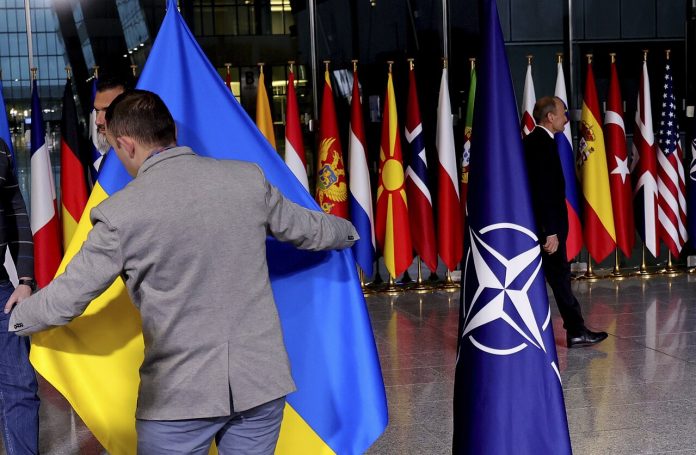
In a letter to his NATO counterparts ahead of the meeting, Ukrainian Foreign Minister Andrii Sybiha said an invitation would remove one of Russia’s main arguments for waging its war – namely, preventing Ukraine from joining the alliance.

But there is no sign of the required consensus among NATO’s 32 members for such a decision at the foreign ministers’ meeting in Brussels, said diplomats, speaking on condition of anonymity.

“It will take weeks and months to get consensus,” a senior NATO diplomat said on Monday, adding, “I don’t see that happening tomorrow, I would be very surprised.”

A senior U.S. official said the meeting would focus on surging support for Ukraine so it was in the strongest possible position next year, “going into possible negotiations”.

“The best way to do that is to surge money, munitions and mobilisation,” added the official, speaking on condition of anonymity.

U.S. Secretary of State Antony Blinken on Monday announced a new weapons package for Ukraine worth $725 million.

Ukraine sees NATO membership as the best guarantee of its future security. Under NATO’s Article 5 mutual defence pact, members agree to treat an attack on one as an attack on all and come to each other’s aid.

Ukrainian President Volodymyr Zelensky suggested on Friday in a Sky News interview that putting territory currently controlled by his government “under the NATO umbrella” would stop the “hot phase” of the war.

His comments came as Ukraine faces a tough winter on the battlefield, with Moscow’s troops advancing in the east and Russian airstrikes targeting the country’s hobbled energy grid.

While NATO has declared Ukraine will join its ranks and that the country’s path to NATO is “irreversible”, it has not issued an invitation or set out a timeline for membership.

Any such decision would depend above all on NATO’s predominant power, the United States, so will soon be a matter for Trump, when he returns as U.S. president next month.

President Joe Biden administration officials are aware that any major move on Ukraine should ideally have the backing of the incoming government to ensure it has a lasting impact.

Ukraine was among the topics of a discussion in recent weeks between U.S. National Security Adviser Jake Sullivan and his successor Mike Waltz but the level of alignment, if any, between the outgoing and incoming administrations remains unclear.

Trump has criticised the scale of U.S. aid for Kyiv and said he will end the war in a day. But he has not set out a detailed plan of how he will tackle the conflict.

Some NATO members, such as Hungary, have openly voiced opposition to Ukraine joining the alliance. But some others have also signalled they do not think the time is right, such as the current U.S. and German governments, according to diplomats.

Russia responds to Trump’s BRICS threat

Kremlin

Peskov’s remarks come after Trump’s statement over the weekend on Truth Social, in which he warned that countries attempting to abandon the dollar in favor of an alternative would face severe economic consequences.

“The dollar is starting to lose its attractiveness as a reserve currency for many nations,” Peskov said, adding that the erosion of its dominance is a “process gaining strength.”

This shift, Peskov noted, is not limited to BRICS nations but is a broader movement worldwide. The use of national currencies in trade is becoming increasingly common, as more states seek alternatives to the dollar, particularly in light of Western sanctions and the weaponization of financial systems. BRICS previously comprised Brazil, Russia, India, China, and South Africa, and was expanded in January to include Egypt, Iran, Ethiopia, and the United Arab Emirates.

Russia has supported the development of the BRICS Bridge platform, designed to facilitate settlements in national currencies, including via digital channels. Foreign Minister Sergey Lavrov has emphasized that such initiatives aim to shield countries from the economic influence of the US and EU.

Peskov also referred to statements by Russian President Vladimir Putin during the BRICS summit in Kazan in October, where he pointed out that while Russia hasn’t “rejected” the dollar, it has had to find alternative financial systems to circumvent Western control over global financial infrastructure.

Israel kills 11 people in Lebanon, Hezbollah retaliates

Lebanon War

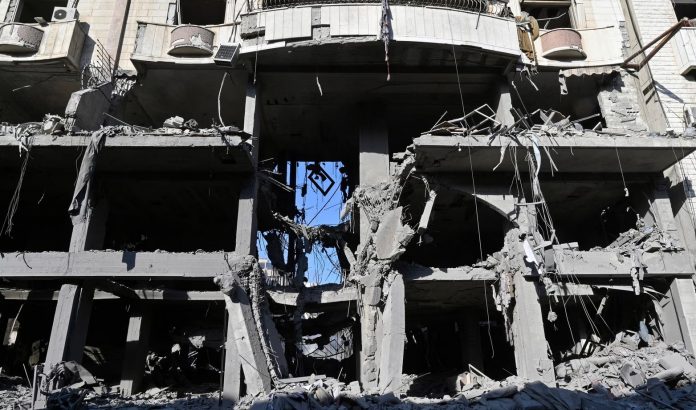
The truce agreement was pushed to the brink on Monday as Israel’s air strikes killed two people, and Hezbollah launched an attack against an Israeli military position in retaliation. Israel, then, responded with a series of air raids that killed at least nine people, according to the Lebanese Health Ministry.

Hezbollah said on Monday that it carried out a “preliminary defensive response” to the “repeated violations” of the ceasefire by attacking an Israeli military base in the hills of Kfar Chouba, a disputed area that Lebanon claims as its own.

Hezbollah said Israeli breaches of the truce that went into effect on Wednesday include deadly air raids across Lebanon, shooting at civilians in the south, and flying drones and jets in Lebanese airspace, including over the capital, Beirut.

The group said it launched its “warning” strike because “appeals by the relevant authorities to stop these violations did not succeed”.

But the Hezbollah move did not appear to deter further Israeli assaults. Israel carried out multiple air strikes as a promised a “harsh” response to the Hezbollah attack.

The Lebanese Health Ministry said the raids killed five people in Haris and four in Talloussah in south Lebanon.

The renewed violence highlights the fragility of the ceasefire, which ended a devastating war that killed nearly 4,000 people in Lebanon and saw Hezbollah fire rockets daily at Israel.

Earlier on Monday, Lebanon’s State Security agency said an Israeli rocket killed officer Mahdi Khreis in the southern district of Nabatieh, calling the incident a “blatant violation” of the ceasefire and a dangerous escalation.

Israeli bombardment in neighbouring Marjayoun killed another person, Lebanon’s Health Ministry said. A drone attack in the northeast of the country also injured a Lebanese soldier.

Although the ceasefire calls on all parties to hold their fire, Israel has been conducting near-daily assaults against Lebanon.

Lebanese media outlets have also reported that the Israeli military is using the truce to advance into new neighbourhoods in towns that it had entered during the war.

After months of low-level hostilities, Israel launched an all-out war on Lebanon on September 23 with the stated aim of defeating Hezbollah.

The Lebanese group had been targeting Israeli military bases in northern Israel for months in an effort that it said was aimed at pressuring Israel to end its war on Gaza.

Israel assassinated top Hezbollah military and political leaders early in the war, including the group’s chief Hassan Nasrallah.

It also levelled thousands of buildings and homes across Lebanon with its focus on southern and eastern Lebanon and the Beirut suburbs of Dahiyeh – areas where Hezbollah is popular.

Still, Hezbollah continued to fire rockets at northern and central Israel. The group also said it inflicted heavy losses on invading Israeli troops that crossed into Lebanese territory.

The truce, which was brokered by the United States and France, stipulates that the Israeli military must withdraw from Lebanon within 60 days and Hezbollah must move away from the border with Israel to the north of the Litani River.

During those two months, the Lebanese army would deploy to southern Lebanon to be the only armed force there.

Although Israel said its recent air strikes are meant to “enforce” the truce, the agreement prohibits attacks by all sides.

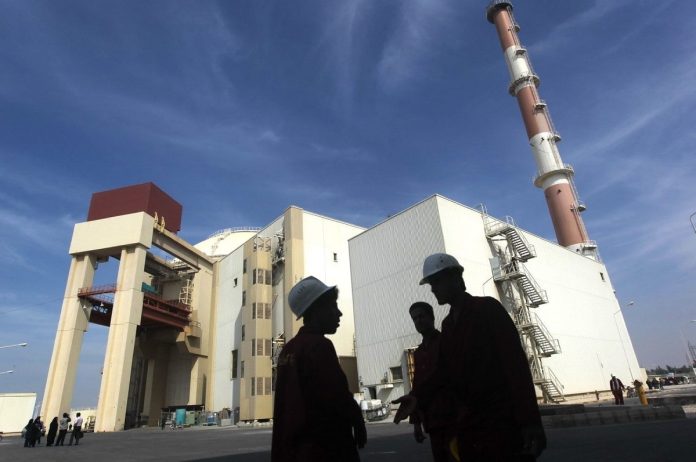
Iran dismisses European claims of ‘nuclear weapons’ ambitions

Iran's Bushehr nuclear plant

In a letter to the UN secretary general and the Security Council, Iran reiterated that nuclear weapons have no place in its defense doctrine.

The response follows a joint letter from ambassadors of the European troika, which accused Iran of failing to adhere to its commitments under the Joint Comprehensive Plan of Action (JCPOA) nuclear accord and UNSC violating Resolution 2231.

Iran said the accusations were baseless and politically motivated, ignoring the root causes of the current crisis surrounding its nuclear program.

The mission stated that Iran’s actions are in line with legitimate rights under Sections 26 and 36 of the JCPOA, following the unilateral US withdrawal from the nuclear agreement.

The letter also highlighted that the three countries have violated their commitments by imposing new sanctions, including against Iran’s shipping lines and aviation sector.

Reiterating its transparent cooperation with the International Atomic Energy Agency (IAEA), the letter dismissed recent accusations of Iran’s non-compliance with safeguard obligations and condemned the resolution against it at the recent IAEA Board of Governors meeting as contrary to the facts.

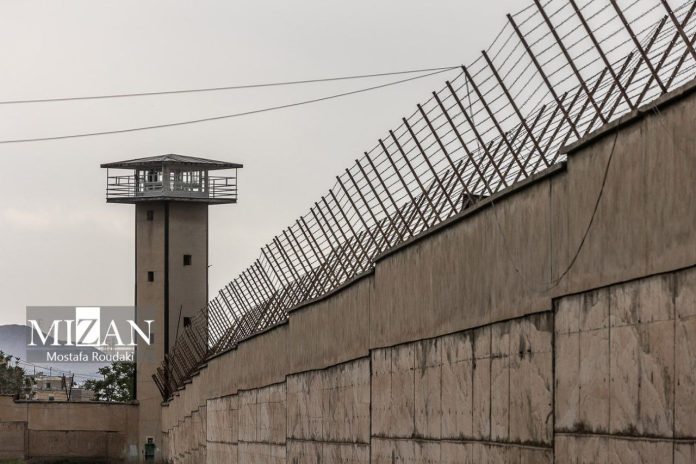
Official: Afghan nationals make up majority of 8,000 foreign prisoners in Iran, ready for repatriation

Iran Prison

Askar Jalalian, in an interview with ISNA news agency, detailed the transfer process, saying a list of 500 prisoners has been prepared and sent to Afghan authorities for identity verification, which will be followed by their transfer upon confirmation.

He stated the crimes committed by Afghan prisoners primarily include drug trafficking, smuggling prohibited goods, theft, and murder, with drug trafficking being the most prevalent offense.

Jalalian further mentioned that, as the head of the Committee for the Transfer of Convicts at the Ministry of Justice, he recently met with Afghan officials.

The transfer of Afghan prisoners is based on a 2006 agreement between Iran and Afghanistan and will continue next year.

The goal is to complete two to three phases of prisoner transfers by the end of the current Iranian year on March 20.

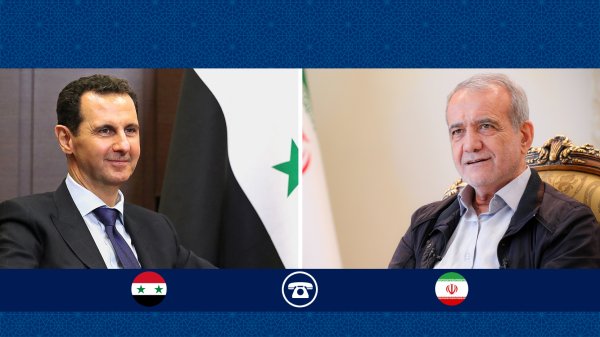
Iran to continue unwavering support for Syria: President Pezeshkian to Assad

Pezeshkian Assad

“We believe that Syria will once again overcome Zionist plots against its security and stability, and we stand by the Syrian government and people in this path”, President Pezeshkian told President Assad during a phone call on Monday.

The two held the conversation as Syria is fighting terrorist groups that have begun resurging in the north of the country in recent days.

The Iranian president said that his country is closely monitoring the situation in Syria, and announced Tehran’s readiness to offer any help to the Damascus government to resolve the ongoing crisis.

Preserving Syria’s sovereignty and territorial integrity is a regional strategy of the Islamic Republic of Iran that will continue to support the Arab country, Pezeshkian stressed.

He also referred to his talks with regional leaders as well as diplomatic efforts by his foreign minister to rally support for the fight against terrorism, expressing assurance that Iran, with the cooperation of Islamic countries, will foil attempts by the Zionist regime to disrupt unity among Muslims and spread terrorism and insecurity in the region.

President Assad, on his part, thanked Iran for its support to Syria, saying that the support is not limited to the current time.

“During the difficult years of war in our country, when all had left us alone, it was the Islamic Republic of Iran that stood by our side”, he stated, adding that Iran today is also taking the same path of support for Syria.

Elaborating on the behind-the-scene resurgence of terrorists in northern Syria, Assad said that the latest terrorist activities are a new phase of a war which is underway under American-Zionist plots against Syrian independence and security.

“Their main goal is to disintegrate Syria and create a new country in the north”, he continued.

The Syrian president also said regional countries should realize that the Axis of Resistance is confronting the West’s hostility and dominance on our region, warning that if this axis or the countries that support it is harmed, other countries will be affected by the repercussions as well.

“By taking such actions, the US and the Zionist regime are seeking to redraw maps and borders in our region in favor of the goals and interests of the Zionists”, the Syrian president noted.

He added that his country sees no option but to win in this war, expressing assurance that victory will be achieved through support of regional countries including Iran.

Trump warns ‘hell to pay’ if Israeli hostages in Gaza not freed

Donald Trump

The statement on Monday was Trump’s most forceful on the deadlocked efforts to bring an end to the war since the November 5 US elections and comes amid reports that he is pushing for a ceasefire to be reached before his second term begins.

In a post on Truth Social, Trump decried “all talk, and no action” about the captives in apparent derision of US President Joe Biden and his administration’s inability to broker a ceasefire between Israel and Hamas in more than a year of war.

“Please let this TRUTH serve to represent that if the hostages are not released prior to January 20, 2025, the date that I proudly assume Office as President of the United States, there will be ALL HELL TO PAY in the Middle East, and for those in charge who perpetrated these atrocities against Humanity,” he said.

“Those responsible will be hit harder than anybody has been hit in the long and storied History of the United States of America. RELEASE THE HOSTAGES NOW!” he wrote.

The post offered no details on what the threat would entail or if it could involve the deployment of the US military. It also did not specify which parties it was referring to but notably referenced only captives held by Hamas without mentioning Palestinian civilians who have borne the brunt of Israeli operations in Gaza.

Both Israeli Prime Minister Benjamin Netanyahu and the leaders of Hamas have been accused of scuttling talks aimed at ending the fighting for months.

Hamas has repeatedly offered to release captives held in Gaza in return for an end to the war, but the Israeli government is adamant that the war will continue until Hamas is totally defeated.

At least one Israeli official was quick to praise Trump’s post on Monday.

“Thank you and bless you Mr. President-elect @realDonaldTrump,” President Isaac Herzog wrote on X, adding, “We all pray for the moment we see our sisters and brothers back home!”

Despite its ambiguity, the promise of escalation represents a departure for Trump as the Middle East policy of his second term continues to take shape.

The former president had campaigned on the broad notion that he would bring about peace in the Middle East, particularly in Gaza, but has offered scant details on how that would be achieved. His “America First” platform has long eschewed further involvement of US forces, assets or funding in conflicts abroad.

At the same time, Trump has voiced support for Israel to “finish the job” in the Palestinian enclave and has long been Netanyahu’s preferred leader in the US.

During his first term from 2017 to 2021, Trump was a strong backer of the US ally.

He moved the US embassy from Tel Aviv to Jerusalem, the illegally occupied eastern half of which has long been seen as the capital of a future Palestinian state. He recognised Israeli sovereignty over the occupied Golan Heights in Syria. He forged a series of normalisation agreements between Israel and Arab countries, and he allowed for the rapid expansion of Israeli settlements, which are illegal under international law.

This time around, Trump has packed his administration nominations with staunchly pro-Israel officials, including his secretary of state pick Senator Marco Rubio, a rabid defender of Israel’s war, and ambassador to Israel pick Mike Huckabee, a vocal supporter of Israeli settlements in the occupied West Bank who refuses to use its commonly used name, instead referring to “Judea and Samaria”.

Biden also promised to re-up efforts to reach a long elusive deal to end the fighting in Gaza, where at least 44,466 Palestinians have been killed since Israel launched its war following the October 7, 2023, attacks by Hamas that killed at least 1,200 people in Israel with 250 taken captive.

Israeli authorities have said 101 captives remain in Gaza. On Monday, Hamas announced a total of 33 captives had been killed since the beginning of the war.

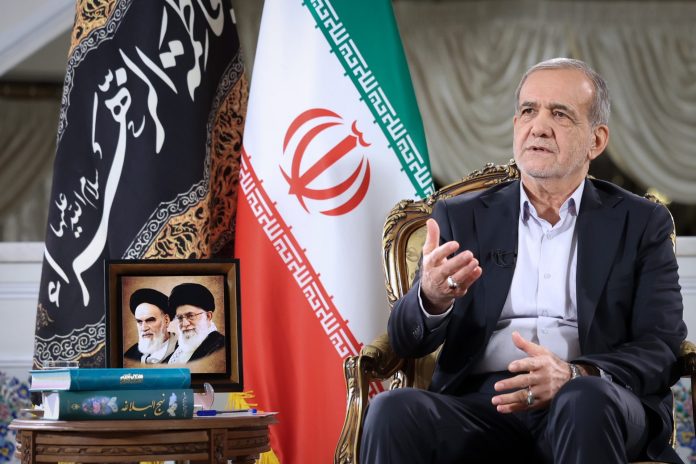
President Pezeshkian questions feasibility of hijab law enforcement, urges dialogue to avoid conflicts

Masoud Pezeshkian

In his second interview with the IRIB state television on Monday night, President Pezeshkian highlighted the ambiguities and practical difficulties in executing the controversial law, emphasizing the need for dialogue to ensure societal cohesion and avoid unnecessary conflicts.

As a case in point, he questioned the feasibility of penalizing individuals like ride-hailing drivers and restaurant owners for their passengers’ or customers’ attire, warning that such measures could lead to widespread dissatisfaction.

President Pezeshkian also touched on the issue of internet filtering, revealing that discussions with experts have led to a consensus on lifting certain restrictions.

He criticized the current approach of extensive filtering, advocating for a more balanced governance.

On international relations, President Pezeshkian mentioned ongoing dialogues with European countries, despite recent sanctions.

He saud Israel is instigating conflicts to hinder Iran’s diplomatic efforts, particularly following the assassination of resistance movements’ leaders in Lebanon and Gaza.

Pezeshkian reaffirmed Iran’s commitment to combating terrorism in the region, stressing the importance of unity among neighboring countries to prevent further bloodshed.

He said Iran will do all in its power to restore calm to Syria and counter foreign-backed terrorists that are active in the Arab country.

Iran, Russia presidents pledge support for Syria amid resurgence of terrorism

Pezeshkian Putin

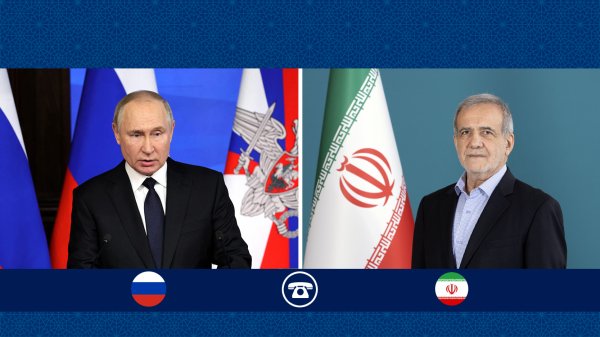
Pezeshkian and Putin discussed the latest developments in Syria on the phone on Monday.

“While the establishment of a ceasefire in Lebanon had created a glimmer of hope for peace in the region, the activities of terrorist groups in northern Syria, with the support of the Zionist regime, have once again put the region on high alert”, President Pezeshkian said.

“We believe that the recent events are part of a dangerous plan by the United States and the Zionist regime to disrupt the geopolitical landscape of the region in favor of the Zionists”, he added, stressing that the plan however will not move forward in light of unity and cooperation among regional countries.

Pezeshkian also praised Russia’s role in maintaining peace and stability in the region and supporting the territorial integrity of Syria, telling Putin that he is aware of his extensive efforts and actions to control the situation in the region and assist in resolving the crisis in Syria.

“I express the readiness of the Islamic Republic of Iran for any cooperation with Russia in this regard”, the Iranian president stated.

Putin, for his part, stated that Russia fully agrees with Iran’s assessment regarding the resurgence of terrorism in northern Syria, adding that the continuation of this situation is detrimental to Syria’s sovereignty and territorial integrity, posing a threat to regional security as well.

“We believe that the decision-makers shaping the current events in northern Syria are not the terrorists but their supporters. In such circumstances, Russia is determined to engage and cooperate with Iran to assist the legitimate and official government of Syria in combating terrorist groups”, the president continued.

The Russian president also stressed the need for using all available diplomatic channels to control the situation and prevent the spread of terrorism in the region, saying “In this regard, besides consulting with the United Nations Security Council, we have proposed holding an emergency meeting within the Astana format this week to discuss the developments in Syria.”

Iran and Russia have been the main backers of Syria since the outbreak of foreign-sponsored militancy in March 2011.

In 2017, Syrian forces, backed by Iran and Russia, scored a monumental victory over the Daesh Takfiri terrorist group. However, the country’s northern parts remained under control of militants and foreign occupation forces.

In late November, terror outfits, led by the Hay’at Tahrir al-Shams (HTS), launched their largest attack in Syria in years, taking control of parts of Aleppo, and advancing southward on the city of Hama.

Hamas confirms dozens of captives killed in Gaza

Israel Hostages

The group issued a video statement on Monday saying the captives were killed “because of the stubbornness of the war criminal” Israeli Prime Minister Benjamin Netanyahu and “his ongoing aggression”.

Hamas made the announcement as key mediators, including Egypt, Qatar and the United States, launch another effort to reach a ceasefire that would see the release of Israeli captives.

The push comes after a recent truce in Lebanon raised hope for a diplomatic breakthrough.

Hamas’s video lists and dates the incidents in which the group said captives were killed. Most of them were air strikes. However, some were rescue attempts by the Israeli military gone wrong.

According to the Hamas, the first incident was an Israeli air strike that killed four captives on October 9, 2023. The latest was the killing of a captive during the Israeli military operation in northern Gaza last month.

“By continuing your mad war, you may lose your captives forever. Do what needs to be done before it’s too late,” the video concluded.

Meanwhile, delegations from the Palestinian factions Fatah and Hamas met in Cairo to “reach a mutual understanding” on the Palestinian Authority’s management of the Gaza Strip after the end of Israel’s war, Egypt’s foreign minister announced on Monday.

“There are indeed two delegations from the Fatah and Hamas movements in Cairo consulting and deliberating to quickly reach a mutual understanding regarding the management of daily affairs in the Gaza Strip under the full control of the Palestinian Authority,” Badr Abdelatty told a news conference in Cairo.

Netanyahu previously voiced opposition to allowing the Palestinian Authority (PA) to take over Gaza. However, the US says it wants a “reformed” PA to be in charge of the Palestinian enclave.

As the talks continued, Israel has pressed on with the bombardment of Gaza.

Israel’s offensive in Gaza – which United Nations experts have described as a genocide – has killed at least 44,466 Palestinians and wounded 105,358 since October 7, 2023.

At least 1,200 people were killed in Israel during the Hamas-led attacks that day, and 250 were taken captive.