Thursday, January 1, 2026
Home Blog Page 613

UN raises alarm over Syria crisis as terrorists press Hama offensive

Syria

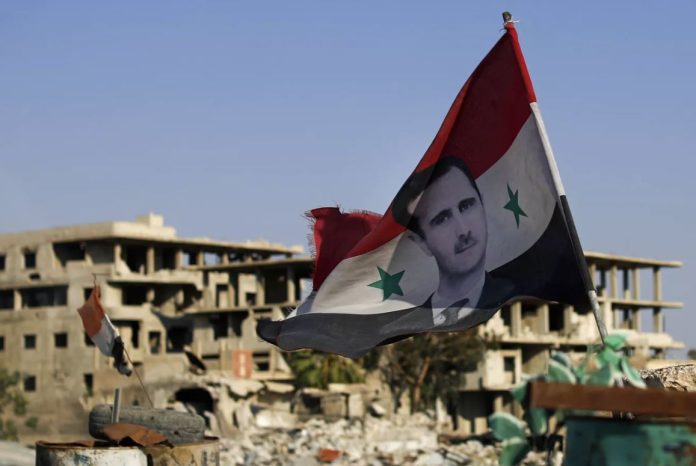
State news agency SANA said Syrian forces were fighting fierce battles in the central Hama province on Tuesday. Syrian and Russian warplanes carried out air attacks in the northern Hama countryside, according to state media.

The terror groups’ military operations administration claimed they captured 14 central villages and towns including Halfaya, Taybat al-Imam, Maardis and Suran.

After their rapid takeover of the city of Aleppo last week, the terror groups led by Hayat Tahrir al-Sham (HTS), as well as Turkiye-backed opposition fighters, are pressing south towards Hama city, the country’s fourth-largest.

Last week’s assault by militants opposed to Syrian President Bashar al-Assad is the biggest offensive for years in a conflict which began in 2011 and whose front lines had been frozen since 2020.

UN Secretary-General Antonio Guterres stressed he was “alarmed” by the escalation in violence and called for an immediate halt to the fighting.

The UN human rights office warned that the spiralling violence was deepening the suffering endured by millions.

“Our office has documented a number of extremely concerning incidents resulting in multiple civilian casualties, including a high number of women and children, stemming from attacks by both Hayat Tahrir al-Sham (HTS) and by pro-government forces,” said a spokesman for UN High Commissioner for Human Rights Volker Turk.

The hostilities are also damaging health facilities, education buildings, and food markets, he added.

UN warns Israel’s ‘repeated evacuation orders’ affect 80% of Gaza

Gaza War

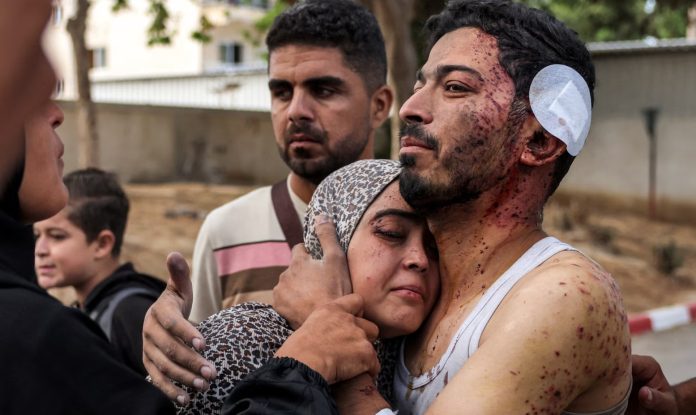
“Israel’s repeated evacuation orders, which are now in effect for about 80% of the Gaza Strip, leaves civilians exposed to the danger of hostilities and deprived of access to essential services,” spokesman Stephane Dujarric said at a news conference.

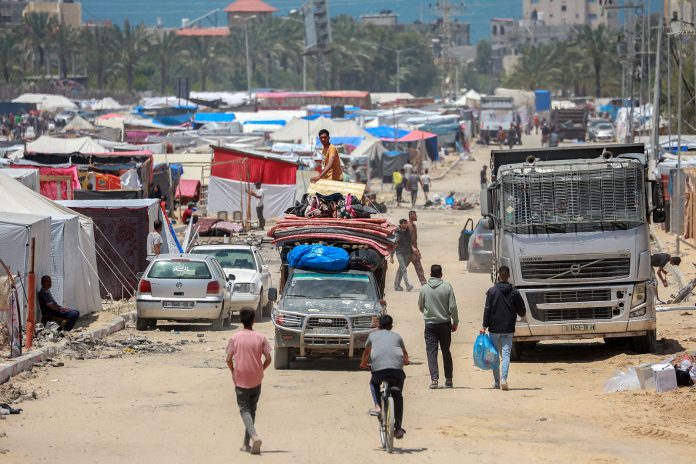
Stating that northern Gaza has been under a tightening siege for nearly two months, Dujarric added around 65,000 to 500,000 people are unable to access regular food, water, electricity or reliable health care.

Dujarric stated that “the entire population of Gaza needs humanitarian assistance”, and stressed the plight of more than 58,000 people with disabilities who are facing additional challenges in accessing food.

In the southern areas of Gaza, he said that “some people are skipping meals and searching through trash to find food”.

Citing the Office for the Coordination of Humanitarian Affairs (OCHA), Dujarric warned that humanitarian access continues to be obstructed.

“In November, out of 578 planned aid movements across Gaza that require coordination with Israeli authorities, only 41% were facilitated. More than a third were denied outright, and the rest were either impeded or canceled due to security and logistical challenges,” he added.

Dujarric reported that aid missions to northern Gaza have been especially disrupted, with efforts to reach besieged areas such as Jabalya, Beit Lahiya and Beit Hanoun encountering severe obstacles.

Israel has launched a genocidal war on the Gaza Strip following a Hamas attack last October, killing over 44,500 people, most of them women and children, and injuring nearly 106,000.

The second year of the genocide in Gaza has drawn growing international condemnation, with officials and institutions labeling the attacks and blocking of aid deliveries as a deliberate attempt to destroy a population.

On Nov. 21, the International Criminal Court (ICC) issued arrest warrants for Prime Minister Benjamin Netanyahu and former Defense Minister Yoav Gallant for war crimes and crimes against humanity in Gaza.

Israel also faces a genocide case at the International Court of Justice for its deadly war on Gaza.

One killed in Israeli attack on Lebanon despite ceasefire

Lebanon War

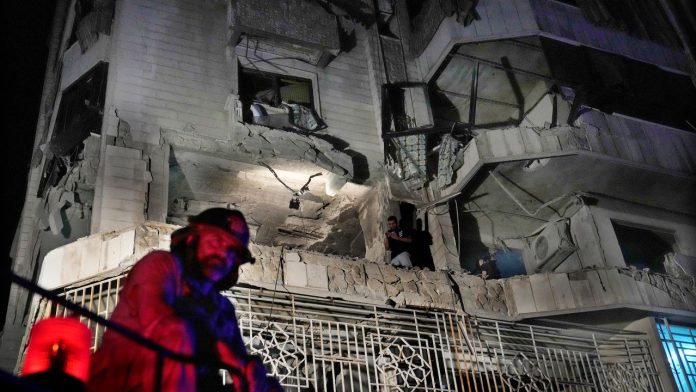
Lebanon’s Ministry of Public Health and state media said Israeli forces carried out several new drone and artillery strikes in southern Lebanon on Tuesday, putting further strain on a tenuous 6-day-old ceasefire with Hezbollah.

“An Israeli enemy drone strike on the town of Shebaa killed one person,” a Health Ministry statement said.

The state-run National News Agency (NNA) described the man who was killed as a “shepherd”.

The new attacks come as Israeli officials threatened to expand attacks on Lebanon if the ceasefire with the Lebanese armed group Hezbollah collapses.

Netanyahu promised to keep striking “with an iron fist” against perceived violations of the truce.

“We are enforcing this ceasefire with an iron fist,” he said before a cabinet meeting in the northern border city of Nahariya.

“We are currently in a ceasefire, I note, a ceasefire, not the end of the war,” he added.

Earlier, his defence minister warned that if the ceasefire collapses, Israel will target not just Hezbollah but the Lebanese state – an expansion of Israel’s campaign.

“If we return to war we will act strongly, we will go deeper, and the most important thing they need to know: that there will be no longer be an exemption for the state of Lebanon,” Defence Minister Israel Katz stated.

“If until now we separated the state of Lebanon from Hezbollah … it will no longer be [like this],” he said during a visit to the northern border area.

The US- and French-brokered ceasefire, which halted more than 13 months of fighting, has been rattled by near-daily Israeli attacks.

Under the terms of the ceasefire, Hezbollah is supposed to withdraw its fighters, weapons and infrastructure from a broad swath of the south by the end of the initial 60-day phase, pulling them north of the Litani River. Israeli troops are also to withdraw to their side of the border.

Lebanese officials have accused Israel of violating the ceasefire dozens of times with strikes, overflights of drones and demolitions of homes.

At least 11 people were killed in Israeli attacks on Lebanon on Monday, according to official figures.

Hezbollah announced it fired a volley of projectiles as a warning over what it said were previous Israeli ceasefire violations.

Advisor to Iran Leader raps Turkey’s foreign policy, reaffirms Tehran’s support for Syria

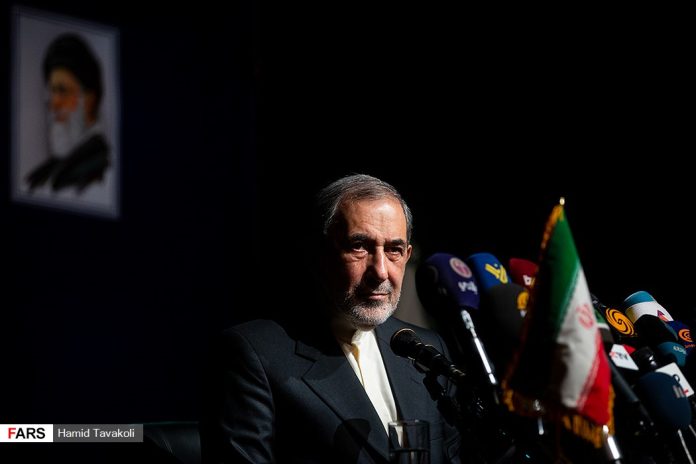
Ali Akbar Velayati

Speaking on regional dynamics and Iran’s steadfast support for Syria, he offered a scathing critique of Turkish leadership while underscoring Iran’s unwavering commitment to its allies, including Syria.

“We had hoped that Hakan Fidan, Turkey’s Foreign Minister with extensive experience in intelligence and foreign policy, would correct the flaws in Turkey’s foreign policy. However, we did not expect Turkey, with its deep Islamic heritage, to fall into the trap set by the U.S. and Zionists,” Velayati said.

He lamented actions taken in Turkey’s name that conflict with its historic Islamic identity, emphasizing, “It is shocking that a nation with such a proud legacy of Islamic resistance would allow such actions.”

Velayati reaffirmed Iran’s unyielding support for Syria, stating, “The Islamic Republic of Iran will stand by the Syrian government until the end.”

He highlighted that Syria’s supporters, including Russia, Hezbollah, Iraq’s Popular Mobilization Forces, Yemen’s Houthis, and Palestinian groups, are stronger than ever.

Addressing US President-elect Donald Trump, Velayati advised him to adopt a more prudent approach in his new term. “Trump should learn from his first term and recognize that the world today is far more challenging. Independent nations will not succumb to threats or intimidation,” he warned.

FM Araghchi: Iran to consider sending troops to Syria upon request

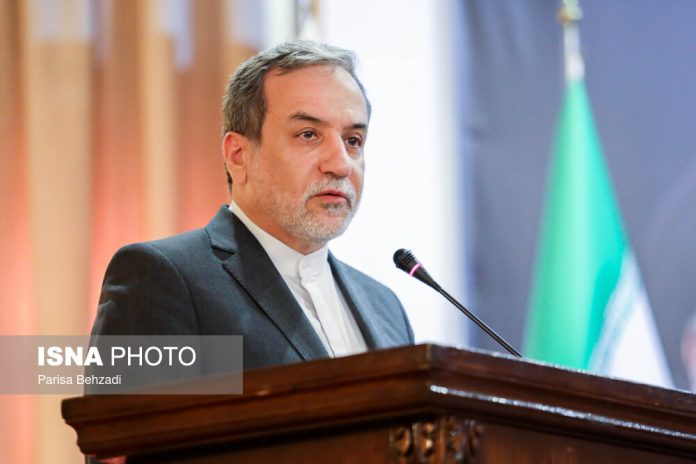
Abbas Araghchi

Speaking to the Qatari newspaper Al-Arabi Al-Jadeed, Araghchi emphasized Iran’s commitment to supporting Syria against terrorist attacks and outlined plans to stabilize the region and propose a permanent solution.

Araghchi noted that Iran continues dialogue with Turkey to address mutual disagreements, stressing that the growing influence of terrorist groups in Syria poses a greater threat to neighboring countries like Iraq, Turkey, and Jordan than to Iran.

He also described the condition for Turkey’s withdrawal from Syria as a reasonable prerequisite for direct talks between the two nations’ leaders.

On Iran’s stance toward resistance groups, Araghchi clarified that Iran does not direct these groups but supports their causes and provides assistance when necessary.

Addressing Iran’s relations with Saudi Arabia, Araghchi expressed optimism, stating that bilateral ties are progressing positively and are independent of Tehran’s tensions with the United States.

He also remarked that any potential negotiations between Israel and Hamas would signify a defeat for the Israeli regime.

Regarding Iran’s nuclear negotiations with Europe, Araghchi expressed skepticism, citing longstanding concerns over European commitments.

He ruled out immediate dialogue with Washington, noting that Tehran is waiting to assess the policies of the new U.S. administration under Donald Trump before recalibrating its strategy.

Over 3,700 Palestinians dead or missing in two months of Israeli offensive in northern Gaza: Media office

Gaza War

In a statement, the office accused Israeli soldiers of conducting an intensive and multifaceted assault by land, sea, and air targeting northern Gaza. Areas affected include Jabalia Camp, Jabalia Town, Beit Hanoun, Beit Lahia, and surrounding regions.

The statement detailed that of the more than 3,700 reported dead or missing, 2,400 bodies have been buried. Additionally, 10,000 others have been injured, and significant numbers detained.

The ongoing military operations have obstructed the work of civil defense teams and destroyed critical infrastructure, including health facilities, water systems, and roads, exacerbating the humanitarian crisis, the office added.

“North Gaza is a disaster zone in every sense of the word,” the office noted.

The office cited witnesses as reporting that between 500 and 650 bodies have remained in the streets for two months due to Israeli restrictions preventing medical and rescue teams from accessing the areas.

The statement added that stray animals have scavenged the remains, leaving unidentifiable bones scattered in the streets.

The office condemned the “deliberate and systematic targeting of civilians, residential neighborhoods, and shelters”, accusing Israel of committing crimes against humanity under international law.

The statement further said that Israeli forces, with backing from the US, the UK, Germany, and France, continue a “planned campaign of killing, destruction, and forced displacement”.

It noted that the Israeli military has blocked more than 8,000 aid and supply trucks from entering northern Gaza, worsening the dire situation.

The office called on the international community and global organizations to condemn the attacks and fulfill their responsibilities to provide humanitarian, medical, and relief aid to Gaza.

It also held Israel and its allies accountable for the ethnic cleansing and genocide of the Palestinian people, particularly in northern Gaza.

Since early October, Israel has launched a large-scale ground operation in northern Gaza to allegedly prevent Palestinian resistance group Hamas from regrouping.

Palestinians, however, accuse Israel of seeking to occupy the area and forcibly displace its residents.

Since then, no humanitarian aid, including food, medicine, and fuel, has been allowed into the area, leaving most of the population there – currently estimated at 80,000 – on the verge of famine.

Israel has launched a genocidal war on the Gaza Strip following a Hamas attack last October, killing more than 44,400 people, most of them women and children, and injuring over 105,000.

The second year of the genocide in Gaza has drawn growing international condemnation, with officials and institutions labeling the attacks and blocking of aid deliveries as a deliberate attempt to destroy a population.

The International Criminal Court has issued arrest warrants for Israeli Prime Minister Benjamin Netanyahu and former Defense Minister Yoav Gallant for war crimes and crimes against humanity in Gaza.

Israel also faces a genocide case at the International Court of Justice for its deadly war on Gaza.
UN says Israel demolished more than 1,500 West Bank facilities in 2024

West Bank

The UN data, published on 29 November, indicated that 3,637 Palestinians have been displaced as a result of an ongoing Israeli demolition campaign.

The destroyed infrastructure included inhabited residences (700), agricultural infrastructure (398), and livelihood-related assets (205), such as shops and businesses.

According to OCHA’s findings, the most targeted areas in the West Bank were located near the city of Tulkarm, which has faced a greater number of Israeli raids and demolitions over the past year, as well as other West Bank cities.

The Tulkarm refugee camp is at the top of the list of areas with demolished infrastructure (171), with the Nur Shams refugee camp next (118).

The Jenin refugee camp, which has been the focus of an ongoing Israeli military campaign, was also frequently targeted (83), according to the data.

According to the figures, 40,557 Palestinians have been impacted by these demolitions since the start of the year.

Israel has long wielded housing demolitions as a means to displace the occupied West Bank’s Palestinian population.

Since the 7 October Hamas-led attack and Israel’s subsequent war on Gaza, however, the practice has been turbocharged, with Israeli bulldozers tearing down people’s homes on a near-daily basis.

Overseeing the drive is Bezalel Smotrich, Israel’s far-right finance minister, who also wields power over authorities in the West Bank – and is a settler himself.

Israel has long used home demolitions as a form of collective punishment, targeting the houses of Palestinians “suspected of carrying out attacks” on Israelis.

Demolitions are often ordered on the grounds that buildings are constructed without permits, but these are all but impossible for most Palestinians to obtain.

Since October, Palestinians across the West Bank and East Jerusalem are waking up to find bulldozers flanked by soldiers preparing to tear down their homes, with no idea that the demolition was imminent.

In January, a group of UN experts called for action to stop Israel’s “systematic and deliberate” demolition of Palestinian structures.

“Direct attacks on the Palestinian people’s homes, schools, livelihoods and water sources are nothing but Israel’s attempts to curtail the Palestinians’ right to self-determination and to threaten their very existence,” the experts said.

ICC president says threats, sanctions put war crimes tribunal in jeopardy

ICC

Addressing ICC members in The Hague at an annual conference on Monday, ICC President Tomoko Akane stated that the court faced “coercive measures, threats, pressure and acts of sabotage” without naming the United States and Russia.

The court has been facing rebukes from the two countries after issuing arrest warrants for Israeli and Russian officials over wars in Gaza and Ukraine.

“The court is being threatened with draconian economic sanctions by another permanent member of the Security Council as if it was a terrorist organisation,” Akane said in her address.

US politicians have been threatening to impose sanctions on ICC officials after the tribunal issued arrest warrants against Israeli Prime Minister Benjamin Netanyahu and his former Defence Minister Yoav Gallant over suspected war crimes in Gaza.

Last month, US Senator Lindsey Graham, whose Republican Party will be in control of both houses of Congress and the White House starting in January, called the ICC a “dangerous joke” and threatened penalties against the court and any country that cooperates with it.

“To any ally – Canada, Britain, Germany, France – if you try to help the ICC, we’re going to sanction you,” Graham said on Fox News.

In June, the Republican-controlled US House of Representatives passed a bill to sanction the court in response to ICC Prosecutor Karim Khan’s request for the arrest warrants against Israeli officials.

The measure has so far not been considered by the Senate, which at this point is controlled by Democrats.

After the ICC issued arrest warrants for Netanyahu, Gallant and a Hamas leader last month, US Senator Tom Cotton suggested using military force against The Hague-based tribunal.

The US and Israel are not members of the ICC, and they have rejected the court’s investigations of alleged abuses in Gaza and the occupied West Bank.

However, the court has ruled that it has jurisdiction in those areas because the State of Palestine is a signatory to the Rome Statute, which established the tribunal.

“The court has been subjected to attacks seeking to undermine its legitimacy and ability to administer justice and realise international law and fundamental rights – coercive measures, threats, pressure and acts of sabotage,” Akane noted.

She called the efforts “appalling”.

Last week, the court decried the “recent issuance of arrest warrants aimed at threatening the liberty and integrity of two judges”. Russia had issued an arrest warrant for ICC Judge Haykel Ben Mahfoudh in November.

Moscow also previously indicted Khan and other court officials after the ICC issued arrest warrants for President Vladimir Putin and Russian military leaders last year over alleged war crimes committed during Russia’s invasion of Ukraine.

Akane warned on Monday that the fall of the court through these threats would “imply the fall of the rule of law in the international community”.

“Victims would no longer be able to obtain justice. For many of them, a world without the ICC is inconceivable,” the ICC president said.

“We firmly reject any attempt to influence the independence and the impartiality of the court,” she added.

The ICC was established in 2002 to prosecute war crimes, crimes against humanity, genocide and the crime of aggression when member states are unwilling or unable to do so themselves.

Its warrant against the Israeli leaders marked the first time the court issued an order for a staunchly close Western ally.

Iran FM urges intl. community’s effective reaction to resurgence of terror groups in Syria

Abbas Araghchi

Iran’s northeastern city of Mashhad is hosting the 28th meeting of the Economic Cooperation Organization (ECO) Council of Ministers.

Addressing the event on Tuesday, Araqchi said the world has been witnessing the Israeli regime’s brutal and unbridled atrocities against the people of Gaza for more than a year, while the crimes afflicted the Lebanese people later.

He also condemned the activities of Takfiri terrorist groups in Syria that have flared up in recent days following a ceasefire in Lebanon, saying the terrorists have regrouped with the support provided by the US and the Zionist regime.

Araqchi also stressed the need for “vigilance and coordination” of the regional countries and also for “immediate and effective” reaction by the international community in the face of a resurgence of terrorism in Syria.

Terrorist groups in Syria claim that they are pushing towards the northern city of Hama after taking control of nearby Aleppo in a lightning offensive that started last week.

The attempted southern advance comes on the fifth day of the surprise terrorist offensive as Syrian and Russian forces have launched counterattacks, reportedly pounding opposition-controlled Idlib province and Aleppo with air attacks since Saturday.

Government forces under the control of Syrian President Bashar al-Assad have also been fortifying the northern province of Hama. The Syrian army overnight pushed back opposition fighters in its northern countryside.

Iran says war in Syria in nobody’s favor

Iranian Foreign Minister Seyyed Abbas Araghchi

In a post on his X account on Monday night, Araqchi said he has held “important talks” with Syrian President Bashar al-Assad in Damascus and “straightforward constructive discussion” with Turkish Foreign Minister Hakan Fidan in Ankara.

“My trip from Damascus to Ankara was among rare direct flights,” he added.

“All agreed: NO ONE benefits from another war in Syria. Conflict carries 100%-guaranteed spillover of terrorism to the whole neighborhood,” Araqchi warned.

“As always, Iran stands with Syrian people, Government and Army in their fight against terrorism -and ready to assist and support regional de-escalation through dialogue and diplomacy,” the Iranian foreign minister noted.

Syria has been gripped by foreign-sponsored militancy since March 2011. Damascus has slammed Western states and their regional allies for aiding terrorist groups to wreak havoc in the Arab country.

On November 27, terror outfits, led by the Hay’at Tahrir al-Shams (HTS), launched their largest attack in Syria in years, taking control of parts of Aleppo, and advancing southward on the city of Hama.

However, Syria’s armed forces continue to fight foreign-backed terrorist groups in the northwestern part of the country, inflicting heavy losses on them.

Syria’s state television reported that nearly 1300 terrorists have been killed by the government forces near the cities of Aleppo, Idlib, and Hama as a result of joint military operations by Syrian and Russian forces.