Wednesday, December 31, 2025
Home Blog Page 596

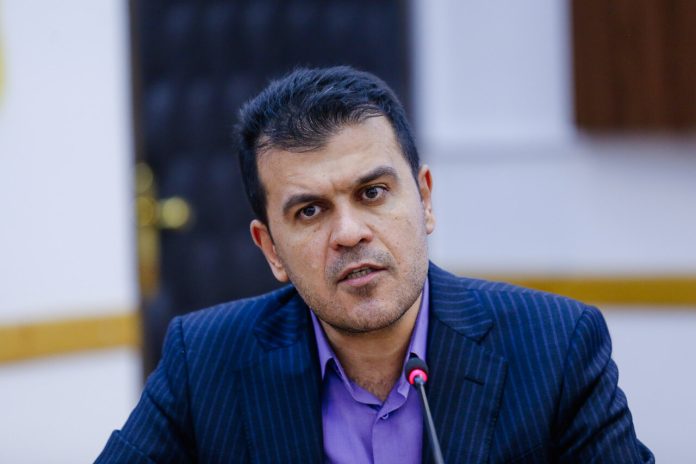
Iran vice president for science says cabinet drafting charter of National AI Organization 

The organization aims to plan and oversee AI activities rather than directly intervene, the vice president explained.

Afshin also revealed plans for the country’s most advanced GPU processing system to be operational by May 2025, primarily serving private sectors and universities.

He said the administration is seeking to shore up researchers in various ways and stressed the importance of preventing talent migration and encouraging the talented people to stay within their own provinces.

Afshin announced a new regulation offering monthly grants of approximately 15 million Tomans for PhD students to encourage research and scientific activities.

The scientific vice president also addressed housing issues for talented individuals, with collaborations in provinces like Yazd, Qom, and Isfahan, and agreements with Tehran’s municipality.

Highlighting the need to support the private sector, Afshin pledged to prevent state-owned companies from entering the production areas of successful private and knowledge-based firms.

He also noted that the 12th Iran-Made Exhibition in Tehran, showcasing over 10,000 innovative products from 300 companies, reflects national confidence in technological advancement.

UN Envoy: Over 6 Million Afghans Reside in Iran 

In his remarks at the UN Security Council, Iravani urged the international community to provide adequate and sustainable support to countries like Iran and Pakistan, which are facing ongoing challenges related to Afghanistan.

He highlighted a recent report from the UN Secretary-General regarding severe economic and humanitarian challenges in Afghanistan, noting that 23.7 million people, particularly women and children, still require urgent assistance. This situation poses a serious concern for neighboring countries directly affected by the humanitarian crisis.

According to Iravani, the irresponsible withdrawal of the United States from Afghanistan in August 2021 has led to widespread migration from Afghanistan, placing significant pressure on Iran, which was already under unilateral and illegal sanctions.

He also expressed Iran’s deep concern regarding the ongoing drug problem in Afghanistan.

Iravani stressed Iran’s serious worries about the increasing threat posed by the terror group ISIS-Khorasan, as the group continues its attacks and propaganda, jeopardizing the security and stability of both the country and the region.

He voiced Iran’s concerns over restrictive measures against girls, women, and ethnic minorities in Afghanistan, particularly regarding access to education and their political and social rights.

Iravani called on Afghanistan’s rulers to reconsider their policies and lift all such restrictions.

Iravani emphasized that Afghanistan’s frozen assets should be returned unconditionally, and sanctions should not hinder efforts to revive the country’s economy.

He stated that Western countries, which occupied Afghanistan for over 20 years and then withdrew irresponsibly, must fulfill their commitments to assist in rebuilding Afghanistan’s economy and combating terrorism.

He also announced that Iran intends to hold a fourth quadrilateral meeting at the ministerial level, involving Iran, China, Pakistan, and Russia, on the sidelines of the 79th UN General Assembly in New York.

Iran, Qatar, UAE FMs call for halt to Israeli Attacks on Syria 

Iran’s Foreign Minister, Seyed Abbas Araghchi, had a phone conversation with his Qatari counterpart, Sheikh Mohammed bin Abdulrahman Al Thani, on Thursday morning to discuss regional developments, with a particular focus on Syria and other issues of mutual interest.

During the talks, both sides emphasized the need for serious efforts and measures to stop the Zionist regime’s attacks on Syrian infrastructure and the occupation of more Syrian territories.

They also discussed and exchanged views on continuing bilateral and multilateral talks on the developments in Syria to help establish a comprehensive political system in the country that reflects the will of the Syrian people.

Araghchi also held a phone conversation with Sheikh Abdullah bin Zayed Al Nahyan, Deputy Prime Minister and Foreign Minister of the United Arab Emirates, during which they discussed regional developments, particularly the situation in Syria.

The two sides reviewed recent developments in Syria and underscored the necessity of safeguarding Syria’s national sovereignty and territorial integrity, as well as maintaining the country’s security and stability.

Both ministers also called for the immediate cessation of ground and air assaults by the Zionist regime on Syria.

The conversation further addressed the importance of preserving regional peace and stability and avoiding provocative actions that could disrupt the atmosphere of friendship and cooperation among regional countries during these sensitive times.

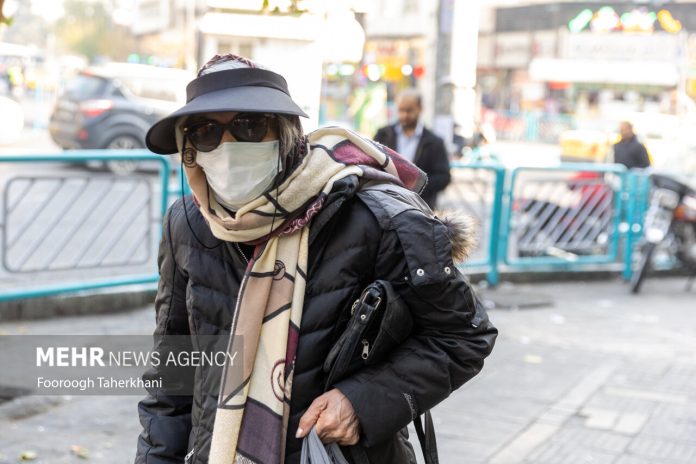
Tehran ranks world’s most polluted city for 2nd consecutive day

The city recorded an Air Quality Index (AQI) of 241, placing it at the top of the list for hazardous pollution levels.

Authorities are under pressure to implement measures to mitigate the worsening air pollution, which continues to dominate global rankings.
The air pollution has also led to the shutting down of offices, universities, and schools across the entire province of Tehran over the past days.

One of the reasons for air pollution in Tehran is the phenomenon of temperature inversion. Temperature inversion typically traps air pollution close to the ground.

Extensive vehicle traffic, high fuel consumption in cars, the use of non-standard fuels, and especially the burning of mazut in power plants are additional factors contributing to air pollution in Tehran and other major cities in Iran.

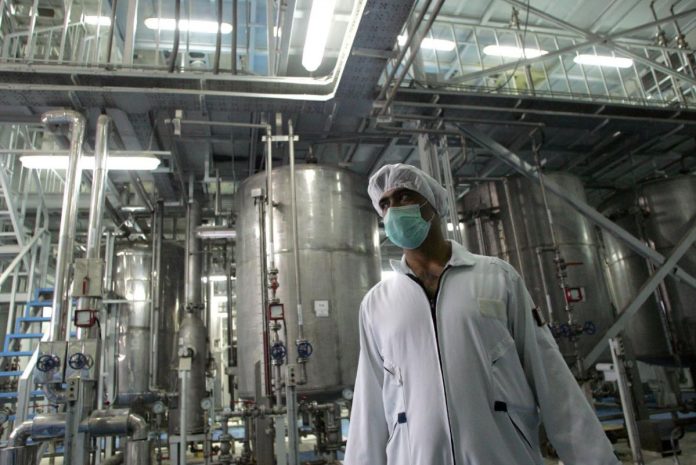
Iran rejects additional monitoring amid sanctions, criticizes IAEA stance

Iran Nuclear Program

Gharibabadi criticized recent remarks by International Atomic Energy Agency (IAEA)’s Director General Rafael Grossi, describing them as “unprofessional and politically motivated.”

He said Grossi is adopting the rhetoric of politically driven actors, stating that “he cannot, based upon mere probabilities and speculations, speak as if he were a political official from countries with political agendas, uttering whatever suits his purpose.”

The Iranian official underscored that the IAEA is authorized to document and report any verifiable deviation from nuclear material safeguards detected during the verification process. However, he warned Grossi to “refrain from publicizing speculations and assumptions,” as such actions fall outside the agency’s mandate.

The remarks come amidst escalating tensions following a letter from the E3—France, Germany, and the United Kingdom—sent to the United Nations Security Council. The letter threatened the activation of the Iran nuclear deak, JCPOA’s, trigger mechanism, which could lead to the reinstatement of sanctions on Iran.

In response, Iran’s Permanent Mission to the United Nations has submitted its own letter to the Security Council, urging the body to address the European parties’ alleged violations of UN Security Council Resolution 2231.
The resolution endorses the JCPOA and calls for the lifting of sanctions in exchange for Iran’s adherence to nuclear commitments.

EU’s top diplomat says frozen Russia’s assets should be used to aid Ukraine

Russia Ukraine War

Kaja Kallas, the EU’s high representative for foreign affairs and security, said that Ukraine had a legitimate claim for compensation and that Russian assets held in the EU were “a tool to pressure Russia”.

The EU has already begun skimming the profits off Russian assets held in the bloc for Ukraine, but has balked at seizing the entire sum (€210bn in the union) because of doubts about the legality of such a move. The EU holds more than two-thirds of Russia’s $300bn sovereign assets frozen by western allies after the full-scale invasion of Ukraine.

Kallas, a lawyer who was Estonia’s prime minister until July, predicted that despite “sensitivities … we will get there one day”, in an intervention that raises pressure on European governments to reconsider the issue.

She suggested the Russian funds would help pay the bill for “all the damage that Russia has caused to Ukraine”.

“Better to have a small bird in your hand than a big bird on the roof,” she continued, adding, “So we have the small bird in our hand [the frozen assets] and this is the tool to also pressure Russia.”

Her proposal comes amid growing questions over how to fund Ukraine in the medium term and pay its colossal reconstruction bill. Donald Trump, who has derided US aid to Kyiv, will also return to the White House next year.

In her first sit-down interview with print media since starting her new role, Kallas said Europe needed to step up aid to Ukraine if the US withdrew funding.

She added that financial support for Ukraine “is not charity”, but in the interest of Europe and the US.

“If they [the US] reduce the aid, then we need to continue supporting Ukraine, because I’m worried about what happens if Russia wins. I think we will have more wars, bigger wars.”

Aiding Ukraine was “investment” in “our own security” and global security, she said, citing the involvement of North Korean soldiers in Ukraine and Chinese military exercises in the South China Sea.

“China is also learning from what Russia does.”

She was speaking in her office on the 12th floor of European Commission headquarters, where the bare walls and empty shelves testified to a heavy schedule in her first 11 days.

On her first day in the post, she went to Kyiv to meet Ukraine’s president, Volodymyr Zelenskyy, who said his country needed “diplomatic solutions” only when Russia was unable to launch further attacks.

This week Poland’s prime minister, Donald Tusk, said peace talks on Ukraine could start “in the winter” but Kallas would not be drawn on dates, observing: “Russia doesn’t want those negotiations.”

Asked about recent phone calls between Vladimir Putin and the Hungarian prime minister, Viktor Orbán, on Wednesday, and the German chancellor, Olaf Scholz, last month, she stated: “They [Orbán and Scholz] are doing this for domestic purposes; so I wouldn’t do it, but this is not for me to criticise.”

Foreign ministers meeting on Monday, she said, would discuss whether there was “any added value” from such diplomacy.

Ministers would assess “why some members are doing this, what they want to achieve by this and is there any added value”, Kallas continued, adding: “Putin really wants to humiliate Europe. That is what we have to keep in mind all the time.”

Russia was betting on “outlasting” western allies, she said, but the war for Ukraine remained winnable.

“What we saw in Syria [is] they are not able to keep up that fight,” she stated, referring to Moscow’s failure to keep propping up its long-term ally, the Syrian President Bashar al-Assad. Russia had been “somewhat humiliated” in Syria, while “their thoughts were elsewhere”.

Kallas took office a week before the dramatic collapse of the 54-year-old Assad government in Syria, a development no one in the region, much less Brussels, had foreseen.

“Syria’s future is right now, quite hopeful, but still uncertain,” she said, adding that Europe’s approach to engaging with the dominant rebel group, Hayat Tahrir al-Sham (HTS), would be based on conditions, including “no radicalisation, no revenge, no retaliation”.

Kallas said it was too soon to talk about recognising Syria’s transitional government or lifting sanctions on HTS – a proscribed terrorist group in the EU and US – but that did not prevent talks.

“The question at this really early stage is not the question of recognising the government. It’s rather, assessing the deeds and the direction of Syria,” she continued.

The EU, Kallas added, needed a common approach to Syrian asylum seekers. Showing rapid speed, several European countries have suspended processing Syrian asylum claims, while Austria announced a “repatriation and deportation” programme.

Kallas said she had been told by her counterparts in the Middle East that some Syrian refugees in neighbouring countries were already returning on a voluntary basis. She added that EU asylum rules must be followed.

The European public wanted to know when Syrians would return, she went on. In Europe, “we have seen elections where migration is the main topic. Then it’s clear that, in several countries, this is the thing people want to hear: What happens now to the refugees? Are the refugees returning?”

IRGC: US, Israel exploiting chaos to destroy Syrian infrastructure

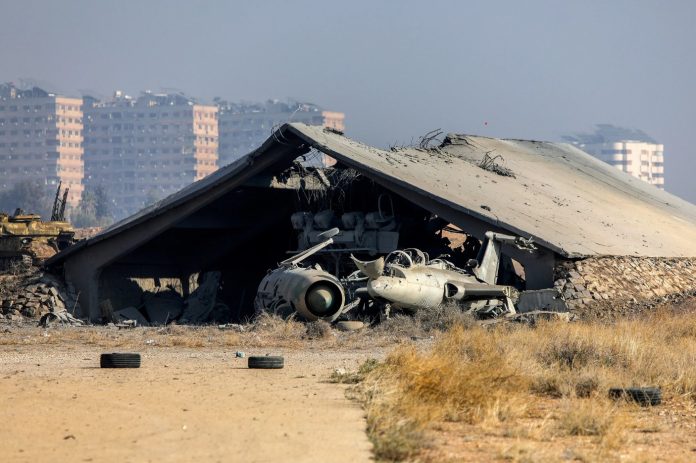
In a statement Thursday, the force strongly condemned attacks on Syria’s territorial integrity, marked by “intense and intensive aggression and bombing of residential and military areas, the destruction of infrastructure and vital centers, and the occupation of areas of Syrian territory”.

It also condemned the “astonishing silence of international communities in the face of this blatant aggression and assault”.

“As stated in the fundamental policies of the Islamic Republic of Iran, preserving the national sovereignty and territorial integrity of Syria and creating conditions for determining the fate and future political system of the country through the will and choice of its people is an indisputable, legitimate and legal right which must be respected and internationally supported,” it said.

The world, the statement added, is at a major historical turning point, where a new power geometry and global order is forming, with Islam led by the Islamic Republic of Iran being one of its main aspects.

This is “an undeniable truth that has prompted the camp of the enemies of Islam and Muslims to bring all its forces into the field of hostilities with the support of an all-out combined war and the media empire to prevent it from happening”, it said.

The IRGC added the Islamic Resistance Front will “definitely not remain passive, but intelligently confront any plan that seeks to disrupt the resistance and weaken the power and authority of the regional countries through partitioning them and changing their geography”.

The resistance “will make its growth, self-reliance, and stronger motivation a solid support for expelling the US from West Asia and realizing the ideal of freeing the Holy Quds and liberating the Palestinian people”, the statement read.

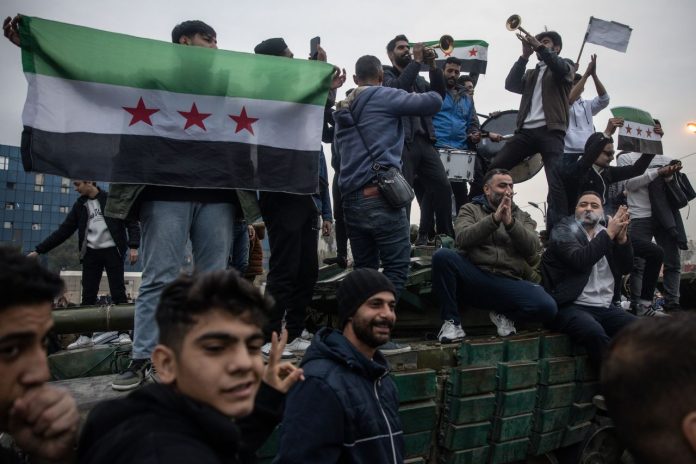
Foreign-backed armed militants, led by Hay’at Tahrir al-Sham (HTS), stormed the Syrian capital of Damascus early on Sunday after scoring major gains in the Arab country’s north following their resurgence in two weeks, which led to the fall of President Bashar al-Assad’s government.

Numerous reports pointed to the militants receiving strong support on the part of the Israeli regime, Turkey, and some Western states, which have been acting as the main backers of anti-Damascus outfits since the outbreak of foreign-backed militancy in Syria in 2011.

Pouncing on the heightened chaos in the Arab country, the Israeli regime launched a ground offensive in Syria’s southwest and targeted various areas with a fusillade of missiles.

The Israeli military claimed to have destroyed up to 80 percent of Syria’s military capabilities in what it bragged to be one of the largest offensive operations in the illegal regime’s history.

G7 says to ‘fully support’ Syrian government that respects ‘rule of law’

“We stand ready to support a transition process … that leads to credible, inclusive, and non-sectarian governance that ensures respect for the rule of law, universal human rights, including women’s rights, the protection of all Syrians,” the statement said.

“The G7 will work with and fully support a future Syrian government that abides by those standards and results from that process,” it added.

The leaders also called on “all parties” to “preserve Syria’s territorial integrity and national unity, and respect its independence and sovereignty”.

The UN announced on Wednesday that Syria’s transitional government must be more inclusive, emphasising the need to bring in different parties and communities to avoid new civil strife.

“My biggest concern is that the transition will create new contradictions in the manner that could lead to new civil strife and potentially a new civil war,” the UN’s envoy to Syria, Geir Pedersen stated.

Fighters in Syria who toppled President Bashar al-Assad, have appointed Mohammed al-Bashir as the country’s caretaker prime minister.

The new interim prime minister stated he aimed to bring back millions of Syrian refugees, create unity and provide basic services, but rebuilding would be daunting.

“We have no foreign currency and as for loans and bonds, we are still collecting data,” said al-Bashir, who headed a HTS-led administration in Idlib before the lightning offensive swept into Damascus and toppled al-Assad.

He stated that the full appointees of the interim government will be announced within days.

He explained that most government employees have returned to work and reiterated that the door was open for those to join the interim government, except, he said, those who were involved in “the blood of the people” would not be welcomed back.

Starting next week, schools and universities will reopen, he added.

According to Hayat Tahrir al-Sham (HTS), the current transitional government is set to rule until March 2025.

Militants waged a surprise two-pronged attack on Syria’s Aleppo and the countryside around Idlib on November 27.

Soon afterward, they seized control of several major Syrian cities, including Hama, Homs, Dara’a, and Suwayda, before entering the capital Damascus.

On Sunday, armed groups, led by HTS militants, announced that they had fully captured Damascus, and confirmed reports of the fall of Assad’s government.

Iran judiciary files legal case against ‘unauthorized’ concert

Iran Court

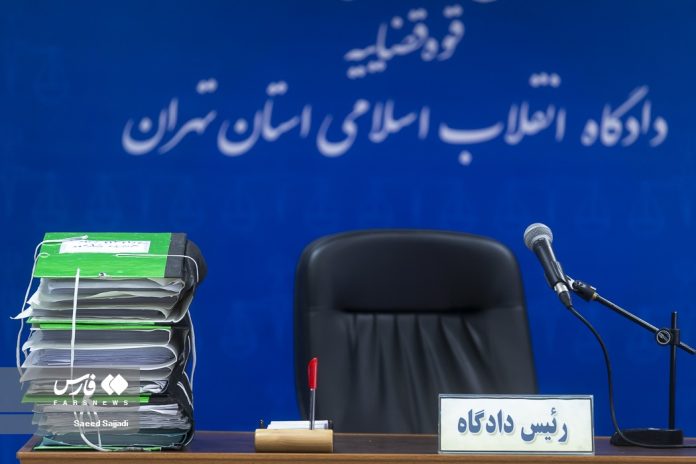
In response to the release of the video, titled Hypothetical Concert, which lacked legal authorization and failed to comply with the country’s legal and cultural regulations, the judicial authorities have intervened and filed a legal case against the singer and the production team.

Iran has introduced a set of whole new rules and regulations, particularly on female solo performances and certain genres of music deemed inappropriate, since the 1979 Islamic Revolution.

These rules are based on religious and cultural norms and violations can lead to legal consequences.

Death feels imminent for 96% of Gazan children: Study

Gaza War

A needs assessment, carried out by a Gaza-based NGO sponsored by the War Child Alliance charity, also found that 92% of the children in the survey were “not accepting of reality”, 79% suffer from nightmares and 73% exhibit symptoms of aggression.

“This report lays bare that Gaza is one of the most horrifying places in the world to be a child,” Helen Pattinson, chief executive of War Child UK, said.

“Alongside the levelling of hospitals, schools and homes, a trail of psychological destruction has caused wounds unseen but no less destructive on children who hold no responsibility for this war,” Pattinson added.

The survey questioned parents or caregivers of 504 children from families where at least one child is disabled, injured or unaccompanied. The sample was split between southern and northern Gaza and was complemented by more in-depth interviews. The survey was carried out in June this year, so is likely to understate the accumulated psychological impact of Gaza’s children now, after more than 14 months of Israel’s assault on the territory.

The estimated death toll in Gaza is more than 44,000 and a recent assessment by the UN Human Rights Office found that 44% of the fatalities it was able to verify were children.

The new psychological survey published on Wednesday was carried out by ​​a Gaza-based organisation, the Community Training Centre for Crisis Management, with backing from the Dutch Relief Alliance as well as the War Child Alliance.

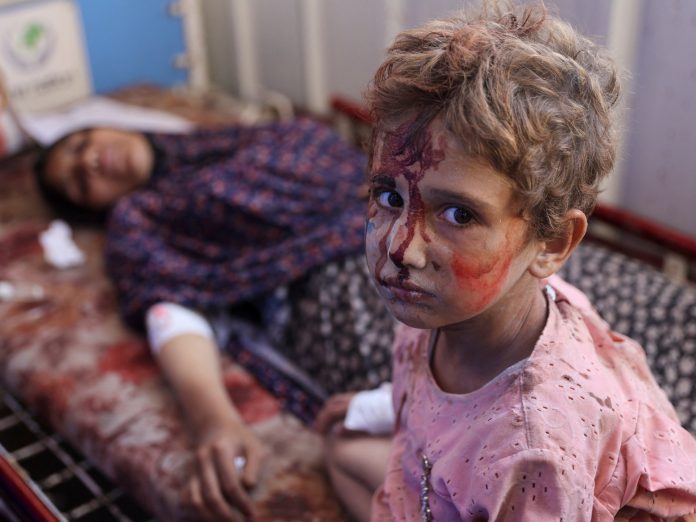
“The psychological toll on children was severe, with high levels of stress manifested in symptoms such as fear, anxiety, sleep disturbances, nightmares, nail biting, difficulty concentrating and social withdrawal,” the report said.

It added, “Children have witnessed the bombing of their homes and schools, experienced the loss of loved ones, and have been displaced or separated from their families while fleeing for safety.”

About 1.9 million Palestinians in Gaza, approximately 90% of the territory’s total population, have been displaced, many several times. Half of that number are children who have lost their home and been forced to flee their neighbourhoods.

More than 60% of the surveyed children reported having experienced traumatic events during the war and some had been exposed to multiple traumatic events.

An estimated 17,000 children in Gaza are unaccompanied, separated from their parents, although the study notes the real number may be much higher.

The report warns: “Being separated from their families places these children at a heightened risk of exploitation, abuse and other serious violations of their rights.”

“As a result of such exposure, children develop responses that may persist long after the war has ceased, profoundly affecting their daily lives,” it adds.

“Traumatic responses can manifest in various ways, including ongoing emotional distress, anxiety, behavioural changes, difficulties in relationships, regression, nightmares, sleep disturbances, eating issues, and physical symptoms such as pain,” it says.

The sense of being doomed has become pervasive. Almost all the children (96%) felt their death was imminent, and 49% actually wished to die, a feeling that was much more prevalent among boys (72%) than girls (26%).

War Child says the charity and its partners have so far been able to reach 17,000 children in Gaza to provide mental health support, but it ultimately aims to reach a million children with psychosocial and other support, in what it says will be the biggest humanitarian response in its three-decade history.

“The international community must act now before the child mental health catastrophe we are witnessing embeds itself into multigenerational trauma, the consequences of which the region will be dealing with for decades to come,” Pattinson stated.