Wednesday, December 31, 2025
Home Blog Page 597

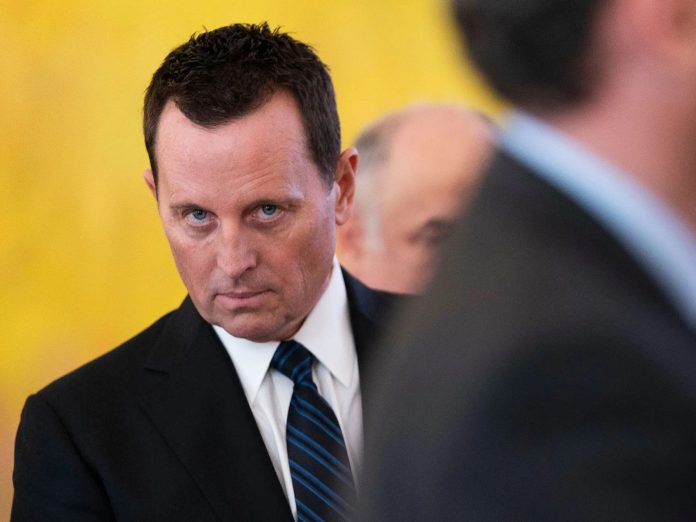
Trump considering ex-intelligence chief as special envoy for Iran

“He’s definitely in the running,” said a person familiar with transition deliberations, who asked not to be identified.

No final decisions on either personnel or strategy on Iran have been made official yet by Trump, including whether to slap fresh sanctions on the country, pursue diplomacy or both in order to halt their nuclear program.

Trump’s plans for the role have not previously been reported.

But his consideration of a key ally for such a posting sends a signal to the region that the new US president may be open to talks with a country he has previously threatened and whose elite Islamic Revolutionary Guard Corps have sought to assassinate him, according to the US government. Iran has dismissed the claim.

In the role, Grenell is expected to be tasked with speaking with countries in and beyond the region about the Iran issue as well as taking Tehran’s temperature on possible negotiations, stated one of the people.

Iran’s President Masoud Pezeshkian said following Trump’s election that Tehran must “deal with the US” and “manage” relations with its arch-foe.

It’s not the first job Trump has considered for Grenell, who served as Trump’s ambassador to Germany, a special presidential envoy for Serbia and Kosovo peace negotiations, and as acting director of national intelligence during Trump’s 2017-2021 term.

After campaigning for Trump in the lead up to the Nov. 5 election, he was a top contender to be secretary of state and for special envoy for the Ukraine war. Those jobs went to US Senator Marco Rubio and retired lieutenant general Keith Kellogg, respectively. Trump takes office next month.

During his first term in office, in 2020, Trump ordered a US air attack that killed Iran’s top military commander, Qassem Soleimani.

Trump in 2018 also reneged on a nuclear deal struck by his predecessor Barack Obama in 2015 and re-imposed US economic sanctions on Iran that had been relaxed.
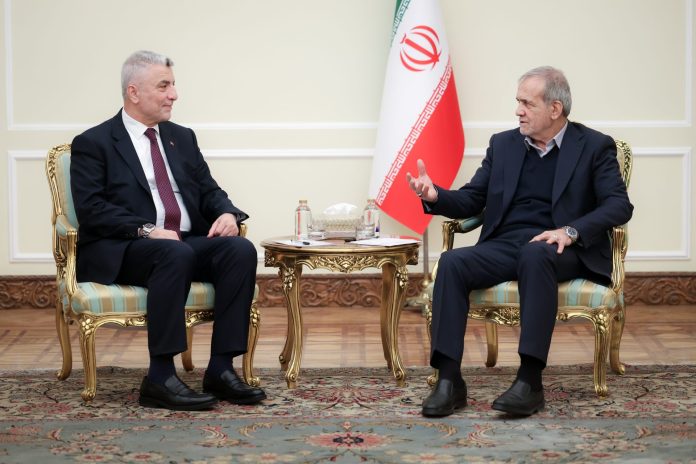
Iran’s president says regional developments demonstrate Israel’s exploitation of discord within Muslims

“What is happening in the region shows that the Zionist regime is exploiting division among Islamic countries”, the Iranian president said on Wednesday as he hosted Turkish Trade Minister Omer Bolat in Tehran.

Pezeshkian added that the Israeli regime “is conducting aggression on Gaza, Lebanon, and Syria, killing Muslims. If we put aside our differences, the Islamic world will become more powerful.”

He also stated that that Islamic countries should continue to develop their ties, which will benefit the entire Islamic world, making the “Zionist regime and other powers not dare commit crimes and interfere in Muslim affairs”.

Islamic nations should resolve their problems in a brotherly way and in practice not just in words, Pezeshkian stressed.

Elsewhere in his remarks, the Iranian president said that his country seeks to eliminate the dollar from its transactions with Turkiye in the face of unfair sanctions by the US and Europe.

The Turkish trade minister, for his part, stated that his country intends to increase its trade with Iran to $30 billion, stressing that Ankara is doing all it can to realize that goal.

In addition, Omer Bolat added, Turkiye wants to renew its 25-year trade agreement with Iran in the energy sector.

Iran’s Esmaeili, Saravi crowned among world’s top Greco-Roman wrestlers

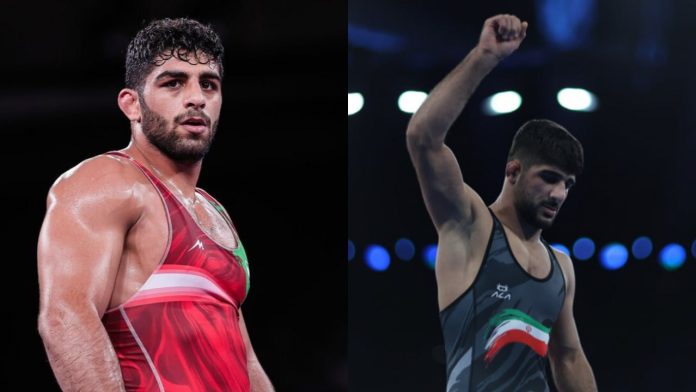
The latest ranking by the United World Wrestling Federation for 2024 places Saeid Esmaeili and Mohammad Hadi Saravi, who clinched gold medals at the Paris Olympics, at the top of the 67 kg and 97 kg weight classes, respectively.

The final ranking of the world’s best Greco-Roman wrestlers in 2024 puts Eldaniz Azizli in the 55 kg category from the Republic of Azerbaijan on the top spot.

China’s Liqchao emerged as the leader in the 60 kg category, while Kazakhstan’s Yerzhan Zalirkasin took first place in the 63 kg category.

In the 72 kg category, Elvin Mursaliyev from the Republic of Azerbaijan claimed the top ranking.

Japan’s Nao Kusaka led the 77 kg category, and Hungary’s Erik Silowasi dominated the 82 kg category.

Semen Novikov from Bulgaria topped the 87 kg category. Lastly, Yasmani Fernandez from Chile was ranked first in the 130 kg category.

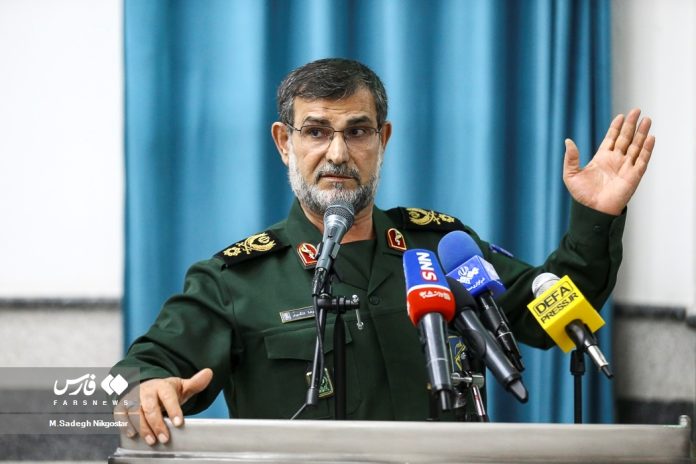
Senior commander says Iran’s new drone to ‘surprise world’

Rear Admiral Alireza Tangsiri

Tangsiri on Wednesday announced the pending integration of the groundbreaking and uniquely advanced unmanned aerial vehicle into the force.

Speaking on the sidelines of the 12th edition of the Islamic Republic’s International Aerospace Exhibition on the Kish Island in the country’s southern waters, he said the aircraft that has been developed in cooperation between the IRGC Navy and Iran’s Defense Ministry “will surprise the world”.

“The horizon of joint cooperation between the IRGC Navy and the ministry will change” upon integration of the aircraft into the force, Tangsiri noted, asserting that the drone would not serve as the last instance of collaboration between the two sides.

“We will, in fact, change the horizon (of the bilateral cooperation)” through unveiling of the aircraft, the commander added.

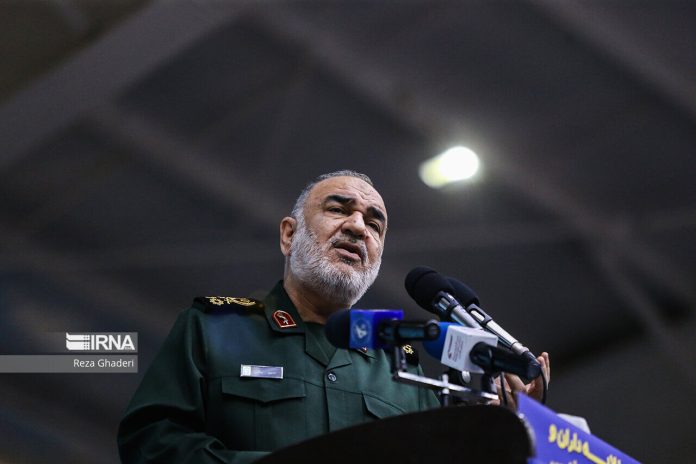
General Salami: IRGC forces last personnel to leave Syria after Assad’s fall

Hossein Salami

During a briefing with IRGC commanders, General Salami highlighted Syria’s unique stance among Arab countries in opposing Zionism and refusing any ‘peace plans’ with Israel, noting Syria’s historical victory in reclaiming the Quneitra province from Israeli occupation during the Arab-Israeli conflicts.

General Salami explained that Western forces could not eliminate Iran’s spiritual influence through conventional means, thus they “resorted to creating extremist groups as a countermeasure.”

He detailed that approximately 300,000 extremists were brought into Syria and Iraq with the aim of massacring Shia Muslims and destroying religious sites.

The commander praised Iran’s significant efforts to combat these groups, stating, “The direct military presence and advisory roles played by the IRGC, under the command of the late General Qassem Soleimani, were crucial in curbing the spread of extremism.”

“Combating dangerous Takfiri movements was a great service that the Islamic Republic rendered to all of humanity,” he added.

Citing Iran’s intelligence data, he warned that the threat of extremism persists.

General Salami also reiterated Iran’s continued support for Hezbollah and Palestinian resistance movements in the face of Israel’s aggressions.

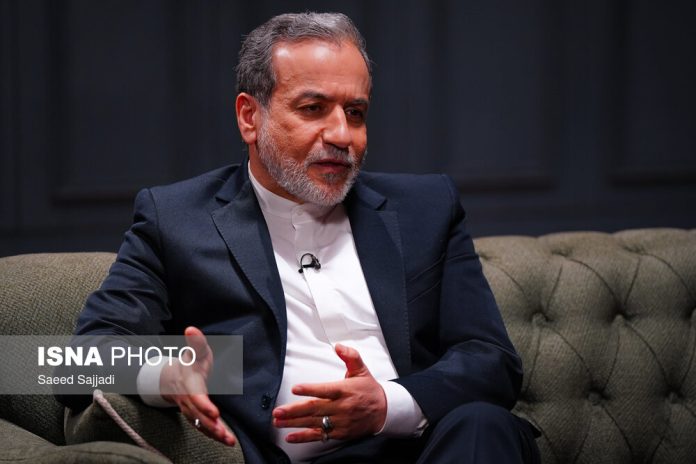
Iran urges mobilization to stop Israel’s attacks on Syria

Abbas Araghchi

In a post on social media platform X on Wednesday, Araghchi condemned Israel’s extended assaults in Syria since the fall of the government in Damascus over the weekend.

“The Israeli regime has moved to destroy almost every defense-related as well as civilian infrastructure in Syria,” he wrote.

Since Sunday, the Israeli military has conducted more than 500 airstrikes on Syria and pushed its troops beyond a so-called buffer zone in the occupied Golan Heights and deep into Syrian territory in what has been condemned as a new “land grab” scheme by the occupying regime.

The foreign minister highlighted that the Israeli regime has not only damaged vital facilities in Syria but has also expanded its occupation of Syrian territory, contravening the 1974 disengagement agreement and United Nations Security Council Resolution 350.

“It has also occupied further Syrian territory in violation of the 1974 disengagement agreement and UNSCR 350,” he added.

He emphasized that the UN Security Council, which is tasked with addressing unlawful aggression, has been rendered ineffective due to “US obstruction.”

Araghchi further called on Syria’s neighbors, as well as the broader Arab and Muslim world, to address the situation.

“It is critical for the countries of the region to immediately and effectively mobilize and join forces to stop Israel’s aggression and the destruction of Syria.”

Iran’s top diplomat insisted that every member state of the UN that values the rule of law and international principles cannot afford to remain passive in the face of such violations by the Israeli regime.

Armed militants, led by Hayat Tahrir al-Sham (HTS), captured Damascus on Sunday and overthrew the government of Bashar al-Assad in a lightening offensive that was launched in northwestern Syria and reached the capital in less than two weeks.

The militants, blacklisted by the United States, along with the UK and EU, have long been backed by the West and the Israeli regime to overthrow the Assad government.

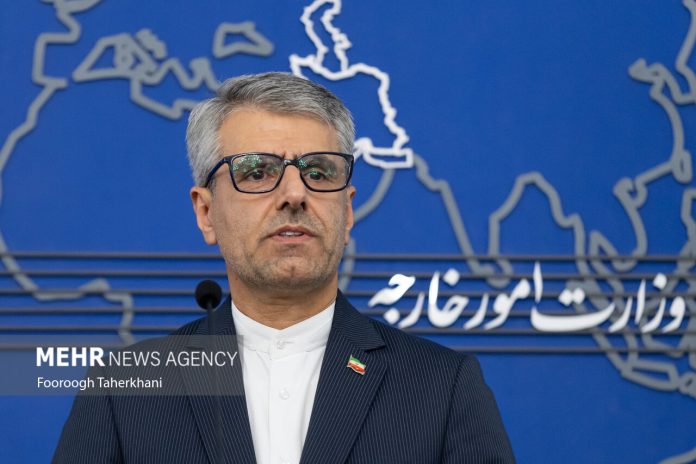
UK has blood of Syrians on its hands: Iran

Esmael baghaei

In a message posted on the social media platform X on Wednesday, Baqaei reminded Lammy, whom he called “an apologist for Israel by profession,” that he has been branded a “genocide denier” by Francesca Albanese, the UN Special Rapporteur on human rights in Palestinian territories.

He said it was “a new low” for Lammy, whose government has been persistently complicit in the “colonial erasure” of Palestinians, to be preaching about the situation in Syria and rejoicing in the “bloodshed there”.

“Mr. Lammy should be asked, among others, how much of the ‘over four billion pounds’ he claims the UK spent on the Syrian crisis was indeed used to ‘create’ and ‘sustain’ the crisis in the first place?” he asked.

In a statement to the House of Commons on the situation in Syria on Monday, Lammy said the current government in London refused to engage with President Bashar Assad when other governments were starting to “step up their presence in Damascus” because Assad was “a butcher with the blood of countless innocents on his hands”.

Baghaei asserted that the blood of Syrians was on the hands of those actors, including the United Kingdom, which contributed to the creation and expansion of the Daesh terrorist group in Syria and Iraq and provided the Israeli regime with lethal weapons.

“Syrian people are being pounded right now by lethal weapons that the UK has supplied to Israel,” he added.

“That’s far from graceful and glorious, not even for a country that has a long history of dark settler-colonial practices accompanied by repeated genocide of indigenous and aboriginal peoples.”

Armed militants, led by Hayat Tahrir al-Sham (HTS), took control of Damascus on Sunday and declared an end to President Assad’s rule in a surprise offensive that was launched from their stronghold in northwestern Syria, reaching the capital in less than two weeks.

The militants, blacklisted by the US, along with the UK and EU, have long been backed by the West and the Israeli regime to overthrow the Assad government.

Since Sunday, the Israeli military has conducted hundreds of airstrikes on Syria and pushed its troops beyond a so-called buffer zone in the occupied Golan Heights and deep into Syrian territory in what has been condemned as a new “land grab” scheme by the regime.

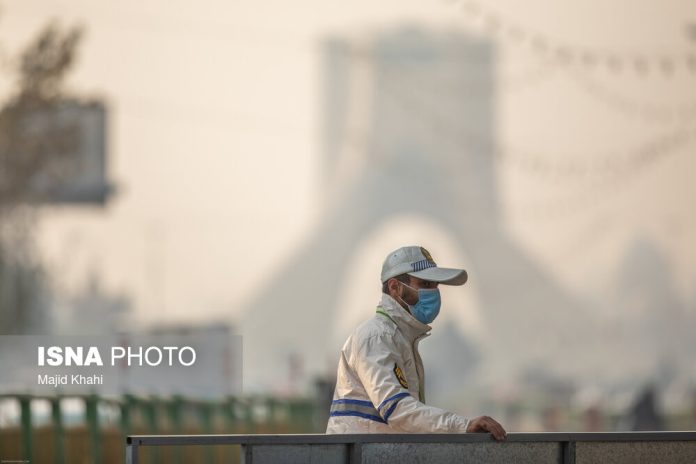
Tehran’s air quality remains hazardous, residents advised to stay indoors

The air quality in the capital is currently in the “red zone”, indicating dangerous conditions.

Authorities are urging all residents, especially the elderly, children, heart and lung disease patients, and pregnant women, to remain indoors if possible.

Data from Tehran’s air quality monitoring stations reveal that 23 areaqs are in the red zone, meaning unhealthy for all age groups, while other areas are in the orange and yellow zones, based on the color-coding by the Air Quality Control Company.

Over the past 24 hours, the air quality index remained at 164, posing health risks to everyone.

Since the beginning of this year, Tehran residents have experienced only 5 days of clean air, 175 days of healthy air, 79 days of unhealthy air for sensitive groups, and 8 days of unhealthy air for all age groups.

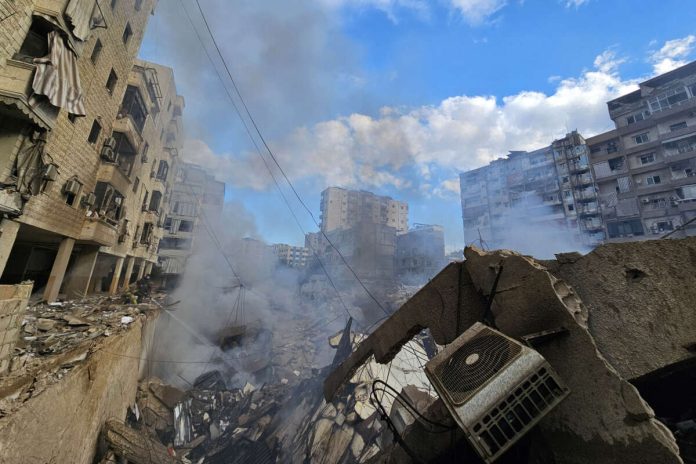
Israeli attacks kill five in southern Lebanon amid fragile ceasefire

“An Israeli enemy drone strike on the town of Ainata killed one person and wounded another,” the ministry said.

An “Israeli strike on the town of Bint Jbeil killed three people,” while a third “on Beit Lif killed one person”, it added.

There was no immediate comment from the Israeli military on the attacks.

Israel’s army escalated its attacks on Lebanon in late September after more than 11 months of cross-border exchanges of fire with the Lebanese armed group Hezbollah, which began firing rockets towards Israel after the Palestinian group Hamas’s attack on southern Israel on October 7, 2023.

A United States-brokered ceasefire started on November 27, but both sides have accused the other of repeated violations. Israel has launched near-daily strikes, mostly in southern Lebanon, that have killed scores of people since the deal took effect.

Under the terms of the agreement, the Lebanese army is to deploy in the south alongside United Nations peacekeepers as the Israeli army withdraws over a period of 60 days.

Hezbollah is required to withdraw its forces north of the Litani River, about 30 kilometres (20 miles) from the border, and dismantle its military infrastructure in the south.

The Lebanese army said it deployed troops around Khiam, a key town just five kilometres (three miles) from the border that witnessed heavy Israeli air raids and fighting between Israeli soldiers and the Iran-aligned group.

The Lebanese military added “units deployed in five positions around the town of Khiam” in coordination with UN peacekeepers and “within the framework of the first phase of deployment in the area, at the same time as the Israeli enemy withdrawal”.

“The deployment will be completed in the next phase, while specialised units” will survey the town to “remove unexploded ordnance”.

Earlier, UN peacekeepers entered Khiam “to inspect the road and verify the Israeli enemy army’s withdrawal”, Lebanon’s state-run National News Agency (NNA) reported.

The NNA announced that the peacekeepers found the body of a man “in the vicinity of his house” in the border town.

The NNA reported that ambassadors from the United States, France, Saudi Arabia, Qatar and Egypt held a meeting Wednesday with Lebanon’s Speaker of Parliament Nabih Berri, a Hezbollah ally who has scheduled a parliament session in January for lawmakers to elect a president.

Crisis-hit Lebanon has been without a head of state for more than two years amid deadlock between pro- and anti-Hezbollah blocs in Parliament.

Envoys from the five countries who met Berri have been working for months to facilitate the process.

Separately, US Army General Erik Kurilla, who leads US Central Command, met with the head of the Lebanese army General Joseph Aoun to discuss ongoing American support for the implementation of the ceasefire agreement.

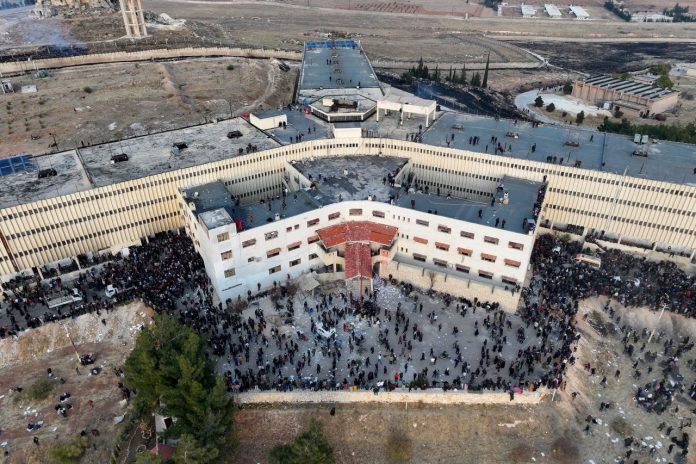
HTS leader promises to punish those involved in torture, murder of detainees in Syria

Syria War

“We will pursue them in Syria, and we ask countries to hand over those who fled so we can achieve justice,” Hayat Tahrir al-Sham (HTS) leader Ahmed al-Sharaa, also known as Abu Mohammed al-Julani, said in a statement published on the Syrian state TV’s Telegram channel on Wednesday.

His comments came after thousands of detainees were released and families hoped to find others who disappeared in the country’s notorious jails, including the Sednaya Prison.

The world is carefully watching to see if Syria’s new rulers can stabilise the country after a 13-year war devastated the country.

The new interim prime minister has also stated he aimed to bring back millions of Syrian refugees, create unity and provide basic services, but rebuilding would be daunting.

“We have no foreign currency and as for loans and bonds, we are still collecting data,” said Mohammed al-Bashir, who headed a HTS-led administration in Idlib before the lightning offensive swept into Damascus and toppled al-Assad over the weekend.

He stated that the full appointees of the interim government will be announced within days.

He explained that most government employees have returned to work and reiterated that the door was open for those to join the interim government, except, he said, those who were involved in “the blood of the people” would not be welcomed back.

Starting next week, schools and universities will reopen, he added.

According to HTS, the current transitional government is set to rule until March 2025.

Militants waged a surprise two-pronged attack on Syria’s Aleppo and the countryside around Idlib on November 27.

Soon afterward, they seized control of several major Syrian cities, including Hama, Homs, Dara’a, and Suwayda, before entering the capital Damascus.

On Sunday, armed groups, led by HTS militants, announced that they had fully captured Damascus, and confirmed reports of the fall of Assad’s government.

United Nations Secretary-General Antonio Guterres said on Wednesday during a visit to South Africa that there were some signs of hope from the end of “the Syrian dictatorship”.

Guterres added that the UN was totally committed to a smooth transition of power in Syria.

“I fully trust Syrian people to be able to choose their own destiny,” Guterres continued.

UN envoy for Syria Geir Pedersen also stated that Syria’s transitional government must strive to be inclusive to avoid new “civil strife”.

“My biggest concern is that the transition will create new contradictions in the manner that could lead to new civil strife and potentially a new civil war.”