Wednesday, December 31, 2025
Home Blog Page 595

Iranian MP claims Raisi assassinated by Israel

President Raisi Helicopter Crash

In a video, Kamran Ghazanfari stated, Raisi who was killed in a helicopter crash earlier this year, was actually assassinated, but the incident was attributed to a cloud mass, sarcastically referring to it as an “intelligent dense cloud.”

Ghazanfari, representing the capital Tehran, alleged that the former Iranian president was assassinated by Israel, the US, and the president of the Republic of Azerbaijan Ilham Aliyev, “but officials deemed it inappropriate to inform the public.”

The claim was made as Iranian security and military officials, in an official statement, attributed the crash of Raisi’s helicopter to bad weather and strongly denied any assassination attempts.

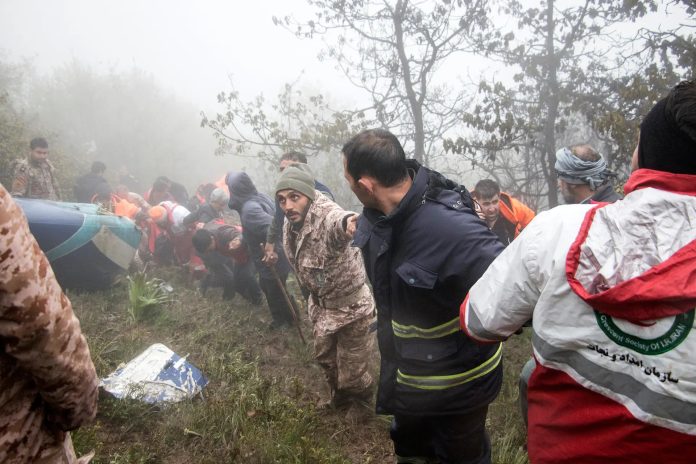
On May 19, an Iranian Air Force helicopter, en route from the Giz Galasi Dam on the border with the Republic of Azerbaijan, carrying the former president and seven others crashed near a village in northwestern Iran which led to the death of the president and his entourage including former Foreign Minister Hossein Amirabdollahian.

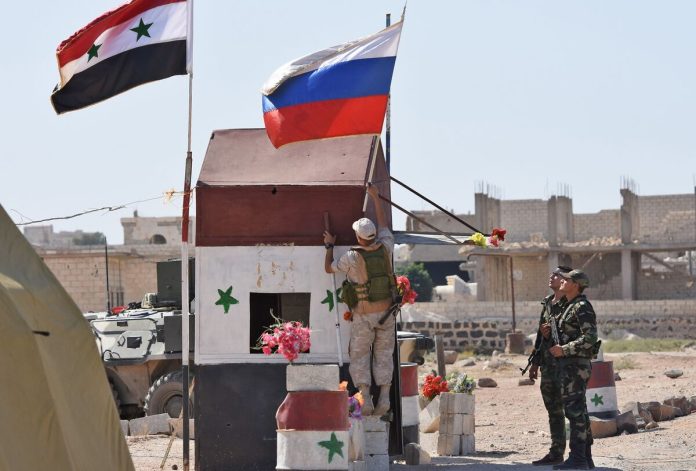
Russia appears to be withdrawing military assets from Syria following fall of Assad: Report

Two AN-124 heavy military transport planes were spotted at Khmeimim air base, located in Latakia on Syria’s Mediterranean coast, with their nose cones lifted, signaling readiness to load cargo. A Ka-52 attack helicopter was also being dismantled, likely in preparation for transport, while components of an S-400 air defense system were being packed up.

Imagery from the Tartus naval base, also on the Mediterranean coast, showed minimal changes. Photos taken earlier in the week revealed two Russian frigates stationed off the coast, with no major activity suggesting an immediate departure, according to CNN.

Michael Kofman, a senior fellow at the Carnegie Endowment for International Peace, described the activity as part of a larger consolidation effort at Khmeimim and the nearby Tartus naval base.

“In short, a withdrawal is underway,” Kofman wrote on X.

Russia was reportedly evacuating its forces from Syria as one of its military bases faced siege, Ukraine’s Defense Intelligence (HUR) had reported. HUR claimed that Russian troops in Syria are voicing frustration with their commanders over what they described as a chaotic withdrawal process.

The Kremlin emphasized the importance of securing its military bases and diplomatic missions in Syria, with spokesperson Dmitry Peskov saying that Moscow has maintained contact with Syria’s new leadership. He declined to disclose the number of Russian troops in the country or comment on potential evacuations.

Russia has maintained a military presence in Syria since 2015, primarily to support now overthrown Syrian President al-Assad’s government during the Arab country’s war. Damascus has been supportive of the Kremlin during the ongoing invasion of Ukraine.

Arab League deplores Israel seizure of Syrian territory

The Egyptian Foreign Ministry said in a statement that under the initiative of Egypt and other Arab countries, the Arab League held a meeting on the level of the permanent delegates in its headquarters in Cairo to draft a unified Arab stance toward the Israel’s new occupation of more Syrian lands.

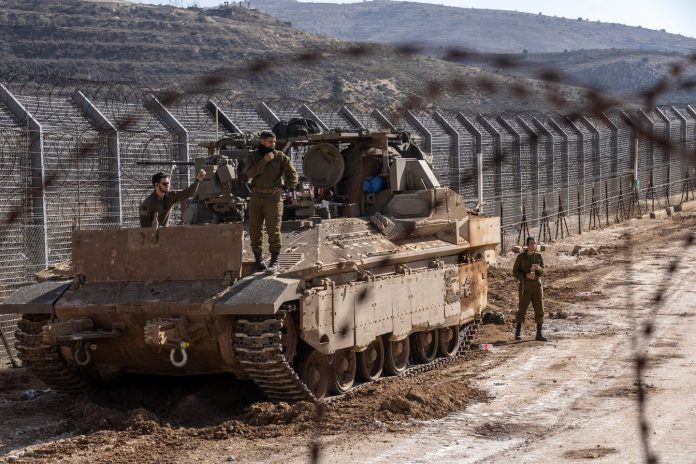
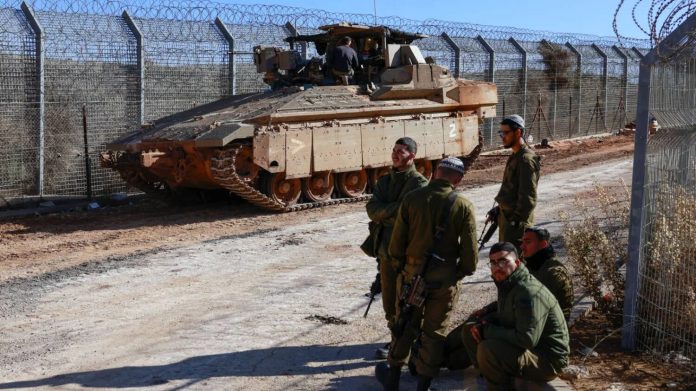
Immediately following the fall of the Bashar Assad government on Dec. 8, the Israeli army captured the buffer zone in Syria’s occupied Golan Heights, shortly after Israeli Premier Benjamin Netanyahu announced the collapse of a UN-monitored disengagement agreement with Damascus.

The Israeli army mounted hundreds of airstrikes against military bases, air defense stations, and intelligence headquarters, as well as long- and short-range missile depots and unconventional weapon stockpiles across Syria.

The meeting resulted in the issuance of a resolution condemning the Israeli incursion into Syria’s buffer zone area and other adjacent areas including the Mount Hermon, according to the Egyptian statement.

The resolution considered the Israeli practices as “violation to the disengagement agreement between Israel and Syria in 1974”.

The statement also added that the Arab League urged the international community to compel Israel to abide by international legitimacy, especially UN resolution 497 of 1981, demanding Israel to withdraw from the occupied Golan Heights.

Since 1967, Israel has occupied the Golan Heights. In 1974, a disengagement agreement between Israel and Syria was signed, which defined the borders of the buffer zone and established a demilitarized area.

Assad, who ruled Syria with an iron fist for nearly 25 years, fled to Russia on Dec. 8 after armed groups seized control of Damascus. The takeover came after Hayat Tahrir al-Sham (HTS) fighters captured key cities in a swift offensive that lasted less than two weeks.

US top diplomat meets Iraq PM during unannounced visit to Baghdad to discuss Syria

Blinken visited the US embassy in the Iraqi capital on Friday on the final stop of his tour of the Middle East following the toppling of President Bashar al-Assad’s government in Syria.

Blinken and al-Sudani discussed “the conviction of so many countries in the region and beyond that as Syria transitions from the Assad dictatorship to hopefully a democracy, it does so in a way that, of course, protects all of the minorities in Syria, that produces an inclusive, nonsectarian government”, Blinken said, adding that Syria should not become a “platform for terrorism”.

“I think this is a moment as well for Iraq to reinforce its own sovereignty as well as its stability, security and success going forward,” Blinken stated.

“The United States [and] Iraq together had tremendous success in taking away the territorial caliphate that Daesh had created years ago.”

“No one knows the importance of that more than Iraq because of the ongoing presence of ISIS [ISIL], or Daesh, in Syria, and we are determined to make sure that Daesh cannot re-emerge,” he continued.

The opposition fighters who toppled al-Assad in Syria, led by Hayat Tahrir al-Sham, have disavowed al-Qaeda and ISIL and announced they have no ambitions in Iraq.

Iraq opted not to allow rebel groups to intervene in Syria as the opposition forces advanced and ultimately seized Damascus last weekend despite Baghdad’s concerns that unrest could spill over the border.

Blinken arrived in Baghdad after stopping in Turkiye, where he also emphasised that it was “imperative” to work against a resurgence of ISIL.

He met President Recep Tayyip Erdogan, who assured Blinken Turkiye would not ease up in the fight against ISIL in Syria despite its operations against Kurdish fighters who have allied with the US in the fight against the group.

“Turkiye will never allow any weakness to arise in the fight against Daesh,” Erdogan said while promising not to let up in his government’s pursuit of groups it sees as a threat to national security.

Meanwhile, Foreign Minister Hakan Fidan told Blinken Turkiye is committed to ensuring stability in Syria “as soon as possible” and preventing ISIL fighters from gaining a foothold there.

Blinken also stated he saw “encouraging signs” of progress towards a ceasefire in the Gaza Strip, urging Turkiye to use its influence to encourage the Palestinian group Hamas to accept a proposed deal.

“We discussed Gaza, and we discussed I think the opportunity … to get a ceasefire in place. And what we’ve seen in the last couple of weeks are more encouraging signs that that is possible,” Blinken added.

“We talked about the imperative of Hamas saying ‘yes’ to the agreement that’s possible, to finally help bring this to an end.”

Nearly 44,900 Palestinians have been killed and 106,454 injured in Israel’s war on Gaza, which began on October 7, 2023, according to the Gaza Ministry of Health.

Iran pushes for FATF membership to boost global trade

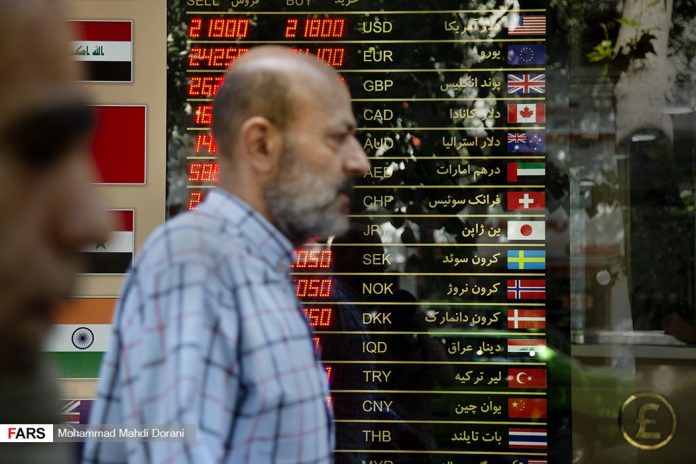
Dollar

Samad Hassanzadeh said, “Exiting the FATF blacklist is very important for the economy and economic growth. Joining the FATF can help with economic issues and increase our connections with the world.”

“The country needs to resolve the FATF issue with coordination among all decision-makers and officials so that the country can have a larger share of global markets, and we need the FATF for developing global trade relations,” he added.

Currently, Iran has met 39 out of 41 FATF requirements, with ongoing deliberations over the final sticking points, namely Palermo and CFT conditions, he explained.

However, opponents argue that agreeing to the conditions would backfire on Iran’s economy.

Iran’s Minister of Economy Abdolnaser Hemmati has also earlier reiterated the administration’s commitment to resolving FATF issues, noting that US opposition hampers Iran’s removal from the blacklist, which restricts smooth banking and financial exchanges, limiting foreign investment and participation in global value chains.

On Wednesday, Iran’s Expediency Council President Sadeq Amoli Larijani tacitly indicated that the council has softened his stance, saying the technical nature of FATF membership deliberations will be evaluated.

Russia carries out large aerial attacks on Ukraine’s energy grid

Russia Ukraine War

Dozens of drones were also used in the attack, which comes as both Moscow and Kyiv manoeuvre ahead of Donald Trump’s return to the White House in January.

Later on Friday, Vladimir Putin’s spokesperson Dmitry Peskov praised Trump, saying his criticism of Ukrainian strikes inside Russia “impresses us”.

The alignment on the strikes between Trump and the Kremlin will cause alarm in Ukraine, where there is hope that Trump may prove surprisingly amenable to continuing US military aid to the country but also fear that his history of pro-Russian rhetoric could see Kyiv forced to sign an unfavourable deal.

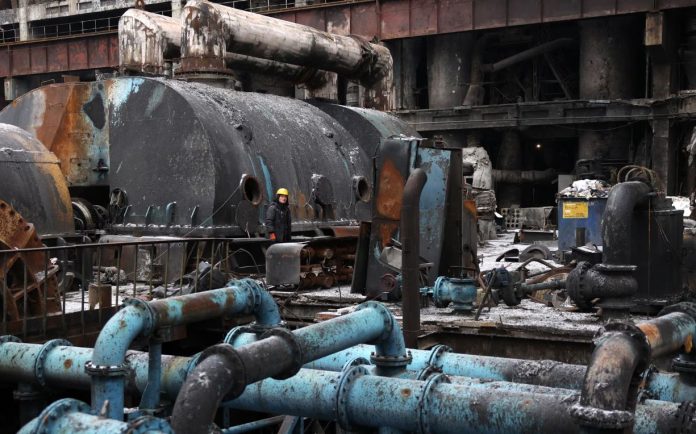
Russia has been systematically targeting Ukraine’s civilian energy infrastructure in recent months, in a bid to sow chaos in the country ahead of winter, with temperatures due to drop well below zero in most of Ukraine over the coming days.

Energy minister Herman Halushchenko stated energy workers were doing everything possible to “minimise negative consequences” for the energy system.

President Volodymyr Zelensky claimed on Friday morning that Russia had used 93 missiles and over 200 drones in the attack. He added Ukrainian forces had managed to shoot down 81 of the missiles, including 11 which had been successfully targeted by F-16 planes. Ukraine’s air force announced the Russian attack included hypersonic Kinzhal missiles launched from the air.

Svitlana Onishchuk, head of the western Ivano-Frankivsk region, said the area had suffered “the biggest attack since the beginning of the full-scale war”, from cruise missiles and drones.

“As Ukrainians wake to the coldest day of the winter so far, the enemy tries to break our spirit with this cynical terrorist attack,” stated Maxim Timchenko, CEO of the private energy company DTEK.

“Right now, multiple DTEK teams are urgently assessing damage to our power stations and deploying all possible resources to restoring power for the people of Ukraine,” Timchenko added.

The Kremlin claimed the latest strikes were in retaliation for a Ukrainian attack on an airbase in southern Russia last week using US-provided long-range missiles. The Joe Biden administration last month lifted long-standing restrictions on using missiles for hitting targets inside Russia.

Trump used an interview with Time magazine this week to criticise the decision.

“It’s crazy what’s taking place. It’s crazy. I disagree very vehemently with sending missiles hundreds of miles into Russia. Why are we doing that? We’re just escalating this war and making it worse,” said Trump.

“The statement fully aligns with our position, with our view on the reasons for escalation,” Peskov told reporters on Friday, adding, “That impresses us. It is obvious that Trump understands exactly what is escalating the situation.”

Russia’s attacks on energy infrastructure have resulted in repeated emergency shutdowns and scheduled power cuts, as the battered grid struggles to cope with demand. Around half of the country’s generating capacity has been destroyed over nearly three years of war.

Andrian Prokip, a Kyiv-based energy expert with the Kennan Institute in Washington DC, told the Guardian earlier this week that he expected the attacks to continue ahead of Trump’s return.

“I have a feeling that they would like to pressure the Ukrainian power system as much as they can before Trump’s inauguration. The Russians would like Trump to believe that Ukraine is already destroyed,” added Prokip.

Zelensky, in response to Friday’s attack, said: “This is Putin’s ‘peace plan’ – destroy everything. This is how he wants negotiations, by terrorising millions of people.”

Trump has promised to bring Russia and Ukraine to the table and end the war, but many observers of the conflict say there is little sign Russia wants to negotiate, except on terms that would be unacceptable to Ukraine.

On 21 November, Russia used an intermediate range hypersonic missile, which Putin has dubbed the Oreshnik, for the first time, striking an industrial plant in the city of Dnipro. Putin has used the missile, which has nuclear capabilities, as a way of raising the stakes and threatening the West, and has said it could be used again, including against “decision-making centres” in the country.

US officials warned on Wednesday that another Oreshnik strike on Ukraine could be imminent, though there was no sign the weapon was used in Friday’s attack.

Ove one million Syrians displaced in 2 weeks: UN

Syria War

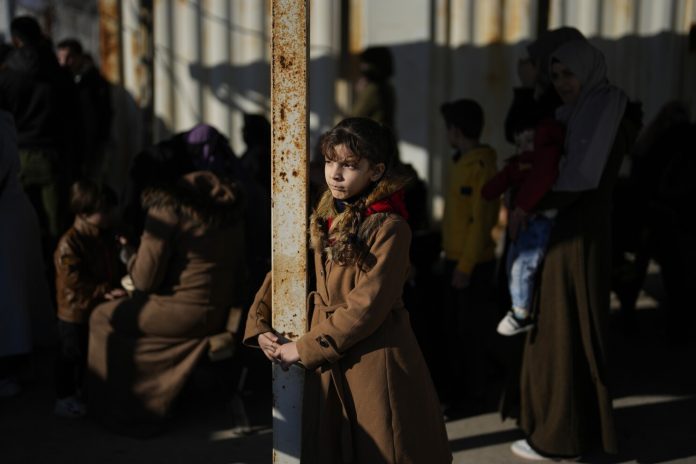
The UN Office for the Coordination of Humanitarian Affairs (OCHA ) said in a statement that most of the newly displaced are women and children. The figures include data from when the fighting between Syrian government forces and armed opposition groups began to escalate late last month.

“As of 12 December, 1.1 million people have been newly displaced across the country since the start of the escalation of hostilities on 27 November. The majority are women and children,” the statement read.

The OCHA noted nearly 640,000 people have fled the Aleppo governorate, while hundreds of thousands of others left Idlib and Hama over the past few days.

It added that more than 400,000 people are currently in hundreds of collective shelters in northeastern Syria, receiving humanitarian aid, including food, hygiene kits, and psychological support.

Militants waged a surprise two-pronged attack on Syria’s Aleppo and the countryside around Idlib on November 27.

Soon afterward, they seized control of several major Syrian cities, including Hama, Homs, Dara’a, and Suwayda, before entering the capital Damascus.

On Sunday, armed groups, led by HTS militants, announced that they had fully captured Damascus, and confirmed reports of the fall of Bashar Assad’s government.

UN chief ‘concerned’ by Israel expansion into Golan Heights and Syria attacks

Israel Army

Guterres described Israel’s actions as “deeply concerning” and called for the Israelis to stop firing into Syria and respect its sovereignty.

“The secretary-general is particularly concerned over the hundreds of Israeli airstrikes on several locations in Syria,” the UN said in a statement, calling for urgent de-escalation “on all fronts, throughout Syria”.

“The secretary-general is particularly concerned over the hundreds of Israeli airstrikes on several locations in Syria,” it added.

“He stresses the urgent need to de-escalate violence on all fronts, throughout Syria.”

Israel has occupied the Golan Heights since the 1967 war with Syria.

Between 1974 and 2024 the territory was divided between areas controlled by Israel and areas controlled by Syria, split by a buffer zone.

The secretary-general also urged Israel to adhere to the 1974 Disengagement of Forces Agreement between Israel and Syria, which ended the Yom Kippur War.

The agreement established a UN-monitored buffer zone in the Golan Heights to prevent further conflict.

It delineated areas of control for each side and included provisions for the return of displaced civilians.

But after the Syrian government collapsed after fighters from Hayat Tahrir al-Sham (HTS) took control of Damascus, Israel began infiltrating the UN buffer zone and occupied Mount Hermon.

The Israelis claimed it was establishing a “buffer zone” by taking further control of areas near the occupied Golan Heights.

Israeli forces has also launched hundreds of air raids and bombed parts of Damascus it claimed were chemical weapons factories and Syrian military infrastructure over the last week – including large chunks of the Syrian navy and air force.

Tehran hosting 12th “Made in Iran” Exhibition

A total of 278 Iranian knowledge-based and technology firms are participating in this exhibition, putting 10,000 products at display.

According to Reza Bakhi Ani, Deputy for Knowledge-Based Economy Development at the Vice Presidency for Science, Technology, and Knowledge-Based Economy, and President of the “Made in Iran” exhibition, the presentation of knowledge-based products at this exhibition has increased by 20% compared to the previous edition.

He also added that the exhibition emphasizes the development of exports of Iranian knowledge-based products. On the final day, two top awards will be given to the best companies, one for exports and the other one for industrial designs.

This exhibition coincides with the first day of Research and Technology Week and the 25th Exhibition of Achievements of Research, Technology, and Innovation.

On the sidelines of the exhibition’s opening, Hossein Afshin, Deputy for Science, Technology, and Knowledge-Based Economy at the Presidency, told reporters that this exhibition aims to support research infrastructure in Iran to mainly enhance people’s lives and the environment.

Iranian president requests citizens to lower heating amid severe cold spell

Masoud Pezeshkian

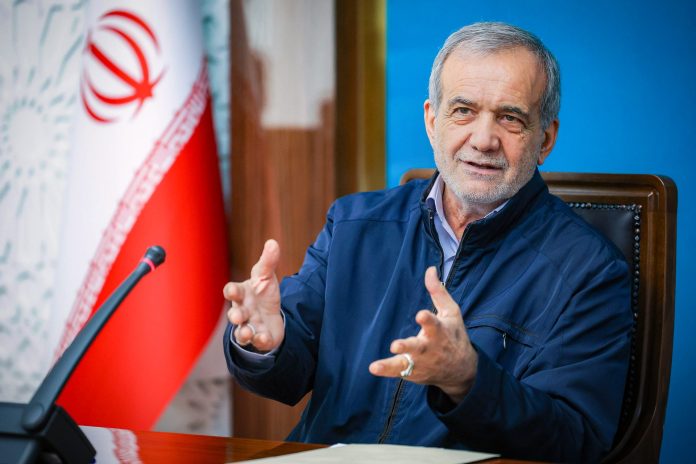
In a video message on Thursday night, the president emphasized the impact of air pollution on public health and the need to conserve fuel. He encouraged citizens to lower heating to ensure fuel availability for all.

The plea comes as Maziar Gholami, Tehran’s Meteorology Director, warned on Thursday of a dramatic temperature drop, predicting temperatures to plummet by 10 to 15 degrees Celsius in northern parts of the country and 8 to 12 degrees in southern and central areas over the next three days.

A cold front from Siberia is expected to bring freezing temperatures, snow, and rain, leading to potentially hazardous conditions in the country, he explained.

In response to severe weather forecast, all schools and educational centers in northern Mazandaran province will close on Sunday and Monday.

The decision, aimed at energy management and safety, will shift education to virtual formats.

The Mazandaran Meteorological Office has issued a warning, cautioning against floods, landslides, and road closures, and advised against non-essential travels.

It is forecasted that the temperature in Tehran will drop to minus 3 degrees Celsius in the coming days