Friday, December 26, 2025
Home Blog Page 553

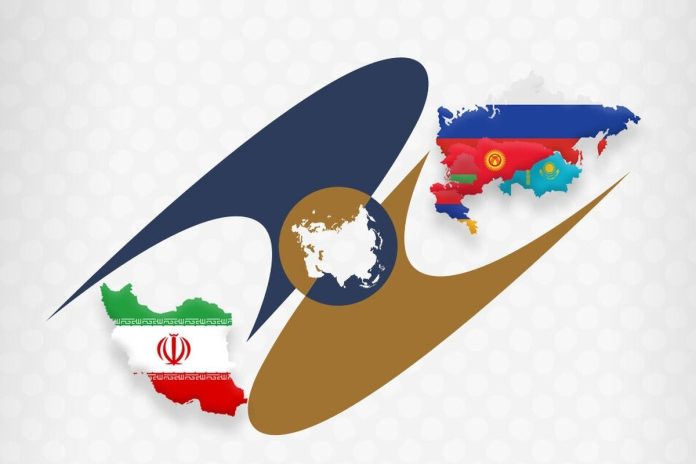
Iran’s trade with Eurasian Union reaches $2.7bn in past 9 months

Speaking to IRNA, Asgari detailed the trade figures and said Iran’s exports to the EAEU amounted to approximately $1.494 billion. This represents a 20.79% increase compared to the same period last year.

He noted that the largest share of exports was directed to Russia, followed by Armenia and Kazakhstan.

The EAEU was established in 2014. The grouping consists of Russia, Kazakhstan, Belarus, Kyrgyzstan, and Armenia, with Uzbekistan, Moldova, and Cuba as observer members.
In late December, the EAEU summit in Saint Petersburg, Russia, approved Iran’s observer membership, marking a significant step in regional economic integration.
The increased trade between Iran and foreign countries comes as the Islamic Republic has been under heavy sanctions imposed by the US and other Western governments.
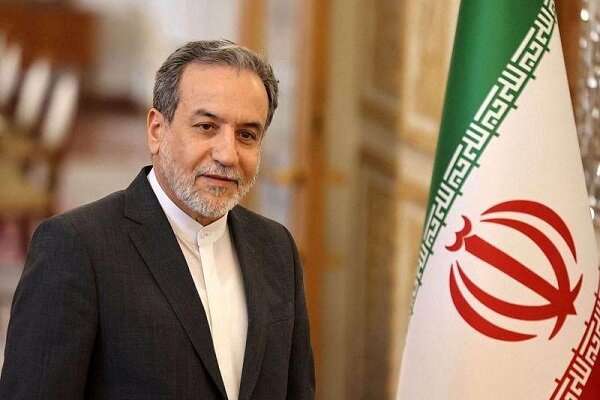
Iranian FM congratulates Aoun on his election as Lebanese President

The foreign minister said Iran supports a stable, safe and independent Lebanon where all Lebanese people can live without foreign occupation and threats.

He added, “Just as always, we cooperate with a government that represents the aspirations of the Lebanese people, guarantees their welfare and safeguards Lebanon’s sovereignty, independence and territorial integrity”.

Lebanon’s parliament on Thursday elected the country’s army chief as president, ending a power vacuum that has lasted more than two years.

Joseph Aoun’s candidacy for the mainly ceremonial role – which is reserved for a Maronite Christian under a sectarian power-sharing system – was backed by several political parties, as well as the US, France and Saudi Arabia.

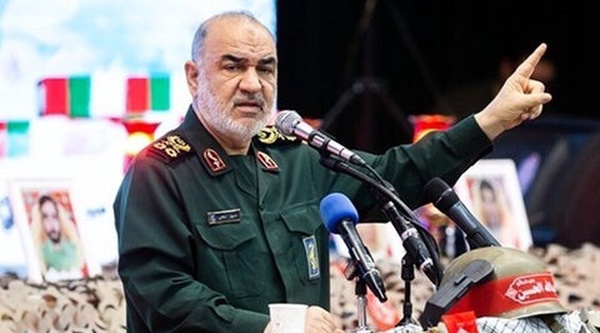
IRGC chief: Iran does not need regional proxies to respond to enemies

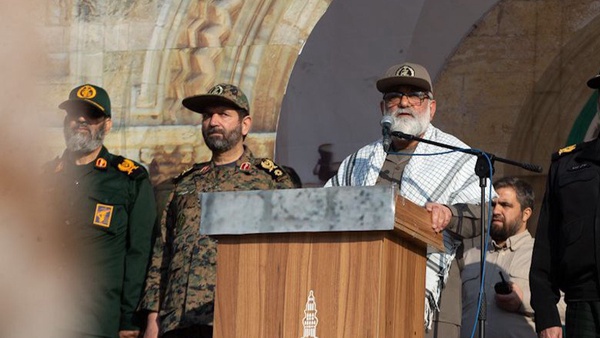
Speaking at a national meeting in Abadan, southern Iran, Major General Salami emphasized Iran’s independent capabilities to act directly against Israeli provocations.

Emphasizing Iran’s domestic strength, the IRGC commander stated that Iran can respond to threats from within its own territory.

Referring to Iran’s retaliatory military operation against Israel a few months ago, the IRGC commander highlighted that despite Israel’s provocations, Iran chose not to use missiles from Syria and Lebanon, showcasing Iran’s operational independence.

He also recalled Iran’s direct military response to the assassination of IRGC Quds force commander General Qassem Soleimani in 2020 by targeting a US base in northern Iraq, demonstrating Iran’s self-reliant deterrence capability.

The top general detailed Iran’s advancements in precision strike technology using AI, achieving significant power in missile, drone, and naval domains.

He announced upcoming unveilings of new missile and drone cities in the country.

Major General Salami noted that Iranians frequently request that the third retaliatory operation against Israel, dubbed True Promise III, be carried out, which he said is “driven by their deep understanding of national power and resilience.”

He also addressed enemy efforts to portray Iran as weakened, refuting claims that Iran has lost its regional deterrence.

IRGC commander: The Region Will Be Cleared of U.S., Israeli Forces

IRGC commander

General Mohammad Reza Naqdi, the Deputy Coordinator of the IRGC made the remarks on Friday morning during the 110,000-strong Quds military exercise in Tehran.

General Naqdi stated that today in the occupied territories, atrocities are occurring that have no precedent in history; mass killings of children, infants, and women; the destruction of universities, schools, hospitals, and medical centers; and even the killing of medical staff in Gaza. These atrocities are unprecedented crimes in human history.

He added that Iranian forces are ready to complete the unfinished mission of Lieutenant General Qassem Soleimani, the Iranian anti-terror icon, and to realize his great wish, which is the liberation of al-Quds, adding today is more suitable for this action than ever before.

General Naqdi said that America and the Zionist regime topple governments through plotting, sowing discord, and destabilizing countries, and then they turn to their oil wells to plunder their resources.

He noted that we are witnessing such policies in Syria, Libya, and Sudan.

‘Damaged foreign policy’ one of Iran’s oldest wounds, political analyst says

‘Damaged foreign policy’ one of Iran's oldest wounds, political analyst says

Talking to ILNA News Agency, Sasan Karimi from the Faculty of World Studies at the University of Tehran emphasized that “Iran’s society is deeply wounded, with one of the oldest and most severe injuries being its foreign policy issues, which no one in the society can deny.”

Addressing the National Dialogue Conference on Consensus, Karimi underlined the strategic importance of consensus in government policies

He emphasized that such consensus should benefit the country in the long term, rather than focusing solely on immediate public welfare.

He argued that short-term perspectives have led to current imbalances across different domains and stressed the need for a strategic approach that considers both present and future generations.

Reflecting on the Joint Comprehensive Plan of Action (JCPOA) nuclear deal, Karimi mentioned that the Iranian people supported it twice, in 2013 and 2017, due to its potential to bring welfare and hope.

However, he pointed out that the lack of internal consensus undermined the agreement, affecting national investment, trust, and leading to issues like brain drain and migration.

Professor Karimi also noted Iran has been in a security dilemma for two decades, exacerbated by external adversaries and internal mistakes.

Tehran hosts large-scale ‘Wayfarers of Quds’ military exercise

Tehran hosts large-scale ‘Wayfarers of Quds’ military exercise

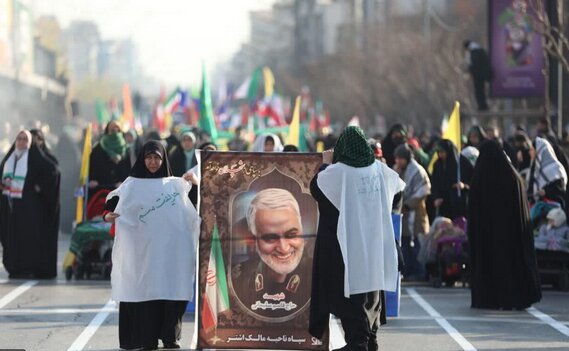
The cultural-military exercise, which involved 110,000 participants, was attended by Basij forces from the capital and members of several battalions.

The event showcased the readiness and professional skills of Basij forces in rescue operations and neighborhood defense.

Brigadier General Hassan Hassanzadeh, commander of the IRGC in Greater Tehran, highlighted that the exercise demonstrates the comprehensive readiness of Basij forces to face any threat and sends a message of unity and resilience to the enemies of the Islamic Revolution.

He emphasized the significant participation of youth in the exercise as a testament to the Basij’s capabilities across various domains.

In addition to displaying defense equipment, the exercise included the distribution of 110,000 food packages, 670 sets of household essentials, and numerous school supplies for the needy.

The items were donated by citizens, philanthropists, and Basi resistance bases and will be distributed among those in need in Tehran.

Iran Security Chief: Presence of Foreigners Complicates Regional Dynamics

Iran Security Chief: Presence of Foreigners Complicates Regional Dynamics

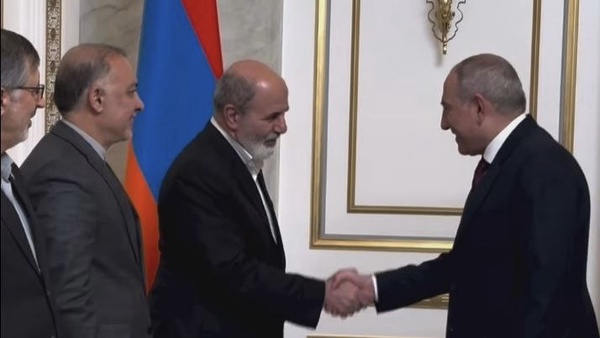
The meeting between Ali Akbar Ahmadian, Secretary of Iran’s Supreme National Security Council, and Nikol Pashinyan, Prime Minister of Armenia, took place on Thursday in Yerevan.

Ahmadian stated that the presence of extraterritorial and foreign forces does not contribute to resolving regional issues.

He also expressed the readiness of the Islamic Republic of Iran to share its experiences in various fields, including industry, agriculture, nanotechnology, and biotechnology with Armenia.

The Prime Minister of Armenia, in turn, expressed interest in further participation and cooperation in the North-South corridor and utilizing its potential.

In honoring the memory of the martyr President Raisi, he emphasized the goal of achieving a $3 billion volume in economic interactions between the two countries, as agreed upon during the time of the martyr Iranian president.

The two sides stressed the importance of enhancing political, economic, and defense relations between Tehran and Yerevan during their discussions.

Prior to Yerevan, the Secretary of Iran’s Supreme National Security Council had met and discussed with officials in Azerbaijan Republic, including President Ilham Aliyev.

Spokesman: Iranian National, Child Exit Syria, to Return Home Soon

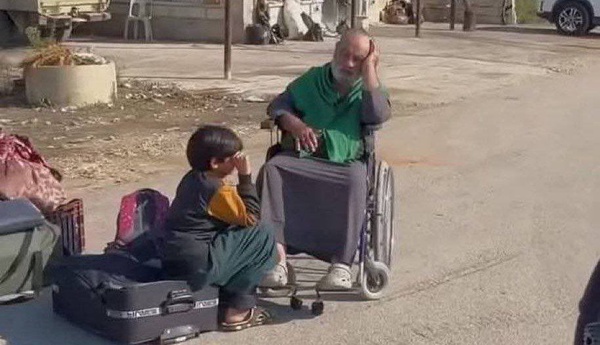
In an interview with Fars News Agency, Baqaei confirmed that necessary arrangements have been made for the return of the Iranian citizen and his child, adding that they are expected to arrive in the country shortly.

Ali Akbar Abotaleb Isfahani had traveled to Syria some time ago for a pilgrimage to holy sites but was unable to leave due to the security situation in the country.

Baqaei expressed gratitude to all parties involved in facilitating this humanitarian effort and reiterated that the Ministry of Foreign Affairs spares no effort in protecting Iranian nationals abroad.

Iranian knowledge-based company produces nano diagnostic kit for rapid heart attack detection

Iranian knowledge-based company produces nano diagnostic kit for rapid heart attack detection

According to the Communications and information center of the Vice Presidency for Science, Technology, and Knowledge-Based Economy, symptoms such as chest pain, shoulder and neck discomfort, and shortness of breath often indicate the possibility of a heart attack. In such cases, doctors rely on specific tests to confirm the diagnosis.

After a heart attack, cardiac troponin (cTnI) is released into the bloodstream from damaged heart muscles. This biomarker remains elevated for 6 to 10 days, making it a reliable indicator for detecting heart attacks. Traditionally, blood samples are sent to laboratories, with results taking hours to process.

The new nano diagnostic kits can identify troponin levels in a fraction of this time, providing a life-saving advantage in critical situations. Particularly useful in emergency settings, such as ambulances, these kits enable rapid diagnosis and timely treatment.

The company has signed a collaboration agreement with Tehran’s emergency services to deploy these kits in ambulances. Additionally, their use in medical laboratories can significantly accelerate testing processes, enhancing patient survival rates through faster intervention.

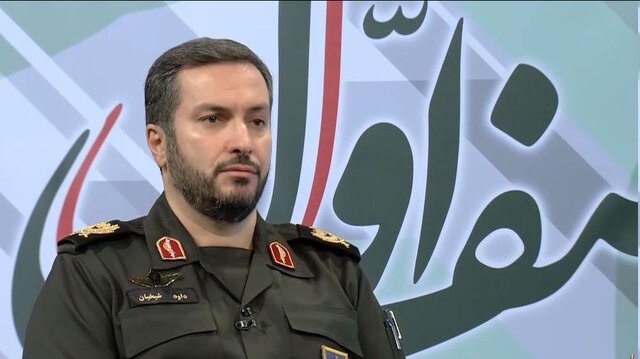
IRGC aerospace cmdr. announces indigenous anti-ballistic defense system

He emphasized the strategic impact this development will have on military dynamics and the perception of adversarial nations.

General Shekhian highlighted the challenge of detecting stealth fighters such as the F-35 and F-22 but affirmed that Iran’s locally developed radar and defense technologies are designed to counter such threats.

He praised the performance of the “9th of Dey” missile system alongside the Dezful and 3rd Khordad systems during a joint air defense exercise, countering claims by the Zionist regime that Iran’s air defenses had been neutralized. “The wide-scale exercises involving both IRGC and Army units demonstrate that we have not lost any strategic capability,” Shekhian asserted.

He also detailed the rapid restoration of damaged systems post-operation “True Promise 2,” ensuring an enhanced defense capacity. He was referring to the anti-Israel operation involving missiles and drones by the Iranian Armed Forces a few months ago.

The drills, organized under the “Defenders of the Sky of Velayat” framework, simulate real-world scenarios with the Army acting as the adversary and the IRGC executing defensive strategies.

Shekhian concluded by noting that the exercises included operations around key sites like Natanz, showcasing Iran’s readiness to respond to any aggression with reinforced capabilities.