Saturday, December 27, 2025
Home Blog Page 543

Israeli attacks kill dozens in Gaza after ceasefire deal announced

One attack on a house near the Engineers Union Building in Gaza City in the north of the Gaza Strip on Wednesday night killed at least 18 people, Al Jazeera Arabic reported.

The Palestinian Civil Defence also announced it retrieved the bodies of 12 people from Gaza City’s Sheikh Radwan neighbourhood.

In central Gaza, five people were killed in an Israeli drone strike that targeted a gathering of people in the Karaj area in the Bureij camp.

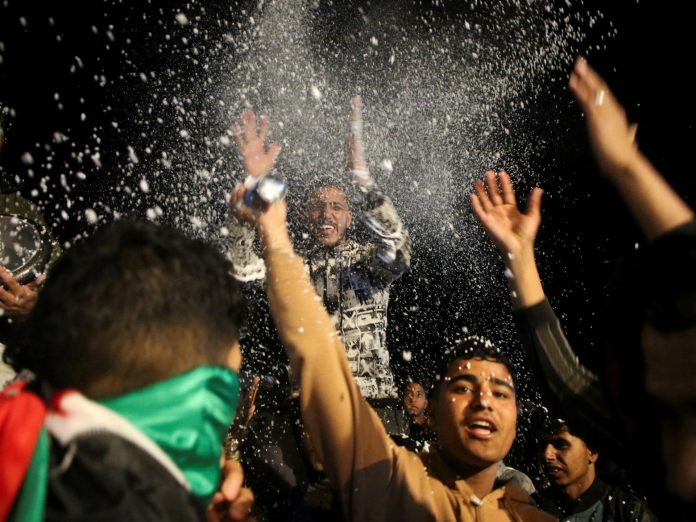
The death toll, which was counted from dawn on Wednesday, continued to rise as Palestinians returned to shelter in their tents after briefly celebrating news of a ceasefire deal that was reached between Israel and Hamas on Wednesday evening.

Qatar announced on Wednesday a cease-fire agreement to end over 15 months of deadly Israeli attacks on the Gaza Strip.

Qatari Prime Minister and Foreign Minister Sheikh Mohammed bin Abdulrahman Al Thani said the 3-phase deal will come into effect on Sunday.

More than 46,700 Palestinians, mostly women and children were killed and over 110,000 others injured in Israel’s genocidal war on Gaza since Oct. 7, 2023, according to local health authorities.

The war has left more than 11,000 people missing, with widespread destruction and a humanitarian crisis that has claimed the lives of many elderly people and children in one of the worst global humanitarian disasters ever.

In November, the International Criminal Court issued arrest warrants for Israeli Prime Minister Benjamin Netanyahu and his former Defense Minister Yoav Gallant for war crimes and crimes against humanity in Gaza.

Israel also faces a genocide case at the International Court of Justice for its war on the enclave.

Iran, Tajikistan sing 23 MoUs to bolster ties

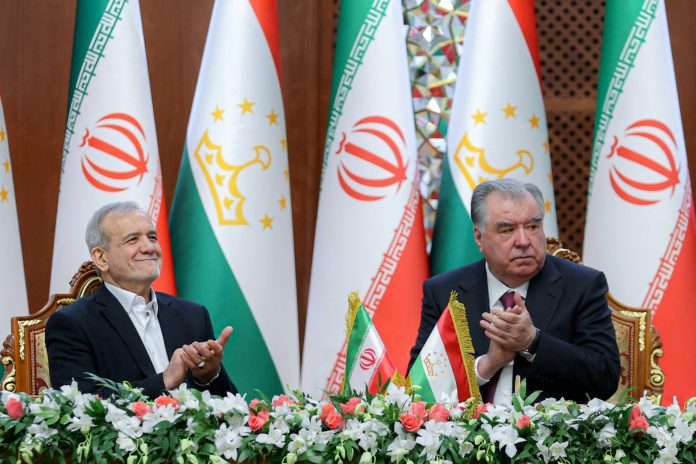
Pezeshkian met Rahmon on Thursday in Tajikistan’s capital of Dushanbe, where Iranian and Tajik officials put their signatures on 23 documents on cooperation in the fields of politics, economy, culture, society, education, transportation, customs services, trade, health, veterinary, electronic systems, technology, as well as ties between the two countries’ police forces.

In talks after the meeting, Pezeshkian hoped that the implementation of the MoUs would result in serious steps towards enhancing cooperation swiftly.

He also noted that the common Persian language, and historical and civilizational bonds between Iran and Tajikistan demonstrate the depth of their friendship.

“Tajikistan is one of our strategic partners in the region and there are deep neighborly relations between our countries,” he added.

The Iranian chief executive further called for removing hurdles in the way of developing Tehran-Dushanbe ties, emphasizing that the two sides can mediate the resolution of problems gripping the region.

Rahmon, for his part, hailed commonalities between the two countries, saying Pezeshkian’s visit provides a good opportunity for bolstering relations in all sectors.

The Iranian president arrived in Tajikistan on Wednesday night for a two-day visit. Afterward, he will travel to Russia, where he is set to hold talks with President Vladimir Putin and sign a comprehensive strategic partnership pact.

Top military commander: No enemy dares to challenge Iran

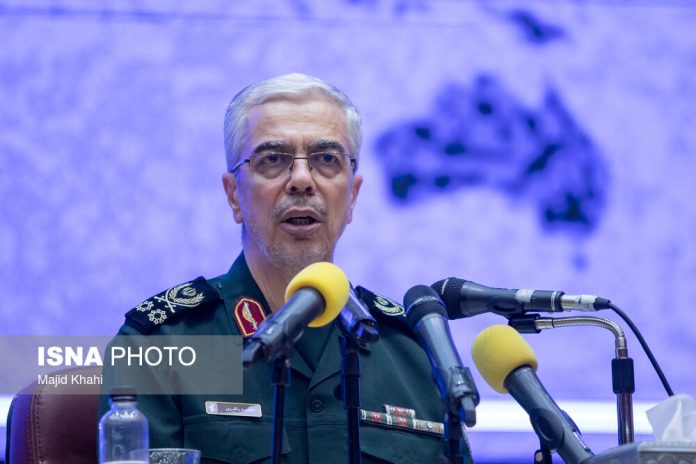
Mohammad Bagheri

Speaking at the inauguration of the new Second Naval Zone of Velayat in the strategic Jask region in southern Iran and the addition of new defense systems, Bagheri emphasized the comprehensive readiness of Iran’s naval forces.

“Our Navy is fully prepared in various educational, technical, and operational dimensions,” Bagheri stated.

He highlighted the strategic importance of Iran’s long coastline, which, if utilized properly, could significantly bolster Iran’s regional power and position it as a global force.

Bagheri praised the local production of defense equipment, noting that unlike before the 1979 Revolution when Iran relied on international suppliers, today, the majority of naval equipment is domestically produced by Iranian experts.

He also acknowledged the strategic placement of the new naval zone in Jask, which enhances Iran’s ability to conduct maritime operations globally.

Bagheri asserted that the resilience and capability of Iran’s Navy ensure the protection of the nation’s interests and security, even in the face of international sanctions and challenges.

Iran rebuts NYT story on contact with Elon Musk over release of Italian journalist

Esmael baghaei

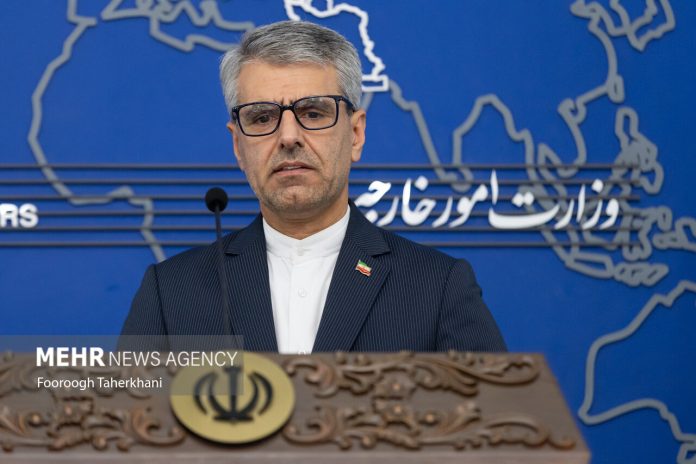
Esmaeil Baghaei rejected on Thursday the report by The New York Times newspaper as “prevarication and media fantasy” after the American daily claimed that the release of Italian journalist Cecilia Sala was the result of Musk’s contact with Iran’s ambassador at the UN.

Citing two Iranian officials, who were allegedly both familiar with the terms of the prisoner exchange, the paper claimed, “Mr. Musk helped secure the release of Ms. Sala by reaching out to Iran’s ambassador to the UN, Amir Saeid Iravani.”

Last week, Tehran released Italian journalist Sala who had been arrested on December 19, 2024, for violating Iran’s laws.

Tehran-Moscow strategic deal step toward ‘more balanced and just world’: Iran’s FM

Abbas Araghchi

The Kremlin said on Monday the Iranian president and his Russian counterpart Vladimir Putin would sign the agreement after negotiations in Moscow on January 17.

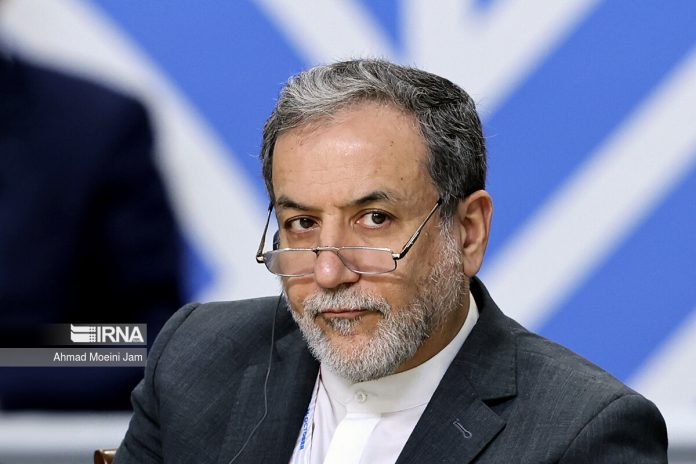
“Iran and Russia, having realized their historical responsibility, are building a new order in which cooperation will replace hegemony, and respect will replace imposition,” Araghchi said in an article published on Sputnik on Wednesday.

He added that the two countries are moving towards creating a bright future for their people and other independent nations.

Stressing that Iran-Russia relations have undergone “difficult tests” throughout history, Araghchi said that mutual ties currently exemplify “sustainable and future-oriented” cooperation.

He said the strategic partnership deal is a “turning point” that will promote mutual relations and prepare a ground for the two countries to play a joint role in regional and global developments.

As two large and powerful countries, Iran and Russia play a leading role in shaping the new world order, the top Iranian diplomat said.

He added that Iran, which enjoys a strategic position in the global energy and trade sphere, and Russia, as a country endowed with highly rich resources, advanced industries, and widespread influence, have enormous potential to boost cooperation.

In addition to their geographical and economic features, the two countries are also aligned in their fundamental principles, he noted.

“Both oppose unilateralism and illegal interference in the internal affairs of countries. Cooperation between Iran and Russia is not only a bilateral interaction but also a message to all countries that believe in national sovereignty, justice and multilateralism,” Araghchi emphasized.

“The signing of the 20-year agreement between Iran and Russia is not just a political document, but also a roadmap for the future. This agreement covers all aspects of cooperation between the two countries,” Araghchi said.

He added that the document will specifically focus on improving economic cooperation between the two countries.

The new strategic agreement between Russia and Iran contributes to the completion of the North-South transport corridor and the promotion of the volume of trade in line with strengthening the economic ties between the two countries, the Iranian foreign minister said in the article.

“This huge transport project connects Iran to Russia and from there to Europe and Asia. With the completion of this corridor, trade routes between the two countries will become shorter and costs will be reduced,” the article read.

The new agreement also aims at accelerating the growth of trade volume between Iran and Russia, which increased by 15% last year, the minister said.

He added that the document encompasses all economic aspects, including the development of common markets and investment in infrastructure projects.

“Iran and Russia, as two major powers in the oil and gas industry, can cooperate with each other in energy production, transmission and export,” Araghchi pointed out.

He pointed to the extensive scientific and research capacities of Iran and Russia, saying the treaty will prepare the ground for sharing knowledge and increasing cooperation in areas such as nanotechnology, aerospace, artificial intelligence and medical sciences.

He noted that the agreement also seeks to facilitate travel conditions for tourists in order to strengthen cultural cooperation.

“One of the underestimated aspects of international relations is the importance of cultural exchanges. The strategic agreement will facilitate travel conditions for tourists and create joint cultural programs, allowing the two countries to better understand each other,” Araghchi said.

The Iranian minister said Iran and Russia have an active presence in organizations such as the Shanghai Cooperation Organization, the BRICS group of emerging economies, and the Eurasian Economic Union, adding that they are defining a new model of regional and global cooperation.

Araghchi said a key component of the strategic deal between Iran and Russia is the enhancement of security and defense cooperation.

“Iran and Russia have valuable experience in combating terrorism and extremism. Such a partnership aimed at strengthening regional and global stability meets not only the interests of the two countries, but also those of global peace,” he added.

He dismissed claims by certain media outlets about Tehran-Moscow interaction, saying their bilateral cooperation does not aim to pose any threat but seeks to improve common security and protect human values.

At the same time, Araghchi noted that the agreement does not imply a military union.

“It is an entirely comprehensive agreement. For instance, it is not an agreement on a military union, with a particular target, but entirely comprehensive and covers all aspects,” he emphasized.

The top Iranian diplomat said Tehran and Moscow have consistently emphasized the need to end humanitarian crises, explaining that cooperation in sending humanitarian aid to Gaza and support for international resolutions to stop the conflict are examples of the common vision.

Iran Leader praises Gaza ceasefire as ‘victory for Palestinian patience, resistance’

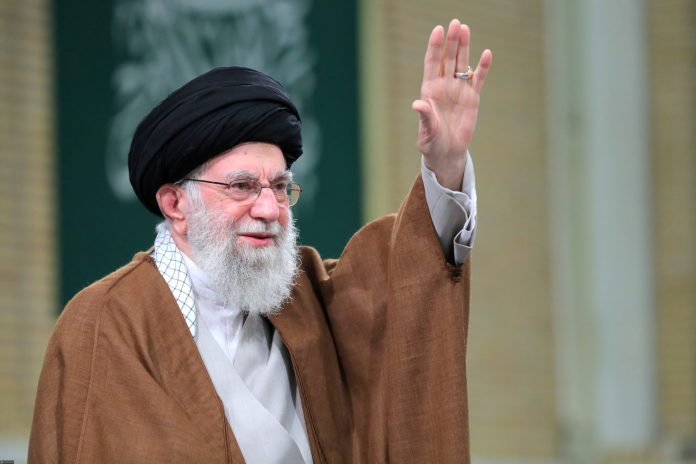
Ayatollah Sayyed Ali Khamenei

The message praised the resilience and determination of the Palestinian people and their resistance forces.

“Today, the world realized that the patience of the people of Gaza and the steadfastness of Palestinian resistance forced the Zionist regime to retreat,” the message read.

“In the future, history books will write that a group of Zionists, committed the most heinous crimes and killed thousands of women and children, but ultimately faced defeat,” it added.

The ceasefire in Gaza, announced on Wednesday, comes after 16 months of intense Israeli genocidal campaign. It includes the release of captives held by Hamas and Palestinian prisoners in Israeli jails.

The ceasefire aims to halt the violence, provide humanitarian aid to civilians, and pave the way for a permanent resolution to the conflict.

Iran says newly-unveiled Zagros from new generation of AI-powered vessels

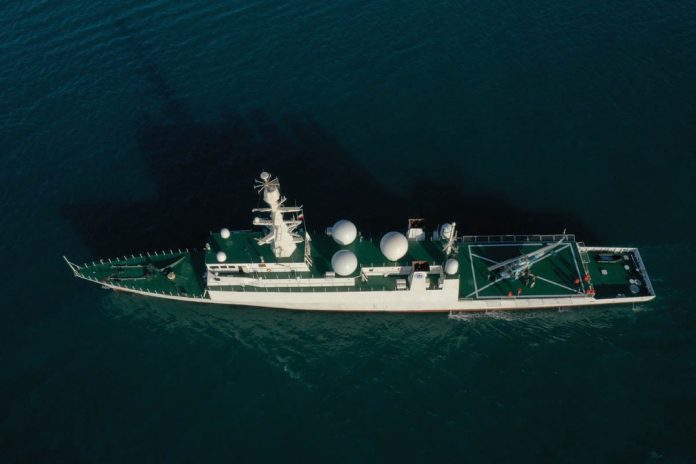
Zagros Destroyer

According to Captain Eskandari, the rapid pace of technological advancements and evolving maritime threats have necessitated updates in the Navy’s operational strategies and equipment.

“The Zagros warship, built entirely in Iran, embodies this strategy with its innovative sensors and AI-driven algorithms,” he stated.

The Zagros warship, which joined the fleet on Wednesday, boasts cutting-edge electronic sensors, advanced electromagnetic wave processing, cyber operations, and intelligent monitoring systems.

Captain Eskandari emphasized the vessel’s ability to collect extensive data and its resilience in challenging conditions, which ensures robust defense and intelligence capabilities.

The warship’s propulsion system, designed and manufactured domestically, enhances its operational efficiency and versatility. It can accommodate and operate various helicopters, providing rescue operations and maritime navigation in adverse sea conditions.

Captain Eskandari concluded the construction of the Zagros warship at the Bandar Abbas shipyards was a testament to the dedication and expertise of the Iranian Navy personnel and defense industry specialists, despite global sanctions and obstacles.

Hamas says Gaza ceasefire deal result of steadfastness, resistance over 15 months

The movement made the remarks in a statement on Wednesday following the announcement of the deal that the regime agreed to after coming under hundreds of retaliatory operations by Palestinian resistance groups.

“The ceasefire agreement is a result of the legendary steadfastness of our great Palestinian people and our valiant resistance in the Gaza Strip over the past 15 months,” it said.

“The agreement to end the aggression on Gaza is an achievement for our people, our resistance, our nation, and the free people of the world. It marks a pivotal moment in the struggle against the enemy, paving the way toward achieving our people’s goals of liberation and return,” the movement added.

According to Hamas, the agreement stemmed from the group’s responsibility toward the patient and steadfast people in Gaza, putting an end to the Zionist aggression against them and halting the bloodshed, massacres, and genocide they have endured.

The group also expressed its appreciation and gratitude for all the honorable official and popular stances that stood in solidarity with Gaza, supported our people, and helped expose the occupation and halt the aggression, whether Arab, Islamic, or international.

It finally voiced special gratitude to the Qatari and Egyptian mediators, who had exerted significant efforts to achieve this agreement.

The Palestinian Islamic Jihad, Hamas’ fellow Gaza-based resistance movement, chimed in by announcing, “Today, our people and their resistance are imposing an honorable agreement to stop the aggression, [Israeli forces’] withdrawal, and conduct an honorable [captive/]prisoner exchange, due to their legendary steadfastness and their brave and valiant fighters.”

The group mourned Gaza’s righteous martyrs, affirming that it would spare no effort in serving the people in the territory and keeping pace with the challenges of the coming stage.

It also extended greetings to all the resistance forces that had supported the Palestinian people throughout the time, asserting that the resistance would remain vigilant to ensure full implementation of the agreement.

The Popular Front for the Liberation of Palestine (PFLP), a Palestinian group based in Gaza and the West Bank, also hailed that “Gaza triumphs over genocide.”

Al-Qassam Brigades’ spokesman Abu Obeida also hailed the patience and steadfastness and firmness of Palestinian fighters in the face of United States-backed Israeli tyranny.

“Peace upon the souls of our martyrs, our innocent children, and our oppressed people,” he said, adding, “Peace be upon your souls that will one day soar in the skies of our liberated al-Quds and al-Aqsa, purified from the defilement of your killers.”

The Palestinian Mujahideen Movement, another resistance faction, released a similar statement, lauding Palestinians’ triumph over the “Zionist Nazi” Israeli regime, “supported by the criminal American administration and all the forces of global evil.”

“Our people and their resistance in Gaza have secured an agreement for a ceasefire and a [captive/]prisoner exchange, thwarting the enemy’s plans for displacement and the eradication of the resistance.”

The Palestinians, it said, had, therefore, thwarted the enemy’s plans for displacement and the liquidation of the Palestinian cause of liberation from Israeli occupation and aggression, bringing the just cause back to global prominence.

They “humiliated the enemy, shattered its arrogance, and inflicted upon it successive losses that cannot be concealed, despite the [simultaneous Israeli] siege, brutal aggression, conspiracies, and betrayals,” the group stated.

It also likewise admired the regional Axis of Resistance for their supportive sacrifices “in a time of betrayal and international complicity.”

The movement finally averred that the resistance would stay fast down its course to reclaim all of Palestinians’ rights and liberate all their lands, and thanked Qatari and Egyptian mediators for their persistent efforts towards realizing the ceasefire.

IRGC hails Gaza ceasefire as victory for Palestinian resistance

The statement hails Operation Al-Aqsa Storm by the Palestinian resistance movements and condemns the brutal and genocidal actions of the Israeli regime against the defenseless Palestinian people.

The IRGC praised the resilience and determination of Hamas and the Islamic Resistance, which ultimately led to the ceasefire.

The statement notes that despite the full support of the US and its allies, the Israeli regime failed to achieve its goals of freeing prisoners without cost, destroying Hamas, and resettling northern settlers.

The 463 days of aggression resulted in over 50,000 deaths, hundreds of thousands injured, and the destruction of more than 80% of Gaza’s vital infrastructure.

The statement celebrates the return of the resilient people of Gaza to their homes and predicts internal strife and criticism for the Israeli leadership.

The IRGC also warned of potential breaches by the Zionist regime and stressed the importance of maintaining readiness for new conflicts.

The IRGC concluded by honoring the martyrs of the recent conflict and expressing hope for the eventual liberation of Al-Aqsa Mosque and Al-Quds.

Iran-Russia comprehensive agreement: ‘A roadmap for economic cooperation’

Pezeshkian and Putin

In an exclusive interview with IRNA, Slutsky emphasized that the agreement, signed ahead of President Massoud Pezeshkian’s visit to Russia, will focus on enhancing economic cooperation in sectors such as transportation, energy, and technology.

Slutsky highlighted the strategic partnership agreement as a significant step in both bilateral relations and regional and international agendas, including security and balanced cooperation.

He noted that Iran and Russia play crucial roles in shaping a multipolar world order, fostering relations based on mutual respect for territorial integrity and sovereignty.

Addressing speculations about the timing of the agreement’s signing before the inauguration of U.S. President-elect Donald Trump on January 20, Slutsky dismissed any connection.

He underscored that both Iran and Russia oppose U.S. hegemony, a unipolar world, and collective Western efforts to dictate policies, while their cooperation is rooted in deeper historical ties.

Slutsky also clarified that both nations adhere to the principles of the UN Charter regarding sovereign equality of all nations, emphasizing the agreement should not be interpreted as a step against other countries.