Monday, December 29, 2025
Home Blog Page 4974

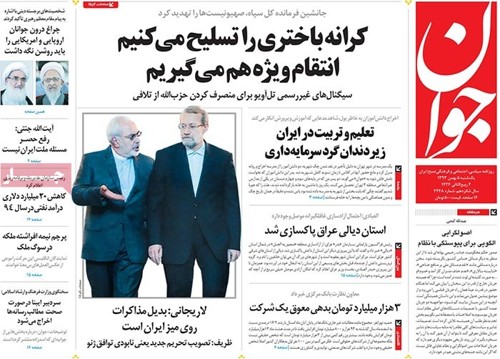
Restoration of security in Iraq benefits the entire region: Larijani

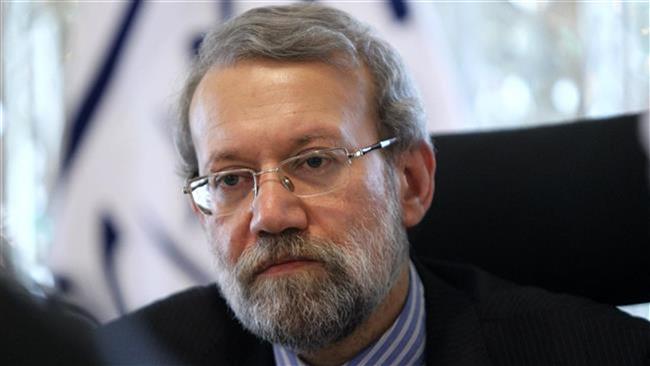
Larijani-Iraq health miniter

Parliament Speaker Ali Larijani said on Tuesday that the Iraqi government’s success in restoration of peace and security to the country will benefit the entire region.
Larijani made the remarks in a meeting with Iraqi Minister of Health Adilla Hamoud Hussein.

The Iranian speaker hailed the recent achievements of Iraqi forces in the fight against terrorist groups.

Larijani voiced Tehran’s support for the government of Baghdad in campaign against terrorism and said, “Iran feels duty-bound to support the Iraqi government and nation and Iraq can count on Iran’s support.”

Meanwhile, the Iraqi minister appreciated Iran’s support for the Iraqi government, saying Iran has played a key role in establishment of stability in Iraq.

Hamoud Hussein said that the Iraqi nation is in dire need of humanitarian aid from the Islamic Republic of Iran, especially medical supplies, as the country is faced with a wave of terrorist attacks.

Interaction, independence and dignity are our ideals

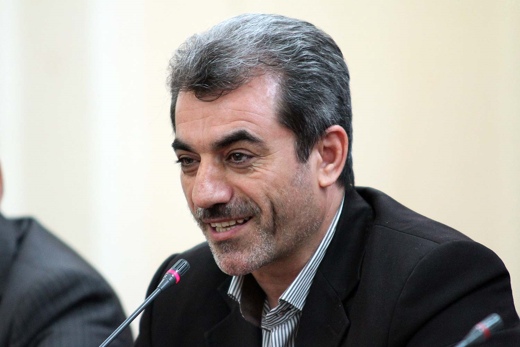
Seyyed reza akrami
Seyyed reza akrami

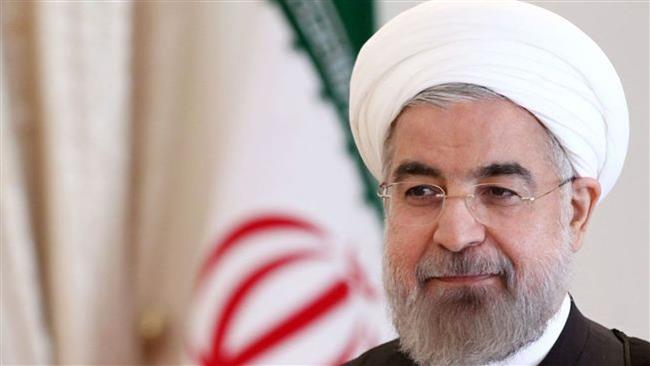
President Rouhani’s comments that our ideals are not tied to centrifuges have drawn a strong reaction from principlists. Seyyed Reza Akrami, a statesman, in a political note in Mardom-e Emrooz daily on January 6, sought to clarify the president’s comments made at a conference on Iran’s economy on Sunday. The following is a partial translation of the note that originally appeared under the heading Interaction is Our Ideal:

With regard to the president’s comments Sunday that “Our ideals are not tied to centrifuges,” three points need to be mentioned to shed light on what the president meant.

First, we live in a country whose vastness, strategic position, resources and diverse climatic conditions make it unique. We have 14 neighbors including Russia, Pakistan, Iraq and countries on the Persian Gulf. That lends added importance to our strategic position.

Second, we are a country of 80 million. That a large percentage of our population is young gives us a big advantage.

Third, we staged a revolution almost 36 years ago. Since the very beginning our motto has been Independence, Freedom and Islamic Republic. That means we want to lead a dignified, reputable life in the world. […]

I believe the important statement the president made in his speech was that we have diverse talents, but unfortunately they remain mostly untapped. The president said not everything in the country should be tied to enrichment and centrifuges.

Instead, detailed planning on the basis of resistance-based economy and firm resolve are needed to help these talents blossom. He meant we shouldn’t remain fixated on a single technology like nuclear centrifuges. […]

He believes our independence does not merely hinge on nuclear technology. We managed to enrich uranium when we were under sanctions. That shows we can forge ahead even when limitations are in place.

Failure of other countries to supply spare parts to our aviation industry won’t ground our air fleet; keeping oil prices low won’t cripple our economy; slapping technological restrictions on us won’t spell an end to our enrichment capability.

In the toughest of conditions, we have proved that we can master uranium enrichment, a technology only a handful of countries have developed.

However, since we seek to interact with the rest of the world, we agreed to replace 20 percent enrichment with 5 percent enrichment. We accepted supervisions beyond what is stipulated in the nuclear Non-Proliferation Treaty.

Those measures were simply designed not to provide an excuse to those who sought an excuse to accuse us of seeking to develop nuclear bombs. Interaction with the world under the banner of the Islamic Republic is an ideal of ours. We don’t have to limit ourselves to one technology.

I believe Independence, Freedom and Islamic Republic remain our ideals that have nothing to do with nuclear talks which in turn are not linked to these mottos. That we want to be independent, lead a dignified life, remain free under the banner of the Islamic Republic and interact with countries in the world is our ideal.

Iran MPs support foreign minister over nuclear talks

Zarif-Majlis

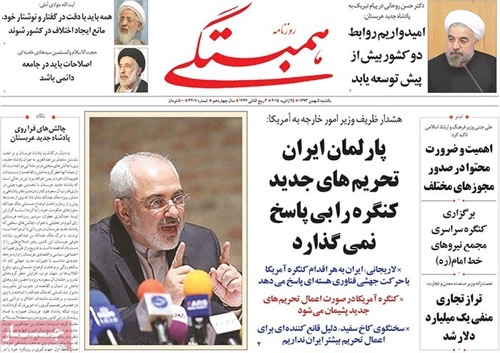
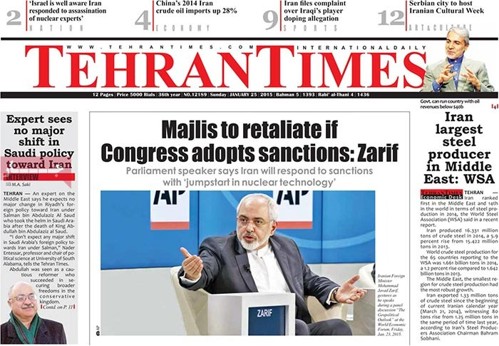
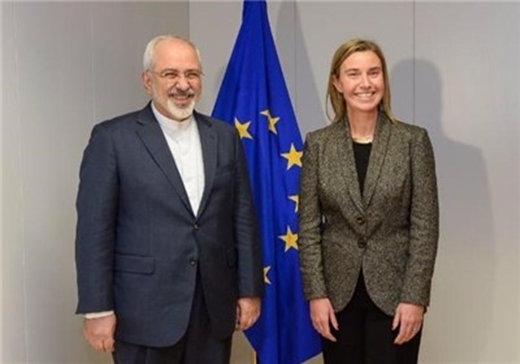
On Tuesday, Iranian Foreign Minister Mohammad Javad Zarif showed up in an open session of parliament to answer questions by lawmakers about the process of nuclear talks.

After Zarif’s explanations, the first deputy speaker of parliament, Mohammad Reza Bahonar, asked lawmakers to vote Aye or Nay for his explanations.

Out of 229 legislators present, as many as 125 MPs endorsed Zarif’s remarks while 86 were naysayers. The rest abstained.

A lawmaker from the northeastern city of Mashhad, Javad Karimi Ghoddousi, posed questions to Zarif on behalf of other legislators.

Nuclear negotiators from Iran and P5+1- the United States, France, Britain, Russia, China and Germany – wrapped up their latest round of talks on Tehran’s nuclear program in the Swiss city of Geneva on December 17, 2014.

The three-day Geneva discussions were held almost three weeks after Tehran and the six countries failed to reach a final agreement by a November 24 deadline despite making some progress.

The two sides agreed to extend their discussions for seven more months until July 1, 2015. They also agreed that the interim deal they had signed in Geneva in November 2013 should remain in place during the negotiations.

Tehran, P5+1 to hold next round of nuclear talks on Jan.18: Iran negotiator

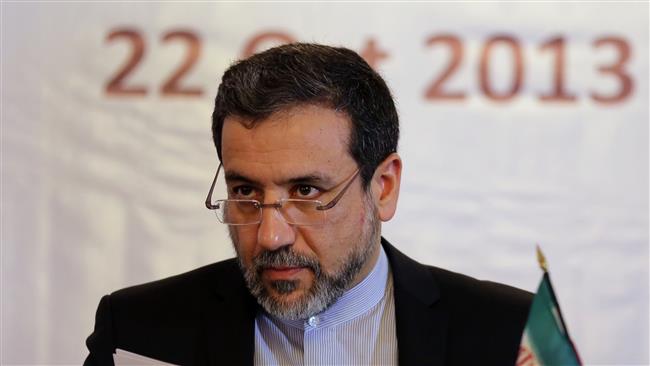
Abbas Araghchi

“The next round of negotiations between Iran and P5+1 will be held at deputy foreign ministerial level in the Swiss city of Geneva on January 18,” Iranian Deputy Foreign Minister for Legal and International Affairs Abbas Araghchi said on Tuesday.

He added that Iran’s negotiating team is also to hold mutual talks with delegations from the United States and Russia prior to the talks, adding that these mutual talks have yet to be scheduled.

Nuclear negotiators from Iran and P5+1– the US, Russia, China, France, Britain and Germany – wrapped up their latest round of talks on Tehran’s nuclear program in the Swiss city of Geneva on December 17, 2014.

The three-day Geneva discussions were held almost three weeks after Tehran and the six countries failed to reach a final agreement by a November 24 deadline despite making some progress.

The two sides agreed to extend their discussions for seven more months until July 1, 2015. They also agreed that the interim deal they had signed in Geneva in November 2013 should remain in place during the negotiations.

What is the president concerned about?

Armane Emrooz-1-6

On January 6, the editorial of Arman-e Emrooz, a reformist daily, was dedicated to the problems faced by President Rouhani and the reason why he has called for a referendum on major issues. The following is the translation of the editorial penned by Seyyed Ali Khorram, Ph.D., who previously represented the Islamic Republic of Iran at the UN:

In the run-up to the 2015 nuclear talks, which should produce a final result in as little as 10 weeks, President Rouhani is worried that the remaining time [before the deadline runs out] might be spent on haggling that would eventually produce no final deal.

In Iran some believe that there should be no rush in conducting the talks and that only if all conditions Iran has set are met, a deal should be struck. But a majority of people are worried about the country’s foreign relations and want tensions averted on the international stage, something that would guarantee Iran’s natural security, growth and development.

That does not necessarily mean that the majority in question is afraid of resistance. Rather it means after valuable three-decade experience, our country knows how to build on the principles of expedience, integrity and wisdom to secure its goals, and in doing so it seeks to avoid tension.

Given that the performance of the previous government created concerns on a national scale, the 11th government is basing its conduct on interaction with the rest of the world in line with preservation of national interests.

Between 1979, when the Islamic Revolution triumphed, and 2005 [when President Ahmadinejad took office] Iran’s oil revenues added up to $400 billion. In the eight years the ninth and 10th governments were in office [both led by Ahmadinejad], that figure rose to $720 billion.

Unfortunately, in that period when the country’s funds were awash with cash, the largest amount of fiat money – almost 40 percent of all money in circulation – was printed. As a result of inflation and mismanagement, Iran’s economic growth that hovered around 7 or 8 percent plunged to minus 5.8 percent.

President Rouhani’s government inherited a sluggish economic, a lethargic industry and a weak private sector which was teetering on the brink. Academic research suggests that international sanctions were to blame for only 22 percent of the woes the country’s economy was grappling with. The rest came as a direct result of government mismanagement.

One and a half years into his presidency, Mr. Rouhani is deeply worried that failure of nuclear talks might render the remaining 30 months of his presidency ineffective, with some dismissing his four years in office as useless later on.

It comes despite the fact that Dr. Rouhani’s government brings together the most effective and seasoned ministers among the last 10 governments. They can do great things for Iran’s progress if they are allowed to.

For instance, Foreign Minister [Mohammad Javad Zarif] is one of the ablest diplomats of the Islamic Republic of Iran who can help secure many of our national, regional and international goals in constructive interaction with regional and world countries. To that end though, he should be given authority to plan and implement plans within the framework of national security and interests.

Certainly, settlement of Iran’s nuclear dossier can give Dr. Zarif plenty of room to maneuver in the region and on the world stage. That is why President Rouhani is worried as to how to solve the nuclear case.

No doubt, in a win-win deal only some demands of one side and some of the other are met. Neither side can cling to their demands in their entirety. That would deny the other side their demands, as a result of which the negotiating process would fall through.

Dr. Rouhani does not have all the time in the world to spectate as developments in the country’s foreign policy in general and the nuclear case in particular unfold. He has only two and a half years left and one needs to understand that.

Of course the president is not the only one who is concerned. The economy, industry and foreign policy of a great country like Iran are at stake. They should not be held hostage by extremist attitudes and emotional fluctuations of some.

Our country needs to develop an industrial and economic strategy and make a leap forward not only to make up for the shortcomings of the past, but achieve the goals stipulated in the 2025 Outlook Plan. That would be impossible unless a foreign policy which is based on constructive interaction, as envisioned in the Outlook Plan, is employed.

With that in mind, one appreciates the president’s concerns. He has said nothing new; he has simply expressed concerns about non-implementation of the Outlook Plan that holds the key to our national growth and development.

Maybe he is worried that a small number are hiding behind what they describe as genuine concerns to waste the opportunity that the nuclear dossier has created and halt the progressive movement of the nation.

Believing that the majority of people and officials hold a different view and want peaceful nuclear technology alongside national progress, the president is telling the minority in question that in a democratic process the viewpoints of the people can be sought in a transparent referendum.

Iran has marked a 40-km red zone inside Iraqi border

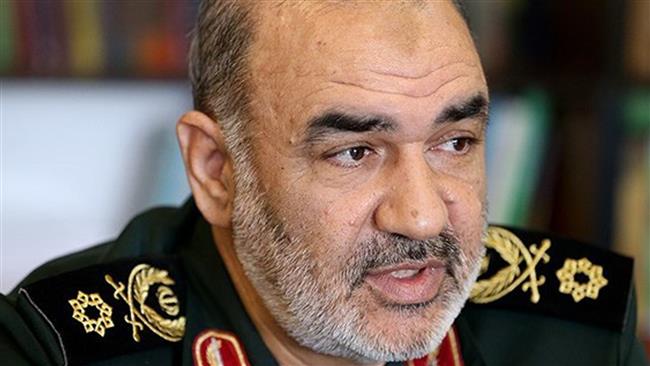
General Ahmad-Reza Pourdastan

Brigadier General Ahmad Reza Pourdastan said Tuesday that the Iranian army warned ISIL against any potential movement toward the Iranian border since the very beginning of the terrorist group’s incursion into Iraq.

“When ISIL Takfiri terrorists penetrated western Iraq and were close to the Iranian borders, the Ground Forces were fully ready to annihilate them,” the commander told IRNA.

“We marked a red line 40 kilometers into the Iraqi soil and warned (them) they will face Iran’s harsh response if they cross the line.

“The group received our message and fled the zone quickly,” he said.

Pourdastan said that the Iranian army is fully familiar with tactics used by terrorists and closely monitors their movement inside Iraq.

The ISIL terrorist group took control of Iraq’s second largest city of Mosul in June 2014, before sweeping through parts of the country’s Sunni Arab heartland.

The Takfiri group, with members from several Western countries, has been carrying out horrific acts of violence such as public decapitations and crucifixions against all communities, including Shias, Sunnis, Kurds, and Christians.

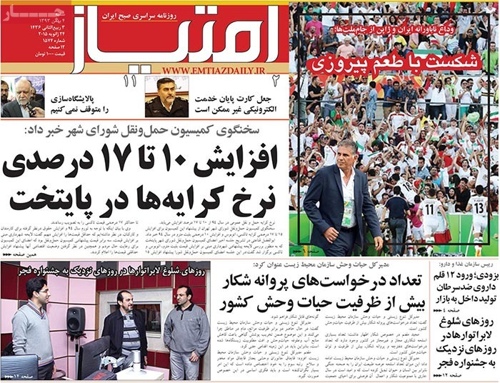
Ali Daei sends a message to Iranian national soccer squad and captain

Ali Dai

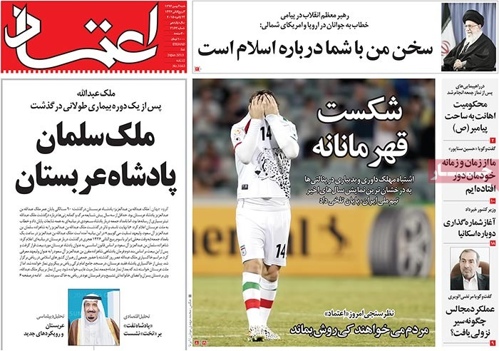
The 2015 Asian Cup will kick off in less than a week in Australia. The Iranian national soccer team is now in Australia. On January 6, Ettela’at, a daily, reported that Ali Daei, who holds the title of the most prolific scorer in the soccer world, has sent a letter to the national team captain Javad Nekounam to lift the spirit of the skipper and his squad. What comes next is the translation of the message of the former national team captain and coach:

In an interesting move, Ali Daei congratulated Javad Nekounam on his imminent shattering of the record of the number of matches he has capped – a record Daei has held on to for years – and also wished the Iranian national soccer squad every success at the 2015 Asian Cup.

“Dear Javad, the national soccer team captain, I appreciate your efforts and I am wholeheartedly delighted that you will soon claim the title of the national team player with the highest number of matches under your belt. I congratulate you on that imminent achievement.

“I also hope that an Iranian will smash [my] world record for scoring goals in official international football matches so that the title will remain Iranian. I am aware that Iran head coach Carlos Queiroz is not happy with preparations for the [Australia] event and the national team has not been given what it deserves.

“However, I am sure that Queiroz, you and your teammates will make us proud and prove that in spite of all obstacles, you can make it. As a fan of the national team, in every moment of your upcoming matches, you are always on my mind and you will be in my prayers.

“God willing, I will fly to Australia for the final match to see firsthand our captain and his teammates lift the trophy [after the blow of the final whistle]. I want you not to pay attention to shortcomings and biased comments. I have no doubt that you, the national team, Carlos Queiroz and his assistants all deserve the best. I wish Iran and the Iranians every success.”

Iran will never give up nuclear rights: Zarif

Mohamad Javad Zarif

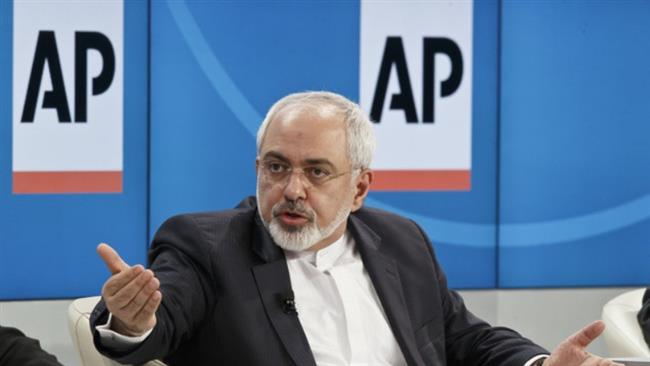
“In these negotiations, we will defend the interests of all people and take the country’s high goals into consideration,” Zarif said at an open session of Iran’s Parliament (Majlis) on Tuesday in response to questions by 40 lawmakers.

He pointed to Iran’s “effective and serious” presence and role in regional and international developments and added that the ill-wishers of Iran and the Islamic Revolution organized and implemented a relatively long-term plot to portray the Islamic Republic’s peaceful nuclear activities as a threat with two major objectives.

The first one, the Iranian minister said, was to “portray an insecure and dangerous image of Iran, [as a country] which endangers global peace and security; and the second one was to weaken the country’s economic, defense and industrial capability and exert pressure on our good people” through various cruel sanctions, including by the UN Security Council as well as unilateral bans.

The nuclear negotiations, however, illustrated an “interactive, stable and powerful” image of Iran and prevented the expansion of sanctions, he pointed out.

Zarif said that, following the Geneva deal reached between Iran and the P5+1 countries in November 2013, Iran’s foreign policy managed to counter the hostile propaganda against the Islamic Republic and boost the country’s security and power.

“I assure you that the [Iranian] government and negotiating team have never followed and will never follow any political and factional objective in the nuclear talks,” the top Iranian nuclear negotiator added.

Iran and the five permanent members of the UN Security Council – Russia, China, France, Britain and the US – plus Germany wrapped up their latest round of talks on the Islamic Republic’s nuclear program in the Swiss city of Geneva on December 17, 2014.

The three-day Geneva discussions were held almost three weeks after Tehran and the six countries failed to reach a final agreement by a November 24 deadline despite making some progress. Back then, the two sides agreed to extend their discussions for seven more months until July 1, 2015. They also agreed that the interim deal they had signed in Geneva in November 2013 should remain in place during the negotiations.

Renovation of Biglar Beigi Building in Photos

Iran-Biglar Beigi Garden

Biglar Beigi Garden is located in Ekhtiarabad Village, 25 km from the southern Iranian city of Kerman. The adobe building inside the garden, which is also known as Fathabad Garden, was built some 140 years ago when the Qajar Dynasty was in power. It was registered as a national site in 2002. The following are some images IRNA posted of the building which is undergoing renovation:


Rafsanjani warns of civil war in Iraq

Rafsanjani-Hakim

Chairman of the Expediency Council Ayatollah Akbar Hashemi Rafsanjani said on Monday that Shia and Sunni dignitaries should be watchful of civil war in Iraq.

He made the remarks in a meeting with head of the Supreme Iraqi Islamic Council, Ammar al-Hakim.

Ayatollah Rafsanjani said support for the IS terrorist group by certain regional states is the result of their lack of political wisdom and foresightedness.

‘The Shia and Sunni dignitaries should be vigilant not to allow enemies of Islam not to drag Muslims into civil war,’ warned Ayatollah Rafsanjani.

Saying that generosity and courage are two noble features of Iraqi people, as observed in Arbaeen procession this year, Ayatollah Rafsanjani said when insecurity was prevailing in every corner of Iraq, people set out, on foot, for Karbala from around the country and people in cities along the way host the majority of the guests, and drew the attention of global observers.

Ayatollah Rafsanjani said treating people with compassion was on agenda of the words and deeds of the infallible household of Holy Prophet (PBUH), and said a true Shia Muslim should learn from the infallible household of the prophet about how to stick to ethics and respect people equally.

He said religious festivals should not be an excuse for desecration of sanctity by followers of other religions.

The Ayatollah underlined the need for unity and solidarity in the world of Islam, especially in Iraq, and said divisions strengthen such groups as IS, Boko Haram, Jibha al-Nasra, Wahabis and Salafis.

He said that even if terrorists succeed in capturing certain regions by force, they will fail to do so when people’s consent and sovereignty is to be taken into consideration because they can do nothing other than massacre of people and plunder of assets and bullying them.

As for the goals behind strengthening terrorist groups in Muslim lands, Ayatollah Rafsanjani said establishment of military bases by enemies is the sign of their program for staying long in the Muslim lands.

He lauded the important and outstanding role of the authorities and people of the Iraqi Kurdistan Region in preserving and ensuring security in the country.

Emphasizing the need for cooperation between Iran and Iraq and ample ground for expansion of cooperation, Ayatollah Rafsanjani said Tehran and Baghdad with rich natural resources, geographical condition and Ahl-ul-Bayt (AS) school of thought have the potential to cooperate with the whole world.

Hakim in turn recalled the opinion of Ayatollah Shahid Seyed Mohammad-Bagher Hakim and the late Ayatollah Seyed Abdelaziz Hakim about Ayatollah Rafsanjani and said at different historical junctures, Ayatollah Rafsanjani played a key and influential role in Iraq, striving for interests and benefits of the public.

He then provided Ayatollah Rafsanjani with a report on the presence of some on 20 million people in Arbaeen ceremonies this year and said he had joined the public in the ceremony from Basra to Karbala and observed public love and feeling for Imam Hossein (AS) and his mourners.

Underlining political and security conditions in Iraq and unity between Shia and Sunni Muslims there he said solidarity between Muslims has prompted the enraged enemies to resort to savage acts of terror and the emergence of terrorist groups such as IS is a result of their latest attempts to that end.

He commented on conditions of Shia in the world of Islam, especially Iraq, and said Shia Muslims want Iraq for all people from all religious and ethnic groups and the past 11 years have shown that despite civil differences, Iraq believes in democracy in general.

Underscoring the need for cooperation between Kurds and Shia Muslims to ensure security in Iraq, he added our principal goal is to guarantee the territorial integrity of Iraq.