Wednesday, December 24, 2025
Home Blog Page 497

Iran gov’t spokesperson does not rule out talks with US

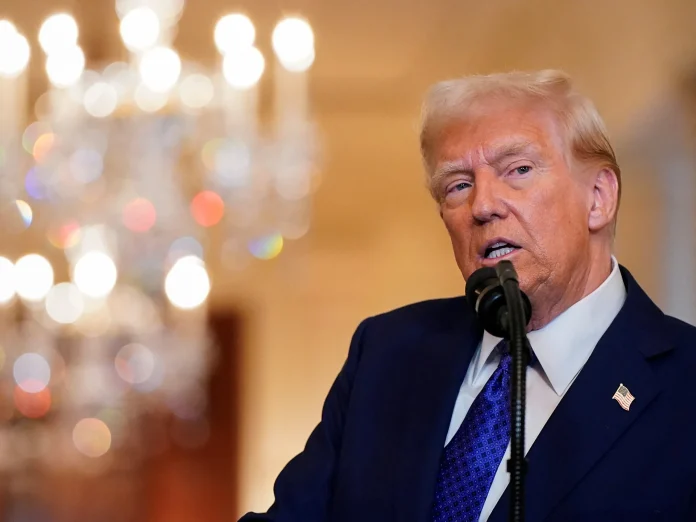
The remarks by Fatemeh Mohajerani came in response to US President Donald Trump’s announcement a day earlier of his willingness to negotiate and have a dialogue with Iran’s President Massoud Pezeshkian.

The government spokesperson explained that the principles of dignity encompass the honor of the country and its people, wisdom involves understanding the nuances and implications of issues, and expediency refers to practical considerations.

She mentioned that all of the country’s matters, especially relationships with other countries, are pursued with these principles in mind.

Trump, who implemented a maximum pressure policy against Iran during his first term, signed a memorandum regarding Iran in his second term, continuing his previously approach.

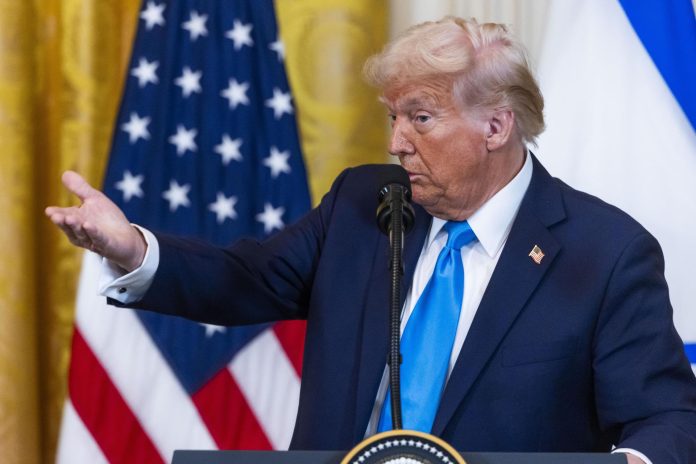
Speaking to reporters in the Oval Office as he signed the order before a meeting with visiting Israeli prime minister Benjamin Netanyahu, Trump claimed he had been hesitant about the action and claimed the US wants to make a deal with Iran.

Ukraine calls for nukes to ‘stop Russia’

On Tuesday, British journalist Piers Morgan published an excerpt from an interview with Zelensky in which he asked the Ukrainian leader why Kiev refuses any alternative to NATO membership ahead of possible peace negotiations, when he knows such a proposition is outright unacceptable to Moscow.

Zelensky responded that should Kiev be prevented rom joining the US-led bloc in the near future, then Ukraine will have the right to ask its Western backers: “What will be defending us against this evil this whole time?”

“Give us back nuclear weapons, give us missile systems. Partners, help us finance a one-million army, deploy your troops to the areas of our country where we want to stabilize the situation,” he went on to say.

Over the past months, Zelensky has repeatedly expressed regret that his country surrendered Soviet nuclear weapons stationed on its soil in exchange for security guarantees. Following the dissolution of the USSR in 1991, Ukraine inherited around 1,700 nuclear warheads, which however remained under Moscow’s operational control.

Russia has argued that Ukraine never had any nuclear weapons to begin with, as the Soviet assets legally belonged to Moscow. Russian officials have also repeatedly stated that the 1994 Budapest Memorandum, which resolved possession of the outstanding nuclear weapons, was then undermined by NATO’s eastward expansion, which threatened Moscow’s vital security interests. The US consigned the memorandum to irrelevancy by backing the Maidan coup in Kiev in 2014.

In an interview with US podcaster Lex Fridman last month, Zelensky similarly lamented that “nuclear weapons were the security guarantees that Ukraine had.”

He claimed at the time that “Ukraine used [the weapons] for protection” before handing them over to Russia.

Back in October, Zelensky also insisted that Ukraine could protect itself either by becoming a nuclear state or a member of NATO, adding that he strongly favored the latter option.

Several weeks later, the New York Times, citing anonymous officials, claimed that former US President Joe Biden “could allow Ukraine to have nuclear weapons again.” Commenting on the allegations, ex-National Security Adviser Jake Sullivan clarified that the idea was “not under consideration.”

In late December, Russian Foreign Ministry spokeswoman Maria Zakharova said that Ukraine could only get hold of nuclear weapons through the transfer of “important components from the outside, from other states.”

In November, President Vladimir Putin emphasized that Russia would be compelled to utilize all available means of destruction if Ukraine were to acquire nuclear weapons.

He stated, “What do you think – on the level of common sense – if the country with which we are essentially now engaged in military operations becomes a nuclear power, what should we do? In this case, use all – I want to emphasize this – precisely all the means of destruction at Russia’s disposal,” he stressed.

“We will not allow this,” he added.

Trump claims US will ‘take over’ and ‘own’ Gaza

In a shock announcement upending decades of US policy towards the Israeli-Palestinian conflict, Trump said on Tuesday that his administration would spearhead economic development in the enclave to “supply unlimited numbers of jobs and housing for the people of the area”.

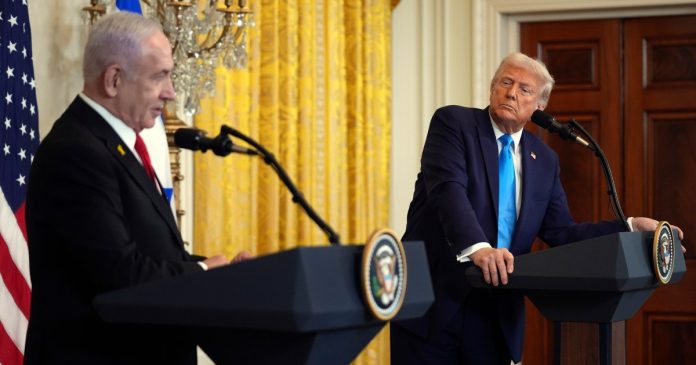
“The US will take over the Gaza Strip and we will do a job with it, too. We’ll own it,” Trump stated at the White House after talks with Israeli Prime Minister Benjamin Netanyahu, adding that his administration would be responsible for clearing destroyed buildings and dismantling “dangerous unexploded bombs and other weapons”.

Hamas, the Palestinian group that governs Gaza, swiftly condemned the proposal as a “recipe for creating chaos and tension in the region”.

“Our people in the Gaza Strip will not allow these plans to pass,” the group said in a statement.

“What is required is an end to the occupation and aggression against our people, not their expulsion from their land. Our people in Gaza have thwarted displacement and deportation plans under bombardment for more than 15 months,” it added.

In his remarks, Trump suggested the US would take a “long-term ownership position” over the enclave.

“This was not a decision made lightly. Everybody I’ve spoken to loves the idea of the United States owning that piece of land, developing and creating thousands of jobs with something that will be magnificent.”

Offering few specifics about how his plan would be implemented, Trump expressed hope that displaced Palestinians in Gaza would “go to other countries of interest with humanitarian hearts”, though he suggested Palestinians would also continue living there.

The US president said Gaza could become home to the “world’s people”.

“I think you will make that into an international, unbelievable place. I think the potential in the Gaza Strip is unbelievable. And I think the entire world – representatives from all over the world will be there and they’ll live there. Palestinians also, Palestinians will live there,” he said.

“Many people will live there.”

Asked if US soldiers could be sent to Gaza to maintain security, Trump stated it was a possibility.

“As far as Gaza is concerned, we’ll do what is necessary. If it’s necessary, we’ll do that,” he added.

Netanyahu, who praised Trump as the “greatest friend” Israel has ever had, said the US president’s plan was worth “paying attention to” and could “change history”.

“He sees a different future for that piece of land that has been the focus of so much terrorism, so many attacks against us, so many trials and so many tribulations,” Netanyahu added.

Trump’s announcement was broadly condemned by Palestinian advocates.

Trump has repeatedly called on Egypt and Jordan to accept displaced Palestinians, but the Arab states have rejected his appeals, warning that resettling residents of the enclave would risk exacerbating conflict in the region and subvert efforts to reach a two-state solution.

Trump’s extraordinary proposal casts a pall of uncertainty over the next round of negotiations to extend the fragile ceasefire between Israel and Hamas.

The initial 42-day truce, which will see the release of 33 Israeli captives and nearly 2,000 Palestinian prisoners, expires on March 1.

On Tuesday, a spokesperson for the Palestinian group Hamas said that negotiations for a second phase of the ceasefire had begun. If agreed to, that phase would see the full withdrawal of Israeli troops from Gaza and the freeing of all captives.

Trump on Tuesday cast doubt on the strength of the agreement and the likelihood it would last.

“The strikes could start tomorrow,” Trump said, adding, “There’s not a lot left to strike.”

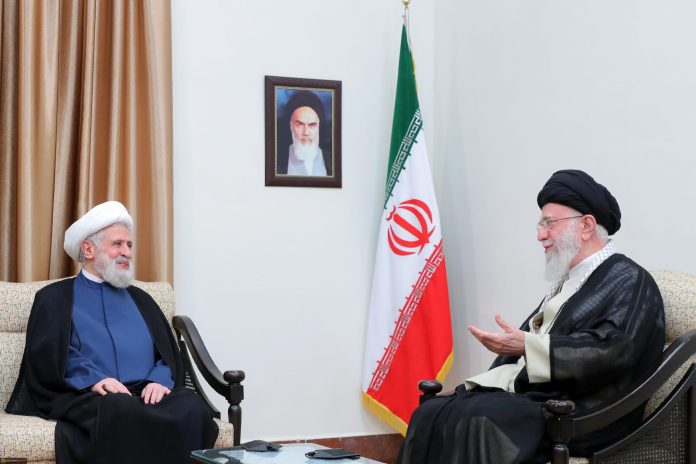
Sheikh Naim Qassem appointed as Iran Leader’s representative in Lebanon

Ayatollah Khamenei issued a decree naming Sheikh Naim Qassem to the key position.

Sheikh Qassem, a prominent figure within Hezbollah, has long been recognized for his influential role in the organization and his close ties to Iran and the new role is expected to further strengthen coordination between the two sides.

The appointment, which is likely to have significant implications for the political and security landscape, comes amid ongoing geopolitical tensions in the region, with Lebanon remaining a focal point of regional dynamics.

Senior commander: Iran must embrace cutting-edge AI, laser technologies

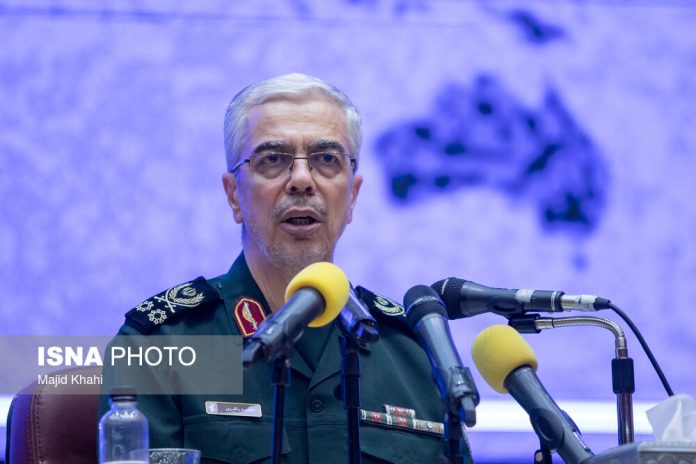
Mohammad Bagheri

Speaking at the inauguration ceremony of the new commander of the Khatam al-Anbia Joint Air Defense Base, General Baqeri highlighted the need for up-to-date knowledge and utilization of the cutting-edge sciences.

Marking the 46th anniversary of the Islamic Revolution, he recognized the significant progress in Iran’s defense capabilities despite challenges such as the 8-year war with Iraq, sanctions, and terrorist group confrontations.

General Baqeri noted that before the revolution, Iran’s defense industry was heavily reliant on imports, whereas now, the country produces most of its defense needs domestically and even exports some products.

General Baqeri underlined the critical responsibility of the Khatam al-Anbia Air Defense Base, particularly amid the recent regional developments and ongoing US-aided Israeli aggressions.

He stressed the importance of an integrated command and control network and urged coordination among all military branches to support the base’s mission.

Baqeri called for continuous efforts to stay current with emerging technologies in electronic warfare, cyber, laser, quantum, and AI to ensure a robust and impenetrable defense for the nation.

Trump says he would love to make an agreement with Iran

“I say this to Iran, who’s listening very intently, ‘I would love to be able to make a great deal. A deal where you can get on with your lives’,” Trump told reporters in Washington.
“They cannot have one thing. They cannot have a nuclear weapon and if I think that they will have a nuclear weapon … I think that’s going to be very unfortunate for them,” he added.
The president said that while Iran can never have a nuclear weapon under any circumstances, he is willing to talk to his Iranian counterpart Masoud Pezeshkian.


In 2015, Iran proved the peaceful nature of its nuclear program to the world by signing the Joint Comprehensive Plan of Action (JCPOA) with six world powers.

However, the US’s unilateral withdrawal in 2018 and its subsequent re-imposition of sanctions against Tehran left the future of the deal in limbo.

In 2019, Iran started to roll back the limits it had accepted under the agreement after the other parties failed to live up to their commitments.

Leader of the Islamic Revolution Ayatollah Seyyed Ali Khamenei issued an official fatwa (religious decree) clearly establishing that any form of acquisition, development, and use of nuclear weapons violate Islamic principles and are therefore forbidden.

Iranian researchers develop rapid detection for Parkinson’s disease using colorimetric nano-biosensor

Parkinson

According to the university’s scientific group, led by Maryam Nikkhah, Parkinson’s is the most common neurodegenerative movement disorder. There is no effective treatment to slow or stop its progression, and current therapies focus on symptom management.

Nikakh explained that the developed nano-biosensor leverages gold nanoparticles attached to specific detector molecules. When these nanoparticles encounter varying concentrations of Parkinson’s biomarkers, they aggregate and change color. The innovative method allows the gold nanoparticles to turn from red to purple in the presence of disease indicators in a patient’s saliva. If the individual is healthy, the solution remains red.

The lead researcher said, “The biosensor, utilizing nanotechnology, can accurately and specifically identify the unique biomarkers of Parkinson’s disease, with results visible to the naked eye.”

Amnesty slams US for hosting Israeli PM despite ICC warrant

Gaza War

“The Joe Biden administration flouted any efforts at international justice for Palestine. Now, by not arresting Netanyahu or subjecting him to US investigations, President Trump is doubling down, welcoming him as the first foreign leader to visit the White House since the inauguration,” said the UK-based organization in a statement on X.

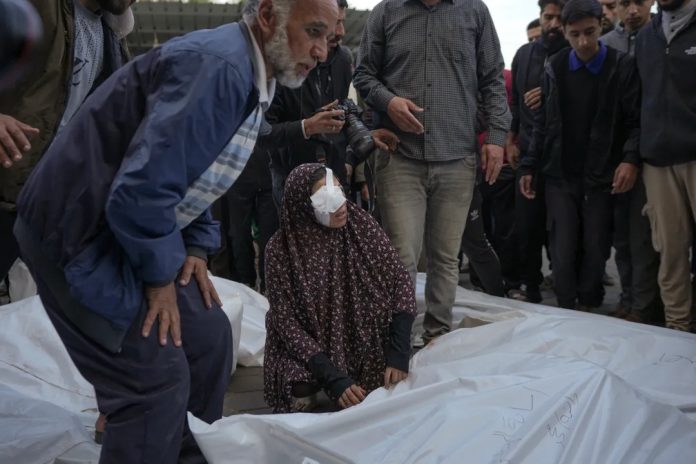
The first six-week phase of the ceasefire agreement took hold in Gaza on Jan. 19, halting Israel’s war that killed nearly 62,000 people and left the enclave in ruins.

The ICC issued arrest warrants last November for Netanyahu and his former Defense Minister Yoav Gallant for war crimes and crimes against humanity in Gaza.

Israel also faces a genocide case at the International Court of Justice for its war on the enclave.

Amnesty emphasized that the US has a legal obligation under the Geneva Conventions to prosecute or extradite individuals accused of war crimes.

“There must be no ‘safe haven’ for individuals alleged to have committed war crimes,” the statement read.

The human rights group also condemned the US for supplying weapons used in Israel’s deadly offensive in Gaza, calling it a violation of the obligation to prevent genocide.

Amnesty noted compliance with ICC arrest warrants is “crucial” to address Israel’s actions in Gaza and its treatment of Palestinians and to hold those responsible for Israel’s “unlawful occupation and system of apartheid.”

Netanyahu’s visit to the White House, the first by a foreign leader since Donald Trump’s inauguration, comes amid ongoing violence in Gaza and the West Bank.

Syria, Turkiye presidents talk Kurdish fighters, defence pacts

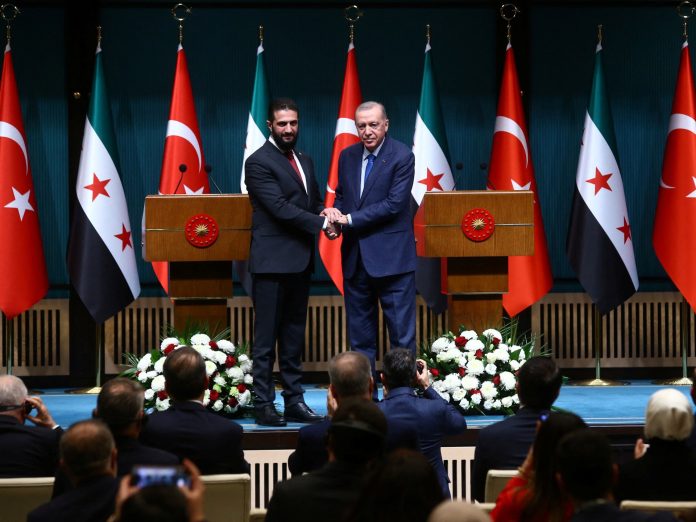
The visit on Tuesday marked al-Sharaa’s second international trip since officially becoming Syria’s interim leader, having met Saudi Arabia’s Crown Prince Mohammed bin Salman in Riyadh earlier this week.

Al-Sharaa led the Hayat Tahrir al-Sham (HTS) rebel group that toppled the government of longtime Syrian leader Bashar al-Assad in a lightning offensive in December.

Speaking alongside al-Sharaa at a news conference in Ankara, Erdogan said Turkiye was ready to partner with Syria’s new leadership, particularly when it came to fighting the armed group ISIL (ISIS) and Kurdish fighters based in northeast Syria.

“I would like to express our satisfaction for the strong commitment my brother Ahmed al-Sharaa has shown in the fight against terrorism,” Erdogan said.

“I told al-Sharaa we are ready to provide the necessary support to Syria in the fight against all kinds of terrorism, whether it be Daesh or the PKK,” he added, referring to the Arabic acronym for ISIL and the Kurdistan Workers’ Party.

Turkiye, which shares a border with Syria, views several Syrian Kurdish groups located near its southern demarcation as “terrorists”. These include the PKK as well as the People’s Protection Units (YPG).

The YPG makes up a large portion of the United States-supported Kurdish-led Syrian Democratic Forces (SDF), which controls a large swath of Syria’s northeast.

The SDF remains the key ally in a US-led coalition fighting ISIL in Syria. But since the fall of al-Assad, Turkish officials have increasingly pushed to take over the operation.

For his part, al-Sharaa said his government sought a “strategic partnership” with Turkiye as he invited Erdogan to visit Syria “at the earliest opportunity”.

The statements underscore a major realignment in the region, with Ankara having severed ties with Damascus in 2011 after the outbreak of Syria’s civil war. Turkiye opposed al-Assad throughout the conflict.

“We are working on building a strategic partnership with Turkiye to confront the security threats in the region to guarantee permanent security and stability to Syria and Turkiye,” al-Sharaa noted.

He added that the pair discussed “threats that prevent territorial unity in northeastern Syria” – an apparent reference to the US-backed SDF. Al-Sharaa has rejected any form of Kurdish self-rule and urged the SDF to hand over their weapons.

The two leaders also discussed a new defence pact that has been widely reported in recent days, Koseoglu reported. The pact could see Turkiye establish new bases in Syria, beyond those that already exist along Turkiye’s border.

Following the meeting, Erdogan pledged to continue to press for the lifting of international sanctions imposed on Syria during al-Assad’s rule. Relief from the sanctions has been al-Sharaa’s top priority as he has undertaken an aggressive diplomatic push in recent weeks.

Erdogan added that it was important for Arab and Muslim countries to support the new Damascus government – financially and otherwise – in the period of transition.

On the issue of Syrian refugees and migrants, Erdogan said he believed the voluntary return of Syrians would pick up pace as the country became more stable.

Turkiye hosted the greatest number of Syrian refugees following the outbreak of the Syrian civil war in 2011 – more than 3.8 million at its peak in 2022.

Lebanon files UN Security Council complaint against Israel over ceasefire violations

UNSC

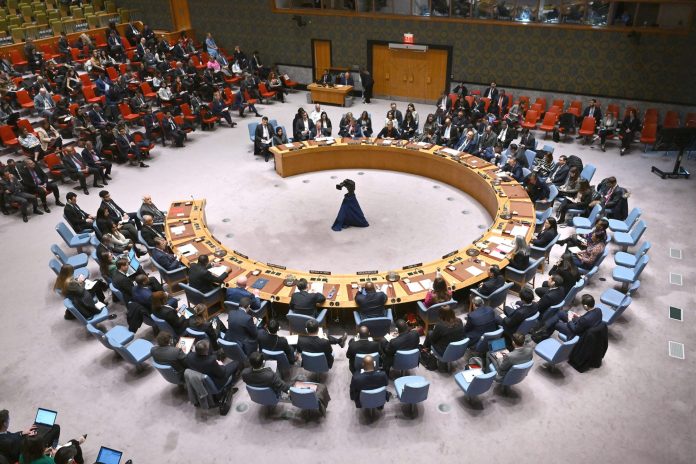
A Foreign Ministry statement said the complaint was filed through Lebanon’s permanent mission in New York in response to Israel’s violation of resolution 1701 and the declaration of cessation of hostilities, and its complete disregard of related security arrangements.

Resolution 1701, adopted on Aug. 11, 2006, calls for a complete halt to hostilities between Hezbollah and Israel and the establishment of a weapons-free zone between the Blue Line and the Litani River in southern Lebanon, with exceptions for the Lebanese army and UNIFIL.

According to the ministry, the complaint explained in detail the Israeli violations in southern Lebanon, including its ground and air assaults, destruction of homes and residential neighborhoods, abduction of Lebanese citizens, including army soldiers, and attacks on civilians returning to their border villages.

The complaint highlighted Israel’s targeting of Lebanese army patrols and journalists, as well as the removal of five demarcation markers along the Blue Line, a de facto border, calling the Israeli acts blatant violations of resolution 1701 and Lebanese sovereignty.

It urged the UN Security Council and sponsors of the ceasefire to take “a firm and clear position” against Israel’s violations, and work for strengthening the Lebanese army and UNIFIL forces.

A fragile ceasefire has been in place since Nov. 27, ending a period of mutual shelling between Israel and Hezbollah that began on Oct. 8, 2023 and escalated into a full-scale conflict on Sept. 23 last year.

Lebanese media have reported over 830 Israeli breaches since the agreement came into force.

Israel was to complete its army’s withdrawal from Lebanon by Jan. 26 under a ceasefire deal, but it refused and the deadline was extended to Feb. 18, according to the White House.

At least 26 people have been killed and 221 injured by Israeli gunfire since Jan. 26, as residents attempt to return to villages in southern Lebanon.