Wednesday, December 24, 2025
Home Blog Page 496

British MPs call on government to send team to inspect Israeli prison sites

Israel Prison

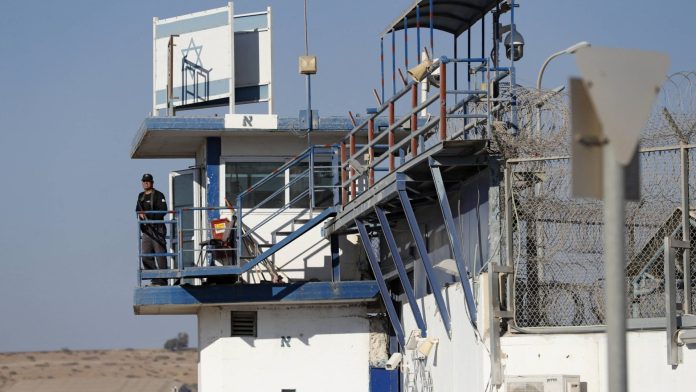
In the letter, sent to Foreign Secretary David Lammy on Monday, Scottish National Party MP Chris Law and other signatories ask whether Labour will commission a delegation led by UK judges and lawyers to “inspect Israeli detention sites”.

The move comes in light of documented evidence of the widespread torture and abuse of Palestinian detainees.

In May 2024, David Cameron, the foreign secretary under the previous Conservative government, negotiated a deal with Israel in which two UK legal observers would visit Palestinian detainees.

The letter sent by Law urged Lammy to send a team to “gather evidence and document testimony from freed Palestinian abductees, hostages and prisoners.”

It also asked for a “parliamentary fact-finding mission to assess and report on the current situation with regard to the detention conditions of Palestinian prisoners”.

On Sunday, the Palestinian Prisoners’ Society said that the majority of Palestinians released from Israeli-run prisons as part of the Gaza ceasefire deal are being subjected to “systematic torture days before their release”.

In recent reports, the monitor group has noted severe forms of torture and abuse, including burning detainees with boiling water and urinating on them.

Last August, the Israeli rights group B’Tselem accused Israeli authorities of systematically abusing Palestinians in torture camps, subjecting them to severe violence and sexual assault.

The report, titled “Welcome to Hell”, was based on 55 testimonies from former detainees from the Gaza Strip, the occupied West Bank, East Jerusalem and Israel, the overwhelming majority of whom were held without trial.

The letter from the MPs to the foreign secretary highlights “inhumane conditions and human rights violations facing Palestinian abductees, detainees and prisoners held in Israeli prisons and detention facilities”.

It suggests there is a “significant perception of a lack of meaningful action, responsiveness, and impartilaity” on the part of the government when it comes to human rights violations suffered by Palestinians.

“Extensive documentation” showing the “widespread use of sexual violence and humiliating treatment” has been shared with the foreign office by Palestinian and Israeli rights groups, the letter further notes.

It asks to what extent the government “is aware of the use of torture by Israel”.

“Will you give an undertaking that your department will closely monitor and engage with the situation of Palestinian detainees, and demand that Israel, as the Occupying Power, and the Israeli Prison Services ensure and uphold Palestinian prisoners’ right to life and the highest attainable standard of health and mental health?”

The letter was signed by MPs Law, Shockat Adam, Paula Barker, Jeremy Corbyn, Colum Eastwood, Lord Hain, Graham Leadbitter, Seamus Logan, Zarah Sultana, Nadia Whittome and Pete Wishart.

According to the Palestinian Prisoners’ Society, over 11,400 arrests were made in the West Bank since the Hamas attack of 7 October 2023. In Gaza, the numbers are estimated to be in the thousands.
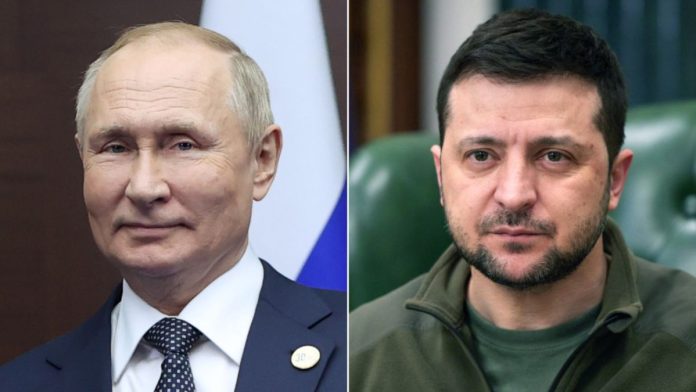
Zelensky says ready for talks with Putin to end war

Zelensky Putin

He made the remarks during an interview with British journalist Piers Morgan, with excerpts published on Tuesday. Asked if he is prepared to meet with the Russian president, Zelensky indicated that he is.

“If that is the only setup in which we can bring peace to the citizens of Ukraine and not lose people, definitely we will go for this setup, for this meeting,” he said.

“What is my attitude to him [Putin]? I will not be kind to him and I… consider him an enemy. And to be honest, I believe he considers me an enemy as well,” he added.

The remarks appear to reflect a shift in Zelensky’s stance. He has refused to negotiate with Putin in the past and even signed a decree banning any negotiations with Moscow, and Putin specifically. Last month, Zelensky stated the ban applies to all Ukrainian officials except himself, while the original 2022 decree only stated that negotiations are “impossible” without specifying any individuals or entities prohibited from engaging in them.

Last week, Putin reiterated Moscow’s position that Zelensky lacks the legitimacy to sign agreements, given that his presidential term expired in May 2024 and no constitutional mechanism exists to extend it. However, the Russian president said he is willing to send negotiators to talk to Zelensky if he is open to discussions.

“It’s possible to negotiate with anyone. However, due to his illegitimacy, [Zelensky] has no right to sign anything. If he wishes to participate in talks, I will deploy people who will conduct such negotiations,” Putin stated.

The Ukrainian decree banning negotiations with Russia remains an obstacle to meaningful talks between Kiev and Moscow, Putin added. He pledged to deploy a team of legal experts to assess the authority of any Ukrainian negotiating team and determine whether they have the proper legal standing to sign an agreement.

“If we start negotiations now, they will be illegitimate… Because when the current head of the regime – that’s the only way to call [Zelensky] today – signed this decree, he was a somewhat legitimate president. But now he can’t cancel it because he is illegitimate. That’s the trick, the catch, the trap,” Putin explained.

Atomic chief: Iran has no nuclear weapons program

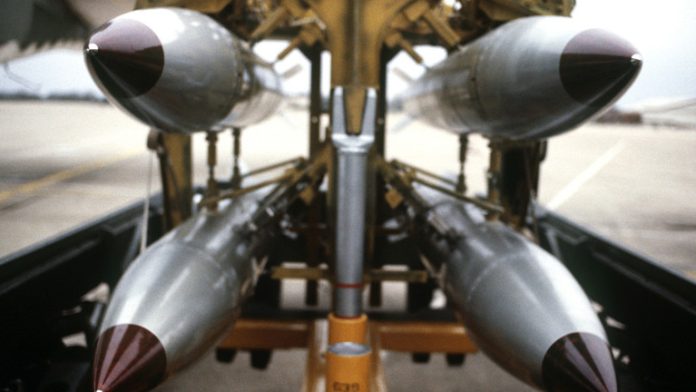
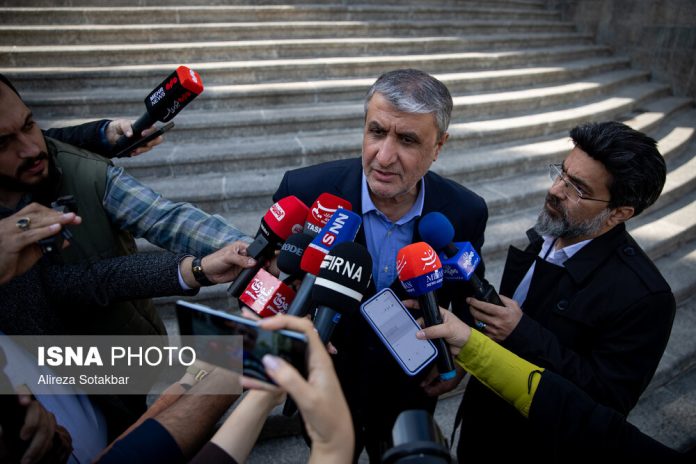
Speaking to Iran’s SNNTV, Mohammad Eslami said, “Trump’s statement that Iran should not have nuclear weapons is clear. Iran has never had, does not have, and will not have a nuclear weapons program. Our approach is clear.”

Eslami emphasized that Iran’s nuclear program is purely peaceful and operates within the framework of safeguard regulations and the Nuclear Non-Proliferation Treaty (NPT).

“Iran’s peaceful nuclear program is being conducted within the framework of safeguard regulations and the NPT,” he noted.

The statement comes in response to Trump’s demand on Tuesday that Iran should not possess nuclear weapons.

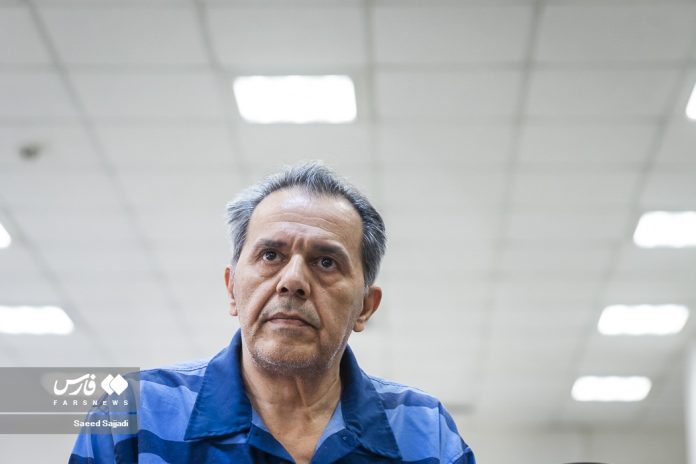
Iran transfers body of terrorist ringleader Sharmahd to Germany

Jamshid Sharmahd

The move was taken in response to the request by Sharmahd’s family within the framework of judicial and diplomatic procedures.

According to the Iranian Judiciary, Sharmahd, who was also a member of the Kingdom Assembly of Iran, died in prison in November before his execution.

He was behind a series of terrorist attacks, including a 2008 attack against a religious congregation center in the southern Iranian city of Shiraz, which killed 14 people, including 5 women and an infant, and wounded hundreds more.

In March last year, a legal court fined the US-backed anti-Iran terrorist group nearly 2.5 billion dollars in damages in the 2008 bombing case.

The Iranian court issued the verdict after a lawsuit was filed by 116 people against the Tondar terrorist group and the US that masterminded and orchestrated several terrorist attacks against Iran.

The outfit was also behind the assassination of Iranian nuclear scientist Masoud Ali Mohammadi with a bomb planted in his car in January 2010.

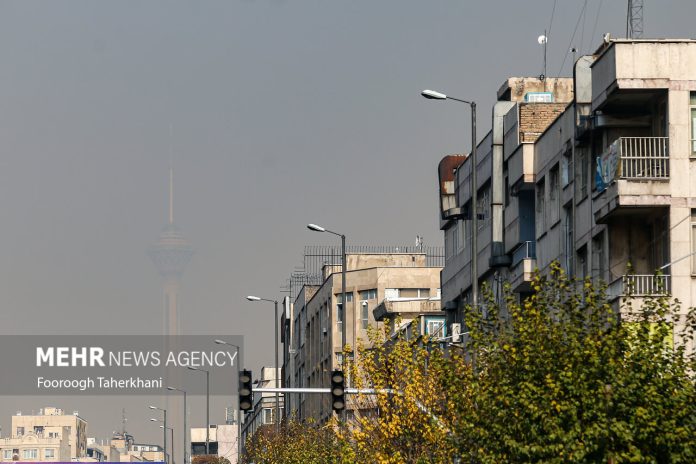
Tehran records 130 days of polluted air in nearly 11 months

Iran Air Pollution

The average air quality index (AQI) in Tehran currently stands at 112, placing it in the “unhealthy for sensitive groups” category.

Under these conditions, individuals with heart or lung conditions, the elderly, and children are advised to limit prolonged or strenuous outdoor activities.

Of the 130 polluted days recorded this year, 111 days were classified as “unhealthy for sensitive groups,” while 19 days were deemed “unhealthy for all residents.”

The persistent air pollution in Tehran has raised concerns among environmental and health experts, who warn of the long-term impacts on public health. Authorities have urged residents to take precautions, particularly on days when air quality deteriorates further.

Efforts to address the issue, including traffic restrictions and increased environmental regulations, have yet to yield significant improvements.

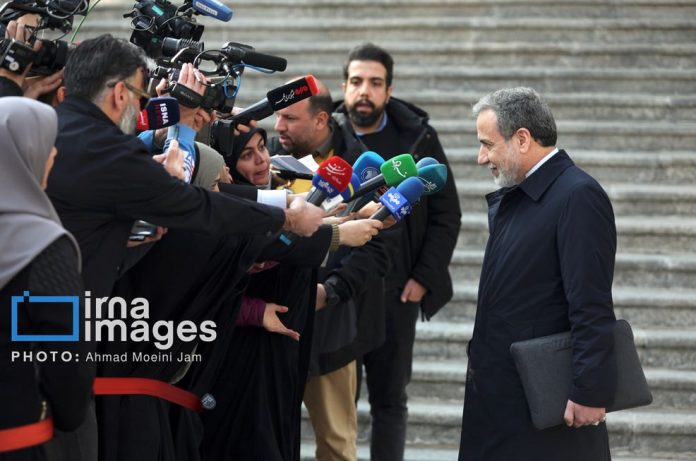
FM Araghchi in response to Trump: Assurance on Iran’s non-pursuit of nuclear weapons is achievable

Speaking to reporters after a cabinet meeting on Wednesday, Araghchi reiterated that the US approach has not only failed to subdue Iran but has also resulted in strengthening the country in various domains.

He asserted that if Washington’s goal is to prevent Iran from obtaining nuclear weapons, this can be fully achieved through diplomacy and international cooperation, without the need for “illogical and fruitless pressures.”

Iran, he noted, is a committed member of the Nuclear Non-Proliferation Treaty (NPT).

Araghchi further highlighted that Iran’s stance on nuclear weapons is clear, underscored by a religious decree from the Leader, which clarifies the country’s position on the matter.

Trump signed the executive order reinstating the maximum pressure policy on Iran, with the goal of limiting its oil exports and diminishing its influence in West Asia.

“It’s very tough on Iran,” Trump told reporters, but added, “Hopefully we are not going to have to use it very much.”

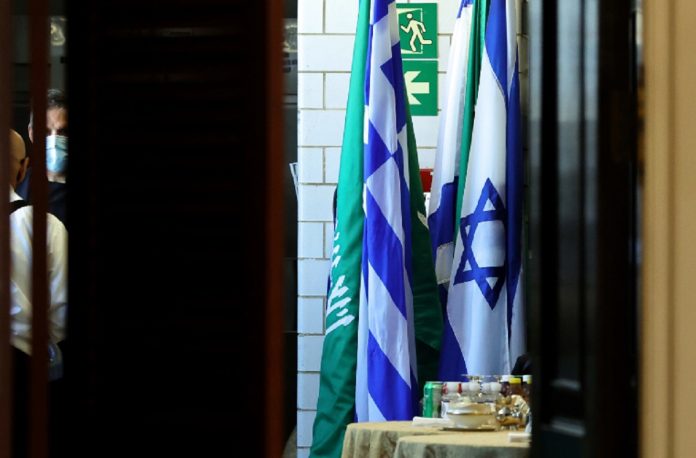
Saudi Arabia rejects Trump’s claim, says no normalization with Israel without Palestinian state

Israel Saudi Arabia Flags

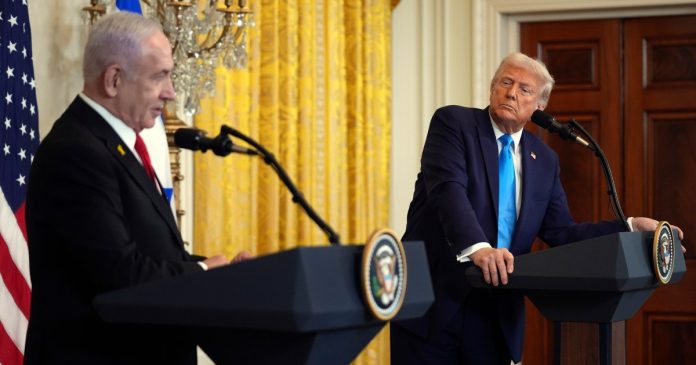
The Saudi Foreign Ministry issued a statement emphasizing that the kingdom’s position remains “firm and unwavering” following Trump’s remarks during a meeting Tuesday with Israeli Prime Minister Benjamin Netanyahu at the White House.

Asked if the Saudis demand the establishment of a Palestinian state, Trump, sitting alongside Netanyahu in the Oval Office, replied: “No, they’re not.”

“The Ministry of Foreign Affairs affirms that the Kingdom of Saudi Arabia’s position on the establishment of a Palestinian state is firm and unwavering,” the Saudi Foreign Ministry said in a statement.

“His Royal Highness Prince Mohammed bin Salman bin Abdulaziz Al Saud, Crown Prince and Prime Minister, clearly and unequivocally reaffirmed this stance during his speech at the opening of the first session of the ninth term of the Shura Council on September 18, 2024.”

The statement recalled that the crown prince reiterated the kingdom’s commitment during the Arab-Islamic Summit held in Riyadh on Nov. 11, 2024, stressing the need for a Palestinian state based on the 1967 borders and an end to the Israeli occupation of Palestinian territories.

“The Kingdom of Saudi Arabia emphasizes that this unwavering position is non-negotiable and not subject to compromises. Achieving lasting and just peace is impossible without the Palestinian people obtaining their legitimate rights in accordance with international resolutions, as has been previously clarified to both the former and current U.S. administrations,” it added.

Iran gov’t spokesperson does not rule out talks with US

The remarks by Fatemeh Mohajerani came in response to US President Donald Trump’s announcement a day earlier of his willingness to negotiate and have a dialogue with Iran’s President Massoud Pezeshkian.

The government spokesperson explained that the principles of dignity encompass the honor of the country and its people, wisdom involves understanding the nuances and implications of issues, and expediency refers to practical considerations.

She mentioned that all of the country’s matters, especially relationships with other countries, are pursued with these principles in mind.

Trump, who implemented a maximum pressure policy against Iran during his first term, signed a memorandum regarding Iran in his second term, continuing his previously approach.

Speaking to reporters in the Oval Office as he signed the order before a meeting with visiting Israeli prime minister Benjamin Netanyahu, Trump claimed he had been hesitant about the action and claimed the US wants to make a deal with Iran.

Ukraine calls for nukes to ‘stop Russia’

On Tuesday, British journalist Piers Morgan published an excerpt from an interview with Zelensky in which he asked the Ukrainian leader why Kiev refuses any alternative to NATO membership ahead of possible peace negotiations, when he knows such a proposition is outright unacceptable to Moscow.

Zelensky responded that should Kiev be prevented rom joining the US-led bloc in the near future, then Ukraine will have the right to ask its Western backers: “What will be defending us against this evil this whole time?”

“Give us back nuclear weapons, give us missile systems. Partners, help us finance a one-million army, deploy your troops to the areas of our country where we want to stabilize the situation,” he went on to say.

Over the past months, Zelensky has repeatedly expressed regret that his country surrendered Soviet nuclear weapons stationed on its soil in exchange for security guarantees. Following the dissolution of the USSR in 1991, Ukraine inherited around 1,700 nuclear warheads, which however remained under Moscow’s operational control.

Russia has argued that Ukraine never had any nuclear weapons to begin with, as the Soviet assets legally belonged to Moscow. Russian officials have also repeatedly stated that the 1994 Budapest Memorandum, which resolved possession of the outstanding nuclear weapons, was then undermined by NATO’s eastward expansion, which threatened Moscow’s vital security interests. The US consigned the memorandum to irrelevancy by backing the Maidan coup in Kiev in 2014.

In an interview with US podcaster Lex Fridman last month, Zelensky similarly lamented that “nuclear weapons were the security guarantees that Ukraine had.”

He claimed at the time that “Ukraine used [the weapons] for protection” before handing them over to Russia.

Back in October, Zelensky also insisted that Ukraine could protect itself either by becoming a nuclear state or a member of NATO, adding that he strongly favored the latter option.

Several weeks later, the New York Times, citing anonymous officials, claimed that former US President Joe Biden “could allow Ukraine to have nuclear weapons again.” Commenting on the allegations, ex-National Security Adviser Jake Sullivan clarified that the idea was “not under consideration.”

In late December, Russian Foreign Ministry spokeswoman Maria Zakharova said that Ukraine could only get hold of nuclear weapons through the transfer of “important components from the outside, from other states.”

In November, President Vladimir Putin emphasized that Russia would be compelled to utilize all available means of destruction if Ukraine were to acquire nuclear weapons.

He stated, “What do you think – on the level of common sense – if the country with which we are essentially now engaged in military operations becomes a nuclear power, what should we do? In this case, use all – I want to emphasize this – precisely all the means of destruction at Russia’s disposal,” he stressed.

“We will not allow this,” he added.

Trump claims US will ‘take over’ and ‘own’ Gaza

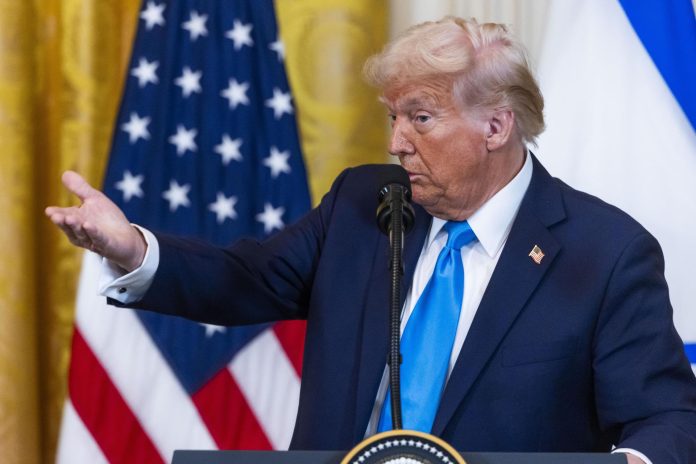
In a shock announcement upending decades of US policy towards the Israeli-Palestinian conflict, Trump said on Tuesday that his administration would spearhead economic development in the enclave to “supply unlimited numbers of jobs and housing for the people of the area”.

“The US will take over the Gaza Strip and we will do a job with it, too. We’ll own it,” Trump stated at the White House after talks with Israeli Prime Minister Benjamin Netanyahu, adding that his administration would be responsible for clearing destroyed buildings and dismantling “dangerous unexploded bombs and other weapons”.

Hamas, the Palestinian group that governs Gaza, swiftly condemned the proposal as a “recipe for creating chaos and tension in the region”.

“Our people in the Gaza Strip will not allow these plans to pass,” the group said in a statement.

“What is required is an end to the occupation and aggression against our people, not their expulsion from their land. Our people in Gaza have thwarted displacement and deportation plans under bombardment for more than 15 months,” it added.

In his remarks, Trump suggested the US would take a “long-term ownership position” over the enclave.

“This was not a decision made lightly. Everybody I’ve spoken to loves the idea of the United States owning that piece of land, developing and creating thousands of jobs with something that will be magnificent.”

Offering few specifics about how his plan would be implemented, Trump expressed hope that displaced Palestinians in Gaza would “go to other countries of interest with humanitarian hearts”, though he suggested Palestinians would also continue living there.

The US president said Gaza could become home to the “world’s people”.

“I think you will make that into an international, unbelievable place. I think the potential in the Gaza Strip is unbelievable. And I think the entire world – representatives from all over the world will be there and they’ll live there. Palestinians also, Palestinians will live there,” he said.

“Many people will live there.”

Asked if US soldiers could be sent to Gaza to maintain security, Trump stated it was a possibility.

“As far as Gaza is concerned, we’ll do what is necessary. If it’s necessary, we’ll do that,” he added.

Netanyahu, who praised Trump as the “greatest friend” Israel has ever had, said the US president’s plan was worth “paying attention to” and could “change history”.

“He sees a different future for that piece of land that has been the focus of so much terrorism, so many attacks against us, so many trials and so many tribulations,” Netanyahu added.

Trump’s announcement was broadly condemned by Palestinian advocates.

Trump has repeatedly called on Egypt and Jordan to accept displaced Palestinians, but the Arab states have rejected his appeals, warning that resettling residents of the enclave would risk exacerbating conflict in the region and subvert efforts to reach a two-state solution.

Trump’s extraordinary proposal casts a pall of uncertainty over the next round of negotiations to extend the fragile ceasefire between Israel and Hamas.

The initial 42-day truce, which will see the release of 33 Israeli captives and nearly 2,000 Palestinian prisoners, expires on March 1.

On Tuesday, a spokesperson for the Palestinian group Hamas said that negotiations for a second phase of the ceasefire had begun. If agreed to, that phase would see the full withdrawal of Israeli troops from Gaza and the freeing of all captives.

Trump on Tuesday cast doubt on the strength of the agreement and the likelihood it would last.

“The strikes could start tomorrow,” Trump said, adding, “There’s not a lot left to strike.”