Sunday, December 28, 2025
Home Blog Page 4962

Major General Soleimani in good health in Iran: Diplomat

Ghasem Soleimani

“Major General Soleimani is in good health and the news [that he is wounded] is false,” Iranian Deputy Foreign Minister for Arab and African Affairs Hossein Amir-Abdollahian said on Thursday.

Some Western media reported earlier in the day that the Iranian commander has sustained serious wounds in an attack by the ISIL Takfiri militants in the Iraqi city of Samarra.

“He (Major General Soleimani) is in Iran,” Amir-Abdollahian added.

The Iranian diplomat further said, “The Islamic Republic of Iran will vigorously continue fighting terrorism and helping countries subject to the threat of terrorism.”

Iran has repeatedly stressed that it will not interfere militarily in Iraq and Syria, but the Islamic Republic continues to provide support to both countries against ISIL in the form of defense consultancy and humanitarian aid.

At the onset of the ISIL advances in Iraq, the Islamic Republic took rapid steps to mobilize popular forces in the country.

Tehran has also refused to join the so-called US-led coalition against ISIL in Iraq and Syria.

The Takfiri terrorists have been carrying out horrific acts of violence, including public decapitations and crucifixions, against all Syrian and Iraqi communities such as Shias, Sunnis, Kurds, Christians and Izadi Kurds.

Iran to expedite nuclear program if US fails to lift sanctions

Ali-Larijani

Iranian Parliament Speaker Ali Larijani underlined that Tehran would revive and speed up its nuclear activities, including its enrichment program, in case the US refrains from removing all sanctions against Iran under a final deal.

“A number of Iranian lawmakers are seeking to ratify a bill according to which if new Western sanctions are imposed on Iran, the country will resume nuclear enrichment at any level,” Larijani said, addressing a group of people in the city of Qom on Friday.

On Wednesday, Iranian Foreign Minister Mohammad Javad Zarif cautioned P5+1 (the US, Russia, China, Britain and France plus Germany) not to miss the present opportunity for cutting a final deal with Iran.

Speaking in a televised interview in Geneva, Zarif advised nuclear negotiators to use the opportunity for resolution of the deadlock over Iran’s nuclear program.

Upon arrival in Geneva, Zarif called on his Western counterparts in the nuclear talks to show courage and avoid drawing baseless redlines to make a landmark nuclear deal possible.

“Now we have come to a stage that requires the other side to take its decision in order to enable us to move forward,” Zarif said upon arrival in Geneva where he later met his US counterpart John Kerry on the latest developments in talks between Tehran and the G5+1.

“There need to be some new and comprehensive proposals, and we are ready to bring all issues to final results, but we should see the extent of the readiness of the other side,” he added.

Zarif asked the Western powers to take serious and brave decisions to help the negotiations move forward and produce results and avoid specifying improper redlines.

Iran, EU call for timely nuclear agreement

zarif-eu

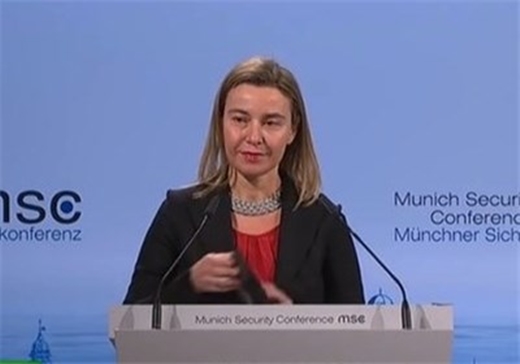
Iranian Foreign Minister Mohammad Javad Zarif and EU Foreign Policy Chief Federica Mogherini called for no delay in reaching a nuclear deal.

During a meeting in the Belgian capital of Brussels on Thursday, the two underlined that there should be no waste of time in reaching an agreement between Iran and world powers on Tehran’s peaceful nuclear program.

“We affirmed our strong commitment to a diplomatic solution which would fully address international concerns about the exclusively peaceful nature of the Iranian nuclear issue,” Mogherini said in a statement after the meeting.

“Negotiations have to be brought to a conclusion in line with the agreed time,” the statement, published on the European External Action Service (EEAS) website, further said.

Zarif and Mogherini also discussed a range of other issues including human rights, the common threat from the so-called Islamic State in Iraq and the Levant (ISIL) terrorist group, and crises in regional countries like Syria, Iraq, and Afghanistan.

The EU foreign policy official highlighted Iran’s role in the region and encouraged Tehran “to use its considerable influence to help create a more inclusive and stable Iraq, which is in the interests of both the EU and Iran.”

She also urged Iran to contribute to a political solution to the Syrian crisis by supporting United Nations Special Envoy for the Syria crisis Staffan de Mistura, according to the EEAS statement.

The latest round of negotiations on Iran’s civilian nuclear program kicked off on Wednesday with a meeting between Zairf and US Secretary of State John Kerry.

On Sunday, January 18, representatives from Iran and 5+1 (France, Britain, the United States, Russia, China, and Germany) will have a plenary meeting in the Swiss city of Geneva.

Negotiations between Iran and the sextet aim to hammer out a final agreement to end more than a decade of impasse over Tehran’s peaceful nuclear program.

The two sides wrapped up their latest round of nuclear talks in the Swiss city on December 17, 2014, three weeks after they failed to reach a final agreement by a November 24 deadline despite making some progress.

They agreed to extend their discussions until July 1, 2015.

Iran, French foreign ministers discuss key developments in Paris

Zarif-Fabius

During their meeting in the French capital, Paris, on Friday, Zarif and Fabius stressed the importance of using the current opportunity to solve the nuclear issue.

They also discussed the latest developments in ties between Iran and the European Union and avenues toward the expansion of bilateral relations.

The two sides further urged international consensus for a fundamental, nondiscriminatory and all-out fight against terrorism and also urged an end to direct and indirect support by some countries for known terrorist groups.

The meeting between the Iranian and French ministers came after Zarif held nuclear talks with US Secretary of State John Kerry for the fourth time over the past three days.

On January 14, Zarif and Kerry held three rounds of intense negotiations in the Swiss city of Geneva to help speed up the ongoing negotiations between Iran and the P5+1 group – Russia, China, France, Britain, the US and Germany – over Tehran’s peaceful nuclear work.

Iran and the five permanent members of the UN Security Council plus Germany wrapped up their latest round of nuclear talks in Geneva on December 17, 2014.

The two sides agreed to extend their discussions for seven more months until July 1, 2015.

The scale of Iran’s uranium enrichment and the timetable for the lifting of anti-Iran sanctions are seen as major sticking points in the talks.

Zarif, Kerry to meet in Paris over Iran nuclear program

Zarif-Kerry

According to a US official, Kerry and Zarif will meet in Paris on Friday in to discuss the ongoing Iran-P5+1 nuclear talks.

On Wednesday, Zarif and Kerry held three rounds of intense negotiations in Geneva to help speed up the ongoing negotiations between Iran and the P5+1 group – Russia, China, France, Britain, the US and Germany – over Tehran’s peaceful nuclear work.

US State Department officials said Kerry and Zarif held “substantive” talks in the Swiss city.

The Iranian foreign minister is also scheduled to travel to the EU’s de facto capital, Brussels, as he steps up his diplomatic efforts to facilitate the achievement of a comprehensive deal aimed at ending the longstanding dispute over Tehran’s nuclear activities.

The meetings come as Tehran and its negotiating partners are set to kick off a fresh round of nuclear talks in Geneva on January 18.

Iran and the six states wrapped up their latest round of nuclear talks in Geneva on December 17, 2014, three weeks after they failed to reach a final agreement by a November 24 deadline despite making some progress.

The two sides agreed to extend their discussions for seven more months until July 1, 2015.

The scale of Iran’s uranium enrichment and the timetable for the lifting of anti-Iran sanctions are seen as major sticking points in the talks.

Iran defeat Qatar 1-0 to secure a place in Asian Cup quarter-finals

Iran gatar football

The red-clad Iran beat Qatar 1-0 in Sydney on Thursday (January 15) to reach the AFC Asian Cup quarter-finals.

A solitary goal eight minutes into the second half was enough to send Iran and the United Arab Emirates through to the second phase with one game left to play in the group stage.

Iran’s win prevented the Qatar side from staying in the tournament. Qatar have only reached the quarter-finals twice in eight Asian Cup appearances.

In another match of the day, the UAE beat Bahrain 2-1, cementing their place at the top of Group C.

On Sunday, the three-time AFC Asian Cup winners Iran defeated Bahrain 2-0 in their Asian Cup opener in Melbourne while Qatar’s campaign was rocked by a 4-1 loss to the UAE.

The Iranian squad will line up against the UAE on Monday (January 19) and Qatar will take on Bahrain on the same day.

Iran are now second in the group standing.

In a press conference one day before the match, Iran’s national soccer team coach Carlos Queiroz said the match against Qatar would be a big challenge for Iran.

Prior to Thursday’s match, words spread that the Iranian team were not allowed to sport their white jerseys which bear an image of the Asiatic cheetah with some news agencies reporting that their jerseys have been stolen in Sydney.

Students shave heads in sympathy with teacher (Photos)

Iranian students and teacher5

Mohammad Reza Ghaderi, a physical education teacher in an elementary school in Hamadan and a cycling champion in Iran and Asia, has recently been diagnosed with cancer. To express sympathy with their teacher, the school students shaved their heads bald.

The following are the photos Mehr News Agency released online on January 14 of the teacher and his compassionate students. Take a look:


Carlos Queiroz expects difficult match against Qatar

Carlos

Iranian national football team’s coach, Carlos Queiroz, said that the match against Qatar in the 2015 AFC Asian Cup is difficult for his team.

Three-time champion Iran, who have started the competition with a 2-0 victory over Bahrain, will face Qatar on Thursday at the Australia Stadium.

“We expect a difficult match against Qatar. They are highly motivated after winning the title in the Persian Gulf Cup,” Queiroz said in a pre-match press conference.

“Qatar is a good team and I think the match will be a big challenge for us. They have played 14 friendly matches so far. Anyway, we want to enjoy the match. My players can even fly or swim to reach their goals,” the Portuguese added.

“We are ready to show a good performance against Qatar. we have to try to be very well disciplined against them,” Queiroz noted.

Iran to double renewable energy capacity, official

Energy

A top Iranian energy official says the country will see its capacity of renewable energy doubled by the end of the current Iranian calendar year (March 20, 2015).

Homayoun Haeri, who serves as the director of Iran’s Power Generation and Transmission Company (TAVANIR), said Wednesday that the government plans to double the capacity of Iran’s wind and solar power generation across the country.

The official also noted that Iran is currently among major countries in the region in terms of the electricity generation capacity, although it still has a lot to do to optimize energy consumption.

Iranian officials announced in October that they have comprehensive plans for the production of 5,000 megawatts (MW) of electricity using renewable energy sources until 2018. Iran currently produces 10,000 MW of electricity from hydropower plants.

Due to its geographical position, Iran enjoys enormous potential for the production of different kinds of renewable energies, including geothermal, solar and wind power.

The country seeks to gradually shift its energy consumption toward renewable resources in a bid to derive the remarkable economic benefits of the sector and tackle its growing environmental issues.

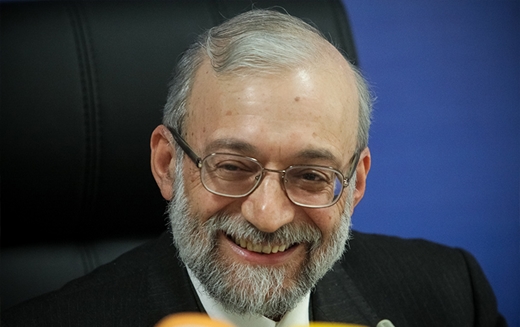
Judiciary Chief slams West’s stance on terrorism, human rights

Amoli Larijani

Iran’s Judiciary Chief Ayatollah Sadegh Amoli Larijani on Wednesday deplored the double-standard attitude adopted by Western countries toward the issues of human rights and terrorism.

Western countries view some terrorist crimes as “good” and some of them as “bad”, while terrorism is a bad and criminal phenomenon in any form, Amoli Larijani said.

“Terrorism should be dealt with honestly.”

The judiciary chief said the West’s double-standard attitude toward terrorism and their support for Israel’s state-sponsored terrorism against the innocent Palestinians were the key reasons behind the spread of terrorism in the world.
Amoli Larijani then referred to the terrorist attacks carried out in the name of Islam as a plot to spread “Islamophobia” in the world, and blamed the plot on Western countries and the Zionist regime of Israel.

“Such measures (terrorist attacks) are the beginning of a coordinated move to spread Islamophobia,”  he said, adding that after recent attacks in France the violence against Muslims and Islamic centers and mosques has been intensified.
Iranian officials have on many occasions warned Western countries against the repercussions of backing Takfiri militants and predicted that more terrorist attacks would target the West.

The remarks by the Iranian judiciary chief came after a string of terrorist incidents in France that took the lives 17 victims in three days of violence that began with an attack on the Charlie Hebdo satirical weekly on Wednesday and ended with Friday’s dual hostage-taking at a print works outside Paris and kosher supermarket in the city.