Sunday, December 28, 2025
Home Blog Page 4950

Iran ex-veep hits back at Ahmadinejad following court verdict

Ahmadinejad-Rahimi

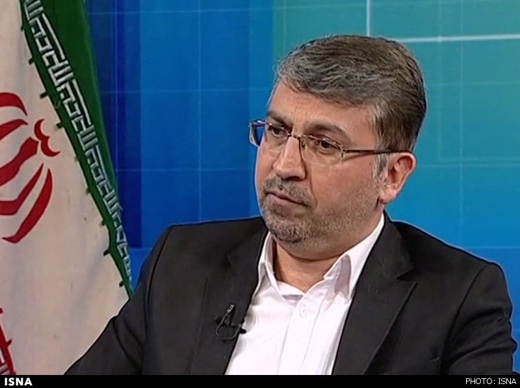
Earlier this month, the Supreme Court sentenced Mohammad Reza Rahimi, Iran’s first vice president under former president Mahmoud Ahmadinejad, to five years and three months in prison over corruption charges.

The court also ordered Rahimi to pay a 10-billion-rial (around $369,000) fine.

A court of first instance had initially handed down a 15-year prison sentence to Rahimi, but the Supreme Court commuted the term.

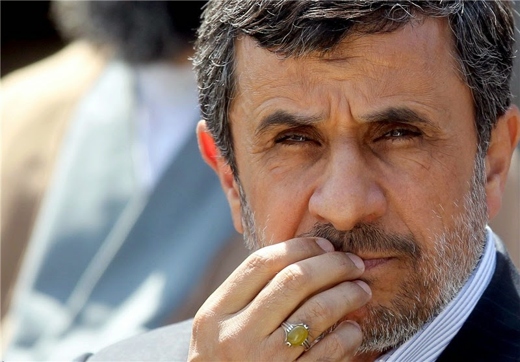
Following the court verdict, Ahmadinejad issued a statement saying the charges against Rahimi had nothing to do with the previous administration as the accusations date back to the time before Rahimi was appointed as first vice-president.

In a letter issued on Tuesday, Rahimi reacted to Ahmadinejad’s “equivocal” statement, criticizing the former president for turning his back on his deputy.

Rahimi said that he maintained friendship with former president for years, stressing that their differences of opinions over certain issues did not have an impact on their long-term friendship.

He said that he did his utmost to fulfill his duties and worked hard to improve relations between Ahmadinejad’s administration and the Iranian Parliament (Majlis).

Rahimi said that he was unwilling to take over as vice president due to certain “political grudges” aimed at tarnishing his reputation, and that he was appointed to the position despite his reluctance.

Rahimi said he expected Ahmadinejad to confirm that his deputy has “not betrayed the public purse.”

Rahimi also said that he is paying the price for the two-time former president’s “stubbornness” and his acts to tarnish others’ image, vowing to press ahead with his efforts to restore his reputation and prove his innocence.

Ahmadinejad has yet to comment back.

Iran and Turkey; from regional rivalry to cultural impacts

Iran-Turkey

Mehmet Seyitdanlioglu, a professor of history at Hacettepe University in Ankara, has analyzed the rivalry between Turkey and Iran during the Ottoman and Safavid Empires back in the 16th century and the attempts by the two archrivals to establish their total domination in the region.

On January 2, Iranian Diplomacy (irdiplomacy.ir) published the remarks of the Turkish academic on historical relations between Turkey and Iran under the Ottomans, explaining their relations in four main eras, especially after the Persian capture of Baghdad.

The following is the translation of his remarks at a conference on new Iran-Turkey cooperation at Iran’s Foreign Ministry which was held in cooperation with Middle East Technical University in the Turkish capital:

No doubt, ties between Iran and the Ottoman Empire gained forward momentum in the 16th century. Up until the 16th century, the Ottoman Empire had concentrated its focus on the Balkans, trying to make advances toward the Balkans and beyond that in Europe.

In other words, the Ottoman Empire was an empire of the Balkans and Europe until the 16th century and was viewed as a European empire.

Up until the 16th century, the East, Iran, Azerbaijan and the Middle East in general had escaped the attention of the Ottoman Empire. Relations between the empires were initiated in 1502 when Shah Ismail Safavi began to harbor the lofty ambitions of an empire. The first contacts between the Ottoman Empire and Iran were established in the same year.

Unlike the tenuous ties between the Ottomans and the West which were rife in conflicts and wars, their relations with Iran were somehow peaceful and calm. Trade, economic and political ties between Iran and the Ottoman which started in 1505 have continued to date. Their relations can be placed in different periodic categories such as:


16th century; rivalry over the Middle East

Rivalry for control over the Middle East started in early 16th century when Shah Ismail Safavi came to power. Back then the two governments tried to spread their domination over the Middle East. Between 1512 and 1517, wars erupted between Sultan Selim I and Shah Ismail. The former’s ambitions went well beyond Iran since he sought to conquer Egypt and the surrounding areas. Sultan Selim did not attach any significance to imposing his rule on Iran; rather, he wanted to bring Egypt under his own control.

During the first Ottoman–Persian Wars [Battle of Chaldiran in 1514], the Ottoman forces suffered huge losses. Conflict between Shiites and Sunnis was the only dominant policy between rival groups in that period; that’s why the Ottoman Empire sustained serious losses. Although the Capture of Cairo may be viewed as a military victory for Sultan Selim, it left an inevitable, yet disputable negative impact on the Ottoman Empire.

17th century; the Persian capture of Baghdad

In the first half of the 17th century after Iran’s capture of Baghdad, the Ottoman Sultan of the time convinced himself to prolong the wars [over territorial disputes]. According to available documents, the capture of Baghdad has been etched in the historical memory of the Ottoman people and the symbol of an Ottoman dream to take back Baghdad from Iran is still alive. Borders which were demarcated between the two neighbors under the Treaty of Qasr-e Shirin [or the Treaty of Zuhab which is an accord signed between Safavid Empire and the Ottoman Empire] on May 17, 1639 are still effective.

18th century; the start of reforms in Ottoman Empire

The third series of wars were waged by Sultan Ahmed III in the early 18th century. The so-called Tulip Age [between 1718 and 1730] marked the start of efforts to reform [the economy and cultural life] in the Ottoman era. In this period after unrest swept across Iran, the Ottoman sultan was behind most of the attacks because the empire was determined to dismantle the Safavid Empire.

On the one hand, domestic instability was Iran’s Achilles heel, and the role Russia played [in this regard] was indisputable. Russia put added pressure on Iran. In fact, Russia was a decisive factor in prompting the Ottomans to decide to attack Iran. Russia’s attempts to weaken Iran strengthened the Ottoman motivation [for attacking Iran]. The borders drawn up under the provisions of the Treaty of Qasr-e Shirin have been respected and remained unchanged.

19th century; the adventure of Akhundzade  

In the 19th century a number of Iranian intellectuals who went to Istanbul were impressed by elitism there. Mirza Fathali Akhundzade pushed this process first. Influenced by French philosopher François [Georgeon], he was the first one who proposed to change the [Arabic] alphabets. His proposed reform failed to gain traction in other countries, but it was welcomed and implemented in the Ottoman Empire and later in the Republic of Turkey.

Final words

In reviewing different angles of Iran-Ottoman relations, the cultural aspect matters most. The Ottoman Empire had been considerably affected by Iran’s history and culture. The Ottoman elite, among them the statesmen and thinkers, went to great lengths to learn the Persian language. They even tried to compose Persian poems. More importantly, those who knew the Persian language had an advantage in the Ottoman Court. Knowing how to speak Persian was also a source of honor.

A look at Iranian newspaper front pages on Jan. 28

Iranian Newspapers Headlines

Comments by Foreign Minister Mohammad Javad Zarif that Iran and P5+1 see eye to eye on termination of sanctions made front-page headlines on Wednesday. Reformist dailies focused on the letter of grievance former Vice-President Mohammad Reza Rahimi has released following Mahmoud Ahmadinejad’s decision to distance himself from his deputy. And principlist papers underlined the call by three die-hard principlist MPs for adherence to the rules in the trial of the son of Ayatollah Hashemi Rafsanjani.


Afarinesh: “We have reached a deal with P5+1 over termination of all sanctions,” said Foreign Minister Mohammad Javad Zarif.


Afarinesh newspaper 1- 28


Arman-e Emrooz: The Russian ambassador to Tehran has said a visa waiver between the two countries is likely to come into effect shortly.


Armane emruz newspaper 1- 28


Asrar: The presidential office has issued a statement urging MPs not to build on unsubstantiated allegations when they question executive officials.


Asrar newspaper 1- 28


Ebtekar has used the headline “The Great Escape of a Draftee” to refer to the failure of Mehrdad Pouladi, a footballer who played for the national team in the AFC Asian Cup in Australia, to return home to serve his military duty.

Ebtekar: “I became a victim of your obstinacy and your measures to bring shame upon others,” said Mohammad Reza Rahimi, vice-president under Ahmadinejad, in a letter released in response to a statement by the former president in which he disavowed the actions of Rahimi, who is convicted of corruption and sentenced to more than five years in prison.

Ebtekar: Air pollution in the southwestern cities of Ahvaz and Abadan is 15 times more than the permitted level.


Ebtekar newspaper 1- 28


Emtiaz: Some 71 percent of the country’s population lives in cities.


Emtiaz newspaper 1- 28


Etemad: “If Pouladi [a national soccer team player who has yet to serve his military duty] fails to return home voluntarily, we’ll have him arrested through Interpol,” said an official with the Conscription Organization.

Etemad: “Criticize as much as you want, I won’t fire back. I have kept silent for 10 months not to harm national interests, or the nuclear talks for that matter,” said Foreign Minister Zarif in comments aimed at his critics in parliament.


Etemad newspaper 1- 28


Ettela’at: A book on 5,000 years of engineering in Iran has been launched at Tehran University. A movie on the same theme was screened at the launch of the book.

Ettela’at: “Criticism leveled at the government is not well-intentioned,” complained the vice-president for parliamentary affairs.


Ettelaat newspaper 1- 28


Hemayat: Some 10,000 prisoners are to wear electronic shackles.

Hemayat: Some 200 MPs have voted for a motion that requires the government to scrap the Geneva Deal in case new sanctions are imposed on Iran.


Hemayat newspaper 1- 28


Hosban: “Interior Ministry officials should not adopt a stance for or against a certain political party,” said the Interior Ministry spokesman.


Hosban newspaper 1- 28


Jomhouri Islami: The education minister has been yellow-carded for a second time by MPs. That puts the education chief on the verge of impeachment.

Jomhouri Islami: There is division in the ranks of Republicans on Capitol Hill over continued nuclear talks with Iran.


Jomhorie eslami newspaper 1- 28


Kayhan: “Twenty members of the Jaish al-Adl terrorist group have been arrested,” the spokesman of the Interior Ministry said.


Kayhan newspaper 1- 28


Mardomsalari: “Two MPs and a senior executive manager who served under Ahmadinejad have been found guilty of administrative offenses,” said the chairman of a panel addressing administrative corruption.


Mardom salari newspaper 1- 28


Qods: Officials should do something to help street children, up to 70 percent of whom are addicted to drugs and 40 percent are HIV-positive.


Ghods newspaper 1- 28


Resalat: Those who favor a clampdown on corruption have called for the corruption case involving Mehdi Hashemi [a son of Ayatollah Hashemi Rafsanjani] to be seriously followed.


Resalat newspaper 1- 28


Shahrvand: A deputy foreign minister has said that following the martyrdom of General Allahdadi [during an Israeli helicopter gunship attack on Syrian soil] Iran warned the US about Israeli actions.


Shahrvand newspaper 1- 28


Sharq: The International Volleyball Federation has said Iran can host the FIVB Volleyball World League if it allowed female spectators into sporting arenas.


Shargh newspaper 1- 28


Tafahom: Foreign exchange offices which have failed to comply with regulations are being shut down.


Tafahom newspaper 1- 28

State oil ownership is in contradiction with democracy

Farhad Nili

The director of Iran’s Monetary and Banking Research Institute has said that mismanagement of the oil sector has undermined rationality in the administration of affairs in the country, adding that thanks to oil, politicians have abandoned the principle of accountability.

In an interview with Tasnim News Agency on January 25, Farhad Nili expanded on the country’s economic problems and took a swipe at Iran’s oil-driven economy. The following is a partial translation of Nili’s remarks in the interview:

The country’s dependence on oil resembles what is done in rainfed agriculture in which the farmer waits for rainfall to see the fruits of his work, unlike the irrigated agriculture which has nothing to do with precipitation. In economy, a rise in oil prices is similar to abundant rainfall for rainfed farmers, and vice-versa. […]

Dependence on oil can be looked at from two angles. From a financial viewpoint, the government sells oil on behalf of people and spends the money on the national economy. Inevitably the country’s budget is drawn up based on oil revenues. […]

Creation of the Foreign Exchange Reserve Fund during the third national development plan was a good idea, but it failed in practice. Its replacement – the National Development Fund – has in fact increased Iran’s dependence on oil revenues.

That the country balances its spending package based on oil prices has caused multiple problems: the government’s revenues swell or shrink due to the developments of the oil market; political managers feel no need for being accountable to the public and secure their satisfaction; and the foreign exchange rate – a political variable – has become a decisive factor in the economy.

Another angle has to do with foreign trade. Oil exports account for the bulk of hard currency Iran earns. Over the past years, Iran has exported non-oil items such as dried fruits and handicrafts, but such exports are limited. Like rainfed agriculture, a rise in crude prices results in a hike in imports. […]

Both before and after the revolution, oil price hikes have contributed to the inflow of imported items. Unlike the Shah, who had accepted to let Iran be integrated into global economy, the ownership regime the post-revolution Iran has set up for oil is in contradiction with democracy; it is not in conformity with domestic production-based economy either.

If Iran runs into difficulty collecting oil revenues, it will face challenges, both in financial and foreign trade sectors. It needs to change the structures and base its economy – like rainfed agriculture – on domestic production, not on oil revenues.

An economy without oil is not a remote possibility. To make it happen, two options are available: First, like a resourceful farmer the country should store water – oil revenues for the national economy – in a reservoir and channel it to different sections through pipelines. Second, it can dig a well and search for sources other than rainfall.

Iran should take these two measures simultaneously. It should turn the abrupt, accidental inflow of oil into a limited, regular and managed circulation. Establishment of a stabilization fund [a mechanism set up by the government or central bank to insulate the domestic economy from large influxes of revenue and from commodities such as oil] is what world nations have done in this regard.

Countries have invested the revenues they earn from natural resources in these funds and injected the returns into the economy. Iran’s oil revenues cannot be funneled into the economy due to the immaturity of economic structures. Iran should first invest and manage these revenues. It needs to turn oil into human capital which will – in turn – improve productivity. An economy becomes resistant when it relies on its own potential.

Resistance-based economy is the opposite of an oil-driven economy. It is the only exit strategy from the current situation. To help resistance-based economy become a reality, Iran should check the flow of oil [revenues] into the economy, reduce dependence on oil and overhaul its structures to base its economy on national production.

Oil is a boon, not a problem, but mismanagement of oil revenues has culminated in a structure which has weakened rationality as far as the administration of affairs is concerned. Unaccountability is to blame too. Officials should be accountable for every single petrodollar [they spend]. Transparency and accountability will boost rationality in management and help curb corruption.

[…]

The country’s problems should not all be blamed on sanctions. Iran could have seized the opportunity over the years to change its economic structures and offset the blow of sanctions. If imports start to flood Iran after sanctions are removed, it would mean that the country is repeating the past trend making the economy more dependent. If the reverse holds true, Iran can be hopeful about an economic boom down the line.

By imposing sanctions, the enemy has targeted Iran’s revenues. To counterbalance the effects of sanctions, Iran has to change its current economic structure in which oil has a big say. Iran has no other option but adopt an endogenous approach to economy and bolster national production.

Oppressive governments main reason for spiritual vacuum: Judiciary chief

Larijani-Religion

Iran’s Judiciary Chief Sadegh Amoli Larijani has criticized defamation of religion and called the recent French cartoons an insult to over 1.5 billion Muslims around the world.

Ayatollah Amoli Larijani made the remarks at a meeting with the Patriarch of Armenian Catholic Church Nerses Bedros in Tehran.

Amoli Larijani described spiritual vacuum as the main problem in the world, and said “The reasons and causes of self-alienation and distance from spirituality and monotheistic religions abound in the modern world, and religious figures have a duty to introduce the truth of anti-oppressive nature of monotheistic religions to the public.”

He called on the religious scholars to take a stance against the violence of hegemonic leaders and Western governments against oppressed people, especially Muslims.

“Due to their influence in the world, Christian leaders are expected to take appropriate positions when and where aggression happens against innocent people,” Amoli Larijani underlined.

The top judge also called for greater engagement of religious scholars and thinkers of the West with the Islamic scholars to bring religions closer together and boost spiritual trends in the world, stressing that ruthless and aggressive governments keep people away from each other and strengthen their tendency toward materialism and enhance their distance from spirituality.

Larijani said divisive actions like insulting religions is decried and the recent cartoons published by Charlie Hebdo was a clear violation of over 1.5 billion Muslims’ rights.

The Patriarch of Armenian Catholic Church Nerses Bedros, while acknowledging the issues raised by Ayatollah Larijani, said that spirituality has declined, especially in Western countries due to the expansion of materialism in the world.

Iran’s foreign relations are developing: Minister

Janati-Portugal

Iran has cultural agreements with many countries with some as old as half a century, Minister of Culture and Islamic Guidance Ali Jannati said in a meeting with Portuguese Foreign Minister Rui Machete in Tehran Tuesday.

At the meeting in which the two ministers signed a cultural agreement, Jannati said, ‘There is a solid base for expansion of bilateral relations and the two countries can have extensive cultural exchanges in the next couple of years.’

Jannati referred to 500-year-old bilateral relations between Iran and Portugal, calling for closer Tehran-Lisbon relations.

Referring to Iran Cultural Week held in Lisbon, Jannati said Iran presented various artworks among other things in music, cinema, at the event and ‘we hope to see Portuguese artists in Iran soon’.

Jannati also said Iran is ready to expand bilateral relations in different fields such as exchanging academic delegations, holding cultural exhibitions, and exploiting the two countries’ cultural potential.

He invited Portuguese film makers to participate in Fajr Film Festival which is held in Tehran annually in February.

Meanwhile, the Portuguese foreign minister called for the implementation of the cultural agreement, saying bilateral relations go back to the 16th century.

Machete expressed hope that the two countries would be able to present their art works to each other.

There won’t be a thaw in Tehran-Riyadh ties under King Salman: Expert

King Salman

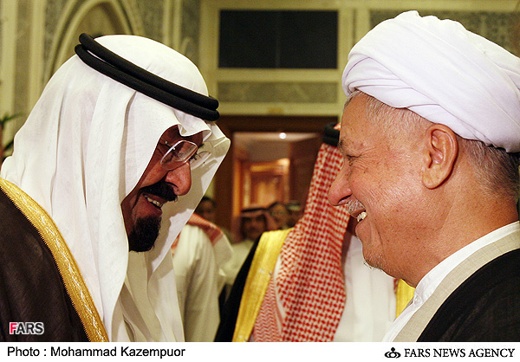
On January 24, Dr. Sabah Zanganeh, a veteran diplomat and foreign policy expert, was quoted as saying that Saudi King Salman bin Abdulaziz, who has just acceded to the throne, is unlikely to seek to ease tensions with Iran given the presence of security-minded people in the royal court. The following is the translation of his opinion piece posted by irdiplomacy.ir:

King Abdullah’s demise paved the way for Crown Prince Salman bin Abdulaziz, who is almost 80, to accede to the throne. When Salman served as heir-to-the-throne, many distractions emerged in the Al-Saud family. Today those peripheral questions are likely to draw more attention than before.

So the post-King Abdullah era can be described as one of the stickiest periods in Saudi history, because on top of power struggles at home, the kingdom faces challenges abroad.

Although in his speech, King Salman said that he would follow in the footsteps of his predecessor, the transformation he has introduced at home could alter the course that Saudi Arabia is moving on.

When King Abdullah rose to power, he too introduced fundamental changes to the system and put loyalists in positions of power. Now his successor has followed suit and given power to loyalists who are mainly from the Sudairi family whose members have risen to power multiple times.

Salman is the 7th king of Saudi Arabia. The ailing 80-year-old monarch is one of the Sudairi Seven who have wielded power in different positions for years. Before his accession to the throne, Salman was the minister of defense and governor of Riyadh Province for 48 years (1963-2011). His nomination of Prince Muqrin as deputy prime minister and reinstatement of Prince Mohammed bin Nayef as interior minister indicates how much sway security-minded individuals hold within the Saudi ruling system.

That the king himself and his son Muhammad bin Salman – minister of defense, chief of the royal court and an advisor to him – remain in charge of military matters shows that the approach adopted by King Fahd is still alive and will bring about an increase in arms purchases.

However, the key point is the presence of a third-generation of Abdulaziz’ sons in the governing system which fans the flames of family feuds. The rise to power of the senior sons of the Al-Saud family is a general rule which has been compromised, and this will definitely give rise to a sense of dissatisfaction in the ranks of the third generation.

Yet, the presence of King Salman at the highest level in the hierarchy could keep the rows within the House of Saud in check, because he has the experience of coping with such problems under his belt.

The new Saudi King shares common ground with America, thus goes down the path marked by Washington.

A[recent] visit by a US Senate delegation led by Republican Senator John McCain to Saudi Arabia is indicative of the rising influence of the Republicans in America and of an improvement in ties with the Al-Saud family after Salman’s accession to the throne. Republicans believe that closer ties with Riyadh could give the arms industry a shot in the arm. In fact, relations between Riyadh and Washington are based on such mentality.

Republicans don’t care about human rights and won’t exert any pressure on the Al-Saud family. With King Salman in power, the question here is whether Tehran-Riyadh relations will improve. Given the presence of security-minded people around King Salman, he is unlikely to pursue easing tensions with Iran unless pressures at home like national security issues leave the new monarch no choice but forge regional cooperation with Tehran to bring the kingdom’s problems to an end.

A look at Iranian newspaper front pages on Jan. 27

Iranian Newspapers Headlines

A meeting between the Supreme Leader and the visiting secretary general of the Popular Front for the Liberation of Palestine during which Ayatollah Khamenei said, “We will stay firm until the realization of the Palestinian cause,” dominated the front pages of Iranian papers on Tuesday. The lingering aftermath of the Iranian foreign minister’s stroll with US Secretary of State John Kerry in Geneva and the liberation of the Syrian Kurdish town of Kobani from the clutches of IS terrorists also appeared on the cover of the dailies.


Abrar: Universities of Tehran and Lisbon have signed a cooperation memorandum of understanding.


Abrar newspaper 1- 27


Afarinesh: President Rouhani has underlined regional security and intelligence cooperation to counter terrorist groups.


Afarinesh newspaper 1- 27


Afkar: “The outrageous crimes terrorist groups such as Boko Haram commit put a blight on human conscience,” said President Rouhani as he received the credentials of the new Kenyan ambassador to Tehran.

Afkar: Moscow is concerned about the security of Israel. The Russian foreign minister has said that conclusion of Iran’s nuclear case should not endanger Israel.


Afkar newspaper 1- 27


Aftab-e Yazd: The nuclear ping-pong of principlists carries on. Saeed Jalili [a former top nuclear negotiator under President Ahmadinejad] has denied reports that he was admonished [by the Supreme Leader] for his performance at nuclear talks in Istanbul, Turkey.


Aftabe yazd newspaper 1- 27


Arman-e Emrooz: “Nuclear talks should produce results as soon as possible,” said President Rouhani at a meeting with the visiting Portuguese foreign minister.

Arman-e Emrooz: “Criticism by some MPs of Foreign Minister Zarif [for his failure to call off his Paris visit and for his promenade with the US secretary of state in Geneva] is based on no solid ground,” said Principlist parliament deputy Ali Motahari.


Armane emruz newspaper 1- 27


Asia: The Portuguese foreign minister and 120 businessmen accompanying him have held talks with Iranian businesspeople.

Asia: Iran’s economy is on course to post eight percent growth.


Asia newspaper 1- 27


Asr-e Eghtesad: Inflation is expected to slip below 16 percent by the end of the year, a senior economic official told a conference on electronic banking.


Asre eghtesad newspaper 1- 27'


Asr-e Iranian: “The occupation of Palestinian territories lies at the center of regional problems,” said President Rouhani in a meeting with the new Jordanian ambassador to Tehran to receive his credentials.


Asre iranian newspaper 1- 27


Asrar: Why didn’t anyone take notice of the stroll [former nuclear negotiator Saeed] Jalili took with American diplomat William Burns?

Asrar: “Sanctions will be lifted in the near future,” said the Iranian economy minister.

Asrar: “In the absence of lame excuses, a nuclear deal is within reach,” said the Iranian Parliament Speaker Ali Larijani.

Asrar: “Those who have been involved in corruption will find no safe haven,” said the Iranian attorney general.


Asrar newspaper 1- 27


Ebtekar: The vice-president for parliamentary affairs has dismissed as libelous allegations that a member of President Rouhani’s Cabinet holds dual citizenship.

Ebtekar: IS has been kicked out of the Syrian town of Kobani near the border with Turkey.


Ebtekar newspaper 1- 27


Emtiaz: The picturesque northern Iranian town of Masouleh is one step closer to being registered as a world heritage site.

Emtiaz: “Star of the Persian Gulf Refinery needs some 650 million euros in investment,” said the Iranian oil minister.


Emtiaz newspaper 1- 27


Esfahan-e Emrooz: President Rouhani will visit Isfahan next week.


Esfehane emruz newspaper 1- 27


Etemad: “Is the walk Foreign Minister Zarif took with the US secretary of state in Geneva the only outstanding problem of the country!? Why didn’t anyone fault the former top negotiator [Saeed Jalili] for taking a similar stroll? The prospect of a nuclear deal sends shockwaves through the ranks of some groups. Criticism aimed at Zarif is not well-intentioned. Efforts to hammer the nuclear negotiating team are simply meant to settle a political score,” said Vice-President for Parliamentary Affairs Majid Ansari in reaction to a petition by 21 MPs to summon Zarif to parliament for explanation about his conduct.

Etemad: “We have not backed down in the face of pressures. The Tales reflect social realities; it does not seek to paint a negative image of society,” said the minister of culture and Islamic guidance.


Etemad newspaper 1- 27


Ettela’at: A second Iranian well dug in the Caspian Sea has hit oil.

Ettela’at: Top Shiite cleric Ayatollah Sistani has praised Iraqi volunteer forces for their contribution to the liberation of Diyala Province.

Ettela’at: “Iran’s economic growth will hit 3 percent this year,” said the governor of the Central Bank.


Ettelaat newspaper 1- 27


Ghanoon: “The nuclear case and the house arrest [of Messrs. Karroubi and Mousavi] won’t be settled through holding a referendum,” said Mohammad Reza Bahonar, a vice-speaker of the Islamic Consultative Assembly.


Ghanoon newspaper 1- 27


Hambastegi: “The West and Europe should win the trust of Iranians,” said Foreign Minister Zarif.


Hambastegi newspaper 1- 27


Hemayat: A number of MPs have called on the Foreign Ministry to summon the Germany ambassador to Tehran for “meddling in Iran’s internal affairs”. The appeal came after a top German MP called for an end to the house arrest of Mousavi and Karroubi [presidential hopefuls who disputed the results of the 2009 elections and sparked widespread unrest].

Hemayat: At a meeting with the Archbishop of the Armenian Church Nerses Bedros XIX, Iranian Judiciary Chief Ayatollah Sadegh Amoli Larijani said that the attitude of Western leaders to world nations is completely unjust.


Hemayat newspaper 1- 27


Jomhouri Islami: “The preferential deal with Turkey is the brainchild of the previous government!,” said the deputy industry minister.

Jomhouri Islami: “Criticism of Zarif is rooted in ossified mentality and narrow-mindedness,” said principlist MP Ali Motahari.


Jomhorie eslami newspaper 1- 27


Kaenat: “The 11th government has stopped the distribution of cancer-causing gasoline,” said the director of the Environment Protection Organization.


Kaenaat newspaper 1- 27


Kayhan: “The youth will definitely witness the realization of the Palestinian cause,” said the Supreme Leader at a meeting with the secretary general of the Popular Front for the Liberation of Palestine.


Kayhan newspaper 1- 27


Resalat: “The initiative of the Supreme Leader [sending a message to European and North American youth] was a perfect reaction to Islamophobia,” said Ayatollah Mohammad Yazdi, [a former judiciary chief].


Resalat newspaper 1- 27


Shahrvand: The Iranian national football team has returned home to a hero’s welcome despite being eliminated in the quarterfinals of the AFC Asian Cup.


Shahrvand newspaper 1- 27


Terrorist groups have nothing to do with Islam: Iran president

Rouhani-Kenyan

“Unfortunately, many terrorist groups are operating in the name of religion and Islam, but their ideology and conduct bear no affinity to Islam,” Rouhani said on Monday.

The Iranian president made the remarks in a meeting with new Kenyan Ambassador to Iran Ruqyah Ahmad Sabu in Tehran, where the Kenyan official submitted her credentials to the president.

Rouhani said the heinous crimes committed at the hands of terrorist groups, including Boko Haram, have drawn global condemnation from people all across the globe.

Boko Haram, whose name means “Western education is forbidden,” control vast swathes of Nigeria’s northeastern Borno State and a number of areas in neighboring Adamawa and Yobe states.

The notorious terrorists group says its goal is to overthrow the Nigerian government. The terrorist group has claimed responsibility for a number of deadly shooting attacks and bombings in various parts of Nigeria since the beginning of its operations in 2009, which have claimed lives of thousands of people.

The Iranian president further described Kenya as an important and influential country in East Africa, calling for the further enhancement of all-out ties between Tehran and Nairobi.

The Kenyan official, for her part, expressed her country’s willingness to expand relations with the Islamic republic in tourism and development sectors.


US interventionist policies

Also on Monday, in a meeting with new North Korean ambassador to Tehran Kang Sam-hyon, President Rouhani condemned the US meddlesome and bullying policies in the region.

“We always condemn illegal sanctions and we should resist pressures and hegemony through cooperation,” Rouhani said, adding, that US sanctions against North Korea have merely affected the people of the country.

The Korean official, for his part, said the Iranian government and nation have achieved to thwart the US conspiracies and defend their right to use peaceful nuclear energy program.


Israel root of region woes

In a separate meeting with new Jordanian ambassador to Tehran Abdullah Sulaiman Abdullah Abu Romman on Monday, president Rouhani described the Israeli regime’s occupation of Palestine as the root cause of problems in the Middle East.

“Today, the world public opinion not only refuses to tolerate the Zionist regime’s oppression and aggression but also condemns them,” said Rouhani.

Rouhani voiced Iran’s support for the stability and security in the Middle East, adding that the Islamic Republic seeks the resolution of the Palestine issue and return of Palestinians to their homes.

The Iranian president further stated that Tehran is willing to expand friendly ties with Amman in different economic, cultural and political spheres, calling for bilateral consultations on regional and international issues.

The Jordanian official, for his turn, said his country considers the Islamic Republic as an influential country in the region and called for the enhancement of ties with Tehran in various domains.

Rouhani says Iran, Portugal could link Europe, Middle East

Rouhani-Portugal-FM

President Hassan Rouhani said Iran and Portugal could build a bridge between the Middle East and Europe.

In a meeting with Portugal’s Foreign Minister Rui Machete, he pointed to the long-standing ties between the two countries and said that ranking officials from both countries have been exchanging visits during the past year.

The president said the visit of the Portuguese foreign minister is a staging area for the two countries to start more active cooperation in the international arena.

The Iranian president stressed that the world should focus on settling such major problems like violence and terrorism which are afflicting not only the Middle East, but the whole world, including Europe.

Referring to Iran’s nuclear talks with P5+1, the president said the Iranian nation is determined to safeguard its nuclear technology it has developed for peaceful purposes.

He said the remaining differences between parties involved in nuclear talks are neither legal nor technical but political and require firm determination to be settled.

President Rouhani went on to say that Iran’s nuclear activities have been under the constant supervision of the International Atomic Energy Agency within the framework of international regulations.

He stressed the peaceful nature of Iran’s nuclear activities and underscored that pressures on Iran are quite baseless.

He said pressures and sanctions would harm all parties engaged in the talks.

He said Iran is determined to speedily settle the nuclear case to focus on the development of the country.

The Portuguese foreign minister voiced interest in expanding relations with Iran and said time is ripe for both countries to transform their ties.

He said he believed Tehran and Lisbon could cooperate not only in issues of mutual interest but act as a bridge between Europe and the Middle East.

As for Iran’s nuclear negotiations, he said his country was well aware of the positive consequences of any agreement between the negotiating parties.