Friday, April 17, 2026
Home Blog Page 4950

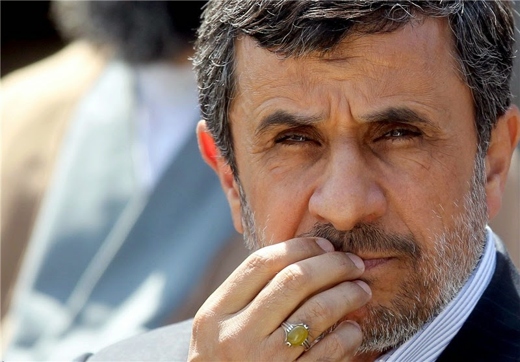
Will Ahmadinejad stand trial?

Mahmoud Ahmadinejad

Some principlists who are vocal in their criticism of former President Mahmoud Ahmadinejad say it would be an act of bravery on the part of the Judiciary if charges were brought against him for disrupting Iran’s economy and squandering national assets during the golden age of foreign revenues. On the other hand, his staunch supporters say his trial would be a great opportunity to reveal many things which have remained unsaid so far.

What comes next is the translation of an analysis published by Fararu on February 21, featuring the perspectives of a critic and a supporter of Ahmadinejad:


We hope that the Judiciary makes good on its pledge to try Ahmadinejad

Expressing hope that the Judiciary will deliver on its promise to prosecute Ahmadinejad, Secretary General of the Guilds and Bazaar Association of Iran, Ahmad Karimi Isfahani said, “Ahmadinejad has a long history in finger-pointing and tarnishing the reputation of others. On certain occasions, by building on such a tactic he has even succeeded in getting things done the way he wants them to be done. The most glaring mistakes in the history of the Islamic Republic were made during his term in office.”

The principlist politician added, “Therefore, it would be appreciable if the Judiciary treated him like an ordinary citizen. Any timely action in this regard will contribute to efforts to safeguard the establishment.”

Arguing that the offenses committed by Ahmadinejad outnumbers those under investigation by the Judiciary, he said, “Thanks to his mismanagement, numerous offenses were committed by officials under him like [Esfandiar Rahim] Mashaei [his senior cabinet member] and [Mohammad Reza] Rahimi [his first vice-president] for which he has to be held accountable. Besides, the heaviest blows were dealt to the economy during the golden age of foreign currency revenues when he could have streamlined the economy.”

Karimi Isfahani said that whenever Ahmadinejad found greater opportunities, he caused more damage to the country’s infrastructure.

He went on to say, “The Judiciary seeks to find out about cases involving a waste of assets or corruption. Even if we assume that his government has not siphoned off public funds, lots of resources have been wasted. Still he says that he will run for office!”

Denouncing offenses committed by Ahmadinejad as major, he added, “Disrupting the economy is his most serious offense. On the international front, he caused disorder too and cast doubt on Iran’s dignity. That’s why in my opinion, Ahmadinejad has to be severely punished.

Supporters of Ahmadinejad, on the other hand, have not expressed any opposition to him being put on trial.


Ahmadinejad will reveal what remains unsaid

Abdolreza Davari, the head of HOMA, a media outlet supporting Ahmadinejad, is among those who has welcomed the idea of trying Ahmadinejad and said, “In my opinion, this trial will be among the most remarkable in the history of the Islamic Republic.”

Stressing the fact that if Mr. Ahmadinejad faces charges, he should be treated like an ordinary citizen, he added, “The current supporting him welcomes the trial, because it will definitely offer an opportunity to say what remains unsaid.”

Whether his case should be heard in an open court is another bone of contention.

In reaction to Davari’s comments, Karimi Isfahani said, “His case should be heard like other cases the Judiciary deals with and the ruling should be made public, because it is obvious that like in the past Ahmadinejad will turn to finger-pointing and tarnishing the reputation of others. Now that not much is at stake for him, he definitely won’t take into account the considerations of the establishment.”

After eight years in power, when Ahmadinejad left office many people and experts denounced him as the main culprit for the economic and political damage the country suffered. We should wait and see when the Judiciary can file charges against him based on current complaints and not necessarily because of the damage he has caused to the country.
The image of you by Vank Cathedral sticks in my mind forever

Zawen-Ghokasian

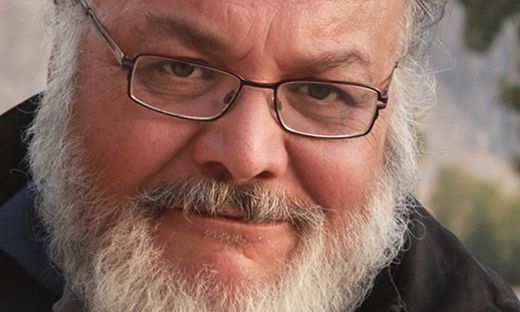
On February 21, Sharq published a laudatory tribute by Bahman Farmanara, an Iranian director, screenwriter, and producer, to Zaven Ghokasian, a filmmaker, critic, and professor of cinematography who passed away a day earlier. The following is a partial translation of the item in which Farmanara reminisced about the past, paying tribute to late Ghokasian who like him was originally from Isfahan:

Walking next to Vank Cathedral in Isfahan, a pudgy man of medium build approached the camera behind which Bahman Kiarostami was positioned. We were in Isfahan to make a documentary. We soon realized that it was Zaven Ghokasian, the leading cinematography figure in town.

Without him, cinema wouldn’t have survived long in Isfahan. With a lot of enthusiasm, perseverance and kindness, Zaven would attract people to film festivals or to classes he held; he was the one who encouraged the youth interested in cinema to attend such gatherings.

A while ago when Zaven’s mother passed away and we went to Isfahan to attend her memorial, we were astonished at the sight of the large crowd coming from far and wide to offer condolences. It was surprising because Zaven did not hold public office, nor was he a man in a high position.

Still, he was well loved by all those who were enthusiastic about cinema in Isfahan. Although Zaven was at the center of attention, he was surprised about how sincerely the public mourned his mother.

Zaven and I were always fond of food and eating. Sometimes we’d make fun of ourselves for our excessive interest. Our shirts were always the butt of jokes we exchanged. […] He would always laugh off my banters gracefully.

Zaven was the one behind the success of the international short film festival in Isfahan. Leading figures like Abbas Ghanjavi [a film editor] would travel from Tehran to Isfahan every week to teach classes and even stood in for Zaven every time he called in sick.

Zaven Ghokasian was an ordinary citizen of a major city of Iran whose passion for cinema and its survival in his hometown turned him into a giant; a heavyweight who left a mark which will last for good.

My dear friend, rest in peace; you will always remain a sweet memory in my mind. I am ever so glad that thanks to my own disease I did not see you suffer. The image of you as a pudgy man of medium build with your typical laugh walking next to Vank Cathedral will be imprinted in my mind.

Iran to quit talks if interests not secured: Araghchi

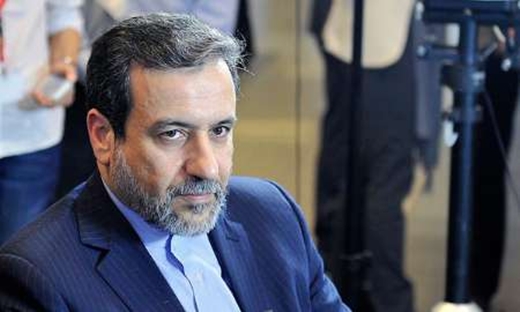
Abbas Araghchi

Deputy Foreign Minister and senior nuclear negotiator Abbas Araghchi said Tehran attaches no importance to media hype and will continue to hold talks as long as there is respect at the negotiating table.


He made the remark in reaction to comments by U.S. Secretary of State John Kerry who said Saturday that “significant gaps” remained and warned that Washington was ready to walk away from the talks if Tehran didn’t agree to terms demonstrating that it doesn’t want atomic arms.
Araghchi further said the Iranian nation and nuclear negotiators will never surrender to threats, bullying, pressures, and force

“We have already faced this kind of American rhetoric and it is unfortunate that they repeat it while it has proved a total failure,” Araghchi added.

“Both Americans and other members of 5+1 Group (Russia, Britain, France, China, Germany) have experienced several times that political or media pressures do not cause Iran to change its approaches, demands, and stances in the negotiations whatsoever.”

Stressing that the negotiations should continue in a win-win situation, Araghchi said if one side tries to impose its will, Iran will have no doubt to walk away from the talks, “but this is not the situation we are in now. We continue the talks strongly, but whenever we feel that the negotiations do not secure our national interests, we will certainly walk away.”

On the presence of Director of Iran’s Atomic Energy Organization Ali Akbar Salehi and US Energy Secretary in the negotiations, Araghchi said involvement of Salehi in the talks was very useful because he is an expert on technical aspects of the talks.

“We can’t claim yet that there is a breakthrough in the talks and there are still gaps, but all the sides are seriously trying to get closer to a settlement, although there are not complete solutions in key problems, yet,” said the Iranian negotiator.

No one could claim Iran pursuing non-peaceful nuclear program: Rouhani

Rouhani-NAM

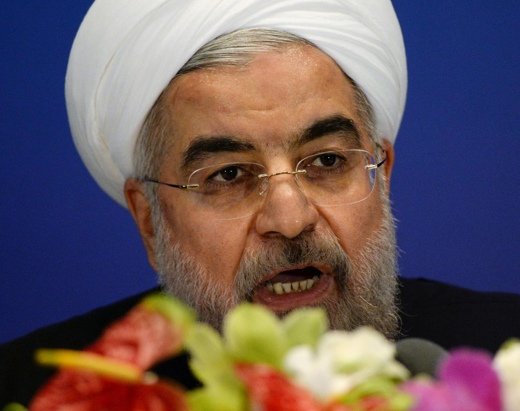
President Hassan Rouhani said that no one now could claim that Iran is pursuing non-peaceful goals in its nuclear program.

He made the remarks on Monday while addressing the opening of a meeting of Science Ministers of the Non-Aligned Movement (NAM) member states.

He said those who are imposing sanctions against Iran as well as the ones who are running projects to make Iran’s nuclear program a matter of security, are both well aware of the real objectives of the Iranian nation and government.

The president also stressed that today in the world nobody could ever claim that Iran’s nuclear program is non-peaceful.

He said Iranians are under a lot of pressure only because of their determination to safeguard their inalienable right to nuclear technology for civilian purposes.

Discrimination in science, he added, is now used as a tool to keep up the process of underdevelopment, poverty and unemployment in non-developed countries.

He went on to underscore the need for independent countries to adopt collective policies to confront this trend.

The Iranian president also stressed that as long as politicians in developing countries fail to make any reforms and establish a proper link between science and industries, the brain drain will continue in their countries.

He urged the NAM member states to drop non-realistic missions and try to focus on areas of joint scientific and technological cooperation.

He said each NAM country enjoyed remarkable scientific capacities which could be shared with other member states.

President Rouhani said that scientific and technological cooperation within the NAM could serve to enhance progress and prosperity in member states and in the long run help attain the ultimate goal of the organization which is to establish peace and equality in the world.

He said extreme poverty and unemployment in developing countries which is exacerbated in turn by an impotent global political and economic system paves the way for growing extremism and violence in the world.

The president highlighted the right of people to knowledge and technology as an inalienable one.

As learning and teaching knowledge have no borders, he said, the benefits gained from them have no limits either.

Representatives from 58 countries and international organizations, as well as 31 science ministers from the Non-Aligned Movement (NAM) states are participating in the meeting which is hosted by Iran’s Ministry of Science, Research and Technology.

Participants include officials from the Islamic Educational Scientific and Cultural Organization (ISESCO), D-8 Organization for Economic Cooperation, the Islamic Development Bank, the OIC Standing Committee on Scientific and Technological Cooperation (COMSTECH), the African Union, and a number of deans of universities from NAM states.

This is the first specialized summit on science and technology by NAM.

It is aimed at boosting major policy-making cooperation among the member states and improving the movement’s diplomacy of science and technology.

Zarif, Kerry, Salehi, Moniz end nuclear talks in Geneva

Zarif Kerry Salehi

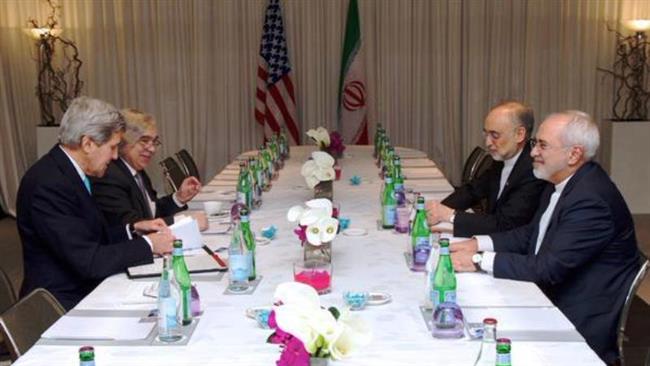
The negotiations which began late Sunday in the Swiss city of Geneva ended after 2.5 hours with the two sides agreeing on resuming negotiations on Monday.

A source in the Iranian negotiating team said that the agenda for Monday is yet to be determined.

The meeting between the two top diplomats was delayed for several hours due to Kerry’s late arrival from London.

Ali Akbar Salehi, the director of the Atomic Energy Organization of Iran (AEOI) and US Energy Secretary Ernest Moniz also attended the talks. The high-ranking officials have already held two rounds of negotiations to discuss the technical aspects of Iran’s nuclear program.

Iranian and US delegates, who attended a simultaneous meeting with negotiators from Russia, China, Germany, France and the UK, later joined talks between Zarif and Kerry.

Deputy Foreign Minister Abbas Araghchi, the head of the Iranian delegation, said after the meeting with P5+1 in the EU mission building in Geneva that it is soon to claim any progress has been made.

The talks are expected to continue on Monday at an expert level with discussions on the technical issues.

The ongoing talks in Geneva, which kicked off on Friday, are among the last attempts by the involved parties to narrow gaps on the remaining issues as a deadline for reaching a comprehensive deal on July 1 draws closer.

The two sides have missed two deadlines since an interim deal was signed in November 2013.

Deputy minister tells colleagues to quit if they can’t manage

Ettemad-Water

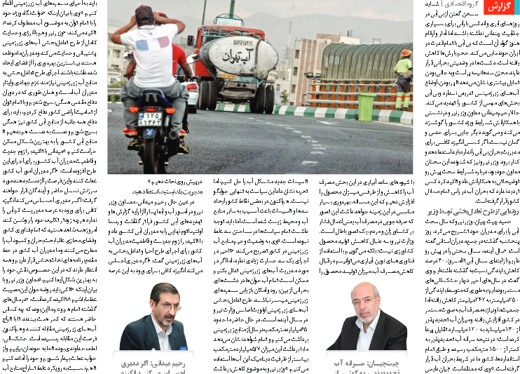
On February 21, Etemad daily ran a report on water crisis in Iran and the need for urgent action to defuse it. What appears below is a partial translation of what the energy minister and his deputy have said about the country’s water resources:

“We will have a tough year ahead [starting on March 21]. Over the past 11 months there has been a 30 percent drop in rainfall,” said Energy Minister Hamid Chitchian.

Deputy Energy Minister for Water and Sewage Affairs Rahim Meydani urged officials who play a role in water management across the country to try in earnest to implement the plan aimed at reviving ground water resources.

He underscored that implementation of the plan requires determination and said, “As we joined hands during the Sacred Defense to safeguard our territorial integrity, we should now spring into action to properly protect the country’s water resources.”

Meydani warned, “If those at the helm of water management failed to seize the opportunity, they would be blamed by present and future generations. If a manager thinks that they are not motivated enough to step up to the plate in dealing with water crisis, they should let us know as soon as possible.”

He further said, “Drought has turned out to be a blessing in disguise. In fact it was a wake-up call; it has prodded us to take action to compensate for overconsumption of water and properly manage surface and ground water resources in the face of crises.”

Stray dogs are collected and rehomed in Tehran

Dogs

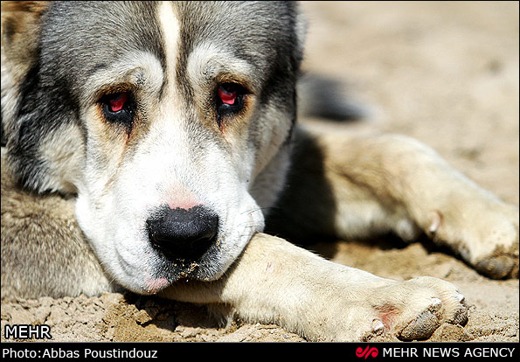
A collaborative project by Tehran Municipality and animal rights organizations got underway in Darakeh, north of Tehran, on Friday to collect stray dogs and fit them with GPS tracking collars.

Etemad daily on February 21 filed a report on the animal-friendly project. The following is a brief translation of the report:

[…]

The project aims to treat homeless dogs in fixed periods of time and save them from diseases such as rabies.

Reza Ghadimi, who is in charge of organizing businesses and industries in Tehran, said that the project is meant to protect animals, adding that over the past year no stray dog has been killed, not even one.

After being vaccinated, the dogs become traceable thanks to the yellow collars they wear which are equipped with GPS, he said, adding this way the non-domesticated animals can receive periodic treatment.

Ghadimi further said that Tehran Municipality and a number of NGOs have joined hands to carry out this collaborative project which intends to help the strays and promote the culture of protecting the animals.

[…]

In addition to animal advocacy groups, he went on to say, 12 teams of veterinarians have joined the project to help with the vaccination of the canines. He added as many as 3,000 dogs have been equipped with GPS tracking collars over the past year.

[…]

The Municipality is planning to provide food to these dogs in order to prevent them from straying into residential areas in the capital.

[…]

The project helps 20 percent of unclaimed dogs – which are of good breed and have been simply abandoned – get rid of a homeless and unprotected life, and be used as watchdogs in [government] organizations and institutions instead.

A look at Iranian newspaper front pages on Feb. 23

Iranian Newspapers Headlines

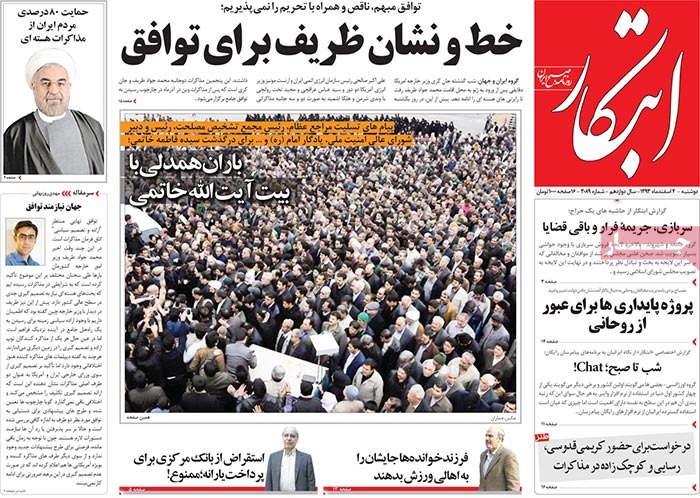
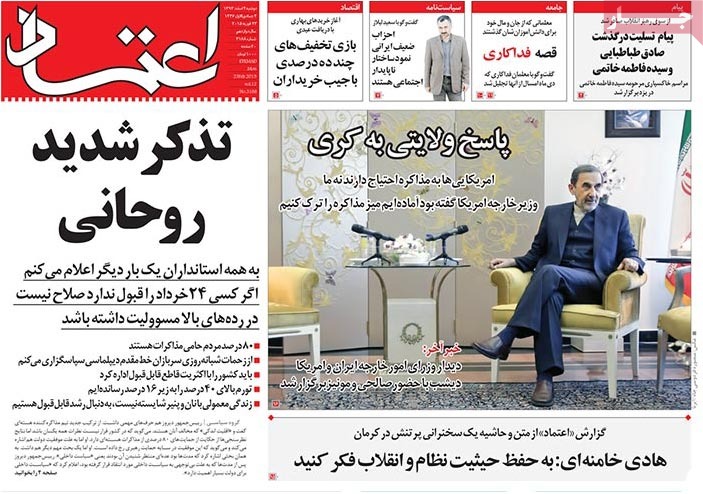
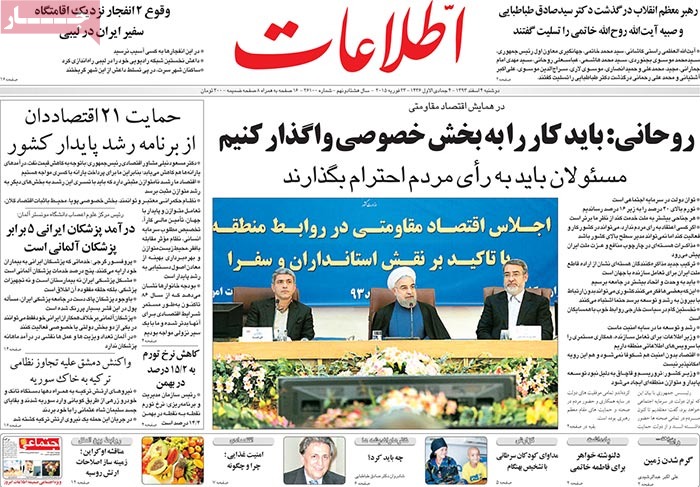
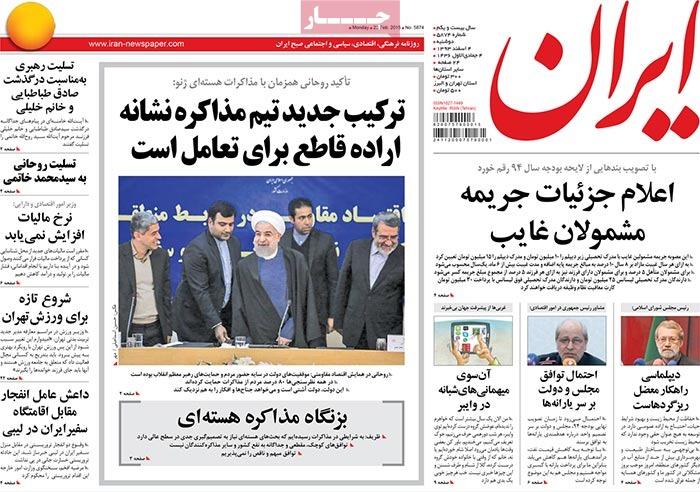
Nuclear talks in Geneva between representatives of Iran and the US and the comments of President Rouhani on public support for the way his government handles the nuclear issue dominated the front pages of Iranian dailies on Monday.

News on the messages of condolences senior figures including the Supreme Leader released following the deaths of Seyyed Sadegh Tabatabai and Fatemeh Khatami also grabbed front-pages headlines.


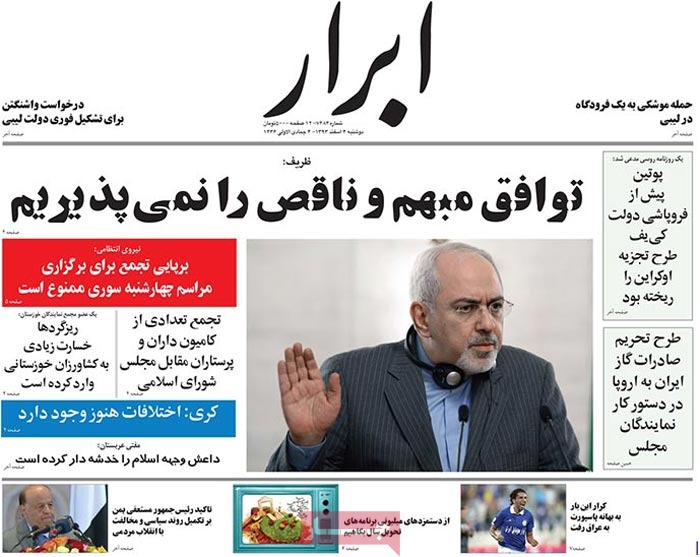
Abrar: A plan to impose natural gas sanctions on Europe is on the agenda of Iranian MPs.


A look at Iranian newspaper front pages on Feb. 23


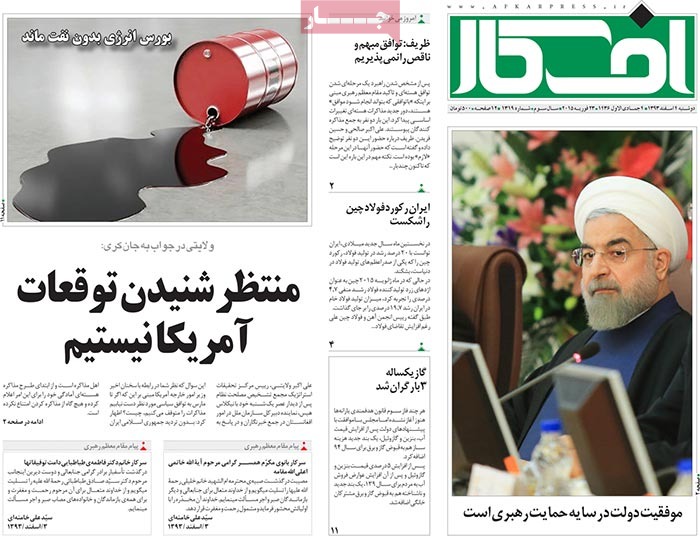
Afkar: Iran broke China’s steel production record

In January steel production in Iran posted a 20 percent growth.


A look at Iranian newspaper front pages on Feb. 23


Aftab-e Yazd: Gatherings to celebrate Chaharshanbe Suri [the fire-jumping festival that falls on last Tuesday of the year] are illegal.

The commander of the prevention department of the law enforcement force said.


A look at Iranian newspaper front pages on Feb. 23


Arman-e Emrooz: “We should not allow society to be divided,” said the president.

Speaking at a gathering on resistance-based economy Hassan Rouhani further stated in every poll conducted more than 70 percent of respondents have supported the government’s nuclear approach.

Arman-e Emrooz: When games become dangerous

Those who sell unauthorized computer games will be dealt with.


A look at Iranian newspaper front pages on Feb. 23


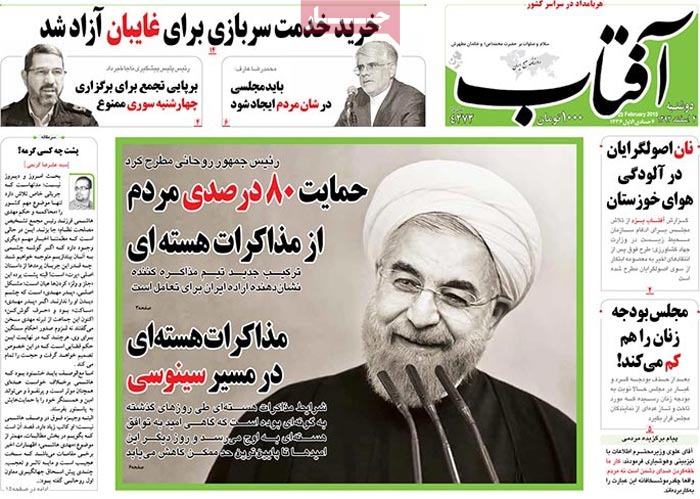
Ebtekar: “Some 80 percent of Iranians support nuclear talks with P5+1” said President Rouhani.

It came as Foreign Minister Zarif said that Tehran won’t accept any deal which is vague, incomplete or keeps sanctions in place.

Ebtekar: There has been an outpouring of sympathy with the family of Ayatollah Ruhollah Khatami.

Senior clerics, the chairman of the Expediency Council, the chairman and secretary of the Supreme National Security Council and the grandson of the late Imam Khomeini have all released messages of condolences following the passing of Fatemeh Khatami.


A look at Iranian newspaper front pages on Feb. 23


Etemad: A stern warning by Rouhani

“Let me once again tell all provincial governors, those who do not believe in what happened on June 14 [people overwhelmingly voted for Rouhani in 2013] should not hold high-level positions,” the president said.


A look at Iranian newspaper front pages on Feb. 23


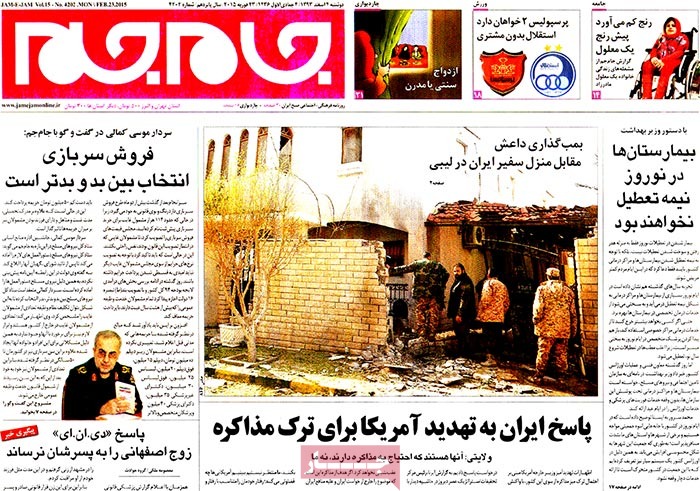
Ettela’at: There have been two explosions near the residence of the Iranian ambassador to Libya.

No one was injured in the two blasts. In other news, IS launched its first radio service in Libya and residents of Sirte fled the Libyan city as IS militants took over.

Ettela’at: Twenty-one economists support the plan to secure sustainable development.

An economic adviser to the president has said that following a steep decline in oil prices, government faces a budget deficit to pay out cash subsidies.

And in other news, in the 30 days to February 20, inflation fell to 15.2 percent.


A look at Iranian newspaper front pages on Feb. 23


Iran: The Supreme Leader has released messages of condolences following the passing of Seyyed Sadegh Tabatabai and Fatemeh Khatami.

President Rouhani has offered condolences to [former President] Seyyed Mohammad Khatami [on the passing of his sister].


A look at Iranian newspaper front pages on Feb. 23


Jamejam: IS has set off a bomb outside the residence of the Iranian ambassador to Libya.


A look at Iranian newspaper front pages on Feb. 23


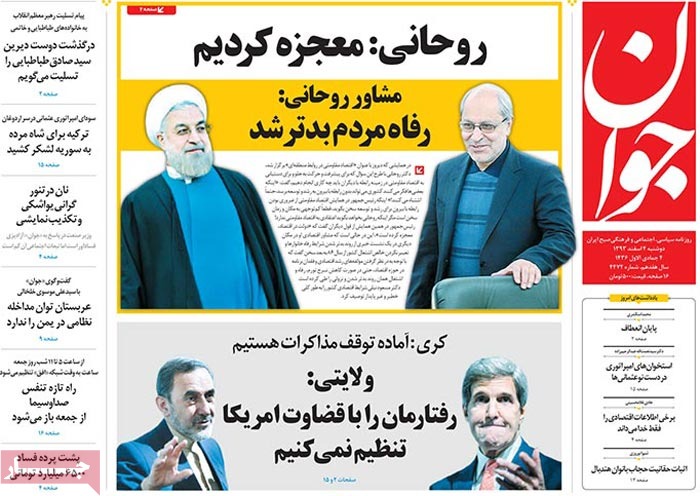
Javan: “We won’t adjust our behavior on the basis of American judgment,” said Ali Akbar Velayati, an adviser to the Supreme Leader.

His comments came after Secretary of State John Kerry said the US is ready to walk out of the talks.


A look at Iranian newspaper front pages on Feb. 23


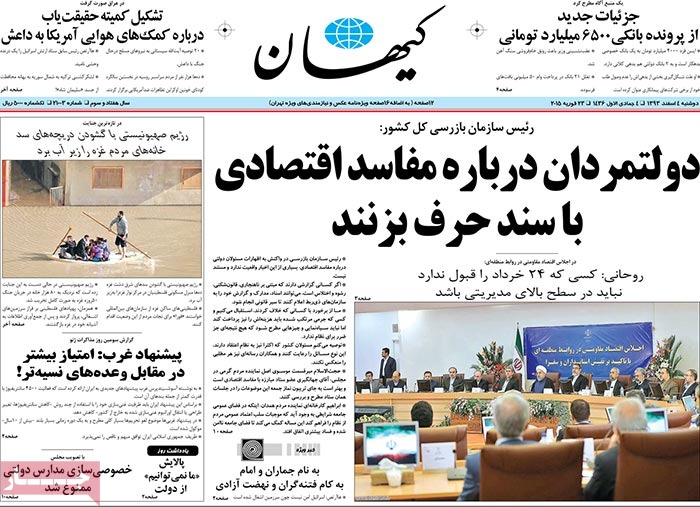
Kayhan: Parliament has voted for a motion that bans the privatization of state schools.

Kayhan: In its latest crime, the Zionist regime [of Israel] has opened the floodgates of a dam, submerging the houses of Palestinians in Gaza.


A look at Iranian newspaper front pages on Feb. 23


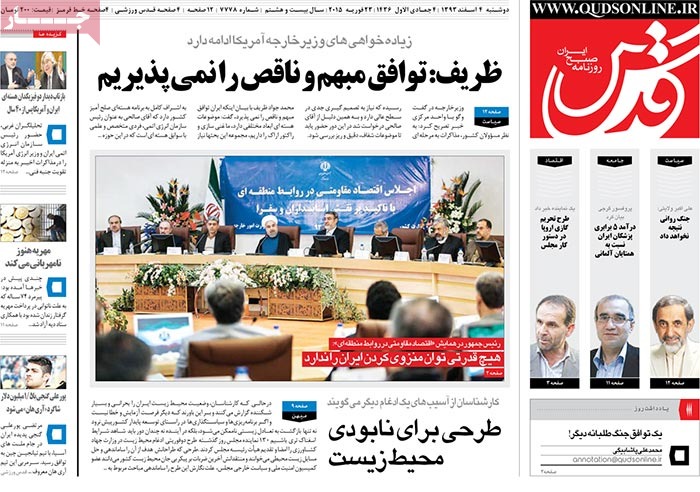
Qods: “No power can isolate Iran,” said President Rouhani.

It came as an adviser to the Supreme Leader warned the West that its war of words won’t work in dealing with Iran.


A look at Iranian newspaper front pages on Feb. 23


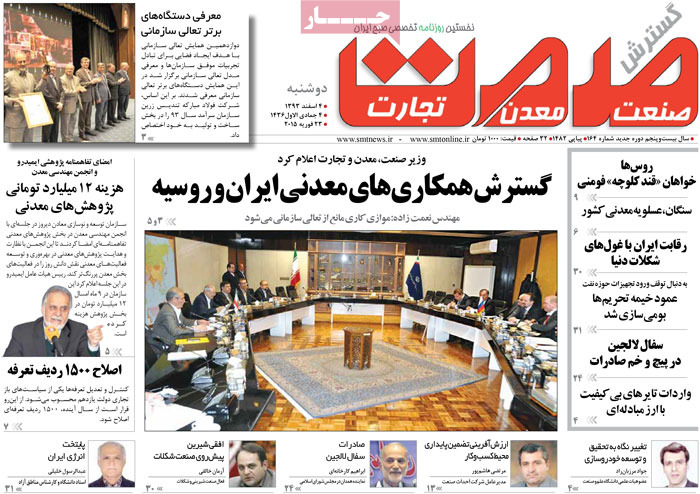
SMT: The minister of industries, mines and trade has said that mining cooperation between Iran and Russia will increase.


A look at Iranian newspaper front pages on Feb. 23


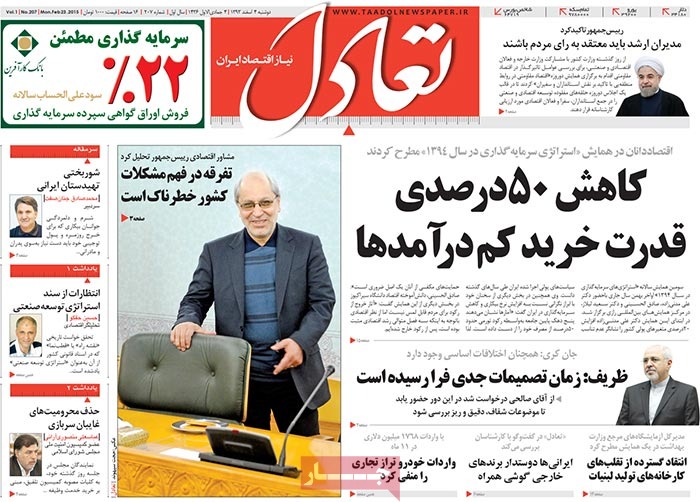
Taadol: “It’s time to make serious decisions,” said Foreign Minister Mohammad Javad Zarif.

The comments by the Iranian top diplomat came after talks with his US counterpart John Kerry who said disagreements still remain.


A look at Iranian newspaper front pages on Feb. 23


No casualties in explosion in front of former envoy’s residence

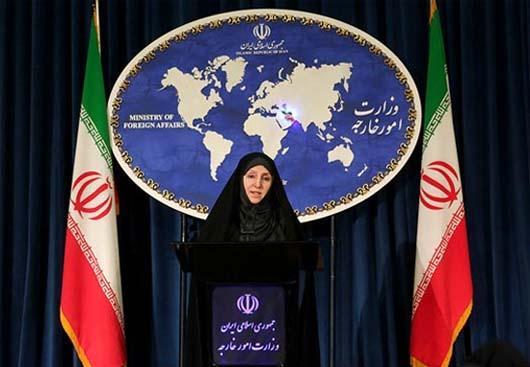
Iranian Foreign Ministry Spokeswoman Marziyeh Afkham

The Foreign Ministry spokeswoman on Sunday condemned the explosion of a handmade bomb in front of former Iranian ambassador’s residence in Tripoli, Libya, saying that the terrorist attack had not caused casualties, or major damage.

‘We have precise information indicating that the explosion of a handmade bomb in front of the residence of the former Iranian ambassador in Tripoli only led to trivial material damage,’ said Marzieh Afkham Sunday evening.

She said that Iran is following up the situation in Libya and opposes foreign interference in the North African country.

The Islamic Republic of Iran believes that the problematic developments in that country must be resolved through holding national dialogues.

The Foreign Ministry spokeswoman said that the Libyan political parties are required to develop national reconciliation to establish a national unity government in Libya, something which will block the path for the activities of the terrorists and the extremists.

Rouhani highlights strong public support for Iran’s nuclear approach

Rouhani

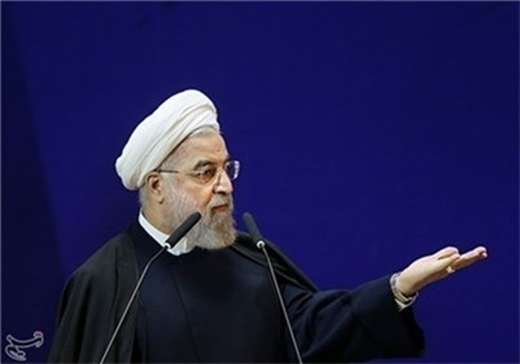
Iran’s President Hassan Rouhani underlined that the vast majority of Iranians back his administration’s approach in the nuclear talks with world powers.

“All polls indicate more than 80 percent (public) support for the administration’s nuclear approach,” the president said on Sunday.

He also stressed “the seriousness” of the country’s negotiators in the talks with P5+1 (Russia, China, the US, Britain, France and Germany) over Tehran’s peaceful nuclear energy program.

Iran and P5+1 (also known as E3+3) are in talks to hammer out a final agreement to end more than a decade of impasse over Tehran’s civilian nuclear energy program.

Following the diplomatic and confidence-building measures taken by President Rouhani’s administration, the two sides in November 2013 signed an interim deal – the Joint Plan of Action – that took effect on January 20, 2014 and expired six months later. They later extended the deal until November 24, 2014.

After failing to hammer out a lasting accord by the self-imposed November 24 deadline, the parties once again decided to extend the deadline for seven more months.