Friday, December 26, 2025
Home Blog Page 4907

Asia oil buyers set to enhance Iran imports

Iran-Oil

Oil buyers in Asia are preparing to purchase more crude oil from Iran amid hopes of a long-awaited nuclear deal to ease sanctions against the Islamic Republic.

As intensive nuclear talks are to resume between Tehran and six world powers, at least six Asian refiners are forecasting more supply from Iran, a top Middle East producer, if a permanent deal is reached to result in sanctions relief.

Mangalore Refinery and Petrochemicals Ltd. in India and Cosmo Oil Co. in Japan are among the refiners hoping for Iran sanctions relief.

Iran is currently exporting around 1 mb/d of oil, due to US-imposed restrictions, while it has potential to supply up to 4 mb/d.

“If sanctions are removed, there’s a big chance that demand for Iranian oil will recover in Asian nations like South Korea, China and Japan,” Bloomberg quoted Hong Sung Ki, a commodities analyst at Samsung Futures Inc., as saying.

“India is another nation to watch,” said the analyst.

Iran’s Minister of Petroleum Bijan Namdar Zanganeh said recently that the country’s oil output would nearly quadruple just months after a possible lifting of the sanctions.

Indian Oil Minister Dharmendra Pradhan has recently said that “if the deal happens, it will definitely help our country.”

“It will help our imports,” said Pradhan.

The latest round of nuclear negotiations ended in Lausanne on Friday after six days of intense and serious discussions among representatives of Iran, the United States and the European Union. The talks will resume on March 25.

Talks between the US and Iran are part of broader ones between the Islamic Republic and P5+1 – the US, Britain, Germany, France, Russia, China – to reach a comprehensive agreement on Tehran’s nuclear program as a deadline slated for July 1 draws closer.

Minister calls for efforts to preserve regional cultural heritage

Ali Jannati

Visiting Minister of Culture and Islamic Guidance Ali Jannati on Tuesday called on regional states to make collective efforts to protect cultural heritage and archeological works of the region from Takfiri terrorists.

Jannati made the remark at a press conference in Beirut after paying a visit to Lebanon’s National Museum along with his Lebanese counterpart Raymond Araiji.

Regional governments have to work with international bodies such as UNESCO to protect the cultural heritage of the region, Jannati stressed.
He regretted that extremist groups like ISIL destroy the invaluable cultural and historical heritage in Iraq and Syria.

For his part, the Lebanese minister of culture said that terrorist crimes of Takfiri groups against the history and civilization of Iraq are crimes against humanity.

Araiji urged international organizations, UNESCO in particular, to take necessary measures to protect the archeological works of the region.

Lebanese Speaker says Takfiri terrorism is a plot to overshadow Palestine

Jannati-Lebanon

Lebanese Parliament Speaker Nabbih Berry said Tuesday the Takfiri terrorism helps overshadow the issue of Palestine.

In a meeting with Iranian Minister of Culture and Islamic Guidance Ali Jannati in Beirut, the Lebanese president said the wave of terrorism [sweeping the region] aims to cover up the activities of the Zionist regime, which is the common enemy of all Muslims.

He said that before the emergence of Takfiri terrorists, all Arab and Muslim countries used to focus on the issue Palestine which brought all Muslim countries together.

He further warned of the plot to disintegrate Syria and said it is regrettable that Islamic and Arab countries were no longer viewing the Palestinian issue as their top priority.

Berri said that Iran was still concentrating on the issue of Palestine with a special zeal and tried to safeguard the unity within the Islamic world and protect the territorial integrity of all regional countries.

He expressed hope a nuclear agreement between Iran and world powers would be signed soon so that all regional countries, including Lebanon, would benefit from its outcome.

For his part, Jannati said to Iranian officials the security and stability of Lebanon were as important as the security of Iran.

The Iranian culture chief underlined Tehran’s support for convergence and dialogue among all Lebanese political groups to enhance security, stability and peace in the country.

Jannati also met with Lebanese Prime Minister Temam Selam. At the meeting, among other things, Iran’s nuclear case came up for discussion.

No time should be wasted in Iran talks: China

Chinese FM

China has urged all sides involved in the negotiations over Tehran’s nuclear program not to lose any time in the bid for a comprehensive agreement.

Speaking at a regular press conference on Monday, Chinese Foreign Ministry Spokesperson Hong Lei urged all sides in the negotiations about Iran’s nuclear program to build up political will in an attempt to reach a comprehensive agreement.

“The negotiation on a comprehensive agreement on the Iranian nuclear issue has come to a critical point… All parties concerned should build up political will, work towards the shared goal, waste no time in making political decisions and make joint efforts to clinch a final deal through negotiation,” Hong said.
He added that during the latest nuclear talks between Iran, P5+1 and the EU in Lausanne, Switzerland, all participants demonstrated “strong political will, pragmatic attitude for negotiation and innovative thinking.”

The Chinese official pointed out that important progress has been made in Lausanne while the gaps still remain.
He said Beijing pursues an “objective and unbiased” approach to the Iranian nuclear issue and plays a constructive role in advancing the negotiations.

“The Chinese side put forward a host of ‘China solution’ and ‘China thinking’ on relevant focal and thorny problems during the negotiations to bridge differences among all parties and contribute ‘China wisdom’ to the negotiations. We will continue to make relentless efforts together with other parties,” Hong said.


Zarif, Lavrov discuss talks

Meanwhile, foreign ministers of Iran and Russia have exchanged views on the latest developments pertaining to Tehran’s nuclear program and vital issues relating to bilateral cooperation.

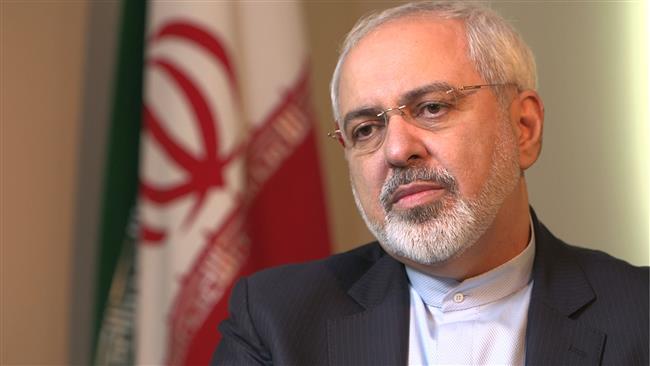
In a phone conversation on Monday, Iran’s Foreign Minister Mohammad Javad Zarif and his Russian counterpart Sergey Lavrov discussed the settlement of the nuclear issue ahead of a new round of talks between Iran and P5+1.

A fresh round of nuclear talks is scheduled to resume in the Swiss city of Lausanne on Thursday with a planned visit between Zarif and US Secretary of State John Kerry.

The latest round of nuclear negotiations ended in Lausanne on March 20 after six days of intensive and serious talks with both Iran and the United States citing progress.

The Iranian foreign minister said on Friday that “good progress” had been made over the six days of the latest round of negotiations and pointed out that some work still needed to be done.

The US secretary of state also said, “We’ve made a lot of progress.”

The talks between the United States and Iran are part of broader negotiations between the Islamic Republic and P5+1 — Russia, China, Britain, France and the United States plus Germany — to reach a comprehensive agreement on Tehran’s nuclear program as a deadline slated for July 1 draws closer.

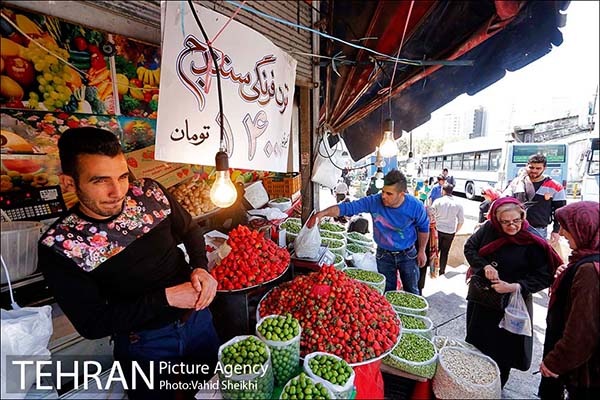
Per capita consumption of milk is low in Iran

Milk

In Iran, consumption of milk is below the world average, and only four out of 10 Iranians consume enough milk and dairy products. What comes next is the translation of a report published by Fararu website:

Per capita consumption of milk in Iran rose from 28 kg in 1970 to 80 kg in 2008. But the figure has since been on a downward slope and has dropped by 15 to 20 percent in recent years.

The jump in the consumption of sugary drinks such as coke has been so much that Iran now stands among countries with the highest consumption of sugary drinks.

Based on studies, the consumption of fizzy soft beverages by an Iranian increases 3-fold between childhood and adolescence, whereas milk consumption over the same period declines by 75 percent.

The hectic modern lifestyle has led Iranians, in particular the youth, to turn to fast food which has a high content of fat, salt and harmful additives. Research suggests that a high intake of such substances is to blame for a number of diseases such as diabetes, osteoporosis, hypertension and various forms of cancer, particularly pancreatic cancer.

Italian researcher: Iran is a safe, growing country

Tiziana Ciavardini-1

Iran is a safe country which is making progress despite sanctions, said Tiziana Ciavardini, an Italian researcher and anthropologist, who has recently visited Iran to study the traditions and customs of Iranians.

Titre-yek, a news website, has published a detailed interview with her in several parts. The following is a brief translation of the first part of the interview:

[…] Iran is a vast country with diverse customs and subcultures which can be studied thoroughly. Politically, Iran is a very safe country in the region. It has managed to provide its people with safety far from war and bloodshed.
When you cross the border into another country, the blessing [security] Iranians enjoy in their homeland comes into focus. Security and calm are two key factors which are conspicuous by their absence in Iran’s neighbors, among them: Afghanistan, Pakistan, Iraq, Syria and even Turkey.

Security was in evidence in February. People turned out in force on February 11 [for rallies marking the victory of the Islamic Revolution 36 years ago]. This proves that security and calm exist in the country. I am here [in Iran] too because I feel safe.

[…] But why is that an Islamic country like Iran is portrayed in an opposite way in the West? In response, I should say there are a number of reasons for such an attitude in Western media.

One such reason is that they lack a good understanding of Iran and they build [their reports] on what they hear about Iran. I mean they are not in Iran to get a first-hand account of a real, Islamic Iran. They have read anti-Iran reports which are published, by design or by chance, and republish the same materials.

Another point – which I have mentioned in one of my articles – is creating enemies. Yes, that’s right. Certain Western countries really need to create enemies. They need to have an enemy. Do not doubt it.

Their like-minded media too have a similar attitude. You used Islamophobia, but I want to add to it “Iranophobia”, something which is being stirred up at a fast pace.

Iran is turning into a heavyweight in the Middle East, in the region and even in the world. It has friendly relations with Russia and China. It is growing in the areas of science and military by the day. It is not far-fetched that it [Iran] may pose a big threat to world powers such as the US.
Thus, one appropriate way to block Iran’s progress is fuelling Iranophobia and painting a negative picture of this country and the [Islamic] establishment for the whole world.

Why is it that sanctions are still in place? Iran is making progress and is close to becoming a trans-regional power despite the sanctions. Now assume Iran with no sanctions! […]

* IFP will separately translate the subsequent parts of the interview.

Tiziana Ciavardini is a cultural anthropologist and journalist. She was a researcher at the Department of Anthropology at the Chinese University of Hong Kong. She spent more than 23 years traveling, living for many years in the Middle East, Asia and Southeast Asia. She is the President of Ancis Anthropology Forum, a cultural association for the dialogue of religions and culture. Ciavardini has lived in Iran for more than 10 years and has published several articles, essays and books.

West must reach consensus over Iran N-talks: Araghchi

Abbas Araghchi

A high-ranking Iranian nuclear negotiator has called upon Western countries to arrive at a common position during the course of negotiations over Tehran’s nuclear program, stressing that the Islamic Republic is not going to grant any concessions.

“We are currently at a critical juncture and should reach the point, where we have a balanced deal that recognizes our nuclear program and lifts sanctions in exchange for confidence-building measures,” Seyyed Abbas Araghchi, who is also Iran’s deputy foreign minister for legal and international affairs, said on Sunday.

“I believe what is needed more than anything else is coordination among our opposite sides so they can come to a common viewpoint in the talks,” he pointed out.

Araghchi further noted that no such coordination was evident during the recent round of negotiations in the Swiss city of Lausanne, adding that Iran believes an agreement over its nuclear program would be at reach if such cooperation coupled with political will existed.

The Iranian diplomat also responded to a recent statement by US President Barack Obama about the reversible nature of Iran sanctions removal.

“If we cut a deal, both sides must be granted the verification right. Naturally, the terms that Iran agrees to will be verified by the International Atomic Energy Agency (IAEA), and the commitments that the other side assumes concerning the ease of sanctions must be honored in practice,” Araghchi said.

The latest round of nuclear negotiations ended in Lausanne on Friday after six days of intense and serious discussions among representatives of Iran, the United States and the European Union. The talks will resume on March 25.

Talks between the US and Iran are part of broader ones between the Islamic Republic and P5+1 – the US, Britain, Germany, France, Russia, China – to reach a comprehensive agreement on Tehran’s nuclear program as a deadline slated for July 1 draws closer.

VP: World has learned about Iran’s logical position

Jahangiri

Iran’s first vice-president says that the country is walking down the right path and the world has learned about the logical stance of the Iranian nation.

Eshagh Jahangiri made the remark during a trip to Kerman Province on Monday. The following is a partial translation of what else he said as reported by the Islamic Republic News Agency:

Jahangiri said that Iran is a key player in the region, adding that super powers are aware that they should work in cooperation with Iran if they seek to pursue any plan on peace and stability in the region.

He further said that Iran, which is the center of stability and calm, can build on its influence and help restore stability and security in the region.

Efforts to implement plans [on regional stability] will result in failure if the Islamic establishment is not consulted, he said.

The vice-president went on to say that Iran has made planning for its international and economic advances, adding that the country is determined to rely on its domestic potential and continue its march toward progress.

This comes as major powers that have imposed unjust sanctions on Iran have come to the conclusion that the language of force and bullying do not work when it comes to Iran, he said, adding that’s why they have to talk with the Iranian nation through logic and honest words.

Jahangiri then said that the government is looking for a way to have the sanctions lifted as it maintains the rights and dignity of the Iranian people.

He hailed Iran’s [national] capacities and said that the country has good maritime, mining and industrial potential to tap into to make even more progress.

He said that Kerman Province sits on rich copper and iron reserves and this gives the country an economic edge.

The first vice-president also credited the country’s young experts for the national success and said that the stage has been set for Iran to make economic headway.

He said that the country’s problems are expected to be removed on all fronts in the year designated by the Supreme Leader as the “Year of Government and Nation; Solidarity and Harmony”, hoping that all sectors in Iran could flourish this year.

Iran President hails Leader’s support for administration

President Rouhani Invites Malaysian King to Visit Iran

Iranian President Hassan Rouhani acknowledged the support of Supreme Leader of the Islamic Revolution Ayatollah Seyyed Ali Khamenei for his cabinet, and vowed to press ahead with plans to boost the country’s economy and safeguard its interests in the nuclear talks with world powers.

In a Sunday letter to Ayatollah Khamenei, President Rouhani thanked the Leader for his backing for the administration.

In a message on the occasion of Nowruz on Saturday morning, Ayatollah Khamenei designated the new Iranian year as “The Year of Government and Nation, Empathy and Harmony.”

Also in his letter, President Rouhani praised the Leader’s emphasis on the necessity for strengthening the country’s economy and stimulating investment by reliance on domestic forces and capacities.

Rouhani said that his administration is encouraged to push ahead with the policies to improve trade and business, support domestic production and counter corruption and smuggling.

He also thanked the Supreme Leader’s support for the nuclear negotiations between Iran and P5+1 (Russia, China, the US, Britain, France and Germany), stressing that his administration is duty bound to safeguard the country’s national interests in the talks.

In the New Year message, Ayatollah Khamenei had underlined the necessity for closer cooperation between nation and government, noting that in a bid to meet the slogan of the New Year, both the government and people “should trust each other and work together sincerely”.

Pointing to causes and dreams of the Iranian nation this year, including economic development, regional and international power and dignity, real scientific leaps, judicial and economic justice, faith and spirituality, Ayatollah Khamenei stressed that all these dreams can be fulfilled given the Iranian nation’s capacity and the policies pursued by the Islamic system.

Body of Iranian soldier killed by Pakistan-based terrorists repatriated

Jamshid Danai Far

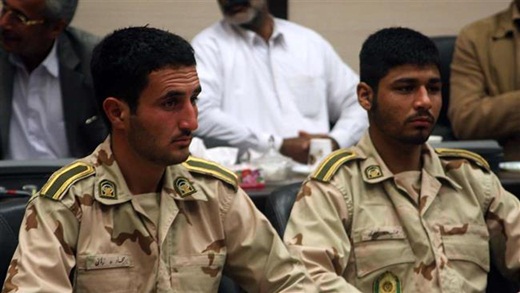
Iran’s Intelligence Ministry announced that it has found, identified and returned home the body of Jamshid Danaeifar, an Iranian border guard kidnapped by a Pakistan-based terrorist group in February 2014.

The Intelligence Ministry said in a statement on Sunday that Danaeifar’s body was transferred to Iran on March 21 following extensive intelligence operations by its forces that also led to the arrest of some people involved in the murder of the Iranian border guard, a sergeant.

Jamshid Danaeifar, along with four other Iranian border guards, was kidnapped on February 6, 2014, by a Pakistani-based terrorist group named the Jaish-ul-Adl.

They were abducted in Jakigour region in Iran’s southeastern province of Sistan and Balouchestan and taken to Pakistan.

Four of the five abductees were released and returned home after being held hostage for two months.

On March 23, 2014, Jaish-ul-Adl announced in a Twitter message that it had killed Danaeifar but the terrorist group has provided no evidence to confirm its claim. The four released border guards said at the time that Danaeifar had been separated from them for nearly a month.