Tuesday, December 23, 2025
Home Blog Page 4902

Italian researcher: Iran is a safe, growing country

Tiziana Ciavardini-1

Iran is a safe country which is making progress despite sanctions, said Tiziana Ciavardini, an Italian researcher and anthropologist, who has recently visited Iran to study the traditions and customs of Iranians.

Titre-yek, a news website, has published a detailed interview with her in several parts. The following is a brief translation of the first part of the interview:

[…] Iran is a vast country with diverse customs and subcultures which can be studied thoroughly. Politically, Iran is a very safe country in the region. It has managed to provide its people with safety far from war and bloodshed.

When you cross the border into another country, the blessing [security] Iranians enjoy in their homeland comes into focus. Security and calm are two key factors which are conspicuous by their absence in Iran’s neighbors, among them: Afghanistan, Pakistan, Iraq, Syria and even Turkey.

Security was in evidence in February. People turned out in force on February 11 [for rallies marking the victory of the Islamic Revolution 36 years ago]. This proves that security and calm exist in the country. I am here [in Iran] too because I feel safe.

[…] But why is that an Islamic country like Iran is portrayed in an opposite way in the West? In response, I should say there are a number of reasons for such an attitude in Western media.

One such reason is that they lack a good understanding of Iran and they build [their reports] on what they hear about Iran. I mean they are not in Iran to get a first-hand account of a real, Islamic Iran. They have read anti-Iran reports which are published, by design or by chance, and republish the same materials.

Another point – which I have mentioned in one of my articles – is creating enemies. Yes, that’s right. Certain Western countries really need to create enemies. They need to have an enemy. Do not doubt it.

Their like-minded media too have a similar attitude. You used Islamophobia, but I want to add to it “Iranophobia”, something which is being stirred up at a fast pace.

Iran is turning into a heavyweight in the Middle East, in the region and even in the world. It has friendly relations with Russia and China. It is growing in the areas of science and military by the day. It is not far-fetched that it [Iran] may pose a big threat to world powers such as the US.

Thus, one appropriate way to block Iran’s progress is fuelling Iranophobia and painting a negative picture of this country and the [Islamic] establishment for the whole world.

Why is it that sanctions are still in place? Iran is making progress and is close to becoming a trans-regional power despite the sanctions. Now assume Iran with no sanctions! […]

* IFP will separately translate the subsequent parts of the interview.

Tiziana Ciavardini is a cultural anthropologist and journalist. She was a researcher at the Department of Anthropology at the Chinese University of Hong Kong. She spent more than 23 years traveling, living for many years in the Middle East, Asia and Southeast Asia. She is the President of Ancis Anthropology Forum, a cultural association for the dialogue of religions and culture. Ciavardini has lived in Iran for more than 10 years and has published several articles, essays and books.

West must reach consensus over Iran N-talks: Araghchi

Abbas Araghchi

A high-ranking Iranian nuclear negotiator has called upon Western countries to arrive at a common position during the course of negotiations over Tehran’s nuclear program, stressing that the Islamic Republic is not going to grant any concessions.

“We are currently at a critical juncture and should reach the point, where we have a balanced deal that recognizes our nuclear program and lifts sanctions in exchange for confidence-building measures,” Seyyed Abbas Araghchi, who is also Iran’s deputy foreign minister for legal and international affairs, said on Sunday.

“I believe what is needed more than anything else is coordination among our opposite sides so they can come to a common viewpoint in the talks,” he pointed out.

Araghchi further noted that no such coordination was evident during the recent round of negotiations in the Swiss city of Lausanne, adding that Iran believes an agreement over its nuclear program would be at reach if such cooperation coupled with political will existed.

The Iranian diplomat also responded to a recent statement by US President Barack Obama about the reversible nature of Iran sanctions removal.

“If we cut a deal, both sides must be granted the verification right. Naturally, the terms that Iran agrees to will be verified by the International Atomic Energy Agency (IAEA), and the commitments that the other side assumes concerning the ease of sanctions must be honored in practice,” Araghchi said.

The latest round of nuclear negotiations ended in Lausanne on Friday after six days of intense and serious discussions among representatives of Iran, the United States and the European Union. The talks will resume on March 25.

Talks between the US and Iran are part of broader ones between the Islamic Republic and P5+1 – the US, Britain, Germany, France, Russia, China – to reach a comprehensive agreement on Tehran’s nuclear program as a deadline slated for July 1 draws closer.

VP: World has learned about Iran’s logical position

Jahangiri

Iran’s first vice-president says that the country is walking down the right path and the world has learned about the logical stance of the Iranian nation.

Eshagh Jahangiri made the remark during a trip to Kerman Province on Monday. The following is a partial translation of what else he said as reported by the Islamic Republic News Agency:

Jahangiri said that Iran is a key player in the region, adding that super powers are aware that they should work in cooperation with Iran if they seek to pursue any plan on peace and stability in the region.

He further said that Iran, which is the center of stability and calm, can build on its influence and help restore stability and security in the region.

Efforts to implement plans [on regional stability] will result in failure if the Islamic establishment is not consulted, he said.

The vice-president went on to say that Iran has made planning for its international and economic advances, adding that the country is determined to rely on its domestic potential and continue its march toward progress.

This comes as major powers that have imposed unjust sanctions on Iran have come to the conclusion that the language of force and bullying do not work when it comes to Iran, he said, adding that’s why they have to talk with the Iranian nation through logic and honest words.

Jahangiri then said that the government is looking for a way to have the sanctions lifted as it maintains the rights and dignity of the Iranian people.

He hailed Iran’s [national] capacities and said that the country has good maritime, mining and industrial potential to tap into to make even more progress.

He said that Kerman Province sits on rich copper and iron reserves and this gives the country an economic edge.

The first vice-president also credited the country’s young experts for the national success and said that the stage has been set for Iran to make economic headway.

He said that the country’s problems are expected to be removed on all fronts in the year designated by the Supreme Leader as the “Year of Government and Nation; Solidarity and Harmony”, hoping that all sectors in Iran could flourish this year.
Iran President hails Leader’s support for administration

President Rouhani Invites Malaysian King to Visit Iran

Iranian President Hassan Rouhani acknowledged the support of Supreme Leader of the Islamic Revolution Ayatollah Seyyed Ali Khamenei for his cabinet, and vowed to press ahead with plans to boost the country’s economy and safeguard its interests in the nuclear talks with world powers.

In a Sunday letter to Ayatollah Khamenei, President Rouhani thanked the Leader for his backing for the administration.

In a message on the occasion of Nowruz on Saturday morning, Ayatollah Khamenei designated the new Iranian year as “The Year of Government and Nation, Empathy and Harmony.”

Also in his letter, President Rouhani praised the Leader’s emphasis on the necessity for strengthening the country’s economy and stimulating investment by reliance on domestic forces and capacities.

Rouhani said that his administration is encouraged to push ahead with the policies to improve trade and business, support domestic production and counter corruption and smuggling.

He also thanked the Supreme Leader’s support for the nuclear negotiations between Iran and P5+1 (Russia, China, the US, Britain, France and Germany), stressing that his administration is duty bound to safeguard the country’s national interests in the talks.

In the New Year message, Ayatollah Khamenei had underlined the necessity for closer cooperation between nation and government, noting that in a bid to meet the slogan of the New Year, both the government and people “should trust each other and work together sincerely”.

Pointing to causes and dreams of the Iranian nation this year, including economic development, regional and international power and dignity, real scientific leaps, judicial and economic justice, faith and spirituality, Ayatollah Khamenei stressed that all these dreams can be fulfilled given the Iranian nation’s capacity and the policies pursued by the Islamic system.

Body of Iranian soldier killed by Pakistan-based terrorists repatriated

Jamshid Danai Far

Iran’s Intelligence Ministry announced that it has found, identified and returned home the body of Jamshid Danaeifar, an Iranian border guard kidnapped by a Pakistan-based terrorist group in February 2014.

The Intelligence Ministry said in a statement on Sunday that Danaeifar’s body was transferred to Iran on March 21 following extensive intelligence operations by its forces that also led to the arrest of some people involved in the murder of the Iranian border guard, a sergeant.

Jamshid Danaeifar, along with four other Iranian border guards, was kidnapped on February 6, 2014, by a Pakistani-based terrorist group named the Jaish-ul-Adl.

They were abducted in Jakigour region in Iran’s southeastern province of Sistan and Balouchestan and taken to Pakistan.

Four of the five abductees were released and returned home after being held hostage for two months.

On March 23, 2014, Jaish-ul-Adl announced in a Twitter message that it had killed Danaeifar but the terrorist group has provided no evidence to confirm its claim. The four released border guards said at the time that Danaeifar had been separated from them for nearly a month.

Iran deplores human tragedy in Syrian Kurdish town of Hasakah

Iranian Foreign Ministry Spokeswoman Marziyeh Afkham

Iran’s Foreign Ministry spokesperson on Sunday condemned the terrorist act of extremist groups in the Syrian Kurdish town of Hasakah which killed and wounded dozens of innocent people celebrating Nowruz.

Marziyeh Afkham expressed sympathy with the bereaved families and hoped that terrorism would be uprooted by the cooperation of regional governments.

Twin bombs exploded among crowds gathered for Kurdish spring celebrations in the northeastern Syrian city of al-Hasakah late Friday, leaving dozens dead and many more injured, Kurdish officials and activists said.

Some 46 people were killed after two car bombs were detonated among a crowd of people celebrating Nowruz Friday night.

Asya Abdullah, co-chair of the Democratic Union Party which governs al-Hasakah and the surrounding region, said, “We had canceled Nowruz celebrations in different places because we knew of the threat, and this one wasn’t an officially organized ceremony.”

“The death toll is likely to rise because some are suffering from heavy injuries,” said Idres Nassan, a senior official from Kobani, who was in Diyarbakir of Turkey to attend the main Nowruz celebrations to be held Saturday.

The terrorist attacks came after fears of an attack on Kurdish celebrations across the region after a year of fighting Islamic State militants on the battlefields across Syria and Iraq.

London says ‘unity of purpose’ to secure nuclear deal with Iran

Iran Talks

The British foreign secretary says there is “unity of purpose” on the part of the negotiating side to the nuclear talks with Iran to secure a successful outcome from the negotiations.

Philip Hammond conveyed the message in a statement released after a meeting between US Secretary of State John Kerry, France’s Foreign Minister Laurent Fabius, German Foreign Minister Frank-Walter Steinmeier, European Union’s foreign policy chief, Federica Mogherini, and the UK foreign secretary in London on Saturday.

“We will all continue to work together with unity of purpose to secure a successful outcome,” said the statement.

It was also underscored in the statement that “substantial progress” has been made in the negotiations.

There still remain differences on some “important issues,” the statement read.

Western officials said they were “equally committed,” adding, “Any solution must be comprehensive, durable and verifiable. None of our countries can subscribe to a deal that does not meet these terms.”

“Now is the time for Iran, in particular, to take difficult decisions,” the statement said.

On Saturday, Iran’s President Hassan Rouhani said reaching a nuclear deal is possible.

“I believe that reaching a final agreement is possible and there is nothing insolvable and the other negotiating side should also make a final decision about this issue,” Rouhani stated.

The Iranian president added that the Islamic Republic has the necessary will for holding negotiations and clinching a nuclear deal within the framework of its principles and the bounds of its red lines.

Iran and P5+1 have succeeded in making progress during their latest round of talks in Lausanne, Switzerland, President Rouhani said.

He added that the negotiations will become tougher in the coming days and weeks as the two sides move to take the final steps toward securing a deal.

The Iranian president expressed hope that the negotiations would lead to an agreement which would result in peace, friendship and development for Iran and the entire region.

The latest round of nuclear talks ended in Lausanne on Friday after six days of intense and serious discussions among representatives of Iran, the United States and the European Union.

Iran’s Deputy Foreign Minister for Legal and International Affairs Abbas Araghchi said on Friday that the talks will resume on March 25.

The negotiations between the United States and Iran are part of broader talks between the Islamic Republic and P5+1 – the United States, Britain, Germany, France, Russia, China – to reach a comprehensive agreement on Tehran’s nuclear program as a deadline slated for July 1 draws closer.

Leader: Removal of sanctions should be part of any nuclear deal

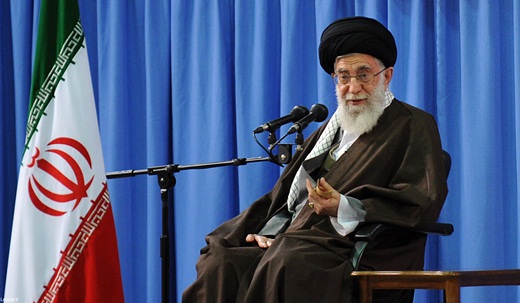
Leader-Mashhad

Leader of the Islamic Revolution Ayatollah Seyyed Ali Khamenei says removal of anti-Iran sanctions should be part and parcel of any possible nuclear deal between Iran and P5+1, and should not come as a late result of those talks.

Addressing the nation at a speech delivered on the occasion of the Iranian New Year in the northeastern Iranian city of Mashhad on Saturday, the Leader touched on the ongoing nuclear talks between Iran and P5+1, mentioning a few points on the negotiations.

Ayatollah Khamenei said the first point is that the United States government is in dire need of nuclear talks.

The Leader noted that apparent differences in the US do not mean that the American statesmen do not need nuclear negotiations, but there are political factions in the US that do not want a government run by their Democrat rivals to pull off nuclear talks with Iran to a final outcome.

“Obama’s Nowruz message included dishonest assertions and his claim of friendship for Iranian people was not sincere,” the Leader said, noting that Obama’s claim that there are people in Iran who do not want nuclear case to be resolved through diplomacy is a lie.

What the Iranian nation is resisting against is the bullying approach of the United States, Ayatollah Khamenei noted.

“They [the Americans] say [to Iranian negotiators] ‘you come here and listen to what we say and implement them word for word’. But our nation will resist against it and will never accept this.”

The Leader went on to say that neither the negotiating team, nor the Iranian nation that supports the team, will ever give in to such bullying.

As for the second point, Ayatollah Khamenei said negotiations with the United States are just about the nuclear case and do not cover regional issues or issues related to Iran’s internal affairs, including defense matters.

“Iran and the US have opposite views on regional issues. We want security and calm in the region, but the arrogant powers led by the US pursue the policy of sowing insecurity in the region, which is quite the opposite of our goals.”

The third point, as put by the Leader, was removal of anti-Iran sanctions, which should be discussed as part of nuclear negotiations and should not be considered a result of those talks.

Ayatollah Khamenei added, “America says ‘we sign the agreement and monitor [Iran’s] behavior and then remove the sanctions’. This is erroneous and unacceptable and Iran will never accept this. This is the Americans’ ploy. Removal of sanctions should be part of any agreement.”

Another point mentioned by the Leader was that Americans expect Iran to take irreversible decisions pursuant to a possible nuclear deal which is not acceptable to the Islamic Republic.

If the opposite side would be able to reestablish sanctions on any grounds, there is no reason for our negotiators to accept an irreversible condition, the Leader added.

Ayatollah Khamenei emphasized Iran’s nuclear industry is indigenous, belongs to people, and should progress.

In another part of his speech, the Leader said marking Nowruz is not in conflict with religious values as the Iranian nation uses Nowruz as a framework for promoting Islamic values.

Reflecting on the true meaning of promotion of virtue and prohibition of vice as an Islamic principle, the Leader said establishment and protection of the Islamic government is the most important thing from the viewpoint of Islam.

Ayatollah Khamenei noted that, therefore, protecting the dignity of the Iranian nation, paving the way for progress of the Islamic society and promotion of judicial and economic justice are among the greatest of goods in an Islamic society.

The Leader noted that supporting the Islamic government in its efforts to run the country’s affairs is imperative for all people.

Ayatollah Khamenei stated that every government has its own supporters and critics and there is no problem if people criticize the government, provided that their criticism is limited within logical bounds.

The Leader specified that such criticism should not be done in a way as to strip incumbent officials of public trust.

The Leader also advised state officials to allow critics to give voice to their viewpoints, noting that stifling criticism by the government is a mistake.

Ayatollah Khamenei stated that as the Leader, he has never closed eyes on mistakes committed by various governments, but has communicated them to state officials in a suitable manner, including by sending messages or in one-on-one meetings.

The Leader emphasized that his support for every government has been proportionate to that government’s performance in various fields.

Islam expects to see synergism and solidarity among people, Ayatollah Khamenei said, adding that the best manifestation of solidarity is that governments in an Islamic Establishment should be supported by all people even those who have not voted for them.

Online shopping booming in Iran

Online Shopping Keyboard

In Iran online sales registered a 229 percent growth last year [ended March 21, 2015]. What comes next is a report Haft-e Sobh daily has published about the staggering growth of online shopping in the country:

Fortune smiled on online shopping websites in the country last year. TV commercials and advertisements at subway stations eventually helped online sales pick up. One such site is said to have amassed a fortune.
Mohammad Gorganinejad, the head of the Electronic Trade Center at the Ministry of Trade, has said, “Statistics released by the Central Bank of Iran put the value of online purchases at around $17 billion, registering a 229 percent rise over the year before year.”

In 2014, the value of online purchases in the world stood at $1.4 trillion. Online trade is projected to grow by 30 percent only in the Asia-Pacific. Online shopping is also believed to have accounted for one third of total trade in these two regions.

Yet, many still have no trust in the quality of products purchased online. Gorganinejad has stated, “An electronic trust logo with a specific design has been granted to all sites approved by the Ministry of Trade. The logo is only posted on sites which are trustworthy. If a customer filed a complaint with the center against a certain website and the veracity of their complaint were established, the site breaching the rules would be dealt with.”

More than 7,200 websites have been granted the trust logo in Iran.

In an in-depth interview Rafsanjani talks politics, past and present (PART Three)

Hashemi Rafsanjani

Chairman of the Expediency Council Ayatollah Akbar Hashemi Rafsanjani has said although President Rouhani’s administration is in conditions tougher than those of his own government that took office after the end of the Iran-Iraq war in the 1980s, the performance of the Rouhani administration is satisfactory.

The following is part three of the translation of an exclusive interview Arman-e Emrooz daily’s Hossein Abdollahi conducted with the top councilor. The interview was published by the newspaper on March 15.

[What is your take on government’s ability to honor its promises?]

[…] Promises are made when officials take the podium; they say they keep their promises. In the long run, it is not good for the reputation of the government to say that it has not forgotten its promises, but fail in practice to make good on them.

[…] The problem is that when Mr. Rouhani was making promises he didn’t make them conditional, saying he would do this and that. He knew the government does not have at its disposal the tools it needs to get these jobs done.

What has Mr. Rouhani taken over [as the head of the government]? He has nothing at hand except the executive branch whose budget should be passed in a parliament that has its own issues; in other words, the government should obey [orders] when it comes to budget and is not the decision maker. The government can just implement the budget bill, its hands are tied.

The government is empty-handed when it comes to advertising; it’s unclear what is being done in that area. The performance of state media is rather vague, one cannot say if they are defending or criticizing the government! […] When it comes to IRIB, the issue is clear.

The Judiciary Branch is taking its own path. The Army steers clear of political issues. The government airs grievances more than others. It has expectations that remain unmet.

In all, a government has come to power which can only implement the orders. It cannot make or get involved in decisions. It can only make decisions in certain areas in which it faces nuisances. For instance, in state-run universities, the government can make good on part of its promises, something Mr. Rouhani has gone to great lengths to do. But any minister he proposed to parliament met with [the chamber’s] opposition.

The Ministry of Culture and Islamic Guidance belongs to the government, but there are some across the nation who claim they are engaged in guidance; [it seems] everyone has their own ministry of [Islamic] guidance, acting as they wish. Truly, the government’s hands are tied.

When the government praises and supports the [nuclear] negotiators who are involved in the talks with which the Supreme Leader is satisfied, you see what they do. In security issues, some are trying to create problems for people.

If people accepted the fact that the government wanted to keep its promises but it lacked the needed tools, such complaints would not arise. The government is trying to seriously pursue the [country’s] affairs, but the performance of those in the government is far from perfect. Generally, the promises the government has made are not practically implementable now. Next [Iranian] year will be a tough year [for the country] if sanctions remain in place, unless talks result in a deal.

Does Mr. Rouhani consult with you about certain key issues which have injected a sense of hopelessness and dismay into society? Ever since you have entered the scene for the elections, a sense of hope has been instilled in society and people say this government has close ties with you. […] All eyes are on you. Does Mr. Rouhani seek your counseling for solving the problems? […]

We are friends. I see him whenever I think it’s necessary. If I tell him that I want to have a word with him, either he comes to my office or I go to him. His ministers sometimes come to me and discuss the problems. Up to now Mr. Rouhani has not asked for talks, I have always stepped forward because I think it’s my duty to do something.

People may think that I have helped this government rise to power. I don’t want to see Mr. Rouhani say he has come to office with the help of others, he said it at the beginning though. I don’t want to hear people say this is my government. From the very beginning I told him, ‘My relatives should not hold posts in your government to avoid such speculations. I don’t propose anybody for ministries. You know the people I know. For the sake of consultation, I am quite ready to help.’

It was what we agreed on from the start. I know Mr. Rouhani has not retracted what he believed in and is willing to settle such issues, but there are problems. He was not allowed to act freely as far as the Cabinet lineup was concerned. He faced a parliament in which certain MPs were determined not to cooperate with the government in several areas. You can see that these problems persist.

Parliamentary elections are to be held next year. Are you going to support any special group or ticket?
I will only get engaged in election debates. It has been always the case and I will do it again. It is what I do because it is my responsibility and I won’t do it for special people. I will run for the Assembly of Experts because it has something to do with clerics; we all have to get involved.

Now we have an asset which should be protected. The Leader knowingly raised the question of people’s right. What we do about general policies in the [Expediency] Council is to honor people’s right. […]

Certain issues are passed in the council and some issues are voted down. We work freely in a democratic way in the council. I think what we pass there paves the way to some extent, especially because we should monitor the implementation of what we have passed.

All in all, I hope the next parliamentary elections can be held more easily than other elections. People should be vigilant. They should turn out to reclaim their rights and should not be disappointed. When sanctions are lifted, people will be more delighted and will participate [in the elections]. I am not disappointed because the young generation that is to replace the past generations will claim its own rights one day. They will not let the situation worsen.

Problems arising in the development process will be removed if issues between Iran and the US are settled and ties are reestablished. A onetime taboo has been somewhat shattered. As a case in point, we can mention the walk Mr. Zarif took with Mr. John Kerry [on the sidelines of nuclear talks in Geneva]. For years, you have said that issues between Iran and the US should be settled. It was one of the many issues you had asked the late Imam to agree to. You had asked Imam to settle the issue in his lifetime. Do you think that the stage is being set for a thaw in Iran-US ties?

Obama has apparently taken a positive attitude, standing up to Congress, although it is not easy for him to face up to the Israelis. The influence of Israelis is significant in the US [Congress]. The Jews and their friends are the main lobbyists there, but Obama is determined. His stance is clear. He says that they [the Americans] have an issue with Iran over its nuclear program and that it should be dealt with in a way that gives the US at least one year to prevent Iran if it ever decides to develop nuclear arms.
In case there is no bad intention, I think, this stance is acceptable by Iran because we do not possess atomic weaponry. We can accept the supervision [they have asked for] and have control over everything. […] Iran has no plan to go after nuclear weapons.

I think it [such an agreement] is viable and I believe the Americans are willing. It’s no secret that Republicans want to see the [Obama] administration fail in its efforts and want to get concessions from Iran through bullying. There is much hope that the issue is settled in this government. If Obama gets this job done, the stage will be set for the two sides to work together.
[…]

When was the last time you met the Supreme Leader?

One or two weeks ago!

What did come up for discussion?

The meeting focused on the nuclear issue. In the meeting, I asked the leader not to go tough on the issue, saying that the time is not ripe for tough attitudes. The leader replied, ‘Mr. Rouhani was here yesterday. He was satisfied when he was leaving the place’.
Is your relationship with the Supreme Leader like before?

It cannot be like it was in the past. Back then I held an executive position and we could talk, via phone or face time, about the country’s daily issues. It is not the case now. We do our job in the council and what we decided should be approved by the leader. But the emotional ties are still in place. Once in a month, we sit together talking about issues related to seminary schools.