Monday, December 22, 2025
Home Blog Page 4901

Rouhani urges all Iranians to work for realization of New Year motto

Rouhani-Government

In his first Cabinet meeting in the New Year, President Hassan Rouhani called on everyone to redouble their efforts to actualize the New Year’s motto of ‘Harmony and Unanimity’ between people and the government.

Recalling the designation by the Supreme Leader of the New Year as “The Year of Harmony and Unanimity between the Government and People”, President Rouhani said, “There must always be harmony and unanimity between the government and people as the true owners of the country.”

Rouhani called constructive criticism as another form of support for the government and said anyone who criticizes for the sole reason of improving the conditions is in fact demonstrating support.

“Last year, the anti-Iranian sanctions continued, oil prices dropped drastically and the region suffered from insecurity and instability, despite all these hardships, statistics show the performance of the country has been hopeful,” said Rouhani, referring to the country’s 20 percent budget growth, and a relative stability in Iran’s economy.

Rouhani also called for a boost in domestic production in the New Year.

Iran offers condolences over German jet crash in French Alps

German jet crash

Iran has extended condolences to the German government and nation over a deadly plane crash that left 150 people dead.

On Tuesday President Hassan Rouhani expressed deep sorrow over the tragic accident and offered Tehran’s deepest sympathy to the families of the victims.

The president sent separate condolence messages to German Chancellor Angela Merkel and King Felipe VI of Spain.

Foreign Ministry Spokeswoman Marzieh Afkham also extended condolences to Germany and the families of those who lost loved one in the aviation disaster.

An Airbus A320 passenger aircraft owned by Germanwings, an affiliate of German airline Lufthansa, crashed in the southern French Alps Tuesday, killing all 150 people, including 144 passengers and six crew, on board.

The plane was en route from the Spanish city of Barcelona to the German city of Dusseldorf when it went down in southern France.

2016 AFC U-23 Championship qualification: Iran 5 – 0 Nepal

Iran-Nepal

Iran defeated Nepal 5-0 at Tehran’s Azadi Stadium in Group C of the 2016 AFC U-23 Championship qualifiers on Monday.
Arsalan Motahhari put the home side one up after 14 minutes before a 27th minute penalty from skipper Behnam Barzay gave Iran a 2-0 lead.

Sardar Azmoun made it 3-0 in the 55th minute and Ali Karimi scored Iran’s fourth goal in the 67th minute. Shahin Saghebi rounded off the victory three minutes from full time.

Iran will take on Palestine, who defeated Afghanistan 2-0, on Friday.

Ten group winners and five best second-placed teams from all groups will join host Qatar at the AFC U-23 Championship 2016, with January’s 16-team competition also serving as Asia’s qualifying tournament for the Olympic Games in Rio.

Signing Additional Protocol is optional: Iranian nuclear official

Behrouz Kamalvand

The spokesman of the Atomic Energy Organization of Iran (AEOI) has said that resolutions adopted by the UN Security Council and the IAEA’s Board of Governors are not legal, that’s why Iran has so far refused to implement those resolutions.

Behrouz Kamalvandi made the remark in reaction to comments by IAEA Director General Yukiya Amano. The following is a partial translation of Kamalvandi’s remarks as reported by Tasnim News Agency on March 24:

Kamalvandi said that it would be better for the two sides if Mr. Amano made no comments on a [possible] agreement between Iran and P5+1 except in the UN nuclear agency’s quarterly and monthly reports on Iran.

[…]

Mr. Amano has recently talked about Iran at the 2015 Carnegie International Nuclear Policy Conference hosted by the Carnegie Endowment for International Peace, which is a think tank based in Washington, the spokesman said, adding this think tank has its own political agenda and what Mr. Amano did is like delivering a speech in a partisan meeting.

Although the think tank is a place where strategic reports and materials are discussed, it has its own political positions and Mr. Amano’s remarks there could be misused, he said.

The Iranian official went on to reject Amano’s claims that IAEA inspectors cannot verify the peaceful nature of all nuclear materials inside Iran and said that Mr. Amano’s remarks are nothing new, adding they have been included in the agency’s reports to which Iran has provided verbal and written answers.

Asked about Amano’s insistence on Iran’s implementation of the Additional Protocol, Kamalvandi said that according to the agency’s reports Iran is not obliged to do so, but Mr. Amano has repeatedly said that he needs to see Iran sign the Additional Protocol before the IAEA could substantiate the peaceful nature of Iran’s atomic activities.

The Iranian official further said that the IAEA director general has also emphasized that the UN Security Council and Board of Governors have asked Iran to implement the Protocol, he said, adding that Tehran has time and again reacted to their appeal.

The spokesman further said that accepting the Protocol is optional, adding that Iran does not view the resolutions of the UN Security Council and Governors’ Board as legal.

Suspension of Iran’s [nuclear] activities is one of the issues they insist on, he said, stressing that Tehran, which is holding talks with P5+1, has not agreed to do that.

White House officials say Israel spied on Iran talks to sink nuclear deal

Obama-Netanyahu

Top White House officials have revealed that Israel began to spy on the closed-door nuclear negotiations between Iran and P5+1 last year in order to sink an agreement.

Current and former American officials told the Wall Street Journal that the spying operation was part of a campaign by Israeli Prime Minister Benjamin Netanyahu to “penetrate the negotiations and then help build a case against the emerging terms of the deal.”

The newspaper reported on Monday that Israel was spying on the talks by eavesdropping and getting information from confidential US briefings, informants and diplomatic contacts in Europe.

According to the US officials, Israel shared information from the talks with American lawmakers and others to drain support from a nuclear agreement.

“It is one thing for the US and Israel to spy on each other. It is another thing for Israel to steal US secrets and play them back to US legislators to undermine US diplomacy,” an unnamed senior American official was quoted as saying by the Wall Street Journal.

American intelligence agencies learned Israel’s espionage operation when they intercepted communications among Israeli officials that carried details from the confidential talks.

However, Israel denied spying on the negotiation team of the Obama administration directly.

Tel Aviv has been persistent to undermine the talks and prevent a nuclear deal between Tehran and the five permanent members of the UN Security Council – the US, Britain, Russia, China, France – plus Germany (P5+1).

Netanyahu travelled to the United States earlier this month and delivered a warning speech to the US Congress to stop a potential agreement.

On Monday, 367 members of the House of Representatives signed a letter, telling President Barack Obama that any nuclear accord must constrain Iran’s nuclear program for “decades” before Congress will roll back sanctions.

“A final comprehensive nuclear agreement must constrain Iran’s nuclear infrastructure,” the letter said.

In any agreement, “Congress must be convinced that its terms foreclose any pathway to a bomb, and only then will Congress be able to consider permanent sanctions relief,” according to the letter.

Netanyahu’s efforts to sabotage the nuclear negotiations have angered President Obama.

Obama said the re-election of Netanyahu would not affect his support for any possible deal with Iran.

“Our goal is to get this done in a matter of weeks, not months,” Obama said in an interview with the Huffington Post.

Asia oil buyers set to enhance Iran imports

Iran-Oil

Oil buyers in Asia are preparing to purchase more crude oil from Iran amid hopes of a long-awaited nuclear deal to ease sanctions against the Islamic Republic.

As intensive nuclear talks are to resume between Tehran and six world powers, at least six Asian refiners are forecasting more supply from Iran, a top Middle East producer, if a permanent deal is reached to result in sanctions relief.

Mangalore Refinery and Petrochemicals Ltd. in India and Cosmo Oil Co. in Japan are among the refiners hoping for Iran sanctions relief.

Iran is currently exporting around 1 mb/d of oil, due to US-imposed restrictions, while it has potential to supply up to 4 mb/d.

“If sanctions are removed, there’s a big chance that demand for Iranian oil will recover in Asian nations like South Korea, China and Japan,” Bloomberg quoted Hong Sung Ki, a commodities analyst at Samsung Futures Inc., as saying.

“India is another nation to watch,” said the analyst.

Iran’s Minister of Petroleum Bijan Namdar Zanganeh said recently that the country’s oil output would nearly quadruple just months after a possible lifting of the sanctions.

Indian Oil Minister Dharmendra Pradhan has recently said that “if the deal happens, it will definitely help our country.”

“It will help our imports,” said Pradhan.

The latest round of nuclear negotiations ended in Lausanne on Friday after six days of intense and serious discussions among representatives of Iran, the United States and the European Union. The talks will resume on March 25.

Talks between the US and Iran are part of broader ones between the Islamic Republic and P5+1 – the US, Britain, Germany, France, Russia, China – to reach a comprehensive agreement on Tehran’s nuclear program as a deadline slated for July 1 draws closer.

Minister calls for efforts to preserve regional cultural heritage

Ali Jannati

Visiting Minister of Culture and Islamic Guidance Ali Jannati on Tuesday called on regional states to make collective efforts to protect cultural heritage and archeological works of the region from Takfiri terrorists.

Jannati made the remark at a press conference in Beirut after paying a visit to Lebanon’s National Museum along with his Lebanese counterpart Raymond Araiji.

Regional governments have to work with international bodies such as UNESCO to protect the cultural heritage of the region, Jannati stressed.

He regretted that extremist groups like ISIL destroy the invaluable cultural and historical heritage in Iraq and Syria.

For his part, the Lebanese minister of culture said that terrorist crimes of Takfiri groups against the history and civilization of Iraq are crimes against humanity.

Araiji urged international organizations, UNESCO in particular, to take necessary measures to protect the archeological works of the region.

Lebanese Speaker says Takfiri terrorism is a plot to overshadow Palestine

Jannati-Lebanon

Lebanese Parliament Speaker Nabbih Berry said Tuesday the Takfiri terrorism helps overshadow the issue of Palestine.

In a meeting with Iranian Minister of Culture and Islamic Guidance Ali Jannati in Beirut, the Lebanese president said the wave of terrorism [sweeping the region] aims to cover up the activities of the Zionist regime, which is the common enemy of all Muslims.

He said that before the emergence of Takfiri terrorists, all Arab and Muslim countries used to focus on the issue Palestine which brought all Muslim countries together.

He further warned of the plot to disintegrate Syria and said it is regrettable that Islamic and Arab countries were no longer viewing the Palestinian issue as their top priority.

Berri said that Iran was still concentrating on the issue of Palestine with a special zeal and tried to safeguard the unity within the Islamic world and protect the territorial integrity of all regional countries.

He expressed hope a nuclear agreement between Iran and world powers would be signed soon so that all regional countries, including Lebanon, would benefit from its outcome.

For his part, Jannati said to Iranian officials the security and stability of Lebanon were as important as the security of Iran.

The Iranian culture chief underlined Tehran’s support for convergence and dialogue among all Lebanese political groups to enhance security, stability and peace in the country.

Jannati also met with Lebanese Prime Minister Temam Selam. At the meeting, among other things, Iran’s nuclear case came up for discussion.

No time should be wasted in Iran talks: China

Chinese FM

China has urged all sides involved in the negotiations over Tehran’s nuclear program not to lose any time in the bid for a comprehensive agreement.

Speaking at a regular press conference on Monday, Chinese Foreign Ministry Spokesperson Hong Lei urged all sides in the negotiations about Iran’s nuclear program to build up political will in an attempt to reach a comprehensive agreement.

“The negotiation on a comprehensive agreement on the Iranian nuclear issue has come to a critical point… All parties concerned should build up political will, work towards the shared goal, waste no time in making political decisions and make joint efforts to clinch a final deal through negotiation,” Hong said.

He added that during the latest nuclear talks between Iran, P5+1 and the EU in Lausanne, Switzerland, all participants demonstrated “strong political will, pragmatic attitude for negotiation and innovative thinking.”

The Chinese official pointed out that important progress has been made in Lausanne while the gaps still remain.

He said Beijing pursues an “objective and unbiased” approach to the Iranian nuclear issue and plays a constructive role in advancing the negotiations.

“The Chinese side put forward a host of ‘China solution’ and ‘China thinking’ on relevant focal and thorny problems during the negotiations to bridge differences among all parties and contribute ‘China wisdom’ to the negotiations. We will continue to make relentless efforts together with other parties,” Hong said.


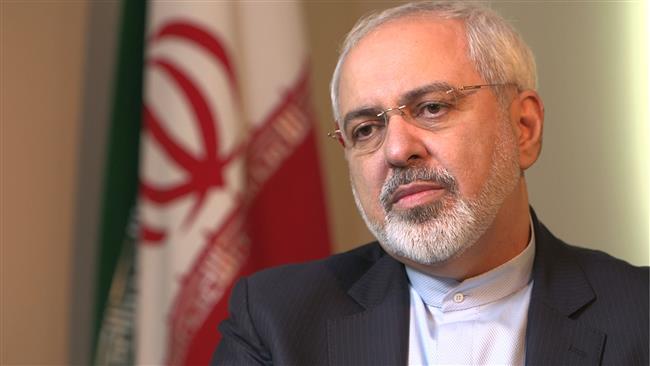
Zarif, Lavrov discuss talks

Meanwhile, foreign ministers of Iran and Russia have exchanged views on the latest developments pertaining to Tehran’s nuclear program and vital issues relating to bilateral cooperation.

In a phone conversation on Monday, Iran’s Foreign Minister Mohammad Javad Zarif and his Russian counterpart Sergey Lavrov discussed the settlement of the nuclear issue ahead of a new round of talks between Iran and P5+1.

A fresh round of nuclear talks is scheduled to resume in the Swiss city of Lausanne on Thursday with a planned visit between Zarif and US Secretary of State John Kerry.

The latest round of nuclear negotiations ended in Lausanne on March 20 after six days of intensive and serious talks with both Iran and the United States citing progress.

The Iranian foreign minister said on Friday that “good progress” had been made over the six days of the latest round of negotiations and pointed out that some work still needed to be done.

The US secretary of state also said, “We’ve made a lot of progress.”

The talks between the United States and Iran are part of broader negotiations between the Islamic Republic and P5+1 — Russia, China, Britain, France and the United States plus Germany — to reach a comprehensive agreement on Tehran’s nuclear program as a deadline slated for July 1 draws closer.

Per capita consumption of milk is low in Iran

Milk

In Iran, consumption of milk is below the world average, and only four out of 10 Iranians consume enough milk and dairy products. What comes next is the translation of a report published by Fararu website:

Per capita consumption of milk in Iran rose from 28 kg in 1970 to 80 kg in 2008. But the figure has since been on a downward slope and has dropped by 15 to 20 percent in recent years.

The jump in the consumption of sugary drinks such as coke has been so much that Iran now stands among countries with the highest consumption of sugary drinks.

Based on studies, the consumption of fizzy soft beverages by an Iranian increases 3-fold between childhood and adolescence, whereas milk consumption over the same period declines by 75 percent.

The hectic modern lifestyle has led Iranians, in particular the youth, to turn to fast food which has a high content of fat, salt and harmful additives. Research suggests that a high intake of such substances is to blame for a number of diseases such as diabetes, osteoporosis, hypertension and various forms of cancer, particularly pancreatic cancer.