Friday, April 10, 2026
Home Blog Page 49

Iran’s president calls for Muslim unity to counter US, Israeli plots

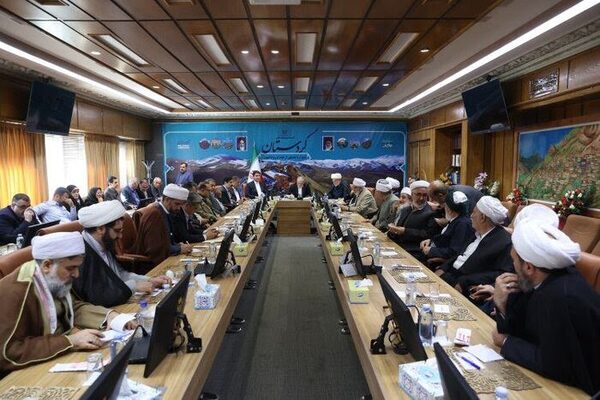
Speaking on Thursday to a gathering of Muslim scholars in Iran’s western province of Kordestan, President Pezeshkian said that division and discord among Muslims are precisely what the enemies of Islam desire.

He warned that internal conflicts within the Muslim world ultimately serve the interests of Israel, the United States, and their allies, allowing them to pursue their aggressive agendas unchecked.

Pezeshkian emphasized that if Muslims stood united, no foreign power would dare to exploit or violate Islamic nations.

He also described internal divisions as the main source of many of the challenges currently facing the Muslim community.

Iran cautions against grave repercussions of Israel’s aggressive policies for regional peace, stability

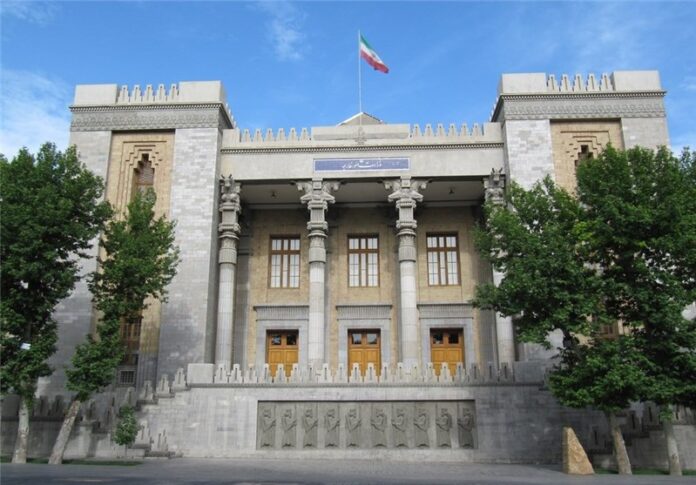
In a statement, the Islamic Republic of Iran’s Foreign Ministry emphasized the responsibility of the United Nations, the international community, and regional countries to confront the warmongering of the regime, to hold it accountable, and to punish it.
It warned of the dangerous consequences of the regime’s impunity and the continuation of its expansionist and aggressive policies for regional peace and security.

The statement added that the military attacks by the Zionist regime against Lebanon, which since the ceasefire agreement in November 2025 have resulted in the martyrdom and injury of over a thousand Lebanese civilians and the destruction of infrastructure and residential areas, constitute a blatant violation of the national sovereignty and territorial integrity of an independent country and are considered a heinous crime against international peace and security.
It further says these criminal assaults, which are undoubtedly planned and executed with full support and complicity from the US, are yet another indication of the criminal, terrorist, and hegemonic nature of the Zionist regime. Their sole aim is to undermine Lebanon’s sovereignty and security and to obstruct the country’s reconstruction and development.

The Islamic Republic of Iran’s Foreign Ministry, reaffirmed its solidarity with the government and people of Lebanon in the face of these criminal aggressions. It also reiterated its support for Lebanon’s legitimate resistance and the country’s efforts to safeguard its sovereignty, security, and territorial integrity.

Daughter of assassinated Iranian nuclear scientist regains consciousness after months in coma

Seyyedeh Fahimeh Hashemitabar, a student at Sharif University of Technology, was seriously injured in an attack in late June that resulted in the deaths of her parents, nuclear expert Seyed Asghar Hashemitabar and his wife.

Israel has targeted several Iranian nuclear scientists in the past but has not publicly commented on the case.

Hashemitabar, who had been receiving intensive care since the attack, regained consciousness on October 14 and has recently regained the ability to speak, family acquaintances confirmed.

A video posted online by Shohreh Pirani, the widow of another assassinated nuclear scientist, Dariush Rezaei-Nejad, showed Fahimeh speaking for the first time since emerging from the coma.

Pirani described the development as a moment of hope amid ongoing grief.

Doctors say Fahimeh’s recovery remains gradual, and rehabilitative therapy is expected to continue. The case has once again brought attention to targeted attacks on Iranian scientific personnel and the psychological toll on their families.

IRGC intelligence denies reports of arrests within Judiciary security unit

Iran Court

The allegations had circulated on some unofficial media outlets earlier this week.

In a statement released on Thursday, the IRGC Intelligence Organization described the reports as “unfounded” and emphasized that no such arrests had taken place. It warned that spreading false information can undermine public trust and disturb social stability.

The statement added that the organization remains firmly committed to confronting individuals or networks that attempt to disrupt public confidence or create psychological insecurity within society.

The IRGC Intelligence Organization also highlighted continued close cooperation with the Judiciary’s Security and Protection Center. According to the statement, both bodies are aligned in their responsibility to prevent and combat corruption across all government institutions.

“Just as in the past, the IRGC Intelligence Organization and the Judiciary’s Security and Protection Center will act decisively and without hesitation in addressing any corruption, regardless of position or affiliation,” the announcement said.

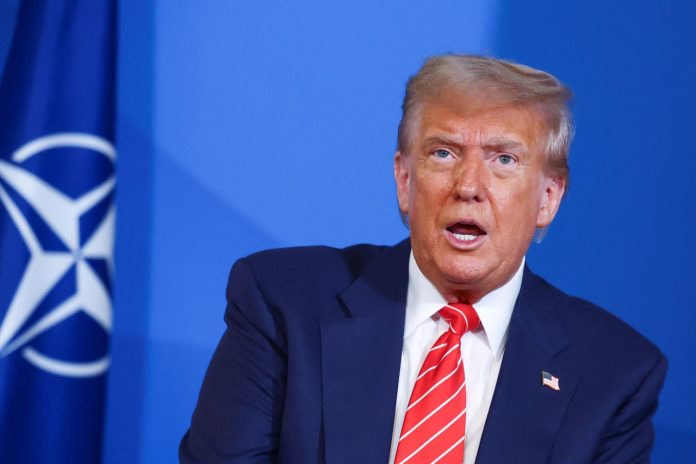
Trump reiterates nuclear threat

Trump last week ordered the US Department of War to commence preparations for nuclear testing “immediately.”

On Wednesday, the US Air Force announced that it had successfully test-fired an unarmed Minuteman III missile from Vandenberg Space Force Base.

“Because of other countries’ testing programs, I have instructed the Department of War to start testing our nuclear weapons on an equal basis. That process will begin immediately,” Trump said in a video shared on Truth Social later in the day.

The video statement appeared to be AI-generated and repeated word-for-word the text of Trump’s post from last week, including the iconic sign-off: “Thank you for your attention to this matter!”

It remains unclear whether it was posted by the president himself or one of his aides, as the White House declined to comment, citing staff shortages linked to the ongoing government shutdown.

Several clips shared at around the same time featured an identical background and similarly rehashed unrelated past statements.

Russian Defense Minister Andrey Belousov stated earlier in the day that Moscow “must respond to Washington’s steps” and “start preparing for full-scale nuclear tests immediately.” Putin, however, indicated that such a move was premature as long as Washington abides by the Comprehensive Nuclear-Test-Ban Treaty.

In the meantime, the Russian president instructed all relevant government agencies to analyze US plans and submit proposals on “the possible commencement of work on preparing for nuclear weapons tests.”

Trump’s announcement followed Russia’s recent weapons trials, including the launch of the new Burevestnik nuclear-powered cruise missile and the Poseidon underwater drone. However, neither of those tests involved actual nuclear detonations.

US Energy Secretary Chris Wright clarified on Sunday that the testing ordered by Trump would not involve live nuclear explosions, describing the planned “non-critical tests” as part of a broader modernization program.

Kremlin spokesman Dmitry Peskov noted that Russia was informed in advance about the latest Minuteman III launch. He previously added that Moscow is still waiting for “clarifications from the American side” regarding the meaning and full implications of the US president’s remarks.


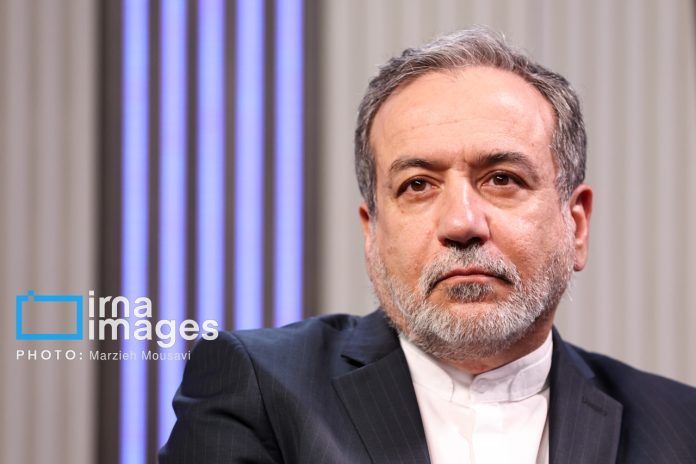
Iran open to negotiations if national interests are secured, says Foreign Minister Araghchi

Abbas Araghchi

Speaking during a gathering with students at Hamadan University, western Iran, Araghchi emphasized that Iran’s foreign policy principle of “neither East nor West” does not mean avoiding relations, but refusing dependency on any global power.

Araghchi noted that Iran seeks balanced engagement, explaning, “If cooperation with Eastern countries benefits Iran, we will not forgo it. Likewise, if dialogue with Western countries can secure our interests, we are not opposed to it.” However, he argued that past Western behavior has often undermined mutual trust.

He stressed that previous negotiations, including those during the Rouhani administration and later efforts under the late President Ebrahim Raisi to revive the 2015 nuclear deal, were all aimed at defending Iran’s national rights.

“We will pursue the removal of sanctions in a dignified and honorable manner,” he said.

Araghchi added that Iran does not place full trust in any foreign power. However, he confirmed that Tehran maintains strategic partnerships with countries such as China and Russia, based on long-term cooperation agreements, while insisting that the Iranian government relies primarily on its own people.

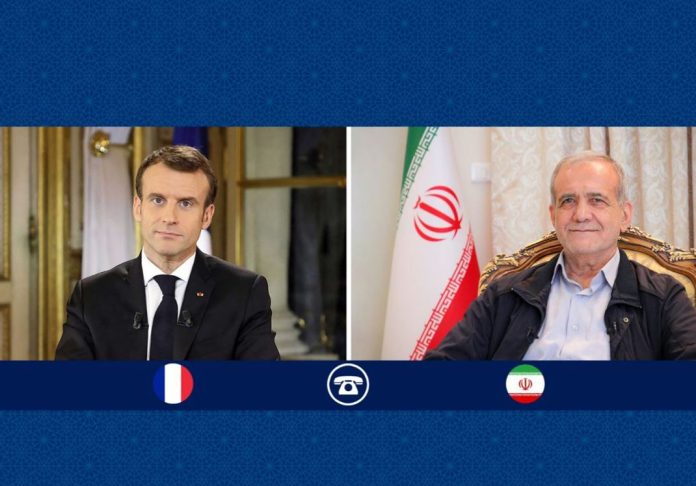
Macron, Pezeshkian discuss new negotiation framework between Iran and West

Pezeshkian Macron

Macron underlined the need for continued dialogue to promote transparency and mutual trust.

He noted that this could lead to an agreement, the lifting of sanctions, and the expansion of bilateral relations between Iran and France.

Pezeshkian reaffirmed that Iran has always welcomed dialogue and engagement but stressed that it is now the Western side that must respect Iran’s rights and avoid excessive demands.

“It is not Iran that must prove its honesty”, he said, “but rather the US and Europe that should demonstrate sincerity to gain Iran’s trust.

Referring to Iran’s nuclear policy, Pezeshkian reiterated that, based on the Iran’s Leader’s fatwa and the country’s defense doctrine, Tehran does not seek nuclear weapons.

He added that resolving misunderstandings through logic and dialogue, not through pressure and threats, is the principled policy of the Islamic Republic.

US to share draft UN resolution on Gaza with most of Security Council

Gaza War

Representatives for Egypt, Qatar, Saudi Arabia, Turkey and the United Arab Emirates will join the U.S., “showing clear regional support,” the official added.

Israel and the Palestinian group Hamas agreed a month ago to the first phase of Trump’s 20-point plan for Gaza: a ceasefire in their two-year war and hostage-release deal.

The United States has drafted a U.N. Security Council resolution that would approve a two-year mandate for a Gaza transitional governance body and an international stabilization force in the Palestinian enclave, according to the text seen by Reuters.

It was not immediately clear if any changes have been made to the draft that will be shared with the 10 elected Security Council members. A resolution needs at least nine votes in favor and no vetoes by Russia, China, the U.S., Britain or France to be adopted.

It was not immediately clear if the U.S. has yet shared a copy of the draft resolution with Russia and China.

The two-page text seen by Reuters would authorize a Board of Peace transitional governance administration to establish a temporary International Stabilization Force (ISF) in Gaza that could “use all necessary measures” – code for force – to carry out its mandate.

Russia to take ‘reciprocal measures’ if US resumes nuclear tests: Putin

The Russian leader told his Security Council on Wednesday that should the US or any signatory to the Comprehensive Nuclear-Test-Ban Treaty (CTBT) conduct nuclear weapons tests, “Russia would be under obligation to take reciprocal measures”, according to a transcript of the meeting published by the Kremlin.

“In this regard, I instruct the Foreign Ministry, the Defence Ministry, the special services, and the corresponding civilian agencies to do everything possible to gather additional information on this matter, have it analysed by the Security Council, and submit coordinated proposals on the possible first steps focusing on preparations for nuclear weapons tests,” Putin said.

Moscow has not carried out nuclear weapons tests since the collapse of the Soviet Union in 1991. But tensions between the two countries with the world’s largest nuclear arsenals have spiked in recent weeks as Trump’s frustration with Putin grows over Russia’s failure to end its war in Ukraine.

The US leader cancelled a planned summit with Putin in Hungary in October, before imposing sanctions on two major Russian oil firms a day later – the first such measures since Trump returned to the White House in January.

Trump then stated on October 30 that he had ordered the Department of Defense to “immediately” resume nuclear weapons testing on an “equal basis” with other nuclear-armed powers.

Trump’s decision came days after he criticised Moscow for testing its new Burevestnik missile, which is nuclear-powered and designed to carry a nuclear warhead.

According to the Kremlin transcript, Putin spoke with several senior officials in what appeared to be a semi-choreographed advisory session.

Defence Minister Andrei Belousov told Putin that Washington’s recent actions significantly raise “the level of military threat to Russia”, as he said that it was “imperative to maintain our nuclear forces at a level of readiness sufficient to inflict unacceptable damage”.

Belousov added that Russia’s Arctic testing site at Novaya Zemlya could host nuclear tests at short notice.

Valery Gerasimov, the Chief of the General Staff of the Russian Armed Forces, also cautioned that if Russia does not “take appropriate measures now, time and opportunities for a timely response to the actions of the United States will be lost”.

Following the meeting, state news agency TASS quoted Kremlin spokesman Dmitry Peskov as saying that Putin had set no specific deadline for officials to draft the requested proposals.

“In order to come to a conclusion about the advisability of beginning preparations for such tests, it will take exactly as much time as it takes for us to fully understand the intentions of the United States of America,” Peskov added.

Russia and the US are by far the biggest nuclear powers globally in terms of the number of warheads they possess.

The Center for Arms Control and Non-Proliferation (CACNP) estimates that Moscow currently has 5,459 nuclear warheads, of which 1,600 are actively deployed.

The US has about 5,550 nuclear warheads, according to the CACNP, with about 3,800 of those active. At its peak in the mid-1960s during the Cold War, the US stockpile consisted of more than 31,000 active and inactive nuclear warheads.

China currently lags far behind, but has rapidly expanded its nuclear warhead stockpile to about 600 in recent years, adding about 100 per year since 2023, according to the Stockholm International Peace Research Institute.

France, Britain, India, Pakistan and North Korea comprise the remaining nuclear-armed countries.

The US last exploded a nuclear device in 1992, after former Republican President George HW Bush issued a moratorium on nuclear weapons testing following the collapse of the Soviet Union a year earlier.

Since 1996, the year the CTBT was opened for signatures, only three countries have detonated nuclear devices.

India and Pakistan conducted tests in 1998. North Korea has carried out five explosive tests since 2006 – most recently in 2017 – making it the only country to do so in the 21st century.

Such blasts, regularly staged by nuclear powers during the Cold War, have devastating environmental consequences.

Trump has yet to clarify whether the resumption he ordered last week refers to nuclear-explosive testing or to flight testing of nuclear-capable missiles, which would see the National Nuclear Safety Administration test delivery systems without requiring explosions.

Security analysts say a resumption of nuclear-explosive testing by any of the world’s nuclear powers would be destabilising, as it would likely trigger a similar response by the others.

Iranian composer Aria Aziminezhad Performs “Love Through the Ages” in Paris

The performance offered a fresh interpretation of love in Iranian culture and literature, featuring Aziminezhad’s live music alongside narration by French actress Séjeanel, delivered in French.

The show was staged at the prestigious and historic Eiffel Theater.
It played to a full house and received an enthusiastic response from the Parisian audience.