Tuesday, December 23, 2025
Home Blog Page 48

US peace plan proposes Ukraine ‘give up sovereignty’: FT

Russia Ukraine War

The framework agreement, containing 28 points, was delivered to Kiev this week by US President Donald Trump’s special envoy Steve Witkoff, according to people familiar with the matter, cited by various outlets. The sources said Witkoff made clear that he wanted President Volodymyr Zelensky to accept the terms.

According to FT, the proposed plan would require Ukraine to relinquish the parts of the new Russian regions in Donbass still under Kiev’s control, cut the size of its armed forces by half and abandon key categories of weaponry. A rollback of US military assistance is included in the framework. One source told FT that accepting the conditions would amount to Ukraine giving up its sovereignty.

The document reportedly also stipulates recognizing Russian as an official state language in Ukraine and granting official status to the Ukrainian Orthodox Church, the largest Christian denomination in the country, which Zelensky’s government has cracked down on over its historic ties with Russia.

Moscow has accused Kiev of violating the rights of native Russian speakers, who make up a significant share of the population, citing it as one of the root causes of the conflict.

Russian officials insist any lasting settlement must address fundamental security demands, including that Ukraine maintain neutrality, stay out of NATO and other military blocs, demilitarize and denazify, and accept the current territorial reality.

Kremlin spokesman Dmitry Peskov did not confirm the proposal and said that there is “nothing new” in the US-Russia talks beyond what was discussed between Russian President Vladimir Putin and Trump in Alaska.

Senior Russian negotiator Kirill Dmitriev told Axios, which first reported on the plan, that it was more than a ceasefire arrangement, saying “we feel the Russian position is really being heard.”

A White House official told Politico the plan could be agreed by all parties by the end of this month and possibly “as soon as this week.”


Schooling in Nomadic Tents in Iran

In these simple, minimally equipped tents, nomadic children continue their studies despite the challenges of life on the move.

In Iran’s North Khorasan Province these schools shift locations during the tribes’ autumn migration. This ensures that the education of nomadic children continues uninterrupted, even in the midst of migration and the demanding conditions of nomadic life.

Peyman Maadi named jury member at Morocco film festival

Maadi will join Anya Taylor-Joy, Jenna Ortega, Celine Song, Julia Ducournau, Karim Aïnouz, and Hakim Belabbes as jury members for the festival’s main competition section, with Bong Joon-ho leading the panel.

The jury will evaluate 14 debut and sophomore films in the official competition, aiming to discover emerging global cinematic talents.

Peyman Maadi gained international acclaim for his role in Asghar Farhadi’s A Separation, which won the Berlin Golden Bear and the Oscar for Best Foreign Language Film, earning him the Silver Bear for Best Actor.

Maadi has previously served on juries at festivals including Shanghai and Sundance. The Marrakech Film Festival will take place from November 28 to December 6.

Israel says 1,000th Western military supply aircraft landed since Gaza war began

Israel Army

The announcement comes as the US continues to support Tel Aviv during the Gaza war, with some Western governments criticizing Israeli actions and imposing restrictions on arms exports.

Spain issued a royal decree in September imposing a full arms embargo on Israel, while last year the UK, Germany, and Canada imposed limits on weapons transfers.

“The 1,000th aircraft in the comprehensive military equipment and weapons airlift operation, which commenced immediately following the outbreak of war, has landed in Israel,” said a ministry statement, calling the operation “unprecedented” in Israeli history.

The aircraft, carrying a large shipment of military equipment, was received by Defense Ministry Director-General Maj. Gen. Amir Baram, the ministry added.

“To date, over 120,000 tons of military equipment, munitions, weapons systems, and protective gear have been transferred to Israel via 1,000 aircraft and approximately 150 maritime vessels,” the statement read.

The statement did not specify the exact origins of the shipments. However, it said the operation is jointly managed by the Defense Ministry’s Procurement Directorate, through the International Defense Transportation Unit, the ministry’s missions in the US and Berlin, the army’s Planning and Force Build-Up Directorate, and the Israeli Air Force.

An October report by the Washington-based Quincy Institute for Responsible Statecraft said the US has provided Israel with at least $21.7 billion in military assistance since the start of the Gaza genocide two years ago.

After Oct. 7, 2023, the US supplied $17.9 billion in military aid during the term of former President Joe Biden, and $3.8 billion under current President Donald Trump, according to the report. Some of that assistance has already been delivered, while the remainder will arrive in the coming years.

The report said Israel would not be able to continue its genocide in Gaza without US support.

Since October 2023, the Israeli army has killed nearly 70,000 people in Gaza, mostly women and children, injured over 170,000, and reduced most of the enclave to rubble.


Hundreds of career Israeli soldiers submit requests for early retirement from army: Yedioth Ahronoth

Israeli Army

According to the daily newspaper Yedioth Ahronoth, representatives from the army’s Personnel Administration told the Knesset’s Foreign Affairs and Defense Committee that about 600 career personnel, including senior officers and professional non-commissioned officers, have asked to effectively “resign” early.

“There were those whose retirement we postponed throughout the war (in Gaza) because of their necessity, simply because there are no replacements for them,” one military official told lawmakers.

Military officials said 85% of career soldiers retire “at the rank of lieutenant colonel or below.”

Bar Kalifa, an Israeli army official who addressed the committee, linked the growing crisis to the Supreme Court’s recent ruling striking down pension supplements for career officers.

He also pointed to “the broader issue of the IDF’s (army) manpower shortage amid the ongoing exemption from military service for ultra-Orthodox Jews” at a time when troops “began maneuvering in Gaza City.”

The army “needs another 12,000 soldiers,” he added.

On Aug. 8, Israel’s Security Cabinet approved a plan by Prime Minister Benjamin Netanyahu to gradually reoccupy the Gaza Strip, beginning with Gaza City, before the plan was shelved after a ceasefire took effect on Oct. 10.

He added that Haredi leadership “is escalating its rhetoric, and their protests are draining resources from both the army and the police.”

Kalifa also warned of a surge in draft evasion.

“We now have more than 17,000 draft dodgers. Dodging the draft has become the norm,” he stated, adding, “There’s an army of lawyers fraudulently securing exemptions for draft dodgers.”

Haredim, who make up about 13% of Israel’s population of 10 million, claim military service threatens their religious identity and community structure, as they dedicate their lives to Torah study. Prominent rabbis have urged followers to reject the draft and “tear up enlistment orders.”

For decades, most ultra-Orthodox men avoided service through repeated deferments for religious study until reaching the exemption age, currently set at 26.

Opposition lawmakers accuse Netanyahu of pushing legislation to permanently exempt the Haredim to satisfy demands by the ultra-Orthodox Shas and United Torah Judaism parties, both of which left the coalition earlier this year but are expected to rejoin once such a law passes.

More than 69,000 Palestinians have been killed and over 170,700 others injured in the Israeli war on Gaza since October 2023.

EU says eyes training 3,000 police officers in Gaza

There will be a “need to stabilise Gaza with an important police force” if the current ceasefire endures, said the official, who was granted anonymity to discuss the sensitive matter.

The UN Security Council voted Monday in favour of a US-drafted resolution bolstering President Donald Trump’s plan for the Gaza Strip — which has allowed a fragile ceasefire to hold between Israel and Hamas since October 10.

The peace plan notably authorises the creation of an international force that would work with Israel and Egypt and newly-trained Palestinian police to help secure border areas and demilitarise Gaza.

The EU has struggled to exert influence during the two-year war in Gaza due to splits within the bloc between countries supporting Israel and those closer to the Palestinians.

Keen to reclaim a role in the region, the EU will propose training Palestinian police officers — who are not affiliated with Gaza’s Hamas rulers — as part of efforts to restore long-term security in the territory.

Around 7,000 police in Gaza are still on the payroll of the Palestinian Authority (PA), which governs the West Bank, the official said. Many have retired or are unable to work, but about 3,000 could be trained, he added.

The training would take place outside of the Gaza Strip, he stated.

The EU has financed a police training mission in the West Bank since 2006, with a budget of around 13 million euros ($15 million).

EU foreign ministers are due to discuss the training proposal during talks Thursday in Brussels. The bloc will also host a Palestinian donor conference the same day, bringing together around 60 delegations, including Arab states — but not Israel.

The conference will notably allow participants to “take stock” of progress on reforms by the Palestinian Authority, the official said.

The EU is the PA’s main financial backer but has made future aid conditional on reforms, which it considers essential for the Authority to play its part in a two-state solution to the Israeli-Palestinian conflict, which Europe has long advocated.

IAEA head confirms inspection of Iran’s nuclear facilities ‘unaffected’ by US attacks

“Our inspectors are back in Iran and have carried out inspections at facilities unaffected by June’s [Israeli and American] attacks, but more engagement is needed to restore full inspections,” Grossi said in a post on X following the IAEA’s Board of Governors meeting on Wednesday.

Earlier, addressing the board meeting, Grossi stated he is in regular contact with Tehran and urged Iran to facilitate the IAEA’s access to the damaged sites with low-enriched and high-enriched uranium to assess their status.

“We have returned to Iran, and over a dozen inspections have taken place so far. However, there is still more work to be done in line with the relevant provisions of the Comprehensive Safeguards Agreements,” Grossi noted, adding that more engagement is needed under the Non-Proliferation Treaty (NPT).

Iran suspended cooperation with the IAEA in June over security concerns following the US and Israeli war of aggression, during which some of its nuclear sites were bombed in violation of international law, the NPT, and the UN Charter.

In response, the Iranian Parliament passed legislation barring further access to its nuclear facilities by IAEA inspectors. Tehran also accused the Agency of effectively providing cover for the strikes by declaring Iran in breach of its non-proliferation obligations and then failing to condemn the attacks.

In early September, the IAEA chief signed an agreement in Cairo with Foreign Minister Abbas Araghchi, setting out a framework of understanding on procedures for Agency inspections.

However, Iran announced that the agreement was null and void after the European parties to a now-expired nuclear deal invoked its so-called snapback mechanism, restoring UN sanctions on the country.

However, Tehran later said that it had allowed IAEA inspectors to visit several nuclear sites since the June aggression.

“As long as we are a member of the NPT, we’ll abide by our commitments, and just last week, IAEA inspectors visited several nuclear facilities, including the Tehran Research Reactor,” Foreign Ministry spokesperson Esmaeil Baqaei stressed earlier this month.


Major part of UN Security Council resolution on Gaza violates rights of Palestinians: Iran

Iranian Foreign Ministry

The full text of the statement of the Ministry of Foreign Affairs of the Islamic Republic of Iran regarding the UN Security Council resolution on Gaza is as follows:

1-The Ministry of Foreign Affairs of the Islamic Republic of Iran, while supporting any regional or international action to end the genocide and crimes of the Zionist regime against the Palestinian people and Gaza, the effective entry of humanitarian aid into the Gaza Strip, and the complete withdrawal of the Zionist occupiers, expresses its serious concern regarding the provisions of United Nations Security Council Resolution No. 2803.

2-A large part of the provisions of this resolution are contrary to the legitimate rights of the Palestinian people and, by imposing a kind of guardianship system on the Gaza Strip, it deprives the Palestinian people of their fundamental rights, especially the right to self-determination and the establishment of an independent Palestinian state with Holy Quds as its capital.

3-The drafters of this resolution have deliberately ignored the central position and role of the United Nations and even the organization’s previous resolutions on the Palestinian issue.

4-The Islamic Republic of Iran considers any legitimization of the occupation of the Gaza Strip by the aggressive Zionist regime, the division of Gaza, and its separation from the unified geography of Palestine to be contrary to the aspirations of the Palestinian people and warns of its dangerous consequences.

5-International forces must operate under full UN supervision, and their task will be to monitor the implementation of the ceasefire and the entry and distribution of international humanitarian aid.

6-The Islamic Republic of Iran emphasizes the responsibility of the international community, especially the guarantors of the ceasefire agreement, to force the apartheid regime and the Zionist occupiers to end the occupation of Palestine and completely withdraw from the Gaza Strip, and believes that no decision can and should distort this.

7-The Islamic Republic of Iran has emphasized the legitimacy of resistance against occupation, apartheid, and colonialism according to international law, and considers resistance to be the legitimate response of the Palestinian people to the continued occupation of the Palestinian land and the continued aggression of the Zionist regime.

8-It emphasizes that any discussion about the fate of the Palestinian people, including how to govern the Palestinian territories, must take place within the framework of Palestinian national agreement and consensus, and that imposing any solution by external parties in this regard is unacceptable.

9-In the current situation where the Palestinian people in Gaza and the West Bank are facing genocide, imposed famine, and colonial annihilation, providing humanitarian aid, relief, and the full reopening of crossings are priorities.

10-The immediate expectation from the international community is to exert effective pressure on the Zionist regime, to prevent the continuation of the Zionist regime’s crimes and occupation and gross violations of Palestinian rights in the Gaza Strip and the West Bank, and to support the realization of the fundamental rights of the Palestinian people.

11-It also reminds us of the responsibility of the United Nations Security Council and its member states to prosecute and hold accountable war criminals and genocidal perpetrators, given the apparent failure and inaction of the United Nations Security Council over the past two years to stop the genocide of Palestinians.


No negotiation process underway with US: Iran

Esmail Baghaei

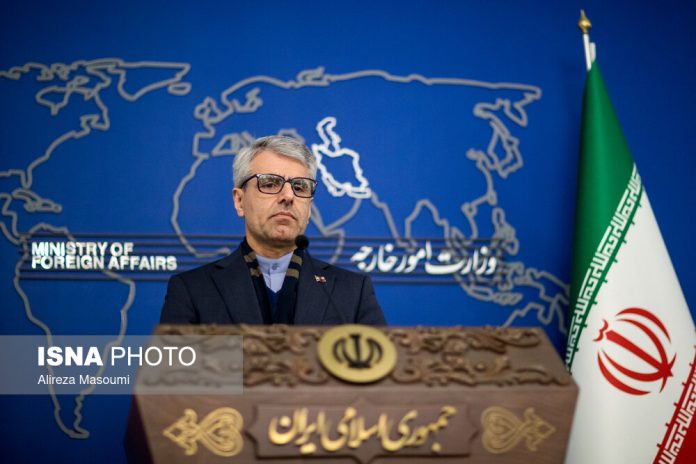
Esmail Baqaei, the spokesperson for the Islamic Republic’s diplomatic apparatus, on Wednesday responded to US President Donald Trump’s renewed claims about negotiations with Iran.

During a meeting with Saudi Crown Prince Mohammed bin Salman in Washington on Tuesday, Trump repeated his previous claims, saying that Iran is “desperately seeking a deal.”

Baqaei, referring to Washington’s record of repeated breaches and excessive demands, said that—as the foreign minister has repeatedly stressed—talks with a party that does not believe in the reciprocity of negotiations, boasts of its military aggression against Iran and the killing of Iranian children, and is clearly seeking to impose its own dictates, are not justifiable.

In response to another question about a message sent by Iranian President Masoud Pezeshkian to Saudi Crown Prince Mohammed bin Salman—and whether it was linked to the crown prince’s visit to Washington—Baqaei said the message, delivered by the new head of Iran’s Hajj and Pilgrimage Organization, was purely bilateral in nature.

It expressed Iran’s appreciation to Saudi Arabia for the services provided to Iranian pilgrims during last year’s Hajj and highlighted the importance of continued cooperation and coordination to ensure the successful organization of this year’s pilgrimage.

Iran’s deputy FM dismisses holding secret talks with IAEA

Iran nuclear program

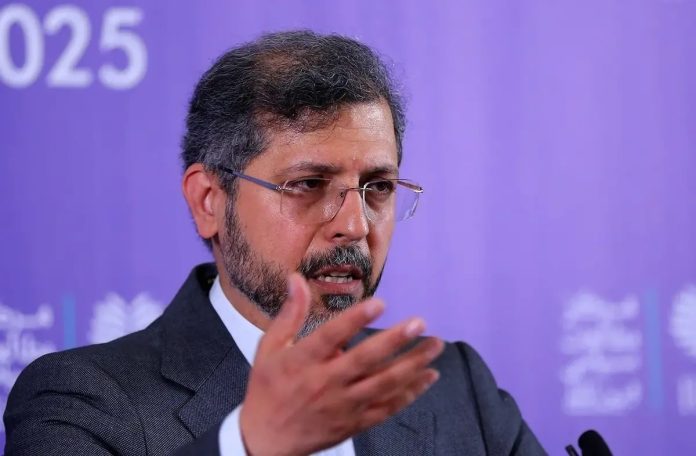
Speaking in a televised interview on Tuesday night, Kazem Qaribabadi said that Iran maintains an official channel of communication with the Agency and therefore has no need for clandestine talks.

Responding to a question about alleged secret discussions between Iran and the IAEA in Egypt, he strongly denied the reports.

Elsewhere in the interview, Qaribabadi warned that the recent anti-Iran initiative pursued by the three European countries and the United States at the IAEA Board of Governors could jeopardize the “Cairo understanding.”

His comment referred to the recent arrangement reached between Iran and the Agency in the Egyptian capital, under which bilateral cooperation was to continue within a defined framework.

Reports indicate that the UK, France and Germany, together with the United States, have drafted a resolution against Iran for adoption at the Agency’s upcoming meeting in Vienna.

Iran has previously stated that if such a resolution is passed, it will fundamentally reconsider its cooperation under the Cairo understanding as well as its approach toward the Nuclear Non-Proliferation Treaty.