Tuesday, December 23, 2025
Home Blog Page 50

Iran’s envoy cautions US-drafted resolution on Gaza must not be used to shield Israel

Gaza War

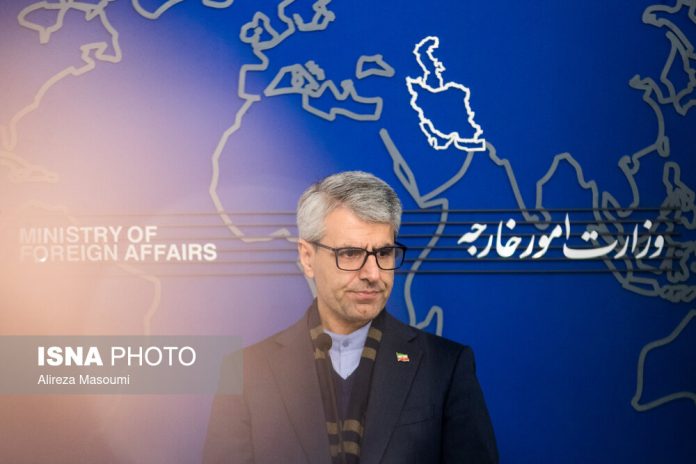
Iravani delivered the remarks on Tuesday during a session of the UN’s Special Political and Decolonization Committee (Fourth Committee).

He cautioned that while many Security Council members had supported the measure in hopes of halting Israeli bloodshed, its mechanisms risked sidestepping the UN’s authority and diluting the core rights of the Palestinian people.

The resolution, passed on Monday, endorses establishment of an “International Stabilization Force (ISF)” in Gaza under a 20-point plan devised by Donald Trump. The US president says the plan is aimed at ending the Israeli regime’s war of genocide on the coastal sliver that began in October 2023.

Iravani emphasized that the resolution’s implementation must not infringe on Palestinian rights, particularly the right to self-determination, statehood, and territorial integrity.

“Gaza is an integral part of Palestinian territory,” he said, insisting it must be governed by a Palestinian transitional body and remain protected from annexation or forced displacement.

The ambassador stressed that ending the war, while essential, was not sufficient. Justice and accountability, he said, remained central obligations of the international community.

“The masterminds and perpetrators of genocide and crimes against humanity in Gaza must be prosecuted,” he declared, adding, “The decades-long culture of impunity surrounding the Israeli regime must finally end.”

Citing UN-verified data, Iravani noted that nearly 70,000 civilians, mostly women and children, had been killed as a result of Tel Aviv’s unrestrained military assault.

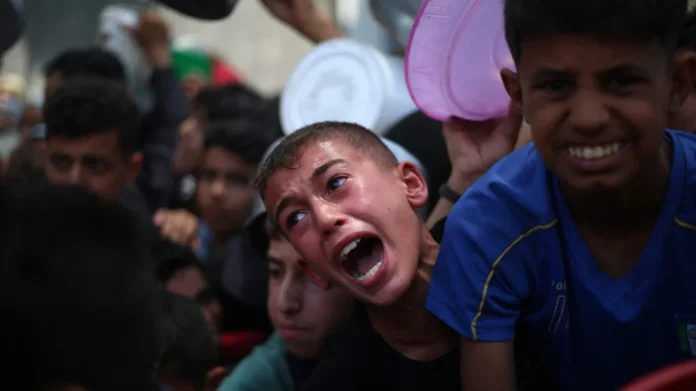
The ambassador lamented that Tel Aviv had openly defied the International Court of Justice, while carrying out a campaign of starvation, siege, and systematic destruction in Gaza.

The envoy described the regime’s “weaponization of starvation” in Gaza, through blockade, aid obstruction, and destruction of civilian infrastructure, as not only a war crime, but a direct assault on Palestinians’ inalienable rights.

The official cautioned that the regime’s rejection of the International Court of Justice’s advisory opinion – ordering an end to its unlawful occupation, evacuation of its illegal settlers, and unimpeded humanitarian access – showed it was intent on dismantling global legal norms.


Advisor to Iranian Leader outlines conditions for renewed talks with US, rejects limits on Iran’s missile, nuclear programs

Speaking in an interview with CNN, Kamal Kharrazi stressed that Washington must take the first step to demonstrate readiness to engage on terms set by Tehran.

Kharrazi reiterated that Iran will not halt uranium enrichment, describing it as essential for nuclear fuel production and medical needs, though he said the level of enrichment could be subject to negotiation.

He added that Iran’s nuclear program is indigenous and cannot be dismantled by force.

He also stated that the Leader’s fatwa (religious decree) prohibiting nuclear weapons is “unchangeable.”

On missiles, Kharrazi ruled out any negotiations, calling Iran’s ballistic program non-negotiable and vital for national defense.

On the US-Israeli strikes earlier this year on Iranian nuclear facilities, including Natanz and Fordow, he said the extent of damage is still under assessment.

Addressing US President Donald Trump, Kharrazi said a “positive approach” would be met with reciprocity, but warned that any use of force against Iran “will not work.”

EU says its ability to pressure China over Ukraine is limited

Speaking at a Bloomberg event, Kallas explained that, due to deep economic ties with the European Union, Beijing could “cause damage” to the bloc’s countries in response to sanctions.

“China is acting very smartly by increasing its geopolitical influence,” she said.

Earlier, Chinese Foreign Ministry Spokesperson Guo Jiakun stated that China seeks an end to the Ukrainian crisis and will play a constructive role in promoting its political settlement.

As the Chinese diplomat noted, China maintains a consistent position on the Ukraine issue, “based on the essence of the matter itself, adhering to the principles of fairness and objectivity.”

Russia and China have intensified cooperation since the Ukraine conflict escalated in February of 2022, with Beijing becoming the main buyer of Russian oil after the West imposed sweeping sanctions on Moscow. The two nations now describe their relations as a strategic partnership “without limits.”

SCO PMs declare UNSC Resolution 2231 expired

The closing statement by member states on Tuesday opposed the West’s unilateral coercive measures, including economic sanctions, that violate the UN Charter and international law.

Leaders warned that such measures obstruct global cooperation and hinder the achievement of the United Nations’ Sustainable Development Goals.

Delegations also highlighted the importance of preserving the spirit of inclusivity and consensus that underpinned the adoption of UN Security Council Resolution 2231, noting that under operative paragraph 8, its provisions have lost validity.

The United States and its European allies have imposed numerous sanctions on Iran over its nuclear program, claiming that the country seeks nuclear weapons.

Iran has repeatedly denied the allegation, citing regular IAEA inspections over decades that proved the peaceful nature of its nuclear activities, as well as Islamic teachings banning the development of weapons of mass destruction.

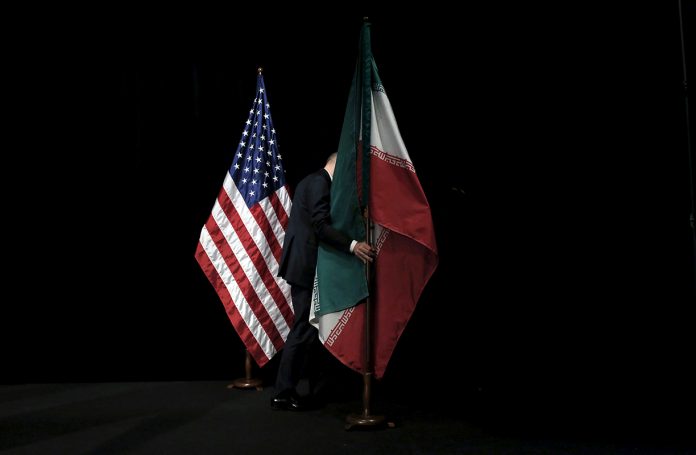
The parties signed a 2015 deal, the Joint Comprehensive Plan of Action (JCPOA), that lifted sanctions in exchange for confidence-building curbs on Iran’s nuclear activities.

However, the deal was derailed by the 2018 US withdrawal and the failure of the E3 (Britain, France, and Germany) to fully abide by their commitments under the accord.

Iran and the United States held five rounds of talks earlier this year to explore a replacement for the 2015 deal, whose endorsing UN resolution was due to expire shortly, but to no avail.

On the eve of the sixth round of talks, Israel and the United States launched a 12-day campaign of aggression against Iran in June, killing hundreds of people and damaging the country’s scientific and military infrastructure.

After the aggression, the E3 claimed they were activating the 2015 deal’s so-called snapback mechanism to restore UN sanctions against Tehran just before the resolution was set to expire.

However, Iran, Russia, China, and some other countries have rejected the claim, arguing that the E3 first dishonored their commitments under the deal and cannot use it to prevent the resolution’s expiration.

That stance was further supported by the SCO during Tuesday’s meeting.

At the close of the summit, SCO prime ministers signed a comprehensive cooperation document covering economic development, transportation, and social support, underscoring the organization’s drive to deepen integration among member states.

The document was also signed by Iran’s First Vice President Mohammad Reza Aref, who attended the meeting at the head of a political delegation.


US holding secret peace talks with Russia to end Ukraine war: Axios

Russia Ukraine War
Red Cross volunteers help local residents to evacuate from the city of Kupiansk-Vuzlovyi in Kharkiv region, Ukraine.

U.S. Special Envoy Steve Witkoff and Russian Envoy Kirill Dmitriev have extensively discussed the 28-point peace plan, an unnamed U.S. official said.

Dmitriev described the secretive peace deal optimistically, saying that, unlike in the past, “we feel the Russian position is really being heard.”

Russia has repeatedly issued maximalist demands to Kyiv in previous direct peace talks, including that Ukraine give up its NATO aspirations, demilitarize, and cede territory that Kyiv controls.

The secretive peace deal reportedly focuses on peace in Ukraine, security in Europe, security guarantees, and U.S. relations with Kyiv and Moscow in the future.

Dmitriev met with Witkoff and other senior members of the White House administration in Miami from Oct. 24-26, the Russian official told Axios.

“It’s actually a much broader framework, basically saying, ‘How do we really bring, finally, lasting security to Europe, not just Ukraine,'” Dmitriev claimed.

The two sides hope to produce a written document before U.S. President Donald Trump and Russian President Vladimir Putin next meet, Dmitriev stated, adding that a Budapest summit still remains off the table.

The proposed meeting was called off by Trump on Oct. 25, who said he felt it would not be productive as the White House continues efforts to broker a peace deal.

Meanwhile, Witkoff’s planned meeting with President Volodymyr Zelensky in Turkey has reportedly been postponed, according to Ukrainian and U.S. officials.

National Security and Defense Council Secretary Rustem Umerov has already discussed the secretive peace deal with Witkoff at a separate meeting in Miami a week earlier, unnamed Ukrainian officials told Axios.

The White House has begun briefing Ukrainian and European officials on the new plan, an unnamed U.S. official said.


Trump hosts Saudi Arabia’s crown prince at White House

The White House rolled the literal red carpet out for Prince Mohammed, known as MBS, on Tuesday. Trump greeted him with a ceremony that featured marching bands, flag-carrying horsemen and a military flyover.

The opulent display of hospitality signalled Trump’s embrace of what he sees as a new Middle East driven by financial investments and US partnerships with allies in the region, chiefly Saudi Arabia.

After Prince Mohammed’s arrival through the South Portico, he and Trump took questions from journalists in the Oval Office. The two leaders spoke of business opportunities, peace, artificial intelligence and the tech business.

The Trump-MBS meeting also led to major announcements, including in the already strong defence relationship between the US and Saudi Arabia.

Here are the key takeaways from the meeting:

‘Good talks’ on Saudi Arabia-Israel ties

In recent months, Trump has repeatedly said he would like Saudi Arabia to join the so-called Abraham Accords, which established formal relations between Israel and several Arab countries.

On Tuesday, Prince Mohammed and Trump signalled possible progress on the issue without providing details or a timeline for a potential deal. The crown prince, however, did reiterate that Riyadh wants to advance the establishment of a Palestinian state as part of a potential agreement.

“We believe having a good relation with all Middle Eastern countries is a good thing, and we want to be part of the Abraham Accords,” Prince Mohammed told reporters.

“But we want also to be sure that we secure a clear path [to a] two-state solution. And today we have a healthy discussion with Mr President that we’ve got to work on that, to be sure that we can prepare the right situation as soon as possible to have that.”

Saudi officials have previously stressed that Riyadh is committed to the Arab Peace Initiative, which conditions the recognition of Israel on the establishment of a Palestinian state.

Trump stated that he had “good talks” with Prince Mohammed about the issue.

“We talked about one state, two states. We talked about a lot of things. In a short period of time, we’ll be discussing it further too,” the US president added.

Major non-NATO ally status for Saudi Arabia and a defence deal

At a black-tie dinner he hosted at the White House for the Saudi leader, Trump announced the US has decided to recognise Riyadh as a “major non-NATO ally”.

That status allows a country expedited access to US military hardware, sales and other cooperation without some of the elaborate licensing protocols that other buyers of advanced American weapons systems need to go through.

Saudi Arabia joins 19 other countries that are major non-NATO allies of the US: Argentina, Australia, Bahrain, Brazil, Colombia, Egypt, Israel, Japan, Jordan, Kenya, Kuwait, Morocco, New Zealand, Pakistan, the Philippines, Qatar, South Korea, Thailand and Tunisia. The US also treats Taiwan at par with major non-NATO allies.

Separately, the White House announced that Trump and MBS signed a strategic defence agreement “that strengthens our more than 80-year defense partnership and fortifies deterrence across the Middle East”. Details of the agreement are unclear, but the White House said it would secure “new burden-sharing funds from Saudi Arabia to defray US costs” and would affirm that the “Kingdom views the United States as its primary strategic partner”.

The agreement comes weeks after Saudi Arabia signed a mutual defence agreement with Pakistan following Israel’s September attack on Qatar, which had sparked concerns across the region over whether the US could be trusted by its Gulf allies as a security partner.

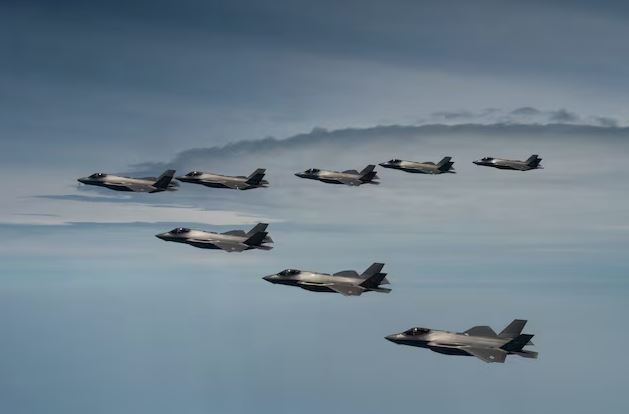
On Monday, Trump confirmed that he will authorise the sale of F-35 fighter jets to Saudi Arabia.

During the meeting with MBS, he stated the jets would not be downgraded to ensure Israel’s military superiority in the region, a departure from a US policy known as “qualitative military edge”.

“They’d like you to get planes of reduced calibre. I don’t think that makes you too happy,” he told the Saudi crown prince.

“They’ve been a great ally. Israel has been a great ally, and we’re looking at that exactly right now. But as far as I’m concerned, I think they are both at a level where they should get top of the line.”

Trump says Iran wants deal

Trump once again expressed pride in the US strikes against Iran’s nuclear facilities in June.

“We did that on behalf of everybody, and the outcome was extraordinary because we have the best pilots, the best equipment, the best planes, the best everything,” he said.

The US president later shifted to a softer tone on Iran, claiming Tehran is seeking a diplomatic resolution with Washington, which has sought the dismantlement of its nuclear programme.

“I am totally open to it, and we’re talking to them,” Trump added.

“And we start a process. But it would be a nice thing to have a deal with Iran. And we could have done it before the war, but that didn’t work out. And something will happen there, I think.”

Saudi Arabia’s official news agency, SPA, had reported that MBS had received a handwritten letter addressed to him from Iranian President Masoud Pezeshkian before his trip to Washington. No details were available about its content.

On Tuesday, Prince Mohammed said Saudi Arabia would back a US-Iran deal.

“We will do our best to help to reach a deal between the United States of America and Iran,” he told reporters.

“And we believe it’s good for Iran’s future to have a good deal that would satisfy the region and the world and the United States of America,” he added.

$1 trillion in investments?

At the outset of the two leaders’ public remarks, Trump expressed gratitude for anticipated Saudi investments in the US, which he said will be in the hundreds of billions of dollars.

“I want to thank you because you’ve agreed to invest $600bn into the United States. And because he’s my friend, he might make it $1 trillion, but I’m going to have to work on him,” Trump said.

He added that the Saudi funds will create jobs and resources for US companies and Wall Street investment firms.

For his part, MBS said the Saudi investments in the US will likely rise to $1 trillion.

“The agreement that we are signing today in many areas – in technology and AI, in rare materials, magnet, etc – that will create a lot of investment opportunities,” he added.

The crown prince echoed Trump’s assessment that the US is now the “hottest country” in the world, adding that the kingdom wants to be part of the “foundation of emerging technologies” in the US.

Praise and smiles

Trump and MBS were all smiles as they exchanged flattering comments from the moment the crown prince arrived at the White House.

At one point, Trump reached for Prince Mohammed’s hand and held it as he criticised former US President Joe Biden for giving MBS only a fist bump when he visited Riyadh during the COVID-19 pandemic in 2021.

“I grabbed that hand. I don’t give a hell where that hand’s been,” Trump said.

The US president described the Saudi crown prince as “fantastic” and “brilliant”.

“We have an extremely respected man in the Oval Office today, and a friend of mine for a long time – very good friend of mine,” Trump added.

“I’m very proud of the job he’s done. What he’s done is incredible in terms of human rights and everything else.”

The US president went on to rebuke an ABC News reporter for asking a challenging question of Prince Mohammed, accusing her of disrespecting his guest.

When the same journalist later asked Trump why he would not voluntarily release government files related to sex offender Jeffrey Epstein, Trump said ABC News’s broadcasting licence should be revoked.

“You’re a terrible person and a terrible reporter,” he added.


US, Russia in talks over potential prisoner swap: Axios

Russia US Flags

Prisoner swaps, the latest of which took place in April, were part of US President Donald Trump’s effort to stabilize relations with Russia after years of diplomatic friction. Kirill Dmitriev, an aide to Russian President Vladimir Putin, told Axios that the prospect of another exchange was raised during his trip to Washington in late October.

“I met some US officials and members of the Trump team on some issues that are humanitarian in nature, such as possible exchanges of prisoners that the US side has been working on,” Dmitriev told the outlet in a phone interview.

US officials confirmed that Dmitriev discussed the idea with special envoy Steve Witkoff and other members of the Trump administration, but no agreement has been reached and no names have been publicly identified, according to Axios.

The Trump administration has rejected the previous White House’s strategy of isolating Moscow over the Ukraine conflict, promoting instead what it calls a pragmatic normalization process. Officials have described prisoner exchanges as a confidence-building element meant to repair bilateral ties damaged under President Joe Biden.

In May, Washington reportedly provided Moscow with a list of nine people whose release it wanted. One of them, Joseph Tater, reportedly left Russia in June, after a court overturned his involuntary psychiatric commitment stemming from a brief altercation with police during an apparent mental health episode.

Witkoff, who has been handling several sensitive negotiations for Trump, was personally involved in arranging prisoner exchanges with Russia. This week he is expected to meet Ukraine’s President Volodymyr Zelensky in Türkiye.


Israeli settler killed, 3 injured in West Bank attack

Israeli Police

Israel’s national ambulance service MDA said an Israeli man was stabbed and killed near the Gush Etzion settlement, south of East Jerusalem, in the southern West Bank.

MDA added three other settlers were moderately injured in the attack.

Israel’s public broadcaster KAN reported that attackers armed with knives drove their car into pedestrians near the settlement, with one getting out and stabbing settlers.

An Israeli army statement noted two attackers were killed near Gush Etzion, and searches were launched in the area.

There was no claim of responsibility for the attack.


Syria launches first trial over violence that killed hundreds

Syrian state media reported on Tuesday that 14 people were brought before Aleppo’s Palace of Justice following a months-long, government-led investigation.

Hundreds of people from the Alawite religious minority, to which ousted President Bashar al-Assad belonged, were killed in the massacres in March.

The violence erupted after attacks on the new government’s security forces by armed groups aligned with the deposed autocrat. Counterattacks soon spiralled out of control to target civilians in the coastal regions that host the Alawite population.

Seven of the defendants in the court on Tuesday were al-Assad loyalists, while the other seven were members of the new government’s security forces.

Charges against the suspects could include sedition, inciting civil war, attacking security forces, murder, looting and leading armed gangs, according to state media.

The seven accused from government forces are being prosecuted for “premeditated murder”.

The public and the international community have put pressure on the country’s new rulers to commit to judicial reform.

“The court is sovereign and independent,” said Judge Zakaria Bakkar as the trial opened.

The proceedings are important for President Ahmed al-Sharaa, the leader of forces that formerly had links to al-Qaeda, who since coming to power in December has scrambled to step out from diplomatic isolation. He is working to convince the United States to drop more of its crippling sanctions against Syria and to boost trade to rebuild the war-torn country.

However, despite initial reports by the state media that charges could quickly be brought against the defendants, the judge adjourned the session and rescheduled the next hearing for December.

The National Commission of Inquiry announced in July that it had verified serious violations leading to the deaths of at least 1,426 people, most of them civilians, and identified 298 suspects.

It claimed 238 members of the security forces and army had been killed in attacks attributed to al-Assad’s supporters. The authorities then sent reinforcements to the region, with the commission estimating their number at 200,000 fighters.

The commission added there was no evidence that Syria’s new military leaders had ordered attacks on the Alawite community.

A United Nations probe, however, found that violence targeting civilians by government-aligned factions had been “widespread and systematic.”

A UN commission said that during the violence, homes in Alawite-majority areas were raided and civilians were asked “whether they were Sunni or Alawite.”

It added: ”Alawite men and boys were then taken away to be executed.”


Iran’s parliamentary security chief: IAEA’s report deliberate act against natl. interests

IAEA

Ebrahim Azizi, reacting to the report circulated ahead of the upcoming meeting of the IAEA Board of Governors in Vienna, said that Grossi’s “hostile behavior and malicious actions can no longer be addressed with mere warnings.”

Azizi argued that the tone and content of the report fit into a broader Western political campaign.

“What we are witnessing today from Grossi and Western institutions is a coordinated and intentional effort against Iran’s national interests,” he said, warning that Europe and the United States “will not be able to achieve in Vienna what they failed to accomplish through political pressure in New York or during recent regional tensions.”

He stressed that the Islamic Republic “will neither remain silent nor passive” in the face of what Tehran views as one-sided demands and politicized pressure.

Referring to Iran’s earlier suspension of voluntary cooperation measures with the Agency, Azizi said Parliament will again adopt “firm and proportionate measures” in response to the “blatant political manipulation by the Agency and its Western backers.”

The comments come as the Associated Press reported that it had reviewed a confidential IAEA assessment stating the Agency has been unable to verify Iran’s stockpile of 60-percent enriched uranium since Israel’s attack on Iranian nuclear facilities earlier this year.

According to AP, the report warns that the status of the accumulated material “requires urgent clarification.”