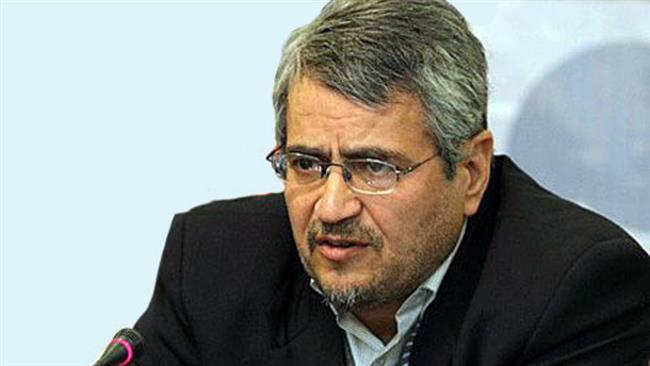
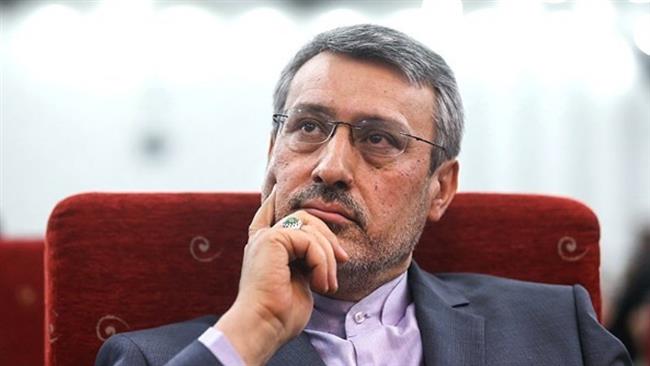
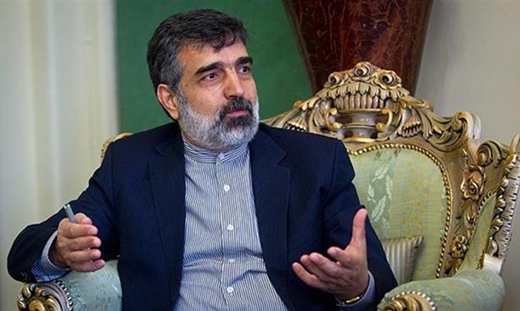
The spokesman of the Atomic Energy Organization of Iran (AEOI) has underlined that a final, comprehensive nuclear deal is achievable if past issues are settled.
Behrouz Kamalvandi has – in an interview with Arabic-language Al-Alam News Network – expounded on the main hurdles standing in the way of a nuclear deal, saying that foreign countries that are opposed to a final deal try to raise concerns among Iranians by offering their arbitrary and politically-motivated interpretations of the Additional Protocol of the NPT.
The following is the translation of excerpts of his remarks in the interview as reported by the Islamic Republic News Agency on June 8:
Different interpretations have been made of the Additional Protocol (AP) simply to derail the nuclear talks. The AP does not give general access to inspectors to visit anywhere [in Iran] anytime. Iran’s cooperation with the International Atomic Energy Agency (IAEA) is based on two basic principles: One is Iran’s agreement with the agency which dates back to before the revolution; Iran is honoring its commitments. The other is about past issues – something other than the Safeguards Agreement: agreements between Iran and the agency in the past under which they discussed past issues in the previous years.
Everybody may have their own reading of the AP. We can look back and see how it was implemented in the past.
Certainly no country is ready to allow its sovereignty to be subject to negotiations. On the one hand, we should provide answers to the questions on the activities of Iran, which is an IAEA member; on the other, we need to pay attention to the country’s sensitivity about its sovereignty.
Some in other countries seem to have tried to instill that under the AP they [inspectors] can go anywhere they seek, but the literature of the protocol does not suggest that. At home, that question has raised genuine concerns. Studying the original text of the AP can help ease such concerns.
That the AP is to be implemented in the future is one question and how it is interpreted is another. […]
Iran has a bad experience. Iran’s military sites were visited over the past several years and samples were taken, but the West made a fuss over it. People in Iran are now worried that the West may want to take advantage of the country again in the future, but the AP seems to have blocked their path.
Under Clause C of Article 5 of the AP “Any location specified by the Agency, other than locations referred to in paragraphs a. and b. above, to carry out location-specific environmental sampling, provided that if ………. is unable to provide such access, ………. shall make every reasonable effort to satisfy Agency requirements, without delay, at adjacent locations or through other means.” The agency takes samples away to make sure nuclear materials are found nowhere else, so it does not matter if it is done inside or outside the site.
AP and interview with scientists
There is nothing about interrogation of and interview with [nuclear] scientists in the AP and the Safeguards Agreement.
If the IAEA obtains information on undeclared nuclear activities in an area and wants to substantiate the information, it can only access that area. It is far from reasonable for individuals to think the agency can interview and interrogate the scientists one by one.
IAEA should first verify documents
We have always said the UN nuclear agency should first verify the available documents. The documents the agency is handed are pieced together mainly by intelligence services, especially those of the Zionist regime.
Fake documents should result in no access
When it comes to judicial affairs, the credibility of the documentation and competence of the court which is to hear the case should be reviewed. We have already said no access should be granted if the available documents are fake. If the agency grants access based on fake documents, there will be no end [to such access].
Past issues should come to an end. Westerners have used different names to refer to past issues; “Possible Military Dimensions” (PMDs) is the most recent name. […]
Iran’s past activities should be put aside. The agency’s review [of Iran’s past activities] should not continue forever. What if the IAEA does not become convinced over the next 50 years? Iran does not have to explain the alleged studies and other baseless claims of the IAEA and intelligence services. […]
Parchin, 11-12 sampling
[…] The UN inspectors did sampling in Parchin twice: four on one occasion and seven or eight times on another. The agency is expected to have come to a conclusion after 12 years of [Iran’s] cooperation and access [to Iran’s information].
[…] The agency’s director general says in his report that Iran has provided answer only to one of the two questions, but he fails to elaborate on the second question. They [the agency] are talking with ambiguity.
As many as 18 questions have been raised in talks between Iran and the IAEA of which 16 have been settled. Iran views the last two questions settled too. One is the neutron transport calculation, which has been published as a scientific article in a university. They made ballyhoo that the article has been prepared for military and bomb-making purposes. We said the university would not have published the article if it had been prepared for developing bombs.
[…]
Iran ready to give access to Marivan
When we said – verbally, in writing and at meetings – if the agency is certain about an explosion in Marivan, it should determine the exact point in order to get access to, the IAEA halted its efforts to solve the remaining two issues.
If they come and see no explosion has taken place in the area, what can they say? If they confirm no explosion has happened, it will prove they have been fed misinformation.
Why should we give information? When the agency claims there was an explosion in that area, it can determine the exact point and get information on it. The agency says it wants information, not access. What information should Iran provide the agency with when there is none?
The agency seems to have been duped by those who have provided the information; in the past the agency had held up the information as reliable.
Unfortunately, the problem is that the IAEA’s reports have been repeated with the agency jumping to conclusion beforehand. The agency, which has reached conclusion without verification, has to deal with the party which has provided misinformation.
US plot for designing intelligence bomb
The issue seems to be associated with the case of Jeffrey Sterling and Operation Merlin [a US covert operation during the Clinton Administration to provide Iran with a flawed design for a component of a nuclear weapon ostensibly in order to delay the alleged Iranian nuclear weapons program, or to frame Iran] during which the CIA intelligence was leaked.
This was not done out of sympathy for Iran. They lodged complaints against the spy, asking why he had leaked the information about a US plot in 2003. Under the plot, Iran was supposed to be provided with information on a flawed design for a nuclear weapon so that the US could frame Iran and claim Tehran had been studying how to make a bomb. Fortunately, Iran has not fallen into such traps.
The question speaks for itself and shows a politically-motivated plot is in play behind the scenes.
[…]
Iran accepts logical interpretation of Additional Protocol
Naturally Iran accepts a general interpretation which is based on a general consensus of all nations, not one of which anybody can develop its own interpretation. Some inside Iran are sensitive about this issue, saying the other side’s interpretation serves as an excuse to access all sites.
This is not how the AP works. It is to the benefit of all nations that all parts of the protocol are discussed in the agency. Clause C of the AP’s Article five is very clear. […]
The safeguards too can be misused by an expanded interpretation. We shouldn’t approve of such interpretations.
Now that we are moving toward [signing] the AP, foreign countries say they can get access to any place they wish, but it is not the case. What they say has also raised concern inside Iran.
We are negotiating the middle ground
We need to look for a happy medium to remove such concerns. We hope to find a solution which takes into account Iran’s rights and its bitter past experiences.
If other countries act like Iran, give access to information and then find themselves back at square one, can they be still ready to continue their cooperation? These are the issues Iran has raised in the talks. […]
Before going into detail, we need to let go of cynicism which is the result of measures taken by some individuals in foreign countries who wrongfully interpret Iran’s cooperation under the AP. This has also caused concern in Iran. Such an interpretation can throw obstacles in the way when Iran’s signing of the protocol needs to clear the Iranian parliament.
Consultation with parliament
[…] We are holding consultations with the Islamic Consultative Assembly about what we should do. Parliament has its own concerns, saying sanctions should be lifted once and for all and access [to military sites] should not harm the country’s sovereignty. […]
Sanctions and transparency still under negotiations
[Removal of] Sanctions and transparency remain to be the toughest part of the talks. […] Talks are ongoing. A look back at the talks shows that we have made a lot of progress compared to the past. We have reached common ground.
[…] You frequently hear this sentence: we can reach settlement, if the other party shows determination. I think we can still repeat that sentence. […]
What happens in absence of John Kerry and Ali Akbar Salehi
Mr. Salehi has always been informed of the talks, indirectly though. Currently there is no need for him to attend the talks, but he will be kept posted about what’s going on. He will be well enough in one or two weeks to get directly involved in the negotiations. […]