Tuesday, December 23, 2025
Home Blog Page 4782

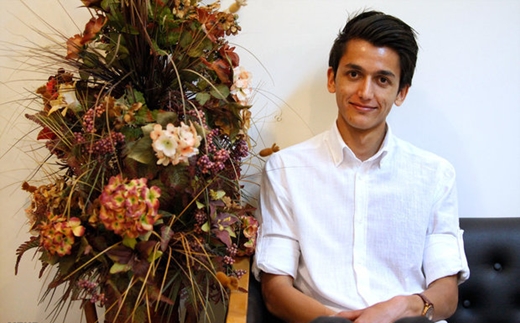
Meet Iran’s next Bill Gates: a dropout-medical student

1783357

A young scientist, computer programmer and inventor, named Sajjad Yaghoubi has grabbed the media’s attention nationally and somewhat internationally in the past few years.

The tall, skinny and olive-skinned Yaghoubi was born 23 years ago in Maku, a city in the extreme northwest of Iran – in West Azerbaijan Province.

Born into a middle-income family, Sajjad was the third of four children and the only son of the family. He completed primary school all the way to high school in his small hometown of Maku.

However, the small-sized town with only a few learning facilities and a limited number of educational centers couldn’t bring him down.

Already at an early age he began to satisfy his curiosity in robots by dismantling toys and machines in order to figure out the function of each part.

If that weren’t bad enough, he would even sell his stuff to buy robot parts.

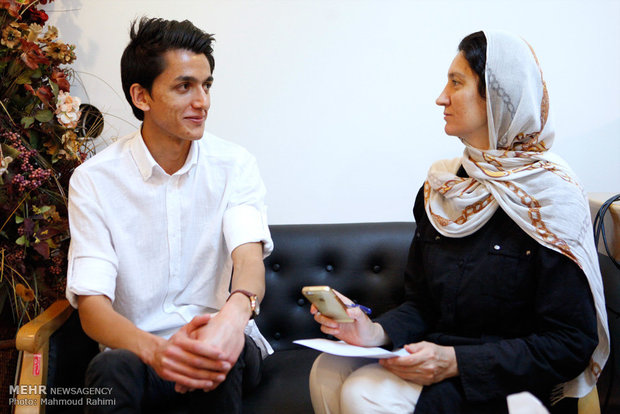
On that topic, Sajjad even had a story to recount for the Tehran Times.

On one of his birthdays, his father surprised him with a brand new cell phone as a birthday gift. The very next day, however, when his father could not locate his son via his cell phone, Sajjad had to confess that he had sold the pricey phone in exchange for some robotic parts for his next creation.

During 6th grade, with no guidance at his disposal, Sajjad tapped into the world of ‘robotics’.

Although it only seemed an interest to him at first, the field of robotics would open up many possibilities to him later on and win him plenty of awards.

On his journey into the robotics world, Sajjad encountered a lot of “naysayers” who mocked him and tried to cast a gloom over his dreams, but little did they know that his strong resolve would block out all of them.

It goes without saying that Sajjad must’ve had wonderful mentors along the way. In fact, he named his father and late uncle as his inspirational and motivational gurus.

Since his town of residency had a limited number of books available to the public, particularly on his favorite topic, robotics, Sajjad’s uncle, whom he called a genius, mailed out around 20 books on biology and robotics to him each month from Tehran.
“I would read the books voraciously, knowing full well that more would be on the way in the following months to get my hands on,” he recalled.

In addition to winning the first nationwide award in robotics while still on his second year of junior high school, Sajjad also took the second place at the Robocup World Competition in Germany in 2009, and got gold medal in Belgium at the World Invention Competition in the same year.

Ever since Sajjad was a young boy, he knew he wanted to contribute to the world and help people. But it wasn’t until he arrived in high school that he reaffirmed his obligation to the world and rechanneled his energy to incorporate robots into the medical industry to assist the ailing people.

While still in high school, he built somewhere around 40 different robots: from soccer, humanoid, autonomous, rescue and earth quake rescue robots to aerial, basic surgical, agricultural, military and industrial path finder robots.

As a high school student, Sajjad won numerous prizes at various competitions including: first place at the Malaysian invention innovation technology competition, best special prize at the Korean under 18 world inventions Olympiads, and the special prize of best under 18 inventor in Asia.

One of his inventions, which Sajjad takes great pride in, is called the “eye exercise equipment”. The device, patented in his name when he was only 16, isolates the extraocular muscles and relieves eye tiredness in just five minutes by improving the blood circulation in them.

The useful equipment is already out in the market in Turkey and goes for $400.

After graduating with honors from high school, Sajjad decided to go abroad to further his education in an area where Iran had already lagged behind due to years of sanctions imposed by the West.

Higher education institutions in the United States and Europe were off limits since his mother wasn’t willing to send her sole beloved son to faraway lands.

So, Sajjad picked Turkey where he had already been granted a scholarship from Bahcesehir University department of medical school in Istanbul.

A year after his arrival in Turkey, he began observing surgeons in operating theaters where he got to assess the design flaws of medical equipment used during surgeries in order to improve their precision.
It was then that Sajjad decided to launch his company and began selling his inventions, his company runs successfully to this day in Turkey.

While in university, Sajjad continued his outstanding performance, which once again won him many more medals and accolades in competitions.

The list includes: gold medal at the invention world competition in Germany in medical field 2011, silver medal at the Russian innovation and technology contest in 2011, the world’s best & youngest inventor of 2012 in Croatia, gold medal at the European and World Competition in Romania in 2012 in medical field, gold medal for the largest invention competition in the world in Geneva, Switzerland, in 2013, gold special prize of USA invention competition as the best creative inventor in 2014, best paper of world medical student congress in Ankara, Turkey in 2014; he was awarded the youngest peace spokesman from Iran and turkey in USA model UN students congress 2014, and last but not least he took the 3rd place at the Geneva invention competition 2015.

Sajjad told the Tehran Times that in January 2016 he will participate at CES, a global consumer electronics and consumer technology tradeshow, in Las Vegas, Nevada to present his latest inventions.

He continued to study medicine for three years until one day he decided the world of academia wasn’t feeding his dream fast enough since he wanted to undertake research in operating rooms.

Sajjad decided to call it quits and leave the academic world behind in Turkey. He is now planning to move to the States, to pick up where he left it off in Turkey and to get on with his dream projects.

With a company in Turkey already established under his name and a new office in Tehran, the third-year college drop-out has made a name for himself so much so that his name is known to everyone in his hometown.

With 15 patents, so far, under his name, and surely many more to come, Sajjad’s mind is constantly buzzing with new ideas, trying to find solutions for unsolved problems.

It is just a matter of time before Sajjad’s name captures the world’s attention and becomes an international icon with his new discoveries and inventions.

Beyond a shadow of a doubt, Sajjad has made a leap at such a young age; he already has fame and wealth.
1783354

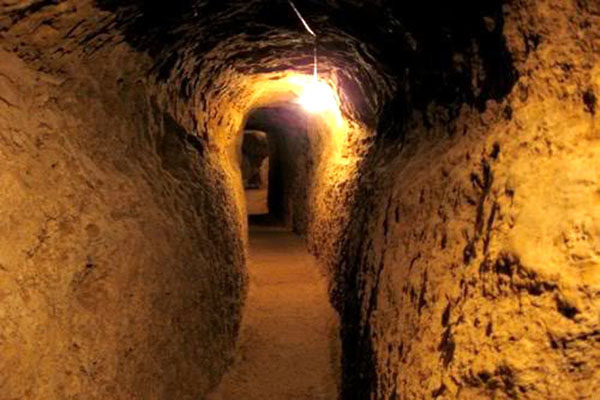
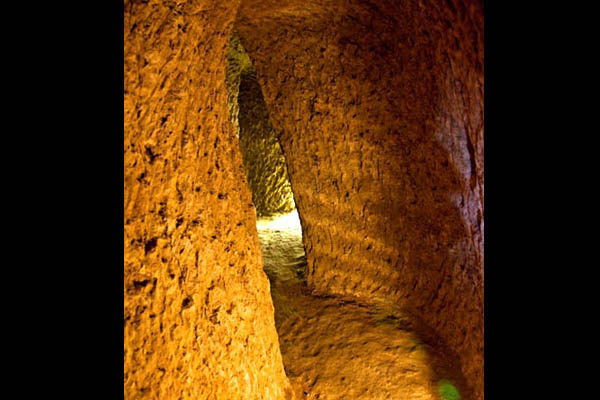
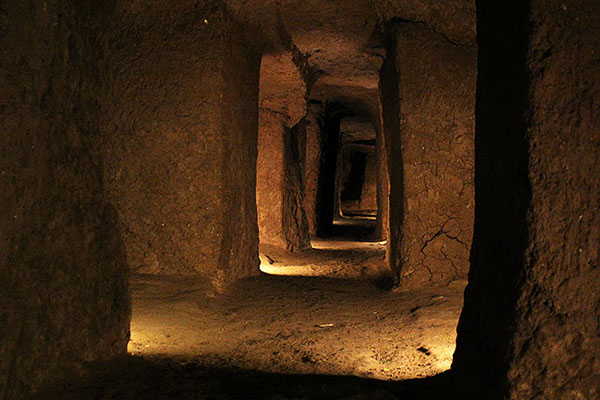
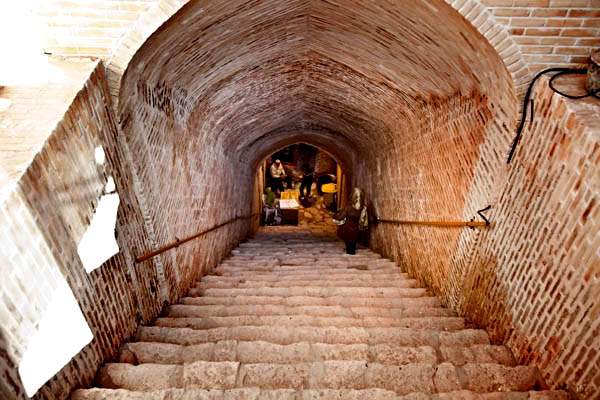
Iran in Photos: Underground City of Nooshabad

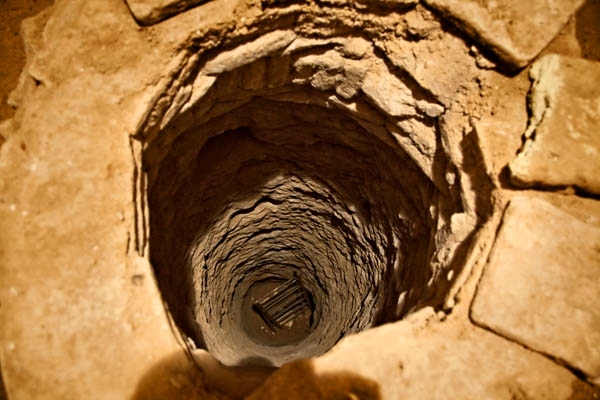
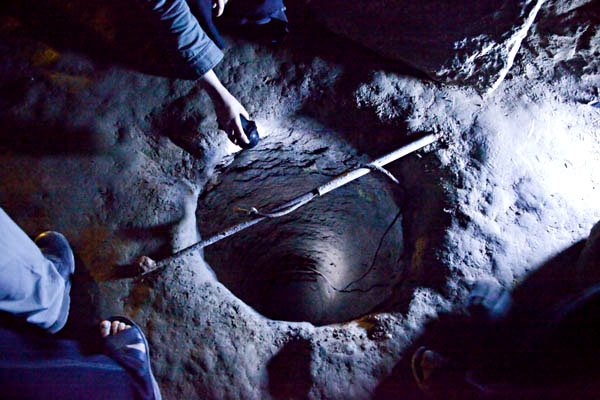
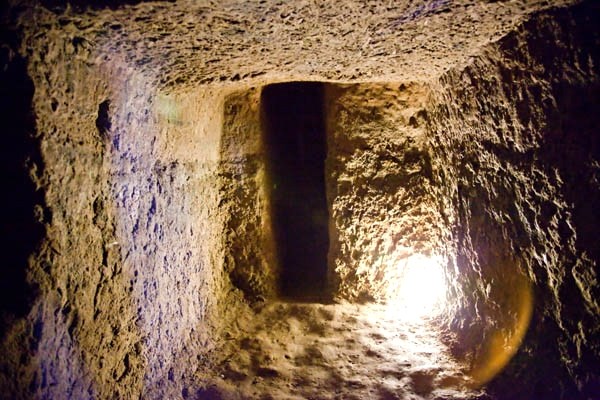
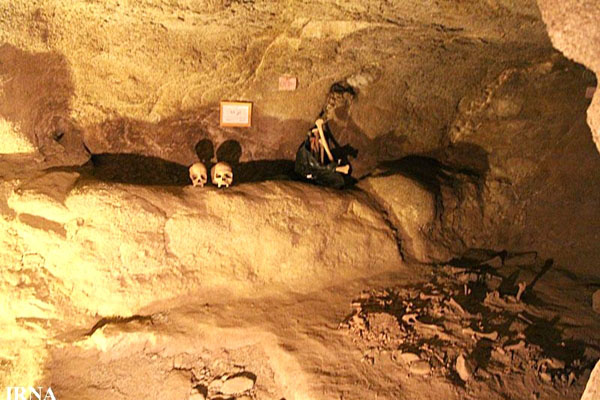
Underground city of Nooshabad

Nooshabad, which was discovered by chance during a construction project, was initially built to protect city dwellers against invasion and plundering, particularly during the Mongol invasion of Iran.

The 3-story underground city is between 4 and 18 meters in depth and is thousands of square meters in area.

Images of the underground city of Nooshabad posted online by hamshahrionline.ir:

A look at Iranian newspaper front pages on August 4

Iranian Newspapers Headlines

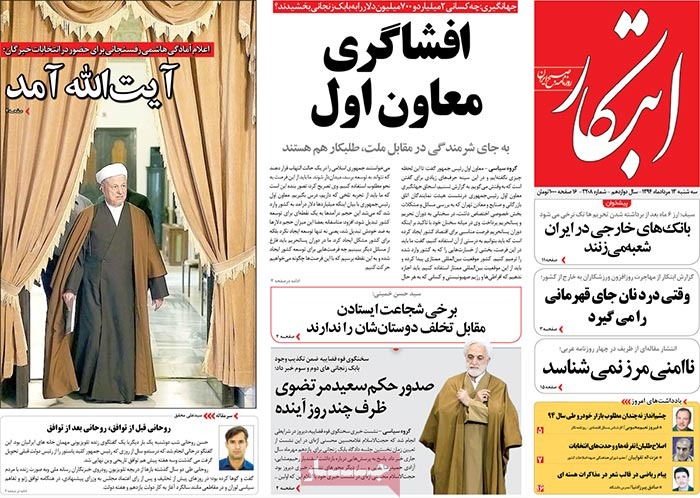
What the first vice-president said and what he didn’t say about corruption during the previous government’s term in office dominated the front pages of Iranian newspapers on Tuesday. Reformist dailies put an announcement by the chairman of the Expediency Council about his candidacy in upcoming Assembly of Experts on their front pages. Principlists continued to lash out at President Rouhani for his comments during a prime-time televised speech on Sunday.


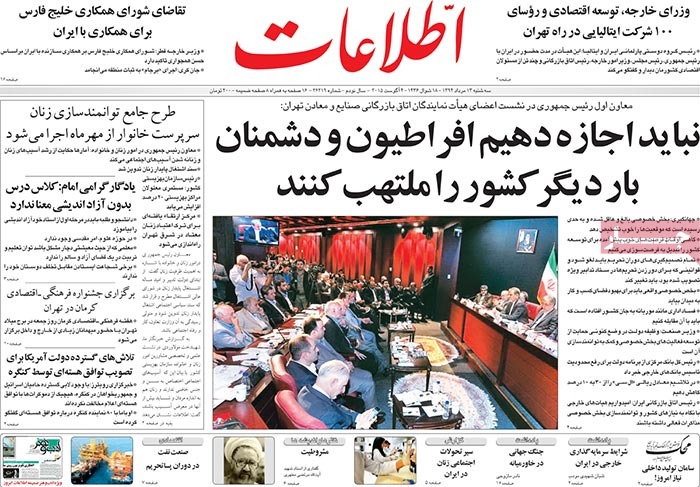
Ettela’at: “We should not allow hardliners and the enemies to stir things up in the country once again,” said the first vice-president at a meeting with members of Tehran Chamber of Commerce, Industries and Mines.

Eshagh Jahangiri further said the private sector is mature enough to seize trade opportunities.


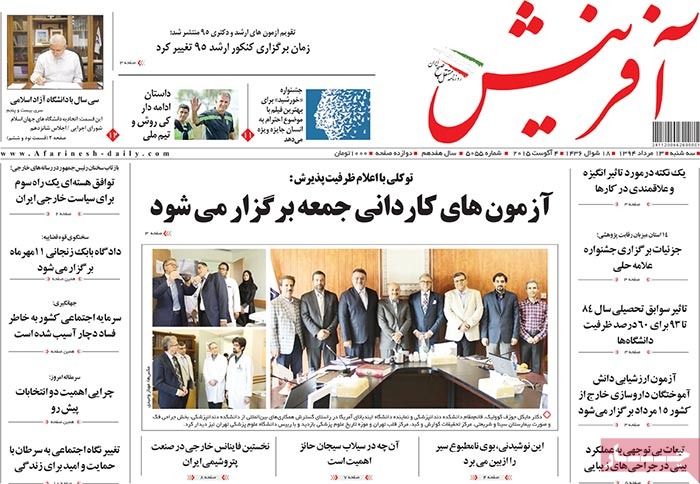
Afarinesh: “The trial of Babak Zanjani [a young billionaire who stands accused of massive corruption when Ahmadinejad was in office] will open on October 3,” the judiciary spokesman said.


A look at Iranian newspaper front pages on August 4


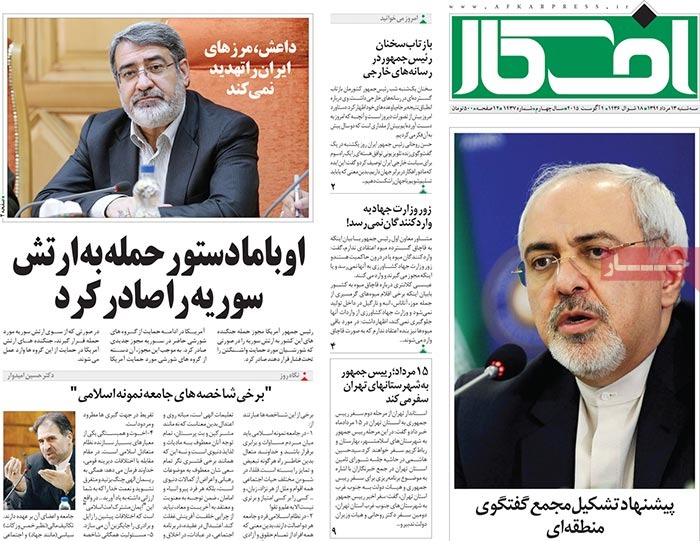
Afkar: “IS does not pose a threat to Iran’s borders,” said the Iranian interior minister.


A look at Iranian newspaper front pages on August 4


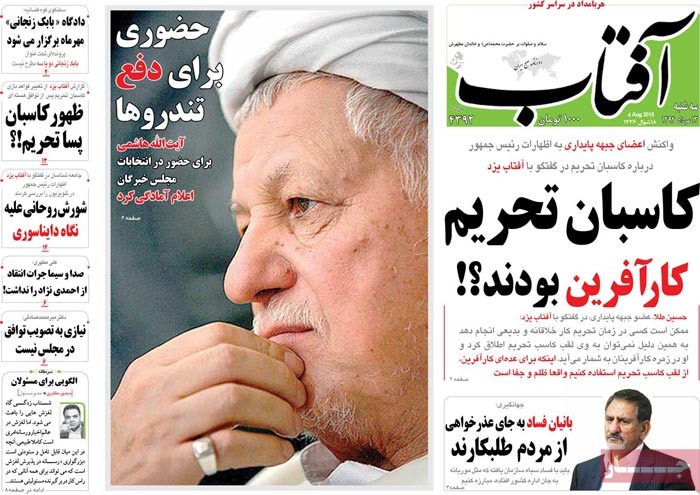
Aftab-e Yazd: Participation to repel hardliners

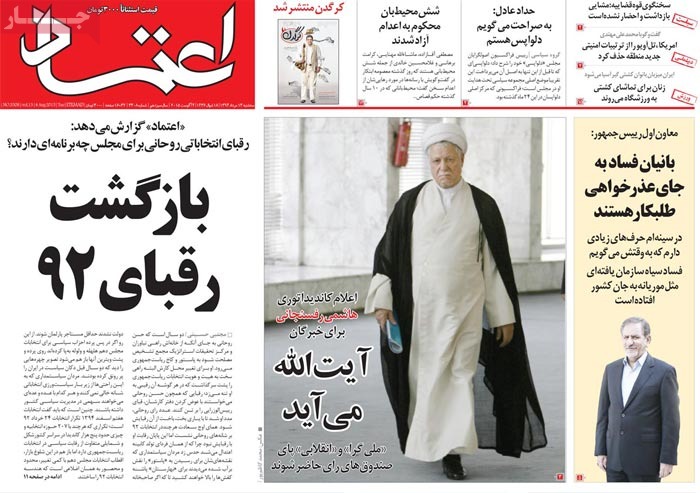
Ayatollah Rafsanjani has signaled his readiness to run for the Assembly of Experts.

Aftab-e Yazd: “Instead of apologizing, those behind corruption act as if they are owed by members of the public,” said First Vice-President Eshagh Jahangiri.


A look at Iranian newspaper front pages on August 4


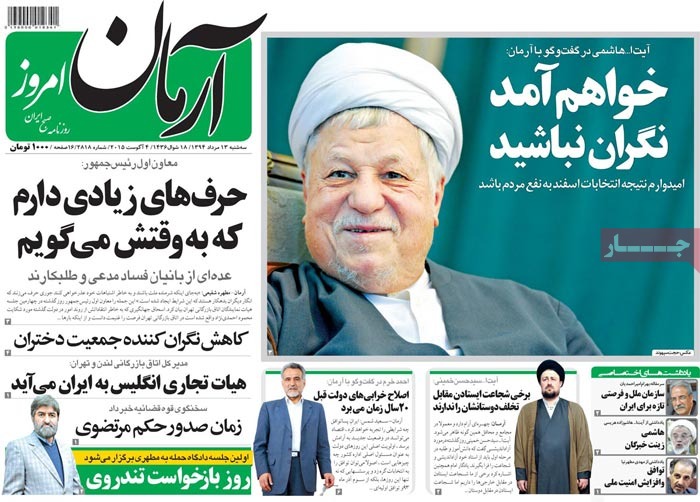
Arman-e Emrooz: “I have many things to say; I’ll make them public all in due time,” said First Vice-President Eshagh Jahangiri.

Arman-e Emrooz: Extremism on trial

Those who attacked Tehran MP Ali Motahari when he traveled to Shiraz for a planned speech will appear in court on Tuesday.

Arman-e Emrooz: “It takes 20 years to fix the problems caused by the previous government,” said Ahmad Khorram, a former transport minister.


A look at Iranian newspaper front pages on August 4


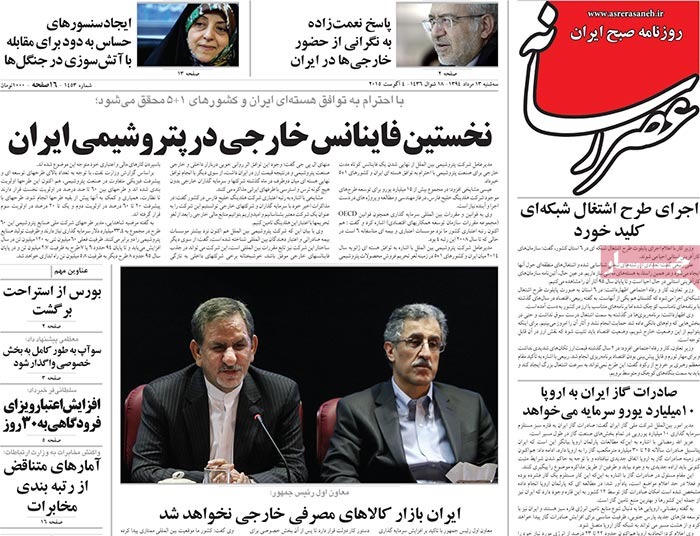
Asr-e Rasaneh: The director of the Environment Protection Organization has said that smoke alarms will be installed in forested areas to detect forest fires.


A look at Iranian newspaper front pages on August 4


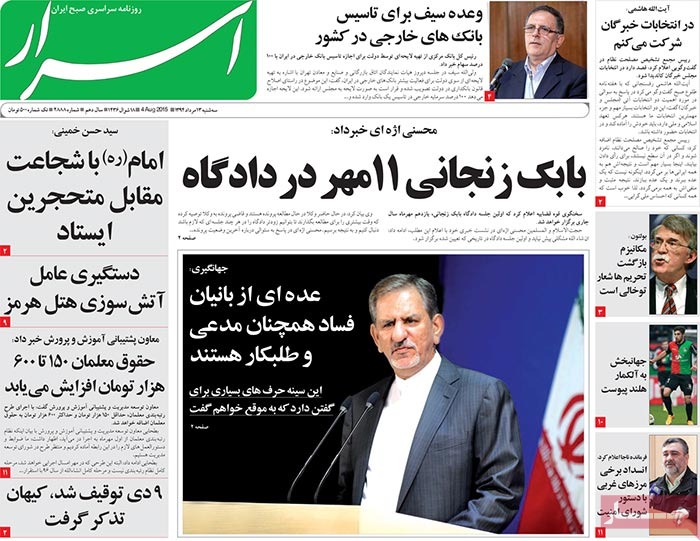
Asrar: The arsonist who set fire to Hormoz Hotel in the southern port city of Bandar Abbas has been arrested.

Asrar: Dey 9 [a weekly run by hardline MP Hamid Rasaei] has been banned; Kayhan has been given an admonition.


A look at Iranian newspaper front pages on August 4


Ebtekar: “Foreign banks are to set up branches in Iran,” said the governor of the Central Bank.

Valiollah Seif further said six months after the termination of sanctions, a single foreign exchange rate will be introduced in the country.

Ebtekar: “A verdict in the case of Saeed Mortazavi [a former director of the Social Security Organization who is on trial, among other things, for corruption] will be issued within days,” said the judiciary spokesman.

Gholamhossein Mohseni Ejei denied the existence of a second or third Babak Zanjani [a young billionaire who stands accused of committing massive embezzlement when Ahmadinejad was in office]


A look at Iranian newspaper front pages on August 4


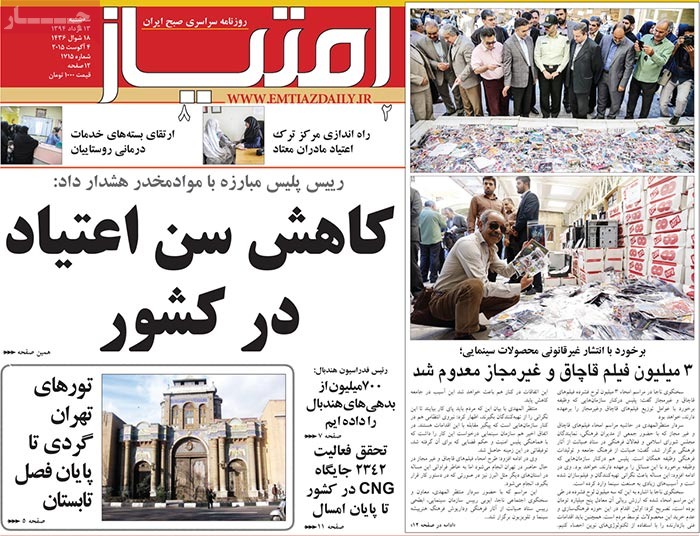
Emtiaz: A rehabilitation center for addicted mothers has been set up in eastern Tehran.


A look at Iranian newspaper front pages on August 4


Etemad: “Frankly, I am worried [about the nuclear deal Iran has struck with P5+1 in Vienna,” said Tehran MP Gholamali Haddad Adel.


A look at Iranian newspaper front pages on August 4


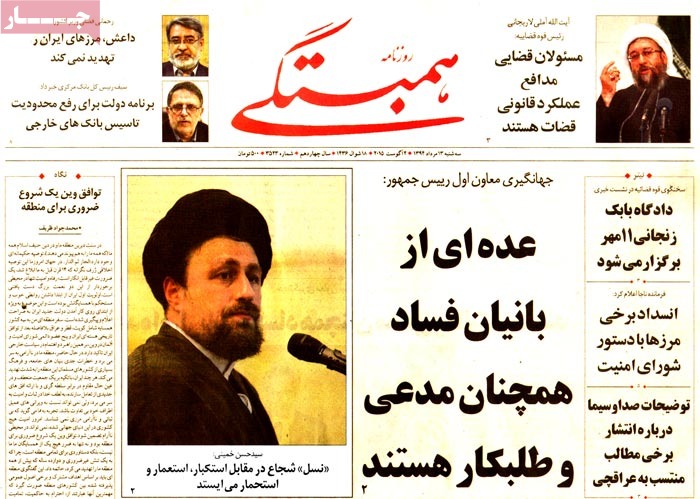
Hambastegi: The police chief has said law enforcement is blocking some border areas following an order issued by the Supreme National Security Council.


A look at Iranian newspaper front pages on August 4


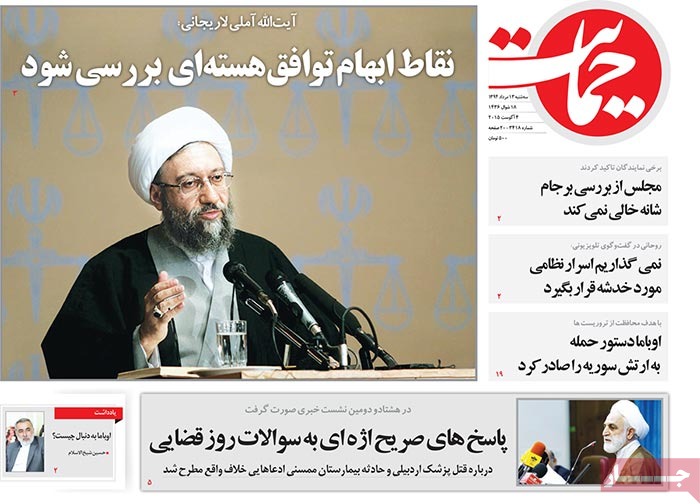
Hemayat: “The gray points of the nuclear deal will be examined,” said Judiciary Chief Ayatollah Sadegh Amoli Larijani.


A look at Iranian newspaper front pages on August 4


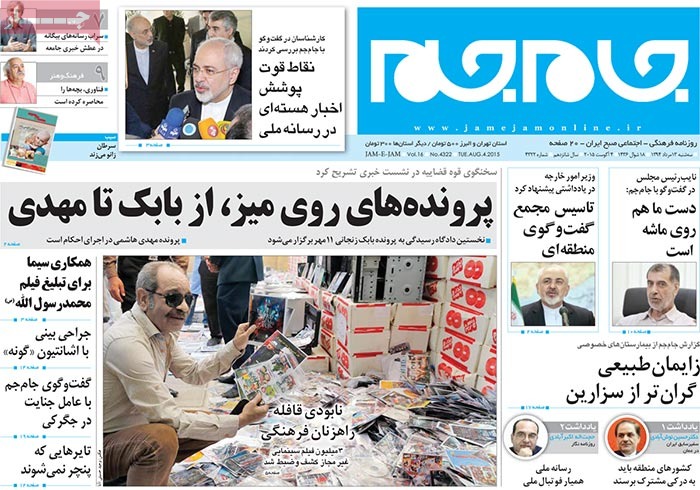
Jamejam: The Iranian foreign minister has proposed the formation of an assembly for regional dialogue [in an opinion piece published by four Arabic-language papers in the Middle East].


A look at Iranian newspaper front pages on August 4


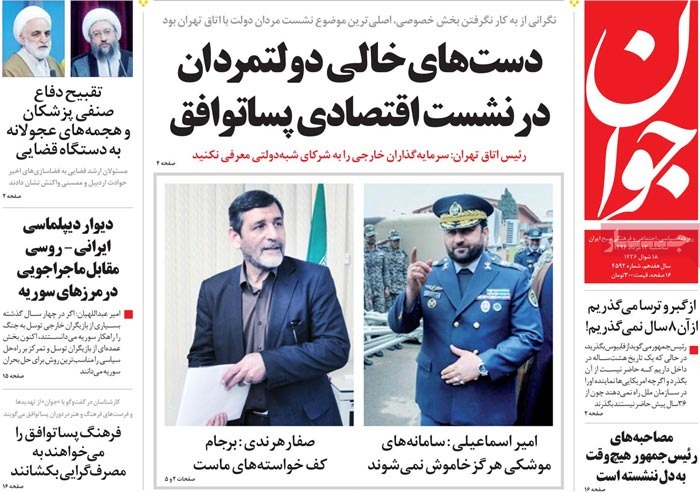
Javan: “Iran’s missile defense system won’t be switched off,” Brigadier General Farzad Esmaili, the commander of Khatam al-Anbiya Air Defense Base, said.


A look at Iranian newspaper front pages on August 4


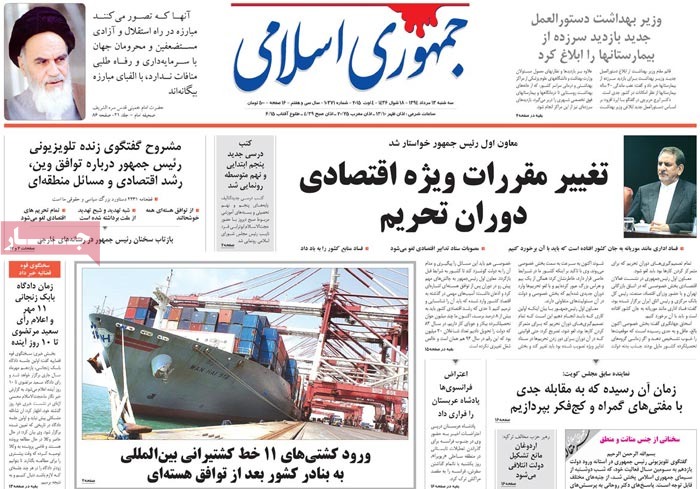
Jomhouri Islami: Ships belonging to 11 international carriers have docked at Iranian ports following the nuclear deal of July 14.


A look at Iranian newspaper front pages on August 4


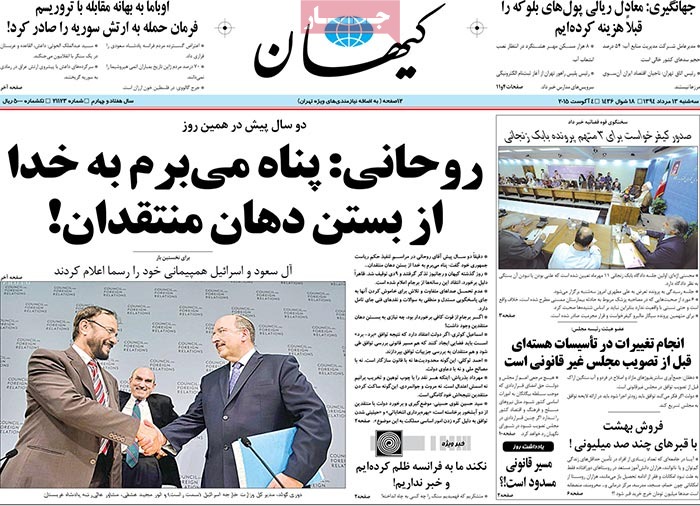
Kayhan: Saudi Arabia and Israel have for the first time announced their official alliance.

Kayhan: “I seek refuge in God from muzzling the critics!” President Rouhani said two years ago today.

[The sarcastic banner headline was in reaction to the closure of a hardline weekly and the admonition Kayhan received from relevant officials for their coverage of the nuclear deal between Iran and P5+1.]


A look at Iranian newspaper front pages on August 4


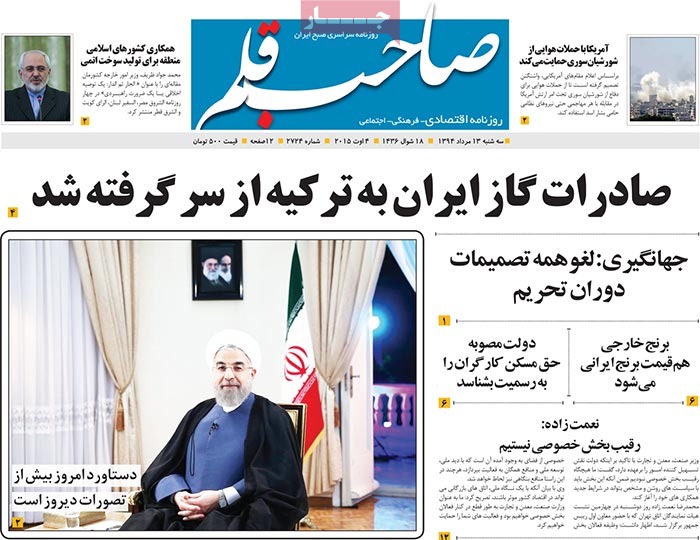
Saheb Ghalam: Iran has resumed exports of natural gas to Turkey.

Saheb Ghalam: The minister of trade has said his ministry does not act as a rival to the private sector.


A look at Iranian newspaper front pages on August 4


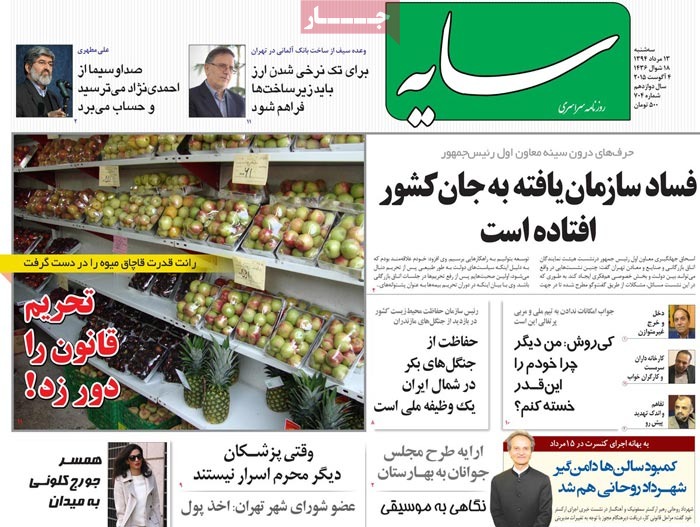
Sayeh: “Islamic Republic of Iran Broadcasting [IRIB] was afraid of Ahmadinejad and wouldn’t do anything to cross him,” said [outspoken] Tehran MP Ali Motahari.


A look at Iranian newspaper front pages on August 4


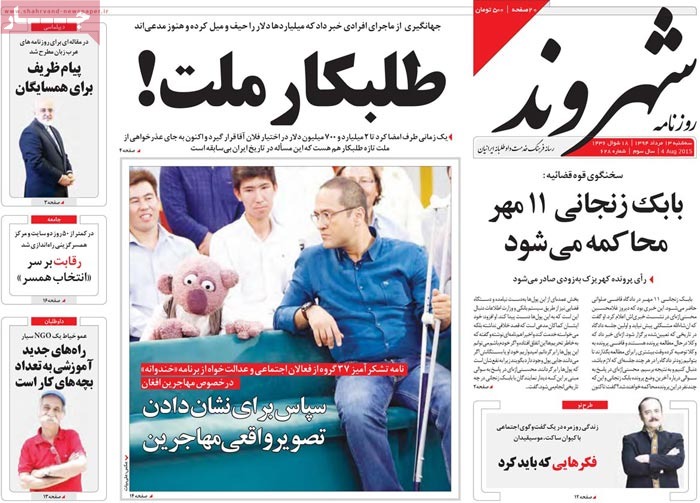
Shahrvand: Twenty-seven social activists have sent a letter to Khandovaneh, to thank the host of the popular TV show for painting a realistic picture of Afghan immigrants.


A look at Iranian newspaper front pages on August 4


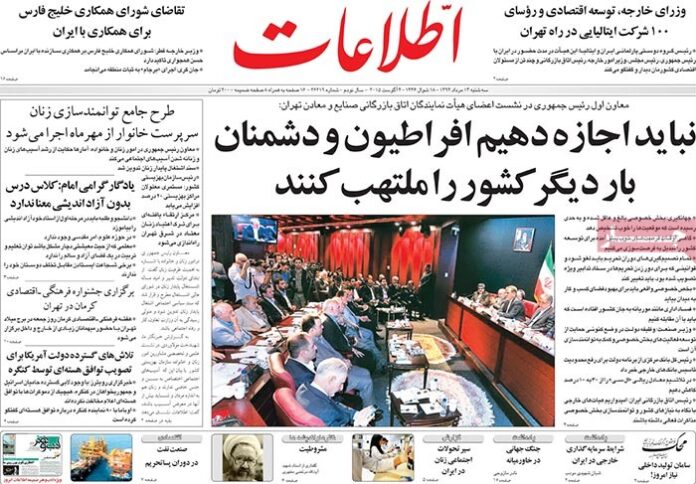
Highlights of Ettela’at newspaper on August 4

Ettelaat-August4

 “We should not allow hardliners and the enemies to stir things up in the country once again,” said the first vice-president at a meeting with members of Tehran Chamber of Commerce, Industries and Mines.

Eshagh Jahangiri further said the private sector is mature enough to seize trade opportunities.

 The Italian ministers of foreign affairs and economic development are to visit Iran at the head of a delegation which also includes the top executives of 100 Italian firms.

During its stay in Tehran the Italian delegation will meet, among others, with the president, parliament speaker, foreign minister and the chairman of the Chamber of Commerce.

 The Persian Gulf Cooperation Council [PGCC] has called for cooperation with Iran.

The Qatari foreign minister has said that PGCC favors constructive cooperation with Iran based on the principle of good neighborliness.

 A plan to empower women who head families will be implemented as of late September.

The news came after the drafting of a document to create sustainable jobs for women was completed.

 The grandson of the late Imam Khomeini has said education loses its meaning in the absence of freethinking.

Seyyed Hassan Khomeini further said university and seminary students should first learn from their teachers how to become a freethinker.

 Tehran is to play host to a Kerman cultural and economic festival.

A number of local and foreign guests will attend the festival at the capital’s Milad Tower.

 The Obama administration is making extensive efforts to have the Iran nuclear deal approved in Congress.

Despite extensive lobbying by Republicans and supporters of Israel, Democrats on Capitol Hill have not opposed the deal yet.


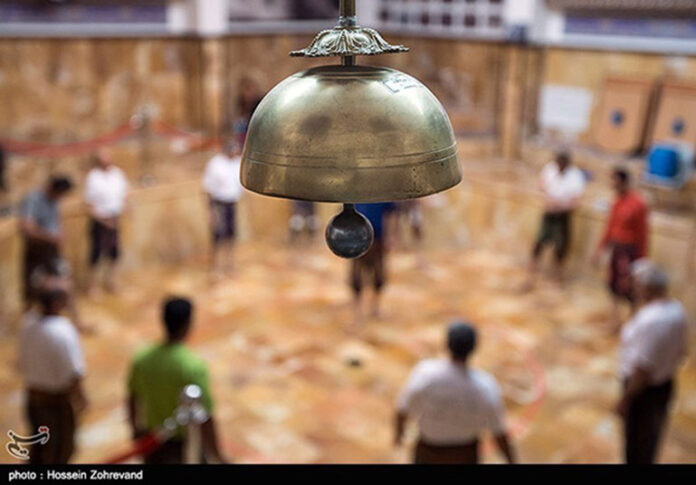
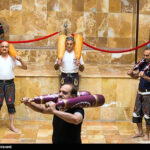
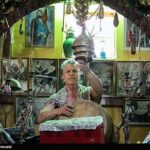
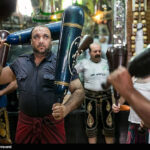
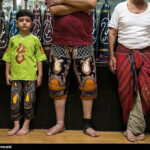
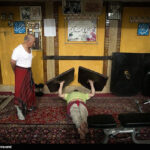
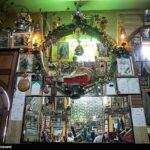
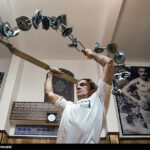
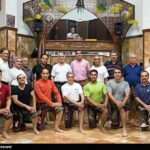
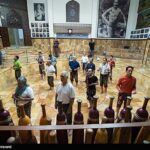
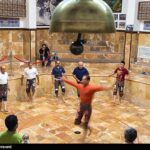
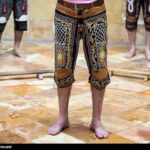
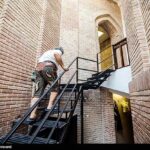
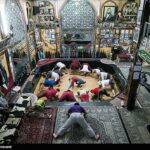
Zoorkhaneh (PHOTOS)

Zoorkhaneh00

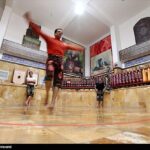
Zoorkhaneh (traditional Iranian gymnasium) features a system of athletics originally used to train warriors. It is believed to have been pioneered by Pourya-ye Vali, who was famous for his chivalrous behavior and strength, about 700 years ago.

The traditional sport is assumed to be much older; ancient Iranians practiced traditional wrestling to build up their physical stamina.

Images of Zoorkhaneh posted online by Tasnim News Agency:

Germany to set up Bank in Iran: Official

139404111551065115612554

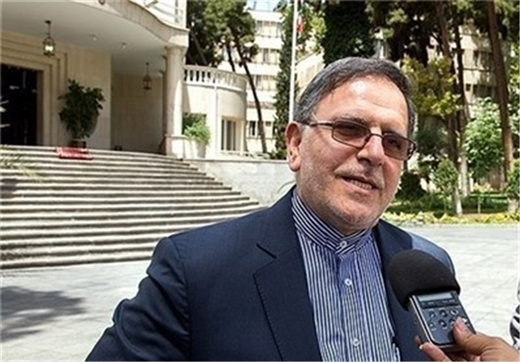
Central Bank of Iran (CBI) Governor Valiollah Seif announced that in a recent visit by a high-ranking German delegation to Tehran, it was agreed that Germany establish a bank in Iran.

In a meeting with representatives of Tehran Chamber of Commerce, Industries, Mines and Agriculture on Monday, Seif said that there is no restriction for foreign banks to establish financial institutions in Iran.

“According to the regulations of free trade zones, foreign investors can establish new banks or bank branches in these zones,” he said.

Seif further pointed to his recent meeting with the German economic delegation, saying it was decided in the meeting that the Germans launch a bank in Iran.

Back on July 19, a 100-strong German delegation, headed by Vice-Chancellor and Minister for Economic Affairs and Energy Sigmar Gabriel, arrived in Tehran to meet with top Iranian officials and hold talks on ways to boost economic ties.

[…]

Experts believe that Iran’s economic growth will rise remarkably after a nuclear deal it struck with world powers on its nuclear program in July takes effect.

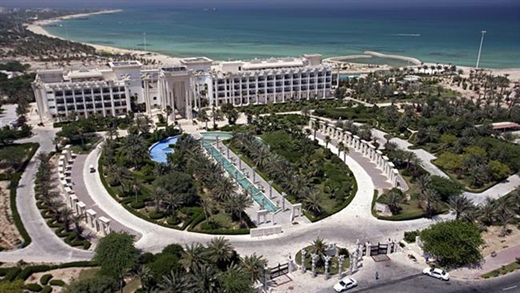
Iran billed ‘most lucrative’ hospitality market

fa6898dc-b904-4f1b-b5bf-8503e31fc828

Hotel groups in Persian Gulf Arab states are seeking to boost their portfolios in Iran as they see the country emerging as the most lucrative hospitality development market.

Iran has an ambitious target to increase annual visitor count by five folds to 20 million by 2025 in order to generate $30 billion a year.

International hoteliers are heartened by the plan and spurred by the recent finalization of nuclear talks, they see the ground being paved for expansion of the country’s infrastructure and industrial base.

“There has already been talk of an investment of $185 billion in oil and gas projects, as well as further development of the country’s metals and automotive industries, while general trade is certain to rise which will give a tremendous boost to the region,” president and CEO of UAE-based Cristal Hotels Peter Blackburn says.

The legion of traders, entrepreneurs and politicians is already trickling in and Tehran is struggling to offer suitable and sufficient accommodation.

“In addition to business interests, there is considerable demand for Iran as a new tourism destination,” Blackburn told the Arabian Business.

“And we can see potential to grow in all sectors in the country, taking advantage of new financial incentives as well as the transformation of the image of Iran in global markets,” he added.

According to Iranian officials, hotel groups from Germany, Greece, South Korea and Singapore have recently traveled to Iran for talks.

Europe’s largest hotel group Accor is reportedly building two four-star hotels at Imam Khomeini International Airport outside the Iranian capital.

The UAE-based Rotana plans to open a five-star 600-room hotel in Tehran this year and another in the pilgrimage city of Mashhad.

Head of the Iran Touring and Tourism Investment Company (ITTIC) Mohsen Gharib has said the country has to prepare for a “tsunami” of foreign tourists. But the torrent is on course to pose serious challenges, given Iran’s underdeveloped hospitality market.

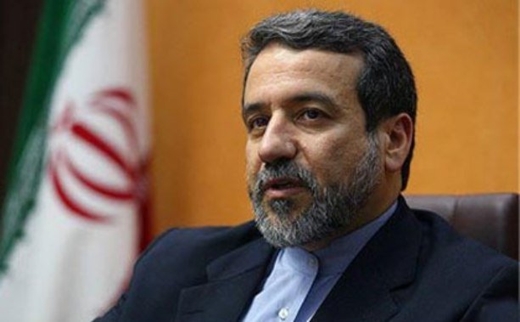
Majority of Iranians support JCPOA: Araghchi

araghchii

Deputy Foreign Minister and top nuclear negotiator Seyyed Abbas Araghchi said on Monday that according to opinion polls the majority of Iranians support and are pleased with the Joint Comprehensive Plan of Action (JCPOA).

The deputy foreign minister who made the comment at a meeting with university researchers and media analysts did not offer statistics on the opinion polls he mentioned.

[…]

Araghchi praised the political growth and maturity of the general public in recognizing national interests and the macro-scale security sensitivities of the country, giving them assurances that President Rouhani’s Cabinet tries to observe maximum transparency in informing the public.

“With all due respect for surveys on Iranian nation’s opinion of JCPOA, the agreement’s international and regional aspects are worth thorough review,” said the top member of the Iranian nuclear negotiation team.

US playing with ISIL pawn: Iran parliament speaker

ad45e974-0b7a-46a2-9cf1-79e123cb1b47

Iranian Parliament Speaker Ali Larijani says the United States is using the ISIL Takfiri terrorist group as a means to advance its own interests in the region.

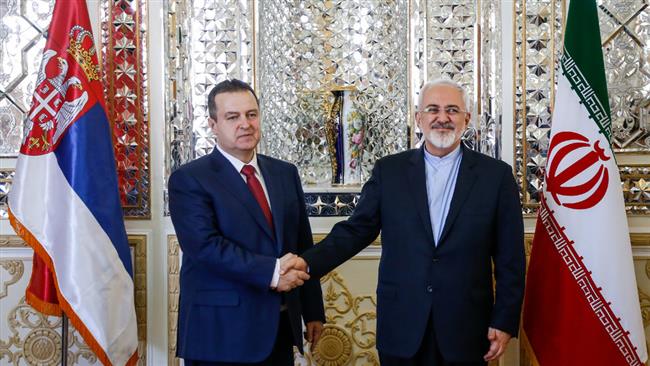
“It seems that the US is playing with the ISIL pawn in the region,” Larijani said Monday in a meeting with visiting Serbian Foreign Minister Ivica Dačić.

The top Iranian legislator said that a lack of serious efforts by the US in dealing with ISIL has enabled the terrorist group to freely operate in the region.

Larijani said such a policy has further emboldened ISIL terrorists to press ahead with their crimes, which is detrimental to peace and security in the region.

Drawing a comparison between the developments in the Balkans in the early 90s and the current situation in the Middle East, Larijani said in both cases “intervention by outside elements” hampered the restoration of tranquility.

The Serbian foreign minister, for his part, criticized the international community’s double standards vis-à-vis the war on terror, saying the policy has exacerbated violence and extremism.

Dačić slammed the big powers for their interventionist policies in various parts of the world, saying they sow discord among ethnic and religious groups with the aim of disintegrating big countries.

He said such policies further intensify instability across the world.

Iran-Serbia business council to meet

Earlier in the day, Dačić also met with Iranian Foreign Minister Mohammad Javad Zarif and the two top diplomats discussed ways of boosting bilateral relations, especially in business and economic fields.

During the meeting Zarif welcomed a proposal by Dačić for the holding of the 14th Iran-Serbia Joint Economic Committee.


cc8ae8eb-40ad-4914-a9c5-bb572e6f293c


Zarif welcomed the proposal, saying, “In this regard, an economic delegation from Iran’s government and private sectors will head for Belgrade in the future.”

Referring to the countries’ long-standing and favorable relations, Zarif expressed hope for the development of bilateral cooperation in political, economic, energy, agricultural, parliamentary, cultural, scientific, and academic areas.

The Serbian minister, for his part, voiced Belgrade’s readiness to open a new chapter in ties with the Islamic Republic in the political, economic, and parliamentary fields.

The Serbian official also felicitated Iran on the conclusion of nuclear talks between Tehran and P5+1 – the United States, Britain, France, China, Russia and Germany – in the Austrian capital Vienna last month.
First the neighbor, then the home; simply a piece of ethical advice or a strategic necessity?

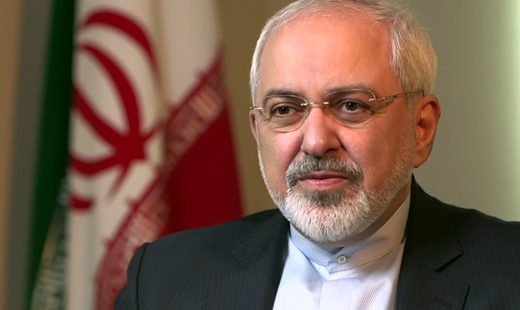
Zarif

Mohammad Javad Zarif, the foreign minister of the Islamic Republic of Iran, has published an article in Arabic in four regional newspapers, namely Lebanon’s Assafir, Qatar’s Al-Sharq, Alrai of Kuwait and Ashorooq of Egypt, in which he has described friendly ties with neighboring countries as a priority of the Islamic Republic.
The following is the translation of the article whose Farsi version appeared on the website of the Ministry of Foreign Affairs on August 3:

First the neighbor, then the home is a sagacious piece of advice underscored by the ancient tradition of our region and by the monotheistic religion of Islam, which bonds all of us together. In the modern world, this farsighted piece of advice which dates back 14 centuries is an undeniable imperative. Welfare and security will only be available [to a nation] in surroundings blessed with these two great gifts.

The first priority of Iran is to have solid, good relations with its neighbors. That [policy] has been reiterated and pursued, especially since the new government took office in Tehran. My regional tour that took me to Kuwait, Qatar and Iraq immediately after Iran struck a historic deal with P5+1 in Vienna was in line with the same foreign policy strategy of the Islamic Republic.

Presently, this region of the world is restive and exposed to grave threats which target the social foundations and the culture of many Muslim nations. Iran has built on the flexibility of its population and, at the same time, on its resistance in the face of domination to open new chapters in constructive interaction [with the rest of the world]. Thank God, this has helped it cling to stability and security. Still, it cannot remain indifferent to the massive destruction in its surroundings. Our experience has taught us that instability and unrest know no bounds. Today, the security of no country in this globalized world can be guaranteed in an insecure environment.

The Vienna accord was an imperative start for our region. Not only does it not harm the interests of any of our neighbors, but it constitutes an achievement for the entire region, because it brought to an end an unnecessary 12-year-long dispute that posed more threat to our region than anywhere else.

It is now time to get on more important things, chief among them, launching a quest that allows Iran and other regional countries to uproot the factors that fuel tension and mistrust in the region. Establishment of a regional assembly to promote dialogue in the Persian Gulf and at a later stage among all Muslim nations in the Middle East to facilitate interaction is a necessity which should have been addressed long ago.

Such regional dialogue should be based on joint goals and some general principles signed off on by regional countries. Respect for sovereignty, territorial integrity and political independence of all nations as well as for their inviolable borders, non-intervention in the internal affairs of countries, peaceful settlement of disputes, avoidance of threats or use of force, and promotion of peace, stability, progress and prosperity top the list of such principles.

We all have to accept that gone is the time of zero-sum games that suggested you either win or lose. The path to sustainable security does not go through exposing others to insecurity. No nation can cling to its interests without taking account of the interests of others. Whether we like it or not, that is an unavoidable destiny. “And do not dispute and [thus] lose courage and [then] your strength would depart; and be patient. Indeed, Allah is with the patient.” (Al-Anfal Chapter of the holy Koran, Verse 46)

This inevitability, though, does not prescribe bitter interaction with the enemies. Rather, it is a sweet process of affinity among members of a family who have been away from each other for a while. “The believers are but brothers, so make settlement between your brothers.” (Al-Hujurat Chapter, Verse 10)

Nowhere in the world is the importance of such mechanisms more evident than in the Persian Gulf and the Muslim Middle East. The need for an intelligent assessment of regional complexities and adoption of sustainable policies to counter them is undeniable. The fight against terrorism is one such example. No one can take on violent extremist groups like the so-called Islamic State – which is neither Islamic nor a state – in Iraq as they promote these groups in Yemen and Syria in parallel.

If we were to choose one of the ongoing regional tragedies as a topic to launch serious discussions about, Yemen would be a good example. Iran has put forth a rational, practical approach to end this painful, unnecessary crisis.

The four-point plan Iran has proposed calls for an immediate ceasefire, shipment of humanitarian aid to Yemeni civilians, facilitation of talks among Yemeni groups in their country and eventual formation of a broad-based government of national unity. After consultation with some neighboring countries and other players, we presented a similar initiative two years ago to help peace and stability return to Syria.

In parallel with efforts to end the crisis in Yemen, the Syria initiative can be placed on the agenda in cooperation with other Islamic countries under the auspices of United Nations mechanisms.

At the same time, these strategic talks can be used to take definitive steps and develop a better understanding to address issues such as terrorism and extremism, prevent sectarian and tribal conflicts, diversify scientific and industrial cooperation, and expand and upgrade relations among Islamic countries in the region.

Peaceful nuclear cooperation could be a perfect example of such collaboration. Iran and fellow Muslim countries in the Middle East are entitled to the benefits associated with peaceful nuclear technology in keeping with international law.

Cooperation of all regional countries to secure such objectives is imperative. Such collaboration can pursue the following: Turning enrichment facilities into a regional hub to produce nuclear fuel in cooperation with Islamic nations on the technical front, and intensifying international efforts to create a nuclear-free Middle East on the political front.

Finally, as Muslim nations of the Persian Gulf and the Middle East, our religious, cultural, political and geographical common ground give us all the necessary tools to launch constructive cooperation that benefits the people of the region and the entire world.

The numerous challenges we face in the region are so serious that we should not use ethnic issues and personal differences to hold up any longer the courageous, farsighted launch of critical cooperation to target the root causes of unrest in the Muslim Middle East, the Persian Gulf in particular.

We should not pin our hopes on the very same ones who have played a role in the creation of these problems to settle them for us. This is a unique opportunity to interact and our people rightfully expect us not to blow it. “And say, ‘Do [as you will], for Allah will see your deeds, and [so, will] His Messenger and the believers.”’ (At-Tawbah Chapter, Verse 105)