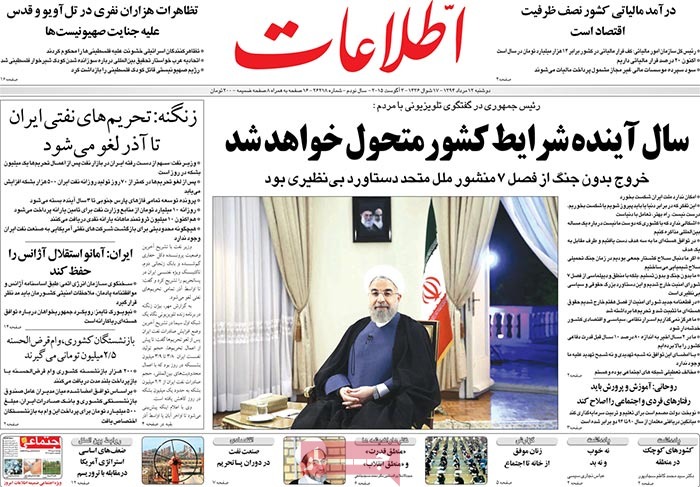
The port city of Kong in Hormozgan Province is home to workshops where sailing boats are built.
The following are images of a dhow workshop released online by the Iranian Students’ News Agency:
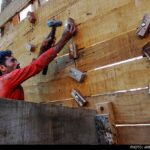
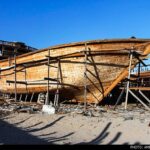
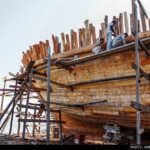
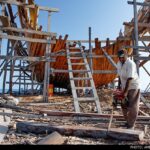
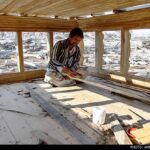
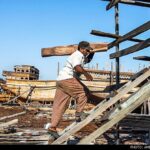
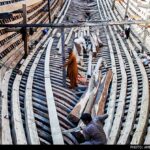
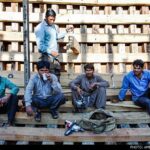
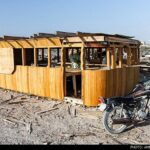
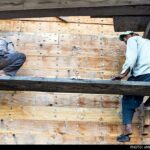
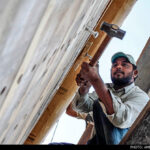
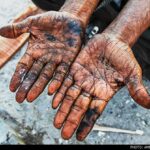
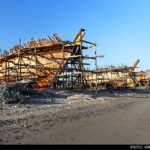
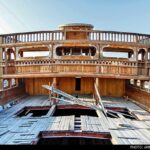
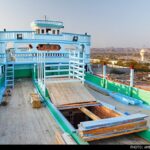
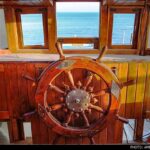
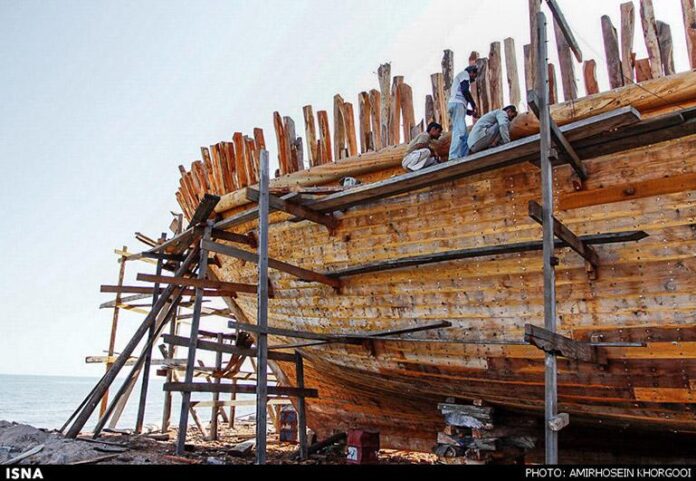
The port city of Kong in Hormozgan Province is home to workshops where sailing boats are built.
The following are images of a dhow workshop released online by the Iranian Students’ News Agency:
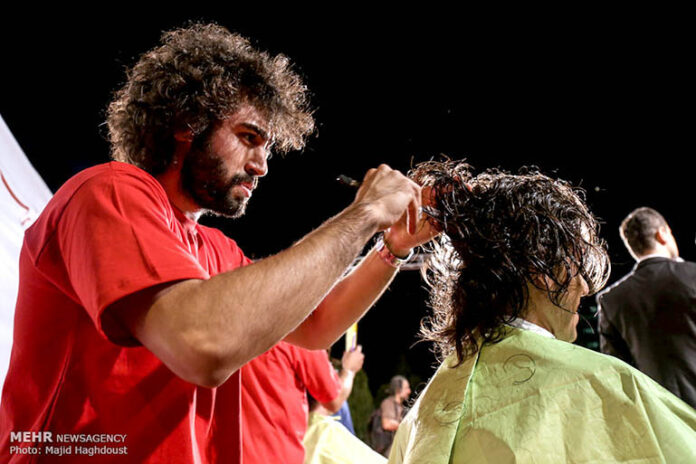
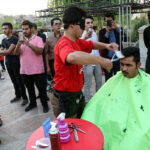
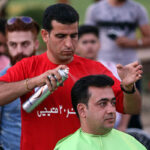
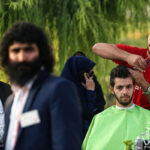
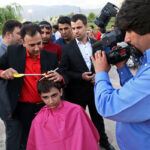
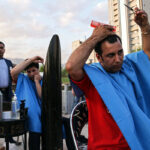
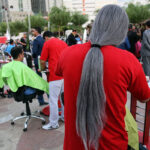
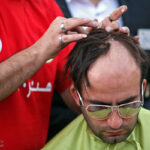
At a festival held in a Tehran park late in July, male stylists tried to put on display their skills to cut hair.
Images of the festival released online by Mehr News Agency:








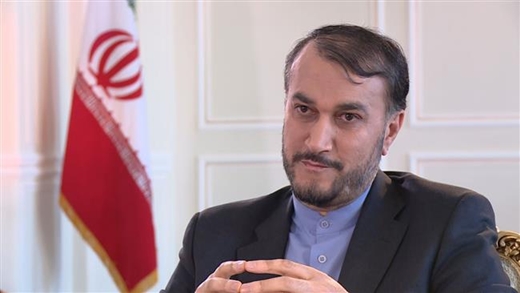
Iran’s deputy foreign minister for Arab and African affairs says that Tehran has received positive signals from Riyadh and is waiting to see what the Kingdom does in practice.
Hossein Amir-Abdollahian made the comment in an interview – with Al-Alam News Network – which covered a wide range of questions, including ties with regional countries and the fight against ISIL. The following is the translation of parts of his remarks in the interview as reported by entekhab.ir on August 3:
Iran’s policies
Interaction with neighbors and regional countries tops the list of Iran’s foreign policy priorities. The eleventh government is trying to pay more attention to its main priority [ties with regional nations] after the Iran nuclear deal. To that end, Tehran is seeking to deepen ties with regional countries on all fronts, including environmental and security issues. A new opportunity has opened up for the region to take appropriate measures to get out of regional crises.
Iran held talks with P5+1 simply on the nuclear issue. The Foreign Ministry has had no plan for talks with world powers on regional issues, because Tehran believes regional questions should be solved by regional nations.
Saudi Arabia
The Saudi solution to regional problems, especially its aggression against Yemen, is a strategic blunder. Iran does not approve of this Saudi approach, but seeks to help Tehran-Riyadh ties return to previous levels. Iran and Saudi Arabia can have constructive interaction to both settle bilateral differences and solve regional problems. […]
I met with Saudi Foreign Minister Adel Al-Jubeir on the sidelines of an Organization of Islamic Cooperation conference in Jeddah and provided transparent and frank answers to his transparent comments on regional questions.
At that meeting, we agreed that diplomacy is the only way forward to remove misunderstandings and set the stage for the two countries to help settle regional disputes. We agreed that Iran and Saudi Arabia should launch straightforward, constructive talks, play a positive role in the fight against extremism and terrorism and help restore security and stability in the region.
I heard positive remarks from Mr. Al-Jubeir there. We hope what he said will materialize in practice. We also hope the Saudis pave the way for working out a diplomatic solution in Yemen, Syria, Lebanon and other regional countries.
We have received positive signals from the Saudis, but they are just messages. We are waiting to see what Saudi Arabia does in practice. We will respond positively if Riyadh plays a constructive role. Saudi Arabia is expected to act insightfully, stay away from war, stop the killing of civilians in Yemen and focus on diplomatic approaches in its regional policies.
Bahrain
[…] If Iran had intended to get involved in the Bahraini question, the situation in the Persian Gulf country would have been different. Authorities in Bahrain are creating security scenarios simply to suppress public demands. […] Manama’s resort to force and its human rights violations have widened the gap between people and the government. The Bahraini government is expected to return to the diplomatic path and reconcile with its people. Now that the stage has been set for regional cooperation, Manama is expected to play a constructive, not destructive, role. Iran has always supported a national dialogue and diplomatic solution in Bahrain.
Syria
Regional players have changed their Syria policies, stressing the need for a diplomatic, not military, solution to the Syrian crisis. We have held constructive talks with Mr. Staffan de Mistura [the UN special envoy in Syria] whose new initiatives will be discussed at the UN Security Council soon. […] The Syrian foreign minister will be in Tehran later this week to talk with his Iranian counterpart on the pursuit of Iran’s solution to his country’s crisis.
The nuclear deal
The Iran nuclear deal revived a long-forgotten concept in the international relations: diplomacy and dialogue can solve the most complicated of political problems. Another message the deal carried was that it is possible to let go of war and walk down the path of diplomacy to reach solutions. It can set an example for regional countries to follow. The deal showed to regional nations that they can solve all regional crises through diplomacy and without foreign interference.
Fight against ISIL
Iran and Turkey have strategic ties, although they do not see eye to eye over Syria’s future. Turkey’s security matters to Iran, but Tehran does not support measures which endanger the sovereignty of Turkey’s neighbors. The fight against terrorism, especially on ISIL, by Turkey or any other country should be in coordination with the Syrian and Iraqi governments. Countries should not take measures which violate the territorial integrity and sovereignty of neighboring countries. […]
Cooperation with the US
Iran was among the first countries to help Iraq and Syria in their fight against terrorism and ISIL in the region. Tehran has no plan to enter partnership with the US against ISIL. We will continue to offer assistance, including consultation, to Baghdad and Damascus.
The US has its own plans for taking on ISIL. Washington has adopted double-standard policies on terrorism. We have no contact or cooperation with the US on fighting ISIL. In the future, Iran will simply help those regional countries which have been targeted by terrorist threats.
Israel
[…] The Zionist regime’s officials make comments [on Iran] out of fear, weakness and concern. The nuclear deal Iran has clinched with P5+1 has raised the regime’s concerns. Western officials have repeatedly said that the Iran nuclear deal has boosted Israel’s security, but the fact remains that the Zionist regime is now at the nadir of its power.
Lebanon
The political future of Lebanon is of great significance to Iran, so is this country’s security. Iran supports the finalization of the political process in Lebanon and the pick of a president in the Middle Eastern country. We hope diplomatic efforts will bear fruit in the next several weeks and Lebanon can enjoy more security and move toward bolstering its political stability.
Egypt
Iran has always welcomed establishment of sustainable, constructive ties with Egypt. It is now up to the Egyptians to decide about the development of relations with Tehran. Talks at political levels are ongoing between the two nations. Iran approves of Egypt’s stance on taking on extremism and terrorism in the region. We hope the challenges in Egypt can be overcome and the demands of revolutionary Egyptian people can be met.

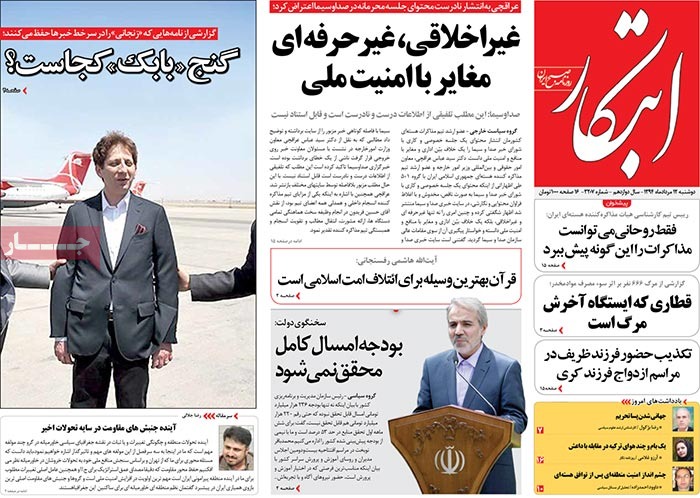
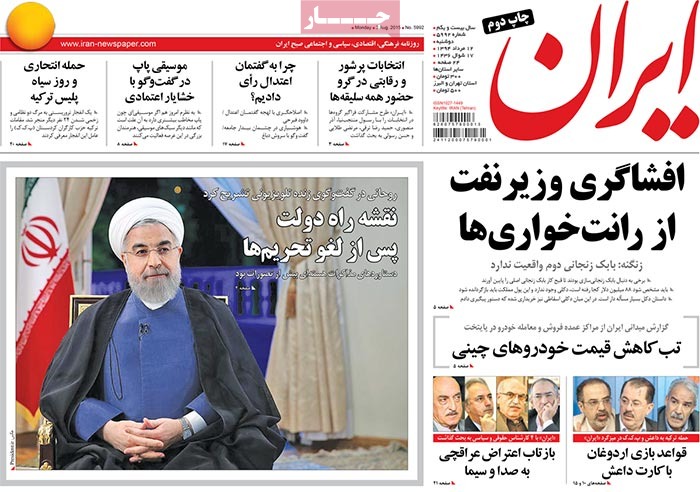
The comments President Rouhani made in a televised speech on the nuclear deal Iran has struck with P5+1 dominated the front pages of Iranian newspapers on Monday. Also in the news were the comments of the oil minister about the corruption case involving Babak Zanjani.
Ettela’at: “Next year will usher in a transformation in the country,” President Rouhani said in a televised speech.
“Having Iran’s nuclear case removed from Chapter VII of the United Nations Charter without a war was quite an achievement.”
“The ideology that one needs to either defeat the world or be defeated by it is wrong; there is a better way: interaction with the rest of the world.”
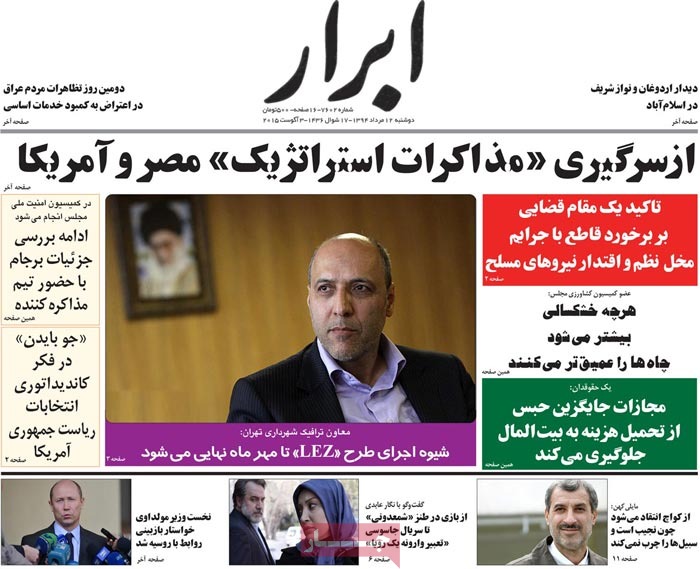
Abrar: The details of the Joint Comprehensive Plan of Action will be discussed in parliament’s National Security Committee with members of the negotiating team in attendance.
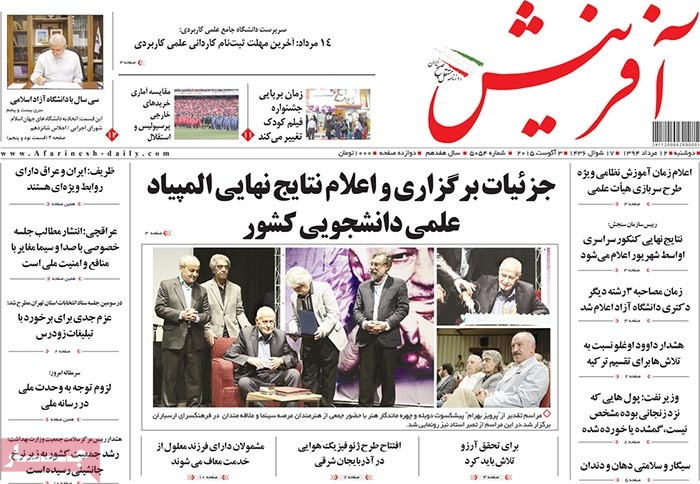
Afarinesh: Deputy Foreign Minister Abbas Araghchi has said that revealing what was said at a private meeting with IRIB [a reference to state broadcaster] officials runs counter to national interests.
Afkar: First Vice-President Eshagh Jahangiri has called for expansion of Tehran-Yerevan ties.
Afkar: A first phase of the Tehran-North Highway Project will have become operational by the end of the year [March 20, 2016].
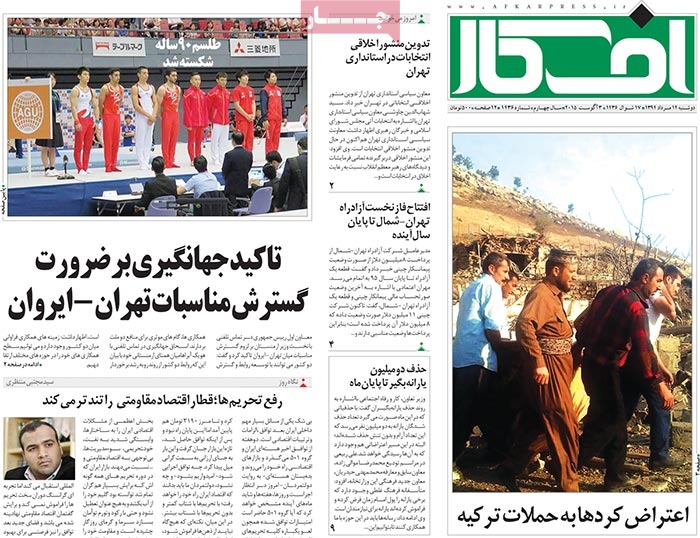
Aftab-e Yazd: The previous government purchased run-down oil derricks!
Nader Ghazipour, an MP, has said that there is evidence that the previous government has bought two dilapidated derricks, which have yet to be delivered to Iran.
He further said that apparently the derricks have been seized in Sharjah, UAE.
Aftab-e Yazd: There would have been no nuclear deal, if Rouhani had not been elected president.
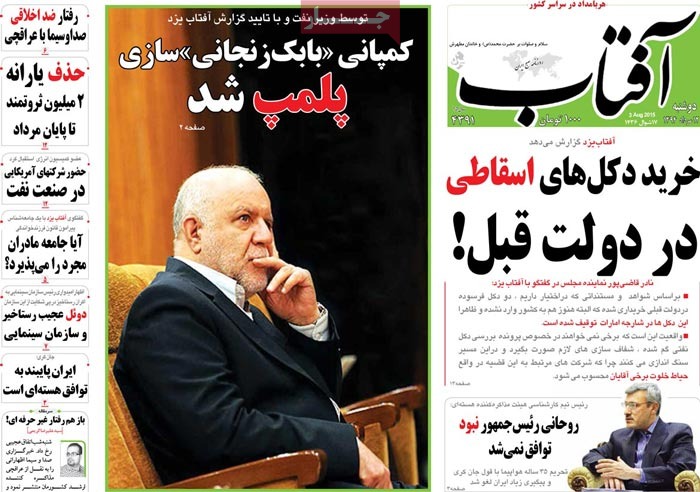
Arman-e Emrooz: “Those who benefitted from sanctions are now mad,” President Rouhani said in a speech.
He further said that the 2013 presidential election amounted to a nuclear referendum.
Arman-e Emrooz: Reclamation is taking a toll on the environment.
There are around 500,000 illegally-built villas around the country.
Arman-e Emrooz: Mohsen Hashemi, [a son of Chairman of the Expediency Council Ayatollah Akbar Hashemi Rafsanjani] has not ruled out a run for parliament.
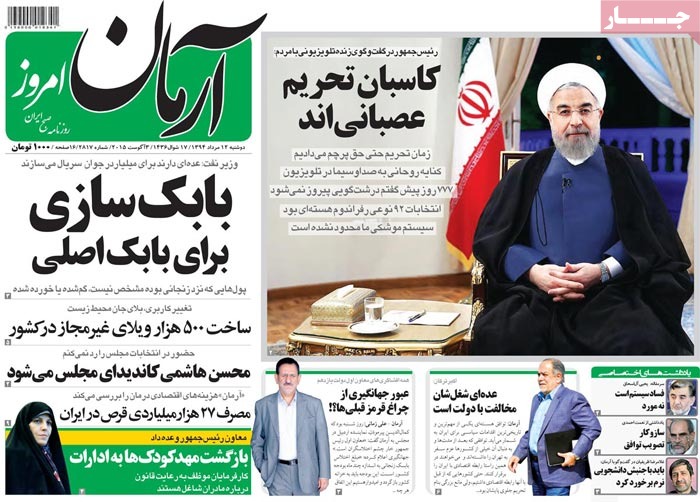
Asrar: “We face no restrictions as far as cooperating with American firms is concerned,” said the Iranian oil minister.
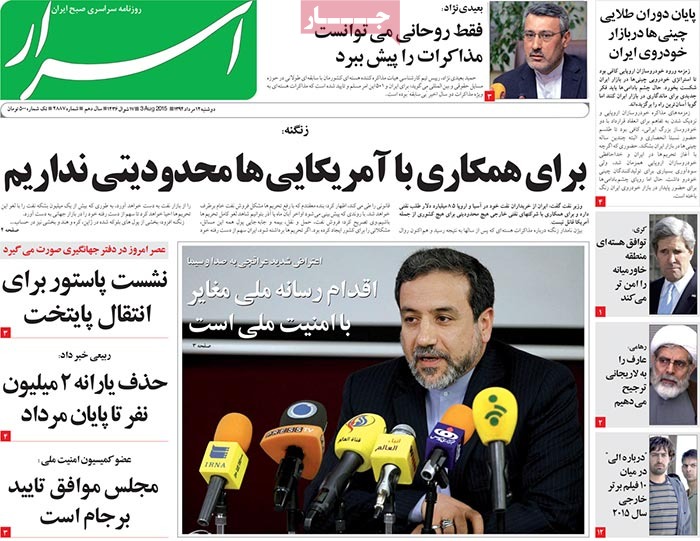
Ebtekar: The Iranian Foreign Ministry has rejected reports that Foreign Minister Zarif’s son has been the best man of US Secretary of State John Kerry’s son-in-law.
Ebtekar: The government spokesman has said this year’s budget won’t be realized.
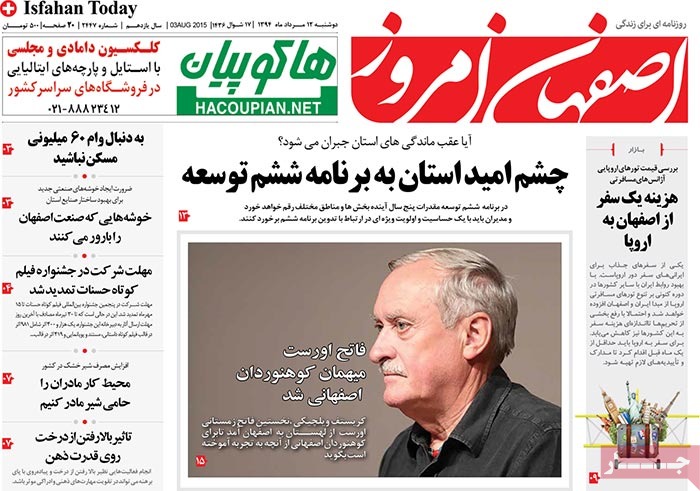
Esfahan Emrooz: Krzysztof Wielicki, a Pole whose name has gone down in history for the first winter ascent of Mount Everest, has come to Isfahan to talk about his experience to Iranian climbers.
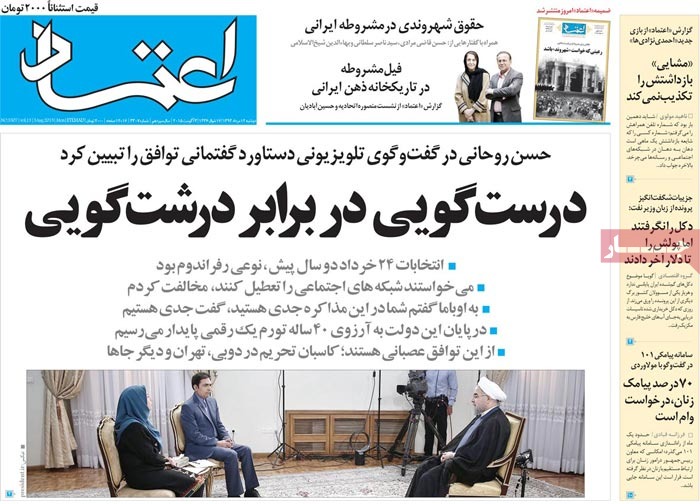
Etemad: Truthfulness versus rhetoric
The president said in a televised speech that some wanted to slap a ban on social networking platform, but that he opposed the move.
“I asked President Obama whether the Americans are serious in the talks and his answer was in the affirmative,” President Rouhani said.
“At the end of this government’s term in office, the 40-year dream of securing sustainable single-digit inflation will have been realized.”
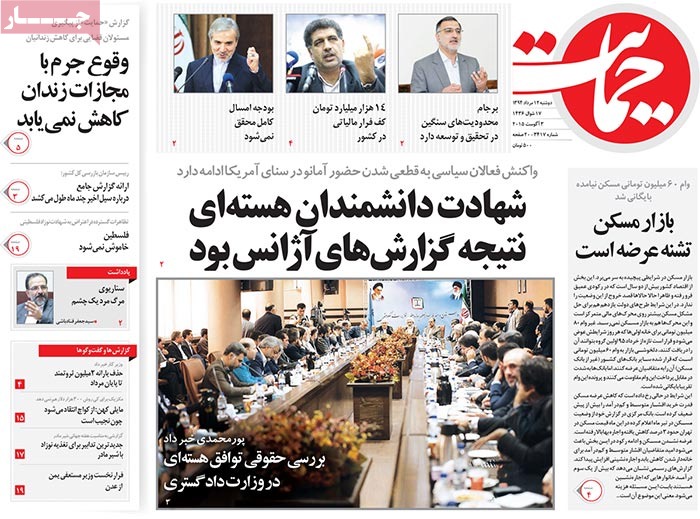
Hemayat: The justice minister has said that the nuclear deal will be reviewed from a legal standpoint at the Justice Ministry.
Iran: The prices of Chinese-made cars on Iranian market are declining.
Iran: “There is no truth to reports that there is a second Babak Zanjani [a young billionaire who stands accused of massive corruption when Ahmadinejad was in office],” the oil minister said.
Bijan Namdar Zanganeh further said rumors that there has been a second embezzler are designed to play down the hideousness of Babak Zanjani’s measures.
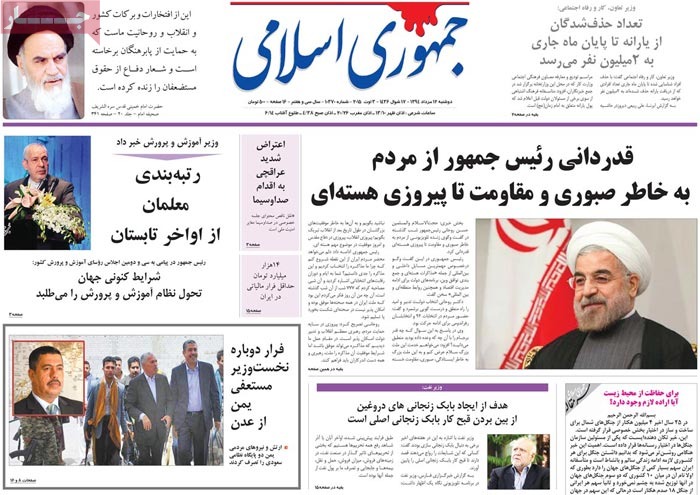
Jomhouri Islami: “The number of people taken off the list of individuals eligible to get cash subsidies will have increased to 2 million by the end of the month [August 22],” said the minister of cooperatives, labor and social welfare.
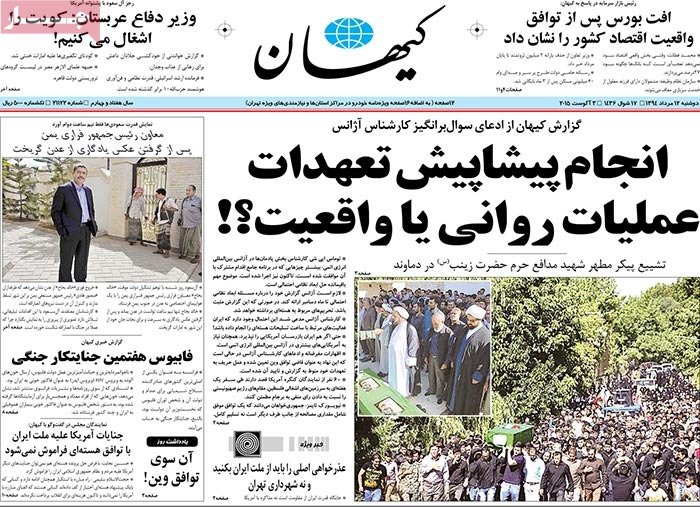
Kayhan: A number of MPs have said that American atrocities against the Iranian people won’t drift into oblivion on the back of the nuclear deal.
Kayhan: A funeral procession has been held in Damavand for a young Iranian national who was killed at the hands of terrorists in Syria.
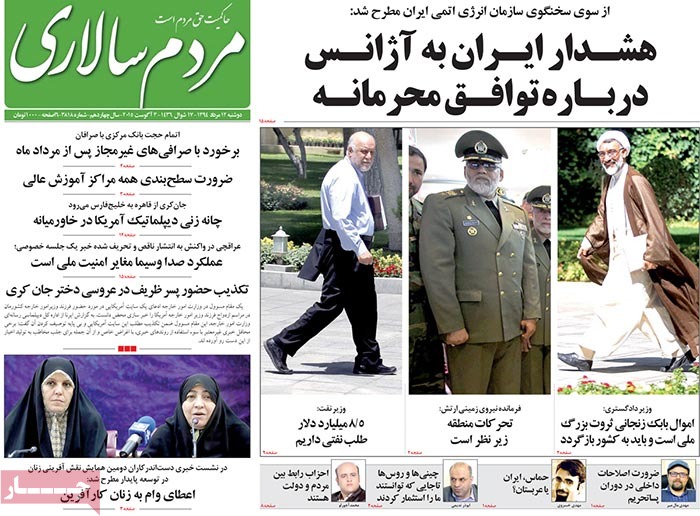
Mardomsalari: “Iran is owed $8.5 billion in oil money,” said the oil minister.
Mardomsalari: The commander of the Iranian Army says his men keep a close eye on regional developments.
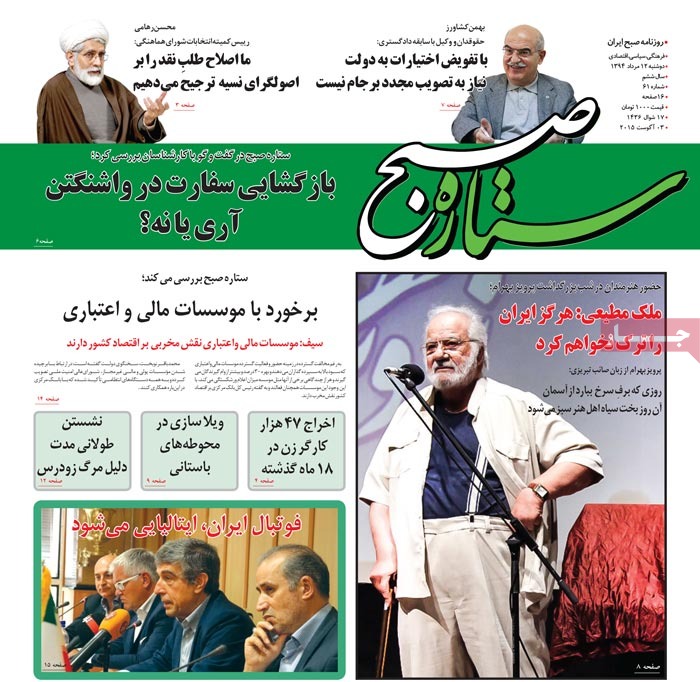
Setareh Sobh: Renowned Iranian actor Nasser Malek Motiei has said that he would not move out of his homeland.
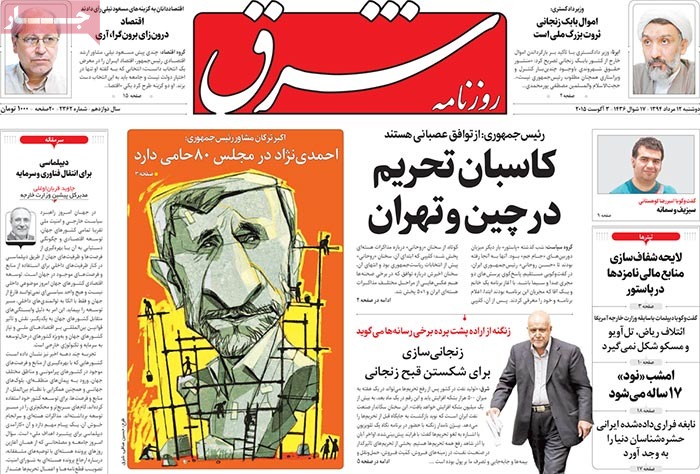
Sharq: “Eighty MPs support Ahmadinejad,” Akbar Torkan, an advisor to the president said.
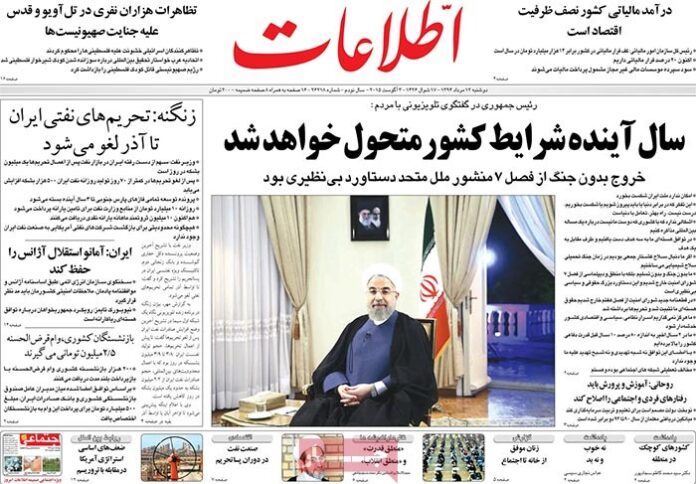
♦ “Next year will usher in a transformation in the country,” President Rouhani said in a televised speech.
“Having Iran’s nuclear case removed from Chapter VII of the United Nations Charter without a war was quite an achievement.”
“The ideology that one needs to either defeat the world or be defeated by it is wrong; there is a better way: interaction with the rest of the world.”
♦ “The Education Ministry needs to rectify individual and social behaviors,” President Rouhani said.
The government spokesman has said that the Rouhani administration is determined to invest more in education.
The average salary of teachers has doubled between 2011 and 2015.
♦ The country’s tax revenues are half its economic potential.
The director of the National Tax Administration has said that minimum tax evasion stands at around $4.7 billion.
♦ Thousands have staged rallies in Tel Aviv and Beit ul-Muqaddas against Israeli crimes.
The Arab League has called for an international investigation into the burning to death of a Palestinian toddler at the hands of Zionist settlers.
♦ “Oil sanctions against Iran will have been lifted by November,” Oil Minister Bijan Namdar Zanganeh said.
Within 70 days after the sanctions are lifted, Iran’s output will increase by 500,000 barrels a day.
♦ Iran has called on the director general of the International Atomic Energy Agency to maintain the independence of the UN nuclear watchdog.
The spokesman of the Atomic Energy Organization of Iran has said that under the IAEA charter, the country’s security considerations should be taken into account.
♦ Pensioners will be offered more than $800 dollars in interest-free loans.
Under a deal signed by the State Pension Fund and Bank Saderat, around $167 million will be allocated to the loans.
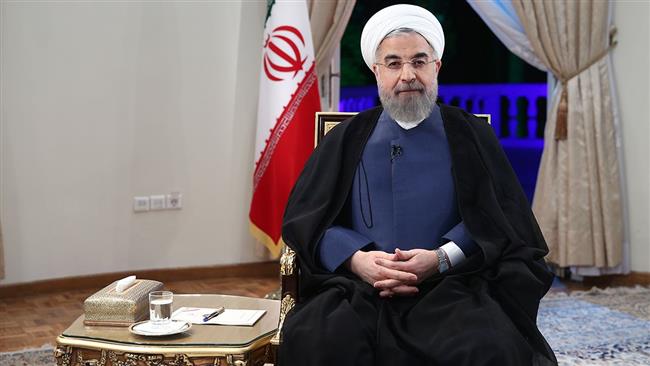
Iranian President Hassan Rouhani says the achievement of his administration in resolving the nuclear issue beats initial expectations.
Speaking in a live televised show on Sunday, President Rouhani said he did not mean to exaggerate, but believed that what was achieved at the end of the negotiations between Iran and P5+1 was beyond what was initially expected.
President Rouhani said that the end results of the negotiations were a win-win. He said the opposite side had said it was pursuing an objective of preventing Iran from obtaining a nuclear weapon. Iran never intended to build atomic bombs, the president said; so, ‘if the other side in the negotiations thinks it has achieved that goal (of preventing an Iranian bomb), let this be a victory for it.’
The Islamic Republic, however, had three goals in the talks, all of which were achieved, President Rouhani said.
The Iranian president said the fact that an interim agreement between Iran and P5+1 was holding for nearly two years could be a sign that the comprehensive agreement reached between the two sides on July 14 could also be holding.
We cannot say we have 100% trust in the partners to the agreement, but we can devise a mechanism under which no side would face a loss if the other breached the agreement, the president said.
He said Iran has never sought weapons of mass destruction.
It did not opt for the manufacturing of such weapons even when it was locked in a war with Iraq back in the 1980s, the president said.
“Iranian people are noble; even when fighting, they fight nobly, they don’t seek weapons of mass destruction,” he said.
Referring to certain concerns about inspections under the Joint Comprehensive Plan of Action, the president said there is no reason to worry at all as what Iran has agreed to under JCPOA is nothing extraordinary.
“No one in the world would trade its national security… [and] its secrets,” he said, reassuring that Iran’s military capabilities will by no means be depleted.
Responding to a question about the economic impacts of the anti-Iran sanctions that his administration sought to have removed as a result of the agreement, President Rouhani said his cabinet has been successful in containing or countering economic woes such as high inflation and stagflation.
“Sanctions cannot be successful, ever; but they can have impacts,” he said, adding that as a result of the success of the negotiations, the doors of international business opened to Iran.
No country can be found that is not happy about the conclusion of the agreement between Iran and P5+1, but a handful of warmongers and Zionists, President Rouhani said.
Answering another question about concerns that a potential increase in trade activity as a result of the removal of the sanctions against Iran would result in imports of foreign goods to the country, President Rouhani said such concerns are valid.
He said Iran would welcome foreign investment, but not increased imports. The Iranian president said he has directed his economic team on the matter.
Iran should work hard toward employment for the youth, the Iranian president said.
He said, by the end of his administration’s term in office, the inflation rate in the country will slip into single-digits territory.
Another question put to the president was about potential acts of mischief by the International Atomic Energy Agency (IAEA), the UN agency that has been tasked with carrying out the technical specifications of JCPOA. President Rouhani said the country should be very vigilant that such mischief does not occur, both in terms of security issues as well as technicalities.
The Iranian president also said that the impacts of the removal of sanctions under JCPOA will not be felt overnight.
He said the “sapling” that has been planted will take some time to bear fruits, emphasizing, however, that his administration will try to have such impacts come sooner.
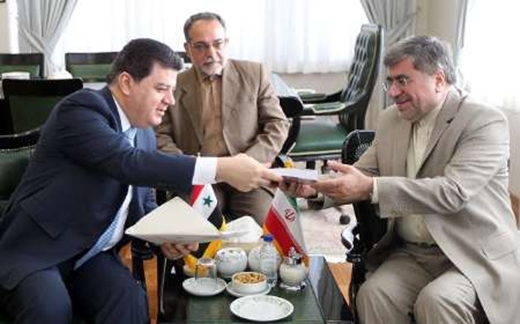
Minister of Culture and Islamic Guidance Ali Jannati said on Sunday that Iran is fully ready to boost cooperation with Syria in the fields of culture, arts and media.
He made the remarks in a meeting with Syrian Ambassador to Iran Adnan Mahmoud.
He hailed the Syrian nation and army’s resistance in the face of terrorism and condemned hardline groups and terrorists operating in the country.
History has proved that the barbaric measures of the groups would not continue, Jannati said.
The minister said that the Iranian and Syrian poets, elites and authors can have good cooperation in various areas of culture and arts and play an effective role in introducing each other’s cultural and artistic works.
Adnan, for his part, said that Iran’s achievements for defending its rights on the international scene are praiseworthy.
The two countries can withstand the Western cultural inroad by developing ties among their poets and writers, he said.
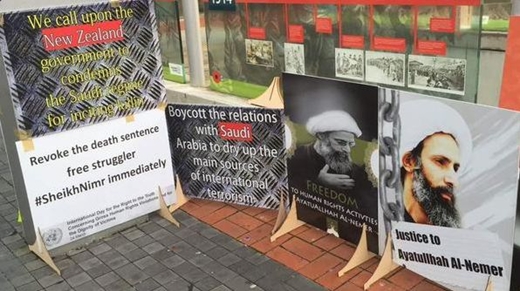
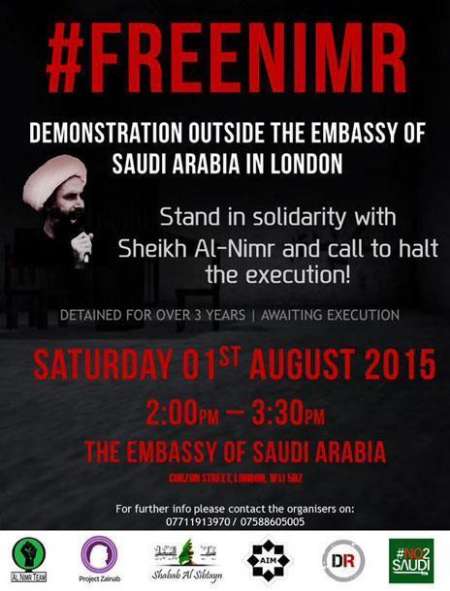
Human rights activists in 20 countries held rallies on Saturday in solidarity with Saudi Shia cleric Ayatollah Sheikh Nimr al-Nimr.
They called on Saudi authorities to revoke the death sentence for Sheikh Nimr and immediately release the senior cleric, al-Akhbar daily reported.
The rallies were staged in Colombia, Switzerland, the US, Germany, Iran, Bahrain, New Zealand, Canada, France, Ghana and Lebanon, among others.
Sheikh Nimr was detained in July 2012 following demonstrations that erupted in Saudi Arabia’s Qatif region.
He was accused of delivering anti-regime speeches and defending political prisoners.
His arrest sparked widespread protests in the Arab country.
A Saudi court later sentenced Sheikh Nimr to death, and, in March this year, an appeal court upheld the death penalty of the prominent cleric.
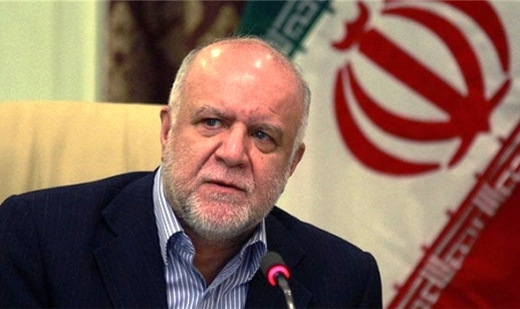
Iranian Oil Minister Bijan Namdar Zanganeh announced that the country’s development projects in all of the oil fields in the massive offshore South Pars will be completed in three years.
“Those who think Iran cannot raise its (oil) production, should wait and see (how Iran will do so),” Zanganeh said in a televised interview broadcast live on Saturday night.
“We are able to increase oil production by 500,000 barrels per day (bpd) anytime we decide to do so,” he added.
“We will finish all 23 oil fields that we have in South Pars in a three-year period,” the Iranian oil minister noted.
Commenting on the development plans to increase crude oil production, Zanganeh said Iran has defined projects worth $70 billion which will triple the country’s crude oil production.
Zanganeh also pointed to Iran’s plans to increase exports of gas, saying that the exports to neighboring countries is top of the agenda of his ministry.
South Pars is part of a wider gas field that is shared with Qatar. The larger field covers an area of 9,700 square kilometers, 3,700 square kilometers of which is in Iran’s territorial waters (South Pars) in the Persian Gulf.
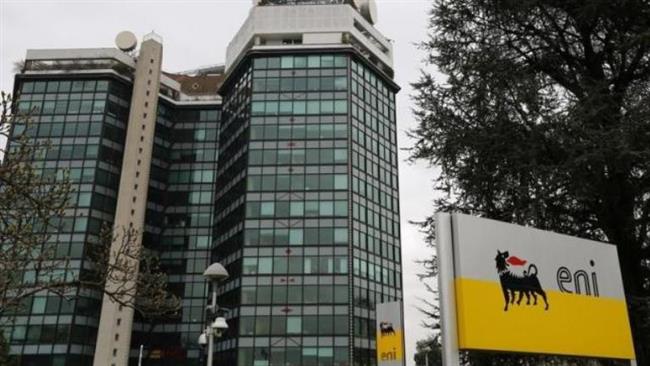
An official with Iran Chamber of Commerce, Industries, Mines, and Agriculture (ICCIMA) says senior executives of Italy’s oil giant ENI will arrive in Tehran as part of a business delegation on Tuesday.
Ali Akbar Farazi, ICCIMA’s deputy for international affairs, said ENI will be part of a high-ranking Italian delegation headed by the country’s Foreign Minister Paolo Gentiloni, which will arrive in Tehran on August 4.
The official added that ENI was a partner to Iran’s oil projects before sanctions were imposed on the country by the West and had taken part in development of phases 4 and 5 of South Pars gas field as well as Darkhoein oil field.
“Now that the prospect for the removal of sanctions imposed on the Islamic Republic is bright, ENI is willing to return to Iran,” he said.
Farazi added that the Italian delegation will also include senior executives of SACE insurance company, as well as creditable Italian banks, automakers, pharmaceutical companies, and other companies active in such areas as water, electricity, oil, gas, and petrochemicals.
In April, ENI’s chief executive, Claudio Descalzi, told the Financial Times that his company is interested in returning to Iran if sanctions against the country are lifted.
He had made the remark in a meeting with Iran’s Petroleum Minister Bijan Zanganeh at an OPEC summit in Vienna in 2014.
Sanctions were imposed on Iran by the US and EU at the beginning of 2012, alleging that there was diversion in Iran’s nuclear program toward military objectives; an allegation that Iran categorically rejected.
On July 14, Iran and P5+1– the US, the UK, Germany, France, China, and Russia – reached the conclusion of negotiations over Tehran’s civilian nuclear program, with the Islamic Republic and the sextet sealing an agreement.
According to the agreement, known as the Joint Comprehensive Plan of Action (JCPOA), all economic and financial sanctions against Iran will be removed. In addition, all bans on Iran’s Central Bank, shipping, oil industry, and many other companies will be lifted.
© All Content by IFP News ( Iran Front Page ) is licensed under a Creative Commons Attribution 4.0 International License.