Sunday, December 21, 2025
Home Blog Page 4654

JCPOA throws US into political turmoil: Iran nuclear chief

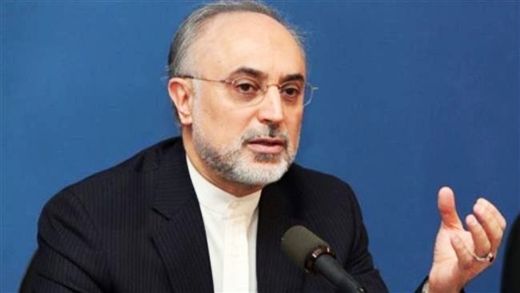
Salehi

Iran’s nuclear chief has said that the discussions in the United States on a recent agreement between the Islamic Republic and P5+1 have thrown Washington into political turmoil.

Director of the Atomic Energy Organization of Iran (AEOI) Ali Akbar Salehi said on Monday that the discussions on the Joint Comprehensive Plan of Action (JCPOA), which he described as a “political challenge” to both Iran and the US, have thrown Washington into political turmoil.

“US officials have announced that if JCPOA is rejected by Congress and the president can’t do anything [to prevent such an outcome], the global credibility of the US will take a hit, the dollar will not be able to maintain its status, and the paradigm of the US foreign and domestic policy will change,” Salehi said.

The remarks by the Iranian nuclear chief come as the US Congress will vote on the agreement in September and most Republicans have opposed the agreement. President Barack Obama, however, has expressed confidence that “this deal will go forward.”

Obama needs the support of 34 Senate Democrats to sustain a presidential veto if Congress approves a resolution to reject the agreement. So far, 31 Senate Democrats have announced support for the agreement.

The US ambassador to the United Nations warned last week that the US will be isolated internationally and will no longer have any influence on the world stage if JCPOA is rejected.

“If the United States rejects this deal, we would instantly isolate ourselves from countries that spent nearly two years working with American negotiators to hammer out its toughest provisions,” Samantha Power wrote in an editorial published by Politico on Wednesday.

Salehi said that there are also challenges and different ideas on JCPOA in Iran, adding that despite the differences “we will tread a path toward national interests and national sovereignty” under the guidance of Leader of the Islamic Revolution Ayatollah Seyyed Ali Khamenei.

“In this political challenge, the Islamic Republic has driven the opponent into a corner,” Salehi said, adding, “The Islamic Republic could gain the upper hand within a formulated framework and with reliance on dignity, expedience and the Leader’s wisdom.”

He also said that JCPOA will not slow down the country’s nuclear activities.

“Our nuclear activities have not been stopped or slowed down and we assure the great [Iranian] nation that our nuclear activities will move forward,” Salehi said.

On July 14, Iran and P5+1– the United States, Britain, France, China, Russia and Germany – finalized the text of JCPOA in the Austrian capital Vienna.

Under JCPOA, limits will be put on Iran’s nuclear activities in exchange for, among other things, the removal of all economic and financial bans against the Islamic Republic.

Salehi further referred to “the limitations” stipulated in JCPOA, saying they will not slow down the basis of Iran’s nuclear activities, and they will be lifted once the two sides have taken trust-building measures.

He also said that Iran has told its negotiating partners that the country has never pursued non-civilian objectives in its nuclear program and will never do so.
Zarif urges Muslim countries to unite against extremism

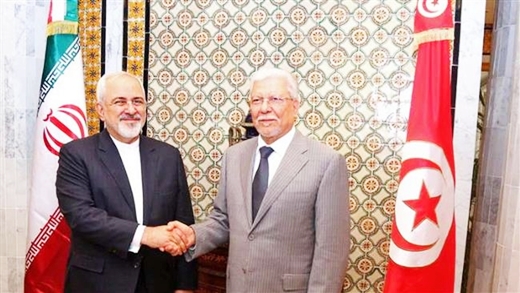
zarif-tunisia

Iran’s Foreign Minister Mohammad Javad Zarif has called on Muslim countries to join forces in the fight against extremism.

“Today, the main battle is between extremism and moderation, and all Muslim countries should unite against extremism on one front,” Zarif said in a meeting with his Tunisian counterpart Taieb Baccouche in Tunis on Monday.

The Iranian foreign minister described extremism and terrorism as major threats to Muslim countries.

Zarif also called for an end to foreign meddling in regional crises, saying that dialogue should be a basic strategy to solve the crises in the region and any contribution in this regard should be aimed at facilitating dialogue.

The Iranian foreign minister said that no condition should be set for dialogue in Syria, Yemen and other regions beset by crisis.

Zarif also sat for talks with Tunisian Prime Minister Habib Essid and stressed that the prevention of extremism and violence should be the main theme of cooperation between Muslim countries.

The Iranian foreign minister recalled the Joint Comprehensive Plan of Action (JCPOA), between Iran and P5+1, and said, “The achievement is a victory for all countries in the world and region and the negotiations proved that the basis of resolving problems is dialogue and negotiation not pressure and sanctions.”

On July 14, Iran and P5+1– the United States, Britain, France, China, Russia and Germany – finalized the text of JCPOA in the Austrian capital Vienna.

Essid, for his part, congratulated Iran on the nuclear agreement, describing it a positive achievement in the international political developments.

The Tunisian premier also called for the expansion of relations with Iran in different fields, including tourism, industry, agriculture and the environment.

Storm tears through capital, leaving three injured (PHOTOS)

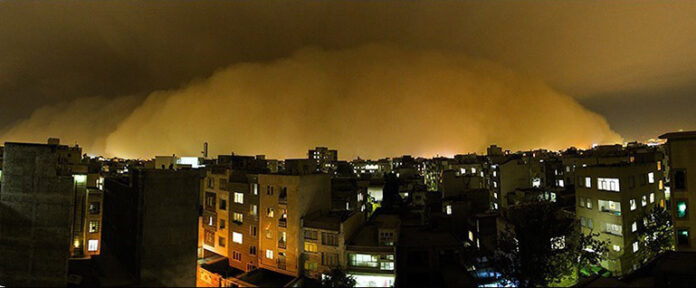
Storm

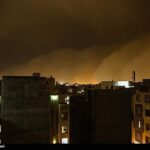
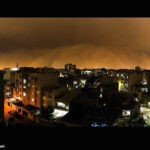
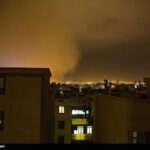
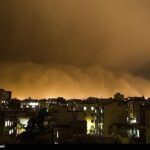
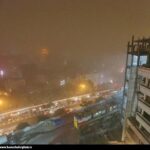
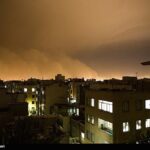
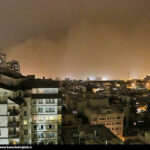
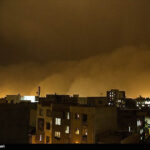
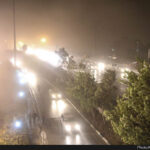
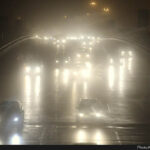
A storm packing winds of 65 km an hour tore through Tehran late Monday, leaving three people injured.

The storm which kicked up dust knocked down trees, power lines and scaffolding.

The following images of the storm have been published by different news agencies:

Iran’s Ehsan Hajsafi joins FSV Frankfurt

Hajsafi

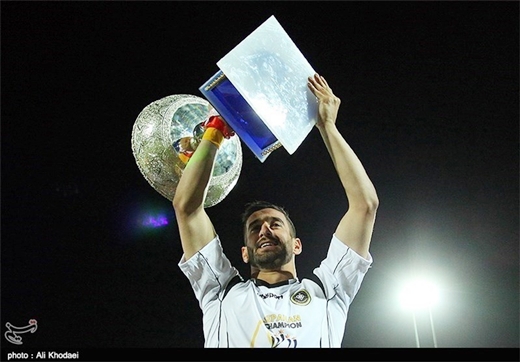
Iranian national football team winger Ehsan Hajsafi joined German Bundesliga 2 side FSV Frankfurt.
The 25-year-old has joined FSV Frankfurt until June 30, 2017 for an undisclosed fee.
Hajsafi has played 71 times for the Iranian national football team and scored four goals.
“Ehsan Hajsafi is a highly experienced international player who has represented Iran in the World Cup. He is a versatile player, who can play in different positions in midfield as well,” FSV Frankfurt coach Tomas Oral said

Iran, Oman sign deal to finalize gas pipeline project

139206021449101501039174

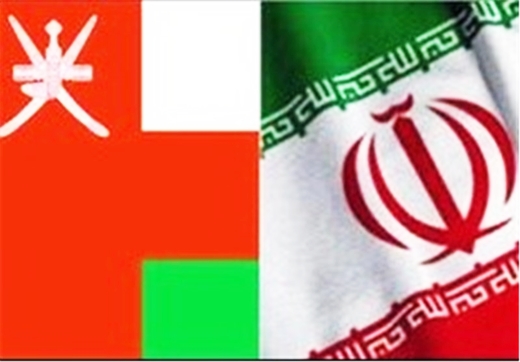
Tehran and Muscat have inked an agreement to finalize the construction of a pipeline which is expected to carry Iran’s gas to the Persian Gulf sultanate.

Salim bin Nasser al Aufi, under-secretary of Oman’s Ministry of Oil and Gas, said the agreement addresses major details, including the cost and route of the project, Oman Daily Observer reported on Monday.

The report added that the gas pipeline is part of a landmark deal clinched by the two countries nearly two years ago.
It added that the 400 km export pipeline will carry Iran’s natural gas to Sohar Port in the Persian Gulf country.
Under the contract, Iran will export 28 million cubic meters of gas per day to Oman for 15 years. Based on the current gas price, the deal is worth $60 billion.

Earlier in June, a senior official with the Iranian Offshore Engineering and Construction Company (IOEC) announced that the company plans to construct a pipeline for exporting gas from Iran to Oman.

“The construction of the gas export pipeline from Iran to Oman will be carried out by the IOEC,” Rahim Tabrizi said in an interview with the Tasnim News Agency at that time.

Kameli had earlier said that construction projects are currently underway and the Iranian contractor is carrying out the basic engineering studies on the pipeline.

Iran’s total gas exports to foreign countries reached over 9.6 billion cubic meters (bcm) in 2014, according to the 64th Edition of the BP Statistical Review of World Energy.

In its statistical review, BP classed Iran as the world’s top gas reserves holder with 33.8 trillion cubic meters.

India, Korea plan $10 billion energy park in Iran

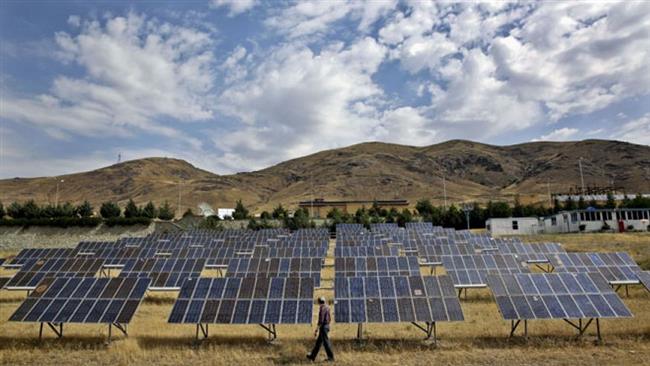
Green Energy

Enterprise Company has also proposed to build gas-powered and combined cycle plants to produce 600 megawatts of electricity, Suesh Sharma, coordinator and head of GTPP Oil and Gas, said.

Iranian project owners have announced readiness to undertake 30% of investment and the foreign side to provide the rest of the funds, an IRNA reporter told Press TV.

Representatives of the consortium visited provincial authorities on Sunday to outline their plans, the news agency said.

The project is part of Iran’s bid to establish 5,000 megawatts of renewable capacity in the country which relies on fossil fuels for 854% of its electricity.

Renewables currently account for less than 14% of the country’s energy mix which mainly come from hydro plants but a lingering drought is reducing their production.

Iran is the biggest producer of electricity in the Middle East, generating over 70,000 megawatt-hours.

Tokyo welcomes JCPOA, closer ties with Tehran

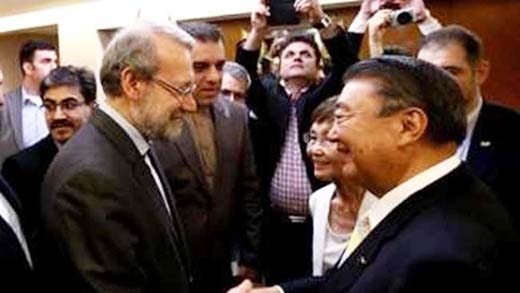
Larijani

A top Japanese parliamentarian has welcomed the nuclear agreement recently sealed by Iran and P5+1 over the Islamic Republic’s nuclear program.

Tokyo is delighted at the agreement and would like to see the ground prepared for its implementation, said Speaker of Japan’s House of Representatives Tadamori Oshima in a meeting with Iranian Parliament Speaker Ali Larijani in New York.

Oshima and Larijani are currently in New York to attend the Fourth World Conference of Parliament Speakers convened by the Inter-Parliamentary Union (IPU) in cooperation with the United Nations.

The top Japanese parliamentarian further said his country stands ready to work with Tehran to help promote peace and stability at regional and international levels.

Japan is prepared to open up a new chapter in its relations with Iran on political, parliamentary, economic, trade and cultural fronts, Oshima further said.

Larijani, for his part, said the Iranian government and people have a “positive view” toward the enhancement of Tehran-Tokyo ties.

Age-old relations between the two countries in political, economic and cultural arenas serve as “capital” for closer mutual cooperation and interactions, he said.

“All potential should be tapped in order to boost [bilateral] relations,” said the Iranian parliament speaker.

In the post-sanctions era, said Larijani, the ground is more prepared for closer Tehran-Tokyo cooperation and Japan can seize this opportunity.

Larijani also expressed hope that an extradition treaty inked by Iran and Japan will come into force as soon as possible.

Qazvin Day (PHOTOS)

Qazvin Day0

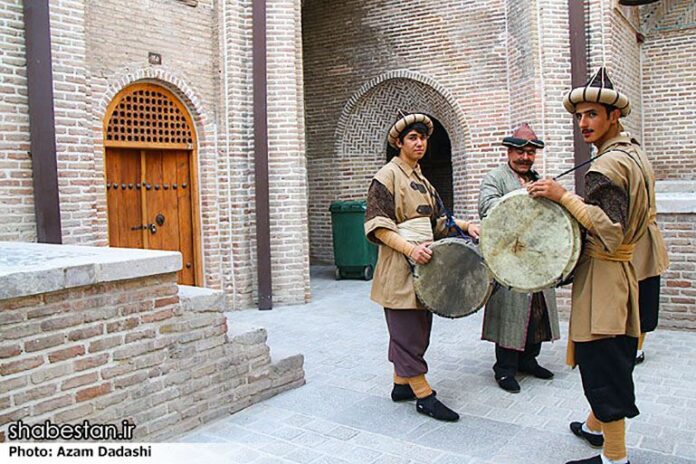
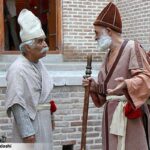
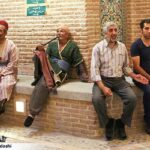
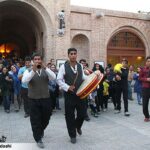
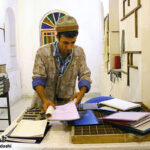
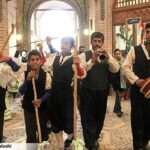
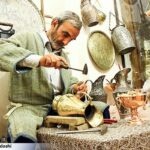
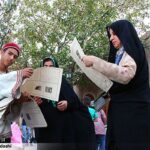
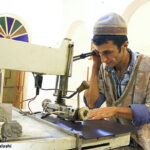
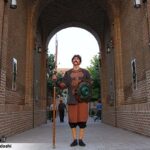
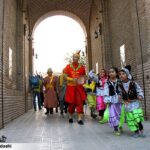
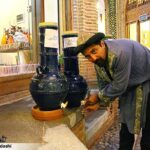
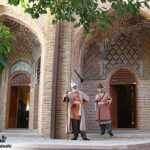
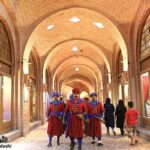
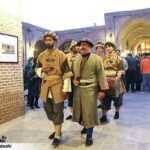
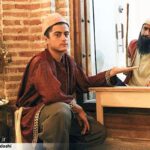
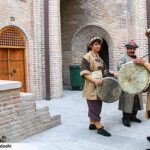
August 31 marks the anniversary of the designation of Qazvin – a city west of Tehran – as the capital of the Safavid dynasty centuries ago.

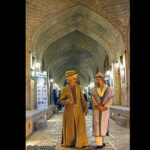
To commemorate what is known as Qazvin Day, some old professions have been revived at the Caravanserai of Sa’d al-Saltaneh.

The following are images of the commemorative event posted online by shabestan.ir:

Iranian diplomats visit peace-themed calligraphy exhibition in Tehran

9dfbea7b-533c-4319-aa8b-de562273f38a

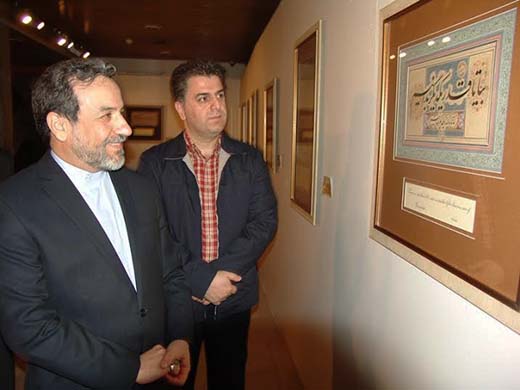
A weeklong exhibition which put on display the works of Iranian calligrapher Hadi Darban, both in Persian and English with a message of peace, was held at Tehran’s Niavaran Cultural Center last week.

The following is the translation of a report on the expo published by Iran Student Correspondent Association (iscanews.ir):

After a visit to the exhibition, Deputy Foreign Minister for Legal and International Affairs Seyyed Abbas Araghchi said, “Depicting the concept of peace in world literature is innovative, and at the expo excerpts of literary works from different nations and internationally respected poets and prophets can be seen.”

Araghchi added, “The exhibition is a valuable cultural initiative to promote peace and to counter violence, massacre and war. It can help fight extremism and violence throughout the world.”

Deputy Foreign Minister for Euro-American Affairs Majid Takht-e Ravanchi, who also visited the expo, said, “The message of peace and friendship is clearly promoted by our religious teachings. The expo features quotes on peace and friendship by Persian poets as well as religious leaders and scholars. Remarkable topics have been chosen; beautiful handwriting and magnificent illuminated manuscripts as well as translation of the quotes for those who do not know Persian can be very useful.”

After inspecting the expo, Sadegh Kharrazi, another veteran diplomat, said, “Today’s world needs peace. Mankind cannot experience security and serenity without peace. All divine religions and cultures identify peace as a lasting virtue. The artist who has identified what today’s world needs and taken the initiative to create works of art with a global impact is admirable.”


Ijtihad in Islam amounts to principlist reformism

rafsanjani-hashemi

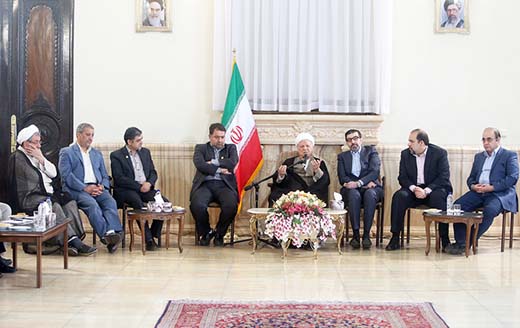
The chairman of the Expediency Council has said that Ijtihad is the principlist reformism which requires adherence to principles and modification in step with the requirements of the times.

Ayatollah Akbar Hashemi Rafsanjani made the comment on Sunday and added that reformists and principlists are simply two titles and the followers of reformism and principlism should only have differences over tactics not tenets. The following is the translation of part of the remarks of the top councilor as reported by the Iranian Students’ News Agency (ISNA) on August 30:

Lines of thinking

It is natural for reformists and principlists to be at odds over methods of administering affairs in the country, but unfortunately some have taken their differences to the level of principles and talk out of grudge. Orthodox principlists are reformist [in nature] and truth-seeking reformists are principlist.

Islam has put forward the idea of Ijtihad [the independent or original interpretation of the problems which are not precisely covered by the holy Koran, Hadith or scholarly consensus] which urges people to maintain the principles and help take society toward better conditions. This is principlist reformism.

Revolution’s values

Society’s culture can undergo transformation if people and officials steer clear of ethical vice such as insult, slander and backbiting. If we keep our distance from such demerits, the Islamic Revolution can turn into a model for the oppressed nations.

Iran’s revolution is unique in the history of Islam and in the contemporary world. Those people who honestly took up the fight [against colonialism] and backed the [late] Imam and his fellow clerics and put their lives on the line will not let outside enemies hijack the ideals of Imam and the martyrs. […]

[Supreme Leader] Ayatollah Khamenei was one of the closest figures to Imam. He is a real, devout revolutionary who remains committed to his allegiance to Imam and the martyrs.

People’s suffrage and role

There are some who think people’s votes are simply for decorative purposes. They want to create a gap between people and the pillars of the revolution. Imam, the Supreme Leader and all those who care for the revolution have always highlighted the role people’s votes play, something that stems from Islamic principles.

One way to run the country is to give the public a say in the administration of affairs, and that can be institutionalized through boosting parties in the country. Different parties should be established so that we can promote the culture of a multi-party system. What matters is how we walk down the path of revolution and how we safeguard its achievements; the names [we choose for these parties] are of secondary importance.

It is an unforgivable sin to dissuade revolutionaries at a time when the friends and foes are watching Iran to see how the Islamic Republic will act on the world stage and how it will influence regional countries. Fuelling differences is a big sin at this juncture. […]

Other revolutions

[…] Extremist terrorists – the third side of the triangle of despotism and colonialism – targeted people’s economic, political and social security [in Egypt]. Lack of experience on the part of the so-called Islamic groups hurt people and made them vote for military men and the remnants of the previous government.

The absence of vigilant leadership, people’s failure to get involved in the country’s affairs and fanning the flames of tensions are the three reasons why these revolutions failed to achieve their ideals and objectives. […]

Terrorism

Terrorists who build on their global communications have benefited from occupying parts of Islamic countries, especially Iraq and Syria. If these radical groups are not countered, radicalism is likely to take advantage of popular dissatisfaction in different countries and spill over into others. […]

[…]