Monday, December 22, 2025
Home Blog Page 4653

Leader tells Army to upgrade defense readiness

Supreme Leader

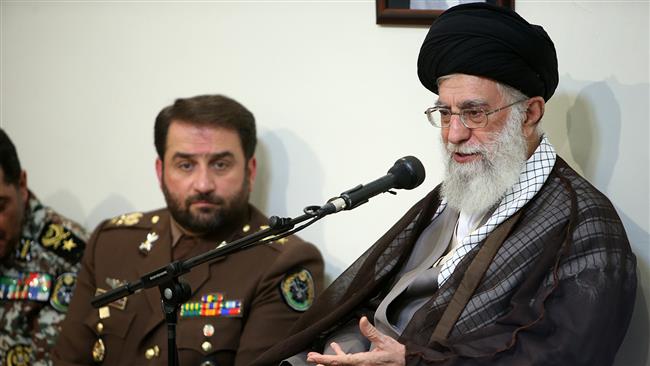
“Upgrade your preparedness and options constantly for countering all types of threats,” Ayatollah Khamenei said in a meeting with top commanders and officials of Iran’s Khatam al-Anbiya Air Defense Base in Tehran on Tuesday.

The Leader hailed efforts by commanders and staff of Khatam al-Anbiya Air Defense Base, saying they have to identify the enemy’s “vulnerable points” and devise plans for dealing with them.

The Leader also urged air defense commanders to communicate and exchange views with scientific and military organs.

“You should increase and diversify your options in the face of various threats,” Ayatollah Khamenei said.

He further called on the Armed Forces’ authorities to “appreciate” Iranian people’s trust in officials and “reciprocate it by fulfilling their duties.”

Speaking prior to Ayatollah Khamenei’s remark, the commander of Iran’s Khatam al-Anbiya Air Defense Base, Brigadier General Farzad Esmaili, expressed the base’s full readiness to implement the Leader’s guidelines.

Khobar Towers attack; an ace in the hole for Riyadh?

Khobar Tower-Arabs

With three weeks to go before the US Senate votes on the nuclear deal between Iran and P5+1, known as the Joint Comprehensive Plan of Action (JCPOA), reports that Ahmed Ibrahim al-Mughassil, the mastermind of the 1996 Khobar Towers bombing in Saudi Arabia, has been captured reveal a new series of Saudi attempts to influence the future of Iran’s ties with the West.

AlAsharq Al-Awsat – a [pan-Arab] daily with close ties with Al Saud family – on Wednesday (August 26) reported that al-Mughassil has been captured and transferred to Saudi Arabia, provoking guesswork on how and when he was taken into custody and what impact his arrest would leave on the future of Iran-West ties.

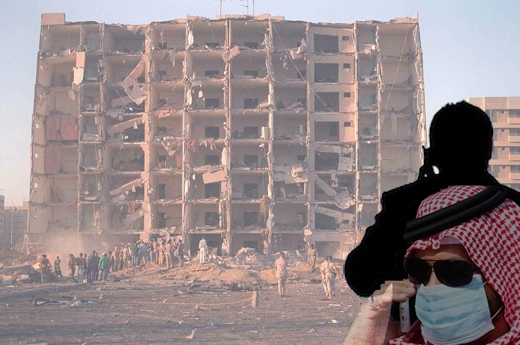
The name of al-Mughassil has become synonymous with the bombing of Khobar Towers [a military housing complex] in Dhahran, Saudi Arabia which killed 19 US servicemen and injured hundreds of others. Nineteen years on, those behind the bombing have yet to be identified and no verdicts have been issued in the case. In line with its own interests, the Saudi government has sometimes pointed the finger of blame at Shiite groups inside the kingdom and at others at Al-Qaeda.

Tabnak.ir on August 30 released a report on the Khobar bombing and its possible impact on the fate of the Iran nuclear deal in the US Congress. The following is the translation of the report:

What happened during the attack on Khobar Towers?

Khobar Towers are located in the national oil company headquarters of Dhahran. They were a base for foreign troops on June 25, 1996 when the attack took place. Prior to the Khobar Towers bombing, there were threats against the presence of US forces in Saudi Arabia. Hours after the bombing, US forces accused Hezbollah Al-Hejaz [the Saudi wing of Hezbollah group] of carrying out the attack. The accusation was repeated in the following years.

The Americans alleged that the bomb was made in South Lebanon. They said its force was estimated to be equal to about 10 tons of TNT. The Americans say that al-Mughassil, as the commander of the military wing of Hezbollah Al-Hejaz, has had a hand in the terror attack which killed 19 US airmen and wounded more than 370.

The suspects of the Khobar Towers bombing

On the day of the bombing, the United States blamed Hezbollah Al-Hejaz for the attack, and in 2006 a US court accused Iran and [Lebanon’s] Hezbollah of masterminding the bombing. US officials claim that a number of Hezbollah Al-Hejaz members, including al-Mughassil, had been in contact with Iran and Hezbollah in Iran, Syria and Lebanon, saying they picked individuals to carry out the attack, put together the bomb in Lebanon and transferred it to Saudi Arabia and then launched the bomb attack.

These claims took a new turn in 2001 when the Bush administration released a most wanted list of suspected terrorists and put a five-million-dollar bounty on al-Mughassil’s head. Since then, Iran has been said to be the possible hideout of al-Mughassil.

In the meantime, over the past 20 years [political] movements inside Saudi Arabia, especially Al-Qaeda, have also been accused of being behind the bombing attack. In its first comments on the mastermind of the attack, Saudi Arabia pointed an accusing finger at Afghan Arabs, those Arabs who had been a veteran [of such attacks] during the war in Afghanistan against the [former] Soviet Union.

In the following years, the Saudi officials changed their position on this. On certain occasions, they claimed that the Khobar Towers bombing was engineered outside the kingdom only to show that security was tight in Saudi Arabia, and on some other occasions they blamed the attack on Saudi nationals, among them members of Hezbollah Al-Hejaz.

Abdel Bari Atwan, a well-known Arab journalist who was one of the people that met with Osama bin Laden in Afghanistan, has said that bin Laden [the founder of al-Qaeda] has carried out the Khobar Towers bombing to flex his muscles after being expelled from Sudan in 1996.

In 2004, the 9-11 Commission [The National Commission on Terrorist Attacks on the United States] in a report said that bin Laden offered congratulations on the bombing on the same day it hit Saudi Arabia, adding that bin Laden had been looking for a way to ease the transfer of explosives to Saudi Arabia months before the Khobar bombing.

In comments in the following years, William Perry, the US Secretary of Defense at the time of the bombing, said [in an interview in June 2007] he “now believes al-Qaeda [rather than Iran] was behind a 1996 truck bombing at an American military base”.

Al-Mughassil’s arrest and reactions

After AlAsharq Al-Awsat released the news on the arrest of Al-Mughassil, Saudi officials declined to comment. Despite the fact that the Saudis kept mum over the news, an American daily newspaper – the New York Times – quoted unknown Saudi officials as talking about the arrest, and substantiated the reports of Al-Mughassil’s arrest.

There are different accounts on how Al-Mughassil has been taken into [Saudi] custody. Certain Zionist media claim that Saudi fighter jets had a role in bringing down the plane carrying Al-Mughassil. Some Lebanese newspapers have said that Al-Mughassil has been arrested by the Lebanese government forces upon arrival in Beirut and immediately sent to Saudi Arabia. Another report says that Al-Mughassil was taken into custody and transferred to Saudi Arabia two weeks before the news was broken.

A number of newspapers in Lebanon accuse the anti-Hezbollah movements of playing a role in Al-Mughassil’s takedown, but Hezbollah Al-Hejaz has in a message to Reuters denounced the move.

Regardless of claims about the Khobar Towers incident and Saudi Arabia’s contradictory positions on the attack over the years, the news on the arrest of Al-Mughassil in the buildup to a review by the US Congress of the Iran nuclear deal has fuelled speculations [on the timing of the reported arrest].

Bruce Riedel [one of America’s leading experts on US security, South Asia, and counter-terrorism], a former member of US security institutes who had reviewed the Khobar attack, has cited Saudi officials as saying that Mughassil’s case, his interrogation, the possible role of the US in it [interrogation] and his extradition to the US are among the topics which will come up for discussion in a planned trip by the Saudi King to the United States and his meeting with President Obama.

He also says that the Saudis are trying to evoke an old story simply to discredit the Iranian leaders before a decision is made [on Capitol Hill] on the nuclear deal and influence the warming of ties between Iran and the West after the [conclusion of the] deal.

Principlists win elections for Presiding Board of Tehran City Council

Chamran

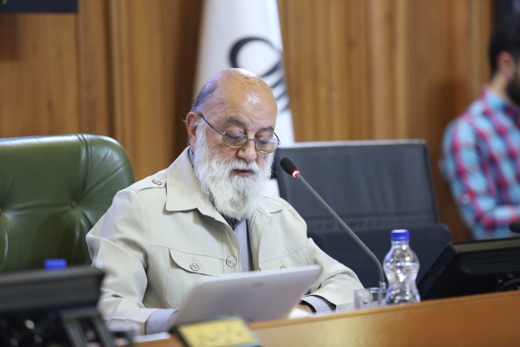
In an in-house vote for the Presiding Board of Tehran City Council on September 1, [principlist] Mehdi Chamran secured the chairmanship of the council for a second time in its current term.

The following is the translation of an excerpt of a Tasnim News Agency report on the vote, followed by a short note by IFP about the important role that independent members of the council play in the election of the board:

Chamran’s victory came as Morteza Talaei, another principlist, beat his reformist rival, Hakimipour, to become deputy chairman. The results tilt the balance in favor of principlists in the Presiding Board of the council.

The victories of the principlists come despite efforts earlier by reformists through multiple meetings with independent councilors to secure the chairmanship of the council.

[Reports in the Iranian press suggest there have been intensive lobbying by rival camps at Tehran City Council to win more votes and secure the chairmanship of the council. Three independent members of the council, with less political and partisan leanings, have played an important role in the victory of Mehdi Chamran – a close ally of Tehran Mayor Mohammad Bagher Ghalibaf who was a rival of Hassan Rouhani in the 2013 presidential race – over Ahmad Masjedjamei, a reformist and a former minister under former President Khatami. These three, all of them famous athletes and World and Olympic medalists, are Hossein Rezazadeh, an Olympic weightlifting champion, Hadi Saei, an Olympic taekwondo champion, and Alireza Dabir, a World wrestling champion.]

Iran unveils radars that can detect stealth targets

Iran air defense system

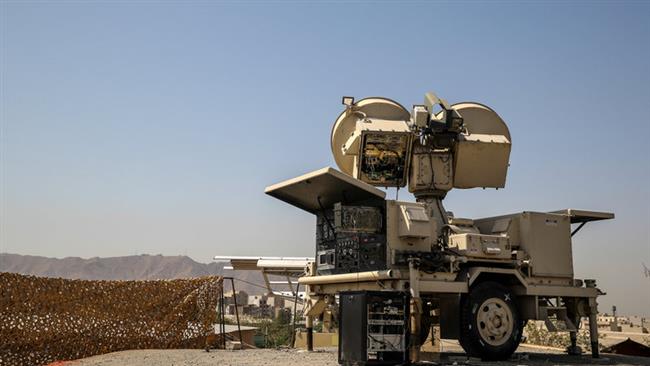
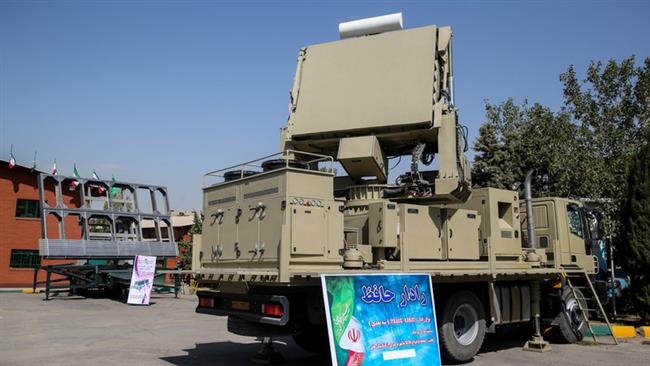
The radar systems, dubbed Nazir and Bina, were unveiled on Tuesday in a ceremony attended by Commander of Iran’s Khatam al-Anbiya Air Defense Base Brigadier General Farzad Esmaili.

Nazir is a long-range radar system that can detect and track hostile aerial targets within a radius of 800 kilometers at an estimated altitude of 100,000 feet, while Bina uses three-dimensional (3-D) technology to detect radar-evading targets. It can also be used to deter electronic warfare.

The two radar systems have been deployed in mountainous and plain areas in the southeastern parts of Iran.

Speaking on the sidelines of the unveiling ceremony, Esmaili said the systems are “unique” in the region and the world.

The Iranian commander said the advanced radar systems are “multi-board” and can detect wide-body military aircraft, stealth targets and small flying objects at high altitudes.


Iran Hafez Radar System
The Iranian Hafez radar system unveiled on August 29, 2015 (Photo by ISNA)


In recent years, Iran has made great achievements in its defense sector and reached self-sufficiency in producing essential military equipment and systems.

The Islamic Republic of Iran has repeatedly assured other nations, especially regional neighbors, that its military might poses no threat to other countries, stating that its defense doctrine is merely based on deterrence.

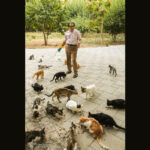
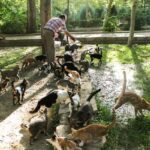
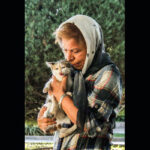
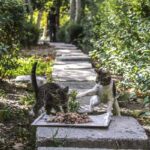
An act of kindness toward animals (PHOTOS)

0

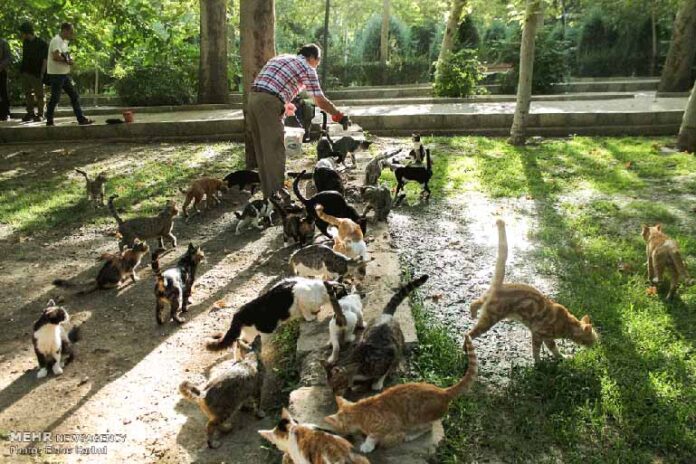
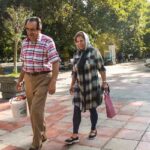
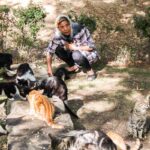
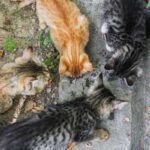
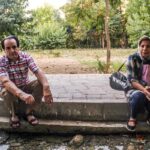
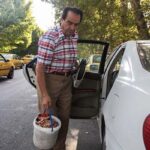
It’s been over two years since Mr. and Mrs. Salehi started going to Tehran’s Laleh Park daily with a bucket-load of food to feed cats. They believe this small act of kindness brings peace and blessings to their lives.

Images of the couple feeding cats in the park posted online by Mehr News Agency:

British top diplomat: We will repair economic ties with Iran

Hammond-IRINN

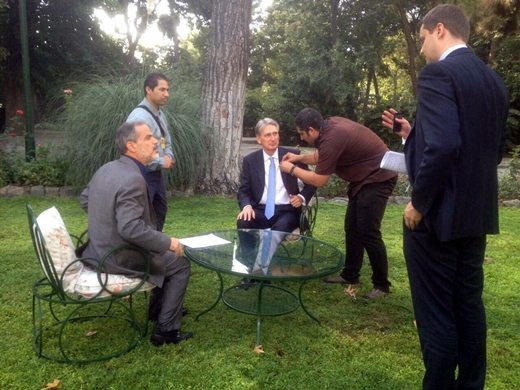
British Foreign Secretary Philip Hammond has said that London is seeking to repair its economic ties with Tehran.

The British top diplomat made the remark in an exclusive interview with the Islamic Republic of Iran News Network (IRINN) and added that London wants to be part of the growing economic activities in post-nuclear deal Iran.

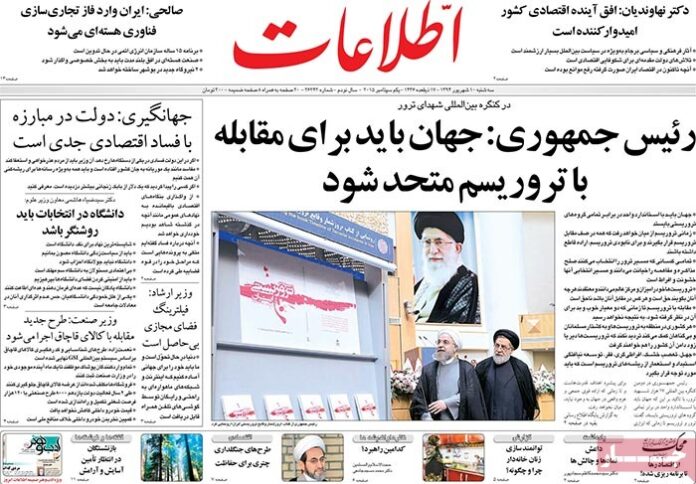
Ettela’at newspaper, on August 31, published a report on Secretary Hammond’s remarks in the interview. The following is the translation from Farsi of what Secretary Hammond said:

Ties with Iran

Iran is implementing its commitments within the framework of the Joint Comprehensive Plan of Action (JCPOA), sanctions are about to be removed and Iran’s assets are to be unfrozen. Iran’s economy will start to grow rapidly and this will open up an opportunity for international companies to invest in and do business with Iran. London wants to be part of the economic development drive in Iran in the coming years.

Ties with FM Zarif

Zarif and I know each other well. We spent many days together during nuclear talks in Geneva and Lausanne. During the talks, we raised a lot of issues on different fronts. Britain and Iran see eye to eye on some issues and are at odds over others.

We came to agree that we’d better pursue things through dialogue rather than confrontation, whether we agree or not.

Prospects of ties with Tehran

Since two years ago when President Rouhani was elected, we’ve witnessed a steady growing trend in ties between the two countries, especially after a meeting between Prime Minister David Cameron and [President] Rouhani on the sidelines of the UN General Assembly session in New York last year.

Now JCPOA has been added to the current trend. This trend is a new opportunity for us to resume bilateral ties which were plagued by multiple difficulties in the past. London and Tehran should look for [new] areas to work on. We [London and Tehran] share similar views on the challenges the world is facing. We also need to work out a strategy to manage the areas over which we remain divided.

How to win Iran’s trust

Let me be clear. The British people have no trust in Iran either. I should say that deep-seated distrust has grown between the two sides and this has its roots in the past developments and a lack of understanding of the other side’s viewpoints.

To leave behind this stage and facilitate the affairs, we need to improve the atmosphere; we should let the Iranian and British people have contacts, boost relations between businessmen and university institutes of the two sides, upgrade cultural ties and set the stage for the two sides to have more exchanges and carry out more studies.

Ties between the two nations

People in the two countries should know each other. More familiarity and mutual understanding will reduce misunderstandings. Through bilateral contacts, dialogue and development of an understanding of the other side, we can improve London-Tehran ties.

Iran has re-started to take measures to join global markets, and – as a result – the Iranians will be able to freely go abroad and pursue their studies. The British people too can visit Iran.

We need to develop a better understanding of each other through official meetings. The two countries have reopened their embassies and this means the two sides have the opportunity to hold regular talks [at higher levels] rather than occasional meetings at foreign ministerial level.

What builds trust is compliance by all parties to the talks between Iran and P5+1 with all agreements based on the text of JCPOA. All sides have remained committed to such a trend. This commitment will bolster confidence-building measures.


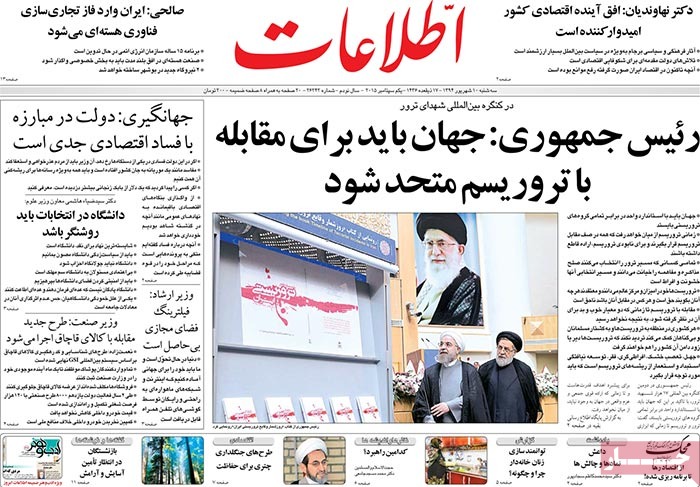
Highlights of Ettela’at newspaper on September 1

Ettelaat

 President Rouhani has called on the world nations to form a united front in the fight against terrorism.

Speaking at an international congress on those who have been martyred at the hands of terrorists, the president said those who choose to walk down the path of terrorism view peace, dialogue and understanding as treason and opt for violence and extremism.

 The chief of staff of President Rouhani has described the economic prospects of the country as promising.

Mohammad Nahavandian hailed the cultural and political effects of the Iran nuclear deal, especially on the international political front, as valuable.

 The director of the Atomic Energy Organization has said that Iran will commercialize nuclear technology.

Ali Akbar Salehi said his organization is drawing up a 15-year development plan.

 First Vice-President Eshagh Jahangiri has said that the administration is serious in the fight against corruption.

Eshagh Jahangiri said that if there is corruption in a ministry, the minister should apologize to the public before tendering his resignation.

 “Universities should play an enlightening role in elections,” said the deputy science minister.

Dr. Seyyed Zia Hashemi further said universities are the best institutions to critique the establishment.

 The minister of culture and Islamic guidance has said that blocking Internet sites is useless.

Ali Jannati further said that the world is transforming fast and that officials should prepare themselves for a world in which Internet and satellite channels will be available free of charge on cell phones.

 The industry minister has said that a new plan to fight smuggling in goods will be implemented.

The new plan requires shops to stop selling items which are smuggled into the country.

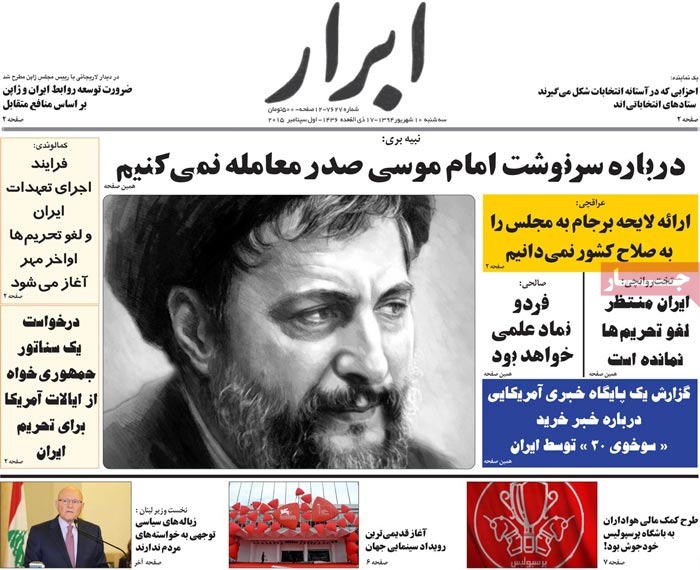
A look at Iranian newspaper front pages on September 1

Iranian Newspapers Headlines

The comments of the president in condemnation of terrorism and those of the judiciary chief about social and cultural issues dominated the front pages of Iranian newspapers on Tuesday.


Ettela’at: President Rouhani has called on the world nations to form a united front in the fight against terrorism.

Speaking at an international congress on those who have been martyred at the hands of terrorists, the president said those who choose to walk down the path of terrorism view peace, dialogue and understanding as treason and opt for violence and extremism.


Abrar: The spokesman of the Atomic Energy Organization of Iran has said that implementation of Iran’s commitments and the lifting of sanctions [under the Vienna accord] will get underway in mid-October.

Abrar: Iranian nuclear negotiator Abbas Araghchi has said that presentation of a bill to parliament on the Joint Comprehensive Plan of Action is not expedient.

Abrar: “Iran is not waiting for the termination of sanctions [to do its business],” said Takht-e Ravanchi, a deputy foreign minister.
 

A look at Iranian newspaper front pages on September 1


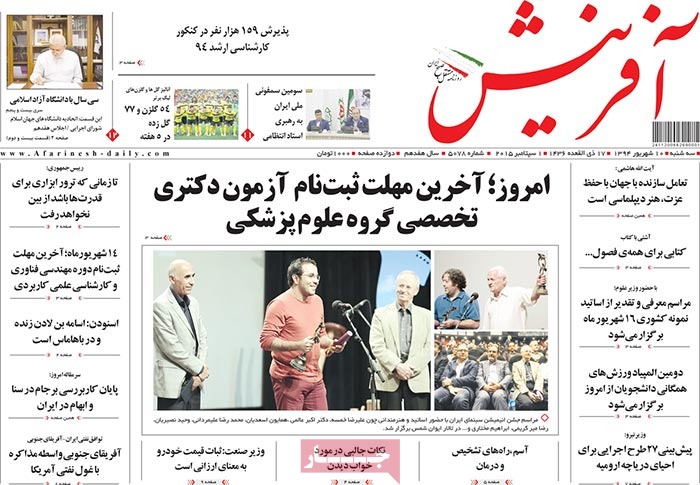
Afarinesh: “Terrorism won’t be eliminated as long as it remains a tool in the hands of major powers,” said President Rouhani.

Afarinesh: South Africa acts as a go-between for talks with an American oil giant.
 

A look at Iranian newspaper front pages on September 1


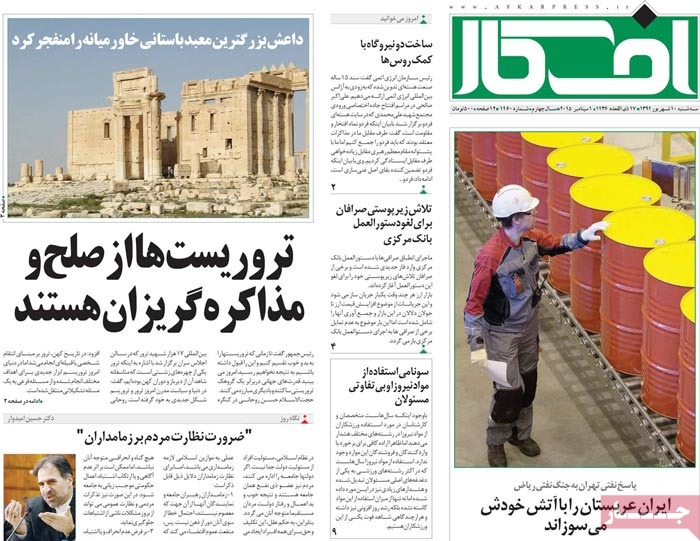
Afkar: Iran is to build two new power plants with the assistance of Russia.
 

A look at Iranian newspaper front pages on September 1


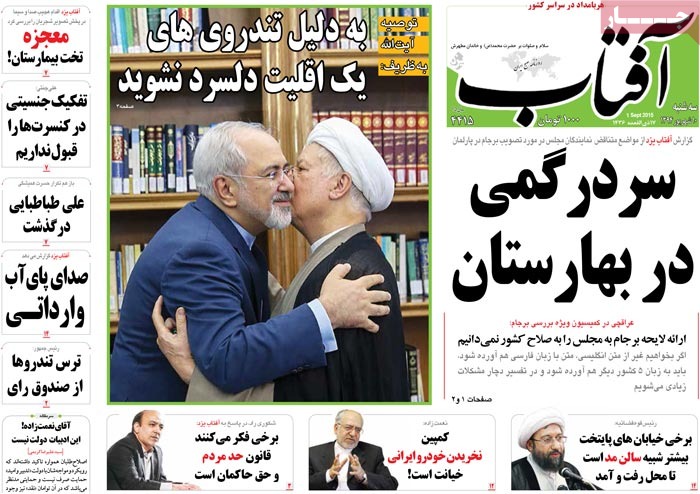
Aftab-e Yazd: Ayatollah Rafsanjani has told Foreign Minister Zarif he should not allow the extremist measures of a minority bunch to dampen his enthusiasm.
 

A look at Iranian newspaper front pages on September 1


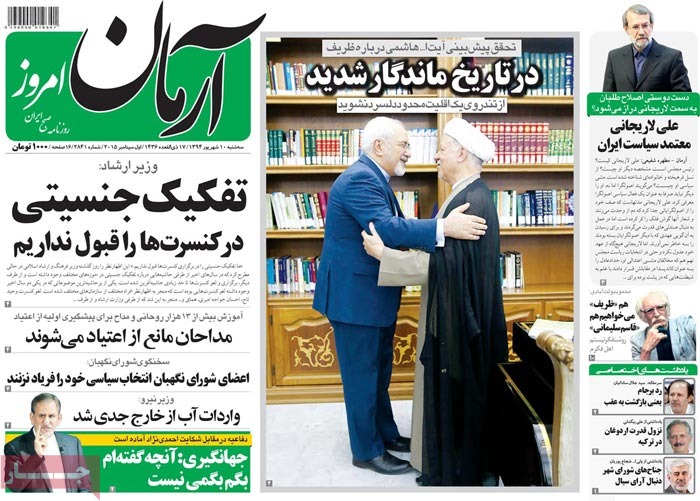
Arman-e Emrooz: “You will go down in history,” said the chairman of the Expediency Council at a meeting with Foreign Minister Zarif.

Arman-e Emrooz: Ali Larijani, the confidant of Iranian politics

Will the reformists stretch out a hand of friendship to Larijani?

Arman-e Emrooz: The minister of culture has said that segregation of men from women in concerts is unacceptable.

Arman-e Emrooz: More than 13,000 religious preachers and elegists have been trained to promote anti-addiction measures.
 

A look at Iranian newspaper front pages on September 1


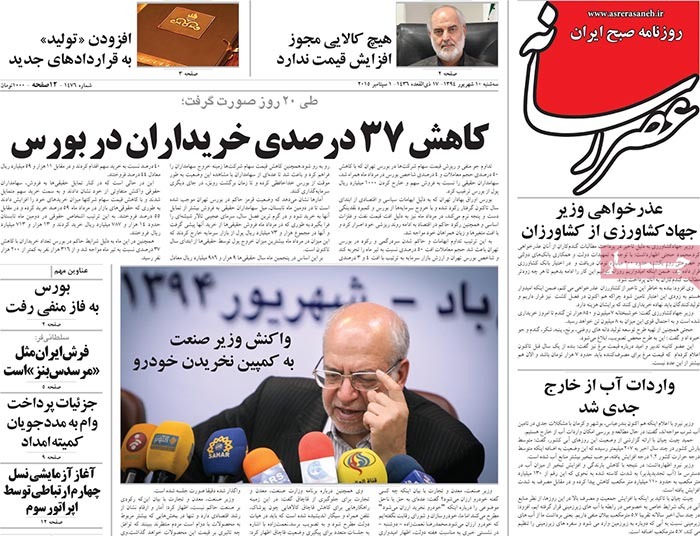
Asr-e Rasaneh: Imports of drinking water from overseas have become a serious option.
 

A look at Iranian newspaper front pages on September 1


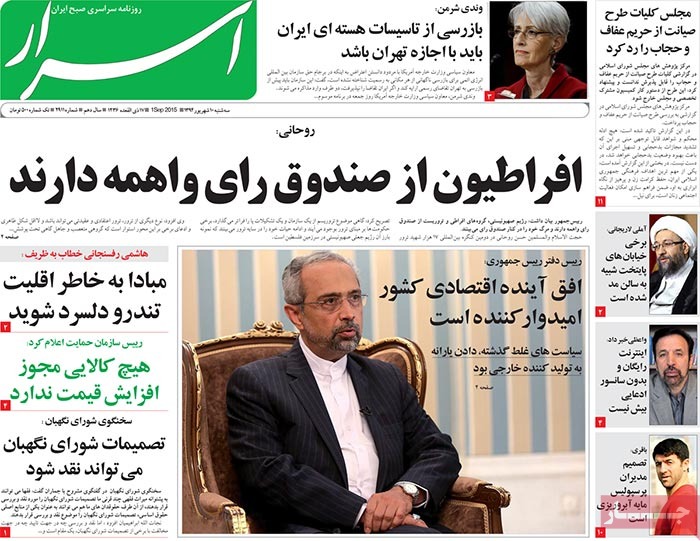
Asrar: “The decisions of the Guardian Council can be critiqued,” said the spokesman of the council.
 

A look at Iranian newspaper front pages on September 1


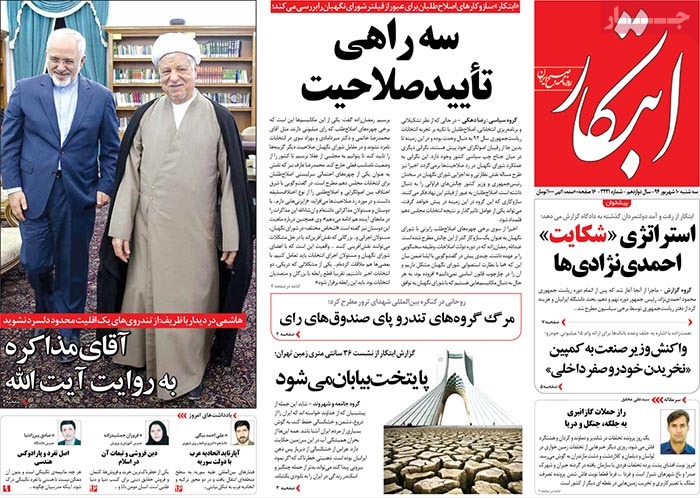
Ebtekar: President Rouhani has said that extremist groups see their death in balloting boxes.
 

A look at Iranian newspaper front pages on September 1


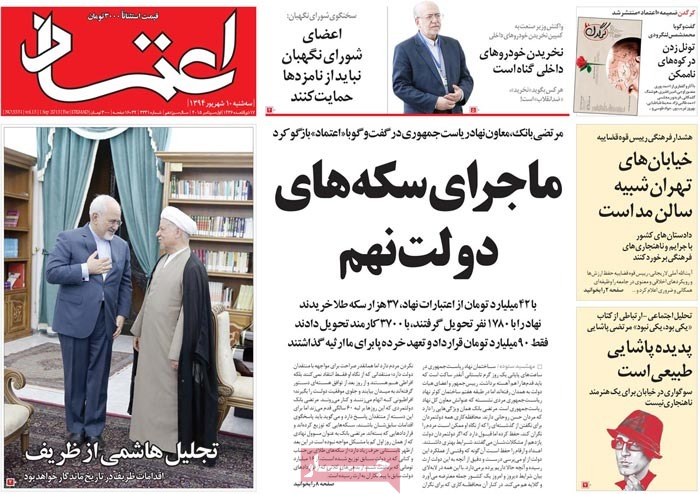
Etemad: “Refusal to purchase locally-manufactured cars is sinful,” said the minister of trade and industries.

Etemad: “Members of the Guardian Council should not support electoral candidates,” said the spokesman of the council.

Etemad: Ayatollah Rafsanjani has praised the services of Foreign Minister Zarif.
 

A look at Iranian newspaper front pages on September 1


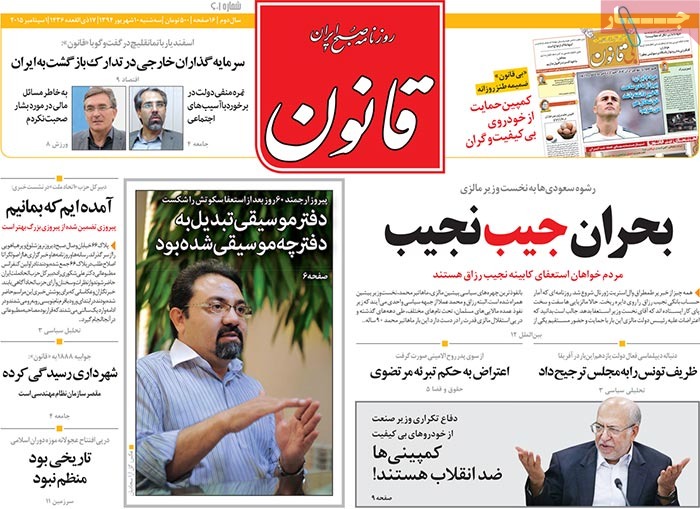
Ghanoon: The father of Ruholamini [who died in Kahrizak detention facility] has appealed the verdict that acquits Saeed Mortazavi [who stood accused of being an accessory to the murder of his son].
 

A look at Iranian newspaper front pages on September 1


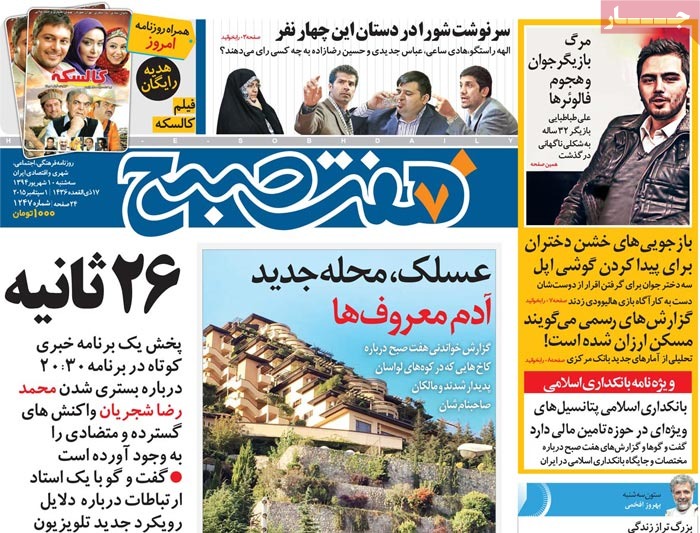
Haft-e Sobh: Ali Tabatabaei, a 32-year-old actor of small- and big-screen, has died of a heart attack.
 

A look at Iranian newspaper front pages on September 1


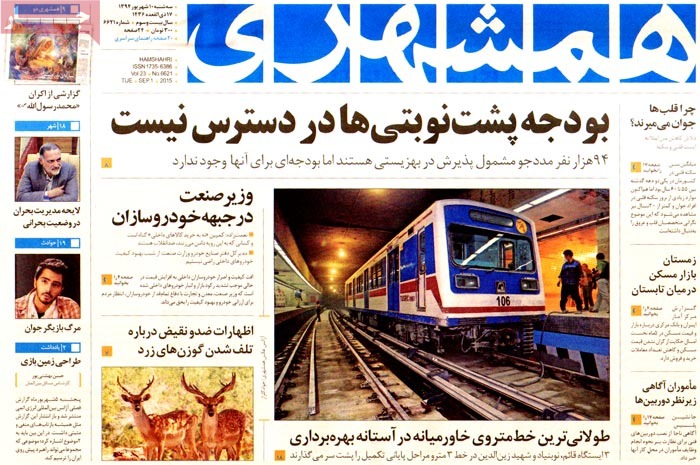
Hamshahri: The longest subway line in the Middle East is to be inaugurated in Tehran.
 

A look at Iranian newspaper front pages on September 1


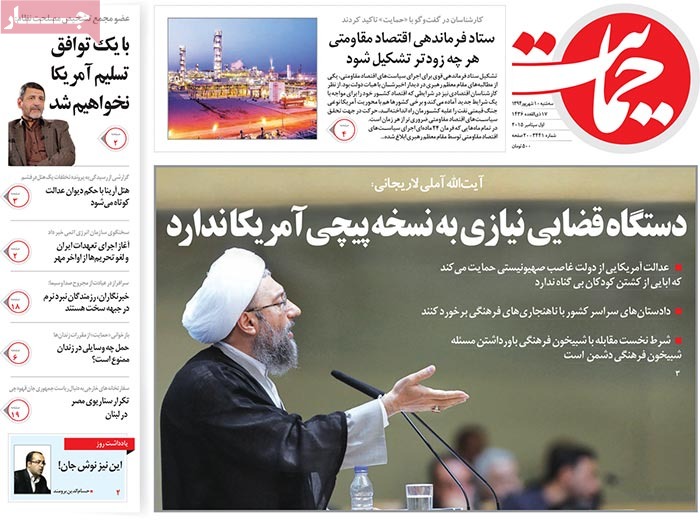
Hemayat: “We won’t bow to the US on the back of a deal [a reference to the Vienna nuclear accord],” said Saffar Harandi, a member of the Expediency Council.

Hemayat: “The Iranian judicial system does not need American prescriptions,” said the judiciary chief.

He said the American-style justice supports the Zionist regime which does not hesitate to kill children.

Ayatollah Sadegh Amoli Larijani also urged prosecutors across the country to take on cultural abnormalities.
 

A look at Iranian newspaper front pages on September 1


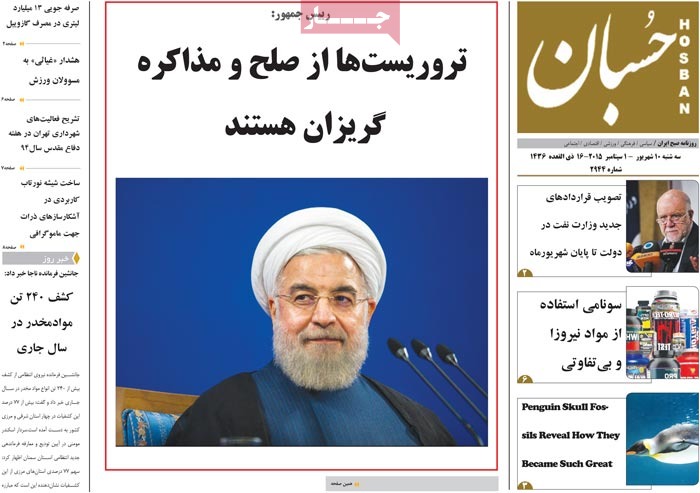
Hosban: Iranianpolice have seized more than 240 tons of illicit drugs this year [started March 21, 2015].
 

A look at Iranian newspaper front pages on September 1


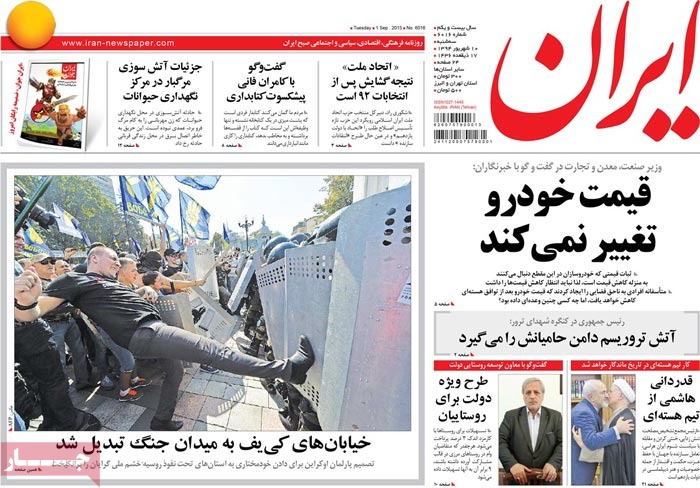
Iran: There has been a deadly fire at an animal shelter.

Iran: “Those who support terrorists are bound to be burned in the fire they help light,” President Rouhani said.
 

A look at Iranian newspaper front pages on September 1


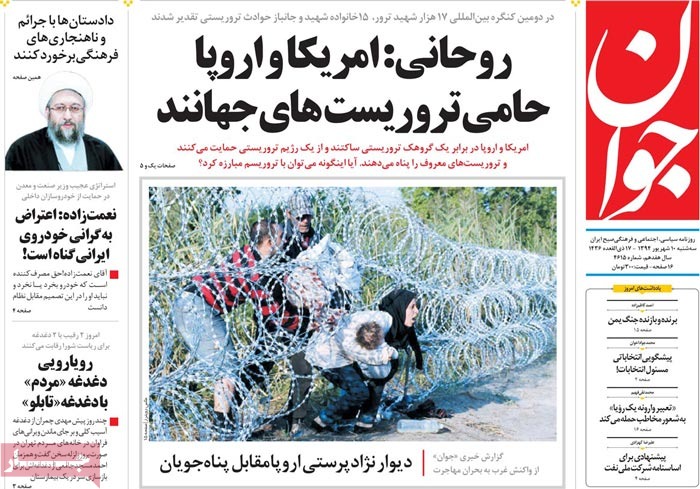
Javan: Rouhani: The US and Europe are sponsoring terror in the world.

“The US and Europe keep silent in the face of a terrorist grouping and support a terrorist regime. They offer refuge to ill-famed terrorists. How can one fight terrorists like this?” the president said.
 

A look at Iranian newspaper front pages on September 1


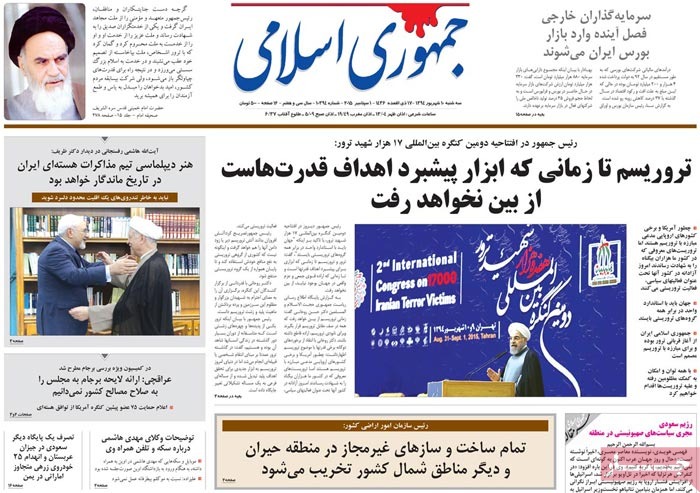
Jomhouri Islami: “All buildings illegally constructed in Heyran Village will be pulled down,” said the director of the Land Affairs Organization.

Jomhouri Islami: Foreign investors will make their way into the Iranian stock market as of next season.
 

A look at Iranian newspaper front pages on September 1


Kaenat: India is after $3 billion presence in Iran’s petrochemical industry.

Kaenat: “The country’s nuclear activities won’t stop,” said the Iranian nuclear chief.
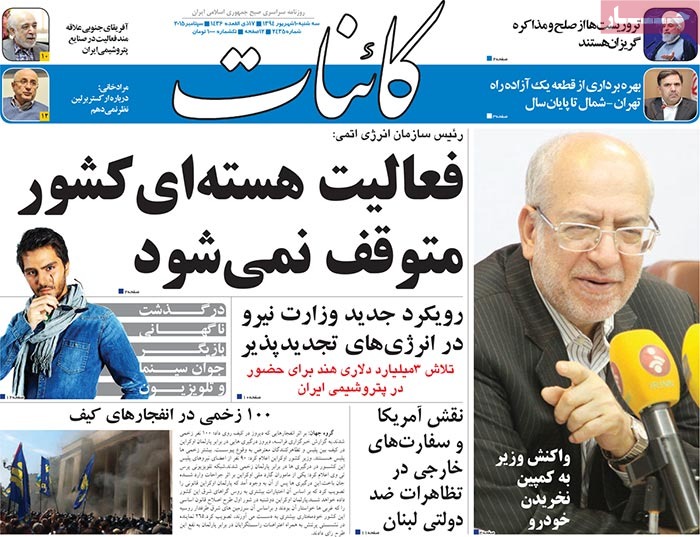
 

A look at Iranian newspaper front pages on September 1


Kayhan: Smuggled medicinal drugs worth $81 million have been seized; 90 smugglers have been arrested.

Kayhan: In the post-deal era, Obama seeks to complement old sanctions with new ones!
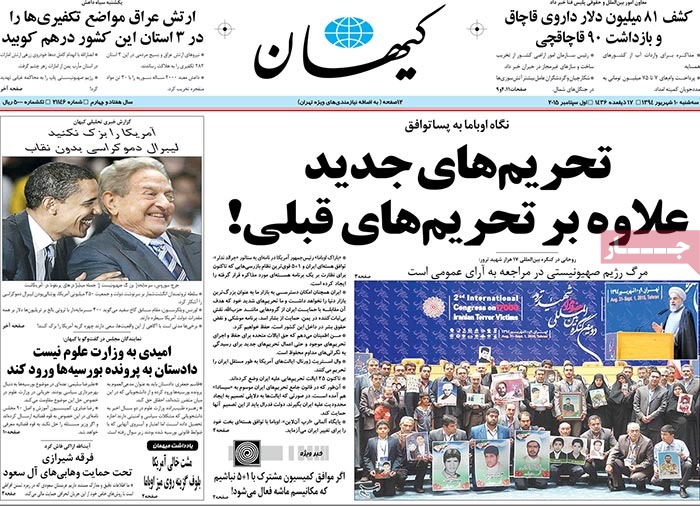
 

A look at Iranian newspaper front pages on September 1


Khorasan: “The campaign not to buy brand new locally-manufactured cars amounts to betrayal to national production,” said the industry minister.
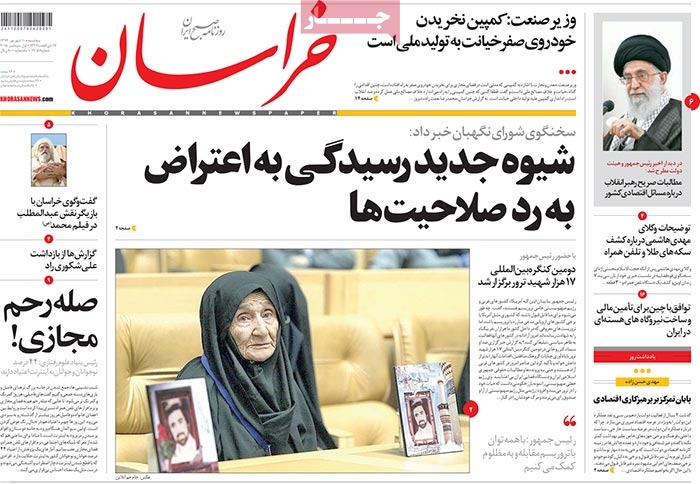
 

A look at Iranian newspaper front pages on September 1


Mardomsalari: Iran is to invest $60 billion in development of South Pars, the largest shared gas field in the world.
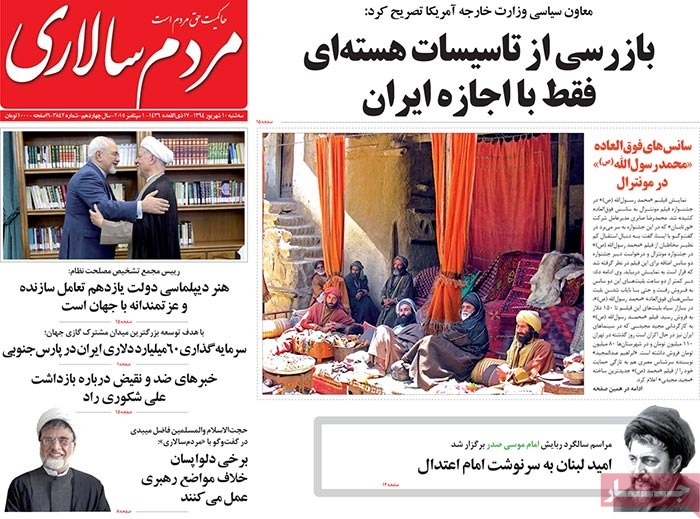
 

A look at Iranian newspaper front pages on September 1


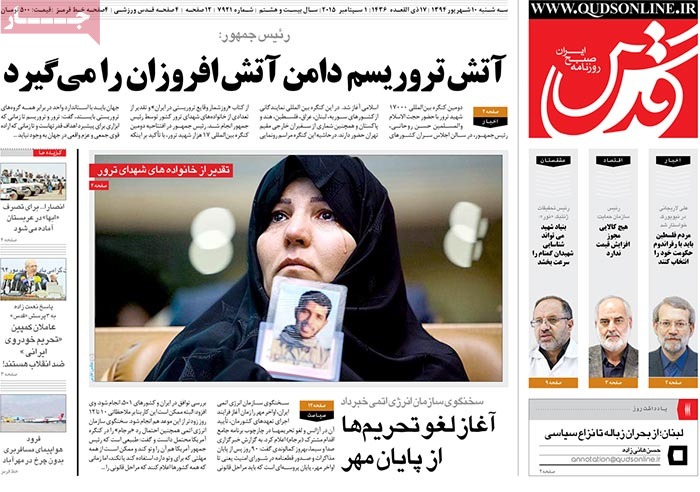
Qods: “The Palestinians should take part in a referendum to choose their government,” said Parliament Speaker Ali Larijani.
 

A look at Iranian newspaper front pages on September 1


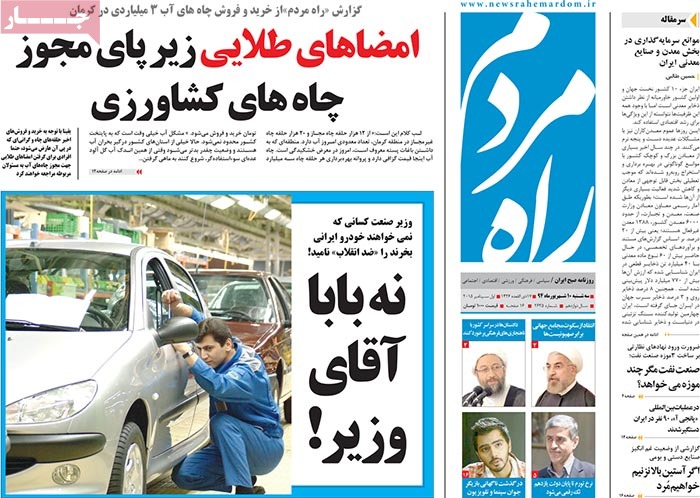
Rah-e Mardom: “Inflation will have slipped into single digits by the end of the government’s term in office in 2017,” said the economy minister.

Rah-e Mardom: Is that so, Mr. Minister?

The industry minister has slammed as anti-revolutionary those who do not want to buy Iranian-made cars.
 

A look at Iranian newspaper front pages on September 1


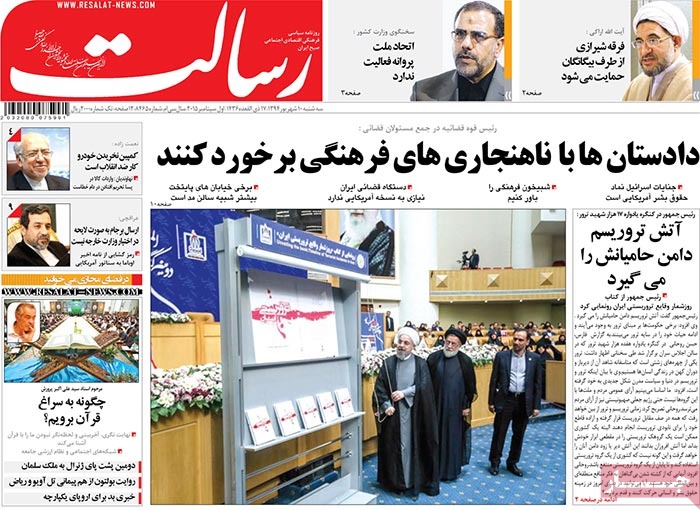
Resalat: “The Unity of Nation Party does not have a license to operate,” said the spokesman of the Interior Ministry.
 

A look at Iranian newspaper front pages on September 1


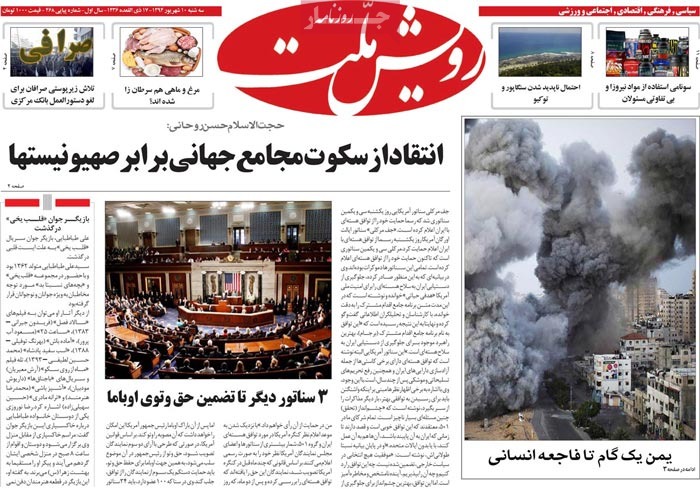
Rooyesh-e Mellat: The president has criticized the international community for its silence in the face of Zionists.

Rooyesh-e Mellat: With just three more senators on board, Congress would not be able to override the president’s veto of its rejection of the Iranian nuclear deal.

Rooyesh-e Mellat: Yemen is only one step away from a human catastrophe.
 

A look at Iranian newspaper front pages on September 1


Setareh Sobh: The judiciary chief has said some Tehran streets are more like fashion houses than streets.
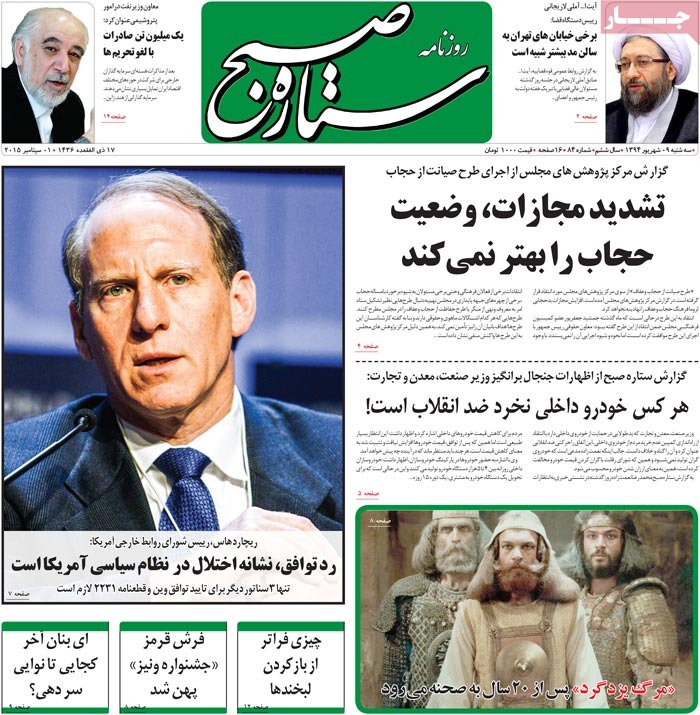
 

A look at Iranian newspaper front pages on September 1


Sharq: The judiciary chief has called on officials not to take the cultural onslaught of the enemy lightly.

Sharq: The vice-president for legal affairs has said the first vice-president is ready to mount a defense after the former president pressed charges against him.
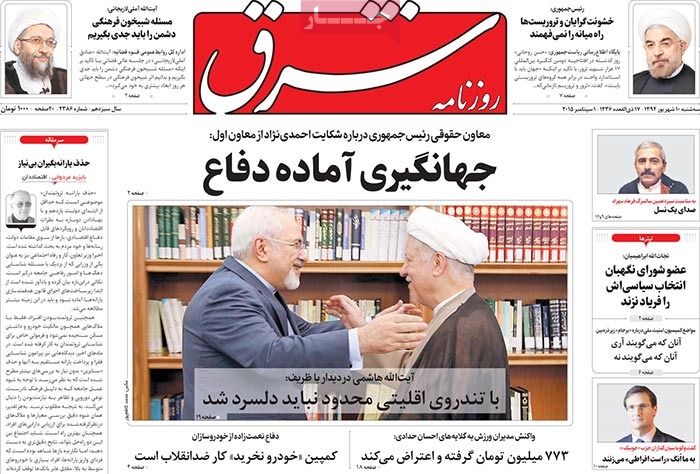
 

A look at Iranian newspaper front pages on September 1


Sobh-e Eghtesad: “The hostility between Iran and the US won’t be resolved through dialogue,” said the commander of the Basij force.
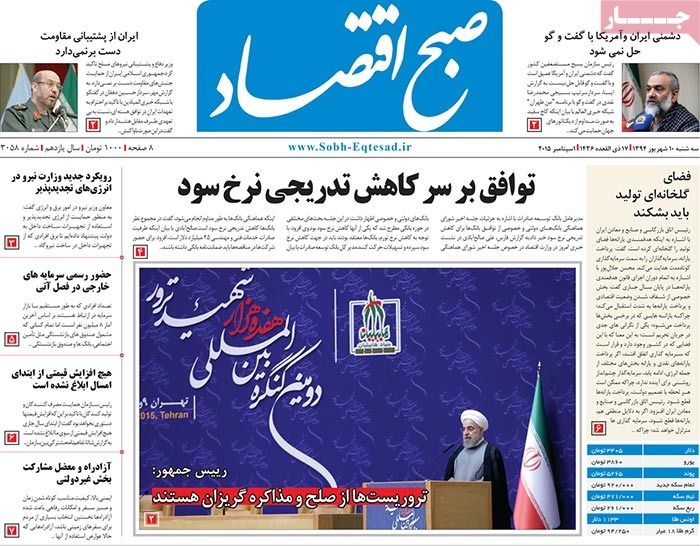
 

A look at Iranian newspaper front pages on September 1


Taadol: “Land prices increased 9-fold during the tenure of the previous government,” said the minister of roads and urban development.
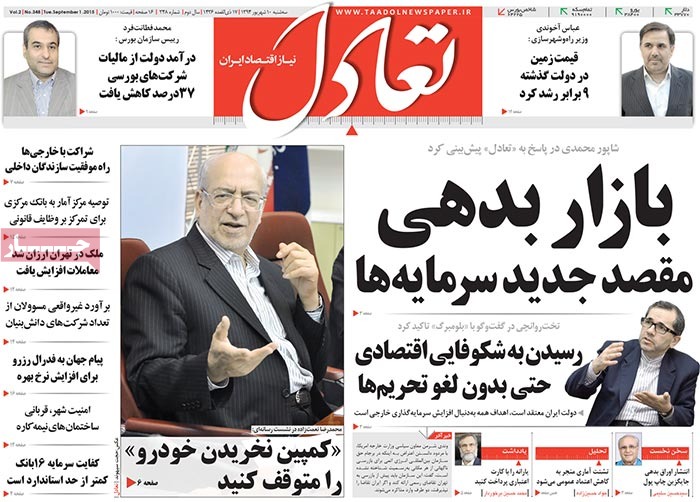

 

A look at Iranian newspaper front pages on September 1


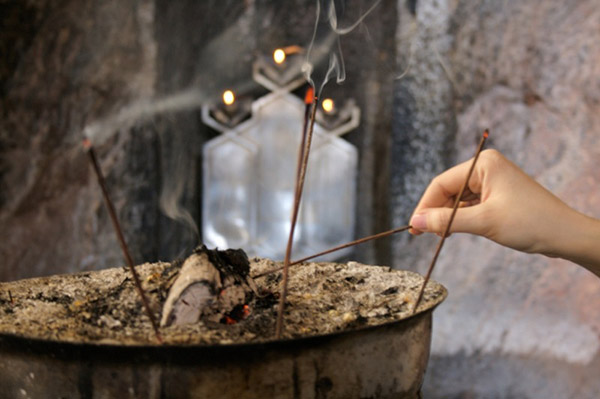
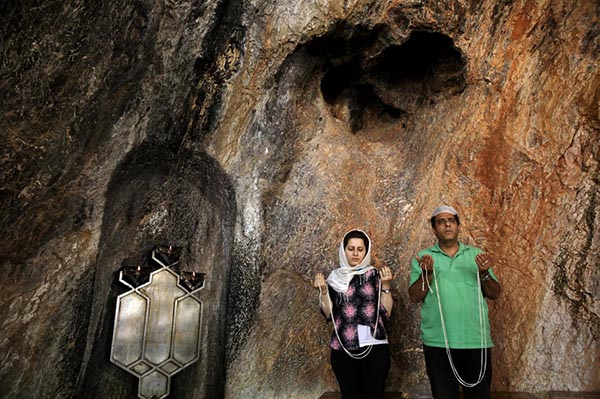
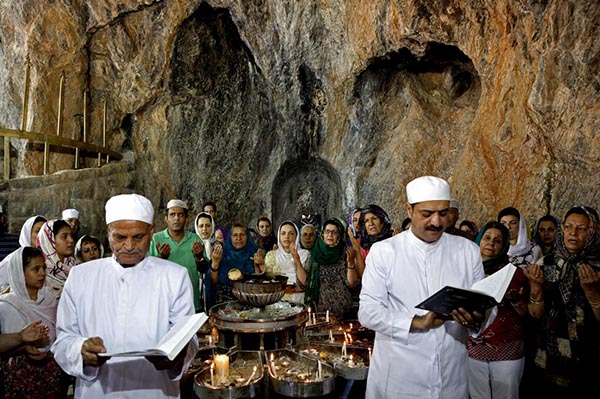
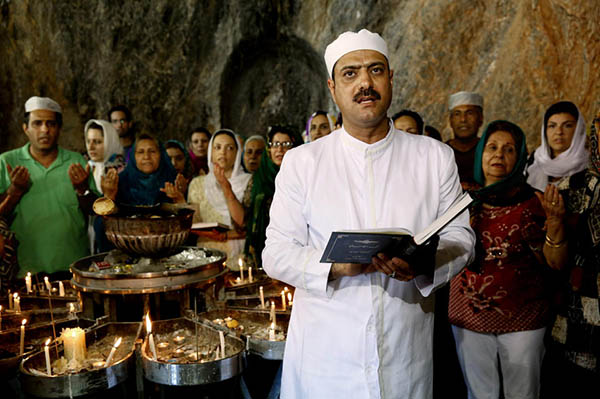
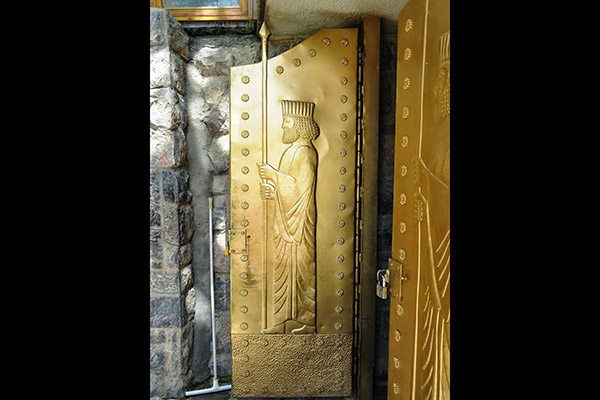
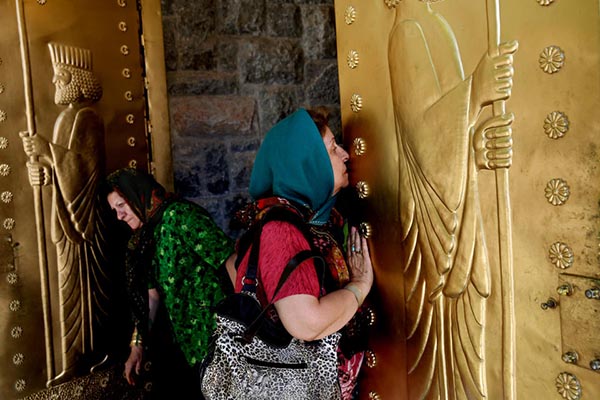
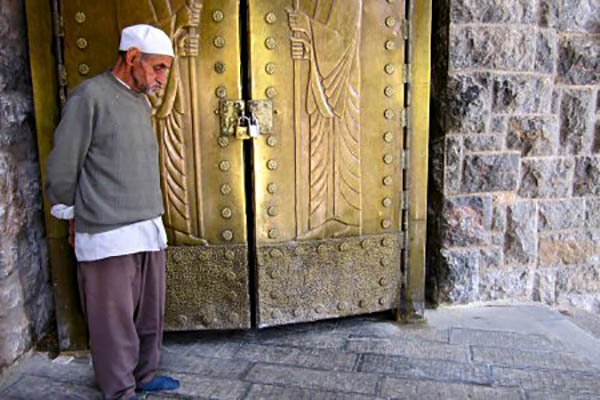
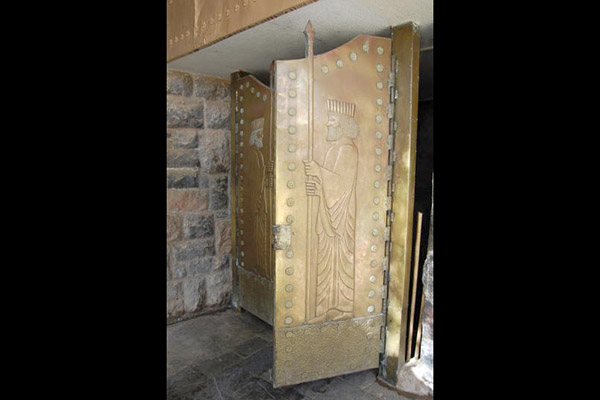
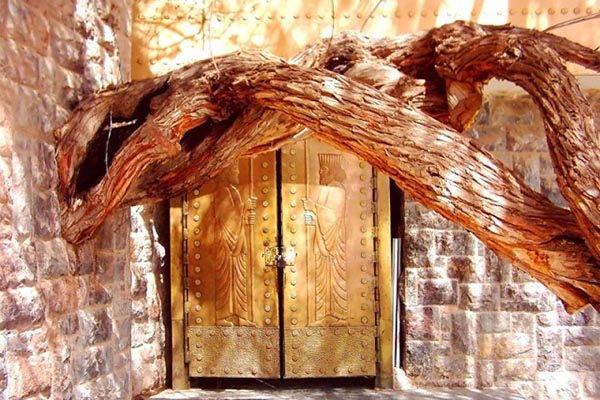
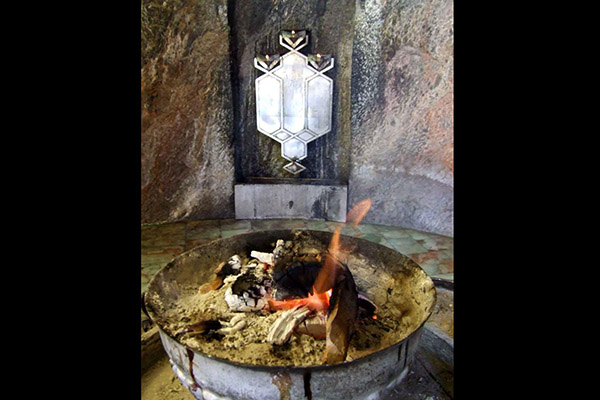
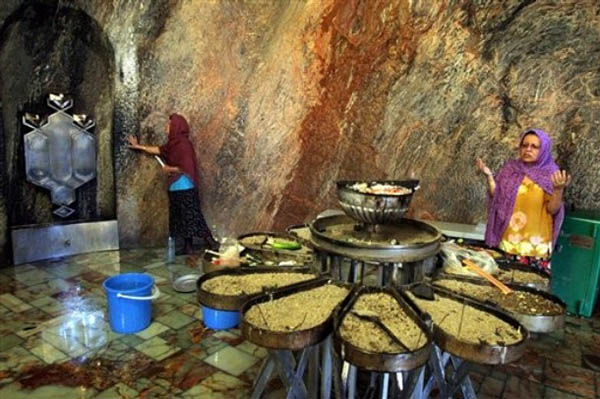
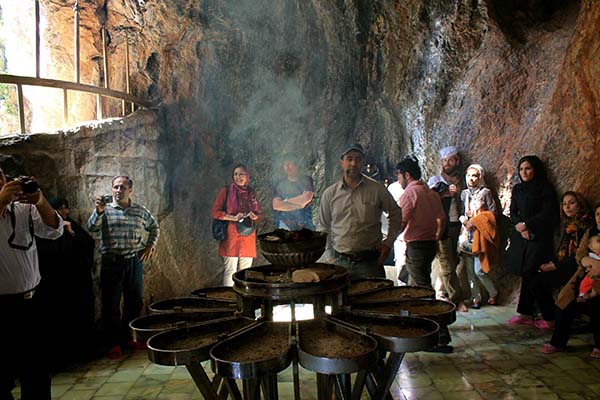
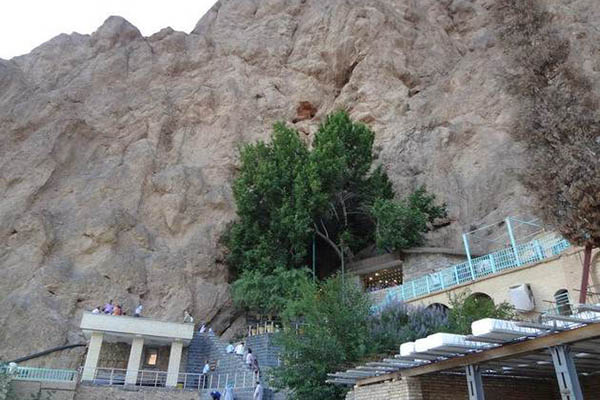
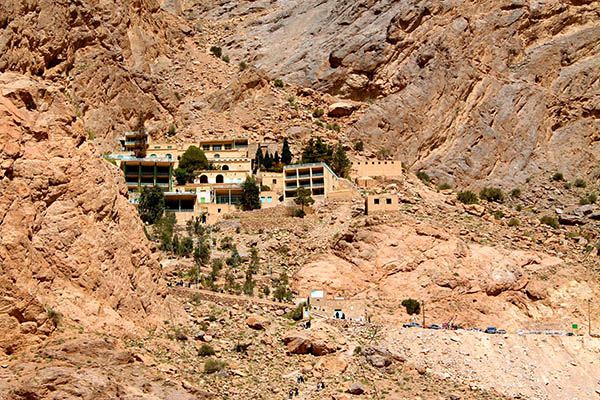
Chak Chak, a Zoroastrian shrine in central Iran

Chak Chak0

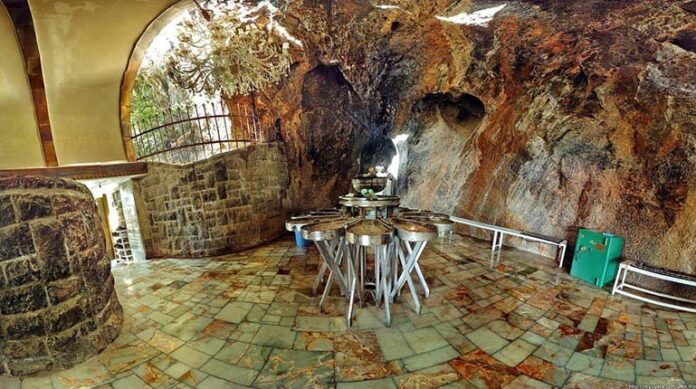
Chak Chak, also known as Pir-e Sabz, is a Zoroastrian house of worship 52 km to the northeast of Yazd, in central Iran.
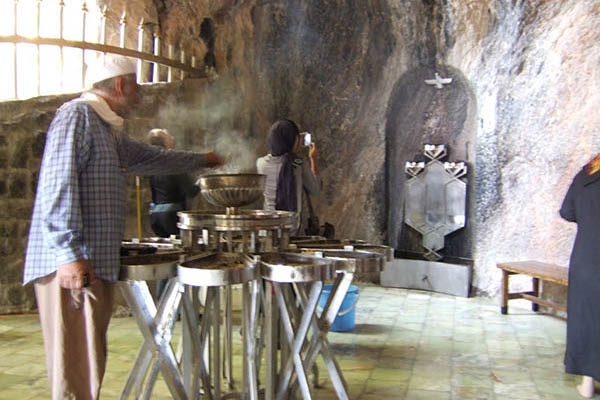
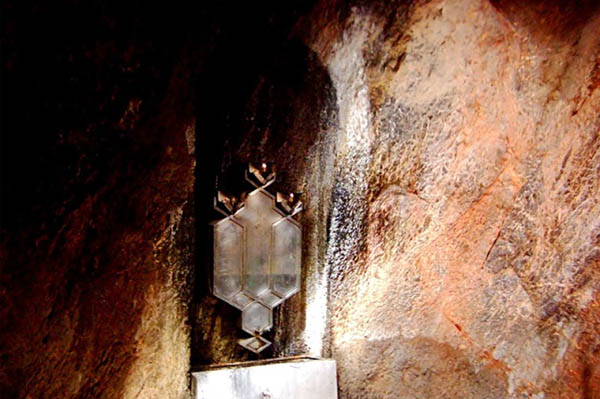
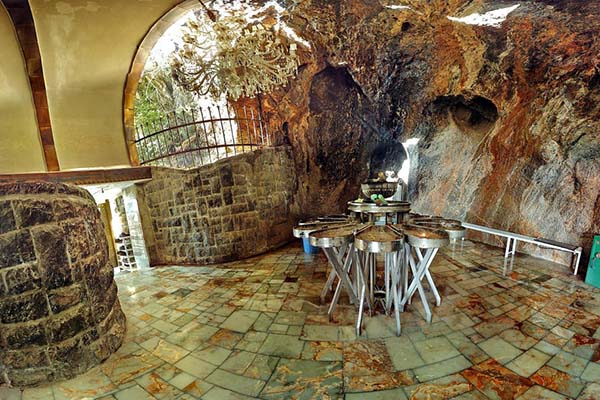
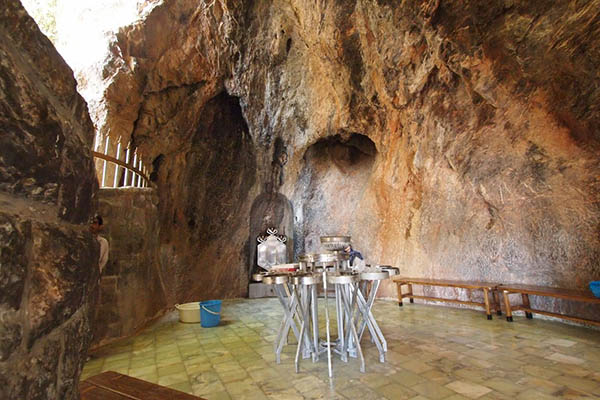
The holy site was named Chak Chak [drip drip] because of the sound of water drops that fall from its rocky ceiling.

The site is believed to be the sanctuary where Nikbanou, a Sassanid princess, took refuge to protect herself from an Arab invasion. Later a shepherd is said to have been ordered by Nikbanou, in his dream, to build the holy house.

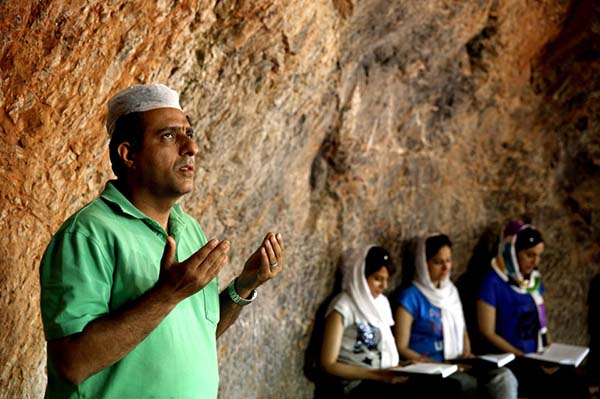
Chak Chak is very popular with both Zoroastrian pilgrims and Muslim tourists. But between June 14 and 18 each year, it is only open to Zoroastrian worshipers.

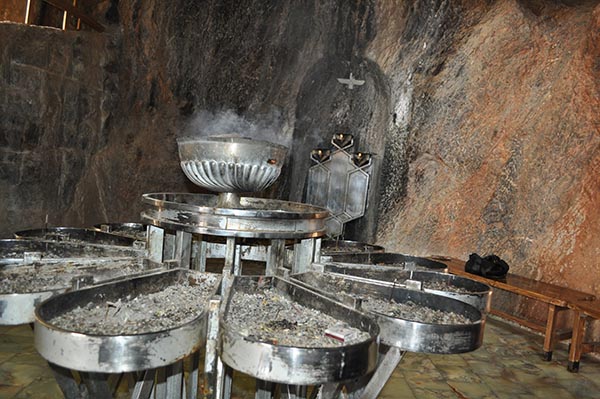
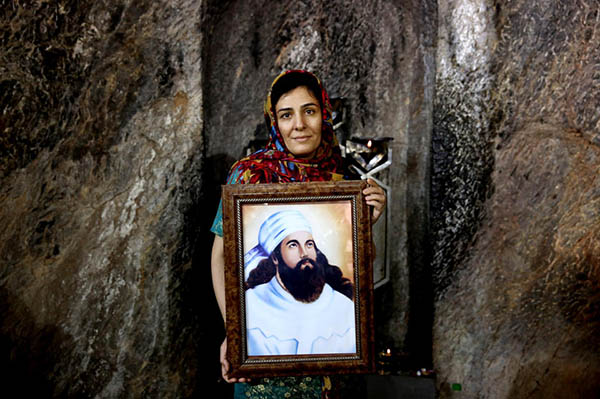
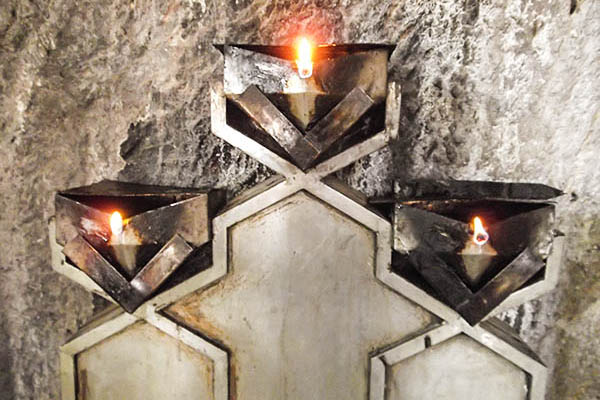
A number of candles are always burning at the pilgrimage site whose walls are graced with the icons of Zoroastrian scholars. There are containers on the temple floor to collect the dripping water which is later given to pilgrims as holy water.

The following are images of the holy site released by different websites:

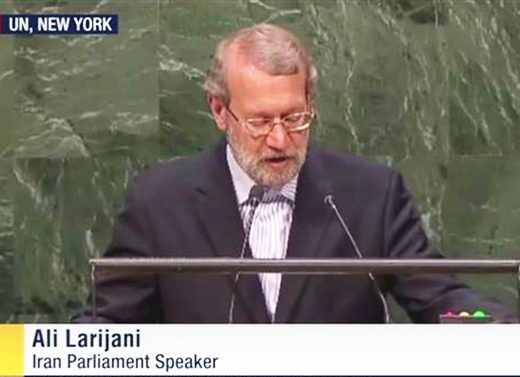
Iran resistance proved bullying ineffective: Parliament speaker

Larijani-UN

Parliament Speaker Ali Larijani has said that Iran has proven to the world that the weapon of force and bullying is no longer effective.

Larijani made the remarks in his address to the Fourth World Conference of Parliament Speakers, convened by the Geneva-based Inter-Parliamentary Union (IPU) in cooperation with the United Nations, at the UN headquarters in New York on Monday.

Some big powers tried to bring the Iranian nation to its knees, but the great Iranian nation stood against force by choosing the course of resistance and steadfastness and emerged victorious, he said.

By so doing, the Iranian nation showed that the weapon of force and bullying is old and ineffective and has lost its effectiveness and power of influence, the official added.

Larijani was referring to Iran’s recent agreement with P5+1which ended a 12-year Western standoff with Iran over the country’s nuclear program.

In today’s world, some powers still believe that they can attain their political goals by resorting to force, pressure and sanctions, he said.

Larijani, who was addressing the session called “placing democracy at the service of peace and sustainable development”, said, “The main question to be discussed at this session should be whether or not democracy is really at the service of peace and sustainable development in today’s world or not.”

He said some governments, which supposedly seek democracy for their own peoples, support dictatorship and despotic and violent regimes in some countries and seek to establish democracy in others via bombs and machine guns.

“The same approaches are the begetters of warmongering in today’s world. The painful fate of the downtrodden Palestinian people, the belligerency of the Zionist regime [of Israel], war and occupation in Iraq and Afghanistan, the war in Yemen, and the five-year-long war in Syria can be cited as examples,” Larijani said.