Saturday, December 27, 2025
Home Blog Page 4604

Iran’s FM Urges Regional Players Not to Complicate Situation in Syria

On February 4, Saudi Arabia voiced readiness to participate in any ground operations in Syria if the US-led coalition purportedly targeting terrorists decides to start such operations.

In reaction, Zarif stressed on Friday that all sides should concentrate on the political solution, and avoid further complicating the situation.

Speaking to Iranian journalists in the German city of Munich, the Iranian minister further urged certain countries not to pin the blames on an issue which is “more an illusion than a reality.”

“These countries should wake up and in the first place consider these (terrorist) groups as a threat to themselves,” Zarif said, stressing that such a realistic approach should be adopted on the ongoing crisis in Syria.

There is a need for cooperation to resolve the Syrian crisis, Zarif said, calling on certain groups to put aside their wishes of imposing their own resolution on the Arab country’s nation.

He also touched upon the recent talks in Munich between global players, saying that everyone should unite against extremist and terrorist groups and help prepare the grounds for delivery of humanitarian aid to Syrian people.

The remarks came after world actors convened on Thursday in Munich and agreed to a plan to “cease hostilities” in Syria within a week and dramatically ramp up humanitarian access in the war-ravaged country.

Ministers at Thursday’s talks wrangled over three core issues: a gradual cessation of hostilities with a firm end date, humanitarian access to cities being besieged by both sides and a commitment that Syrian parties return to Geneva for political negotiations.

Diplomatic delegations from Iran, Saudi Arabia, Britain, China, Egypt, France, Germany, Iraq, Italy, Jordan, Lebanon, Oman, Qatar, Russia, Turkey, the United Arab Emirates, the US as well as the Arab League, the European Union and the United Nations attended the Munich talks.

Iran oil exports to hit 1.5 mb/d in March

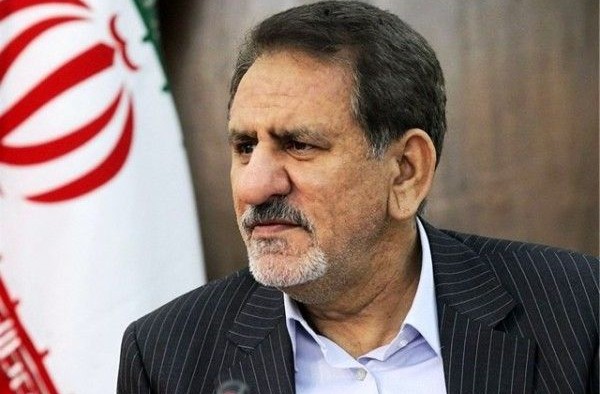
vice- president , eshagh jahangiri

“Today, our oil exports have reached 1.3 mb/d, which will reach 1.5 mb/d by” March, Es’haq Jahangiri said on Saturday.

He added that Iran will be exporting 2 mb/d of oil in the next calendar year starting on March 21.

“Oil exports enhancement was among opportunities created by the JCPOA (Joint Comprehensive Plan of Action)…Iran has to preserve its share in the global oil market,” added Jahangiri.

JCPOA refers to Iran’s landmark nuclear accord with six world powers that took effect in January, paving the way for the lifting of sanctions slapped on Iran.

Sanctions against Iran were imposed by the US and European Union at the beginning of 2012, alleging that there was diversion in Iran’s nuclear program toward military objectives; an allegation that Iran categorically rejected.

There has been speculation that Iran’s move to raise oil exports would cut already low oil prices. But Iran is determined to regain its oil market share lost due to the international sanctions.

Oil markets remain oversupplied, a situation which has been fueled by OPEC’s refusal to cut output in order to squeeze out high-cost US shale producers.

OPEC left its output ceiling unchanged, in both June and December last year, at 30 mb/d with its estimated actual output standing at 32 mb/d.

Because of overproduction chiefly by Saudi Arabia and non-OPEC producers, there is currently up to 2.5 mb/d of excess oil in the market which has caused crude prices to lose around 60% of their value since mid-2014.

Iranian-born woman 1st US female envoy to Sweden

Raji was nominated by US President Barack Obama for the post but it took 500 day for the US Senate to confirm her nomination.

The US Senate managed to confirm ambassadors to Sweden and Norway, ending a drawn-out political fight between Democratic Sen. Amy Klobuchar and GOP presidential hopeful Sen. Ted Cruz.

According to Startribune, Cruz had placed a “hold” on the nomination – a Senate procedure used to block actions – because he opposed President Obama’s Iranian nuclear deal.

On Friday, Cruz spokesman Phil Novack said he lifted his hold because, after seven months, “he feels like he has successfully drawn attention to the issues that he believes are catastrophic in the Iranian nuclear deal.”

Raji is a Wall Street executive, investment banker, financial analyst and philanthropist.
She was nominated by President Obama in October 2014 to serve as Ambassador Extraordinary and Plenipotentiary of the United States to the Kingdom of Sweden.

Raji, the mother of five, is also a member of President Obama’s Commission on White House Fellowships.

She was born in Tehran in 1961 and went to school in Switzerland.
Raji has lived in the US since the age of 17.

Another JCPOA Needed for National Reconciliation: Iran’s President

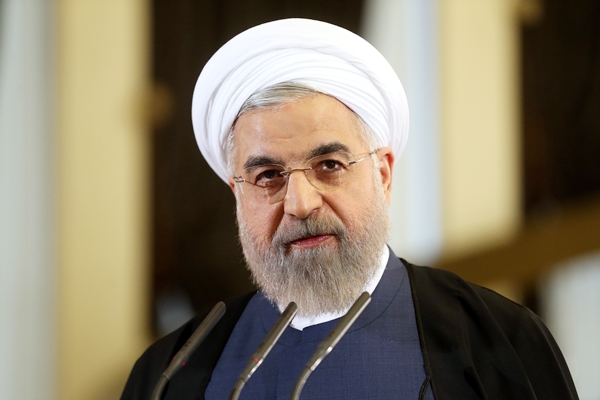
Addressing millions of people gathered at Tehran’s iconic Azadi (Freedom) Square to commemorate the 37th victory anniversary of the Islamic Revolution on Thursday, Iranian President Hassan Rouhani congratulated the great nation of Iran, the Leader of the Islamic Revolution Ayatollah Seyyed Ali Khamenei, and all freedom-seekers of the world on the “decisive day”, and delivered his speech on three key points.

He first explained the conceptual definition of “Independence, Freedom, Islamic Republic”, which was the cause behind the Islamic Revolution; then he elaborated on his administration’s achievements in spite of cruel anti-Iran sanctions; and finally, he underlined the significance of people’s high turnout in the upcoming elections for the Iranian parliament and Assembly of Experts due to be held on February 26.

He wrapped up his speech by appreciating the foreign guests attending the ceremony.

Iran Front Page (IFP) has selected and translated parts of President Rouhani’s speech using a report by the Islamic Republic News Agency.


Goal of Islamic Revolution: Rejecting Domestic Dictatorship, Foreign Colonialism and Hegemony

Thirty seven years ago on this day, the rise of Iranian people to take control of their country’s fate bore fruit, Rouhani said.

“People had been living under the rule of hegemony for hundreds of years, and a dictator was ruling the country,” he went on to say.

He said during their numerous uprisings and movements including the Iranian Constitutional Revolution (1905-1907), and despite great victories and successes, people in Iran failed to topple dictatorship in the country.

It was tens of years that foreign powers, US in particular, were dominant over the destiny of Iranian people, he said, adding that the nation could not tolerate dictatorship, colonialism, and foreign hegemony anymore, and sought to realize the causes of Independence, Freedom, and Islamic Republic of Iran.


Revolution’s Motto: Independence, Freedom, and Islamic Republic

“Using these three mottos, people managed to gain their independence, end the foreign hegemony, and achieve freedom and liberty. They finally established the ruling system they wanted based on people’s majority vote within the framework of Islam and religious values,” Rouhani noted.

“Only 47 days after the victory of Revolution, Imam [Ruhollah Khomeini] called on the Iranian nation to go to the polls,” he added.


Key to Revolution’s Victory: Combination of Republicanism and Islamism

Rouhani stressed that the mobilization and uprising of the entire nation was not possible unless the social movement had its roots in the heart of religion and was led by a senior Grand Ayatollah in whom people trusted.

If Islam was not introduced as a religion that cares about the youth and is compatible with science and knowledge, and if religion and culture were not combined with the Iranian nation’s majority vote, a ruling system that was relied upon by the people and respected by the world could not be established in late 20th century, President Rouhani asserted.

The Iranian president went on to say that the combination the late Imam explained was the combination of Republicanism and Islamism.

“Islamic Republic of Iran, not even a single word less or more than that” was what Imam Khomeini told us. We could not witness such a great evolution in our society if that was not the case, Rouhani added.


Approach of Iran’s Revolution: Ethics, Peacefulness, and Avoiding Violence

He referred to Iran’s Revolution as an ethical and peaceful revolution without violence or misbehavior.

We all know that the Islamic Revolution is not just a political one, though it is closely associated with the politics, Rouhani noted.

The important issue, however, is ethics, which has always preceded politics, he stressed.

Imam Khomeini skillfully managed to keep the revolution away from hatred and revenge through Islamic ethics; otherwise the country would be gripped with civil war for years. It was the people who, under the guidance of Imam Khomeini, put flowers on gun-barrels, and demonstrated the great attraction of revolution that can absorb everyone to the path of right and justice, Iran’s president said.

Islam is the messenger of justice, moderation, kindness, and brotherhood for everyone. Of course many people have been martyred in the path of this revolution since 1979 with the aim of stabilizing the Revolution and, later on, fighting against the aggression of foreigners during the 8-year imposed war against Iraq, he added.

He further touched upon the current political situation within the country ahead of upcoming elections, saying the real conservatives, reformists, and moderates are all revolutionaries.

“We should update the language of revolution,” Rouhani urged.


No One Should Turn One’s Back to Ballot Boxes

“The upcoming elections are an instance of national dialogue,” he noted, adding that Iran’s Revolution crystalizes in ballot boxes.

“The late Imam invited us 47 days after the Revolution’s victory (February 11, 1979), and we went to polls to vote for the Islamic Republic of Iran. Our resistance and might hinges on our participation,” he stressed.

“No one should turn his or her back to the ballot boxes. All the people should rush to vote. As per the invitation of the Leader of the Islamic Revolution, even if someone is critical of the Establishment and the ruling system, he or she should not boycott the ballot box,” Rouhani stressed.

He further noted that this is people’s rights, and everyone should respect the box. “Our social capital is on these ballot boxes,” he added.


1979 Revolution Belongs to All Muslim and Non-Muslim Iranians

“We managed to resist all the problems throughout the past 38 years because we returned to our Iranian and Islamic origins; because the late Imam defined the real dignity for us,” Rouhani said.

“Our revolution managed to go through all the problems thanks to unity and integrity,” President Rouhani added.

“Islam is a shelter for all Iranians and those living in this country. Even if someone is not a Muslim, he or she would feel Islam is his/her shelter. Today, the responsibility of all of us is to defend this glorious revolution and its causes in the best way possible,” he said.

“Our revolution valued men and women, young and old, especially the dear youth. The late Imam determined the path for us,” he went on to say.


Iran’s Revolution, a Return to Real Dignity, Ethics, and Civility

Rouhani further defined the Revolution and its concept as follows:

The Revolution is based on freedom, people’s votes and basic rights, ethics, Islam, and respect for law. The Revolution is for all the people, it does not belong to any particular party. The Revolution belongs to the Iranian nation.

The Revolution is defined within the framework of Iran, Islam, ethics, and national unity. This precious heritage of Revolution does not belong to any particular side, but belongs to the great nation of Iran and all freedom-seekers in the world. Iran’s Revolution was a return to ethics and civility. It is a revolution that should be studied again and again.


Iranians Are Logical and Peaceful People, Not Threats to Global Security

Rouhani described Iranian people as “peace-seekers” who try to establish stability and security throughout the region and the world.

He went on to say that his administration has managed to defeat the Iranophobia project and let the world know that Iranian people are logical and want to have peaceful co-existence with other friendly countries in the region.

All the claims that introduced Iran as a threat to global peace and security were proved to be wrong and baseless, the Iranian president added.


Iran: Land of Stability and Security

“Today is the day when the era of progress combined with national dignity should begin,” Rouhani said.

“The Iranian government is not one that can be isolated, and the Iranian nation is not one whose will and decision can be put aside from the social and global scene,” Rouhani asserted.

He further noted that the world’s superpowers have known after 37 years that the Iranian government is not an interim one.

“Today, the entire world, including all superpowers, is somehow confessing the mistakes it has made in the past 37 years. The entire world and all countries are now willing to have good relations and interaction with the great nation of Iran,” he noted.


Iran’s Nation: Patriotic and Unyielding

Near four decades after the victory of Islamic Revolution, those countries that were for a long time used to talk to the people of so-called Third World countries, even to the Iranian nation, using the language of force, have now felt and understood that the great nation of Iran does not yield to any pressure and will not give in to any threat, Rouhani stressed.

He further noted that the patriotic people of Iran, through their eight-year defense against the foreign aggression, showed to the world that they will strongly counter any aggression.

“It was our great people who did not give in to unprecedented international sanctions during the past decade,” he added.


Iran: Strong in Military Defense, Capable in Diplomacy and Dialogue

“Not only can this great nation resist to world powers in the battlefield of defense and make them defeated and humiliated, but also in the field of diplomacy, logic, and argument, it has the upper hand against the entire world, and can claim its national rights,” Rouhani said.

He further pointed out that the International Atomic Energy Agency (IAEA) Board of Governors, the United Nations, and more importantly, the world’s public opinion have all accepted that the anti-Iran propaganda by Zionists and the US global hegemony is sheer lie and has nothing to do with reality.

“The Iranian people are a peace-seeking nation,” he reiterated.


Iran: Progress despite Sanctions

“In the field of energy, within these two and a half years (since Rouhani took the office in 2013), we managed to increase the sweet gas production by 190 million cubic meters per day for the consumption of people and industries,” the Iranian president announced, adding that seven phases of the giant gas field South Pars were completed during this time.

He further referred to the amount of Iran’s extraction of joint oil fields, which previously amounted to 69,000 barrels, but it has been increased to 110,000 barrels since he has taken the office.

This amount will be increased to 230,000 barrels by late March and to 350,000 barrels by the end of the administration’s four-year term (July 2017), Rouhani predicted.

In petrochemical industry, the country’s income was $16 billion in 2011, but it has amounted to $18 billion this year, and will hit $24 billion by July 2017, President Rouhani noted.

“This means our country has been able to progress even under difficult conditions,” he stressed.

In power generation, Iran has become the region’s top country in the past 2.5 years, Rouhani said, explaining that 5000 MW has been added to the country’s power production within this time, increasing to 74,000 MW.

Rouhani further noted that 900,000 cubic meters of water have been added to the country’s dam reserves, and farms have been equipped with modern irrigation technologies within the 2.5-year period of time.

“We equipped 270,000 hectares of farms with modern irrigation (systems), which equals to 20% of what has been carried out since the 1979 Revolution,” he noted.

During the past 2.5 years, the administration has managed to save $3 billion in the import of food and agricultural products, Rouhani asserted.

“We also succeeded in putting 11 millions of people under the coverage of Public Health Insurance,” he added.

“In different fields, we can reach a point where we only rely upon ourselves,” he said.


Iran to Achieve Economic Growth of 8%

“The intelligence and capabilities of this nation, the education of the youth, the country’s material and natural facilities all can well help the country get to the peaks of progress and honor in material and spiritual life,” Rouhani stressed.

He went on to say that based on an order by the Leader of the Islamic Revolution within the country’s Sixth Development Plan, Iran’s economic growth should be increased to 8%.

“If we want to achieve such a growth, all domestic capitals should be mobilized in this regard,” Rouhani said, adding that the country will need 30 to 50 billion dollars of foreign investments each year.

“This is possible, and the reason is the developments we have witnessed within the past 2-3 years in our country, even though the sanctions had remained in place,” he added.


February 26 Elections: People’s Vote to Say Final Word

“We are on the verge of decisive elections; we will hold two big elections on February 26, for both of which this great nation will go to the polls,” Rouhani noted.

“If someone has any complaint, if a citizen or a political movement has been faced with adversity, they should all go to the ballot box actively,” he urged.

“We should know today that your vote says the final word. Either in Iran, in the region, or in the world, our citizens’ votes including those of males and females, young or old, boy or girl, from all ethnicities, will be beneficial both to us and to the region and the world,” Rouhani stressed.


Vote for Hope, Rationality, Rule of Law in Upcoming Elections

“Your vote in February 26 elections will be for hope, rationality, (rule of) law, and defense of the nation’s rights. The vote of the great Iranian nation will be casted for construction of our dear country based on dialogue and trust,” he said.

Rouhani went on to say that “our vote will not be casted for those who want to turn their back to law, neither will it be for those who are into scuffles and extremism.”

“Our vote will be casted for hope, a developed and free Iran. We will develop the country… We will boost the nation’s national might to a desirable point through coordination, unity, and solidarity,” he noted.


National JCPOA Needed for National Reconciliation

“Today, anyone who tries to expel a danger that threatens the country is a revolutionary; anyone who takes a single step today for the country’s progress is a revolutionary; anyone who tries to increase the country’s national unity is a revolutionary,” Rouhani said.

He went on to say that today, a national Joint Comprehensive Plan of Action (JCPOA – the name given to a recent nuclear deal between Tehran and world powers) is needed for national unity, reconciliation, and national action with revolutionary resolve under the guidance of the Leader of the Islamic Revolution.

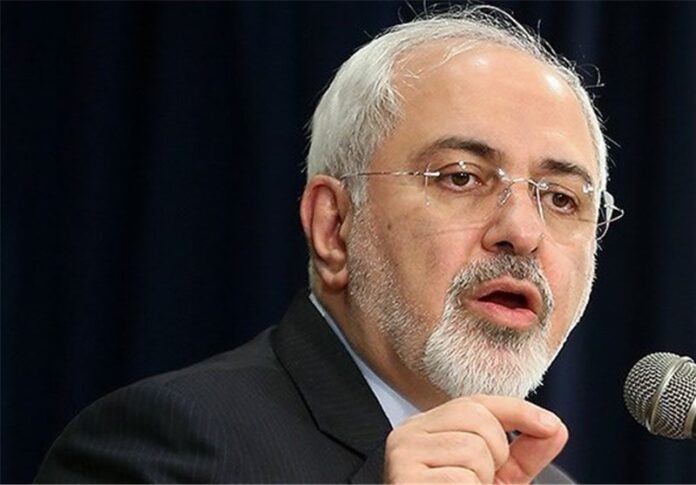
Zarif: Iran Ready to Work with “Saudi Brothers”

“We are prepared to work with Saudi Arabia… Iran and Saudi Arabia have common interests in Syria, and Tehran and Riyadh need to work together,” Zarif said on Friday, addressing the 52nd Munich Security Conference (MSC) in Germany.

Expressing Iran’s preparedness to cooperate with Saudi Arabia for the settlement of the regional conflicts, Zarif added, “Iran and Saudi Arabia cannot exclude each other from the region.”

He added that the countries in the region are facing “common threats” that have created problems for “our brothers in Turkey, Saudi Arabia, Pakistan, even in Afghanistan and the Central Asia.”

Zarif then referred to the “challenge of sectarianism” as a threat against all regional countries.

“We have a common opportunity, common challenges, common threats and a better future,” he added.

Zarif also called on the regional countries to reconsider their “paradigms,” adding, “We have to change this paradigm. I can assure you. Iran is ready.”

He further urged the countries in the region to “start redefining problems” and “set aside” their past differences instead of remaining “prisoner of the past.”

Pointing to Saudi Arabia’s decision to sever ties with Iran, Zarif underlined that Tehran and Riyadh should not follow a policy of exclusion, bemoaning the fact that Saudis have been seeking to eliminate Iran from the political equations, including from the Syria peace talks.

Saudi Arabia’s decision to sever relations with Iran came after the kingdom’s execution of prominent Shiite cleric Sheikh Nimr al-Nimr drew widespread international condemnation and ignited furious protests in Iran during which some of the demonstrators stormed the Saudi diplomatic buildings in the cities of Tehran and Mashhad.

Iranian officials condemned the attacks, with President Hassan Rouhani calling for the perpetrators to be brought to justice.

Envoy: Iran welcomes peace, tranquility

In an article published in “Navya Waqt” newspaper on the occasion of the victory anniversary of the Islamic Revolution in Iran, he gave a brief revolutionary era history and outlined its unique characteristics.

He referred to the close alliance between the Iranian nation and its leader as the key for its overcoming numerous plots hatched by enemies against it and said even during the negotiations with the P5+1 on its nuclear program, the country managed to manifest the power of its diplomatic skills.

The ambassador said that during the negotiations the nation succeeded to prove that it could be quite vigorous even in diplomatic arenas.

Honardoust said that now in the post-sanctions era, Iran is opening a new chapter in its relations with the world especially the regional countries.

Seoul to finance South Korean firms’ projects in Iran

“Government-wide assistance will be offered so businesses can gain access to the resource-rich country,” Minister of Trade, Industry and Energy Joo Hyung-hwan said.

He was speaking to a group of senior executives from Hyundai Motor Co., LG Electronics Inc., Daelim Industrial Co. and other South Korean companies planning to do business in Iran.

South Korea lifted sanctions against Iran last month after Tehran’s landmark nuclear accord reached in July 2015 with world powers went into effect.

Joo said a high-ranking business delegation will travel to Tehran soon to explore opportunities for renewed cooperation.

“To promote trade and investment, Seoul is committed to maintaining the current Korean-won based settlement of accounts system while adding other forms of exchange using different foreign currencies,” he said, adding, “The euro and Japanese yen can be used in tandem with the won to settle accounts.”

Joo said South Korean companies would set up joint ventures with Iranian partners and reach technical transfer deals in such sectors as car manufacturing, petrochemicals and steel production.

“If headway is made, South Korean exports, including parts and components, will increase and benefit companies,” he said.

South Korea’s exports to Iran rose to $4.14 billion in 2014, up 8.3% year-on-year, according to data compiled by the state-run Korea Trade-Investment Promotion Agency.

Last month, South Korea’s official export credit agency KEXIM said it was raising its sovereign credit rating for Iran by one notch in anticipation of a strong economic growth.

The agency has already pledged to provide financial support to Korean firms trying to secure business in Iran as international companies jockey to enter the market.

Iran hints at ‘unexpected’ jump in oil prices

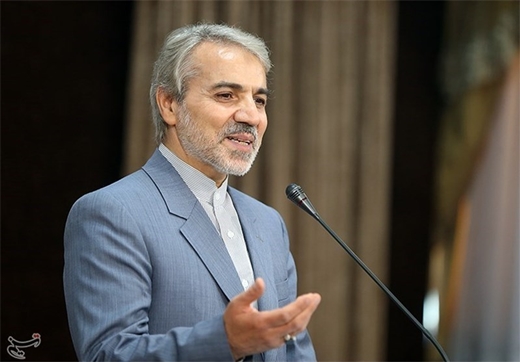
nobakht

“We can expect oil prices to jump unexpectedly next [calendar] year and given the experience of the past decades, an unrestrained jump may be awaiting the price of oil,” Iranian government spokesman Mohammad-Baqer Nobakht said.

Nobakht, who is also head of Iran’s Management and Planning Organization which drafts annual budget bills, said no international agency had forecast oil prices to drop below $30 a barrel in 2014.

Iran is preparing to supply more crude oil on markets owing to the lifting of international sanctions in January.

Because of overproduction chiefly by Saudi Arabia and non-OPEC producers, there is currently up to 2.5 mb/d of excess oil in the market which has caused crude prices to lose around 60% of their value since mid-2014.

However on Friday, oil prices made gains on the strength of speculation on OPEC’s willingness to consider output cuts in a bid to ease the global supply glut.

US benchmark West Texas Intermediate (WTI) for March delivery finished at $29.44 a barrel on the New York Mercantile Exchange, up $3.23.

North Sea Brent crude for April delivery, the European benchmark, shot up $3.30 to $33.36 a barrel in London.

In its annual Energy Outlook report, Britain’s BP forecast the oil price to spike to $100 a barrel over the coming years as a global oversupply of oil will eventually be eroded.

OPEC decided last December to increase its collective output ceiling to 31.5 mb/d from the previous 30 mb/d.

OPEC approved a Saudi plan to scrap allocating fixed production quotas to member countries in December 2011 and introduced output ceiling of 30 mb/d which does not specify quotas.

7 things to consider before sending troops to Syria

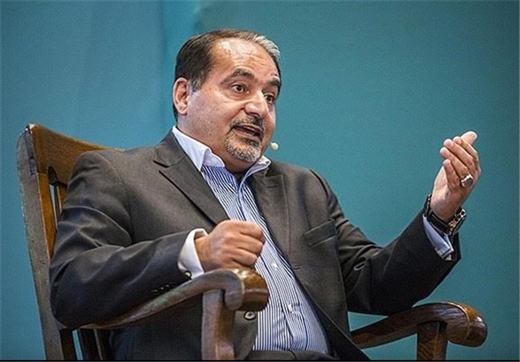
Mousavian

Saudi Foreign Minister Adel al-Jubeir has stated: “The United States government was very supportive and very positive about the kingdom’s readiness to provide special forces to the operation in Syria.” It seems Washington and Riyadh have not learned from their past mistakes, of which there have been many:
1. The United States supported the revolutions in Tunisia and Egypt and even flirted with supporting the Muslim Brotherhood. The US made the mistake of believing that Syria could follow in Egypt’s footsteps, even though Syria had a far more sensitive sectarian and political balance than either of those countries.
2. Turkey, Qatar and Saudi Arabia cast aside their relatively friendly relations with Syria the second they saw an opening for the Muslim Brotherhood (in Turkey and Qatar’s case) or Salafist groups (in Saudi Arabia’s case) to seize power. They wanted to advance their interests at the expense of Iran’s and were willing to do anything to this end, including taking an extremely sectarian position in the Syrian conflict and trying to uproot Alawites from power — regardless of the cost.
3. The administration of US President Barack Obama also saw an opportunity in toppling the Syrian government and supporting US “allies” in the region — namely, Turkey, Qatar and Saudi Arabia — while in reality, it only perpetuated the neoconservatives’ “creative chaos” vision. The result after years of conflict is that the United States’ demand for the removal of Syrian President Bashar al-Assad is now unattainable.
4. By participating in a major anti-government demonstration in 2011, US Ambassador to Syria Robert Ford emboldened extremist forces by making them believe Washington was on their side.
5. In June 2012, the United States and Russia signed the Geneva I agreement, which set the ground for a road map to resolve the Syrian conflict. Instead of vigorously and rapidly pursuing this plan to forge a peace process, the United States backed off and delegated its policies to the Turks, Qataris and Saudis, who unleashed massive military and financial support to the opposition. This was the biggest misstep of the past five years. Diplomacy, just as it solved the Iranian nuclear dispute, is the only way to resolve the Syrian conflict. The situation ultimately became such that Assad could not afford to step down without both himself and the Alawite minority facing a mortal threat. He thus responded with extreme military force after being surrounded in a winner-takes-all conflict. Subsequently, his extreme response backfired by inflaming the opposition and reducing the chances for reconciliation.

6. Supplying the Syrian opposition with arms and unlimited financial and logistical support, even as it had no credible political, secular or nationalist leadership, opened the door to extremist elements becoming dominant and killing the Syrian people’s democratic aspirations. The Syrian army could no longer rely on the majority Sunni population for its base and had to open the door for Hezbollah, Iran and more recently Russia to counter the terrorist groups it faces. The conflict has thus become an all-out regional and international proxy war. The Syrian military’s reliance on air power led to the massive destruction of towns and cities as terrorist groups entrenched themselves in civilian quarters. Areas controlled by the terrorists have become fierce battle grounds. This has caused an unprecedented refugee situation internally and externally.
7. Drawing a line between moderate and extreme opposition factions has now become impossible, and almost a sad joke. These groups draw their ranks based on who pays the highest salaries, tribal and regional affiliations, and ever-shifting allegiances and financial sponsors. They are often led by fanatic religious zealots who are willing to do anything to advance their agenda. Every foreign member of IS, al-Qaeda and Jabhat al-Nusra has entered Syria via NATO-member Turkey, where in many instances they were supplied with money, weapons, drugs, women and training camps and then sent off to Syria.
These and many other elements have contributed to the tragic mess in Syria today. The current challenge posed by IS is the biggest threat currently facing both the Muslim world and Western civilization. IS is now the No. 1 threat to the peace, stability and security of the Middle East — and the world. It’s of supreme importance to note that IS was for years funded by wealthy donors in Kuwait, Qatar and Saudi Arabia, all of which are US allies.
Make no mistake: Saudi Arabia’s main goal in Syria is to overthrow Assad. In this vein, Saudi ground troops entering the conflict would only strengthen terrorist groups like IS. While the Saudis have in the past pressured the United States to attack both Syria and Iran, they have launched a brutal assault on Yemen to uproot the Houthis from power. The United Nations has confirmed that Saudi forces have violated international humanitarian law, requiring an international investigation. Riyadh also deployed military forces into neighboring Bahrain in 2011 to quash the Arab Spring-inspired uprising there in support of the continued minority rule of the Sunni al-Khalifa monarchy. Saudi Arabia has failed to achieve the aims it has sought through all of these measures.
By supporting a Saudi ground invasion of Syria, the United States would be aiding and abetting the expansion of terrorism as well as pushing Iran and Russia toward threatening the very viability of the House of Saud. This would be a devastating mistake that the United States and Saudi Arabia should not make. Riyadh is already overstretched and does not have the capacity to meet its commitments. Last but certainly not least, one should bear in mind the Russian prime minister’s dire warning: “Deploying ground troops in Syria would spark World War III.” (al-monitor.com)
(Mousavian is Associate Research Scholar at Woodrow Wilson School Princeton University. He is also a former senior Iranian nuclear negotiator)

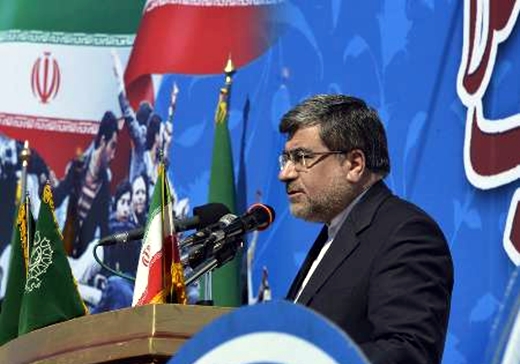
Nuclear deal outstanding victory for Iran: Culture Minister

Addressing a gathering of people in the southeastern city of Zahedan on the occasion of the anniversary of the Islamic Revolution’s victory on Thursday, Jannati said, “The nuclear victory was a great success which was made possible by people’s cooperation, the Leader’s guidelines and nonstop efforts by the negotiating team of the Rouhani Administration.”

He said the draconian sanctions made the past few years very difficult especially in economic fields for the Iranian nation and government.

“Western and arrogant governments sought to defeat the Iranian nation by imposing sanctions but they realized their mistake when they saw integration of the Iranian nation and government,” he said.

The 6 anti-Iran UNSC resolutions would lead to a military confrontation against Iran but the negotiating team could annul the resolutions through dialogue and finalization of the nuclear deal, Jannati added.

“The nuclear deal was proof that nuclear energy is the right of the Iranian nation and the world community has endorsed this right,” he said.

The deal also cleared Iran of accusations that the West leveled at Tehran saying its nuclear program is aimed at developing a nuclear bomb, he said.

The Iranian culture minister further said the nuclear deal has promoted the country’s economy and banking system and has freed the country’s frozen assets.

The senior official said the swift reception of Iranian president by France and Italy is an indication of the significance of Iran for the world.

He said the administration of prudence and hope could have the sanctions removed which were the biggest hurdle in the country’s scientific advancement.

He said the administration is also making every effort to remove obstacles to boosting production, economy, curbing inflation and dependence on oil revenues.

For the time being, hundreds of globally recognized companies have expressed their readiness to enter the Iranian market and invest in its development projects.