Saturday, December 27, 2025
Home Blog Page 4603

Iran, France Mull Nuclear Cooperation

Iran Condemns US Blacklisting of Its Nuclear Chief

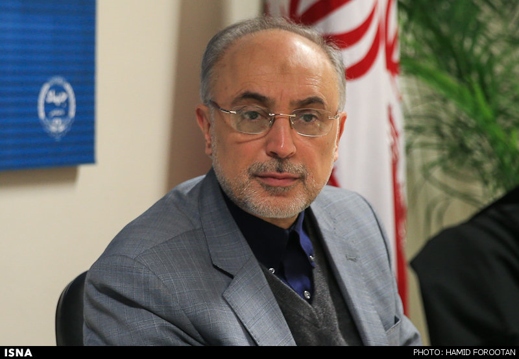
Talks have been held with France on nuclear cooperation, Ali Akbar Salehi told the YJC news agency on Saturday.

“There is a megaproject in France, called ITER, and preparations have been made for (nuclear) cooperation (with ITER),” Salehi added, but did not offer details on the program.

He also said the list of countries that have expressed readiness to launch nuclear cooperation with Iran includes South Korea, Japan and China, noting that Italy and Germany have also voiced preparedness to work with Iran in scientific fields.

Rising interests in nuclear cooperation with Iran follows the implementation of the Joint Comprehensive Plan of Action (JCPOA), a lasting nuclear deal between Iran and the Group 5+1 (Russia, China, the US, Britain, France and Germany) that took effect on January 16.

The JCPOA has terminated all nuclear-related sanctions on Iran, reopened the doors of foreign investment to the country’s market, and prepared the ground for a much-anticipated economic boom.

Iran’s Air Defense Vows Full Advisory Support for Syria

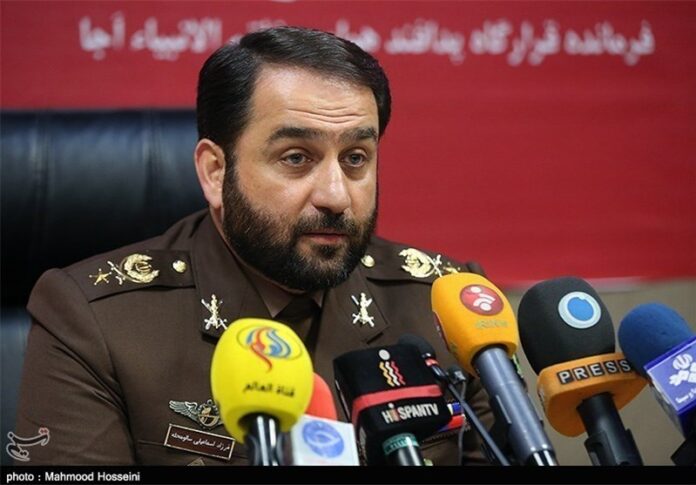
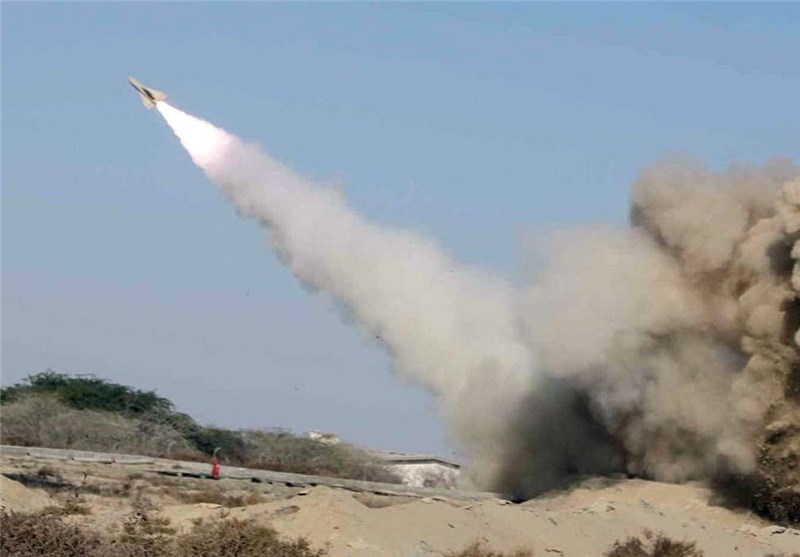
Speaking to the Tasnim News Agency, Brigadier General Farzad Esmaili stressed that if asked by the Syrian government, Iran will vigorously offer advisory help to the Syrian forces in the air defense field, making a reference to Leader of the Islamic Revolution Ayatollah Seyed Ali Khamenei’s assertion that Tehran’s support for the allies comes in the form of advisory help.

As regards the speculations on Saudi Arabia’s decision to deploy ground troops to Syria, the commander argued that any presence in Syria without coordination with the Damascus government will be doomed to failure.

Iran, a close ally of Syria, has been supporting the legitimate Syrian government in the fight against terrorists.

Tehran has already made it clear that its assistance to Syria is confined to consultation and advisory help.

Syria has been mired in a civil war since 2011, with government forces fighting an assortment of militant groups, including the Daesh (ISIL) terrorists.

139310071759042944386544

Iran issues 30-day visas for tourists from 180 countries

Araghchi-Abbas

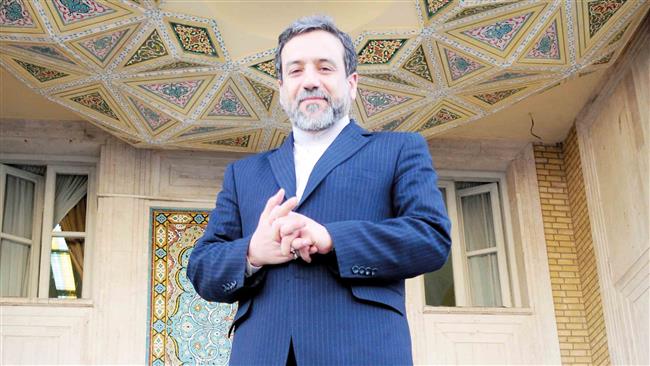
Araqchi made the remarks in a meeting of Isfahan Governor General, mayor, head of Chamber of Commerce and Agriculture of Isfahan province.
He highlighted the role played by tourism to boost national economy.
He said that the JCPOA provided a golden opportunity to resolve Iran’s economic problems and pave the way for Iran’s advancement and economic development.
Araqchi stressed that the Foreign Ministry is the path opener, while the people and economic activists should use this opportunity to develop their international activities.
Meanwhile, Araqchi advised the private sector activists that signing international memoranda of understanding and agreement is the first steps to keep up with the protocols.
He said that the private sector can do the job freely without going through such procedures.

Iranian Island and Italian Town Become Sister Cities

In a ceremony held in Italy, Iran’s largest Island, Qeshm, became a sister city to the Italian commune of Vimodrone, a municipality in the province of Milan.

The ceremony, which was entitled “Persian Night,” was held on Friday in Milan, and was attended by the Iranian consul, as well as a group of Iranian and Italian tourist industry agents who reside in the European country.

During the ceremony, a plaque was also unveiled which displayed the sisterhood of Qeshm and Vimodrone, the Iranian Students’ News Agency (ISNA) reported.

In the ceremony, Antonio Brescianini, the mayor of Vimodrone (14 kilometres northeast of the city of Milan), spoke about what he had seen during his visit to Iran, and hailed Iranian tourist attractions as well as the country’s cuisine, which he described as a “unique experience”.

The ceremony was held at the end of the second day of Milan’s BIT Fair, one of the world’s leading tourism exhibitions.

In this ceremony, Mohammad Jozi, the Iranian consul-general in Milan, hailed the “glorious” and “fitting” design of Iran’s pavilion in the 36th edition of Italy’s tourism exhibition, which resembled a classical Persian garden.

He also highlighted plans for the expansion of Iran-Italy ties after the recent nuclear deal between Tehran and various world powers, which took effect on January 16, and terminated all nuclear-related anti-Iranian sanctions.

The International Travel Fair, known as BIT (Borsa Internazionale del Turismo), is an event that brings together trade agents from all over the world, a large audience of visitors, travel lovers, television reporters and journalists.

BIT takes place every year, since 1980. Over the years BIT has been an international meeting point for decision makers, professionals, buyers, sharply outlined and selected, coming from different areas, and industry fields.

Perhaps a small exhibition, but surely with great goals and achievements

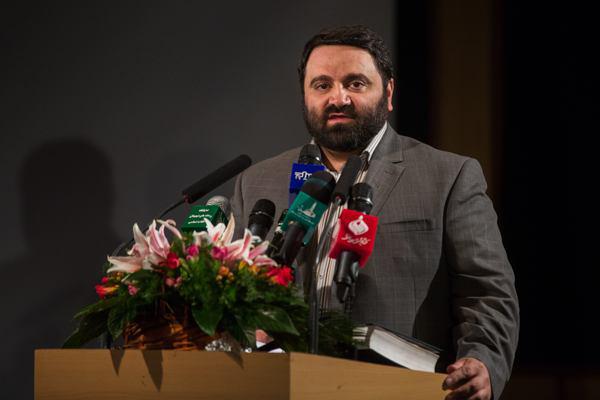
Mansour Amini emphasized the boundary-crossing function of cyberspace in stimulating the world’s curious minds, especially the youth of today. He also stressed the need for better exploitation of this channel for scientific exchange and knowledge accumulation. He requested robust support from the relevant authorities, and also asked that considerable attention be paid in Iran’s 6th Development Plan to the threats posed by new communication technologies.


Referring to the fact that authorities must be vigilant towards enemy threats, the head of the Seraj Cyberspace Organization and the Secretary of the Islamic Revolution Digital Media Fair and Festival said, “The executive authorities in the post-sanction period should trust the revolutionary, talented and elite youth in this field, instead of allowing foreign IT companies to take over.”

He spoke at the opening of the 3rd Fair and Festival on Islamic Revolution Digital Media about the incredible amount of effort by the Islamic Revolution Popular Front in cyberspace, saying “Cyberspace is both a threat and an opportunity.”

Amini continued, “Unfortunately, we don’t yet have something called a National Information Network. In this deplorable situation, cyberspace is neither an absolute opportunity nor an absolute threat. It is our performance which will determine the outcome.”

The Secretary of the Fair called attention to the Supreme Leader’s remarks this year about the capacity and threats of cyberspace. The Supreme Leader had said, “Today we are in a virtual intellectual battle. This battle is not against our interests in any means – in fact it’s in our interests. If we enter this battleground, taking what we need from Islamic thought and using the reservoirs of divine teaching, then victory will surely be ours.”

Amini emphasized the boundary-crossing function of cyberspace in stimulating the world’s curious minds, especially the youth of today. He also stressed the need for better exploitation of this channel for scientific exchange and knowledge accumulation, as well as listing the threats of new communication technologies, which included: “Degrading merit, spreading mental doubt, weakening beliefs, espionage and stealing information, serving Zionism and the inversion of the truth, targeting children and teenagers to disrupt local education, creating feelings of disillusion and humiliation in the youth, in addition to imposing Western thoughts and destroying other societies’ cultures in order to proliferate Western lifestyles.”

Mansour Amini reminded the audience of the necessity of spreading the activities of the Islamic Revolution Popular Front and asked the responsible authorities to take cyberspace threats seriously. He declared, “Today, our concerns with cyberspace are not political – they are about attacks on people’s beliefs and faiths.”


The Fair – Small but Great

The head of the Seraj Cyberspace Organization described the outstanding technical and vocational empowerment of thousands of Iranian specialists in new information and cyber communication technologies. He said that the main goal of this festival is to create an opportunity, through the Seraj Organization, for digital cyberspace activists to get to know each other, to exchange facilities and make scientific and professional connections.

He spoke of the diversity of activities in the field among more than 300 units in attendance at the festival, saying, “Unfortunately, limited facilities, and the exhibition location size allowed us to accept only half of the 600 applicants for the 3rd Fair and Festival on Islamic Revolution Digital Media. We have tried to host a spectrum of cyberspace activists to exhibit and introduce their latest achievements over these 6 days. In this fair – which might seem small in quantity but is great in quality and substance – there are participants from online media activists, programmers, information technologists, mobile application producers, animation activists, etc. Some of them have developed unique and creative projects, such as a cyber-program for ending drug addiction. Also, there are workshops being held for visitors during the exhibition, under the subject of “User Education in Cyberspace”.”

Amini emphasized, “The government should consider national empowerment in the post-sanctions era and trust in the power of youth.” He continued, “The executive authorities in the post-sanction period should trust the revolutionary, talented and elite youth in this field, instead of allowing foreign IT companies to take over.”


We Need a National Information Network!

At the end, the Seraj Cyberspace Organization head mentioned that it is not possible to solve defects and problems solely by setting up fairs and festivals, conferences and speeches, but real action also needs to be taken. He said, “Some of the important points to be considered by the related authorities include: starting a National Information Network, providing local services, supporting a healthy competitive environment among those active within new communication technologies, and helping public and private sector resources to have an active presence in international interactions in the field of cyberspace.” He also complained about the government’s lack of attention regarding the National Information Network in the 6th Development Plan, and asked Parliament members to not to forget the importance of this project whilst checking this program.

Amini finished his speech with some remarks from the Supreme Leader, “Big works sometimes take a generation to achieve. We should continue moving forward. There are many projects that would have yielded results today, if we had started them ten years ago.”



IFP has summarized a Tasnim news report, along with information as presented in the exhibition brochure. They are published on this website under a different title and layout.

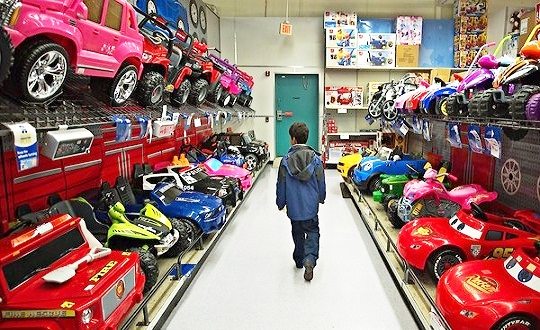
$3m toys imported to Iran monthly

Mohammad Hossein Farjoo told IRNA on Sunday that regarding revenue, toy industry stands after weapon, illegal drugs and make-up trade.

Farjoo said that the annual per capita consumption of toys in Iran was 5 dollars while the world average is thirty-four dollars.

He said that the toy production income for China is more than Iran’s oil revenue for Iran.

He added that some big producers have employed kids in their factory to ask their ideas about the toys to ensure that they would be welcomed by kids.

On supporting toys producers, he said that they should be supported so that more companies enter this field to produce toys easily.

He added that 400 plans have been registered in Iranian Supervisory Council for Toys since the beginning of the current Iranian year, (March 20, 2015)

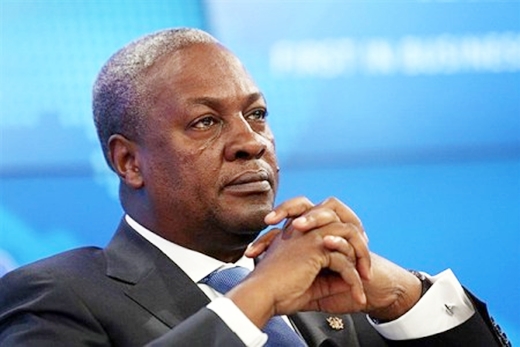
Rouhani welcomes Ghanaian counterpart in Tehran

National anthems of the two countries were played in the ceremony while the two presidents reviewed the parade there.

Ghanaian president, heading a high-ranking delegation, arrived in Tehran on Saturday evening.

He is planned to meet with his Iranian counterpart. He is also due to meet other top Iranian officials.

The president of Ghana is scheduled to attend Iran-Ghana trade meeting.

Female Iranian Futsal Player among the World’s Top 10

Female Iranian futsal player Fereshteh Karimi has been shortlisted for the title of the Best Woman Player of the World, thanks to her astounding display of skills at the 2015 Asian Football Confederation (AFC) Women’s Futsal Championship in Malaysia.

The 26-year-old, who currently plays for the Daneshgah Azad club, is vying for the top honour with Brazil’s Amanda Lyssa de Oliveira Crisostomo, Portugal’s Ana Patricia Abreu Azevedo, and Brazilians Luciléia Renner Minuzzo and Carolina Augusta da Silva.

Daniela Sofia da Costa Ferreira from Portugal, Russian player Aleksandra Samorodova, Brazil’s Tatiane Debiasi Croceta and Vanessa Cristina Pereira, along with Spanish futsal player Vanessa Sotelo Quintela make up the other contenders on the list.

Additionally, Iran’s goalkeeper Farzaneh Tavasoli has been nominated for the Best Women Goalkeeper of the World.

On September 26, 2015, Iran’s women’s national futsal team bagged the trophy at the 2015 Asian Football Confederation (AFC) Women’s Futsal Championship in Malaysia, following a victory over the Japanese side.

‘Not for US, Saudi to decide for Syrians’

Zarif made the remarks on Saturday while speaking to reporters in the German city of Munich in response to earlier comments by US Secretary of State John Kerry and Saudi Arabia’s Foreign Minister Adel al-Jubeir about Assad’s future and the political situation in Syria.

“A political solution will be possible with [the presence of] Assad. Neither we nor they [Saudi Arabia and the US] can make a comment in this regard,” Zarif said at the end of his visit to Germany, where he delivered a speech at the 52nd Munich Security Conference (MSC).

“A decision about the future of Syria must be taken by the Syrian nation. People have the right to express their views and this decision only rests with the Syrians,” he added.

On the eve of the Munich talks, Kerry told The Washington Post that in case of lack of seriousness by Russia and Iran for the resolution of the crisis in Syria, “then there has to be consideration of a Plan B.”

He added that “Plan B” would “lead to a coalition against [the Daesh Takfiri terrorists], and also to support the opposition against Assad.”

The Saudi foreign minister also told CNN in Munich that if the Syrian political process fails, President Assad will have to be removed “by force.”

“I believe Bashar al-Assad is weak and I believe Bashar al-Assad is finished,” Jubeir said.

Zarif-Kerry meeting on JCPOA

On the sidelines of the Munich conference, the Iranian foreign minister also held a meeting with the US secretary of state, during which they discussed ways to implement a nuclear agreement reached between Iran and the P5+1 group of countries last July.

Iran and the five permanent members of the UN Security Council – the United States, France, Britain, China and Russia – plus Germany started to implement the agreement, dubbed the Joint Comprehensive Plan of Action (JCPOA), on January 16.

After JCPOA went into effect, all nuclear-related sanctions imposed on Iran by the European Union, the Security Council and the US were lifted. Iran, in return, has put some limitations on its nuclear activities.

The nuclear agreement was signed on July 14, 2015 following two and a half years of intensive talks.

Iran, Germany to set up joint international university: Iranian official

Touraj Mohammadi noted that the university’s initiation was decided during the last visit of a German trade delegation to Iran, Mehr news agency reported on Saturday. 

He noted that Iran’s Science and Technology University follows various international initiatives, the latest of which is “becoming a communication portal between Iran and Germany’s universities.”

According to Mohammadi, the university will accept students from all over the world while similar cooperation with other countries is in the planning stages.

He refrained from giving a location, time-table or budget for the university’s establishment.