Saturday, December 27, 2025
Home Blog Page 4602

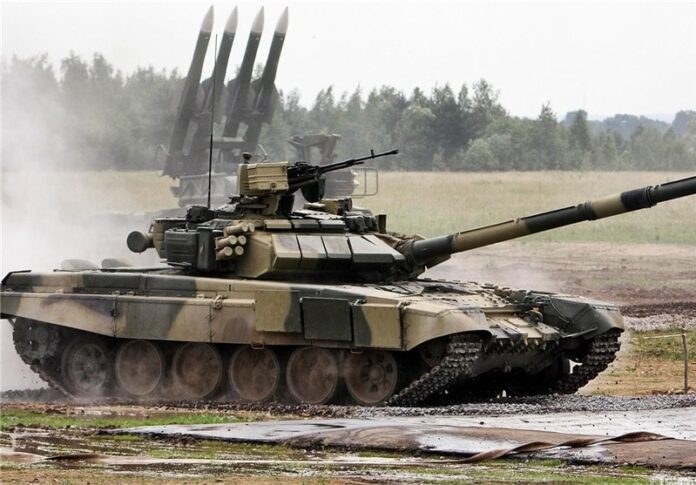
Iran’s Purchase of T-90 Tanks Not Cancelled: Commander

Speaking to reporters on Sunday, Lieutenant Commander of the Iranian Army Ground Force General Kiomars Heidari said the Army has been ordered not to purchase the military gear without transferring the technology to the country.

Back in December 2015, Army Ground Force Commander Brigadier General Ahmad Reza Pourdastan had unveiled plans for furnishing the armored units with the Russian-made T-90 tanks.

But later in February, he said Iran was not interested anymore in purchasing them, saying homegrown products can meet the country’s need for the battle tanks.

Elsewhere in his Sunday’s comments, General Heidari said the country’s domestically-made tank, dubbed Karrar, is now in service.

Karrar enjoys modern technologies, he explained, noting that the Army also owns another type of tank, known as Zolfaqar.

Earlier this month, Defense Minister Brigadier General Hossein Dehqan said the homegrown Karrar tank “is as good as, if not better than, Russian-made T90 tanks”.

Iranian military experts and technicians have in recent years made great headways in manufacturing a broad range of indigenous equipment, making the armed forces self-sufficient in the arms sphere.

Iran’s oil production increases 400,000 pbd

The shipment of the first oil cargo to Europe after a five-year halt has opened a new chapter in broadening economic cooperation between the two sides, he said.

Iran has signed a deal with Total of France for daily export of 160 to 180 thousand barrels of crude oil per day.

The Islamic Republic of Iran has vowed to increase its production and exports of its crude oil after removal of economic sanctions to one million barrel per day in two phases.

A number of European oil tankers have shipped crude oil from Iran after removal of economic sanctions.

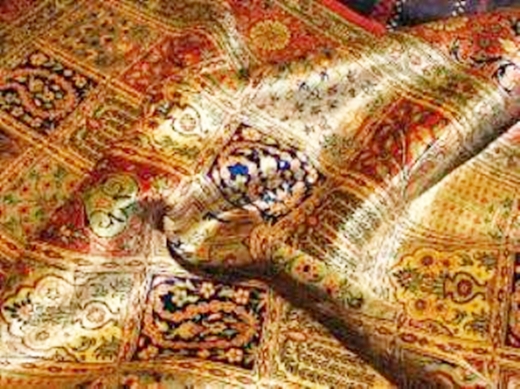
Iran to create first carpet village

‘The plan to create a carpet village has been ratified in the province and for final approval, we have presented it to Iran’s National Carpet Center,’ Ali-Reza Jeilan told the Islamic Republic News Agency (IRNA) on Sunday.

All the steps in producing a carpet, from preparing the raw material to designing, weaving and showcasing, etc. take place at the village, said he.

The rural district of Chaleshtar is among one of the oldest areas where people have been engaged in carpet weaving for centuries, he added.

‘The carpets woven here have been registered in the national heritage list.’

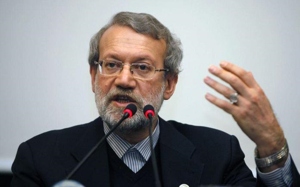
Defending Palestine A Religious Duty: Iran’s Larijani

Larijani

Speaking in a meeting with members of different Palestinian groups, Larijani said the issue of Palestine has always been high on agenda in the Islamic Republic.

“The Iranian people and officials defend the Palestinian nation as their religious duty,” the parliament speaker noted.

“The issue of defending Palestine is a pivotal issue in Iran and all (political) parties and groups in the Islamic Republic have the same view in this regard,” he said.

Larijani further stressed the need for the unity of Muslim countries in support of the Palestinian nation.

The remarks came against the backdrop of a report by London-based newspaper Asharq al-Awsat on January 31 that claimed Mousa Mohammed Abu Marzook, a senior political member of the Palestinian Resistance Movement, Hamas, had criticized Iran for not supporting Palestine, especially after 2009.

Earlier this week, however, Abu Marzook praised Iran for backing Palestine, saying, “Up to now, no Islamic or Arab country has assisted the Palestinian Resistance as much as Iran, particularly since 2006 when the Islamic Republic threw its support behind the Palestinian government in the Gaza Strip.”

He also described Tehran-Hamas relations as “significant and strategic” and called for the Islamic Republic’s continued support for Palestine’s resistance against Israeli aggressions.

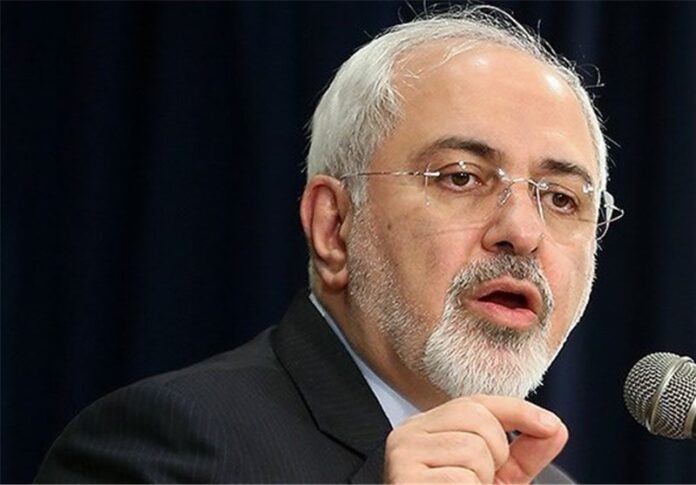
Decision on Syria’s Fate in Hands of People: Iran’s FM

“The decision about Syria’s future should be made by the Syrian people. People have the right to express their views, and such decision (Syria’s political fate) must be taken only by the Syrian people,” Zarif told reporters on Saturday evening before leaving Germany for Iran, after attending the Munich Security Conference (MSC).

Asked about the US or Saudi Arabian officials’ views on Syria, Zarif underscored that a political solution to the five-year-old crisis in the Arab country will be possible only with President Bashar al-Assad.

“Neither they (Americans and Saudis) nor we (Iran) can comment on this issue (Syria’s presidency),” he stressed.

While the Syrian President Assad’s government has made great headways in the battle against the terrorist groups, Iran maintains that ending the conflicts will require a political solution excluding the foreign forces.

Syria has been gripped by civil war since March 2011 with Takfiri terrorists from various groups, including Daesh (ISIL), currently controlling parts of it.

According to the United Nations, more than 250,000 people have been killed and one million wounded during the conflict.

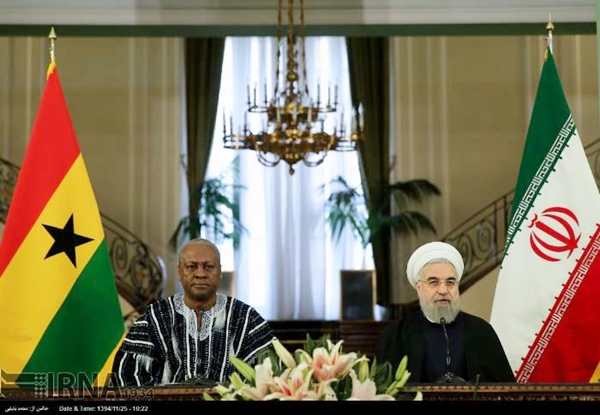
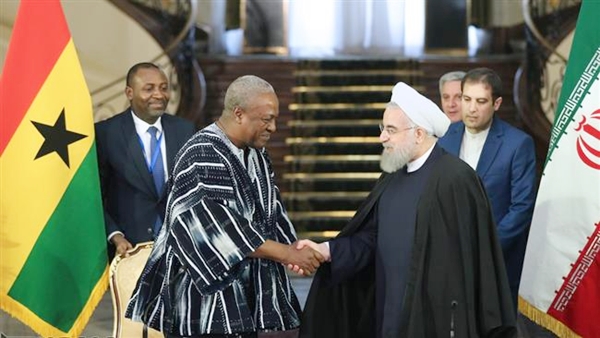
Iran, Ghana sign deals for ‘new epoch’

Mahama on Sunday said there are many grounds for cooperation in a variety of fields, including oil and gas, agriculture, power generation and production of cement, home appliances and engineering products.

“We think Iran enjoys a good advantage in these fields and can become a suitable partner for Ghana,” he told a joint news conference with his Iranian counterpart Hassan Rouhani.

Mahama thanked Iran for its “very high quality health services which it offers at very reasonable prices to the Ghanaian people.”

He also thanked President Rouhani for “Iran’s educational support” and the fellowships which it grants to the Ghanaian youths to study medicine and engineering in Iran.

Mahama said Iran’s establishment of an Islamic Azad University in Ghana had allowed the Ghanaian youths of all religious denominations, including Muslims, Christians and Buddhists, to carry on their graduate studies.

“I also thank Iran for its agricultural services which it offers to poor and remote areas in Ghana which have led to better production and food security in these regions,” he added.

Ghana President: Iran pioneer of fighting violence, extremism

He made the remarks in a joint press conference with Iranian President Hassan Rouhani.

Ghana president urged collective cooperation for fighting terrorism, adding that African continent suffers similar problems in Libya, Morocco and other regions.

Ghana’s President John Dramani Mahama is in Tehran on an official visit to hold talks with senior Iranian officials.

Heading a high-ranking politico-economic delegation, Mahama arrived in Tehran on Saturday night at the invitation of his Iranian counterpart Hassan Rouhani.

The Ghanaian president was welcomed at Tehran Mehrabad Airport by Minister of Agriculture Mahmoud Hojjati who chairs the Iranian side of Iran-Ghana joint commission.

President Rouhani officially welcomed his Ghanaian counterpart on Sunday morning.

The visit is the first by a Ghanaian president to Iran in 37 years.

Mahama is set to hold talks with Leader of the Islamic Revolution Ayatollah Seyyed Ali Khamenei, his Iranian counterpart as well as Parliament (Majlis) Speaker Ali Larijani.

On Monday, he will also attend a trade and economic meeting of businessmen and enterprises from the two countries.

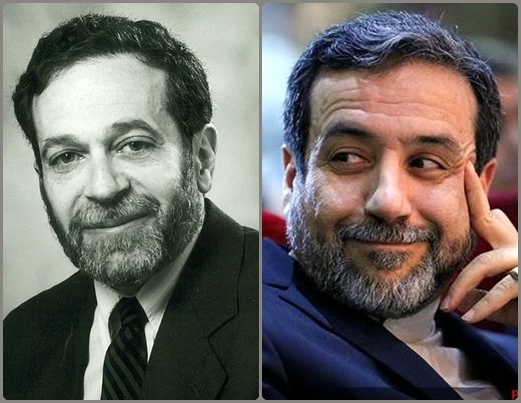
The Resemblance of Abbas Araghchi to a former US Secretary of Labor

Robert Reich was the United States Secretary Labor during the Bill Clinton government, and has written several books criticizing the US capitalist system.

As reported by Parsine News, he is one of America’s well-known centrist political faces. He also was a serious supporter of Iran’s nuclear deal during the nuclear agreement process, and was targeted by various US conservative platforms because of his severe criticism of the Israeli regime and Zionist lobbies.

The interesting point is that Robert Reich bears an uncanny resemblance to Abbas Araghchi, a member of Iran’s nuclear negotiation team.

Saudi troops deployment in Syria political blunder: IRGC cmdr.

“The Saudi government, given its heavy defeats in the region in recent years, may make such a move and commit a strategic mistake,” senior adviser to Leader’s representative to the IRGC, Brigadier General Yadollah Javani, said on Sunday.

Saying that Riyadh intends to achieve its political objectives through such a plan, Javani added the potential deployment of Saudi forces would lead to a “miscalculation” which could cost the Al Saud regime dearly.

He emphasized that the Syrian people have proved that they are capable of resisting any plot, warning that the Saudi deployment would further complicate the situation on the ground in Syria.

“It is obvious for Syrians that terrorist groups are supported by regional and extra-regional countries including Saudi Arabia,” the IRGC commander said, adding that if the United States and European countries are determined to fight terrorism, they should stop supporting terrorist groups.

Javani reiterated Iran’s principled policy on regional developments, particularly on the crisis in Syria, and said the Islamic Republic has repeatedly announced its support for the Syrian nation.

The involvement of any country such as Saudi Arabia in the issue of Syria will not alter Iran’s policies, he added.

Saudi Foreign Minister Adel al-Jubeir on February 8 brought up the possibility of dispatching Saudi forces to Syria as part of the US-led coalition allegedly fighting Daesh Takfiri terrorists in the conflict-hit Arab country.

“There is a discussion with regard to a ground force contingent, or a special forces contingent, to operate in Syria by this international US-led coalition against ISIS (Daesh) and the Kingdom of Saudi Arabia has expressed its readiness to provide special forces to such operations should they occur,” he said during a visit to Washington.

The idea of Riyadh’s possible participation in ground operations in Syria was first raised on February 4 by Ahmed Assiri, a spokesman for the Saudi Defense Ministry.

Although swiftly welcomed by allies like the United States, the proposal was met with huge criticism from Syria and Damascus’ allies. Bahrain and the United Arab Emirates also followed in Saudi Arabia’s footsteps and hinted their preparedness for similar deployment.

Syrian Foreign Minister Walid al-Muallem has slammed the initiative, saying “coffins” await any aggressor in the country “whether they be Saudis or Turks.”

Iran trade delegation off to Germany

The Iranian delegation is to visit Germany at the invitation of economic activists in German state of Bavaria.

Located in southeast of Germany, Bavaria is the largest state in that country.

Tehran’s German visit is aimed at boosting bilateral economic relations and attending various related meetings with the German business community.

During the past years, before removal of anti-Iran sanctions on January 16, Iran and Germany experienced a slump in trade ties.

January 16 was announced the ‘Implementation Day’ for the July nuclear deal known as the Joint Comprehensive Plan of Action (JCPOA) coincided with the removal of sanctions.

Implementation of the JCPOA has prepared the ground for Western countries, Germany in particular, to speedily resume ties with Iran.