Saturday, December 27, 2025
Home Blog Page 4601

Foreign troop deployment to Syria, publicity stunt: Iran FM

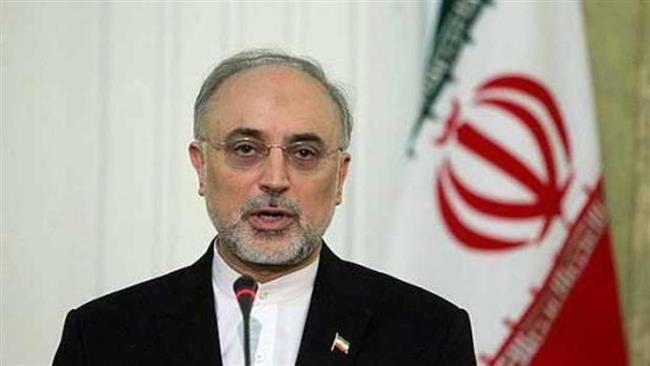
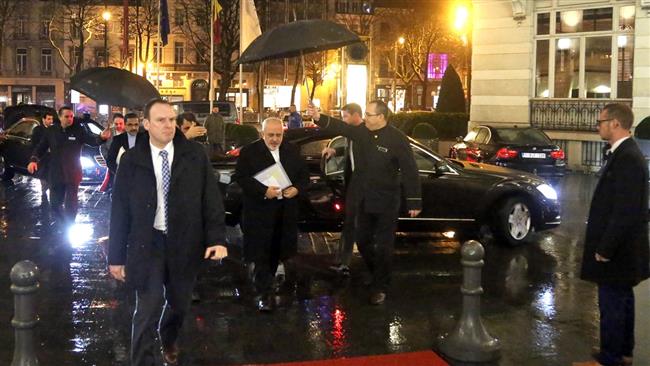
“It is obvious that these remarks are more of propaganda slogans. The means and capabilities of countries are completely clear and with these propagandist bluffs, none of their problems will get resolved,” Zarif said upon his arrival in Brussels early on Monday to discuss key regional issues with European Union officials.

However, such claims will further escalate tensions in the Middle East region, Zarif warned.

The top Iranian diplomat called on the neighboring countries to see the realities on the ground, “set aside illusions,” and stop imposing their will on the Syrian people.

It is up to the Syrian people to decide their future, he said.

Zarif’s comments came as Saudi Arabia and Turkey have in recent weeks raised the possibility of launching ground operations inside Syria.

On February 12, Saudi Foreign Minister Adel al-Jubeir told CNN that Riyadh is ready to deploy special forces to Syria if the US-led coalition decides to send ground troops. The so-called coalition has been conducting combat sorties against purported positions of Daesh in Syria since September 2014.

Turkish Foreign Minister Mevlut Cavusoglu has said Ankara and Riyadh could launch ground operations in Syria “if there is a strategy.”

Saudi Arabia and Turkey are widely believed to be among major sponsors of terrorist groups operating against the government of Syrian President Bashar al-Assad.

The idea of Riyadh’s possible participation in ground operations in Syria was first raised on February 4 by Ahmed Asiri, a spokesman for the Saudi Defense Ministry.

Bahrain and the United Arab Emirates (UAE) also followed in Saudi Arabia’s footsteps and hinted their preparedness for similar deployments.

Swiftly welcomed by the United States, the proposal was met with strong criticism from Syria and its allies.

Damascus has issued warnings against any such move with Foreign Minister Walid al-Muallem saying that any “ground intervention on Syrian territory without government authorization would amount to an aggression that must be resisted.” He has also warned that potential aggressors would return home in a “wooden coffin.”

The development comes as Syrian troops, backed by Russian air raids, have been making gains against foreign-backed militants.

The Syrian president has said the government forces will retake the entire country from terrorists. Assad on Friday warned that the involvement of regional countries in the conflict meant that the process to liberate Syria would take a long time.

For nearly five years, Syria has been grappling with a foreign-backed militancy. According to a new report by the Syrian Center for Policy Research, the conflict has claimed the lives of some 470,000 people, injured 1.9 million others, and displaced nearly half of the country’s pre-war population of about 23 million.

Iran-EU ties to expand

Elsewhere in his remarks, Zarif said that Iran and the European Union (EU) will begin an “all-out cooperation” in different arenas.

He added that high-level talks between the two sides have already begun and that they will continue at the ministerial level in the upcoming trip to Iran by EU Foreign Policy Chief Federica Mogherini.

Zarif said a significant breakthrough has been made on the implementation of the nuclear agreement between Iran and the P5+1 group.

Iran and the five permanent members of the UN Security Council – the United States, France, Britain, China and Russia – plus Germany started to implement the agreement, dubbed the Joint Comprehensive Plan of Action (JCPOA), on January 16.

After the JCPOA went into effect, all nuclear-related sanctions imposed on Iran by the European Union, the Security Council and the US were lifted. Iran, in return, has put some limitations on its nuclear activities.

The nuclear agreement was signed on July 14, 2015 following two and a half years of intensive talks.

During his two-day visit, Zarif is expected to sit down with Belgium Prime Minister Charles Michel as well as a number of other EU officials, including the EU foreign policy chief, European Parliament President Martin Schulz and European Council President Donald Tusk.
Malaysian official sees better trade ties with Iran after removal of sanctions

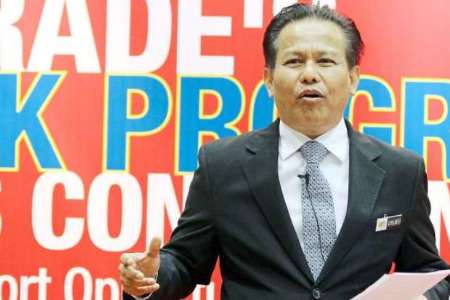
Talking to IRNA, Executive Office Chairman of MATRADE Dzulkifli Mahmud said that removal of economic sanctions against Iran could boost bilateral trade and open doors to Malaysian entrepreneurs to become active in sectors other than palm oil.

Noting that bilateral trade relations dipped in 2015 due to lower amount of oil products imports from Iran as well as certain financial problems, he said his organization will now start to enhance its target of attracting tens of millions of customers in Iran.

He said Malaysian traders should focus on export of such items as machinery, mechanical spare parts and equipment as these commodities are not facing a sharply fluctuating market.

According to the official, Malaysia exported commodities to Iran valued at over 470 million dollars last year which showed a drop of 10.6 percent when compared to 2014.

South Korea triples Iran crude imports

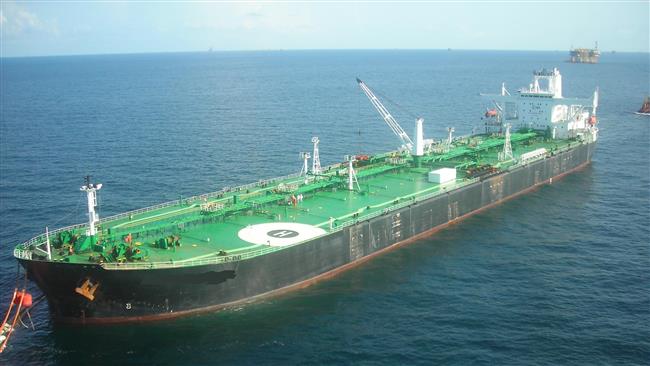
The major Asian crude importer bought 203,165 barrels per day (bpd) of Iranian crude oil last month against 64,699 bpd a year earlier, customs data on Monday showed, quoted by Reuters.

The imports were the highest since 2012 when South Korea bought 230,769 barrels from Iran before it cut shipments due to intensified Western sanctions.

South Korea bought 114,595 bpd of crude from Tehran last year, down eight percent year-on-year, according to Reuters.

Iran is currently exporting 1.3 million bpd of crude oil, which will reach 1.5 million bpd next month, Vice President Es’haq Jahangiri said on Saturday.

Since the implementation of a nuclear accord last month, the country has ramped up production by 400,000 bpd, Managing Director of the National Iranian Oil Company (NIOC) Rokneddin Javadi said in remarks published on Sunday.

Iran is seeking to boost output by 1 million barrels a day and regain market share of 2.1-2.3 million bpd before sanctions were intensified in 2012.

Javadi said Iran is planning three initial shipments to Europe carrying 4 million barrels of oil with 2 million barrels going to France’s Total and the rest to companies from Spain and Russia.

On Sunday, a tanker for Total was being loaded at Iran’s Kharg Port​ in the Persian Gulf, marking the first cargo of oil to Europe since sanctions ended, an Iranian Petroleum Ministry official said.

Tankers chartered for Chinese and Spanish companies were due to arrive later in the day, while a vessel chartered by Lukoil’s trading unit Litasco was located off the east coast of the UAE after loading at Kharg Island, Bloomberg reported.

Greece’s Hellenic Petroleum has also signed supply deals with the NIOC along with Total, Spanish refiner Compania Espanola de Petroleos and Russia’s Lukoil. They have all booked cargoes of Iranian crude to sail from Kharg Island to Europe.

On Sunday, Pirouz Mousavi, managing director of Iran Oil Terminals Co., told the Mehr news agency that the loading operation of the three tankers at Kharg terminals would be done within 48 hours.

IRGC to Have Delivery of New Ballistic Missiles: Commander

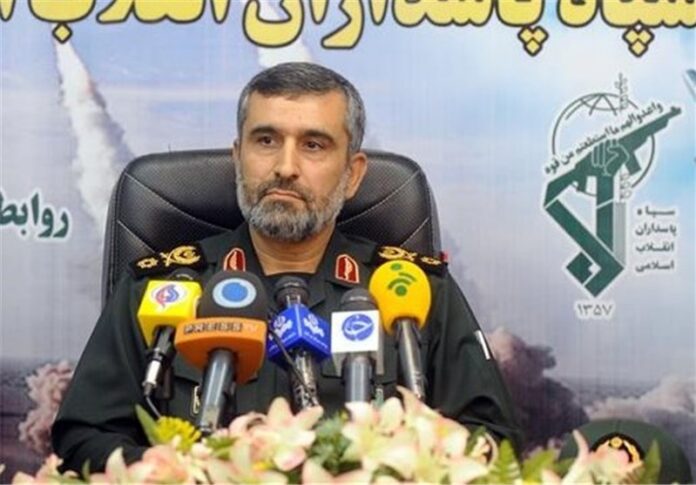
The IRGC will begin receiving Emad ballistic missiles early next Iranian year (to begin on March 20), Brigadier General Hajizadeh told reporters in the city of Mashhad on Sunday.

He noted that the IRGC will be also equipped with a new type of solid-fuel long-range Sejjil missiles.

Sejjil is a ground-to-ground missile with a range of 2,000 kilometers, known as one of Iran’s most advanced ballistic missiles. With a 650-kg warhead, Sejjil runs on solid fuel and can be prepared for launch within minutes.

Emad is also a long-range guided missile that Iran’s Defense Ministry successfully test-fired in October 2015.

Categorized as a new generation of surface-to-surface ballistic missile, Emad is the first Iranian long-range missile that can be guided and controlled until it hits the target with great accuracy.

Iran has in recent years made great headways in manufacturing a broad range of military equipment, including the air defense systems that use cutting edge technologies.

Tehran has repeatedly stated that its military might is defensive in nature and poses no threat to other countries.

Iran Accomplishing Oil Export Objectives

Following the removal of the sanctions under the Joint Comprehensive Plan of Action (JCPOA), a lasting nuclear deal between Iran and the Group 5+1 (Russia, China, the US, Britain, France and Germany), Iran’s daily oil exports have jumped by 400,000 barrels, Rokneddin Javadi, the managing director of the National Iranian Oil Company, announced on Sunday.

He also unveiled plans for another 200,000 bpd hike in Iran’s oil exports in the near future.

On Saturday, Javadi had said that 4 million barrels of crude oil, being loaded on a number of tankers, would be shipped to Europe soon.

“Of those 4 million barrels of crude, 2 million barrels are assigned to France’s Total, and 2 million barrels have been bought by two companies in Russia and Spain,” he told Reuters.

Iran won’t let malicious states have their way in Syria: Commander

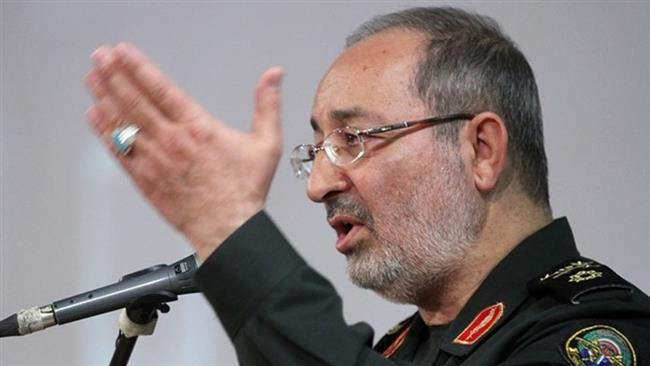
Deputy Chief of Staff of Iran’s Armed Forces Brigadier General Massoud Jazayeri said on Sunday that the recent announcements by some countries to deploy ground forces to Syria are “a political bluff and psychological warfare,” adding, “It looks like the Syrian government and people and the resistance [front] have taken their decision and do not back down in the face of these psychological attacks.”

Saudi Arabia and Turkey have said they could dispatch ground troops to Syria. Such a deployment would come on top of Saudi Arabia’s widely-reported ideological and financial patronage for the Takfiri militants tyrannizing Syria and Turkey’s provision of a supply route for the militants.

In response to the question of whether there was a potential for direct military confrontation between Iran and Saudi Arabia in Syria in case Riyadh does deploy ground forces to the crisis-hit country, Jazayeri said, “We will definitely not let the situation in Syria proceed in line with trouble-making states’ wish to enforce their policies. We will make necessary decisions in the due time.”

Also on Sunday, Riyadh confirmed it had dispatched warplanes to the Incirlik Air Base in southern Turkey, claiming that the move was in line with the so-called fight against the Takfiri Daesh terrorists in Syria.

“Via which place do these terrorists travel to and from Syria other than Turkey? From where do they receive support other than reactionary Arab countries?” Jazayeri asked.

The Iranian commander drew attention to the fact that the talk of troop deployment comes at a time when the Syrian army and popular fighters are making noticeable gains against militants.

The Syrian forces, backed by Russian airpower, have decisively closed in on the militants in various parts of the country, most notably the northwestern Aleppo Province. The Syrian army now intends to advance into the militant-held northern province of Raqqah, which is considered Daesh’s de facto capital.

Syria has been gripped by foreign-backed militancy since March 2011. More than 470,000 have reportedly lost their lives and millions displaced as a result of the violence.

Syrian forces have been battling militants, particularly Daesh terrorists, on different fronts throughout the country. They have recently been making rapid advances against terrorists in operations backed by Russian air cover, which began on September 30 last year at the request of the Damascus government.

“From my point of view, there is a political solution to Syria’s crisis; but hegemonic powers are not after a balanced and just political solution,” Jazayeri said.

Iran eyes competitive marketing of nuclear products

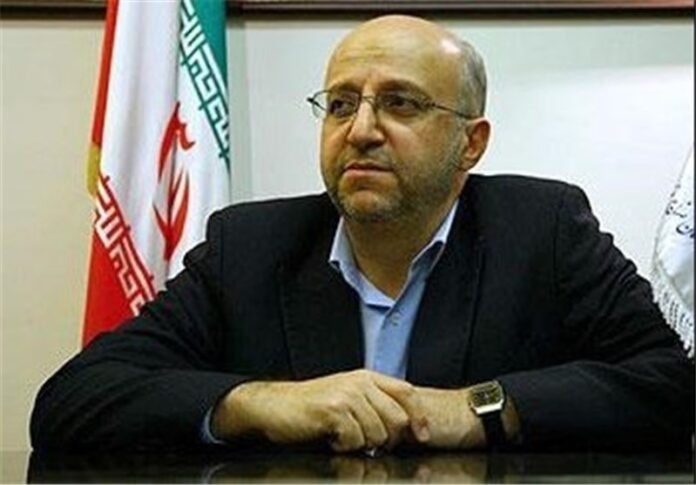
Salehi

In a meeting at the Iranian Mines and Mining Industries Development and Renovation Organization (IMIDRO) on Sunday, he said that IAEO is no longer under sanctions and that concerns over cooperation with it have been removed.
He also said that with implementation of the nuclear Joint Comprehensive Plan of Action (JCPOA), the affiliated companies of IAEO have been instructed to adapt themselves to the new international conditions.
‘IAEO deems it a duty to provide whatever it has within its might for the development of the country,’ he added.

Syrian army urges gunmen to lay down weapons, have their legal status settled

According to the Syrian News Agency (SANA), the General Command addressed on Sunday the citizens in Daraa, the Eastern Ghouta in Damascus countryside and in the eastern countryside of Aleppo province to be part of the national reconciliation and return to their normal lives.

On February 4, the General Command of the Army and Armed Forces called on gunmen in the northern countryside of Homs to lay down arms to have their legal status settled and to be part of the national reconciliation.

Syrians, Not Others, Should Decide for Syria’s Future: Leader

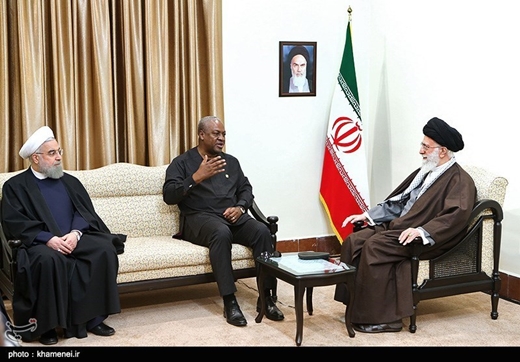
“We believe that a solution cannot be prescribed for a nation from outside that country,” Ayatollah Khamenei said Sunday in a meeting with visiting Ghanaian President John Dramani Mahama here in Tehran.

“Americans and Europeans cannot decide for the Syrian nation, and it is the Syrian people who should decide for their future,” the Leader said.

Imam Khamenei also underlined Iran’s firm policy of “advocating peace” on the Syrian issue.

Elsewhere, Imam Khamenei referred to hegemonic powers, particularly the United States and the Zionist regime of Israel, as the root causes of all problems, stressing that their interests are served by creating insecurity and wars in different parts of the world.

“Terrorist groups in our region and in Africa are trained by the spy agencies of the US, Britain, and the Zionist regime,” the Leader said.

Ayatollah Khamenei added that the solution to such issues as the Syrian crisis, terrorism, and the sufferings of the Palestinian people lies in close cooperation of independent countries.

The Leader further highlighted the capacities of Iran and Ghana and hoped that the visit by the African country’s president would lead to enhancement of cooperation between Tehran and Accra.

Mahama, for his part, praised Iran’s serious fight against terrorism, and expressed the hope that the Syrian issue would be resolved with the effective role Iran plays in the anti-terror campaign.

He also appreciated Iran on behalf of African nations for its support for the continent’s freedom-seeking movements, the anti-Apartheid movement of South Africa in particular.

Jaberi Ansari: Switzerland Officially Hosts Iran and Saudi Arabia’s Interests Sections

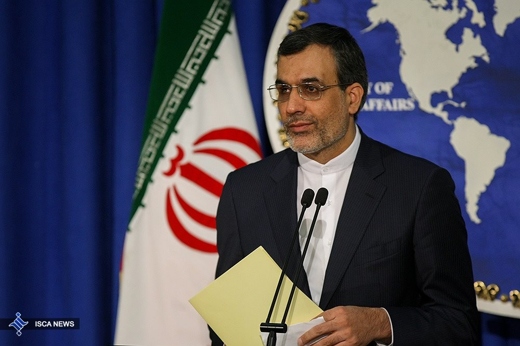
The Foreign Ministry spokesman answered a question about the diplomatic role Switzerland is playing as regards the interests sections of Iran and Saudi Arabia, saying “The Islamic Republic of Iran, during a diplomatic consultation with the Swiss government, requested that this country represent Iran’s interests section in Saudi Arabia.”

He added, “The Swiss government has also announced that they are ready to play this role, but finalizing it depends on consultation with Saudi Arabia. Now, with Switzerland officially receiving the same request from Saudi Arabia, will take over Iran’s interest section in Riyadh and Saudi Arabia’s in Tehran, after processing the necessary diplomatic actions.”

Saudi Arabia severed their diplomatic relations with Iran on January 3rd 2016, after the attack on their embassy and consulate in Tehran.