Friday, December 26, 2025
Home Blog Page 4598

Japan PM due in Iran to expand oil cooperation

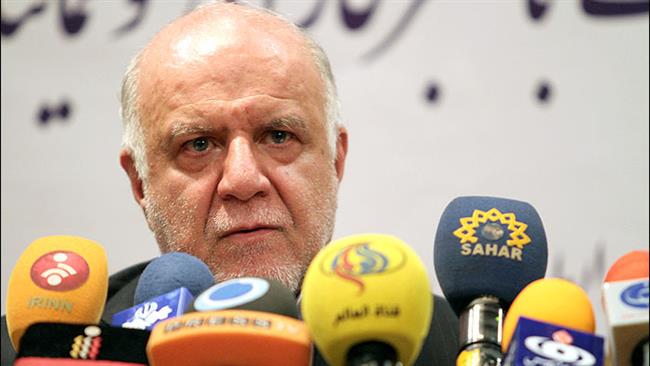
“There are grounds for cooperation between the two countries in oil refinery, LNG, petrochemistry, investment and projects financing sectors,” Zangeneh said in a Monday meeting with Katsuyuki Kawai, an adviser to Japanese prime minister, who is in Tehran at the head of a delegation.

He added that the current visit by Kawai and his accompanying delegation to Tehran is aimed at reviewing issues of mutual interest and making preparation for the Japanese premier’s trip to Iran in 2016.

Following the removal of nuclear-related sanctions against Iran in January, Tehran and Tokyo can speed up cooperation, particularly in the oil sector, the minister emphasized.

Iran and the five permanent members of the UN Security Council – the United States, France, Britain, China and Russia – plus Germany started to implement the Joint Comprehensive Plan of Action (JCPOA) on January 16.

After the JCPOA went into effect, all nuclear-related sanctions imposed on Iran by the European Union, the UN Security Council and the US were lifted. Iran has, in return, put some limitations on its nuclear activities.

Zangeneh further added that the two countries can expand strategic relations in the energy sector and said the export of Iran’s crude oil to Japan can be among important fields for cooperation.

“We expect Japan and companies managed and overseen by the country’s government to boost Iran’s oil purchase to at least pre-sanctions level,” he said.

On January 22, the Japanese cabinet approved the lifting of its sanctions against Iran, joining the ranks of the world’s major economies to normalize trade ties with the Islamic Republic.

Japan was one of the key clients of Iran’s oil before the US-led sanctions were imposed on the Islamic Republic in 2012.  Iran also hosted several leading Japanese companies in its oil and gas projects before the sanctions were put into place to discourage purchases of oil from Iran not only by Japan but also by many other international clients.

The prospects for the removal of the sanctions against Iran encouraged Japanese officials to look for avenues to return to the previous status of oil relations with Iran.

Japan imported around 338.9 bpd of crude oil from Iran before the imposition of the US-led bans against Tehran in January 2012.


S-300 Delivery to Iran to Start in ‘Nearest Time’: Russian Official

“Deliveries will be made in the nearest time,” Zamir Kabulov, who is also Putin’s special envoy for Afghanistan, told RIA Novosti on Monday.

Under the previous contract signed in 2007, Russia was required to provide Iran with at least five S-300 defense system batteries.

But the contract, worth more than $800 million, was revoked after then-President Dmitry Medvedev banned the supply of those systems to Tehran in 2010.

Later, Iran lodged a $4 billion lawsuit at an international court in Geneva against Russia’s arms export agency.

However, Russian President Vladimir Putin decided in April to lift the ban on the S-300 missile system delivery to Iran.

Kabulov said that the Islamic Republic is also displaying interest in buying more advanced, S-400 missile systems, but no talks are underway at the moment on this matter.

“No, there are no talks being held on the S-400. The Iranians have noted that they would principally be happy (to receive them), but there haven’t been any negotiations,” he said.

The remarks come as Iranian Defense Minister Brigadier General Hossein Dehqan left for Moscow on Monday at the official invitation of Russian Minister of Defense Sergei Shoigu to hold talks with senior Russian political and defense officials.

Enhanced defense, military and technical cooperation between Tehran and Moscow are among main objectives of the Iranian minister’s visit.


The Israeli Minister Gets Chummy with Saudi Arabian Authority

As reported by Al-Alam News Network, the meeting of the two authorities at the Munich Security Conference seemed to suggest that there had been previous close contact between them.

The members of the Israeli delegation accompanying Yaalon, the Defense Minister, and Al-Faisal’s entourage also greeted each other with warm smiles. The photos published of this scene imply a certain level of intimacy among them.

It remains worth mentioning that the Israeli Defense Minister talked about channels of contact between his country and the Arab states bordering the Persian Gulf in his speech at the Munich Security Conference, saying, “Meetings with these countries are going on behind closed doors.”

Yaalon emphasized that there are confidential contacts between Israel and the Arab states around the Persian Gulf.

The Munich Security Conference is held annually in the Bayerischer Hof Hotel in Munich, Germany in February, and hosts guests from all over the world. This year it was held from February 1 to 14.

This conference covers a wide range of important international security concerns, and this year the Syrian civil war and the refugee crisis are on the top of its list.

Iranian FM Downplays Saudi Claims about Deploying Troops to Syria

Zarif-Iran Talks

“It is clear that such remarks (about the deployment of troops to Syria) are mostly a propaganda stunt,” Zarif told reporters upon his arrival in the Belgian capital of Brussels on Sunday.

“National capabilities and facilities are self-evident, and such propagandistic bluffing will not help solve their problems,” he added, according to a report by Mizan news agency.

He further warned that such claims can even create more tension and danger in the region, and urged neighbouring countries to face and understand the current reality, and to leave their illusions aside.

“They should accept that they have to yield to the demands of the Syrian nation, and they should stop making decisions for the people of Syria,” Zarif said, reiterating that the Arab nation is the one that must make its own decision.

The comments came after Riyadh voiced its readiness to participate in ground operations in Syria if the US-led coalition, purportedly targeting terrorists, decides to commence any such operations.

Saudi Arabia is a member of the so-called US-led coalition, which has been conducting air raids against what are claimed to be Daesh (ISIS) terrorists inside Syria. This has been undertaken without any authorization from the Syrian government or a UN mandate, since September 2014.


368635_587


Zarif’s Ongoing Visit to Europe


Elsewhere in his remarks, the Iranian foreign minister spoke about his visit to Brussels, stressing that Tehran has begun “important discussions” with the European Union (EU), and the his visit is being made within the same framework.

During the trip, which will last until Tuesday, it will be necessary to confer with EU officials, in particular Federica Mogherini, the EU Foreign Policy Chief, on the timely implementation of recent nuclear deal conditions (known as JCPOA) between Tehran and world powers, according to Zarif.

Bilateral ties and issues of mutual interest, as well as significant regional issues, will also be discussed with EU officials, the Iranian foreign minister added.

“The entire world has urged Saudi Arabia to cease its brutal war against the people of Yemen and its illegal attacks on civilians”, Zarif said, stressing that the necessity for putting an end to the war is another point due to be discussed during the European visit.

He also noted that during the visit, he will follow up on the issue of Syria, and the need for a concerted campaign against ISIS and other extremist groups.

“In the meeting at Munich, we managed to reach an agreement on the necessity for an all-out ceasefire, the cessation of military operations by all sides, and the delivery of humanitarian aid to the Syrian people,” he added.

“These are the positions which the Islamic Republic of Iran has been stressing for several months, during the Vienna process meetings, for example,” Iran’s top diplomat said, while regretting that Saudi Arabia had opposed Iran’s views during previous meetings.

“However,” he added, “The Al Saud regime is now under international pressure to abandon its warmongering policies and its illusions of offering military solutions to the Syrian crisis.”

“We are sure it [Saudi Arabia] would have no other choice,” he added.

A look at Iranian newspaper front pages on Feb 15

Iran Newspaper front pages

The top stories Iranian papers covered on Monday, February 15, 2016 included: the Supreme Leader’s meeting with the Ghanaian president in Tehran; Iran’s readiness to send the African country oil and petroleum products; the judiciary’s latest updates about a big corruption scandal in the Ahmadinejad administration; and the latest Syrian developments.

Abrar:

1- Judiciary updates proceedings on charges against Ahmadinejad, Baghaei, Saeid Mortazavi, etc.

Judiciary spokesman Gholamhossein Mohseni Ejei delivered updates about charges of figures like Former President Mahmoud Ahmadinejad, Former Vice President Hamid Baghaei and SaeidMortazavi, ex-prosecutor.

2- NATO accuses Russia [of loose talk on nuclear weapons]

3- Iran army starts employing Karar tanks

4- North Korea took 70 percent of Kaesong wages for weapons program

5- Iran needs to be crowned by art of calligraphy

6- Kerry: We still have many differences with Iran over various issues

7- Hadi Khamenei : We will win in elections

Hojatoleslam Hadi Khamenei is an influential Iranian reformist politician, mojtahed and linguist. He is a key member of the reformist Association of Combatant Clerics, and a former deputy of the Majlis of Iran representing a district in Tehran. Hadi is the Leader’s brother.


A look at Iranian newspaper front pages on Feb 15


AbrarEqtesadi:

1- Iran to ship oil to Africa

2- Iran to boost oil production capacity by 0.2mb/d

3- Committee holds final deliberations on new oil contract model


A look at Iranian newspaper front pages on Feb 15


Afkar:

1- Assad poised for attack

2- Tehran governor: Election inspectors eye, ear of interior ministry

3- Parliament speaker stresses unity of Islamic states to support Palestinian

4- Digital implantology revolutionizes implant practices

5- Putin, Obama clinch agreement on Syria

6- Syria can count on full Iran help in air defense


A look at Iranian newspaper front pages on Feb 15


Amin:

1- Africa enjoys special status in Iran foreign policy: President

2- Rouhani: People’s election turnout will be significant, glorious

3- Article: How Iran wooed Russia to step in Syria


A look at Iranian newspaper front pages on Feb 15


Arman-e Emrouz:

1- Leader to Ghana President: Syrian nation to decide their own future

2- 10k Iranian students in US


A look at Iranian newspaper front pages on Feb 15


Asia:

1- US to ensure Iran oil shipments

2- Viewpoint: Iran-Turkey coexistence


A look at Iranian newspaper front pages on Feb 15


Ebtekar:

1- Celebrities used for securing votes

2- Leader: Syrian nation should decide their future, not US nor Europe

3- 54,915,024 eligible voters

4- Great confrontation in Syria

5- Smoking kills on Iranian every 5 seconds


A look at Iranian newspaper front pages on Feb 15


Emtiaz:

1- Smoking rises among students

2- Iran ready to sell crude oil to Ghana

3- IRR 1,100bn deal for smart internet filtering [in Iran]

4- Production of German cars welcome in Iran

5- Tine plays in impoverished regions

6- Iran over-imports rice


A look at Iranian newspaper front pages on Feb 15


Etemad:

1- Rafsanjani predicts 2013 epic will be repeated

2- Moderate parliament expected: political activists


A look at Iranian newspaper front pages on Feb 15


Ettela’at:

1- Iran economic growth to top regions next year: Economy Minister

2- Leader to Ghanaian President: Supporting peace is our fixed policy regarding Syria

3- Rouhani: All problems must be solved through political solutions

4- Joint Turkey-ISIS shelling of northern Syria kills 35

5- Burning pandemic in Iran

The number of burning injuries in Iran is 15 times more than the world average.


A look at Iranian newspaper front pages on Feb 15


Hemayat:

1- Iran banks still subject to human rights sanctions

2- Less than 50 cases of election abuses: judiciary


A look at Iranian newspaper front pages on Feb 15


Hosban:

Oil Minister says against gender separation in petroleum industry


A look at Iranian newspaper front pages on Feb 15


Iran:

1- No recession in Iran economy next year: Minister

2- Iran eyes 12.8% inflation rate by yearend (March 21)

3- Volkswagen to help renovate Iran’s fleet of commercial vehicles

4- Tjeknavorian’s glorious greeting to Iranian music

5- Turkey shells Syrian army, Kurds


A look at Iranian newspaper front pages on Feb 15


Jamejam:

1- Banks still under sanctions; delays in P5+1’s most urgent promise

2- US cannot decide fate of Syrian nation: Leader

3- Sanctions’ removal not operational yet


A look at Iranian newspaper front pages on Feb 15


Javan:

1- ISIS point fire to Syria

Turkey shells north Syria

Saudi fighter jets deployed to Turkey’s Incirlik base

2- Interior Minister: Elections competitive in all constituencies

3- Cleanness of economic records will put admin to shame


Javan


JomhourIslami:

1- Iran, Italy sign €1bn Petchem MoU

2- New wave of finances en route to Iran capital market

3- Ayatollah Rafsanjani: Maximum election turnout sign of grown political culture

4- Revealed: Saudi PSYOP against Iran in oil market

5- Iran, Ghana ink MoUs on agricultural, standard cooperation


A look at Iranian newspaper front pages on Feb 15


Kayhan:

1- MP: Opening of 1,000 LCs was a lie

2- Erdogan’s ruling style: One citizen, one bullet

3- US elections: a little popular, a lot financial—experts say


A look at Iranian newspaper front pages on Feb 15


Khorasan:

1Tehran, Moscow poised for major arms deal

2- Potential fall of interest rates by yearend (March 21)


A look at Iranian newspaper front pages on Feb 15


Payam Zaman:

1- Petroleum minister stresses state [feedstock] monopoly in Petchem sector

2- 3%: percentage of standard office lifts in Tehran


A look at Iranian newspaper front pages on Feb 15


Rah-e Mardom:

1- Intelligence Minister: Tiniest suspicious are monitored

2- Rouhani: World expects return of Palestinians to their homes


A look at Iranian newspaper front pages on Feb 15


Resalat:

1- Liberman takes swipe at ‘political charlatan’ Netanyahu

2- Iran wasted 7m jobs by $70bn imports: analyst

3- Russia to Riyadh, Ankara: Assad only legitimate power in Syria


A look at Iranian newspaper front pages on Feb 15


Roozan:

People invest IRR 80,000bn for Petchem development


A look at Iranian newspaper front pages on Feb 15


Sahib Ghalam:

Over 30 British firms call for jointing Iran-UK trade chamber


A look at Iranian newspaper front pages on Feb 15

Iran researcher: GMO imports ‘a Zionist plot’

Ali Karami, specialist in medical biotechnology and genetic engineering, believes an “import mafia” is behind the distribution of GMO products in the country.

He claims to have received death threats after his first interview with Tasnim was published a month ago, the news agency said as it published the second part of his remarks on Monday.

“The mafia importing certain genetically modified products even kills for its interests. Be careful,” said Karami, who is also a lecturer at the Baqiyatallah University of Medical Sciences.

“The fact is the lives of people are not important to American and Israeli companies because two sweet businesses are involved.

“First, the contaminated food causes illness and then the patient needs drugs and medication. This is capitalism where money is the criteria and pharmaceuticals and medicine is a multi-trillion-dollar industry,” he said.

Karami said the proliferation of GMO products is part of a “dangerous plot to control Iran, the Middle East and the Islamic world in general.”

“State officials, stay vigilant. Ministries of Agriculture, Trade, the esteemed Majlis, Judiciary, Executive, Ministry of Health, supervisory bodies, please study this sinister scheme,” he said.

Last year, Iran imported $5.5 billion of GM products, head of the Iranian Organic Association Ali Nourani said recently, adding the imports were threatening the health of consumers.

A variety of GM products, chiefly rice and cooking oil, is imported into Iran while much of the organic crops produced in the country is exported, he said.

Nourani said Iran’s move toward embracing genetically modified organisms (GMOs) makes no economic sense.

“The Iranian society is not starving to say we must move toward genetically modified products, which amounts to toying with the health of the people,” Nourani said.

The Iranian government supports GMO technology which it sees crucial to future food security. The country has been dabbling with biotechnology for years, cloning its first sheep in 2006.

The first GM rice is already grown for human consumption. In May, the first sample of Iran’s GM cotton was unveiled by Minister of Agriculture Mahmoud Hojjati.

Earlier this year, Iran signed several agreements with France for cooperation on production of GM fruit and livestock.

Iran to Issue Visa on Arrival for Citizens of All But 9 Countries: Spokesman

Iran has decided to issue visa upon arrival at the airport for everyone except the citizens of nine countries, Jaberi Ansari said in his weekly press conference here in Tehran.

“Certain countries like the United States and Britain are exceptions to the immediate issuance (of visa),” he said, adding that the details of the plan and list of the countries excluded will be made public later.

He further explained that the decision to ease the visa regime has been made based on the county’s interests and in line with plans to facilitate the entrance of tourists given the extensive tourism capacities of Iran.

Earlier, Iranian Deputy Foreign Minister for Legal and International Affairs Seyed Abbas Araqchi announced that the country’s foreign ministry will issue 30-day visa for citizens of 180 countries upon their arrival in Iranian airports.

Head of Iran’s Cultural Heritage, Handicrafts and Tourism Organization (ICHHTO) Masoud Soltanifarhad also noted that Iran has formulated plans to increase revenue from the tourism industry within the next ten years to an amount equal to the income generated by oil sales

In an interview with the Tasnim News Agency, Soltanifar said according to the plans, Iran’s income from attracting tourists will amount to the oil incomes in 2025.

Referring to a 12-14 percent rise in the number of foreign visitors to Iran over the past two years, he expected that the country will be hosting 20 million tourists in 2025.

With a large number of attractive natural and historical sites, Iran is one of the most touristic countries in the world.

More foreign tourists are starting to arrive in Iran after a lasting nuclear deal between Tehran and the Group 5+1 (Russia, China, the US, Britain, France and Germany) came into force and nuclear-related anti-Iran sanctions were terminated.

IRGC to conduct missile drills soon: Senior commander

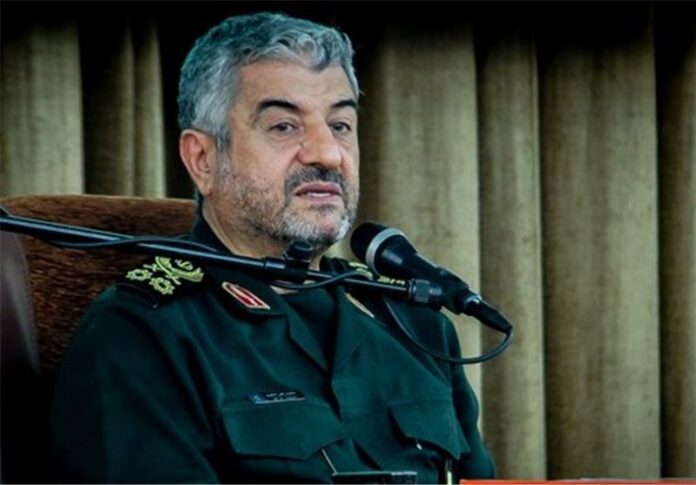
Iranian Armed Forces’ Chief of Staff Major General Hassan Firouzabadi said on Monday that the IRGC missile maneuver will be held in less than a month to test the precision and power of Iranian missiles.

Firouzabadi also said that the planned exercises are aimed at maintaining the preparedness of the Iranian Armed Forces and further enhancement of the country’s missile industry.

The announcement comes as Iran has conducted several missile tests during the past months.

On October 11, Iran successfully test-fired Emad, a precision-guided long-range missile which has been completely designed and manufactured by Iran’s Aerospace Industries Organization, an affiliate of the Iranian Ministry of Defense.

On December 2015, Iranian President Hassan Rouhani ordered the Defense Ministry to speed up efforts to boost the country’s missile power, following reports that the US was planning to impose fresh sanctions on Tehran over the issue.

The US Department of the Treasury announced on January 17 that it had imposed new sanctions targeting Iran’s ballistic missile program, adding five Iranian citizens and a network of companies based in the United Arab Emirates and China to a US blacklist.

The new sanctions came only a day after Iran and the five permanent members of the UN Security Council – the US, Britain, France, Russia and China – plus Germany started to implement the nuclear agreement, dubbed the Joint Comprehensive Plan of Action (JCPOA), they reached in the Austrian capital, Vienna, on July 14, 2015.


540eed91-9617-49ac-98f7-62615c5d4280


After the JCPOA went into effect, all nuclear-related sanctions imposed on Iran by the European Union, the United Nations Security Council and the United States were lifted. Iran, in return, has put some limitations on its nuclear activities.

Rouhani said that Iran’s missile power, which he described as a means to protect the country’s sovereignty and a major deterrence against terrorism in the Middle East and beyond, has never been up for negotiations, including in the nuclear talks with the P5+1 group.

He once again rejected claims that Iran is planning to produce missiles capable of carrying nuclear warheads, saying that Iran will continue to produce and test ballistic missiles as a “conventional and important” instrument for defending the country.

Last week, Iran’s Defense Ministry delivered the first batch of a newly developed air-launched cruise missile, dubbed Nasr (Victory), to the Air Force.

Iran’s Aerospace Industries Organization on August 25, 2015 launched the production line of Nasr cruise missile in a bid to upgrade the country’s deterrence capabilities.

In recent years, Iran has made great achievements in its defense sector and attained self-sufficiency in producing essential military equipment and systems.

The Islamic Republic has repeatedly said its military power poses no threat to other countries, reiterating that its defense doctrine is based on deterrence.


8850e727-5aad-4cd9-a92b-84923fbd68df

CBI starts implementing SWIFT in banking transactions

Deputy for foreign exchanges affairs for Central Bank of Iran Gholamali Kamyab told IRNA on Monday that though the CBI together with other Iranian banks had joined SWIFT two weeks ago, they were practically able to use it only yesterday.

He said the delay was due to time-consuming banking procedures.

He also noted that most of efforts to make SWIFT practical in Iran focused in software operations by the banks.

Noting that the issuance of Letter of Credit (LC) is being underway, Kamyab said the value of the LC cases to be issued depended on the volume of banking relations.

After the nuclear deal that led to the termination of sanctions, Iran gained access to around 100 billion euros of its assets that were frozen in countries around the world.

Since two weeks ago, the Iranian banks are back in the global banking business, able to use the worldwide transaction network SWIFT, the Belgian-based cooperative which handles cash transfers and letters of credit between financial institutions, the Parseed Iranian news website reported.

“Banks can now access SWIFT. We should note that our banks were subject to banking sanctions and needed to prepare the necessary infrastructure and they managed to do that by today,” said Mohsen Jalalpour, the head of Iran’s Chamber of Commerce, Industries, Mines and Agriculture.

Re-engaging with the banking throughout the world, the SWFT system is vital for Iran’s trade, particularly of crude oil.

A government spokesman said some of the 100 billion euros in formerly frozen assets will be brought back to Iran while the rest will be used to purchase goods to be imported.

While international banks are expected to link up with their Iranian counterparts via the SWIFT, Iran will also be looking to encourage foreign institutions to expand involvement in the country’s financial system.

However, foreign banks considering establishing a subsidiary in Iran will in most cases require a partnership with a local entity unless they set up in one of a handful of free zones, said Nicholas Gilani, senior partner at Arjan Capital, a consultancy advising on Iran business.

Spokesman: Iran, Russia enjoy highest level of diplomatic ties

Touching upon the upcoming visit of Minister of Defense Brigadier General Hossein Dehqan to Russia, Jaberi Ansari reiterated that Tehran and Moscow have all-out relations.

Jaberi Ansari made the remarks in his weekly press conference when asked by the reporters to comment on the issue.

‘The post-sanction era has paved the way for fostering the level of Iran-Russia trade transactions to the level of mutual political cooperation,’ he added.

Referring to S-300 air defense system, he underscored that the agreement inked between the two countries in the past months has been finalized and the missile system will be transferred to Iran in near future.

In June 2015, Vladimir Kozhin, President Vladimir Putin’s aide on military-technical cooperation said Moscow is assembling S-300 defense systems to start shipments to Iran by next year.

Russia is also modernizing some parts of the systems and revising contract terms.

Putin ended a self-imposed embargo on supply of the S-300 in April after five years, prompting objections from the US and Israel.

The Russian leader said at the time that the transfer would help create a balance in the region. Iran said it expects to take delivery this year.

Some of the weapons systems originally intended for sale to Iran were supplied to other clients, while some parts of other S-300s stored across Russia have undergone “serious modernization” as the years passed, Kozhin said.