Thursday, December 25, 2025
Home Blog Page 4591

US, France Oppose UN Resolution to Respect Syrian Sovereignty

A Russian draft resolution demanding respect for Syria’s territorial integrity and sovereignty – an effort to curb Turkish military action in the country – has failed to gather support at the UN Security Council.

Russia called for a meeting of the council as Turkey intensified its shelling of Kurdish militants in northern Syria and was allegedly considering sending Turkish ground troops into the country.

The draft resolution, which does not mention Turkey or any other country specifically, “strongly demands to fully respect the sovereignty” of Syria and to “immediately halt any cross-border shellings and incursions as well as abandon all attempts or plans for foreign ground intervention”.

Vladimir Safronkov, Russia’s deputy ambassador to the UN, told reporters after the meeting that putting troops on the ground would “undermine all fundamental decisions” taken so far to end the conflict in Syria, and that Russia will insist on pushing the resolution forward.

However, the draft was quickly dismissed by the US and France, which are both veto-wielding members of the council.

Samantha Power, US ambassador to the UN, said the resolution was a distraction, the Associated Press reported.

“Rather than trying to distract the world with the resolution they just laid down, it would be really great if Russia would implement the resolution that’s already agreed to,” Power said, citing a resolution endorsing a roadmap to end the Syrian crisis.

Asked whether France supported the Russian draft, Francois Delattre, French ambassador to the UN, said “the short answer is no”.

He warned of a “dangerous military escalation” in northern Syria, which he claimed was “the direct result” of increased military operations by the Syrian army and its ally Russia, calling for an end to the offensive.

Yasar Halit Cevik, Turkish ambassador to the UN, defended his country’s military operations against the Kurds, saying Turkey was exercising its right to self-defense against terrorist threats.

Cevik said Turkey would not put boots on the ground unless it was part of a “collective action” authorized by the Security Council or by the US-led international coalition against Daesh (ISIL).

Russia Says to Start Construction of 2 Power Plants in Southern Iran

“We are coordinating the date with our Iranian colleagues, everything is basically ready, we are about to complete the survey of the seismological situation,” Sergey Kiriyenko said Friday speaking of the two reactors, Sputnik reported.

Back on January 31, Head of the Atomic Energy Organization of Iran (AEOI) Ali Akbar Salehi said Iran and Russia have signed agreements for the construction of “two big reactors in Bushehr.”

In November 2014, Tehran and Moscow struck a deal to build eight more nuclear power plants in Iran.

Russia has already built a power plant in Bushehr. The agreement for Bushehr Nuclear Power Plant was finalized in 1995, but the project was delayed several times due to a number of technical and financial issues.

The move came more than a month after implementation of the Joint Comprehensive Plan of Action (JCPOA), a lasting nuclear deal between Iran and the Group 5+1 (Russia, China, the US, Britain, France and Germany).

The JCPOA, which came into force on January 16, has terminated all nuclear-related sanctions on Iran, reopened the doors of foreign investment to the country’s market, and prepared the ground for a much-anticipated economic boom.

How to build tomorrow cities?

According to Mohsen Tabatabaei Mozdabadi, secretary of Iran Urban Economics Scientific Association (IUESA), best cities are where Social interaction and citizenship participation are improved and people are gathered together after their work into public places.

Mozdabadi made the remarks in an article a copy of which was sent to IRNA on Saturday.

An international conference on urban economy is to be held on May 18, 2016, by IUESA to discuss major topics in urban economy including, economy of smart city, economy of urban tourism, economy of urban infrastructures, economic culture of city and citizenship education, urban dilemmas and the environment, and air pollution.

The full text of Mozdabadi’s commentary reads:

Cities are places that they have both the problem and solution simultaneously. They are fruitful area for science, technology, culture, innovation, and individual and collective creativity. Yet, cities are the place for problems such as unemployment and poverty. All evidences and assumptions indicate increase in urban population in the world. On the other hand, UN predicts that slums will be doubled by 2050. It seems that tomorrow cities should pay more attention to this issue. Cities can collect data and information by smart tools about different dilemmas such as traffic, but it is necessary to listen to citizens. It is important to listen to low-income class of the society who live in suburbs more compassionately. City decision-makers should know that what things would be more valuable in the future. They should know that they would face with condensed and populated cities. Therefore, they can hail future through creating new infrastructures and rehabilitation of existing ones.

Tomorrow cities are those that they care streets and public areas collecting people together. Streets are the force of momentum and life in cities. They are valuable public assets. They should have better position in city planning. Streets devote 20 to 30 per cent of existing cities to themselves, but considered as a less valuable place merely for movement. Streets should have roles that are more important in tomorrow cities than movement from one place to another. Best cities in the world are those where they gather people together after their work into public places. These cities offer various options such as sidewalks and path for cycling. Social interaction and citizenship participation are improved in these places. It seems that people, behaviors, and their activities should be planned in tomorrow cities.

World Health Organization (WHO) considers nine square meters per capita green space for city dwellers. This figure is very slight in many cities. Creating and improving green spaces should not only be the challenge of city policy-makers, but they should try to improve this sense among citizens owning green spaces. Cities will take step in the path of being smart. However, being smart is not only economical and powerful use of existing technologies and current data, but it also means that cities should be able to improve data, produce, simulate, and finally design urban issues data by analyzing them.

Boeing gets Ok to study Iran market

“We have applied for and received a license to assess the current commercial passenger airplane needs of US government-approved Iranian airlines,” AFP has quoted Boeing as announcing in a statement.

“The license permits us to engage approved airlines to determine their actual fleet requirements.”

Boeing said it is working to keep up with rivals Bombardier and Airbus. Airbus in January secured a deal to sell Iran 118 planes for about $25 billion during a landmark visit to Paris by the Iranian President Hassan Rouhani.

“We understand that the situation in the region is complicated and ever-changing and we will continue to follow the US government’s guidance as it relates to conducting business with Iran,” Boeing said.

Iran has a potential order list for 500 commercial planes to renovate its aging fleet. According to Iran’s Minister of Roads and Urban Development Abbas Akhoundi, Iran’s current civil aviation fleet consists of 248 aircraft with an average age of 20 years, of which 100 are in storage.

The country is also believed to have started talks to purchase smaller planes from Canada’s Bombardier and Brazil’s Embraer.

Western manufacturers were barred for nearly two decades from selling aircraft or equipment and spare parts to Iranian companies.

The restrictions were partly lifted by virtue of a nuclear deal that Iran signed with the P5+1 and was implemented in January.

Saudi war on Yemen glaring mistake: Iran diplomat

“The Yemen crisis has no solution but through political approach and intra-Yemeni talks,” Iran’s Deputy Foreign Minister for Europe and American Affairs Majid Takht-e Ravanchi said in a meeting with Spain’s Foreign Minister Jose Manuel Garcia-Margallo in Madrid Thursday night.

Since March 26, 2015, Yemen has been under military attacks by Saudi Arabia with the declared aim of undermining the Houthi Ansarullah movement and restoring power to the fugitive former Yemeni president, Abd Rabbuh Mansur Hadi, a Riyadh ally.

Nearly 8,300 people, among them over 2,230 children, have been killed and over 16,000 others injured since the onset of the air raids, which have taken a heavy toll on the impoverished country’s infrastructure.

Takht-e Ravanchi also touched on the Syria crisis, expressing hope that all regional and extra-regional players would contribute to the implementation of a ceasefire and facilitation of humanitarian aid delivery in the country in a bid to clear the ground for the start of political dialogue in the country.

He said efforts by certain governments to classify terrorists into “good and bad” categories would be a futile attempt designed to save their nurtured terrorists and would sabotage any political solution.

In the wake of undeniable atrocities committed by terrorists such as Daesh Takfiri militants and al-Qaeda-linked al-Nusra Front, Western countries led by the US and their regional allies have been continuing with their project to topple the Syrian government of President Basher al-Assad through the provision of support for what they describe as “moderate militants” in the Arab country.

Syria has been gripped by foreign-backed militancy since March 2011. According to a new report by the Syrian Center for Policy Research, the conflict has claimed the lives of over 470,000 people, injured 1.9 million others, and displaced nearly half of the country’s pre-war population of about 23 million within or beyond its borders.

The Spanish foreign minister, for his part, expressed hope that terrorism would be eradicated and peace would be restored to Syria in cooperation with regional countries.

He also expressed concern over worsening humanitarian situation in Yemen and said Madrid did its utmost through European and international channels to promote a political approach to the crisis in Sana’a.

Iran, Spain keen to broaden bilateral ties

During the meeting on Friday night, Takht-Ravanchi pointed to the two countries’ age-old relations and the positive image of Spain before the Iranian officials and people, and underlined the need for the broadening of ties between the two countries in political, economic and cultural fields.

The Spanish deputy foreign minister, for his part, said that his country is pursuing the constructive dialogue with Iran in all areas, especially in economic cooperation.

Takht-Ravanchi arrived in Spain on Thursday for a periodic diplomatic dialogue with Spanish officials on ways of consolidating bilateral ties.

Iranian and Spanish foreign ministry officials meet and confer with each other every six months to hold diplomatic talks.

Diplomat said periodic talks between Iranian and Spanish political officials indicates interest of the Spanish policy makers to boost ties with Tehran after the Vienna nuclear

In a relevant development earlier today, Takht-Ravanchi met with the Spanish Foreign Minister José Manuel García-Margallo, during which the two sides exchanged viewpoints on bilateral ties, regional and international developments.

Ravanchi reiterated that the two countries’ relations are as deep as history, adding that the Spanish government and nation enjoy a special status in the Iranian public opinion.

He welcomed the Spanish companies’ broad presence in the post JCPOA atmosphere Iran in which the presence of three Spanish ministers in Iran has marked a turning point in bilateral ties and signaled the two sides’ merchants, industrialists and businesspeople positively.

The two sides meanwhile were agreed that the fields of bilateral cooperation include infrastructures, transportations especially in rail field, express trains, agriculture, mining and energy fields.

On the Syrian crisis, he referred to the ongoing human catastrophe there and expressed hope that all regional and trans-regional players involved in it will both contribute to the implementation of the ceasefire and facilitate the humanitarian contributions.

‘Such an approach will pave the path for the beginning of the political talks and decision making on the future of Syria by the Syrian people themselves,’ he said.

The deputy foreign minister meanwhile noted that the continuation of massacring the innocent Yemeni people is occurring amid the silence of the international society.

‘The situation is very awe-inspiring there and it is a grave mistake made by certain countries that have assumed the elimination of a huge portion of the Yemeni people is possible, as that is a hallucination which will never be materialized in the real world,’ he emphasized.

The Spanish top diplomat, too, in the meeting remembered the good memories of his memorable and very successful recent visit of Iran and expressed delight over Iran’s investment in Spain’s refinery industry section.

‘The Spanish government supports the private and industrial sectors involved in that process,’ he said.

José Manuel García-Margallo meanwhile called the international agreement on need for forwarding humanitarian aids for the war-stricken Syrian nation and expressed hope that relying on both sides’ cooperation, as well as the other regional countries’ assistance peace and stability will once again return to Syria and the terrorists will be uprooted there.

He also expressed deep regret over the lingering human catastrophe in Yemen, reiterating that Madrid has done all its best through both the European and the international channels aimed at progressing with the political process in Yemen.

Minister: Iran negotiating with American companies

Nematzadeh

Talking to IRNA, Nematzadeh said Iran would interact with other countries in the fields of joint venture and investment.

‘The Islamic Republic of Iran is seeking to renovate its industry by utilizing state-of art technologies,’ he added.

‘Ministry of Industry, Mine and Trade is keen on luring foreign investments and finances,’ Nematzadeh noted.

The Iranian minister, who arrived in Baghdad on Wednesday (Feb 17) to promote bilateral relations, met Iraqi Prime Minister Haider al-Abadi, Chairman of Supreme Islamic Council of Iraq Seyed Ammar Hakim earlier on Thursday.

He also met governor of Iraq’s National Bank, and his Iraqi counterpart on Thursday and visited industrial projects including a factory assembling Iranian automobiles.

Nematzadeh, in a meeting with Al-Abadi, stressed deepening bilateral cooperation in industrial, commercial, and joint investment projects.

During the meeting which focused on ways of increasing bilateral trade, the Iraqi prime minister thanked Iran over its support to develop his country’s industrial infrastructure.

Nematzadeh expressed Iran’s readiness to transfer its experience on industrial development and help the government of Iraq through joint investment projects.

“Group 5+1” Electoral List to Be Put to Vote in Iran’s Elections

Almost a week before the February 26 elections for Iran’s parliament and Assembly of Experts, several groups and political figures including the two major parties of Iran, the reformists and the conservatives, are releasing their electoral lists for different Iranian cities.

Over 6,200 candidates, including 586 women, began a one-week campaign Thursday for a place in the country’s 290-seat parliament.

In the Iranian capital Tehran over 1000 candidates are competing for just 30 seats, and people are asked by the two major parties and other political groups to vote for the lists of 30 they release to gain the most out of the upcoming elections.

Meanwhile, one of the candidates, Mohammad Khoshchehreh, has suggested that he is going to be in a list for Tehran’s parliamentary election under the innovatively smart title of “Group 5+1”, alluding to the name given to world powers (the five permanent United Nations Security Council member states plus Germany) that were engaged in nuclear talks with Iran.

Khoshchehreh, who is also in the electoral list of “Nation’s Voice” led by the moderate lawmaker Ali Motahari, told Khabar Online news website that the members of Group 5+1 electoral list will be announced soon, possibly at the same time as the candidates are allowed to start their legal campaigns.

“Given the correct understanding of current national and ultra-national environment, and considering the demands of Iranian people and Establishment, there is a necessity for participation of those who are influential in securing national interests, and play a decisive role in decision-making and policy-making processes, particularly in passing the country’s laws,” he noted.

“Also considering the deficits we witnessed in the selection criteria of mainstream electoral lists, we deemed it necessary to provide a complementary electoral list, which can respond to people’s needs in the upcoming elections,” Khoshchehreh added.

Therefore, he said, the “Group 5+1” list was prepared to help the previously-released lists.

The new list includes efficient candidates, and the names will be announced shortly, Khoshchehreh declared.

“Group 5+1” is composed of well-known, powerful, popular, and patriotic candidates with economic expertise, he added.

Khoshchehreh, who is also a former parliamentarian, went on to say that the candidates in this list are brave and decent people interested in the country’s progress, and have a good understanding of people’s economic, living, and social problems.

“In a bid to avoid propaganda, speculations, and attempts to undermine the candidates, the names in this list will be announced during the period of time when candidates are allowed to publicize themselves,” he said.

The Assembly of Experts and parliamentary elections will be held simultaneously on February 26.

There are currently 290 seats in the Iranian parliament, known as Majlis, elected by direct vote of people in nationwide election for four years.

The Assembly of Experts is also a high-ranking body that elects and oversees the activities of the leader of the Islamic Revolution.

Members of the assembly are directly elected to office by people for an eight-year term. It holds biannual meetings to appoint a new chairman.

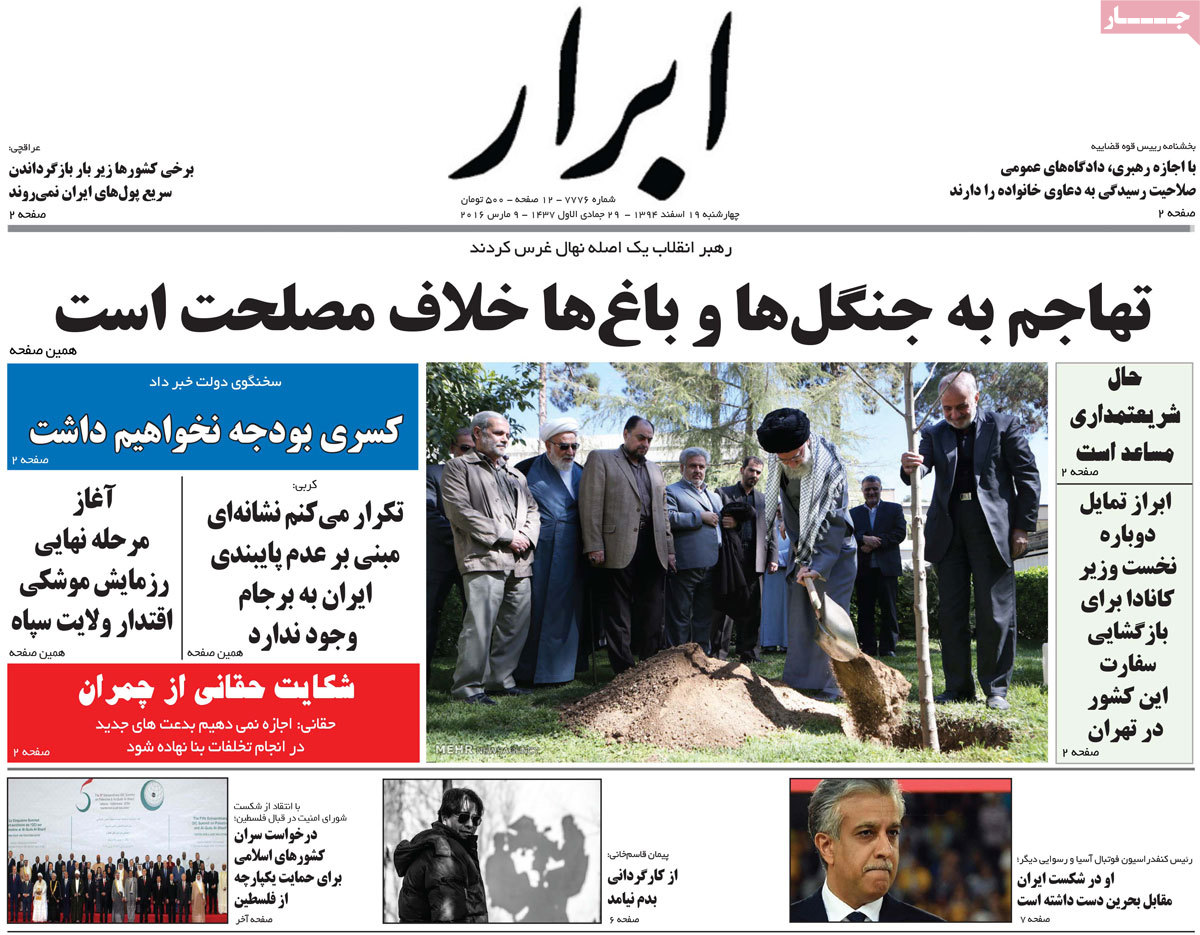
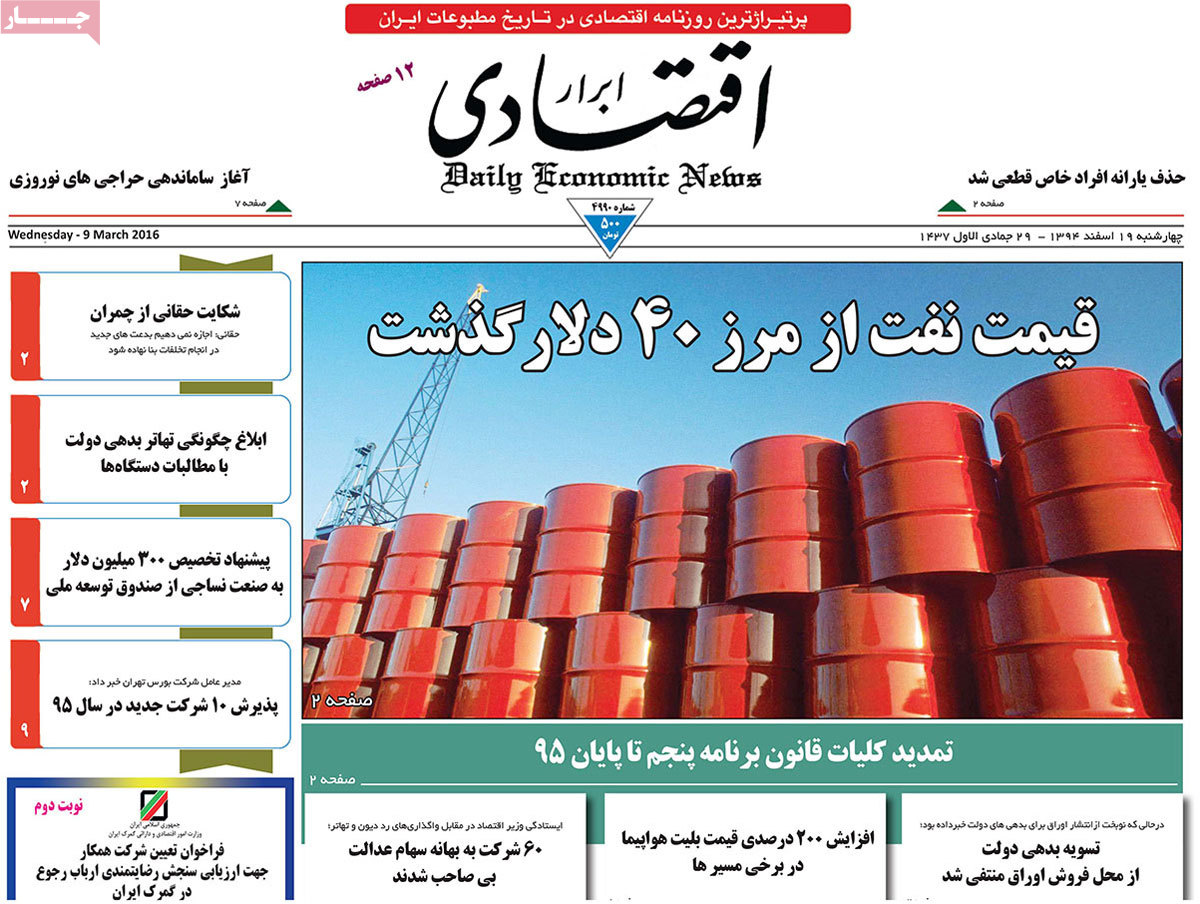
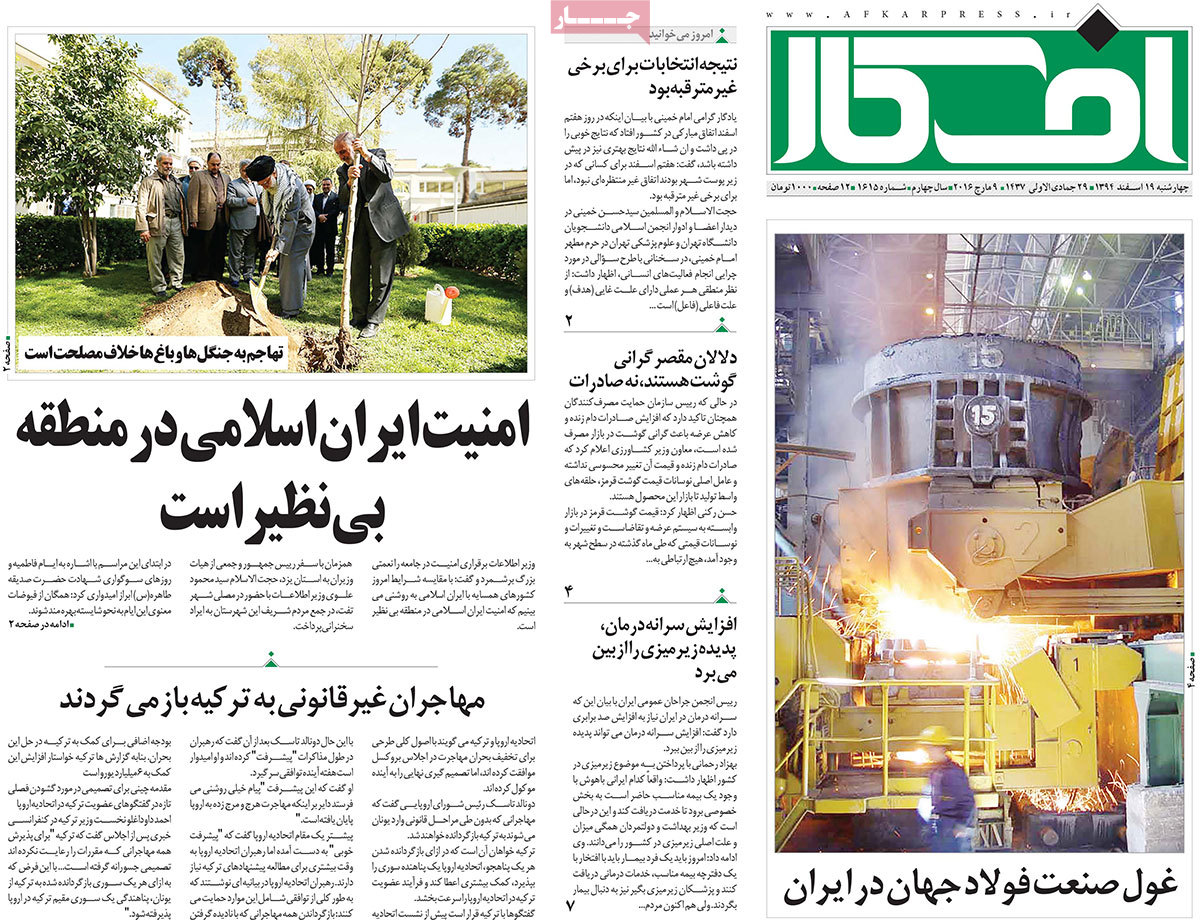
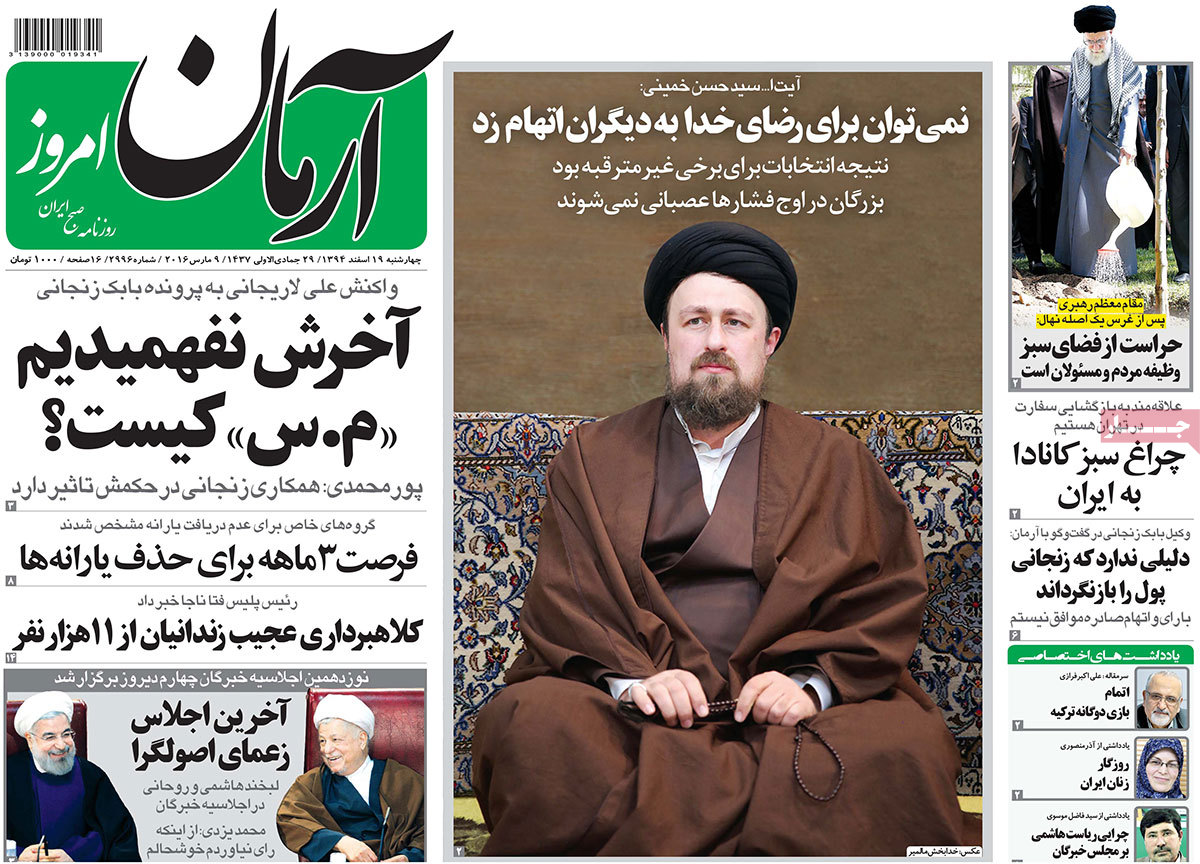
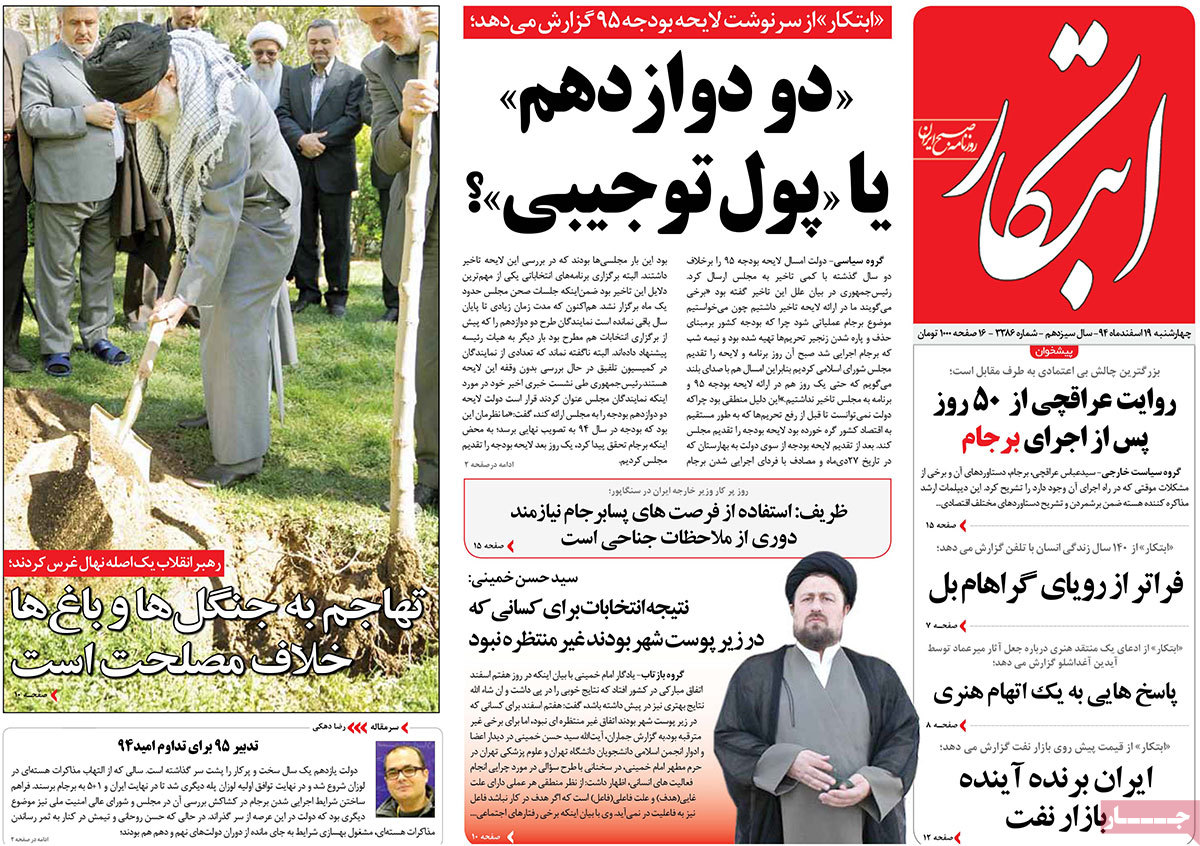
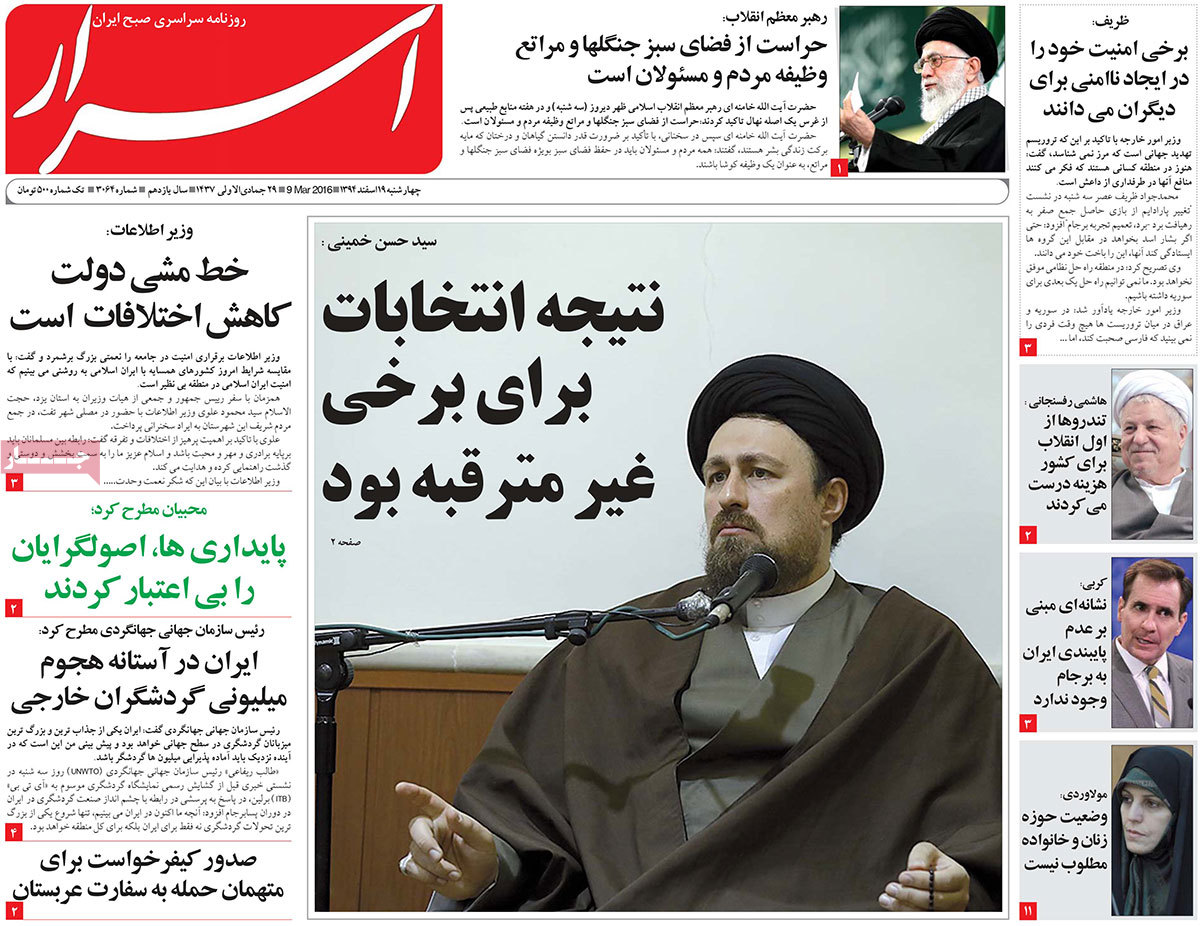
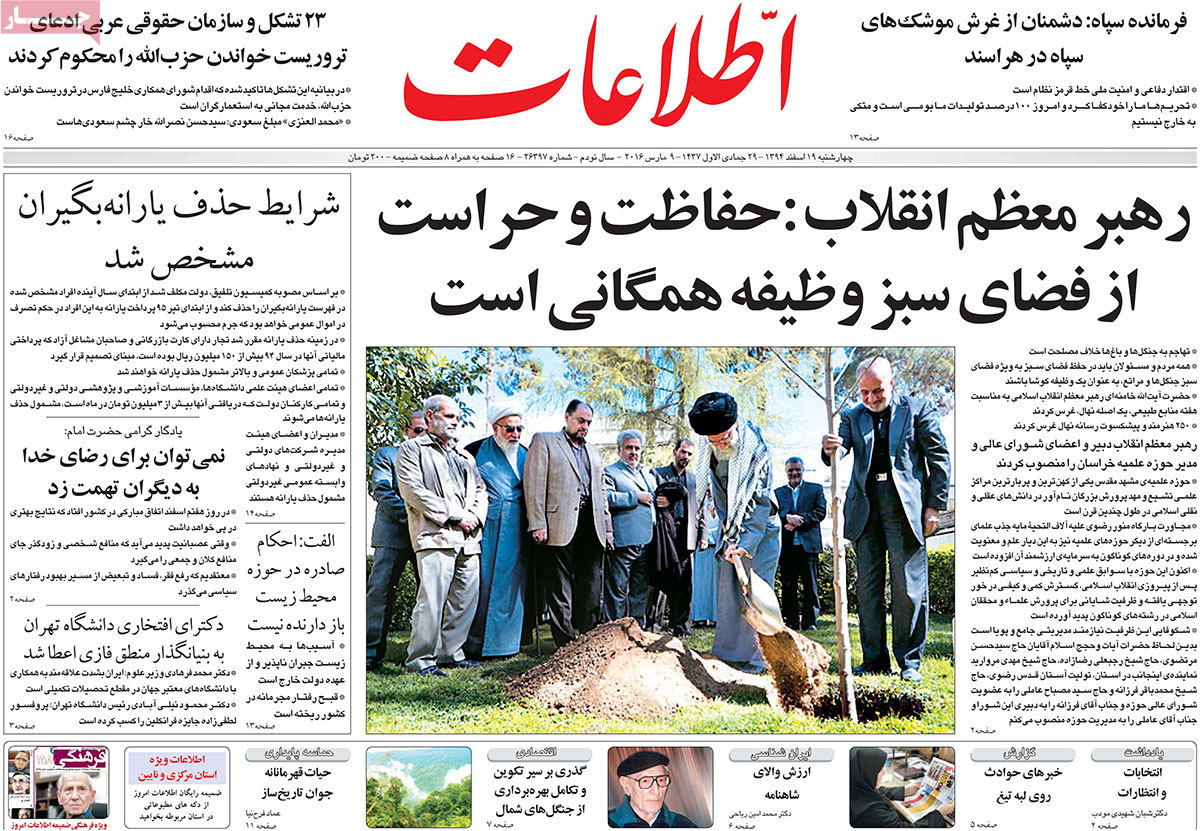
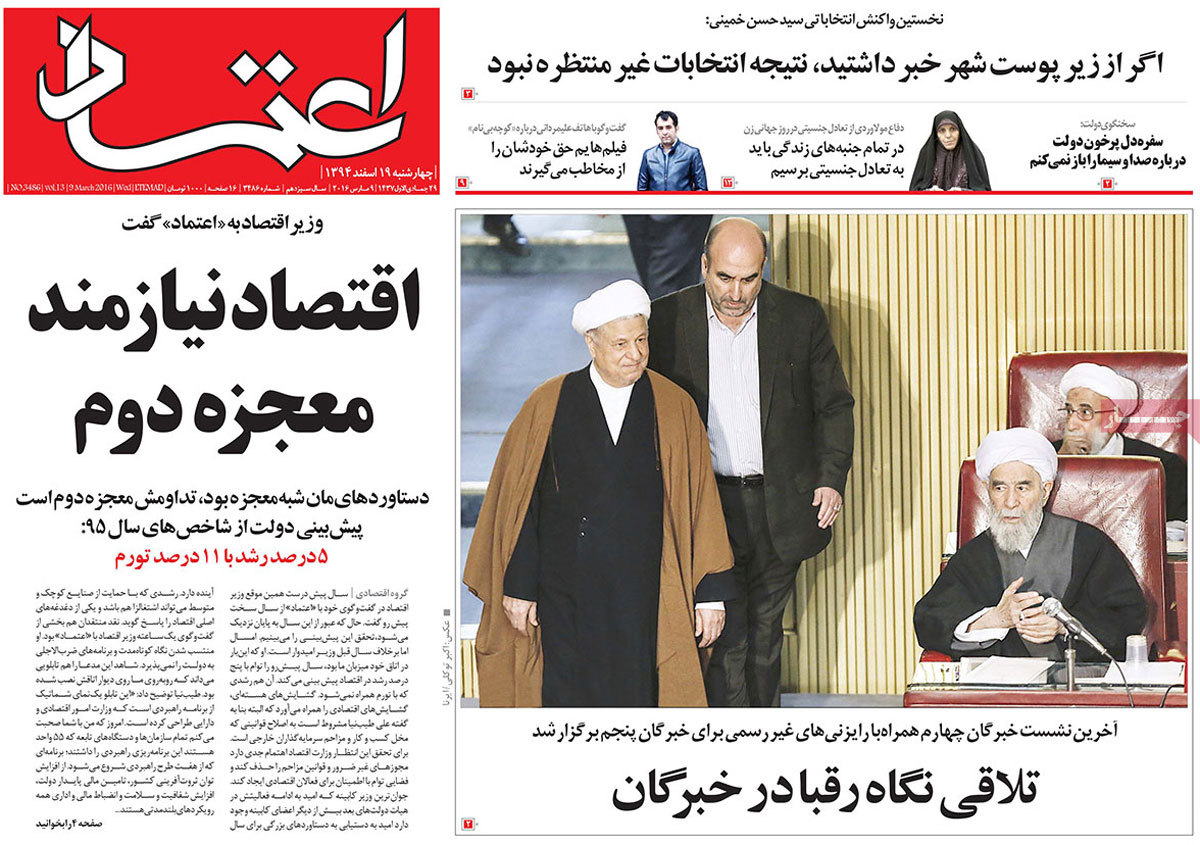
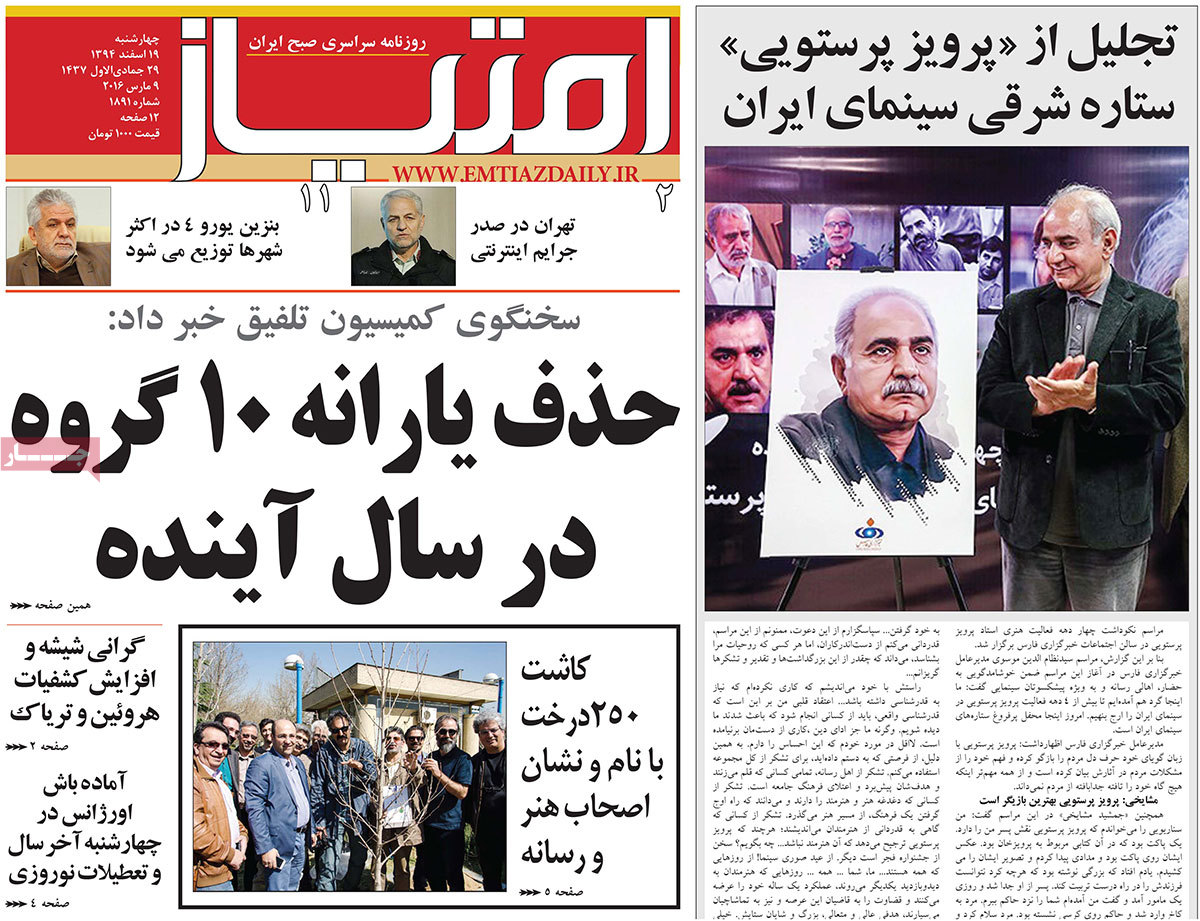
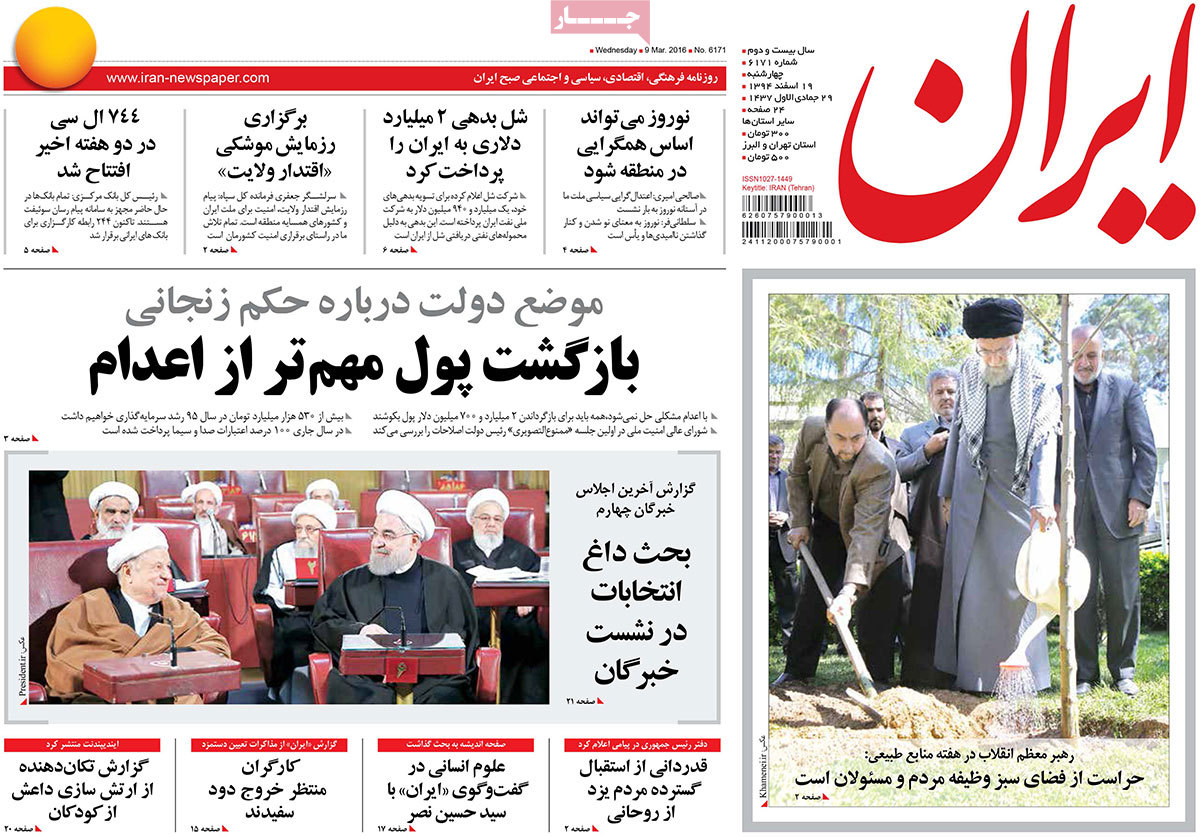
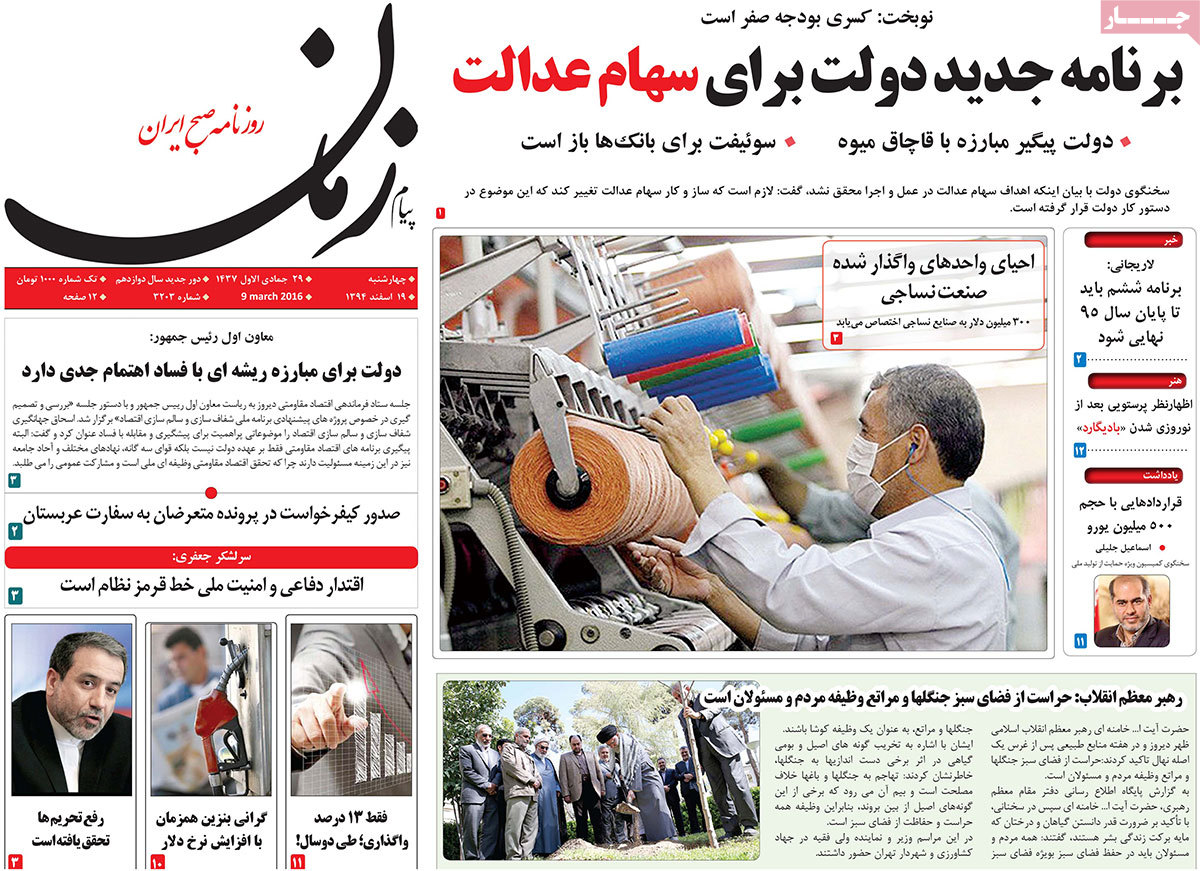
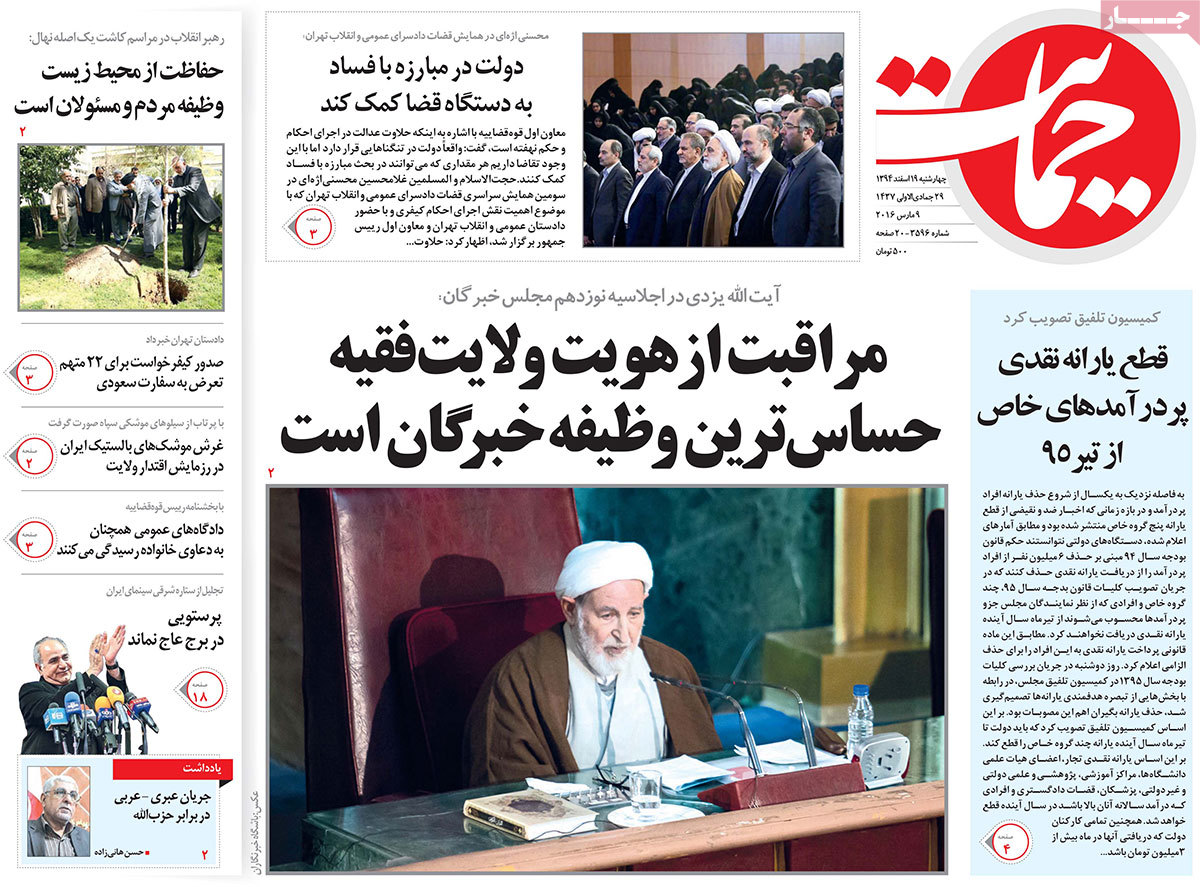
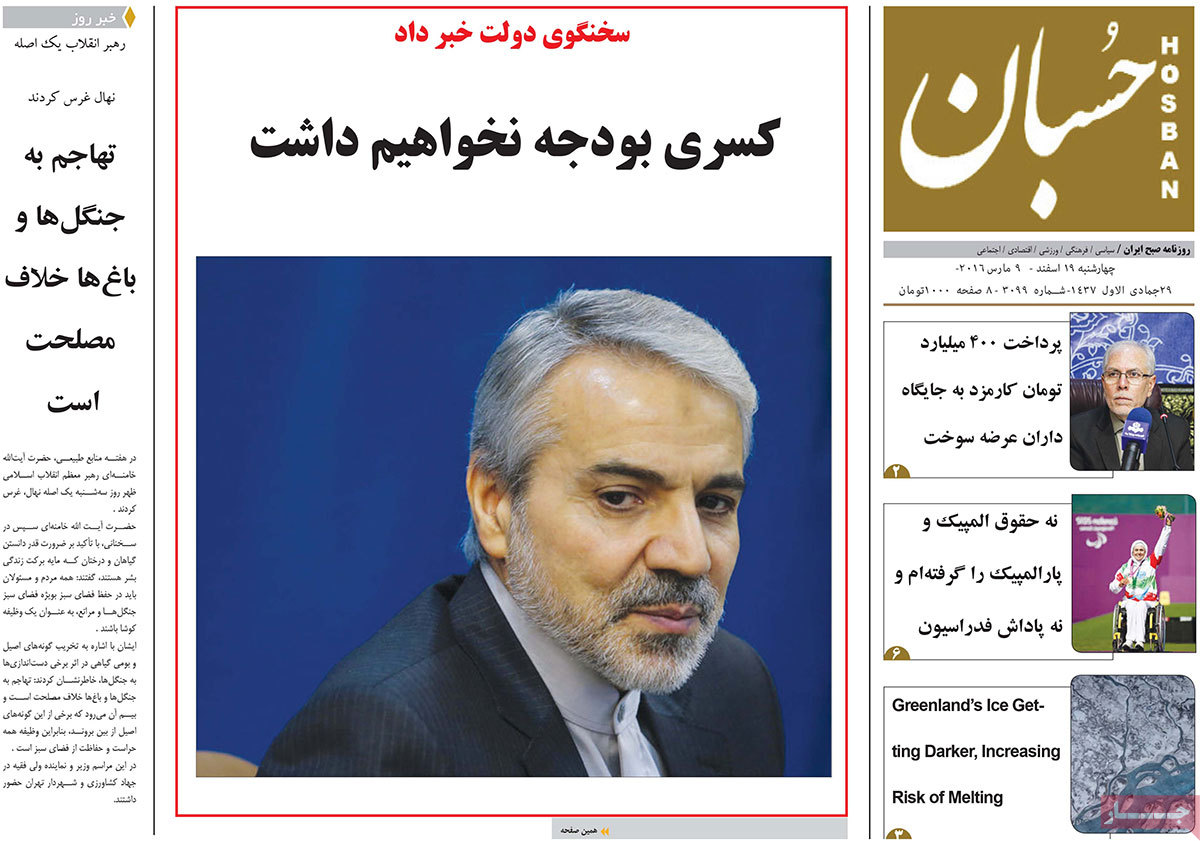
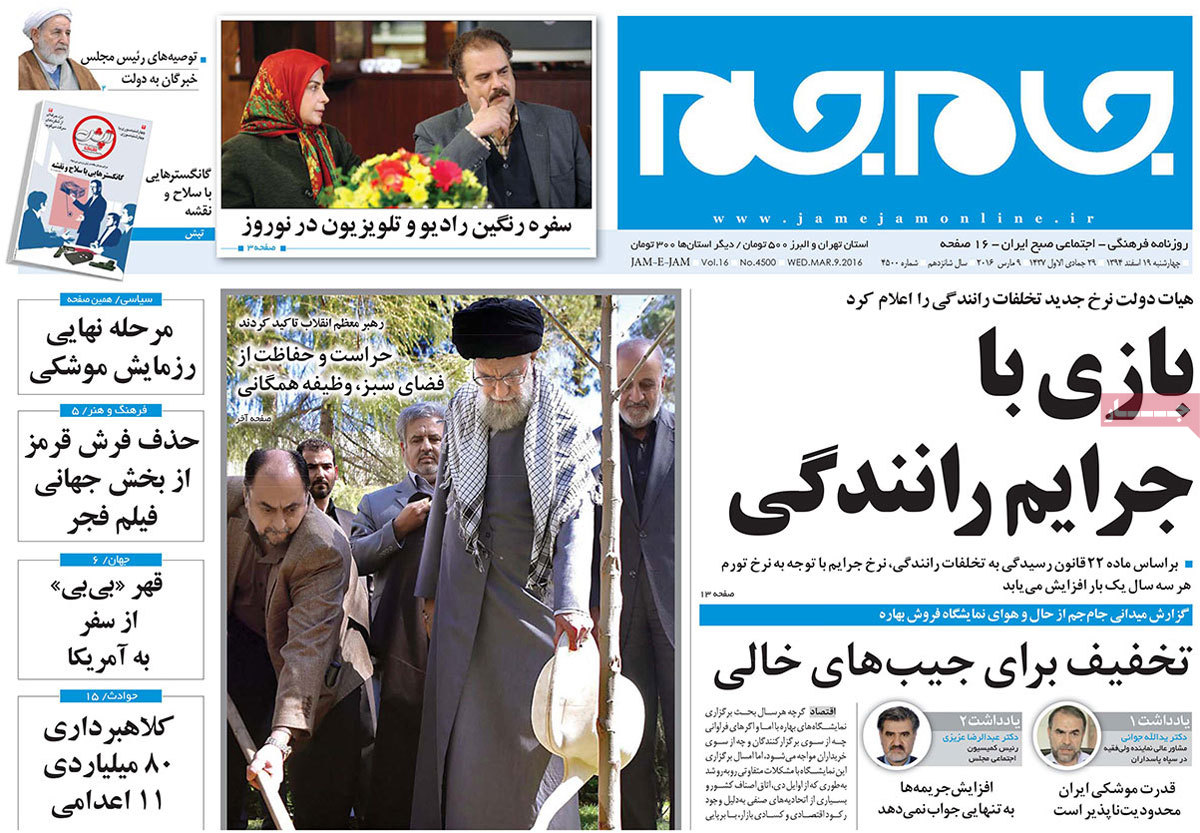
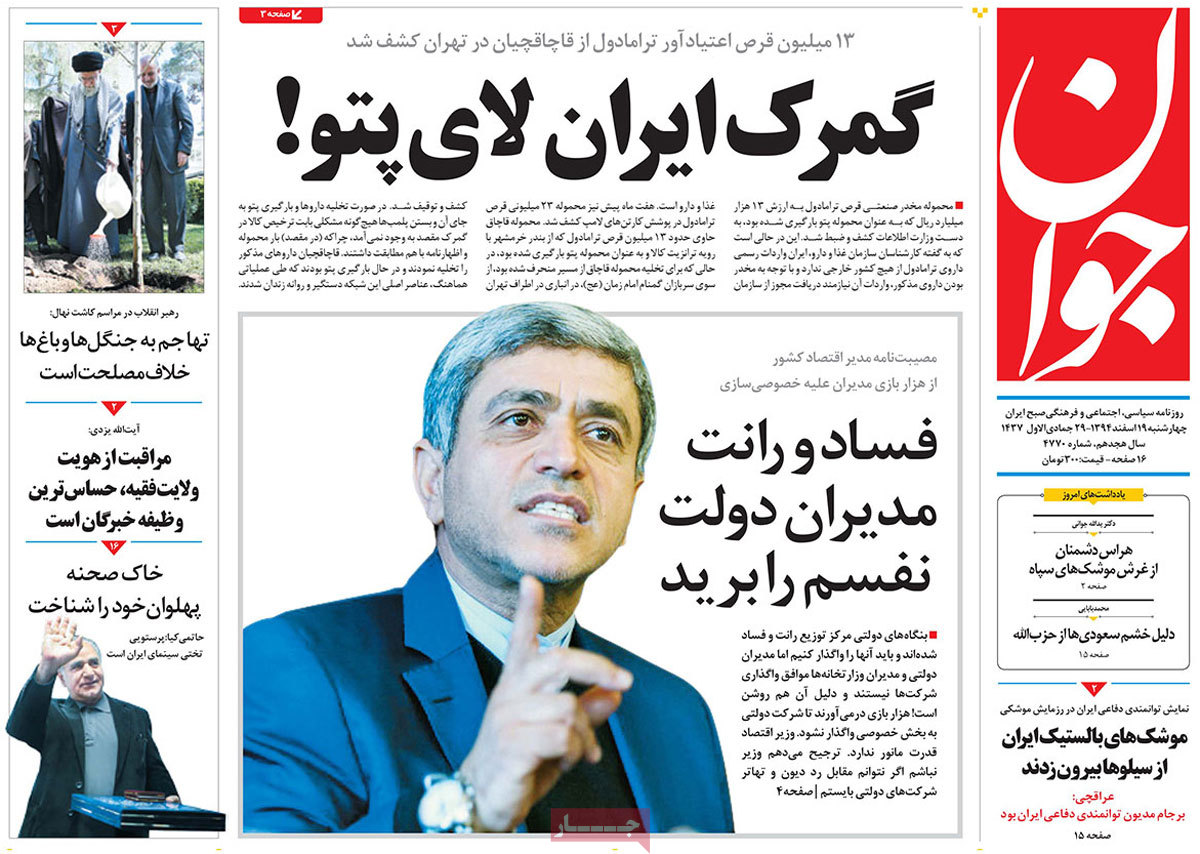
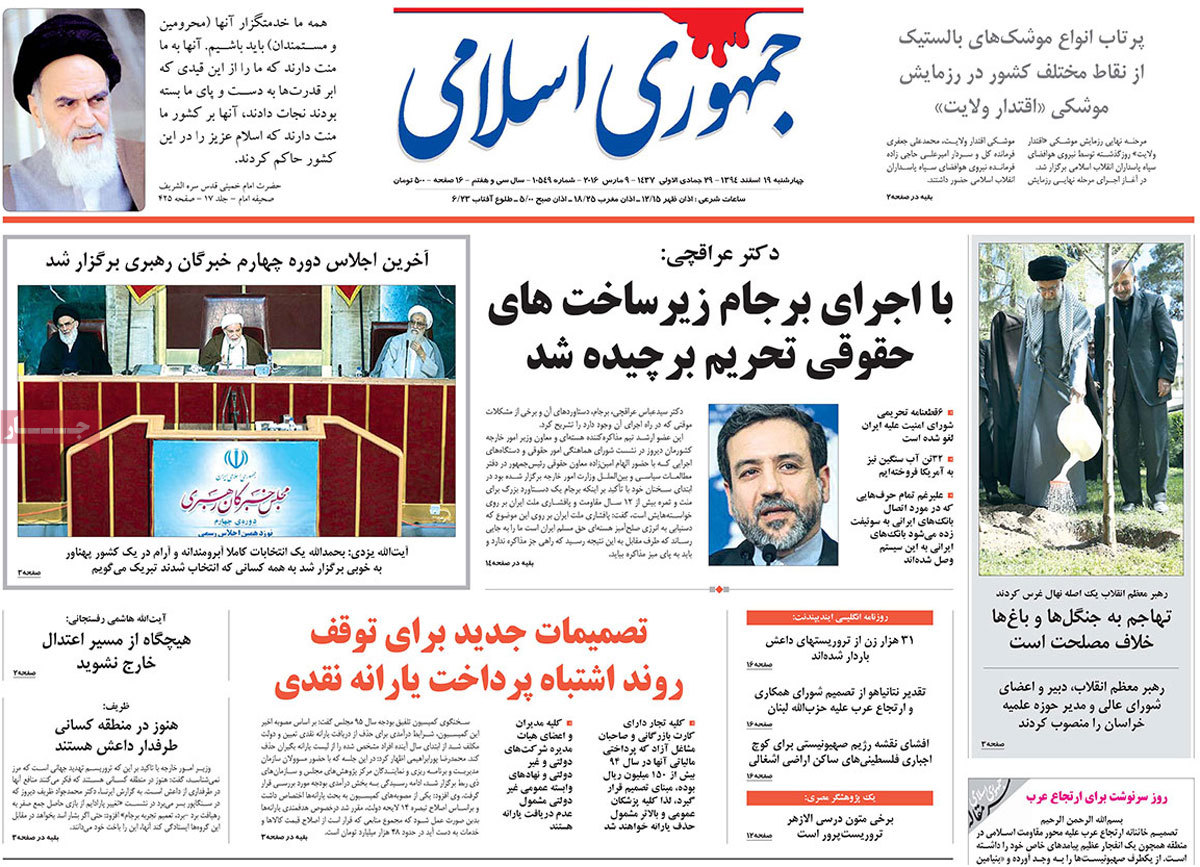
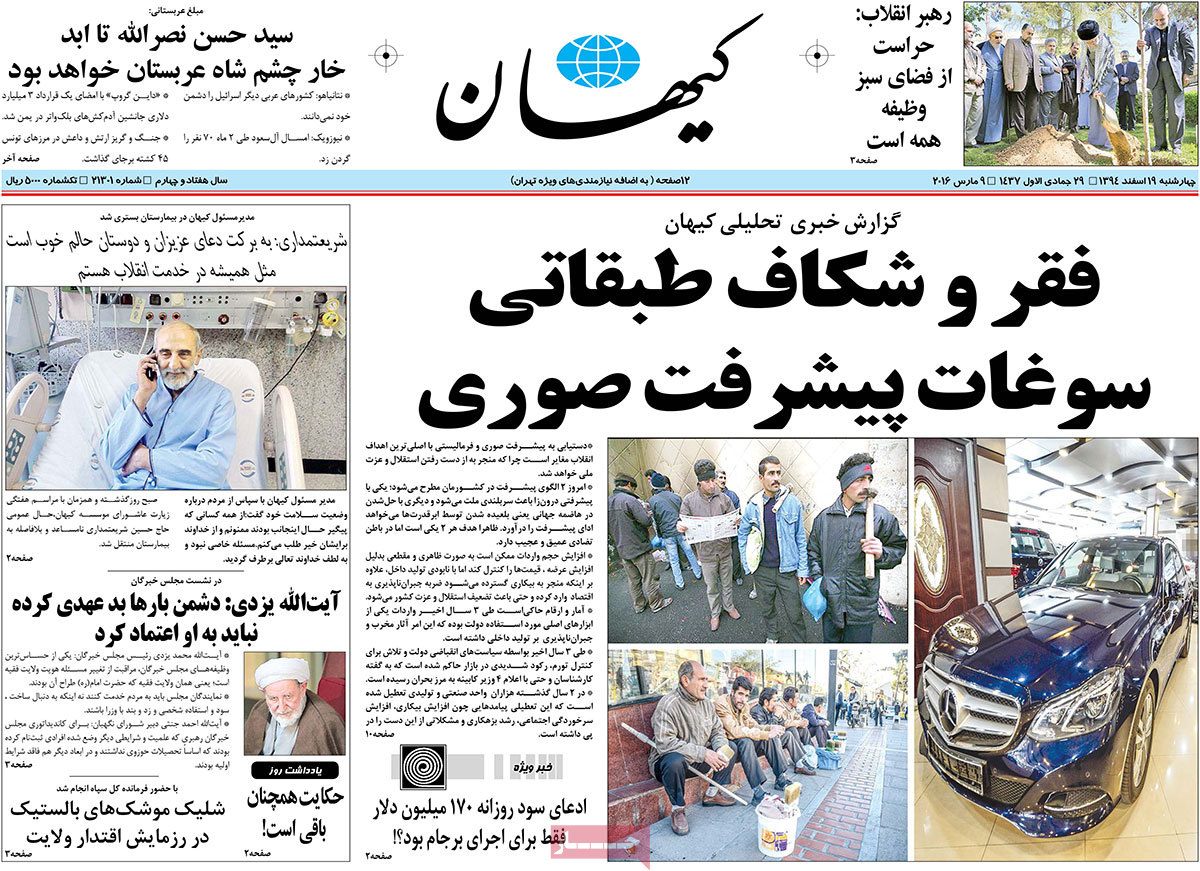
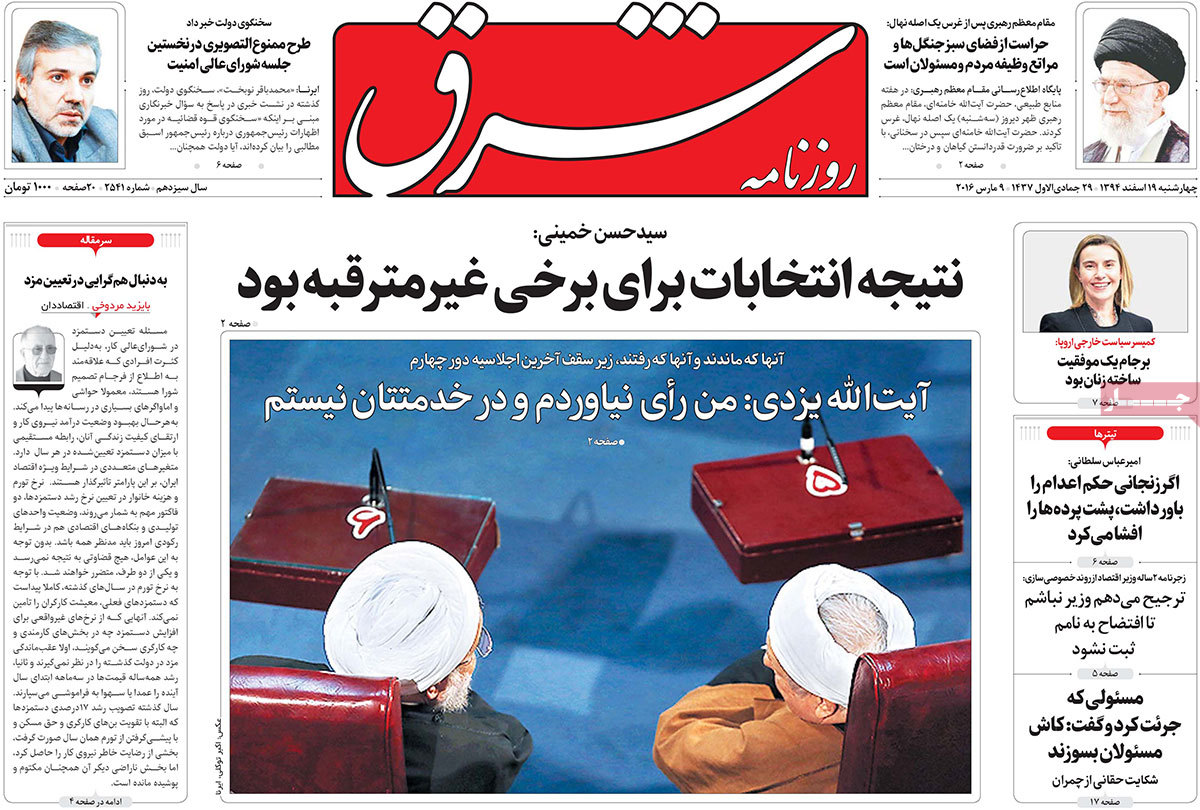
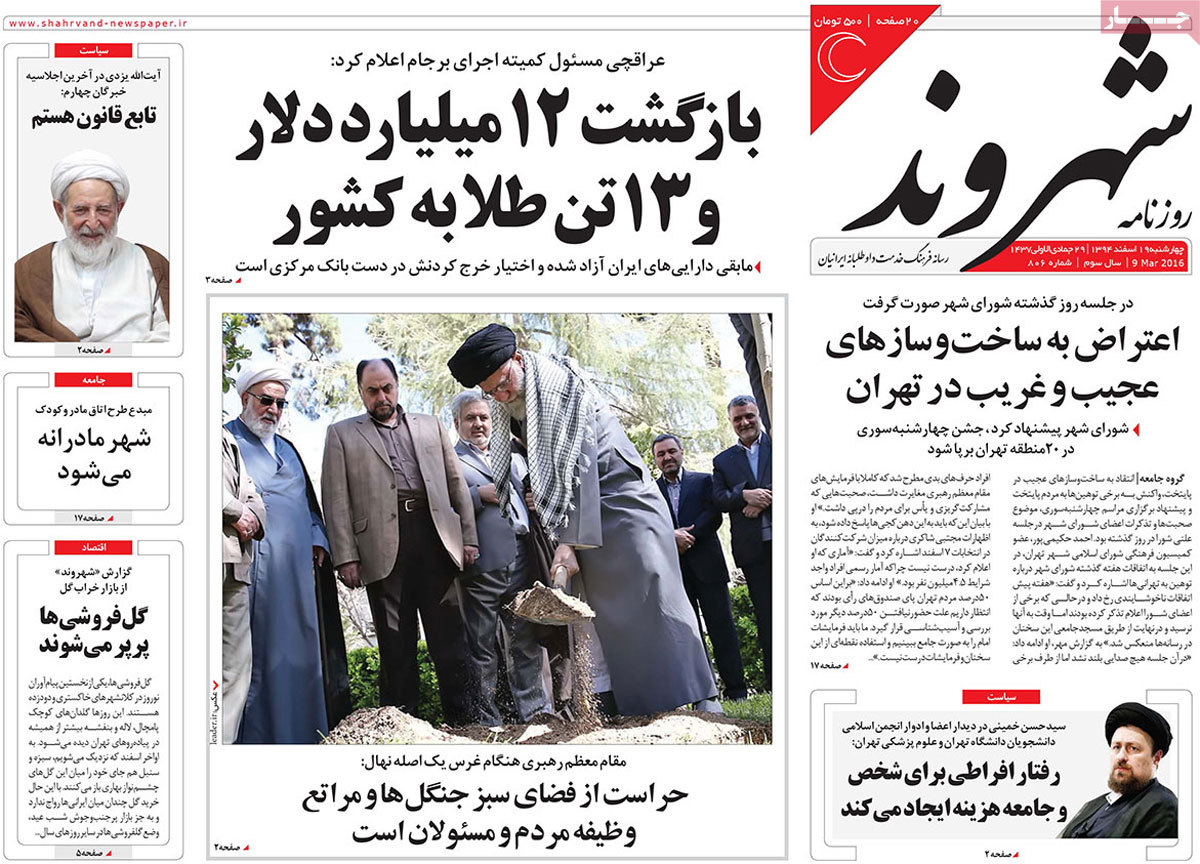
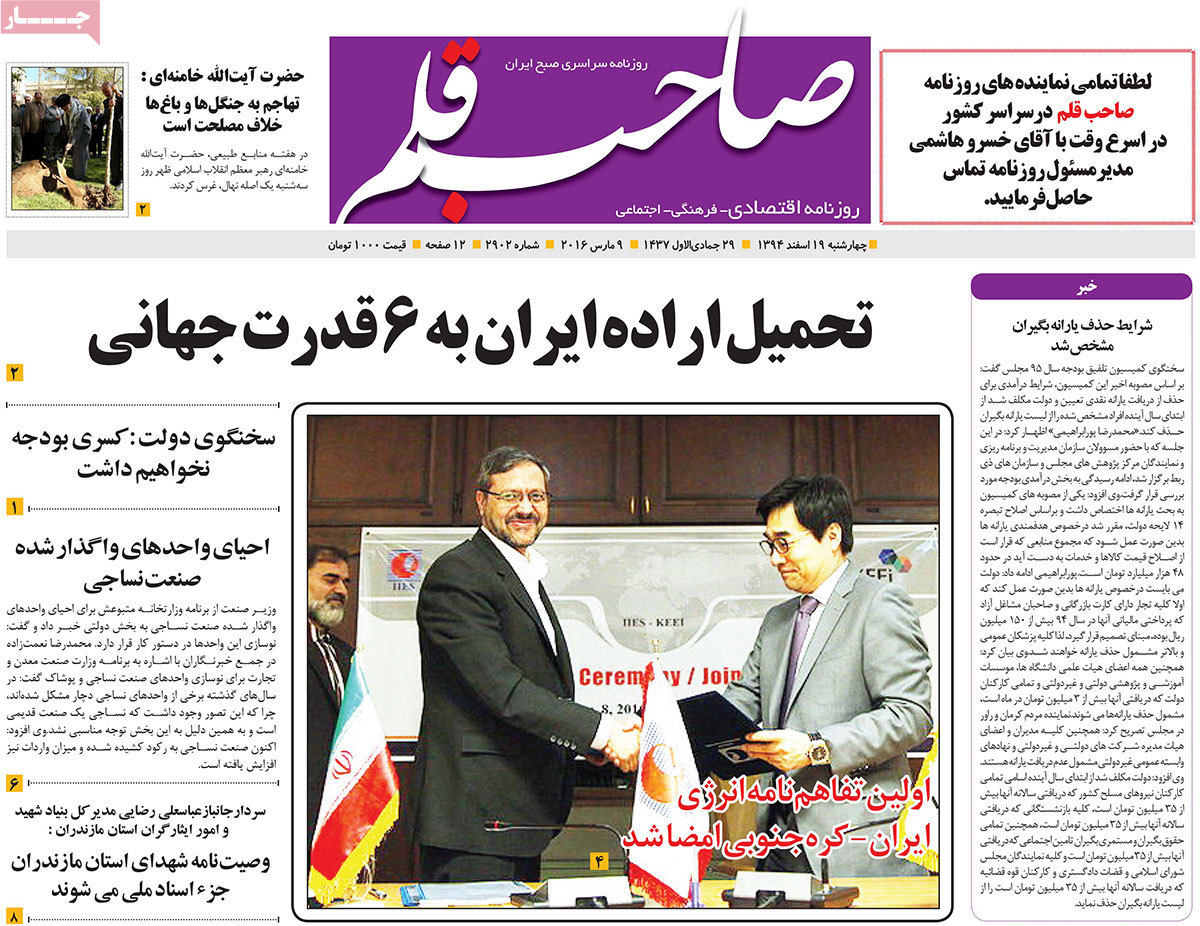
A look at Iranian newspaper front pages on Feb 18

Iran Newspaper front pages

The downward trend of global crude oil prices has brought them down at least 75% over the past 18 months, putting so much pressure on producers whose economies are deeply dependent on crude oil revenues. To tackle the price slump, major producers including Saudi Arabia, Russia and Iran has decided to take measures to prevent further fall in prices. In the latest move, Tehran and Riyadh hosted meetings of oil and energy officials from major crude oil suppliers to the world market. The Tehran meeting was attended by Iranian Minister of Petroleum Bijan Zangeneh who hosted oil ministers from Venezuela, Qatar and Iraq. The meeting ended with an understanding to freeze crude exports at January levels. Many Iranian papers highlighted the Tehran meeting on their front pages.

In another development, the Supreme Leader of the Islamic Revolution addressing large number of people from East Azerbaijan Province, called for maximum turnout in late February elections. The leader stressed that a parliament fearful of America would lead the nation to misery.

Here are the top headlines:


Abrar:

  1. Nuclear negotiator: CBI, 15 other banks linked to SWIFT
  2. NY Times: US Had Cyber attack Plan if Iran Nuclear Dispute Led to Conflict
  3. Candidates start election campaigns today
  4. North Korea Preparing 5th Nuclear Test: nuclear observers
  5. Jordan calls for industrial partnership with Iran
  6. Iran, Russia to Sign Su-30 Fighter Jet Production Deal: Russian official
  7. Russia to deliver S-300 missile system to Iran Thursday


A look at Iranian newspaper front pages on Feb 18


Afkar:

  1. Leader: They seek to influence the election


A look at Iranian newspaper front pages on Feb 18


Arman-e Emrouz:

  1. Leader urges nation to act contrary to enemy’s will in election
  2. 25,000 Iranian burn annually: Deputy Health Minister


A look at Iranian newspaper front pages on Feb 18


Asrar:

  1. Leader to nation: Act exactly opposite to enemies’ will in election
  2. Economic boom before spring
  3. 17,000 die in road accidents annually: according to Iranian police
  4. Over 7,000 killed so far in Yemen conflict


A look at Iranian newspaper front pages on Feb 18


Ettela’at:

  1. Leader: Feb 26 election manifestation of nation’s vigilance, defense for national dignity
  2. Iran sets new crude oil export record
  3. Nasrallah: Hezbollah can beat Israel
  4. UN: Riyadh responsible for killing of Yemeni civilians


A look at Iranian newspaper front pages on Feb 18


Etemad:

  1. Leader urges high election turnout

“February 26 election will be the manifestation of nation’s vigilance and defense for national dignity

  1. Agreement in Riyadh; Understanding in Tehran

Iran hosted a 4-way meeting of oil and energy ministers from Iraq, Venezuela, Iran and Qatar to discuss ways to stop the downward trend in oil prices.


A look at Iranian newspaper front pages on Feb 18


Emtiaz:

  1. IKCO (leading carmaker), Benz start new round of ties
  2. Minister says industries will start flourishing by spring
  3. Iran, Greece eye enhanced tourism ties
  4. Iran supports every measure to promote prices: Petroleum Minister
  5. Justice chief: Iran to step up measures to curb judicial corruption


A look at Iranian newspaper front pages on Feb 18


Iran:

  1. No visit, consultation charges for STD patients in Iran


A look at Iranian newspaper front pages on Feb 18


Jamejam:

  1. Leader warns against enemies’ election plot
  2. Digital tales for digital kids, international gathering of story tellers
  3. GIO Chief: Serious flaws in new oil contract model

Head of the General Inspection Office of Iran Nasser Seraj says there are serious flaws in the newly-introduced oil contact model, known as Iran petroleum contract or IPC.

  1. Viewpoint: Saudi Arabia in the tunnel of isolation


A look at Iranian newspaper front pages on Feb 18


Javan:

  1. Leader: A parliament not seeking economic prosperity heaps misery on country
  2. Iran becomes market of luxuries consumer goods
  3. BBC supports Hashemi’s list of candidates relentlessly

Not even one economist in the list of reformist hopefuls


A look at Iranian newspaper front pages on Feb 18


Hemayat:

  1. Judiciary Chief: Our nation easily recognize anti-revolutionaries
  2. Iran to launch court for financial, banking crimes
  3. EU hypocritical in human rights approaches : Iran FM
  4. Egyptian renowned journalist and commentator, Mohamed Hassanein Heikal dies


A look at Iranian newspaper front pages on Feb 18


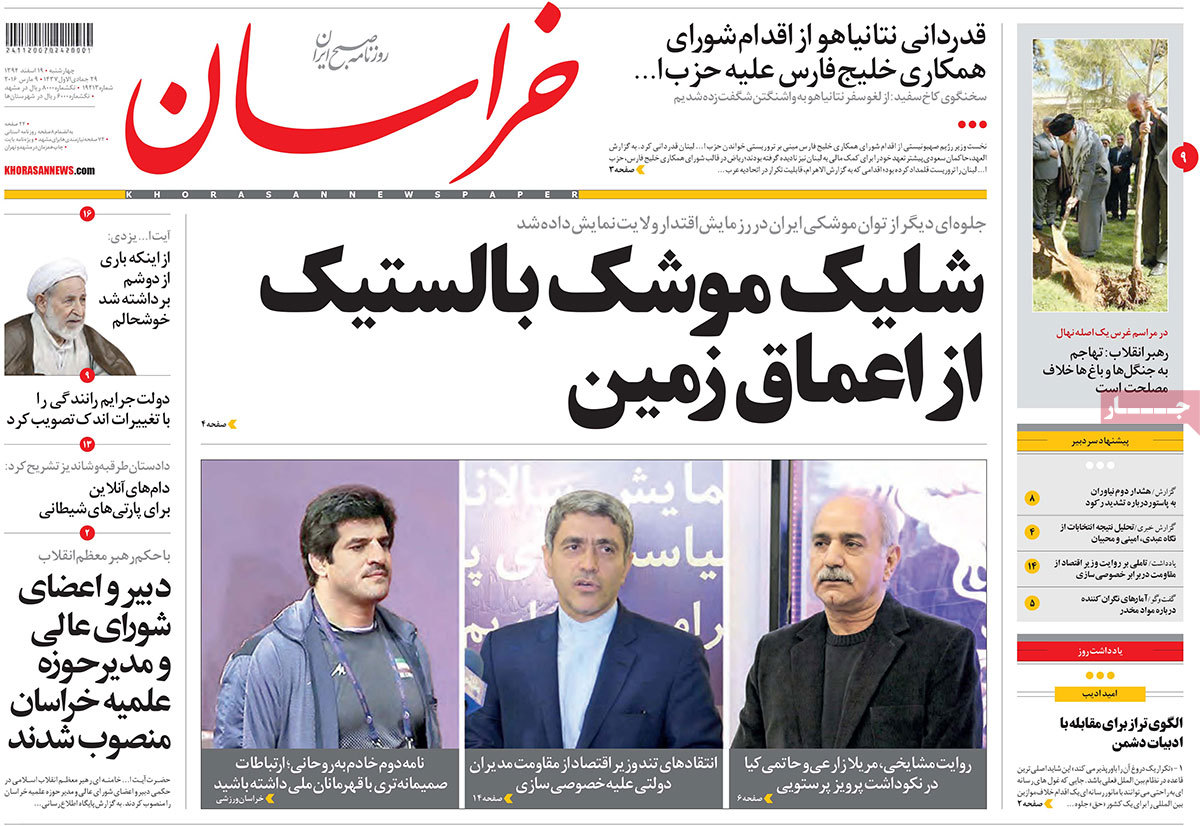
Khorasan:

  1. Leader: US-intimidated parliament heaps misery on nation
  2. Airbus to EU banks: Do not fear investments in Iran
  3. Ankara blast kills 18, injures dozens


A look at Iranian newspaper front pages on Feb 18


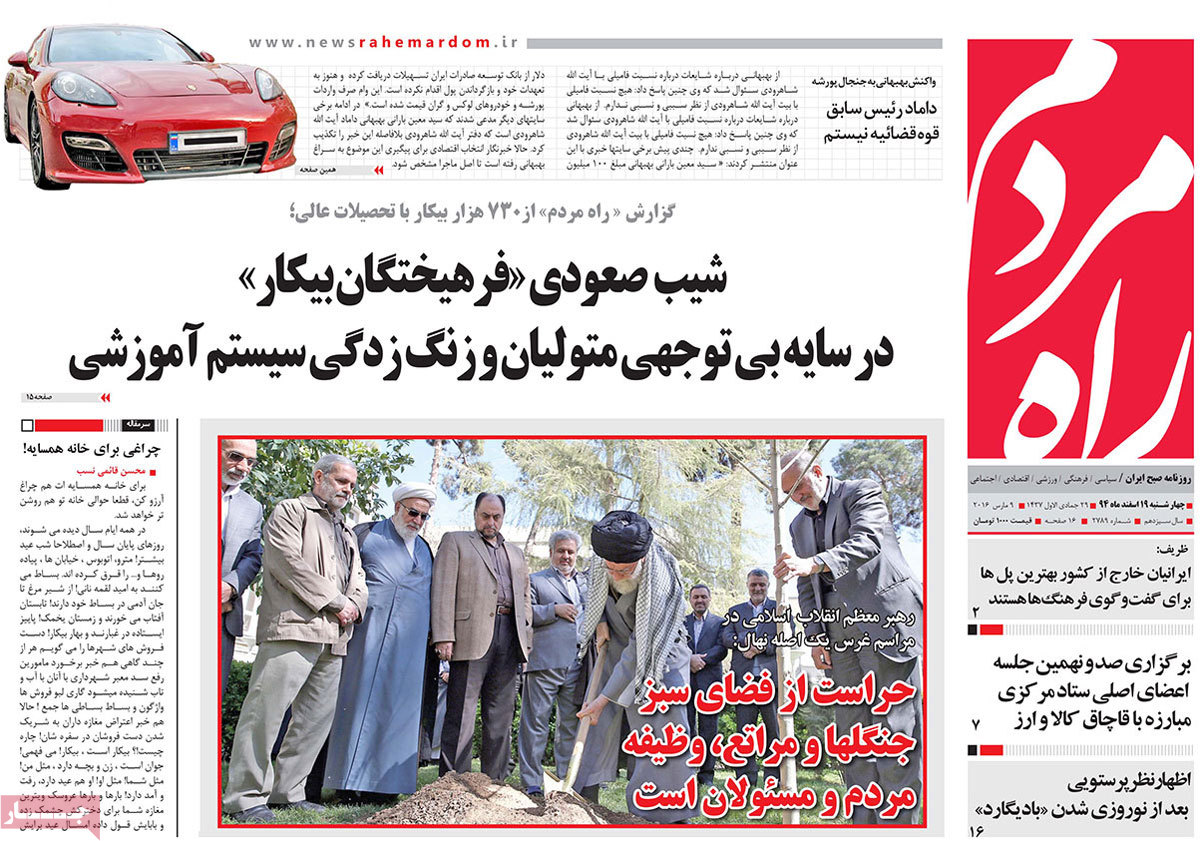
Rah-e Mardom:

  1. Report: Golden chance for Iran tourism industry in post-sanctions era
  2. Envoy: Iran ready to help France to fight terrorism
  3. 15,000t of smuggled fruit seized
  4. Brazil to dump US dollar in trade with Iran
  5. Benz’s return to Iran aimed at exporting cars


A look at Iranian newspaper front pages on Feb 18


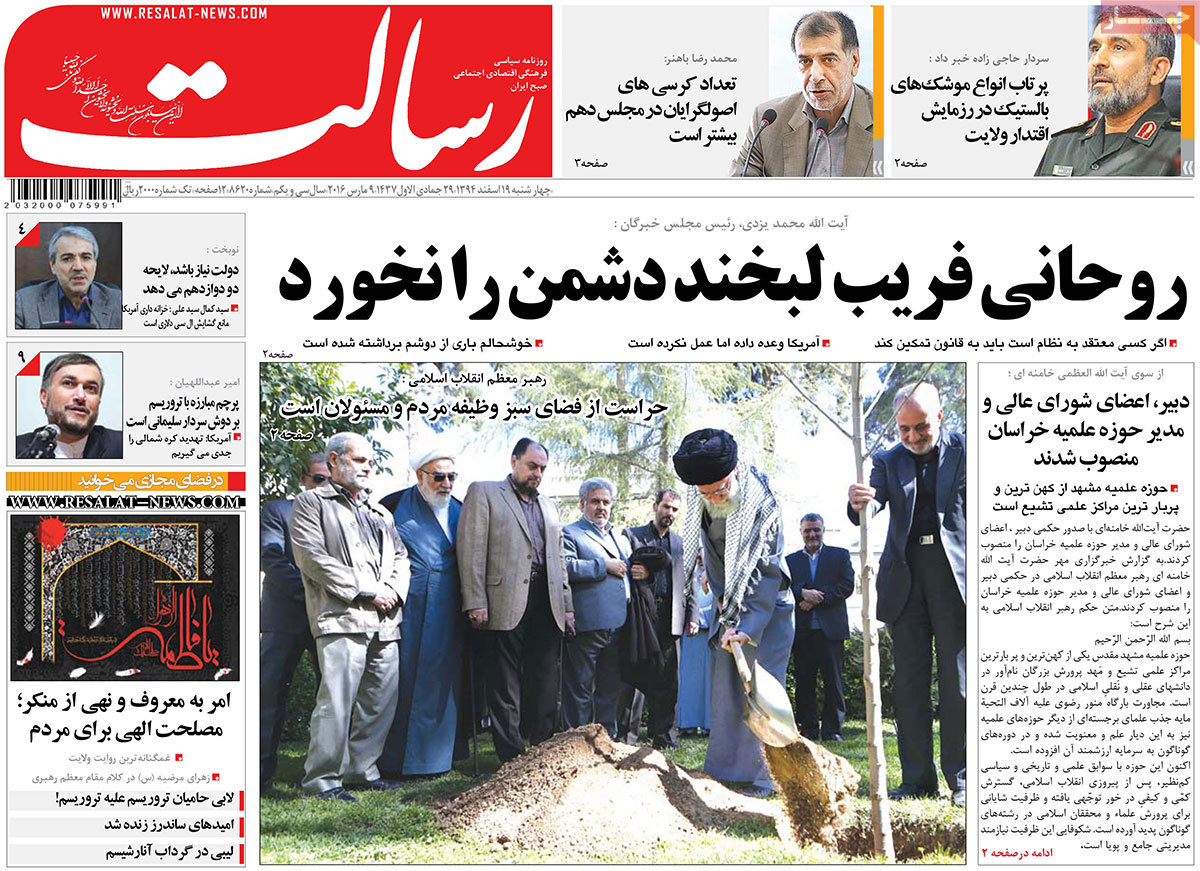
Resalat:

  1. Official: Iran top Middle East country in science production
  2. Cleric: High election turnout sends chill down enemy spine


A look at Iranian newspaper front pages on Feb 18


Rooysh Mellat:

  1. Leader: I will never get tired of telling the truth


A look at Iranian newspaper front pages on Feb 18


Shahrvand:

  1. Leader: Parliament lays down rails for administration’s movement
  2. Urmia basin fully under water

The water surface of Lake Urmia in the extreme north western Iran has risen 51 centimeters as hopes are growing for reviving the lake.


A look at Iranian newspaper front pages on Feb 18


Nasl-e Farda:

  1. Interest rates lowered

Iran has lowered interest rates of bank loans by at least 2%.


A look at Iranian newspaper front pages on Feb 18


Vatan-e Emrouz:

Leader: Brits miss Iran interference


A look at Iranian newspaper front pages on Feb 18


Campaigning begins in crucial Iran elections

As many as 6,300 candidates, including 586 women, are campaigning for a place in the country’s 290-seat parliament.

Earlier this week, Iran’s Interior Ministry finalized the full list of approved candidates for the parliamentary election, due on 26 February, after the Guardian Council endorsed their qualifications.

According to Siyamak Rahpeyk, the spokesman for Iran’s Central Elections Supervising Committee, some 55 percent of those registered have received approval, setting a record in the history of the parliamentary elections.

At least 21 people will compete for each seat in parliament, said the official.

In the capital Tehran, over 1000 candidates are competing for just 30 seats.

Parliament’s members are elected every four years, and former and current members can be re-elected.

On the same day, Iran will also hold the election for the next Assembly of Experts.

The body elects and oversees the activities of the Leader of the Islamic Revolution, and is in a position of authority to either appoint or dismiss the Leader.

Members of the Assembly are directly elected to office by people for an eight-year term. The body holds meetings twice a year to review major national issues and every other year to appoint a new chairman.

On Wednesday, Leader of the Islamic Revolution Ayatollah Seyyed Ali Khamenei warned of “enemy plots to influence” the upcoming elections.

The Leader said that the US plans to challenge the Guardian Council’s decisions and portray the elections as illegal.

“Since the first day of the [Islamic] Revolution, Americans have opposed certain basic organs, including the Guardian Council, but they could not do away with it. Now they want to call into question its decisions,” the Leader said.