Saturday, December 27, 2025
Home Blog Page 4580

Switzerland plays its role in good implementation of JCPOA

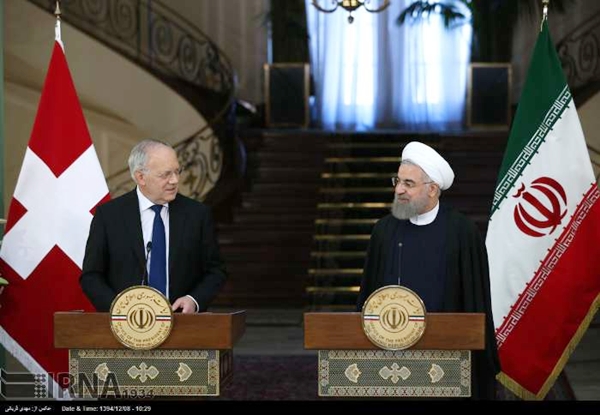
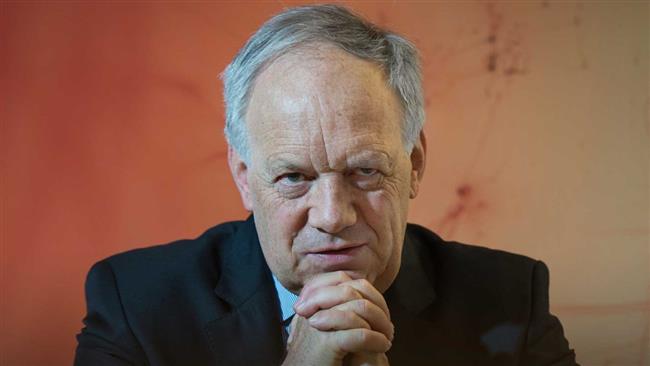
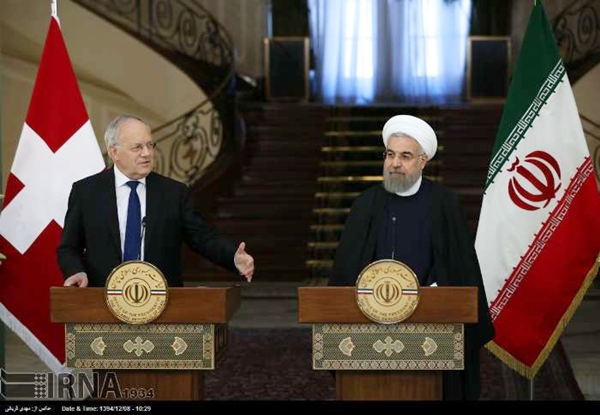
Schneider-Ammann made the remarks at a joint press conference with his Iranian counterpart Hassan Rouhani here on Saturday.

The Swiss president further congratulated all including President Rouhani on reaching nuclear agreement.

On July 14, 2015, Iran and the six world powers reached a landmark nuclear agreement known as the Joint Comprehensive Plan of Action (JCPOA).

On January 16, 2016, anti-Iran sanctions were lifted as the International Atomic Energy Agency (IAEA) verified Iran’s nuclear program and ‘Implementation Day’ of the JCPOA started.

It is clear that economic sector of Switzerland in interested in developing relations with Iran, said Schneider-Ammann.

He added he entered Iran while heading a 40-strong delegation, calling on the Iranian side to travel to Switzerland with a 400-strong delegation.

Switzerland is determined to continue and improve relations with Iran, said he, adding drawing a road map for bilateral cooperation is following up that end.

The two should move step by step to implement mutual agreements and joint projects, he added.

The Swiss president arrived in Tehran on Friday evening.
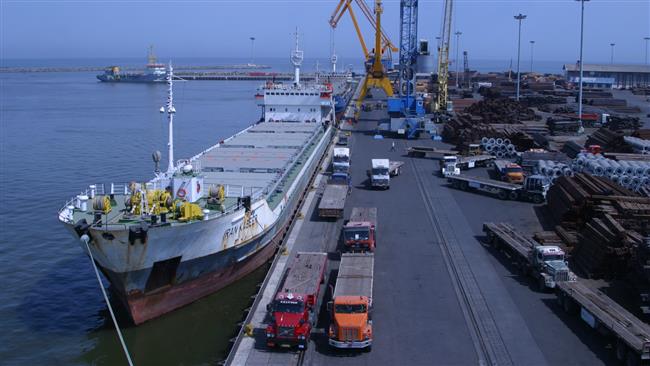
Iran-China trade down 41% in Jan.

Sino-Iran trade dropped to USD 2.07 billion in January 2016, showing a 41% year-on-year decrease, the Tasnim News Agency reported China’s customs office as saying on Saturday.

Chinese-Iranian trade stood at USD 3.5 billion back in January 2015.

According to the report, exports from China to Iran declined to $1.3 billion in January 2016, from $2.25 billion a year earlier, showing a 42% decrease.

Also, China’s imports from Iran dropped to $1.25 billion USD in the same period, showing a year-on-year 39% slump.

The decline in the bilateral trade comes against a backdrop of plunging crude oil prices in recent months.

Beijing is the top customer of Iran’s crude and is seen as Tehran’s largest trade partner.

Bilateral trade between the two countries stood at UDS 31.09 billion in 2015, witnessing a 34% decrease compared to the previous year.

Iran and China have agreed to build economic ties worth up to $600 billion within the next 10 years.

The two countries have already unveiled plans to revive the “Silk Road” — an ancient trans-Asian trade route connecting the east to Europe and the Mediterranean Sea.

The “Silk Road”, envisioned as a rail and sea route, is seen as Beijing’s new initiative to access extensive delivery routes to the Middle East and Eurasia through Iran.

Iran is strategically located in the Middle East, sharing land borders with 15 nations and sea channels on its northern and southwestern coasts.

Earlier this month, a long-distance cargo train traveled from China to Iran.

It took the 32-container cargo train two weeks to complete the 10,399km journey from China’s eastern Zhejiang province to Tehran through Kazakhstan and Turkmenistan – one month less than the sea route from Shanghai to the Iranian port of Bandar Abbas.

President hails people’s broad participation in elections

The President made the remarks here on Saturday in a joint press conference with his Swiss counterpart.

President of Switzerland Johann Schneider-Ammann arrived in Tehran on Friday evening.
He referred to independence, national sovereignty, democracy and elections as the elements which bring the two countries together as they both share them as the foundations of their governments’ systems.

He went on to say that during his talks with the Swiss President, he discussed issues of mutual interest with him specially the economic topics.

According to the President, they also reviewed ways of further activating banking relations between the two countries as well as insurance issues which account for basic grounds of mutual cooperation.

President Rouhani also said that they discussed expansion of relations in industrial, agricultural, transportation and airline activities.

The two countries are also cooperating to get Iran’s membership in the World Trade Organization .

The Iranian President went on to note that the two countries signed 6 agreements on scientific and technical cooperation and agreed on furthering tourist exchanges given the high capacities of both countries in this area.

President Rouhani also said they touched upon the issue of human rights, explaining that Muslims in Europe were presently suffering much because of the Islamophobia encouraged in the continent due to influx of people there who were fleeing terrorist threats.

The Swiss president is to confer with other Iranian officials on expansion of bilateral cooperation as well.

He heads a high-ranking political, economic, and scientific delegation in his official visit to Tehran.

Promoting the Tehran-Bern ties in political, economic, trade, judicial, and cultural fields is among the objectives of the Swiss president’s Iran visit.

Representatives of 38 major Swiss companies are accompanying Schneider-Ammann.

The fact that tens of major Swiss industrialists, investors, and entrepreneurs are accompanying the Swiss president shows that Bern is keen to develop its relations with Tehran, particularly after the recent termination of nuclear-related anti-Iran sanctions.

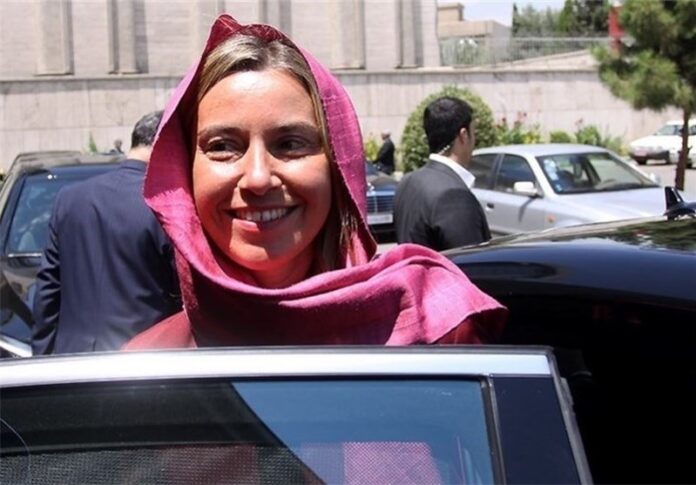
EU Foreign Policy Chief Wishes the Best for Iranian People

“Following #IranElections2016, wishing all Iranians the best for the future of their country,” Mogherini said in a post in her Twitter account.

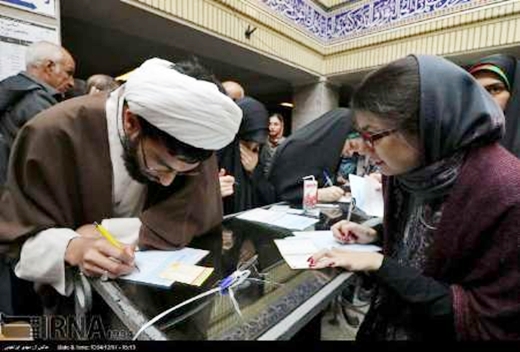
Polling stations opened on Friday morning and were scheduled to close after 10 hours. But the higher-than-expected turnout in the elections was enough to convince the Interior Ministry to extend the voting time three times.Some 55 million Iranians were eligible to cast their ballots at around 53,000 polling stations across the country.

Iran’s Interior Ministry spokesman said on Saturday morning that early results from Friday’s parliamentary and Assembly of Experts elections show that more than 33 million people have voted as of this time.

Hossein-Ali Amiri told reporters in Tehran that the figure will go up as more ballots are being counted.

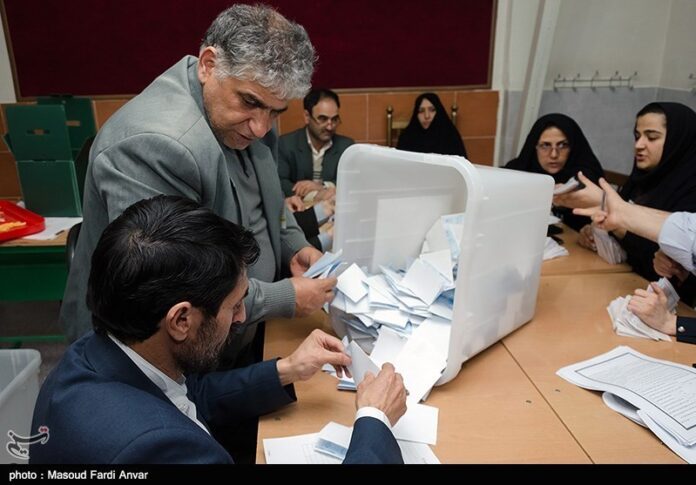
Out of around 52,000 ballot boxes, more than 40,000 have been examined, he added.

The process of counting the ballots in Tehran is still in progress, and a run-off will need to be held in some major cities, Amiri noted.

4,844 and 161 candidates have been running for the parliament and the Assembly of Experts, respectively.

There are 290 seats in the Iranian parliament, elected by direct vote of people in nationwide election for four years.

Police Chief: No electoral security situation reported

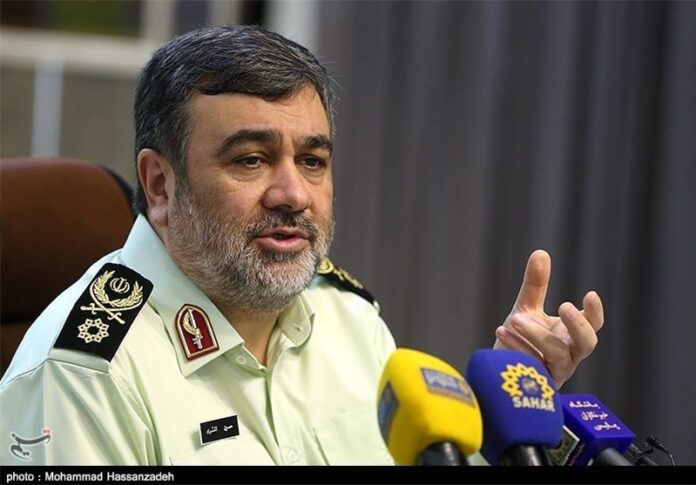
‘No security situation has been reported during the elections from across the country,’ Ashtari said.

This shows that the elections have taken place in complete security, he said.

‘The high turnout and public participation served as an appropriate reaction given by the supporters and well-wishers of the Islamic establishment, the Revolution and the country,’ he added.

‘The people responded well to the Supreme Leader’s call for participating in the elections and this encouraged the friends while it concerned the enemies of the Islamic establishment,’ the police commander said.

Iranians went to the polls in over 1,063 constituencies for the fifth round of the Assembly of Experts and the 10th parliamentary elections on Friday.

Polling started at 8 am local time (04:30 GMT) in over 52,000 polling stations nationwide.

Some 54,915, 024 Iranians were eligible to participate in the voting.

Iran Election Turnout 33mln So Far: Official

Hossein-Ali Amiri told reporters in Tehran that the figure will go up as more ballots are being counted.

Out of around 52,000 ballot boxes, more than 40,000 have been examined, he added.

The process of counting the ballots in Tehran is still in progress, and a run-off will need to be held in some major cities, Amiri noted.

In the meanwhile, the Election Headquarters issued a statement in the early hours of Saturday, calling on the whole media outlets and news agencies to refer only to the headquarters’ statements for any official figure or early results.

Polling stations opened on Friday morning and were scheduled to close after 10 hours. But the higher-than-expected turnout in the elections was enough to convince the Interior Ministry to extend the voting time three times.

Some 55 million Iranians were eligible to cast their ballots at around 53,000 polling stations across the country.

4,844 and 161 candidates have been running for the parliament and the Assembly of Experts, respectively.

There are 290 seats in the Iranian parliament, elected by direct vote of people in nationwide election for four years.

The Assembly of Experts is also a high-ranking body that elects and oversees the activities of the leader of the Islamic Revolution.

Members of the 88-seat assembly are directly elected to office by people for an eight-year term. It holds biannual meetings to appoint a new chairman.


Marathon voting ends in Iran amid massive turnout

In Tehran province and some major provinces and cities, elections was extended for the fifth time. In some other provinces across the nation in ended at 23:00 o’clock after being extended for fourth times.

Few polling stations kept receiving voters by 23:59 as the elections had to close before Saturday.

Elections were held for the tenth round of Parliament and the fifth round of the Assembly of Experts.

The voting time which was originally set for 18:00 hours was first extended for two hours to 20:00. Then it was extended for a second time to 21:00, and to 22:00 for the third time due to massive turnout.

Iranians went to the polls in over 1,063 constituencies for the fifth round of the Assembly of Experts and the 10th parliamentary elections.

Polling started in Iran at 8 am local time (04:30 GMT) in over 52,000 polling stations nationwide.

Some 54,915, 024 Iranians were eligible to participate in the voting.

Currently, the Parliament has 290 representatives fourteen of whom represent non-Muslim religious minorities. Women constitute about eight percent of the Parliament members.

A total of 4,844 hopefuls, including about 500 women, who have been qualified from amongst 12,000 registered candidates by the Guardian Council, were taking part in the race to occupy parliamentary seats. At least 21 people vied for each seat in the legislature.

The elected candidates will serve from May 3, 2016 for a four-year term.

In the capital Tehran, more than 1,000 candidates were competing for just 30 parliamentary seats.

The Assembly of Experts will also see its 88 members elected by the people for another eight-year term.

Voting to end in Iran by midnight

Elections is extended for the tenth round of parliament and fifth round of the Assembly of Experts for about one hour till 23:45 o’clock local time in Tehran and a number of cities on the decision of governorate generals of the provinces.

The voting time which was originally set for 18:00 hours local time was first extended for two hours to 20:00. Then it was extended for a second time to 21:00. But the overwhelming popular turnout prompted officials to extend the time once again to 22:00, 23:00, and 23:45.

Iranians went to the polls in over 1,063 constituencies for the fifth round of the Assembly of Experts and the 10th parliamentary elections.

Polling started in Iran at 8 am local time (04:30 GMT) in over 52,000 polling stations nationwide.

Some 54,915, 024 Iranians are eligible to participate in the event.

Currently, the Parliament has 290 representatives fourteen of whom represent non-Muslim religious minorities. Women constitute about eight percent of the Parliament members.

A total of 4,844 hopefuls, including about 500 women, who have been qualified from amongst 12,000 registered candidates by the Guardian Council, are taking part in the race today to occupy parliamentary seats. At least 21 people will vie for each seat in the legislature.

The elected candidates will serve from May 3, 2016 for a four-year term.

In the capital Tehran, more than 1,000 candidates are competing for just 30 parliamentary seats.

The Assembly of Experts will also see its 88 members elected today by the people for another eight-year term.

Swiss president arrives in Iran to hold talks, sign deals

Heading a high-ranking politico-economic delegation, Schneider-Ammann was welcomed by Iran’s Minister of Industry, Mine and Trade Mohammad Reza Nematzadeh at Tehran Mehrabad Airport upon his arrival on Friday.

The Swiss president, who is in Tehran at the invitation of President Hassan Rouhani, is scheduled to discuss ways to improve mutual, regional and international relations.

Strengthening joint cooperation in political, economic, judicial and cultural fields is also among other objectives of the visit.

Tehran and Berne will sign agreements in the fields of economy, banking cooperation, politics and culture.

Schneider-Ammann’s trip comes in a series of visits by world leaders to Tehran after the implementation of a nuclear agreement, dubbed the Joint Comprehensive Plan of Action (JCPOA), which was reached between Iran and the P5+1 group of countries in July 2015.

Iran and the five permanent members of the UN Security Council – the United States, France, Britain, China and Russia – plus Germany started to implement the JCPOA on January 16.

After the JCPOA went into effect, all nuclear-related sanctions imposed on Iran by the European Union, the Security Council and the US were lifted. Iran, in return, has put some limitations on its nuclear activities.

The nuclear agreement was signed on July 14, 2015 following two and a half years of intensive talks.


Iran JCPOA implementation satisfies IAEA

IAEA to Send Two Rapid Coronavirus Testing Devices to Iran: Envoy

In its first regular report since the implementation of the JCPOA on January 16, the International Atomic Energy Agency (IAEA) said it “has been verifying and monitoring the implementation by Iran of its nuclear-related commitments”, saying it was satisfied.

The report said Iran “has not pursued the construction of the existing Arak heavy water research reactor” and has “not enriched uranium” above levels authorized under JCPOA.

It noted that “all stored centrifuges and associated infrastructure have remained in storage under continuous Agency monitoring” and that there has been no accumulation of enriched uranium through research and development.

Iran and the five permanent members of the UN Security Council – the United States, France, Britain, China and Russia – plus Germany started to implement the JCPOA on January 16.

After the JCPOA went into effect, all nuclear-related sanctions imposed on Iran by the European Union, the Security Council and the US were lifted. Iran, in return, has put some limitations on its nuclear activities.

The nuclear agreement was signed on July 14, 2015 following two and a half years of intensive talks.