Saturday, April 11, 2026
Home Blog Page 4557

Tehran to host festival of silent films

Speaking at a press conference on Monday, the secretary of the festival, Alireza Qasemi, who is also the founder of the event, said that Italy, the U.S. and Australia are the only countries enjoying festivals of silent films.

The Tehran International Silent Film Festival was established “to fill the vacuum for such an event in Iran,” he added.

Forty-five fiction, animated and documentary films will be screened at the festival, which will be held at the Tehran University of Art.

“Hunter” by Scott Barley from Wales, “Trilogy of Silence” by Diego Fiori from Austria, “Displacement” by Manuel Álvarez-Diestro from England and “Chamber Music” by Katharina Blanken from Germany are among the films.

The films have been selected from among over 800 submissions from around the world.

The Experimental and Documentary Film Center and the Tehran University of Art festival are the main sponsors of the event.

The organizers began on Sunday screening a number of silent films during a five-day program at the university to inform the audience about world silent cinema before the beginning of the festival.

The program focuses on works by Swedish cineaste Victor David Sjostrom, Japanese director Yasujiro Ozu, Austrian-German filmmaker Fritz Lang, Finnish-Swedish Mauritz Stiller, Danish director Carl Theodor Dreyer, and German filmmakers Karlheinz Martin and Robert Wiene.

Film editor Hayedeh Safiyari, cinematographer Mahmud Kalari, director Kamran Shirdel and actress Fatemeh Motamed-Arya are the Iranian members of the jury, which also includes Dana Polan, the associate chairperson of the Department of Cinema Studies at New York University.

Photo: A poster for the Tehran International Silent Film Festival


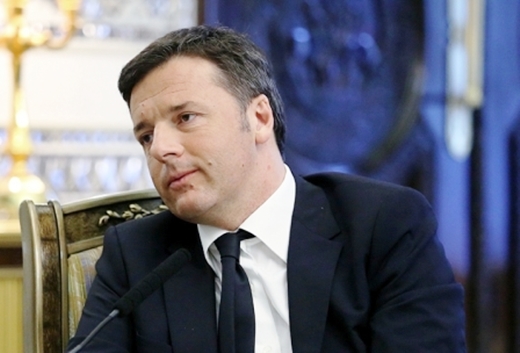
Matteo Renzi: Peace is One of Italy and Iran’s Mutual Goals

He added, “There is a deep belief that Iran can play a vital role not only in the region, but also in the world, which faces so many challenges.”

He highlighted the crisis in the region and said, “There’s still a huge human crisis in Syria and Yemen, to the extent that the number of refugees to Italy in this year has increased 15 to 20 times.”

Italy’s Prime Minister continued, “Knowing that 23% of the victims in Yemen are children, and that 15% are women, highlights the catastrophe in the country.”

Renzi pointed out that Iran and Italy can spread a message for stability in the region and said, “The two countries also can work on subjects which there are some disagreements about. However, we have many agreements and common goals with Iran, and one of them is making peace.”

Iran’s Oil Market Counter-Attack against Saudi Arabia

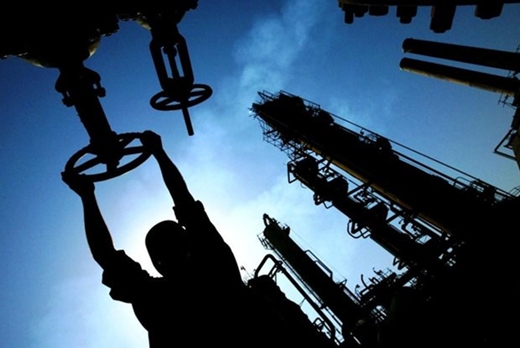
Iran’s oil production had sharply decreased in recent years, due to the sanctions imposed on the country for years, and Tehran is now trying to regain its lost share from the global oil market by boosting its output.
Meanwhile, Iran’s regional rival Saudi Arabia drastically increased its oil supply and even threatened foreign oil tankers in a bid to force Iran into “freezing” its oil production. The finalization of new oil contracts and a growth in Tehran’s oil exports, however, have meant that production continues to increase.
In an article for Mehr News Agency, Mohammad Ali Zamankhani discussed oil competition in the Middle East, and the way Iran countering Saudi Arabia’s plans in this regard.
Here is Zamankhani’s article, translated by IranFrontPage (IFP)


Before the termination of anti-Iran sanctions, based on a nuclear deal implemented in mid-January, Saudi Arabia served as an enforcer for those who had put Iran’s oil industry under sanctions. Now that embargoes are lifted, the Saudis are once again making extensive plans to “freeze” Iran’s oil barrels.

Saudi Arabia’s plans for preventing Iran from regaining its pre-sanctions share of oil supply include unrestrained oil production and supply, attempts to keep the oil price low, manipulating prices, and finally, the recent threats levied at oil tankers carrying Iran’s crude oil.

Saudi Arabia threatened oil tankers carrying Iran’s crude oil, but that has not hampered the increase of Iran’s oil exports

However, statistics indicate that within the first two months of the post-sanctions period, while SWIFT restrictions are still in place and there are barriers to the transfer of foreign currencies and the insurance of oil tankers, Iran has raised its crude oil exports by almost 60%.

Iranian Oil Minister Bijan Namdar Zanganeh announced in late March that Iran’s crude oil and gas condensates exports have already exceeded 2 million barrels per day.

“In the [Iranian calendar] year 1395 [started on March 20, 2016], Iran’s crude oil sale per se will be increased to more than 2 million bpd,” Zanganeh said at the time.

In the new Iranian calendar year, Iran will export more than 2 million bpd of its crude oil.

Meanwhile, the oil tankers belonging to Iran’s customers in Asia and Europe are also docking and being loaded at Iranian terminals. Since the beginning of the new Iranian calendar year, an average of one oil tanker per day has been filled with Iran’s oil in one of the country’s terminals in Persian Gulf, and has transferred it to target markets.

Two of Saudi Arabia’s plans – including the increase of supply and threatening the oil tankers carrying Iran’s oil – seem to have been ineffective so far, as the amount of Iran’s oil exports has exceeded 500,000 bpd to the EU alone.

Iran is now exporting more than 500,000 bpd of its crude oil to European countries

Seyyed Mohsen Qamsari, the director-general for international affairs at the National Iranian Oil Company (NIOC) declared the signing of new contracts for the export of Iran’s oil to Europe, in an interview with Mehr News Agency.

“Currently, Iran sells almost 35%, which is more than 500,000 bpd, of its oil to Europeans,” Qamsari said.
 

jadval (1)


South Korea, Biggest Customer of Iran’s Oil in Post-Sanctions Era

India, China, Japan, and South Korea should be considered as the four traditional customers of Iran’s crude oil in Asia. Among them, South Korea had the greatest increase in its oil purchases after the recent termination of anti-Iran sanctions, and has somehow outpaced its competitors.

A report published by an Iranian body responsible for OPEC (Organization for Petroleum Exporting Countries) affairs demonstrates that in February, Iran’s crude oil exports grew by almost 25%.

Thanks to the termination of sanctions, Iran’s crude oil exports in February has almost increased by 25%

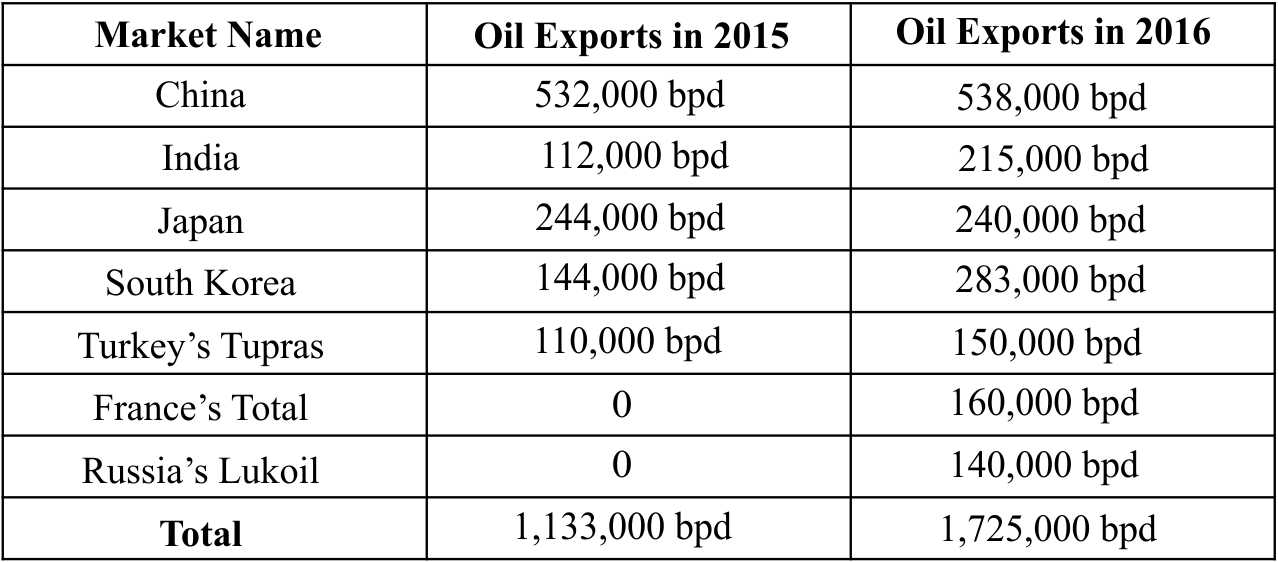
During the same period of time, India increased its oil imports from Iran by 113,000 bpd and marked the highest amount of crude oil imports within the past two years. South Korea’s refineries also raised their crude oil purchase from Iran by 139,000 bpd.

The interesting point here is that the amount of Iran’s oil exports to China in February 2016 shows only an increase of 6,000 bpd, and the exports to Japanese refineries have even dropped by almost 4,000 bpd due to decreased demand in Japan.

Nevertheless, China is still Iran’s biggest oil customer, importing 538,000 bpd, and after that, South Korea (283,000 bpd), and India (215,000 bpd) are among the biggest consumers of Iranian oil.


Unveiling European Customers of Iran’s Oil

In winter 2015, Saudi Arabia targeted Russia’s oil markets by selling oil to a Swedish refinery. Some market experts believed at that time that Riyadh would prevent the return of Iran’s oil barrels after taking over part of Russia’s share in the European market.

Within the past few months, the National Iranian Oil Company have not only signed contracts for selling oil to France’s Total, Russia’s Lukoil, and Spain’s Cepsa, but has also aimed to finalize new deals for selling the country’s oil to Greece’s Hellenic Petroleum, Switzerland’s Vitol, Italy’s Eni and Saras SpA, Britain’s Shell, Hungary’ MOL, and Turkey’s Tupras.

Once new contracts with Europeans are finalized, Iran will increase its exports to the continent to more than 700,000 bpd.

It is generally predicted that once the new contracts for export of Iran’s crude oil to major European companies are signed, the total exports of Iran’s oil to European countries would exceed 700,000 bpd for the first time ever.

One can also draw up a list of potential future customers, including Malaysia’s Petronas, Taiwan’s CPC and Formosa, South African refineries, Sri Lanka’s Ceylon, Singapore, Pakistan, Thailand, Russia’s Rosneft, and Ghana.

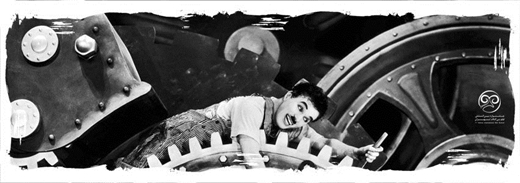
The Best Type of Cooking Dishes, According to Traditional Medicine

As reported by Tasnim, Hamidreza Qorbanzadeh talked about the food and utensil health and safety, according to the traditional medicine. “Food health and safety has been an important subject since ancient times, and Iranian traditional medicine has also addressed this.”
According to him, human health has improved by using chemical medicines in recent years, but there are still many diets which are full of harmful chemical elements, especially for children.

He also added, “Among the heavy metals such as lead, cadmium, arsenic and mercury, there’s no known benefit or useful elements for the body. However, their poisonous effects on metabolism, even in small quantities, have been well documented.”

Qorbanzadeh continued, “Using these metals, even in very small quantities, can be extremely harmful. This is why it has been reported that in some particular foods and diets, especially in developed countries, these elements are entering the body more.”

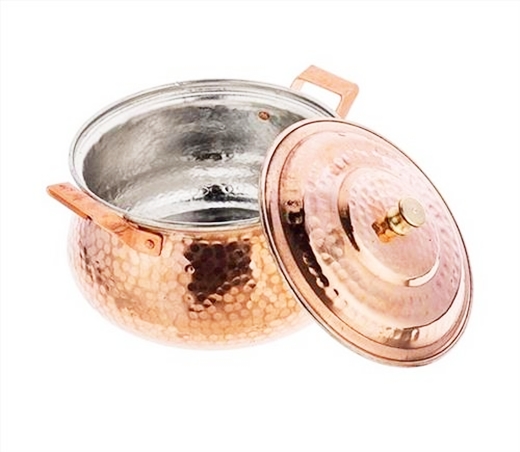
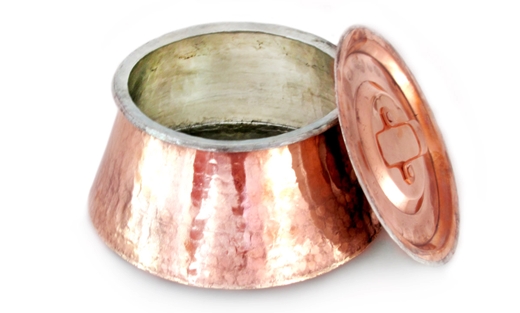
He declared, “In Iranian traditional medicine sources, the best dishes to use for cooking are those made of gold, silver and whitened copper which has been washed by tin, to make it easy to wash and to remain clean.”


168383

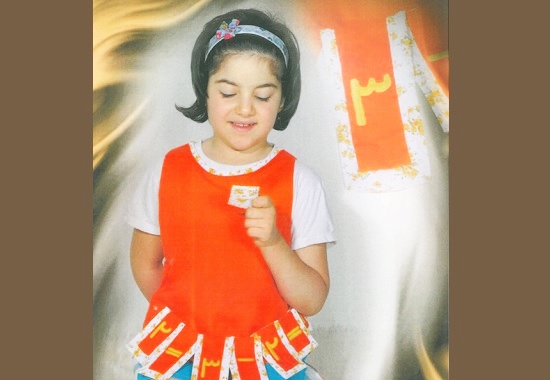
A Shirt to Help Children with Learning Difficulties

Mohadeseh Mahboubi is a costume and clothing design postgraduate from Yazd Azad University. She has designed a “smart shirt” for children suffering from learning difficulties.

In her interview with Honar Online she talked about the initial idea for the shirt, saying, “My postgraduate thesis was on Using Educational Building Blocks in Pre-school Children’s Clothing. That idea ended up in the current form of the shirt.”

She added, “While researching my thesis, I made some changes to the initial idea and changed it into a puzzle which can teach the alphabet, numbers and colours to children. After sharing it with a child psychiatrist and getting a positive response from her, I continued studying the characteristics of those types of children, and took it to an education centre for children with learning difficulties and tested it there. After getting positive results, I registered my invention.”

She pointed out that the children who were tested were mostly in first or second grade. “Those children have difficulties sitting at their desk and learning. This shirt is more like a game for them and it’s entertaining, so it keeps them interested.”

About the function of the shirt, she said, “The training takes place in three stages. The children are asked to find the right letter for a specific word or a number and place it on the shirt. If they do it correctly, through the electric system built into the shirt, it starts playing music for them, so they get motivated.”

She continued, “During the time I was testing the shirt in that centre, I saw children who were crying and didn’t want to go into their classrooms. However, after trying the shirt they were immediately interested and would ask to try it again. They play and learn simultaneously.”

Regarding the mass production of the shirt, she said, “The professors who were involved in the process were all interested to mass-produce it. They believe that there will be a lot of demand for it. So far, however, no steps have been taken in this regard.”

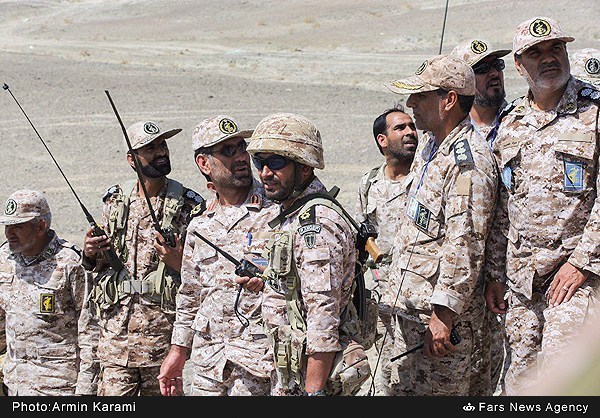
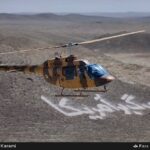
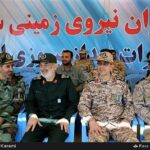
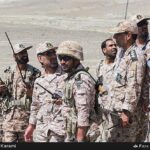
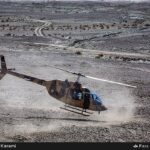
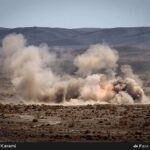
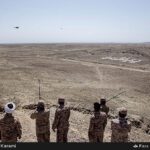
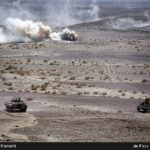
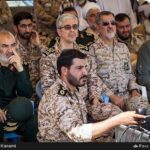
Iran: IRGC Ground Force Starts Massive Drills

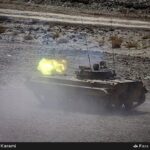
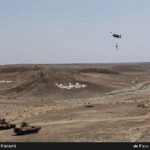
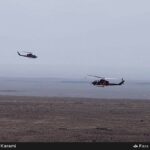
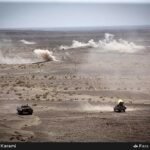
The Islamic Revolution Guards Corps (IRGC) Ground Force started massive wargames in the Southeastern parts of Iran on Tuesday morning. 


Iran launches talks with Shell

Seyed Mohsen Ghamsari, Executive Director for International Affairs at National Iranian Oil Company (NIOC) made the remarks saying “despite the initiation of negotiations, no final agreement has been reached yet.”

In response to a question about the amount of oil sales to Royal Dutch Shell Oil Industry Company in case of sealing a deal, the official estimated that grounds will be provided for selling oil in accordance with pre-sanctions period which amounted to 100 thousand barrels per day.

Ghamsari further pointed to the timetable for resumption of crude oil exports to South Africa stressing “in South Africa, shares of crude refineries belong to international oil companies who will decide on the issue.”

The NIOC official emphasized that so far several talks have been conducted with Royal Dutch Shell, BP (British Petroleum) as well as Petroliam Nasional Berhad (PETRONAS) of Malaysia; “overall, Iran will supply a portion of oil required by Shell’s refineries in South Africa.”

Managing Director of National Iranian Oil Company (NIOC) Roknodin Javadi had previously announced the possibility of deploying Iranian crude to Chevron refinery in South Africa as an American multinational energy corporation; “according to the policies of the Islamic Republic of Iran, there exist no limitations on selling oil to American refineries.”

The South African Deputy Minister of Energy, Ambassador Thembisile Majola had also announced South Africa’s plan to purchase oil from Iran saying “majority of South African refineries are managed by foreign companies and we could encourage them to resume trade with Tehran following the removal of oil sanctions.”

Meanwhile, Seyyed Asghar Hendi, alternate director of NIOC board of managers, had described the latest status of Shell’s solvency asserting “the European company has cleared its debt to Iran while the rest of Oil Ministry’s demands are being negotiated and followed up.”

Given the retirement of oil debts, NIOC could seal contracts for the sale of crude oil and condensate with Britain’s Shell Company following the oil sale agreements with France’s total, Lukoil of Russia, Spain’s Cepsa as well as Hellenic Petroleum of Greece.

Iran, UK agree on academic coop.

Following the due consultations, Iran University of Medical Sciences and UK Lancaster University signed agreements for scientific and technical cooperation, holding joint training courses, research, seminars, exchange of professors and students between the two universities.

The cooperation would contribute to the implementation of development and innovation package in medical education and improving global presence of universities of Iran.

Lancaster University, officially the University of Lancaster, is a public and collegiate research-intensive university in Lancaster, United Kingdom. It is consistently ranked amongst the Top 10 UK institutions according to national league tables.

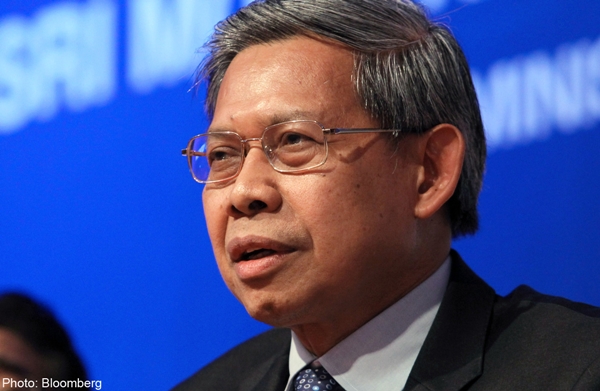
No barrier to boost trade relationships with Iran

Support from financial sector will be forthcoming to take advantage of the emerging business opportunities created after lifting of the sanctions in January, Malaysian minister said in an interview with IRNA.

‘There may be some initial apprehension from the financial sector but we do not see this as a barrier,’ said he.

‘As Iran enters the global economic community, we expect to see a positive impact on the trade exchange between the two countries,’ he noted.

As he mentioned, Malaysia’s exports to Iran recorded a value of RM 1.95 billion ($488 million) in 2015 compared to RM 1.62 billion ($405 million) in 2006, an increase of over 20% despite the sanctions.

Main exports were identified as palm oil chemical products, rubber products, machinery and equipment and foodstuffs, he said.

According to him, total trade with Iran in 2015 was RM 2.09 billion ($517 million).

He further said the Iranian companies can export to and invest in Malaysia and look at the markets within Association of Southeast Asian Nations (ASEAN) to expand their business.

Jannati Explores Iran and India’s Literary Links

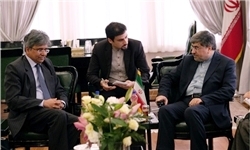
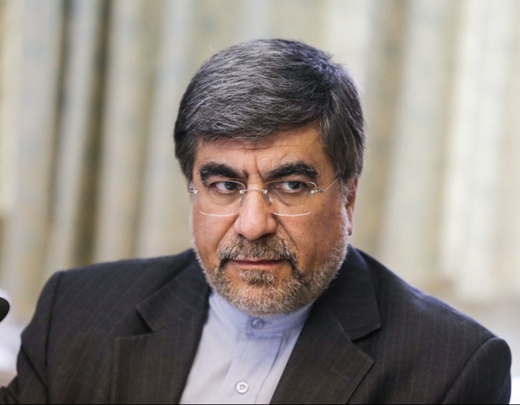
13950124000417_PhotoAJannati met Saurabh Kumar, India’s Ambassador to Iran on April 13. In this visit, Jannati emphasized the long-standing and extensive relations between the two countries, saying “Considering the new atmosphere in international relations after the lifting of sanctions, I hope we will expand our political, economic and cultural relations with India.”

He added that India’s position is special and important for the Islamic Republic of Iran, and greater political, trade, scientific and cultural relations with India are considered a priority in international relations for Iran.

Referring to his trip to India 20 years ago, Jannati continued, “I met Persian Language professors in Delhi and visited the library archive of India in Hyderabad, where I noticed a great treasure of works about Persian language and literature.”

The member of Iran’s Supreme Council of Cultural Revolution said, “During the past few years, many books have been published in Iran which introduce the culture, civilization, schools of thought and religions existing in India.”