Saturday, April 11, 2026
Home Blog Page 4556

Iran FM slams Riyadh’s ‘destructive’ moves at OIC

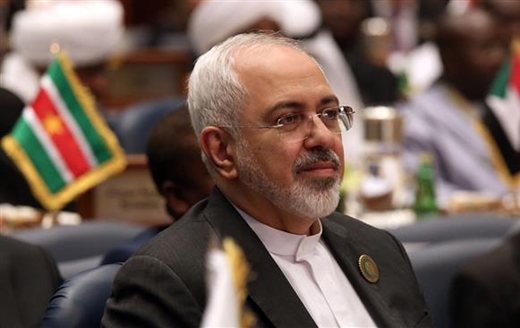
Iranian Foreign Minister Mohammad Javad Zarif said Wednesday that Riyadh’s efforts for the inclusion of four paragraphs in the draft declaration against Iran and one more against Hezbollah were against the “spirit of Islamic solidarity” which can only serve the interests of the Israeli regime, IRNA reported.

The draft was prepared during an expert-level OIC meeting in February in the Saudi port city of Jaddah, which the Iranian officials could not attend as they were denied visas by Riyadh.

Zarif warned that attempts by the Saudis to use the OIC mechanism to achieve their political goals resemble efforts by the former regime of Iraq’s Saddam Hussein against Iran during the organization’s meeting at the time of Iraq’s imposed war against Iran in the 1980s.

The Iranian foreign minister stated that members of the OIC should “learn the lesson” from those experiences and refrain from adopting “failed policies.”

For years, Iran and Saudi Arabia have been at odds over an array of issues in the Middle East, including the situation in Lebanon, Syria, Yemen and Bahrain. The rift, however, widened in January after the Saudi regime executed Sheikh Nimr Baqir al-Nimr, a prominent Shia cleric and an outspoken critic of the Riyadh government. The move sparked massive protests across the Muslim world, including in Iran, where some angry protesters attacked Saudi embassy in Tehran and the consulate in the northeastern city of Mashhad, following which Saudis cut off all diplomatic relations with Tehran.

Zarif said Saudi Arabia is continuing to “make excuses” out of the incidents that happened at its diplomatic missions in Iran, adding that Iran has openly condemned those events.

The Iranian top diplomat, however, noted that despite “destructive efforts” by some OIC members, Iran has always sought improved relations with the neighboring countries.

Zarif also condemned a paragraph proposed in the OIC draft declaration against Hezbollah, saying the move only pleases Israel.


Rouhani: Iran seriously pursues fight against terrorism

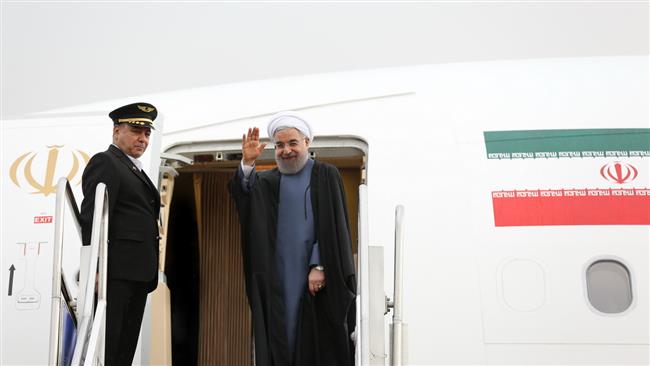
“The Islamic Republic of Iran has always seriously followed the fight against terrorism in the Muslim world and practically any nation and government that has sought Iran’s help, Tehran has offered its help and assistance,” Rouhani said before flying to the Turkish port city of Istanbul to take part in the 13th summit of the Organization of Islamic Cooperation (OIC).

The Iranian president elaborated on Iran’s assistance to the Muslim countries in their fight against terrorism, saying the governments of countries such as Iraq and Syria have enjoyed Iran’s support in this regard.

Rouhani further noted that the Muslim world is currently grappling with such problems as terrorism, extremism and sectarianism, while “some countries are unfortunately invading other countries.”

He stated that one of the goals of the OIC is to create unity among Muslim nations, expressing hope that the organization would be able to resolve differences among Islamic states.

“We hope there would be helpful discussions in this summit about the settlement of disputes in the Muslim world, fostering unity and solidarity among Muslim countries, and especially the issue of fighting terrorism,” Rouhani said.

The OIC summit will be held under the theme, “Unity and Solidarity for Justice and Peace.” A resolution on the Palestinian issue and support for international efforts to re-launch a “collective political process” will be issued at the end of the summit.

The OIC is the second largest inter-governmental organization after the United Nations which has 57 member states spread over four continents.


34th FIFF adds 7 more Iranian films to be screened for intl. guests

According to the public relations office, the 19th edition of Iranian International Film Market at the 34th FIFF will screen seven more titles for international guests, festival managers, buyers and distributers. These films include ‘Lantouri’ (Reza Dormishian), ‘Coquetry’ (Jalal Ashkezari), ‘Cinema-Bench’ (Mohammad Rahmanian), ‘Gita’ (Masoud Madadi), ‘To Be Born’ (Mohsen Abdolvahab), ‘The Sacred List’ (Mohammad Hamedani), and ‘Birthday Party’ (Abbas Lajevardi).

The first line-up for the Iranian films to be screened at the festival includes 22 titles, among which are ‘Standing in the Dust’ (Mohammad Hossein Mahdavian) ‘Sound and Fury’ (Houman Seyedi), ‘Mohammad, the Messenger of God (Majid Majidi), and ‘Breath’ (Narges Abiar).

For the full list of the screening programs please visit this link.

The 34th edition of Fajr International Film Festival will be held from April 20th to April 25th, 2016 in Charsou Cineplex, under the supervision of the well-known Iranian filmmaker, Mr. Reza Mirkarimi.

For more information on Fajr International Film Festival, visit the festival website at www.fajriff.com.

Naraq, Attractive Historical City in Markazi Province

Naraq, Attractive Historical City in Markazi Province

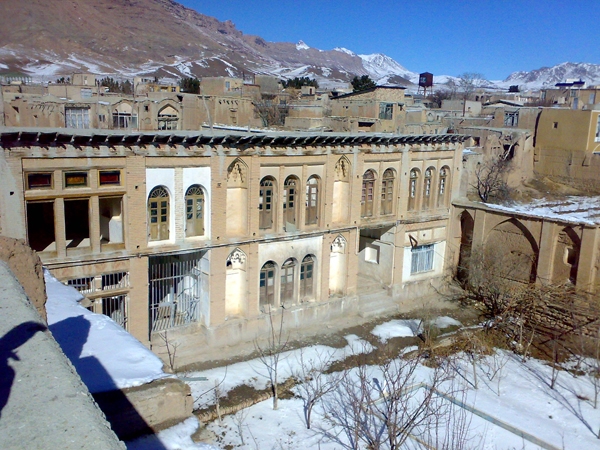
Naraq is located in the central district of Delijan County, Markazi Province. The city dates back to 2,000 years ego and boasts 130 historical buildings and sites. The architectural styles in this old city pertain to the Ilkhanid, Seljuk and Qajar eras.

Naraq is home to three aqueducts, two caravanserais and Shamsolsaltaneh Bazaar.

A meteor struck a school in Naraq in 1974 ― making the city a center of meteor shower.

Naraq Mayor Mahmoud Moradi said three billion rials ($100,000) will be required to renovate the city’s old bathhouse and turn it into an anthropology museum, reported Iran Daily on Wednesday.

He added that annual budget of 500 million rials ($26,161) is insufficient for renovating the historical monuments of Naraq.

Two thousands historical and natural monuments have been identified across Markazi province, of which 800 have been registered on the National Heritage List.

The Chal Nakhjir cave is situated between Delijan and Naraq in Markazi Province, central Iran. It was discovered in 1989 by personnel of the water facilities department who were searching for water sources.

The cave is renowned for its exceptional white dolomite sediments. It was formed about 70 million years ago.

Iran advisors helped kill 200 terrorists in Syria: Commander

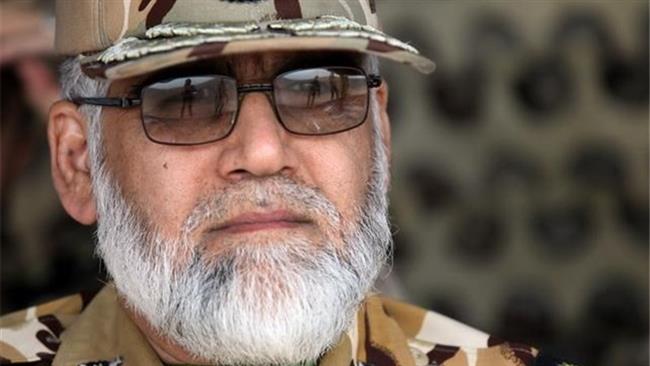
The commandos were from the Army’s Brigade 65, who had taken on a mission of advising Syrian forces in their battle against terrorists.

“In an operation against several thousand terrorists with the al-Nusra Front and [other] Takfiris carrying out a sweeping attack south of Aleppo, these soldiers staged devoted and decent courage and bravery, which resulted in the martyrdom of four of them,” he said.

He made the remarks in Tehran on Tuesday during a funeral ceremony for one of the advisers.

“Prior to their martyrdom, they managed to destroy a number of tanks and personnel carriers belonging to al-Nusra and kill 200 of the terrorists, documents attesting to which are at hand,” he said.

Militancy began in Syria in March 2011, and has killed at least 270,000 people, according to the so-called Syrian Observatory for Human Rights. Some reports, however, put the death toll at as high as 470,000.

Throughout the past two years, al-Nusra has joined the sowing of death and destruction across the Arab country alongside Daesh, another Takfiri terror group.

Commenting on the Iranian advisory mission in Syria, Pourdastan said, “We have a duty to be at hand if there is a mission and perform our responsibility.”

He, however, said, “We do not perceive Daesh to be so big that would entail us sending in a military regiment. Our main enemy is the United States and we prepare ourselves in proportion to that.”

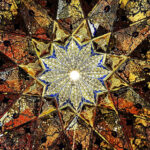
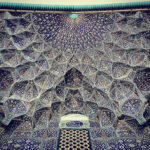
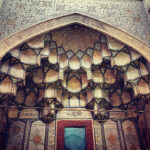
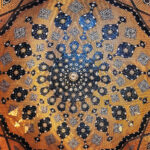
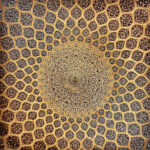
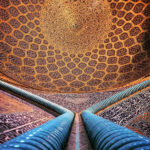
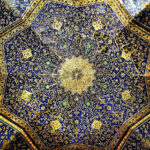
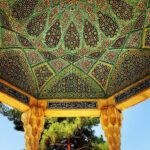
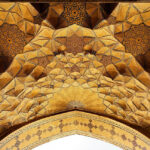
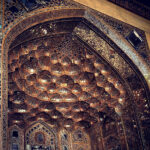
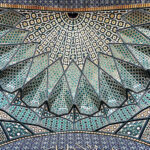
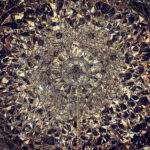
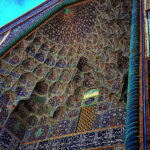
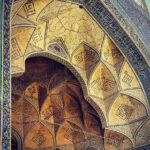
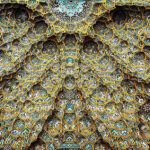
Hypnotizing Beauty of Iranian Mosque Ceilings

Hazrate-Masomeh’s mosque in Qom, Iran

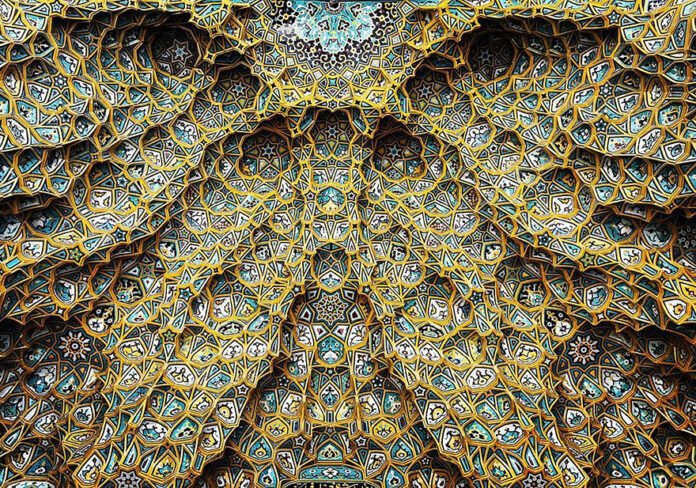
IFP: Mosques in Iran, as well as being places of worship, are often tourist destinations for their impressive architecture. In the following collection, originally sourced by boredpanda.com, there is a focus on some of the most fascinating ceilings of mosques across the country.


Middle Eastern architecture is renowned for its kaleidoscopic beauty. If you haven’t had a chance, yet, to witness it for yourself, Instagram photographer m1rasoulifard can take you on a mesmerizing visual journey. He captures the best of Iran’s architectural details in his hypnotizing photos.

From the Jameh Mosque, one of the oldest still standing in Iran, to Chahar Bagh school, the photographer aims to show the history of Iranian architecture and design.


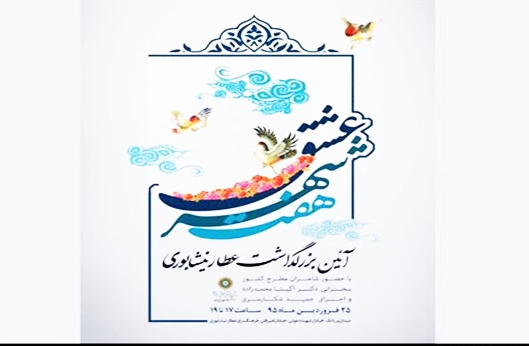
Iran to pay tribute to Persian poet Attar

Among the programs is ‘Seven Cities of Love’ which is scheduled to be held today at Attar Culture Academy in Tehran. It will be attended by poets namely Ali Aban, Ehsan Afshari, Sajjad Azizi and those interested in Attar.

Abu Hamed bin Abu Bakr Ibrahim, known as Attar, was an Iranian Muslim poet, theoretician, and philosopher who had long lasting influence on Persian poetry.

Born in Neishabour, Khorasan Razavi province in 1142, Attar was a poet during the Seljuk rule and his works were mostly inspired by the Persian Sufi poet Molana Jalaleddin Rumi.

According to Iranian literary figure, Mir Jalaleddin Kazzazi, Attar is a master of Persian language who was thoroughly familiar with the delicate and elegant aspects of the language, and featured a divine bond with the Almighty in his poetry.

Attar’s talent for perception of deeper meanings behind outward appearances enabled him to turn details of everyday life into illustrations of his thoughts.

Almost thirty works by Attar survive. They include ‘Asrar-Nameh’, ‘Javaher-Nameh’, ‘Mosibat-Nameh’, ‘Mokhtar-Nameh’, ‘Elahi-Nameh’, ‘Tazkerat al-Olia’ and ‘The Divan of Attar’.

However, his masterpiece is the ‘Manteq-al-Tayr’ (The Conference of the Birds) in which he describes a group of birds (individual human souls) under the leadership of a hoopoe (spiritual master) who determine to search for the legendary bird Simorgh (phoenix).

The birds must confront their own individual limitations and fears while journeying through seven valleys before they ultimately find the Simorgh to complete their quest.

The 30 birds who ultimately complete the quest to discover that they themselves are the Simorgh they were looking for, playing on a pun in Persian (‘si’ and ‘morgh’ which means ’30 birds’) while giving an abstruse teaching on the presence of the divine light within us.

Attar was beheaded by the invading Mongol army in 1221. His tomb, in Neishabour, Khorasan Razavi Province, attracts many visitors throughout the year.

How Iran’s Nuclear Chief Received Death-Threats from Hardline MPs

Salehi

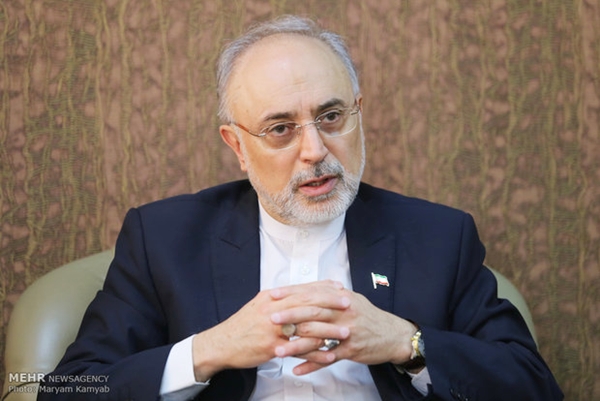
Ali Akbar Salehi, the head of Atomic Energy Organization of Iran (AEOI), was one of the key figures in Iran’s nuclear negotiating team. Salehi and Foreign Minister Mohammad Javad Zarif were the ones who shouldered the majority of the responsibility, and faced harsh criticism both during and after the negotiations.

On October 11, 2015, a parliamentary session was held in Tehran, during which the JCPOA was supposed to be put to a vote. During the historic session, a series of events outraged the Iranian nuclear scientist Salehi, who is known for his calmness.

He showed this anger clearly in his address to the parliament, where he told the audience that he had been threatened to be buried in cement in the Arak heavy-water nuclear reactor.

In a recent interview with Khabaronline, Salehi describes the events that led to his outrage, and the positive consequences of his memorable address, which finally led to the approval of the deal in the Majlis.


Salehi Called to Attend Parliamentary Session

“On that day, I was not even supposed to be in the parliament, or to address it. Some believe that Mr. Zarif and I had previously planned what we were going to say. But we did not know anything about what was going to happen,” Salehi said.

“I was somewhere else on that day when they called me and told me to attend that day’s parliamentary session,” he explained about the day he went to the Majlis.

In the first phone call, which was made by Salehi’s deputy Behrouz Kamalvandi at the request of the Vice-President for Parliamentary Affairs Majid Ansari, he replied that he was busy.

“Since Mr. Zarif was attending the session, I said there was no need for my attendance,” he went on to say.

However, Ansari called Salehi in person and said it was recommended that he attend the session personally. So, according to the Iranian nuclear chief, he left his meeting and went to the parliament.


A Series of Events in Parliament Convince Salehi to React

“In the parliament, I was sitting beside Mr. Zarif. We were talking about what we should do, and based on Mr. Zarif’s recommendation, we agreed that I make some remarks first, and then he would make his own address,” Salehi stated.

“I told Mr. Zarif that since he was the head of the [nuclear] negotiating team, he had better say everything himself. The issue was not technical anymore, so he could do it himself,” he added.

However, Salehi explained, what happened on the sidelines of the parliamentary session led to him speaking first.

It was at the time when Mr. Zarif had shaken hands with US President Barack Obama, and the atmosphere had become even heavier, Salehi said, explaining what made him talk first.

“I guessed that if Mr. Zarif had talked, they would have totally forgotten about the nuclear issue, and would have focused on the handshake and other trivial issues rather than the main problem… But if I talked first, other topics would be raised, such as the reason why we changed the [nuclear] reactor that way, or the centrifuge this way. It would have been totally different,” he further noted.

Zarif had recently shaken hands with Obama, and his address could raise tension in the parliament

“Finally, Mr. Zarif told me to speak first, and he would follow me. In addition, neither I nor Mr. Zarif realized that, based on the regulations, only one person could make an address.”

“When I had finished talking, I thought Mr. Zarif would continue. But [Parliament Speaker] Mr. [Ali] Larijani said, “No! Only one can speak!”.”


Hardline MPs Try to Outrage Salehi and Zarif

“As I was talking to Mr. Zarif, several lawmakers came and talked to us, as they usually do. Some of them just greeted us. Others wanted something from us. One praised us and another criticized us,” he explained about the atmosphere in the parliament before his speech.

“A number of people along with Mr. [the hardline MP Ruhollah] Hosseinian approached us angrily… Mr. Hosseinian and his companions were trying to make me and Mr. Zarif angry,” Salehi asserted.

“These people had formed a large gang! They were fully prepared to take control of the parliament, and they were doing it perfectly! They had a great plan. Like a football team, they all knew what they were supposed to do. Some of them had the job of making us angry. Others came and made sarcastic comments. Another one threw insults. In short, they had shared the duties well between them,” he went on to say.

“The atmosphere was already tense before my arrival at the parliament. When I entered, the atmosphere was quite inflamed,” Salehi said.

“Some MPs were talking to both of us; some shouted that we had betrayed the country, and so on. Mr. Hosseinian was the one who said that I deserved to be buried in the [nuclear power] plant, that they would bury me in cement.”

“He said that to both of us. He said it once to Mr. Zarif, and once to me. Later on, Mr. Hosseinian started arguing with me, saying that I’d better back off. He said I shouldn’t have joined in the fight.”

“Mr. Hosseinian later told his friends that ‘we wanted to make these two angry so that they would show their nerves.’ They were indeed successful, but the anger happened to end up in our favour, and that was God’s will,” Salehi stated.

“It is very difficult to make me angry. I may get angry once in a year. There, I tried hard to control myself. But Mr. Hosseinian called us traitors who had betrayed our country. Then I got really upset. Betrayal is a very offensive and unfair word. Who had given them the right to say such a thing? And in what position were they to say that to us?”

Iran’s nuclear chief: I was outraged when he called us traitors. It was very offensive and unfair.

Some said that Hosseinian was joking when he made those remarks, but based on what Salehi says, he later said he was not joking, and was indeed very serious.

“Those days, I saw certain commentators describing me as irritable, criticizing me for getting angry so easily. But the interesting point was that this supposed irritability had lain unnoticed for more than three decades, and all of a sudden, I was called thin-skinned on this particular issue!”

“Besides, the people who made such remarks were as young as my child. The student of my student could be their teacher. What should I tell them? I have been a faculty member for 38 years. Anyone who is under 40 years old was barely born when I became a faculty member!” he added.

“Another interesting point here was that Mr. Hosseinian swore to God when he was talking to me. He said ‘I swear to God you are a traitor and I swear to God I would do this or that’. That made me angry, and Mr. Zarif had to try to calm me down,” he said, asked about a picture published later showing Zarif taking Salehi’s hand and asking him not to get angry.

“I told Mr. Hosseinian not to swear to God. I told him say anything you want, but do not swear to God. When you swear, you have to do it. I said, you are a cleric, and should encourage people to be ethical and polite. Why are you talking like this? How are you supposed to welcome people to Islam? When you swear to God but do not do what you said, it is a sin,” Salehi stated.

After the arguments, Salehi angrily told the audience in his address that someone had threatened to bury him in cement in the Arak heavy-water nuclear reactor.

“It finally ended up in our favour, because some lawmakers later came to me and said they were doubtful whether to vote for the JCPOA or against it, but after my remarks, they were convinced to vote for it,” Salehi added.

Salehi says his anger happened to be helpful in getting parliamentary approval for the JCPOA

“Before those remarks, Mr. Larijani had noted that the nuclear deal would not get the parliament’s approval at that day. Mr. Kazem Jalali [a senior lawmaker close to Larijani] came to me and Mr. Zarif and quoted Larijani as saying that the deal would not be approved today [Sunday, October 11, 2015].”

Larijani had sent the message to Zarif and Salehi that they could postpone the approval of JCPOA to a session on Tuesday [October 13] if they wanted to.

“I told Mr. Zarif that in my opinion, if the case were to be postponed to Tuesday, it might be even more difficult to get it approved, because at that time, those people were taking control of parliament. They would have had total control over the Majlis by Tuesday. So it was decided that the voting would take place in the same session.”

NIOC Mulls R&D Cooperation with Wintershall

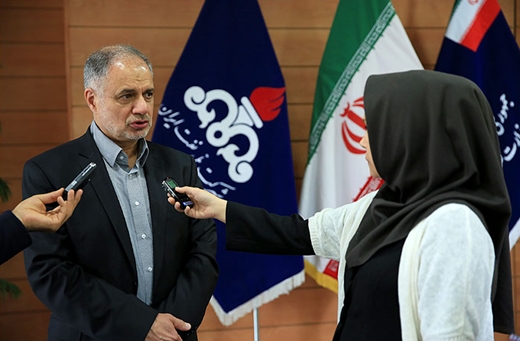
Ali Kardor, NIOC’s deputy managing director for investment and finance, told Shana that Wintershall has indicated willingness to cooperate with NIOC in research and development areas and the two companies may start cooperation in the future.

Speaking on the sidelines of a ceremony to sign a memorandum of understanding (MoU) by NIOC and Wintershall in Tehran, on Tuesday, Kardo said the two companies have agreed to exchange data within a month and the German side will initiate studies on 4 oilfields in western Iran.

From Iran, Roknoddin Javadi, managing director of NIOC, and from Wintershall, Mario Mehren, CEO, signed the MoU in Tehran on Tuesday.

A subsidiary of BASF, Wintershall is Germany’s largest internationally active crude oil and natural gas producer.  It explores and produces oil and gas in Europe, North Africa, South America, Russia, and the Middle East. It has been active for over 85 years and has a workforce in excess of about 2,000 employees from more than 40 nationalities.

This will be the first time Winteshall starting direct cooperation with NIOC, said Kardor.

Iran Ready to Supply Pakistan’s Energy Needs: Interior Minister

He made the remarks in a ceremony held to celebrate the Pakistan National Day.

Rahmani Fazli predicted Iran-Pakistan trade volume to increase to $5bn within the next three years.

Wishing a happy National Day to the Pakistani government and nation, he noted that Iran and Pakistan enjoy cordial historical ties and the two countries’ governments are committed to enhancing all-out ties.

The interior minister voiced hope that practical steps can be taken towards the enhancement of economic ties in the upcoming 20th meeting of the Iran-Pakistan Joint Economic Commission in summer 2016 in Tehran.

Iran is ready to provide Islamabad with the energy and new technologies which the neighbouring country needs, he said.

He added that Iran can export both gas and electricity to Pakistan.

Rahmani Fazli called for a boost in cooperation between Tehran and Islamabad in border control, as well as in fighting human and drug trafficking, adding that Iran and Pakistan will hold high-level security talks in the next three weeks.

The official hailed Pakistan parliament’s stance on the Palestine, Gaza, Syria and Yemen issues, adding that dominant powers seek to stoke war in the region.