Thursday, December 25, 2025
Home Blog Page 4556

Iranian President Due in Pakistan Friday

Heading a high-ranking delegation, Rouhani will arrive in Islamabad on Friday at the invitation of his Pakistani counterpart Mamnoon Hussain and Prime Minister Nawaz Sharif, the deputy head for communications and information at the Iranian president’s office, Parviz Esmaeili, told Tasnim.

President Rouhani’s two-day visit to Pakistan will take place in response to Nawaz Sharif’s last year trip to Iran, the official noted.

Esmaeili said promoting bilateral ties between the two neighbors and particularly boosting economic cooperation in the new atmosphere created after Tehran and six world powers reached a nuclear deal (JCPOA), will be high on agenda during Rouhani’s visit to Pakistan.

Iran and the Group 5+1 (Russia, China, the US, Britain, France and Germany) on July 14, 2015 reached a conclusion over the text of a comprehensive 159-page deal on Tehran’s nuclear program and started implementing it on January 16.

The comprehensive nuclear deal, known as the Joint Comprehensive Plan of Action (JCPOA), terminated all nuclear-related sanctions imposed on Iran.

Experts believe that Iran’s economic growth would rise remarkably following the enforcement of the final nuclear deal.

Iran’s President Slams Brussels Attacks

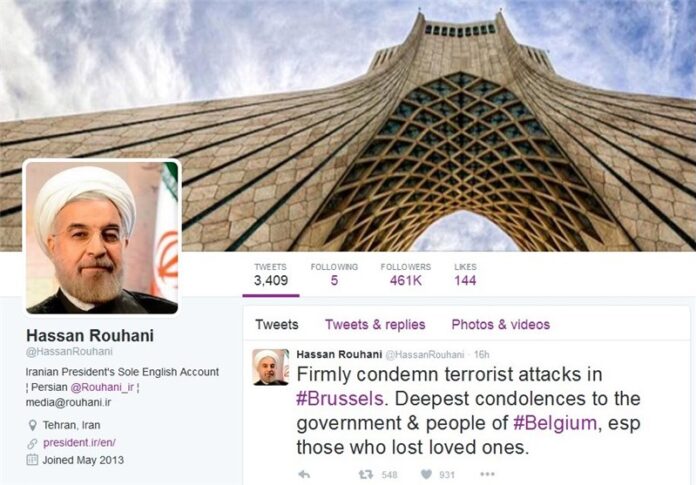
In a message in his Twitter account, President Rouhani offered his condolences to Belgium on the bloody attacks.

“Firmly condemn terrorist attacks in #Brussels. Deepest condolences to the government & people of #Belgium, esp those who lost loved ones,” he wrote.

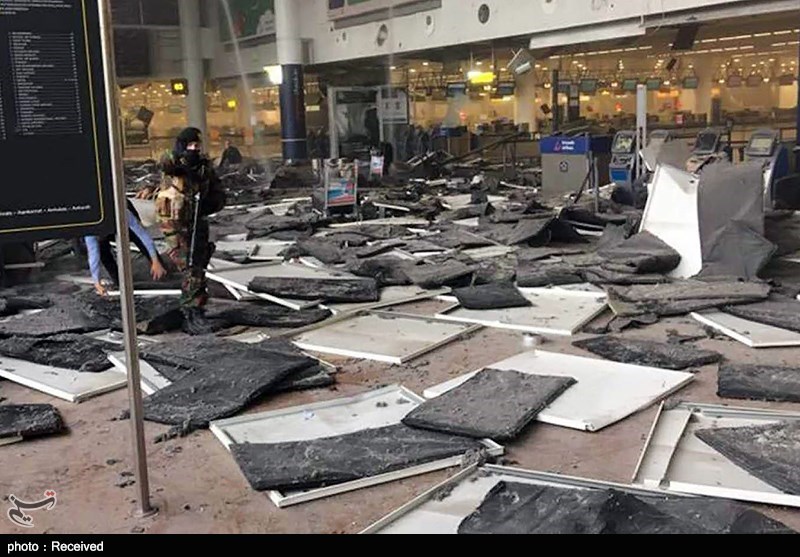
On Tuesday morning, two explosions at the Brussels airport and another at a busy metro station in the Belgian capital killed at least 35 people and wounded 230 others.


139501041004192827392954


Daesh (ISIL) claimed responsibility for the coordinated attacks, but authorities said it is too soon to say for sure whether the terror group was behind the blasts.

For the first time in the country’s history, Belgium raised the terror threat to the highest “fourth” level, the country’s prime minister said.

Borders with France and the Netherlands were also closed.

P&I provides larger liability support for Iran oil imports

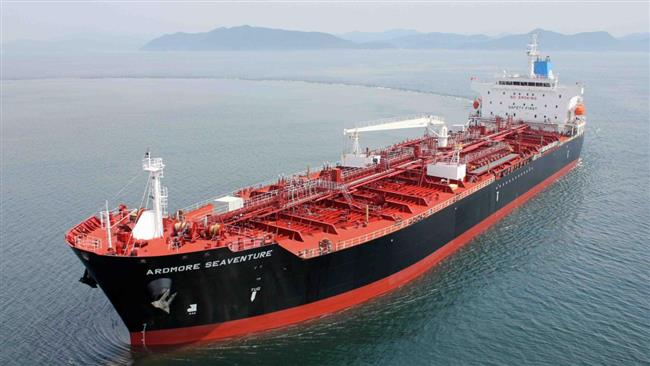
Reuters has reported that the International Group of Protection and Indemnity (P&I) Clubs, which brings together leading marine insurers owned by shipping clients and reinsured internationally, has stepped in to provide a larger insurance coverage for transporting Iranian oil.

The International Group has created a “fall-back” of $500 million additional coverage per ship for Iranian oil at no extra cost to the members, the news service said.

The initiative that was taken last week raises the default insurance coverage for tankers carrying Iranian oil to $580 million per ship from $80 million.

Although $580 million coverage is still less than 10 percent of the normal liability coverage of $7.8 billion per ship, Asian shippers such as China, India and South Korea, and some shippers in Europe, may find that enough to transport Iranian oil, Reuters has quoted an unnamed official with Japan P&I Club as saying.

Japanese shippers, however, are more risk-averse and may continue to use the government’s special sovereign shipping insurance to import Iranian oil until normal P&I coverage becomes available again, industry officials have said.

Tokyo stepped in to help its oil importers after Western sanctions imposed against Iran curbed the ability of private insurers to provide tanker cover, Reuters added.

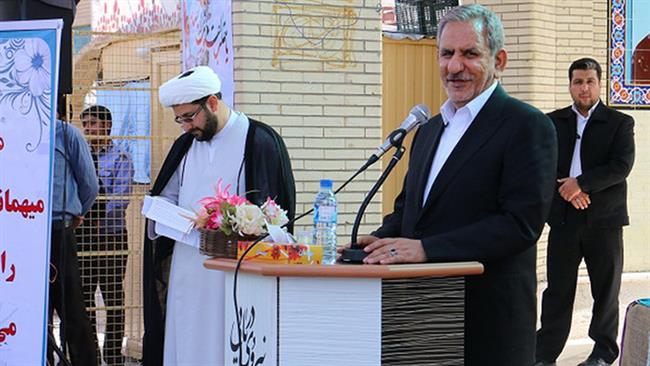
Iran’s First Vice President Es’haq Jahangiri has emphasized that the country’s oil exports saw a major rise of 900,000 barrels per day (bpd) to reach 2.2 million bpd over two months after the removal of sanctions against its oil industry.

In mid-January, a series of economic sanctions that had been imposed on Iran for multiple years were removed after a deal between the country and the P5+1 – the five permanent members of the Security Council plus Germany – was implemented.

The sanctions barred foreign investments in the Iranian oil industry and also limited a low ceiling of 1 million bpd on the country’s oil exports.

Iran’s Oil Minister Bijan Zangeneh had repeatedly emphasized that the Islamic Republic was determined to regain its share of the oil market that it had lost as a result of the sanctions.

Zangeneh had also said on the same front that plans had been devised to increase the country’s oil production by 500,000 bpd immediately after the removal of the sanctions and by a further 500,000 bpd later on.

Last week, he emphasized in his message to the nation on the occasion of the new Iranian calendar year (began 21 March) that Iran has already been able to regain its lost oil market share.

Iran announces major jump in oil exports

Iran’s First Vice President Es’haq Jahangiri said the figure marked a rise of 900,000 bpd in the country’s oil production that had been materialized within only two months after the lifting of the sanctions.

In mid-January, a series of economic sanctions that had been imposed on Iran for multiple years were removed after a deal between the country and the P5+1 – the five permanent members of the Security Council plus Germany – was implemented.

The sanctions barred foreign investments in the Iranian oil industry and also limited a low ceiling of 1 million bpd on the country’s oil exports.

“Until this past [Persian calendar month of] Bahman (21 January-February 2015), Iran was able to sell 1.3 million bpd,” Jahangiri told reporters. “But within two months after the removal of the sanctions, we have been able to export 2.2 million bpd of crude oil.”

Last Saturday, figures provided by Bloomberg showed that Iran’s oil production had climbed to 3.37 million bpd in January, the highest level since February 2014.

Before the sanctions were lifted, Iran said it had made the necessary preparations to boost its oil production capacity to pre-sanctions levels.

Iran’s Oil Minister Bijan Zangeneh had repeatedly emphasized that the Islamic Republic was determined to regain its share of the oil market that it had lost as a result of the sanctions.

Zangeneh had also said on the same front that plans had been devised to increase the country’s oil production by 500,000 bpd immediately after the removal of the sanctions and by a further 500,000 bpd later on.

Last week, he emphasized in his message to the nation on the occasion of the new Iranian calendar year (began 21 March) that Iran has already been able to regain its lost oil market share.

US wants to restore its hold on Iran: Ayatollah Khamenei

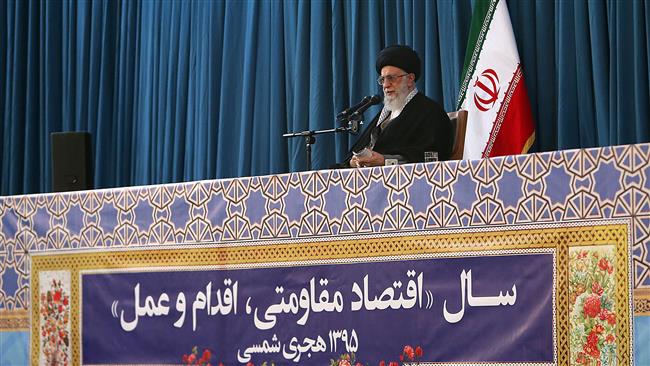
“They (the Americans) are moving in this direction in a bid to be able to reinstate their previous hegemony,” Ayatollah Khamenei told a large crowd of pilgrims in the holy city of Mashhad on the first day of Persian New Year on Sunday.  

The Leader said Iran’s 1979 Islamic Revolution liberated the nation of Washington’s deep-rooted grip, adding that Iranians proved that it is possible to stand up to the US. He said the revolution handed the country back to the nation, its true owners.

Before the revolution, Ayatollah Khamenei said, that US used to plunder Iran’s riches and the ousted Pahlavi regime was the main base of the UK and the US in the region.

The Leader reiterated that the Iranian nation has no issues with the American people but the US administration is the enemy of Iran.

‘US not honoring JCPOA’

Pointing to Iran’s nuclear agreement with the P5+1 group of countries, known as the Joint Comprehensive Plan of Action (JCPOA), Ayatollah Khamenei said the other side, under various pretexts and through deception, is not fully implementing its side of the deal such as removing all obstacles to Iran’s banking transactions or unfreezing the country’s assets abroad.

“In the agreement we reached with the Americans on the nuclear issue, the Americans did not deliver on their pledges… Today, all cross Western countries and those who are under their impact, our banking restrictions are still facing problem and repatriation of our assets are facing problem,” said Ayatollah Khamenei, adding that “they fear the Americans.” 

Elsewhere, Ayatollah Khamenei said there is no guarantee that President Barack Obama’s successor would “fulfill these minimum obligations.”

“The US presidential candidates are vying with each other in inveighing against Iran…These are [proof of] enmity,” said the Leader.

Ayatollah Khamenei said the Secretary of the Treasury Jack Lew is making ceaseless efforts in order to prevent Iran from benefiting from the JCPOA results. 

Regarding his choice of an economic motto for the New Year, namely “Resistance Economy; Plan and Action,” the Leader said that the West seeks to imply that Iranians have only one of two choices, namely either to come to terms with the US or suffer economic hardships.

The Leader said the West seeks to instill and propagate the notion that Iranians must either bow to the demands of the US or suffer the consequences. Ayatollah Khamenei warned that submission to the wishes of the US is tantamount to backing down from one’s stances and a loss of independence.

Ayatollah Khamenei said the West would like the Iranians to back down from its demands such as on the issue of Palestine and turn into what the US would like it to be and like some regional states be reconciled with “the Zionist enemy.”

The Leader said the enemy, if not resisted, will gradually expand its demands to the point where it will question the very founding principles of the Islamic Republic and seek to change its essence and substance.

Ayatollah Khamenei called for an increase in the productivity level in Iran, particularly in the energy sector, adding this can save billions of dollars.

Minister Highlights Resolve to Pursue Resistance Economy Guidelines

In the letter on Sunday, Mr. Tayyebnia hailed the decision to name the new Iranian calendar year “Year of Resistance Economy: Action and Implementation.”

He said the wise move in the current juncture encourages the administration to press ahead with its plans under the general policies of Resistance Economy.

The minister also gave an assurance that the administration’s economic bodies will spare no effort in the New Year to sustain hope among the public, reinforce the national economy, strengthen domestic production, settle the recession, keep lowering the inflation rate, and further stimulate businesses.

In a message on Sunday, Imam Khamenei congratulated the Iranian nation on Nowruz, the New Persian Year celebration, and named it “Year of Resistance Economy: Action and Implementation.”

Back in 2014, Ayatollah Khamenei had sent a proclamation to heads of Iran’s branches of power and outlined general policies to boost the country’s economy and lower its vulnerabilities.

The proclamation, laying out a grand plan for the Resistance Economy in Iran, has been issued after consultations with the country’s Expediency Council and based upon the Clause 1 of Article 110 of the Iranian Constitution.

Iran Renews Call for Negotiated Solution to Yemeni Crisis

In a phone conversation with the UN envoy to Yemen, Ismail Ould Cheikh Ahmed, on Monday, the two sides exchanged views on the latest developments in Yemen.

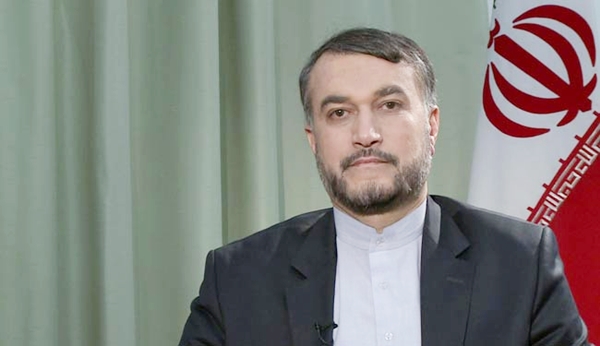
Amir Abdollahian welcomed the UN envoy’s efforts to hold political dialog among Yemeni groups and said Iran’s principled policy is to end hostilities and resolve rifts through negotiations.

“Iran supports any effort to that end,” he underlined.

Ould Chiekh, for his part, briefed Amir Abdollahian on the ongoing efforts and coordination for the resumption of talks among Yemeni groups.

He described consultations with Iran for finding a solution to the crisis as “constructive” and renewed call for all sides’ assistance to end the crisis.

He further expressed the hope that ceasefire in Yemen would pave the way for fruitful talks and disparch of humanitarian aid to the Yemeni people.

The talk came as the Houthi Ansarullah Movement and the resigned Yemeni government officials have reportedly agreed to begin a ceasefire ahead of the resumption of peace talks expected to begin in April.

The agreement for a ceasefire in the near future came as Houthis met with Ismail Ould Cheikh Ahmed, in the Yemeni capital Sana’a on Sunday.

Microsoft’s Ex-Manager Finds Iranian Students More Talented than Americans

Rouhollah Rahmani, the US-born Iranian computer scientist who worked for such giant technology brands as Microsoft and Amazon for several years, has returned to Iran to build his motherland instead of developing and producing software applications and other products in the US.

Here is where he has found Iranian students to be even more talented than the Americans. Iran has made him believe that an added value can be created that changes the world and creates an ideal one.

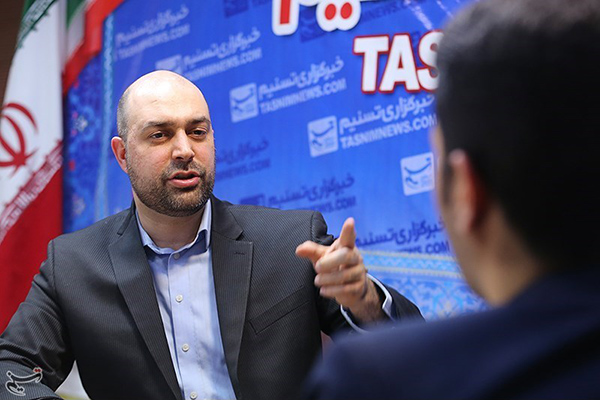
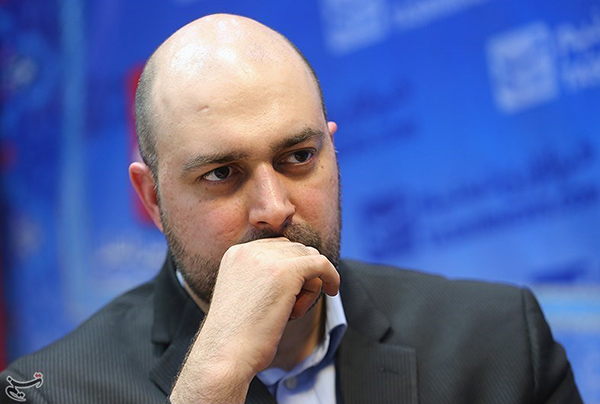
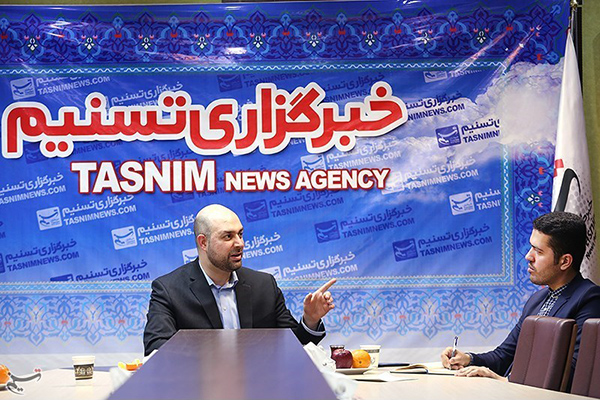
Here is the second part of Tasnim News Agency’s recent interview with Rahmani, who is now in Iran as an elite computer scientist resolved to help Iranians make their dreams come true.

In the first part, he explained about his early life, his position in Microsoft and Amazon, and his decision to leave his successful career in the US and come to Iran.


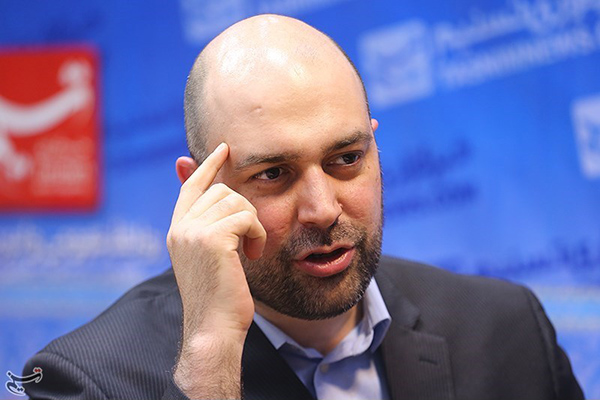
Rahmani said when he arrived in Iran and started teaching at the University of Tehran, the most surprising point to him was that his students in Iran and the types of projects they selected were on par with M.S. and Ph.D. students in the US.

“Iranian students had the same scientific quality as the Americans, and were even better than them. This was why I had a sense of familiarity when I came to Iran; as if only the language, and not the workplace, has changed,” he noted.
 

Rahmani5


Iranian Students’ Craving for Immigration Rooted in Colonialist Thoughts

He went on to say that he was very surprised to see how much Iranian students were eager to immigrate to the US and European countries.

“Many students wanted to go abroad, while many of them possibly didn’t know why they want to do that,” Rahmani added.

Rahmani said he had heard about such dreams among Iranian students before coming to Iran, but he was even more surprised when he realized these students think their stay in Iran would burn their future opportunities.

“Immigration and such way of thinking among Iranian students is a mistake, and even a dangerous one. This way of thinking has its roots in colonialist thoughts,” he said.


University Graduates Should Think of People’s Problems

When students graduate from the university, they want to find a job, but this where they have to be insightful, Rahmani noted.

Students’ first assumption is that after graduation, they should find an employer and work for them, he explained, adding that such students mostly look for someone who tells them “please come and work for me”.

This is wrong, Rahmani said, adding that when a person is considered as one of the country’s most intelligent ones, he or she should not be dependent on existing companies, but on the ones that don’t exist yet.

“They should not see their own career, but the problems people have. If they look at people’s problems, they would find that there are lots of problems,” he noted.

“In order to find these problems, one should get out of oneself and see beyond the self,” Rahmani explained, stressing that “looking at one’s self leads to failure”.
 

Rahmani6


Sometimes, Sticking to Good Positions Hinders Your Success

“When you look at yourself from outside, you realize there is an important chain of events you should go through. Such a view helps you understand what you are supposed to do, how you are going to do it, and when you should leave it,” Rahmani noted in reply to a question about the reason behind leaving such companies as Microsoft and Amazon.

“For example, I once worked in certain projects and set a strategy (for myself), but later I left Microsoft, I left Amazon, and even left the United States,” he noted.

“It is bad that we sometimes stick to a position. This does not let you succeed,” he added.

“It is even mentioned in Islam that we Muslims think about our neighbor and fellow-human beings more than about ourselves,” Rahmani went on to say, stressing that one can find God better if he or she finds problems and solve them.

“When you look at the world, you shouldn’t say what the world looks like today, but rather you should imagine the world you are supposed to see,” he added.

Under such circumstances, Rahmani noted, one should try to supply the resources needed, and leave the unnecessary ones, even if they are pleasant.

“When the strategy and resources are determined, that is when one can make the decision whether to leave the great salary of such a huge brand as Microsoft or not,” he added.

“Before leaving certain things, there is always a kind of fear; but when you leave it, everything becomes great, because you know you are now free, and you just think about what you need to realize the world B (one’s favorable world),” Rahmani noted.
 

Rahmani2


There Are Simple Ways to Solve People’s Problems, Microsoft Taught Rahmani

“I learned many things in Microsoft; for example, I learned how the world’s greatest software company works, and how one should develop a software application, which was very valuable,” he said.

“I also learned that how a weak and newborn search engine like Bing can compete with such giants as Google,” he went on to say.

“There I learned how to think about the market. When I was a Ph.D. candidate, I thought I should write algorithms that change the world, but I didn’t think the customer would sometimes need more than that,” Rahmani added.

For instance, he explained, in his first days in Microsoft, the “Spell Correction” algorithm was developed and released, which helped people improve their searches by 30%, and learn how to spell the words correctly.

“I told myself at that time: there are lots of cool technologies, why should someone invest in spell correction and be so much happy with its release? I actually hadn’t understood the value,” he said.

“I realized at that time that, from a manager’s point of view, there is no need to have complex methods to resolve people’s problems. Sometimes such problems can be settled using simple ways,” Rahmani added.

“It isn’t important to show how much intelligent we are. It is important that how much we can solve people’s problems,” the Iranian scientist added.


Working in Microsoft, Running Islamic School Simultaneously

Rouhollah further referred to his Islamic background and religious concerns, which later took him to run an Islamic school at the same time as he was working in Microsoft.

“My world view was formed when I was three years old; since the time I was a teenager, I had a cause and volunteered in the mosque for any activity including prayers, education, defending the world Muslims’ rights or helping the non-Muslim community to find God,” he said.

“Even in line with these great causes and objectives, I ran an Islamic school when I was simultaneously working in Microsoft,” Rahmani said.

He also pointed to his marriage, which took place in Iran in a short (six-month) stay in the country, saying, “It was very important to me to marry a very decent and believer person, but I really didn’t have a plan for getting married in Tehran.”

“There were lots of options for marriage in the US, but the fate took me to Iran, where I met my future partner… Being Iranian wasn’t really my ideal in marriage, but I was looking for the best person in the world, which happened to be in Tehran,” he said.

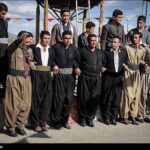
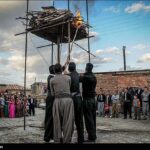
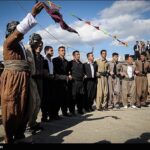
Nowruz Celebration in Western Iranian City of Marivan

Iranian people in the western city of Marivan in Kurdestan province marked the beginning of New Iranian Year by holding Nowruz celebrations in their own traditional style.

The following images have been released by Tasnim News Agency:


Iran in Photos: Nowruz Celebration in Shiraz

Iranians gathered in Hafezieh, tomb of Hafez, to celebrate the Nowruz on Sunday in Shiraz.

The following images have been released by Mehr News Agency: