Saturday, April 11, 2026
Home Blog Page 4545

The Life of a Syrian Family in Tehran

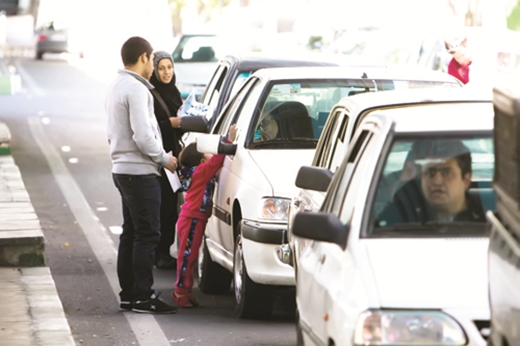
Shahrvand continues: The driver reads the paper, “I’m a homeless Syrian. I ask for help from you Muslims.” The driver reaches out and puts a note in Hassun’s hand. Hassun is young. He’s got curly hair and his first tufts of facial hair. He nods his head in thanks, then moves toward another car. The young girl has her hair tied up, and her ice-cream is dripping on the street’s asphalt and her shoes. Alif is his sister. He turns his head and notices me. He speaks no Farsi. I speak Arabic with him. I ask, “Where are you from, Syria?” In a Syrian accent he says, “Yes.”


Where did you come from in Syria?

–  We came from Aleppo.

When did you come? How?

–   It has been nearly 20 days now. I came with my family by land through Turkey. There are 10 of us.

How did you enter Iran? Weren’t you stopped by police?

–  We were in Turkey first. We had lost everything in the war. Our houses were destroyed and we had nowhere to live. So we went to Turkey and stayed there for a couple of months. No one could understand us there though, and everything was very expensive. Life was getting very difficult there. A relative who lives in Iran suggested that we come here. We were told that Iran is a Muslim country, where they would sympathize with us and help us, so we came here. We came by bus. It took us two days. The police didn’t stop us at all. We even got legal stamps in our passports, but all our relatives are still in Turkey.

You then directly came to Tehran?

–   Yes, we were told to come to Tehran.

Where do you live now?

–  When we arrived in Tehran, they told us to go to one of the pilgrimage areas. We did, and rented a place there for $15 a night.

Where are your family members, your parents?

–  My father is sick. He has diabetes. My mother was killed in the war. I live in the same place with my six sisters, my brother and his family. My sisters and brother are also around. We beg  for money and help in the streets. We came with no money at all. We must take care of our basic expenses.

Can you earn enough to take care of your basic expenses?

–   Sometimes yes, and sometimes no. Our situation has got worse since we came to Tehran. We are looking for proper jobs and a proper place to live.

Aren’t you worried for your sisters in a strange country? They speak no Farsi either.

–  No, God will keep them safe. Plus, we have no other choice.

How did you choose Hafez Street? Your relatives told you about it?

–  We chose it randomly. Our relatives didn’t help us at all.

Do you know the name of the street at all?

–  No, I just know that that place is called Aladdin.


Hassun is 13. Alif stretches her arms out for Hassun to take her in his arms. He speaks no Farsi, neither him nor his sisters who are spread out across the streets asking for help among the cars, holding the same folded paper. The note was written by a Mullah for them. He explains,” I was in the mosque doing my prayers when I saw the mullah. I asked him to write something for me so that people would help us, and he did.”

Their condition is not very good. It takes them an hour every day to get here: him, his sisters, his brother and sister-in-law all agree, saying “This is not a good life. Our job is not good. We are ashamed to do it and beg from people. Many don’t help at all.”

I ask him about their experience in Iran. “Iran is a good place but we are strangers here. No-one understands our language here,” he says.


Are there other people like you apart from your family?

–  Yes, there are many Syrian families. They are all in a bad condition. War has made us destitute. We have nothing.

How was your life in Aleppo?

–   We had a good, happy life, but we lost everything after the war.

Have you tried to get any help from the Syrian Embassy or anywhere else?

–   No we didn’t. We only spoke to the Turkish embassy, where they told us we need to apply for a visa if we want to go back there.


We are busy talking when Nesrim arrives, a thin girl wearing Arabic dress and a black shawl. Her little eyes are shining in her tanned face. She doesn’t look 20 at all. She’s Hessun’s sister-in-law. She speaks no Farsi either, “For God’s sake help us. I have a little girl. I want to buy diapers for her.”

I’ll take some out of my pocket and give it to her, “We just came from Syria. We’re looking for a place to rent. We came with Hessun’s family.” I ask, “Where is your family?”

“They are all in Turkey. We didn’t stay. It was very difficult there. The Turkish government would only give us food. We needed jobs and a place to stay.”

The shopkeepers around Hafez Bridge know them well, since they have been working there for the last three weeks. Every day at noon, they all go to the street food counters and beg for food. Around 2 or 3pm, they all gather together and leave.

One of the shopkeepers says, “There are 5 or 6 of them I guess. There are some boys and an older one, a 20-year-old girl, too.” He continues, “We sometimes help them, but we can’t do it every day.”

There are a few kids a few metres away on the pavement holding glass spray and cloths. They are the Syrian’s competitors, “They don’t sell anything here, they just beg,” one of them says. The other one continues, “Most of them are around the Bazaar, Naser Khosrow or Marvi Alley.”

I walk toward Marvi Alley – not that far. The alley is getting less crowded in the afternoon of the first day of the week. There are a few labourers sitting on the side of the pavement. One of them says, “They are everywhere. They are increasing in number. Once I asked them where were they from, and they said Syria.” A shopkeeper says, “They come to us regularly. Sometimes we help them. I hope they do something about them.”  Another one says, “They are not always around. They usually come here around midday.”

Iranian Dentist Holds Hands-On Course in Dubai World Congress

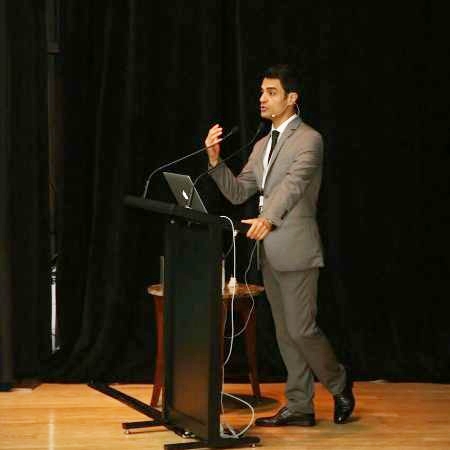
82042224-70664871Second Microvision World Congress was held on April 7-10 in Jumeirah Beach Hotel in Dubai. The conference, organised by Microvision International Group, was aimed at offering the latest therapeutic protocols and advanced technical innovations in dentistry, microsurgery in particular.

The speakers of the conference were selected by an expert panel based on their latest innovations and publications on “microscopic and minimally invasive dentistry”.

More than 200 dentists from 39 Asian, European, and North American countries including Iran, Spain, Saudi Arabia, the UAE, Russia, and Qatar participated in the four-day conference.

Dr. Shakibaie was invited to this edition of the congress as the only specialist working in the field of microscopic and minimally invasive surgeries on jawbone, gum and implant reconstructions.

On April 8, he delivered a speech entitled “Minimally invasive tooth extraction and socket preservation”.

On April 10, he also held a six-hour-long hands-on course called “Microsurgery in external sinus lifting”.

As a global pioneer in implant microsurgeries, Shakibaie has invented and published on several new techniques in the field.

The Iranian dentist is one of leading figures in such new disciplines as microscopic surgeries in jawbone, gum and implant reconstruction.

Iran Rolls Out Red Carpet for World-Class Auteurs

Iran Daily interviewed Keyvan Kassirian, the manager of the festival’s public relations and information. Excerpts of the interview follow:


IRAN DAILY: How many foreign films will be screened in the event, in how many sections?

KEYVAN KASSIRIAN: Over 50 films from 50 countries are taking part in the festival. Nine films will be screened for the first time in Iran, six others will have their first international screening in this festival, and three films will premiere in this event.

The sections of the festival are: Cinema Salvation (international competition), East Vista (Asian and Islamic Countries), which will screen short films, the Festival of Festivals (Cup of Divination), Special Screenings (documentaries and memorials) and Retrospectives and Tributes (dedicated to French Cinema).


Who are the special guests of the festival?

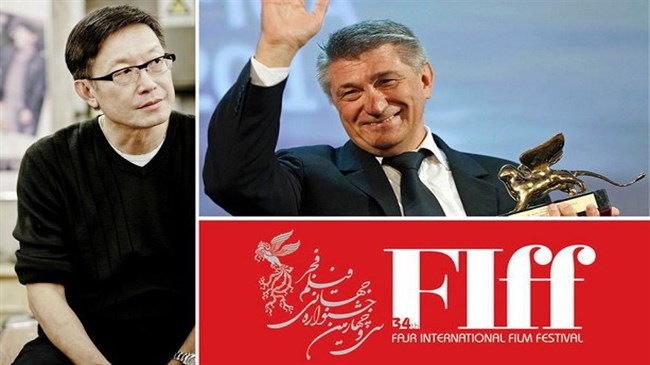
Prolific Russian director Alexander Sokurov and Hong Kong’s most acclaimed filmmaker Andrew Lau will be present at this major global film event.

Furthermore, a famous correspondent from Hollywood Reporters will also be here to cover the news.

Sokurov will attend the screening of his documentary ‘Francofonia’ (2015), which depicts the history of the Louvre during the Nazi occupation and offers a meditation on the meaning and timelessness of art. His documentary will be screened in the ‘Special Screenings and Events’ of the festival.

Sokurov is also scheduled to deliver a speech for students at the Cinema-Theater Faculty.

Andrew Lau, who holds the title of the most successful Hong Kong film director for directing 45 films, producing 33 films, and doing cinematography for more than 50 films, will also be present. He began his artistic career in the 1980s as a cinematographer for films by such great directors like Wong Kar Wai. He pioneered a special cinematography style, and won many cinematography prizes from Hong-Kong film festivals like Golden Horse. His ‘Revenge of the Green Dragons’, a 2014 crime drama film, was produced by highly-acclaimed American director Martin Scorsese.


It is said that this edition of the festival focuses more on encouraging young filmmakers. How does the festival achieve this?

Earlier, it was announced that the major purpose of the festival is to train young filmmakers and improve their knowledge. Several workshops conducted by prominent Iranian and foreign filmmakers will be held to achieve this goal.

Another section, called ‘Dar ul-Funun,’ has been established to identify promising young filmmakers. 100 of the best Iranian and foreign filmmakers (from Pakistan, Afghanistan, Tajikistan, Lebanon, Syria, Iraq and Turkey) with at least one film on their record, or those who have conducted in-depth cinematic research, have been invited to take part in Q&A sessions to exchange ideas.

In total, 8,000 individuals have registered to watch the films so far.


The 34th edition of the Fajr International Film Festival (FIFF) started on April 20, with films from two sections: Cinema Salvation and Eastern Vista in the Charsoo Cineplex, Tehran.

Opening of EU Office in Tehran: Good News for Iranians

European Union

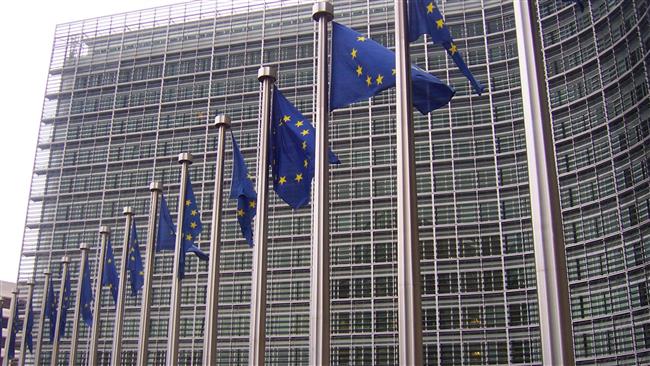
One of the issues raised in Mogherini’s recent visit to Tehran was the opening of an EU office in Tehran.

In a joint press conference with the EU foreign policy chief on Saturday, April 16, Iranian Foreign Minister Mohammad Javad Zarif said that the two sides had conferred on preparing the grounds for the opening of a permanent office.

The EU has 28 member states, more than 500 million citizens, and a GDP of $18.4 trillion (2014). Therefore, the opening of such an office in Tehran can be considered a beneficial and useful development for the Iranian nation.

This would lead to the following results:

Iran and the EU would be able to improve the level of their cooperation in different economic, political, social, and cultural fields. Such promotion would benefit the Iranian nation and government, as well as the EU member states, people, and institutions.

Iran is faced with a global wave of Iranophobia. Unfortunately, there are many outlets in the world actively spreading propaganda to distort the developments in Iran. They are constantly trying to deny or misrepresent positive events in the country, including the elections, the improvement of human rights conditions, and the reinforcement of civil society.

Once the EU opens its office in Tehran, it can directly monitor the positive developments in Iran and Iranian society. This way, the European body can observe the good, positive events in the country, regardless of any false claims and anti-Iranian propaganda spread by foreign-based opposition groups and those aiming to overthrow the Iranian Establishment.

It can thus be predicted that such groups, particularly the MKO (Mojahedin-e-Khalq Organization), would be the strongest opponents of EU’s decision to open its office in Tehran. If that happens, the real Iran would be shown to the world, and thereafter, opposition groups would not be able to present their own wishes and fantasies to European officials, the European Parliament, and the EU member states as the realities of Iran.

 The opening of the EU office in Tehran would also enhance economic cooperation between Iran and EU economic commissions.

Today, many European and non-European countries manage their economic activities within the framework of recommendations, suggestions, and standards provided by the EU.

An EU office in Tehran would make Iran more familiar with up-to-date standards, particularly those of the EU. This would improve economic collaboration between Iranians and Europeans. As a result, Iran would be able to boost its capabilities and expand its economic cooperation with other international blocs and countries.

34th edition of FIFF kicks off in Tehran

The event was opened by screening ‘The Old Man and the Sea’ by English cinematographer Martin Radich, ‘I am a Teacher’ directed by Russian director Sergey Mokritskiy and a movie by Japanese director Naomi Kawase.

Works of filmmakers from Finland, Iraq, France, China, Japan, Kazakhstan, Iran, Armenia, Brazil, Paraguay, Estonia and the Czech Republic will be screened today.

34th edition of Fajr International Film Festival (FIFF) is underway on April 20-25 in Charsou Cineplex.

An interview with FIFF public relations manager, Keyvan Kassirian

Top Iranian cineastes to hold workshops at Fajr festival

Oscar-winning director Asghar Farhadi and Oscar-nominated filmmaker Majid Majidi are among the cineastes.

Workshops will also be set up by directors Fereidun Jeirani, Farzad Motamen, Puran Derakhshandeh, Alireza Davudnejad and Majid Barzegar, and cinematographer Mahmud Kalari are among the educators.

Over 100 students from Afghanistan, Tajikistan, Iraq, Lebanon, Palestine, Syria, Turkey, Pakistan, Azerbaijan and Iran have registered for the six-day workshop program entitled “Dar ul-Funun”, the Iranian polytechnic established in 1851.

Dozens of international distributers, directors, actors and critics from around the globe have been invited to attend the festival, which will be held at Tehran’s Charsu Cineplex until April 25.

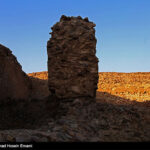
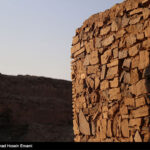
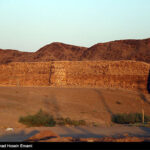
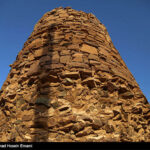
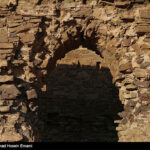
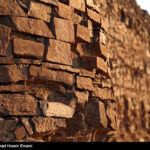
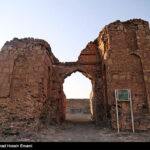
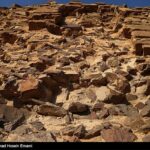
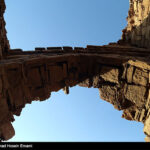
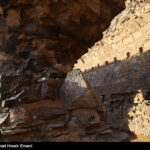
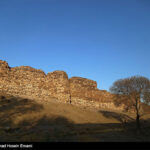
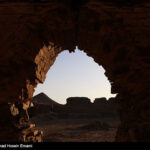
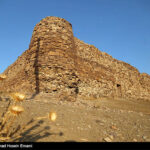
Aliabad Stone Caravanserai – Remnant of Seljuk Dynasty

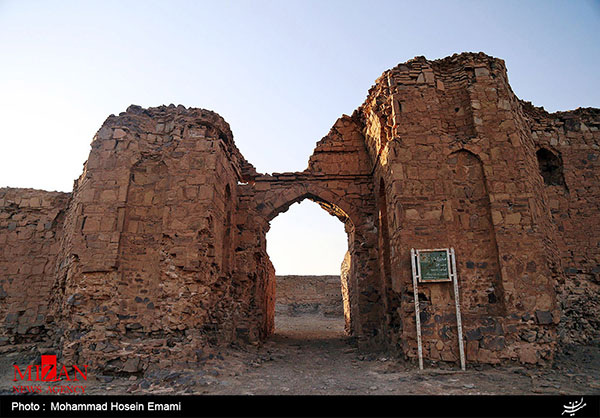
Aliabad four-porch, square-shaped caravanserai. Each side is 66 to 70m long. The porches are deep and are covered by rock arches. At the end of each porch there is a path to the stables. The caravanserai has 31 rooms, all of which are connected to the outside.

This stone site would have been used as a caravanserai during peace-time, while during wars, it would have been used as a military fortress.

IFP: Photos of this historical site have been sourced from Mizan, with explanatory text translated from various additional sources.

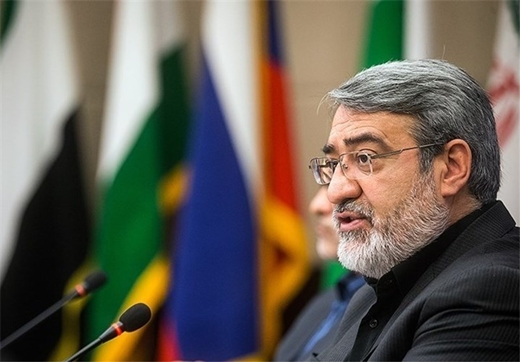
Minister: Iran paying price for world peace, security in fighting narcotics

He made the remarks in a meeting with Switzerland’s Head of the Department of Home Affairs Alain Berst here on Tuesday which took place on the sidelines of the three-day meeting of the United Nations General Assembly which focused on the issue of drugs.

He said Iran has paid huge costs both in material and social terms to fight narcotics and stressed that Iran was actually in the frontline of war against narcotics and was in fact paying dearly for sustainable peace and stability in the world.

He said Iran has sacrificed many of its anti-narcotics forces to stop and discover hundreds of kinds of narcotics and arresting thousands of traffickers.

The minister pointed out that drugs trafficking is a huge source of income for terrorist groups in the region.

The Swiss official stressed the need for international cooperation to fight drugs trafficking and said anti-narcotics programs in his country focused on four main categories of prevention, treatment of patients, reducing damage and confronting supplying of drugs.

The two officials further discussed ways to promote mutual cooperation to find practical ways to fight narcotics.

Iranian Speaker Underlines Necessity for Development of Tehran-Astana Parliamentary Cooperation

Larijani made the remarks in a meeting with his Kazakh counterpart Yakoubov on the sidelines of Eurasia parliamentary meeting in Moscow on Tuesday.

He also stressed the importance of expansion of trade relations between the two countries and their mutual cooperation in fight against terrorism, and warned, “Terrorism is spreading in the region and the ISIL has become active in Afghanistan.”

Yakoubov, for his part, underscored sustainable relations with Iran, and said, “In our view, Iran is among the most important regional states and we have a good perspective in developing relations.”

Kazakhstan’s Ambassador to Tehran Baghdad Amiriyev had said last year that his country would prioritize expansion of trade and industrial ties with Iran, and that it has provided exceptional conditions for the activity of some Iranian companies in Astana.

In December 2014, Kazakhstan Foreign Minister Yerlan Idrisov urged Tehran and Astana to enhance the level of their economic ties to bolster cooperation in trade and commercial fields.

“My country is interested in the broadening of ties with Iran, especially in economic and trade areas,” said in Astana.

Iran’s Zarif, US’s Kerry Meet in New York, Discuss JCPOA Implementation

After a three-hour meeting behind closed doors at the UN headquarters in New York on Tuesday, Zarif told reporters that “the talks primarily addressed the proper implementation of the JCPOA in a way that all parties particularly the Iranian people would reap the benefits which they are entitled to.”

The senior Iranian diplomat further said that he and Kerry are scheduled to meet on Friday in a bid to explore ways to get their ideas into practice.

Kerry, for his part, told reporters, “We agreed we’re both working at making sure that the … nuclear agreement is implemented in exactly the way that it is meant to be and that all the parties to that agreement get the benefits that they are supposed to get out of the agreement.”

“We will meet again to sort of solidify what we talked about today,” he said, adding that he and Zarif would resume discussions in New York on Friday on the sidelines of a signing ceremony at the UN for the Paris climate agreement.

Zarif left Tehran for New York on Monday to attend the upcoming United Nations (UN) climate summit on April 22.

While the JCPOA, a 159-page nuclear agreement between Iran and the Group 5+1 (Russia, China, the US, Britain, France and Germany) came into force in January, some Iranian officials complain about the US failure to fully implement the accord.

Last month, Leader of the Islamic Revolution Ayatollah Seyed Ali Khamenei said Americans have yet to fulfill what they were supposed to do as per the nuclear deal.

Iran still has problems in its banking transactions or in restoring its frozen assets, because Western countries and those involved in such processes are afraid of Americans, Imam Khamenei said, criticizing the US for its moves to prevent Iran from taking advantage of the sanctions removal.