Wednesday, December 24, 2025
Home Blog Page 4533

New Major Medical Cybernetics in Iranian Universities

Kovari said that with its establishment in Iran’s universities, the Islamic Republic of Iran will rank 4th in the world, after the U.S., the U.K., and Finland in this field.

He added that graduates in this field would be able to design and build advanced medical software and equipment like endoscopes, functional magnetic resonance imaging or functional MRI (fMRI) machines, MRI scanners, auto-analysers, lasers, robot operating systems, and smart rehabilitation equipment.

Iranian Inventor Makes Robot for Deep Wells

IRAN DAILY: Tell us about your inventions.

MORTEZA SHIRMOHAMMADI: I have registered 22 inventions in the fields of mechanics, home appliances, auto parts, and robots during from 2006-2009.

I registered a plan to make a robot in 2006 which can be useful in drilling oil wells. I took part in global contests and won two bronze medals in international competitions in Nurnberg (Germany) and Kuala Lumpur (Malaysia) in 2007, and one silver medal in the 2008 competitions in Geneva, Switzerland.


How did you become interested in inventing?

I have been interested in research and using various devices since my childhood. However, the idea of invention came to me during my university years.

Although I graduated in civil engineering, my inventions pertain to mechanics.


Tell us more about the robot you have made for deep wells.

These robots can be applied inside the wells. They can be used for mechanical research, as well as classification of soil and the walls of the well through sampling and photography.

The robot conducts operations in the forms of tests, geological research, and finding the existence of fault lines. The robot can be applied in dangerous wells (instead of manpower), oxygen-free wells, and wells which have toxic gases. The remote-control robot is also used for welding, pipe cutting, and repairing pipes.


How did you get the idea of making robots?

I watched a movie showing an incident involving mine workers. They were trapped in the mine. Rescue workers had to dig another well to help them, which took a lot of time.  I think the idea of digging another well was wrong because it was time-consuming and it was not economical.

Therefore I thought of reworking and modernizing current well-digging devices.


How can the government help inventors?

Bureaucracy bothers us so much. I think a special budget should be set aside for granting loans to inventors. Since inventors generate scientific research, their projects can bring in revenue.


What is your plan for the future?

Currently, I am involved in producing renewable energy, and systems which can produce free energy from renewable sources. Today, I am concentrating on magnetic energy.

VP Lauds Women’s Contributions to Economic Development

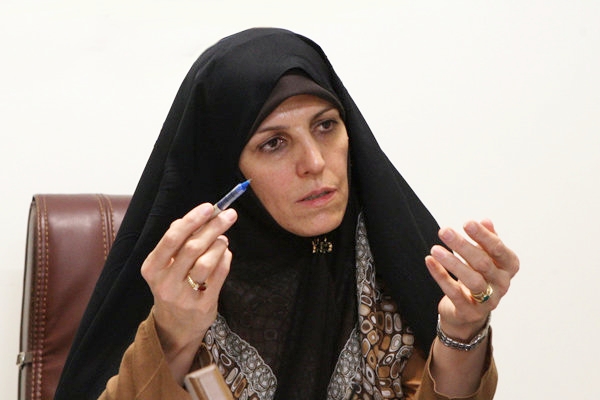
During a meeting with female economic entrepreneurs in the city of Karaj, Alborz Province, Molaverdi highlighted female potential as a means to speed up the economic development of the country.

Creating opportunities for boosting the economic contribution of women is essential, she noted.

Since women make up half the country’s population, their potential should be channelled toward the prosperity and welfare of the nation, Molaverdi added.

She hoped that women’s empowerment would be considered more seriously in national development plans.

In order to take on further economic activities, Molaverdi called for preparatory work to be accomplished to empower women.

Iran, Kazakhstan to build joint shipping company

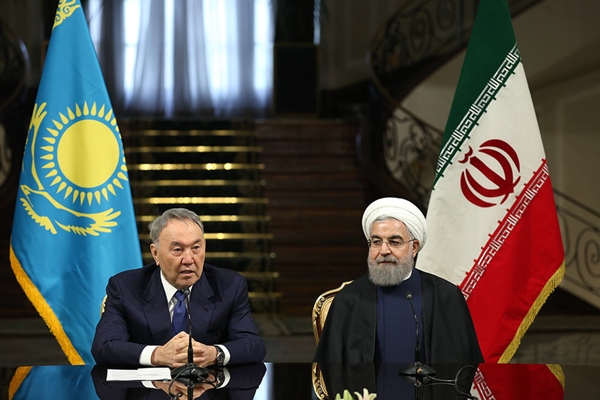
Head of the Islamic Republic of Iran Shipping Lines (IRISL) Mohammad Saeidi announced the news in a Monday interview with official news agency IRNA, noting that the two countries signed an agreement on the establishment of the joint shipping company in the presence of their presidents in Tehran.

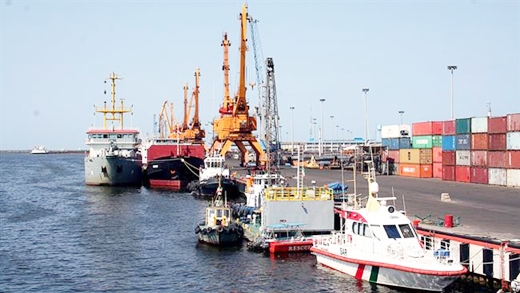
The IRISL chief noted that the planned freight shipping line would boost bilateral trade through the Iranian port of Bandar Anzali and Kazakh port of Aktau, both on the Caspian Sea.

Iran and Kazakhstan also decided to increase their volume of rail transport through a railroad that links Iran, Turkmenistan and Kazakhstan.

On Monday, Iran’s President Hassan Rouhani received his Kazakh counterpart Nursultan Nazarbayev in the Iranian capital city where the two oversaw the signing of a number of agreements in different areas.

Rouhani said Iranian and Kazakh officials signed 66 documents for cooperation, worth two billion dollars, in the public and private sectors, adding that the agreements mark a “turning point” in mutual relations.

He noted that Tehran and Astana would strengthen cooperation in different fields of economy, agriculture, science, culture, technology and communications.

The Iranian president added that bilateral cooperation in the Caspian Sea including marine transportation, tourism and the determination of the landlocked lake’s legal status were also discussed during talks with the Kazakh leader.

Heading a high-ranking politico-economic delegation, Nazarbayev arrived in Tehran earlier in the day to discuss ways to improve mutual relations and the latest regional and international developments.

Tehran and Astana Chart New Course, Ink 66 Documents Worth $2bn

In September 2014, President Rouhani headed a high-ranking politico-economic delegation which paid a formal visit to Astana.


“Altogether, as many as 66 cooperation documents were signed between state and private sectors, which marks a landmark in bilateral ties between the two countries,” Rouhani noted in a joint press conference with his Kazakh counterpart on Monday.

Nine of the contracts were signed in the presence of the two presidents.

Rouhani also emphasized that the resumption of banking exchanges between Iranian and Kazakh central banks will facilitate inter-banking interaction, noting that supporting the private sector will encourage economic development.

The agricultural sector is a fertile ground for collaboration, particularly with Iran leasing agricultural land in Kazakhstan, Rouhani remarked.

“Moving in the direction of free trade between Iran and Kazakhstan, and preferential tariffs between Iran and Eurasia, are key economic measures to be taken,” Rouhani was quoted as saying.

Elsewhere in his remarks, the Iranian president maintained that the two sides also exchanged ideas on the legal status of the Caspian Sea, and its relevant maritime shipping, mineral, tourism, and environmental concerns.

President Nazarbayev, for his part, referred to the agreements made, saying, “66 contracts worth $2bn were signed, covering economy, trade, tourism, agriculture, and minerals.”

Also, ahead of the Organization of Islamic Cooperation (OIC) summit slated for April 14-15 in Istanbul, President Rouhani said that Iran and Kazakhstan are of the belief that the “The voice of the unity and cooperation of the Islamic world should be heard everywhere in the world.”

Related to this, the Kazakh president considered unity among Islamic nations necessary for battling terrorism, saying, “There should be no schism between Iran and Saudi Arabia and this should be resolved through dialogue.”

One day before Nazarbayev’s trip, Kazakh and Iranian governmental and private partners signed memorandums of understanding (MOUs) worth almost $1bn in bilateral trade.

It is expected that the contracts will open a new era of cooperation between the two countries, cementing ties in other areas including trade, transportation, technology, industry, banking, shipping, railways, information technology, and energy, Rouhani stated.

Among Central Asian nations, Iran has the strongest political and economic ties with Kazakhstan, which is the biggest country in the region.


Iran, Brazil Hold 9th Round of Consultative Meetings

Brazilian Deputy Foreign Minister Jose Alfredo Graca Lima, and Iranian Deputy Foreign Minister for European and American Affairs Majid Takhte-Ravanchi stressed the potential for expanding bilateral ties between the two countries.

During the meeting, Ravanchi expressed satisfaction over the developing bilateral ties between Iran and Brazil, and said that exchanging high-ranking delegations by the two sides has shown their willingness to deepen these ties in economic, political and cultural spheres.

Jose Alfredo Graca Lima, for his part, highlighted the role of the Islamic Republic of Iran in the region, and stressed his country’s willingness to expand all-out ties with the Islamic Republic of Iran.

The two sides also discussed their future plans to widen mutual cooperation as well as key regional and international developments.

Boeing Offers to Sell 3 New Aircraft Models to Iran: Official

“Two days of intensive negotiations were held between Boeing representatives, the Airline of the Islamic Republic of Iran (Iran Air), and other [Iranian] airlines on providing logistical support in the areas of parts and publications as well as flight safety issues and other services for the airplanes operating in Iran’s air fleet,” Maqsoud As’adi-Samani, the secretary of the Association of Iranian Airlines (AIRA), said on Monday.

The Iranian official added that “there have been limited cooperation between Boeing and some Iranian aviation companies” in the wake of the country’s nuclear agreement with world powers.

The representatives of the American company offered three plane models to Iranian airlines during the talks in Tehran, As’adi-Samani said, stressing that “Boeing’s way of cooperation with Iranian companies in supporting the existing planes in the country and its adherence to the commitments will undoubtedly affect the airlines’ decision to buy aircraft” from the aviation giant.

The official also noted that the Iranian airlines will study Boeing’s proposal and make decisions based on their own and the national interests.

The Boeing 737 is a short- to medium-range narrow-body aircraft, which has been developed into a family of ten models with a capacity of 85 to 215 passengers.

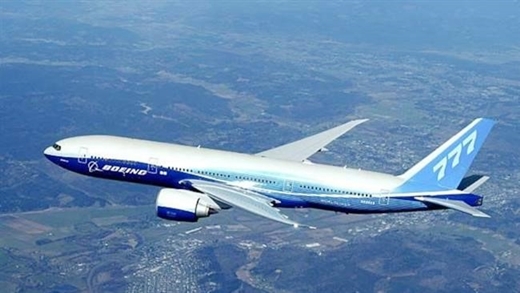
The world’s largest twin-jet with a capacity of 314 to 451 passengers, the Boeing 777 is a family of long-range wide-body airplanes. The Boeing 787 Dreamliner, which is capable of carrying 242 to 335 passengers, is a long-range mid-size airliner.

Elsewhere in his remarks, As’adi-Samani said there are currently 48 Boeing airplanes operating in Iran, comprising some 32 percent of the active fleet in the country.

Meanwhile, Boeing spokesman John Dern told The Associated Press that the company discussed the “capabilities of Boeing airplanes, along with the support the company provides.”

Tehran is seeking to upgrade its aging fleet of aircraft following last year’s nuclear agreement between Iran and the P5+1 group of countries.

Iran and the P5+1 — the United States, Britain, France, China, and Russia plus Germany — finalized the nuclear agreement, dubbed the Joint Comprehensive Plan of Action (JCPOA), in Vienna, Austria, on July 14, 2015. They started to implement the JCPOA on January 16.

In late January, Iran’s Deputy Transport Minister Asghar Fakhrieh-Kashan said the country plans to purchase over 100 planes from Boeing.

The official noted that Iran’s order list from the American company included 737s for domestic flights and two-aisle 777s for long-haul routes.

Also in January, Iran signed a major deal worth over $27 billion for the purchase of 118 planes from Airbus. The deal was signed during a landmark trip to Paris by Iran’s President Hassan Rouhani.

Iran’s Transport Minister Abbas Akhoundi said in January that Airbus’s first deliveries to flag carrier Iran Air are due as early as July.

According to Akhoundi, Iran’s current civil aviation fleet consists of 248 aircraft with an average age of 20 years, of which 100 are grounded.

Iranian officials have already emphasized that the country will need to buy 500 commercial jets of various models for various short-, medium- and long-distance routes, Press TV reported.


High-speed train technology in Iran to be explored

The event which is to be held in cooperation with Japan will take place on May 17.

The gathering aims at introducing Japanese technology in the field to Iranian railway industries and exchanging experiences and know-how between the two countries.

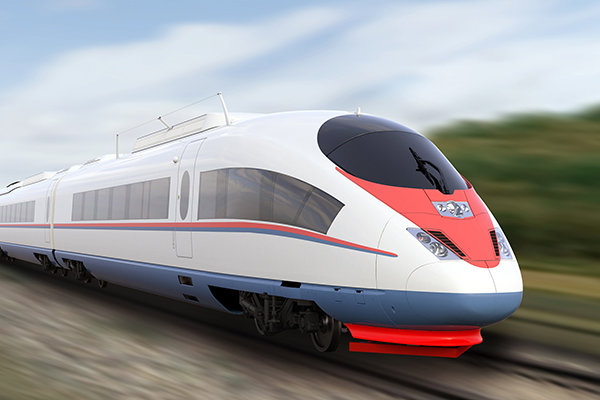
Iran is currently considering plans to build high-speed railway and trains. The first project of the kind will be a train which is to travel from Tehran to Isfahan at a speed of 200 kms.

EU extends sanctions against Iranian individuals

The 28-nation bloc took the measure on Monday, with the Council of the European Union notifying that the sanctions will be running through April 13, 2017.

The measures came despite a recent nuclear agreement reached with Iran, under which the West is obliged to lift its sanctions on the Islamic Republic.

The US and the EU contend that the agreement only includes sanctions related to Iran’s nuclear program, and not those linked to missile and human rights accusations.

The EU first imposed the sanctions — which include asset freezes and travel bans — in 2011 and has been extending them every year ever since.

The Monday move came after UN Special Rapporteur on Human Rights in Iran Ahmed Shaheed presented a report on the Islamic Republic last month, accusing Tehran of violations.

Iran slammed the report as having been compiled “based on the viewpoints of a few countries and with the aim of targeting other countries through exploiting international human rights mechanisms.”

It said “selective” approaches not only have failed to improve the human rights situation in the world, but also have downgraded the issue to the level of political disputes among countries.

European governments have scrambled to renew business ties with Iran since the EU, the US, China, and Russia reached the nuclear agreement with Tehran in July last year.

However, they have said the EU could impose sanctions on Iran over its missile tests after the US slapped new bans on Iranian companies and individuals over the country’s missile program.

Iran is not banned from missile tests under a UN Security Council resolution and the nuclear agreement. The Islamic Republic says its missiles are for use solely as a conventional deterrent.

Russia and China have indicated that they would block any possible action by the UN Security Council against Iran over its missile program.

Iran, Hungary urge implementation of cultural MoUs

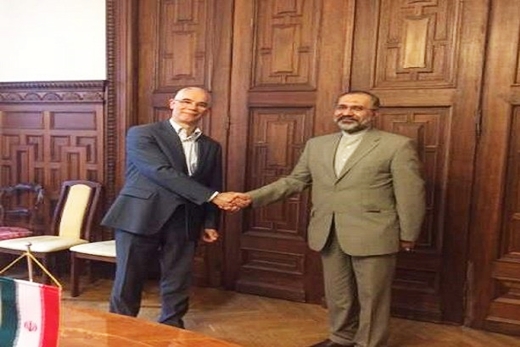
In the meeting in the Hungarian capital on Monday, Zoltán Balog and Mohammad Reza Morshedzadeh called for the implementation of several MoUs that were signed during the visit of Hungarian prime minister to Iran.

Balog, who had accompanied PM Viktor Orbán on his visit to Iran in late November, said Orbán’s meeting with Leader of the Islamic Revolution Ayat. Khamenei was highly significant and the two sides realized religious beliefs were the foundation for the many commonalities between the two countries.

Noting the ‘Eastern sentiments’ of the Italian nation which go back to the country’s historical roots in Asia, Balog expressed hope that the two countries’ cooperation would expand in all areas and the agreements would be implemented as soon as possible.

Iranian ambassador, for his part, highlighted various cultural programs conducted by Iran’s Embassy in Budapest, including cultural and scientific meetings, research and academic delegations’ exchanges, holding Iranian Film Festival in various cities of Hungary, arts and crafts exhibitions, and Iranian traditional music concerts, all aimed at introducing Hungarian people to Iranian culture and civilization.

Morshedzadeh further extended invitation to Balog for participation in Tehran International Book Fair and an international meeting to support investment in the health sector, which were welcomed by the Hungarian side.

The two sides also stressed closer cooperation in the area of museums as well as further participation in art and theater festivals.