Wednesday, December 24, 2025
Home Blog Page 4532

Iran seeks Finland’s coop. in environmental protection

Masoumeh Ebtekar, Iran’s VP and Head of Environmental Protection Organization, said Finland can cooperate with Iran in transfering new technologies, natural environment, preserving biodiversity and better management of protected areas, green economy, tackling air and soil pollution, as well as global warming, as terms of cooperation signed in the joint MoU between the two countries.

Ebtekar also added that the two countries can expand cooperation in preserving wetlands such as Hamoun (shared between Iran and Afghanistan) or Lake Urmia.

She noted another area for cooperation as measuring and monitoring air, water and soil quality, saying Iran has so far implemented many projects in this regard such as installing online monitoring cameras, and establishing and improving air pollution monitoring stations.

She further announced that Iran will host a conference on religion, culture and environment in the near future which aims to establish a connection between environment, peace and religions.

Antti Kaikkonen, for his part, stressed that Iran and Finland have many potentials for improving cooperation in environment, adding “Helsinki can cooperate with Tehran in various environmental fields such as production and storage of clean energy, energy efficiency and waste management.”

“Finalnd can transfer the technology of energy efficiency to Iran so that the country would be able to reduce greenhouse gas emissions,” he said.

Kaikkonen further expressed his country’s readiness to take steps toward the implementation of Iran-Finland environmental MoU.

Kaikkonen had also held a meeting with Iranian Foreign Minister Mohammad Javad Zarif on Sunday, during which the two sides conferred on the latest developments in bilateral ties and regional issues.

Jalalpour’s Complaint: German-Iranian Banking Still Limited

IFP: This article, originally from Tasnim, is a report by Mohsen Jalalpour about his recent meeting with a German Agriculture Minister and trade delegation.


According to Tasnim, Mohsen Jalalpour posted on his Telegram Channel, “I also had two foreign meetings in my compressed schedule yesterday. The first one was with Germany’s Minister of Agriculture and his delegation, then later with Estonia’s Foreign Minister. Both of the meetings were held in the presence of economic experts from the two countries.

“In my meeting with the German Minister of Agriculture, after highlighting the fact that the infrastructure for bilateral activities involves solving banking and insurance issues, I made a serious complaint about the behavior of German banking and insurance institutes during the sanctions era. I told them: During the sanctions, there was no limitation on the food industry, and even its banking transactions were also legal with the right documents. However, Germany drew serious boundaries for food-related banking transactions involving Iran. Worse than that is the fact that they’re still implementing them.  The head of the Agriculture Committee of Iran’s Chamber also talked of this stringency, saying “There is evidence that Americans sent German products to Iran during the sanctions era, using middlemen. This was while we couldn’t make any purchases from Germany.”

“Despite all those issues, the meeting with the German Agriculture Minister was still hopeful. I could see this in his reactions, and those of his delegation, towards collaboration with Iran in mutual investments in fields such as water, wastewater, desalination, modern planting technologies, environment, agricultural tourism and transferring the most recent and modern technologies.

“He also welcomed my suggestion about the importance of forming international collaborations in solving the region’s environmental issues, such as dust.

“In the end, he promised to raise the banking issue as a priority in parliament, and to make sure that Germany will catch up with Austria and Italy in that regard.”

5th South Park Refinery Breaks Gas Processing Record

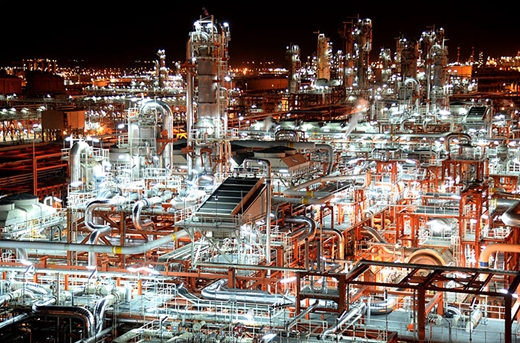
Speaking with Shana, Iraj Khoramdel said the refinery also dramatically reduced its gas flaring during the year while improving reliability of its machinery in production to 98.89%.

He said the reduction in gas flaring by the refinery is a major step in preservation of the environment as the plant views this part of its activities as high priority.

“By precise planning, we were able to reduce the volume of the refinery’s flared gas from 1.26 mcm/d to 0.18 mcm/d during the previous year,” he added.

The refinery also processed 1.9 mcm of ethane, 2,323.4 tons of propane, 1,265 tons of butane, 88,500 tons of gas condensate and 160 tons of sulfur on a daily basis.

A look at Iranian newspaper front pages on April 12

Iran Newspaper front pages

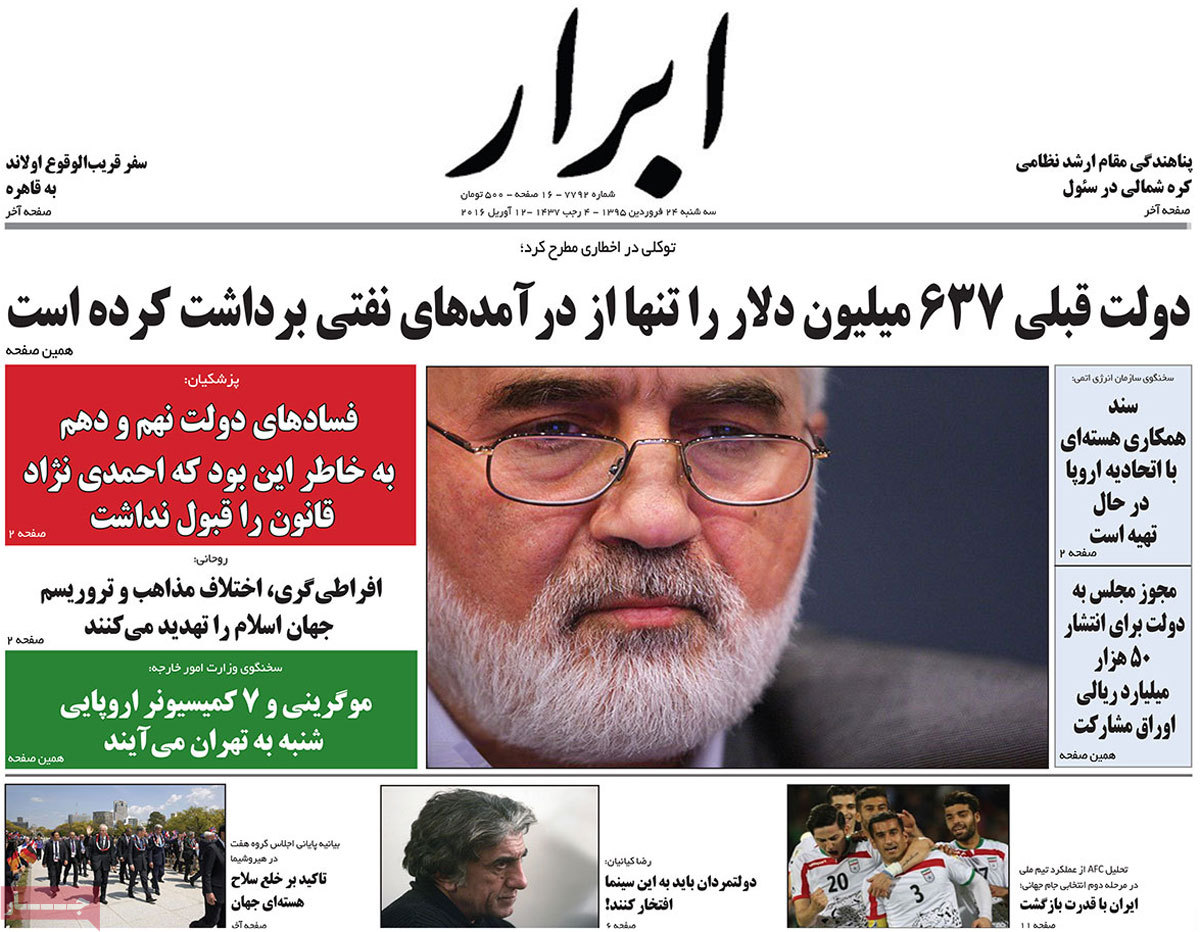
Abrar:

1-President Rouhani: Extremism, religious conflicts and terrorism are threatening the World of Islam

2-Foreign Ministry Spokesman: Mogherini and 7 European commissioners will arrive in Tehran on Saturday

3-Spokesman for Atomic Energy Organization: Cooperation agreement with Europe is under preparation
 

A look at Iranian newspaper front pages on April 12


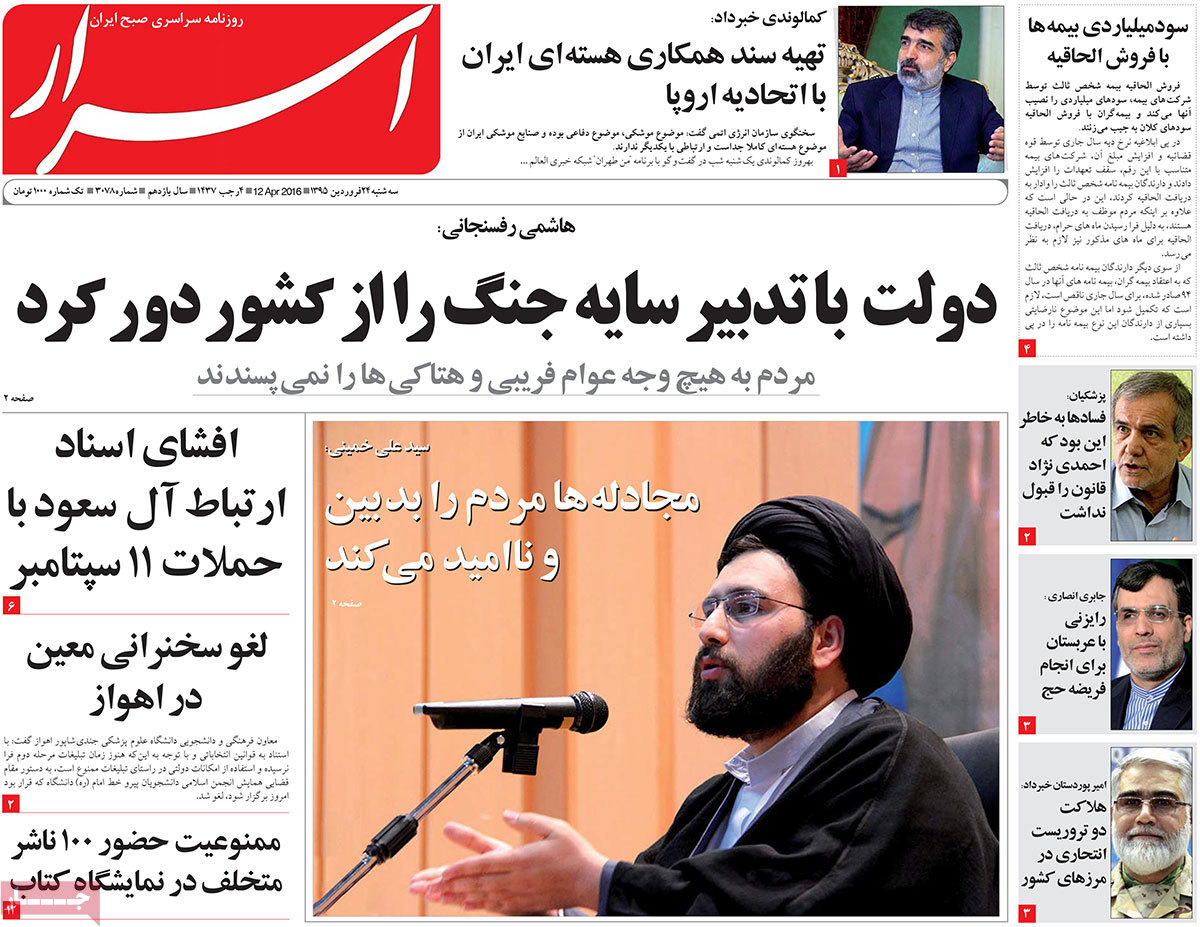
Asrar:

1-Secret documents showing Saudi connection to Sep.11 attacks revealed

2-Talks with Saudis about Hajj Rituals
 

A look at Iranian newspaper front pages on April 12


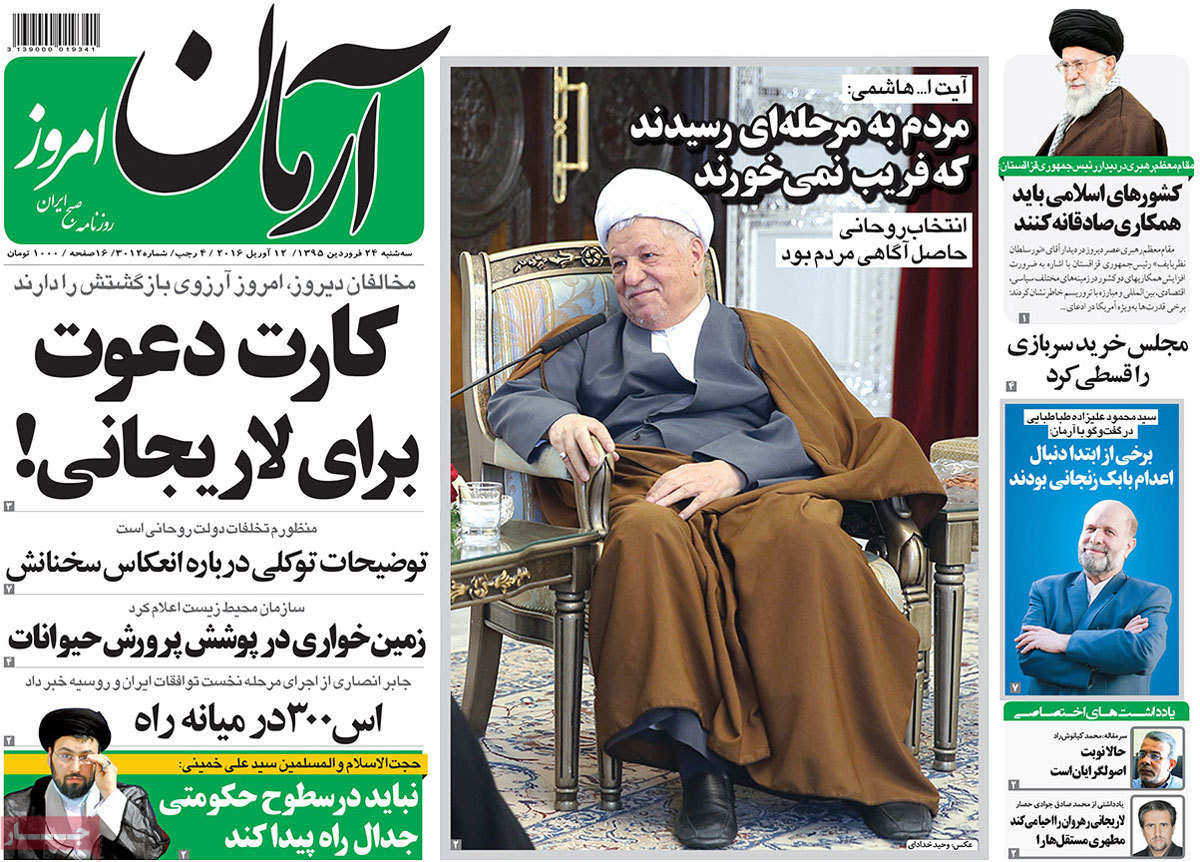
Armane Emrouz:

1-Supreme Leader meets Kazakh President: Islamic countries should cooperate honestly

2-S-300  Anti-Missile system on its way

Jaberi Ansari says the first part of the Iran- Russia agreement has been fulfilled.
 

A look at Iranian newspaper front pages on April 12


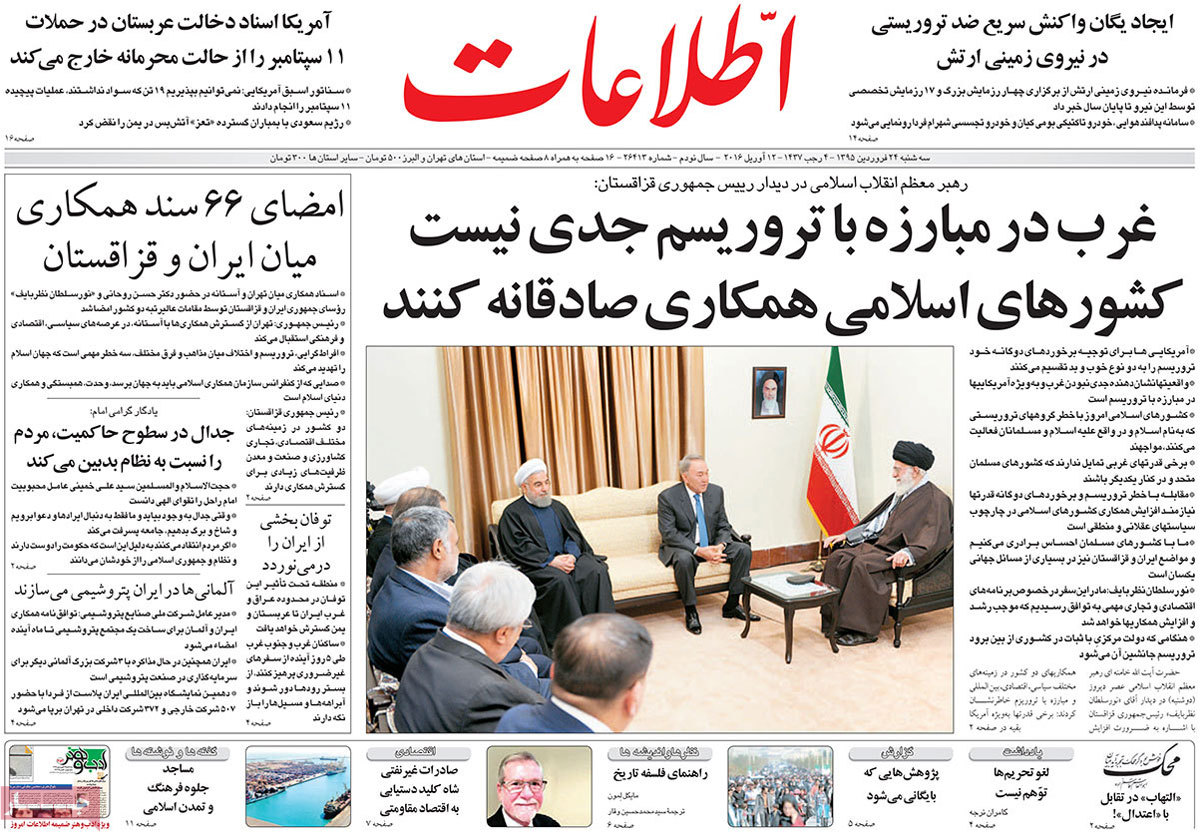
Etela’at:

1-Anti-terrorist Rapid Response Unit been established within Army

2-Supreme Leader with Kazakh President: The West is not serious in its war on terror

3-Iran and Kazakhstan sign 66 cooperation agreements

4-Germans to build petrochemical plant in Iran
 

A look at Iranian newspaper front pages on April 12


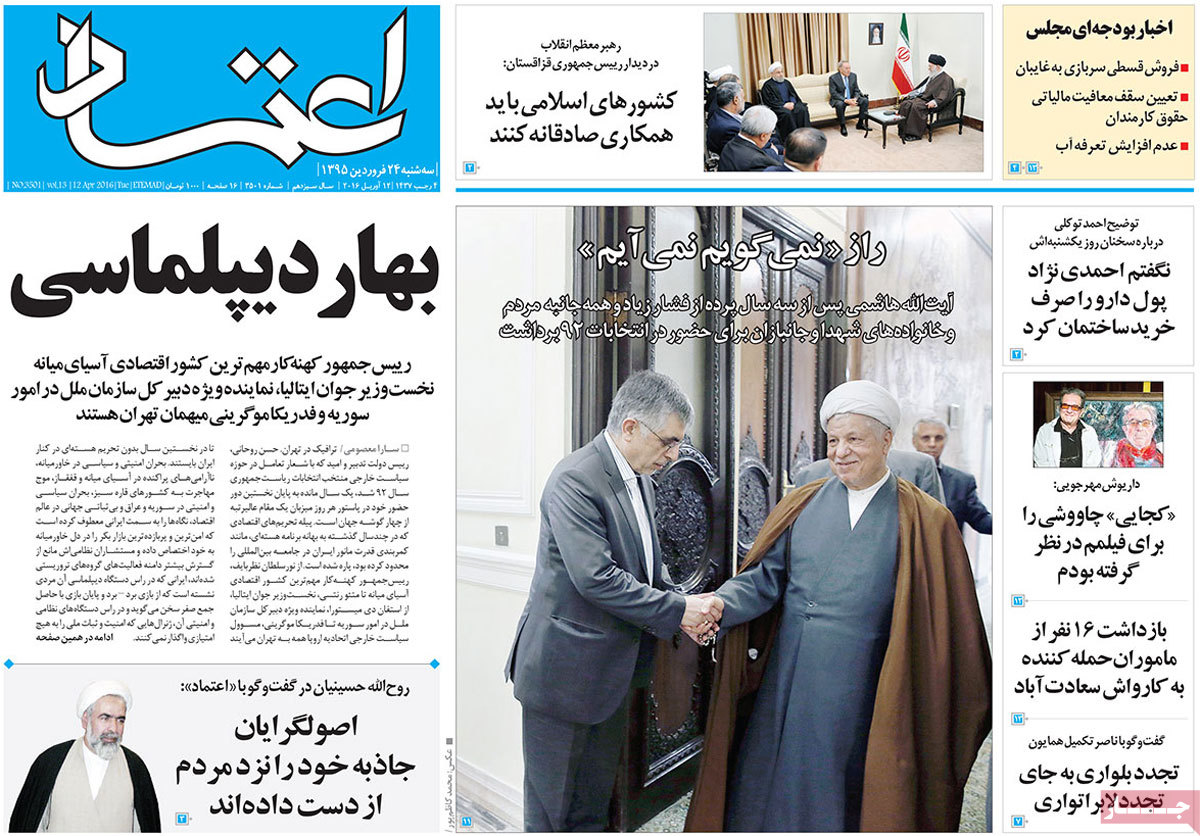
Etemad:

1-Spring of Diplomacy:

The veteran President of the most economically important Central Asian country, a young Italian Premier, the UN special envoy on Syrian Affairs and Federica Mogherini are all being hosted in Tehran
 

A look at Iranian newspaper front pages on April 12


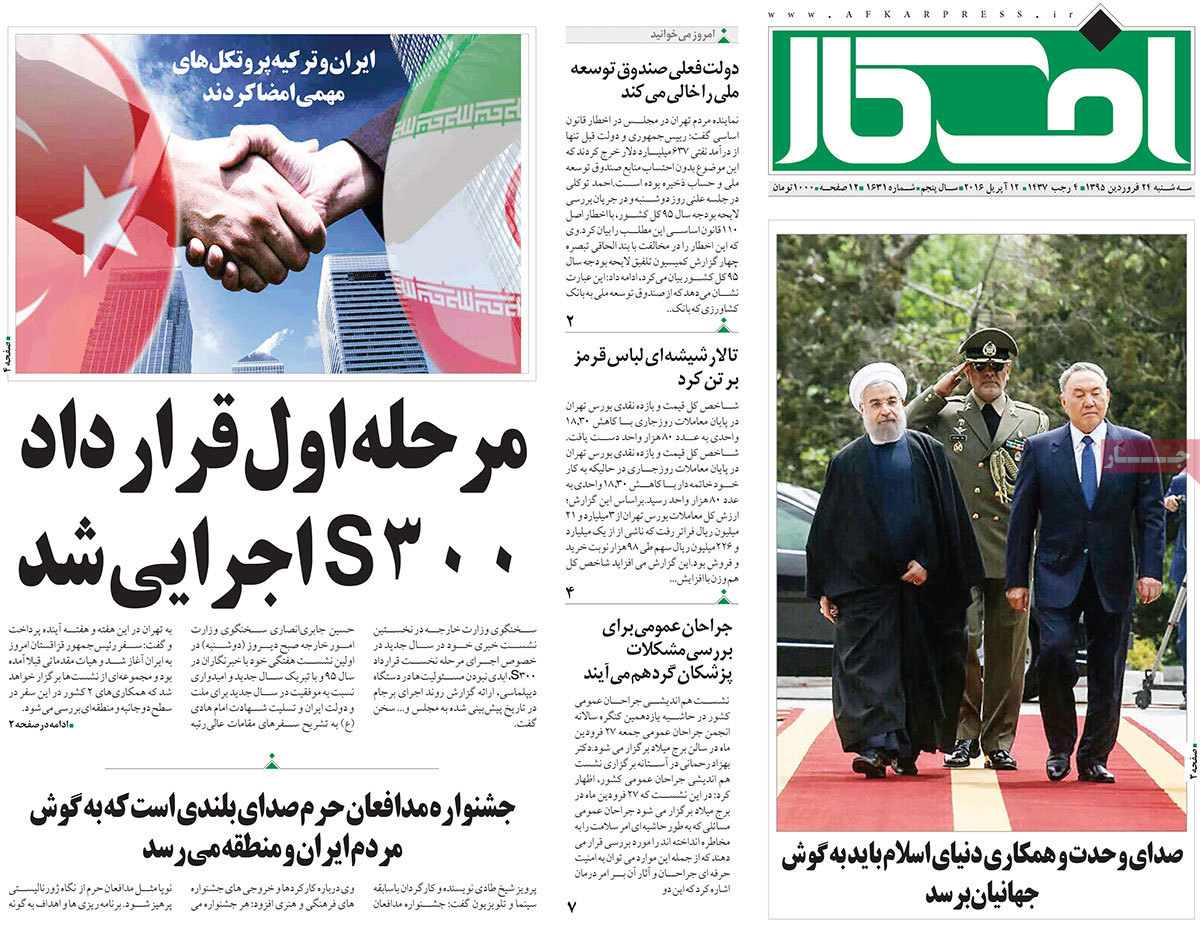
Afkar:

1-Iran and Turkey sign important protocols

2-Rouhani in talks with Kazakh President: Sound of Islamic unity should echo globally
 

A look at Iranian newspaper front pages on April 12


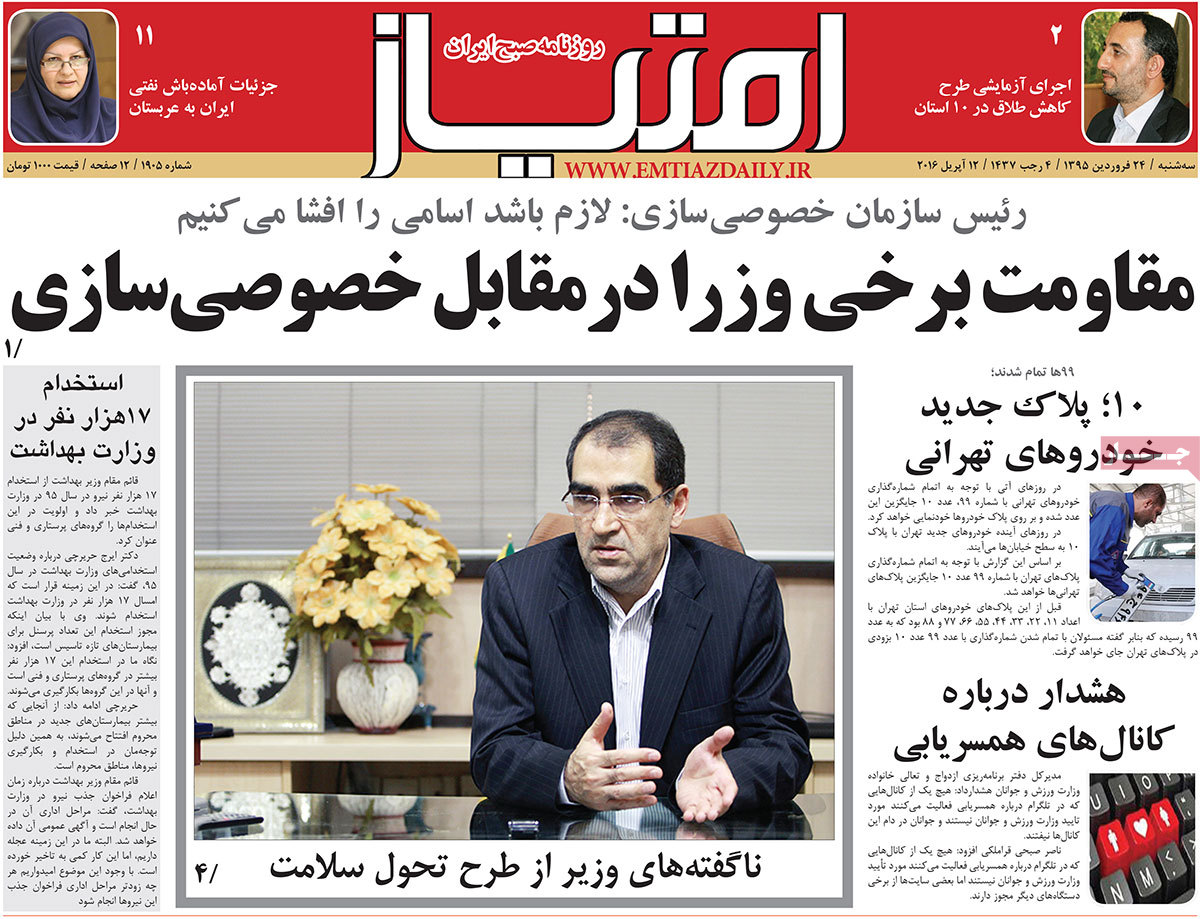
Emtiaz:

1-Pilot project in 10 provinces to reduce divorce rate

2-Warning about marriage matchmaking channels
 

A look at Iranian newspaper front pages on April 12


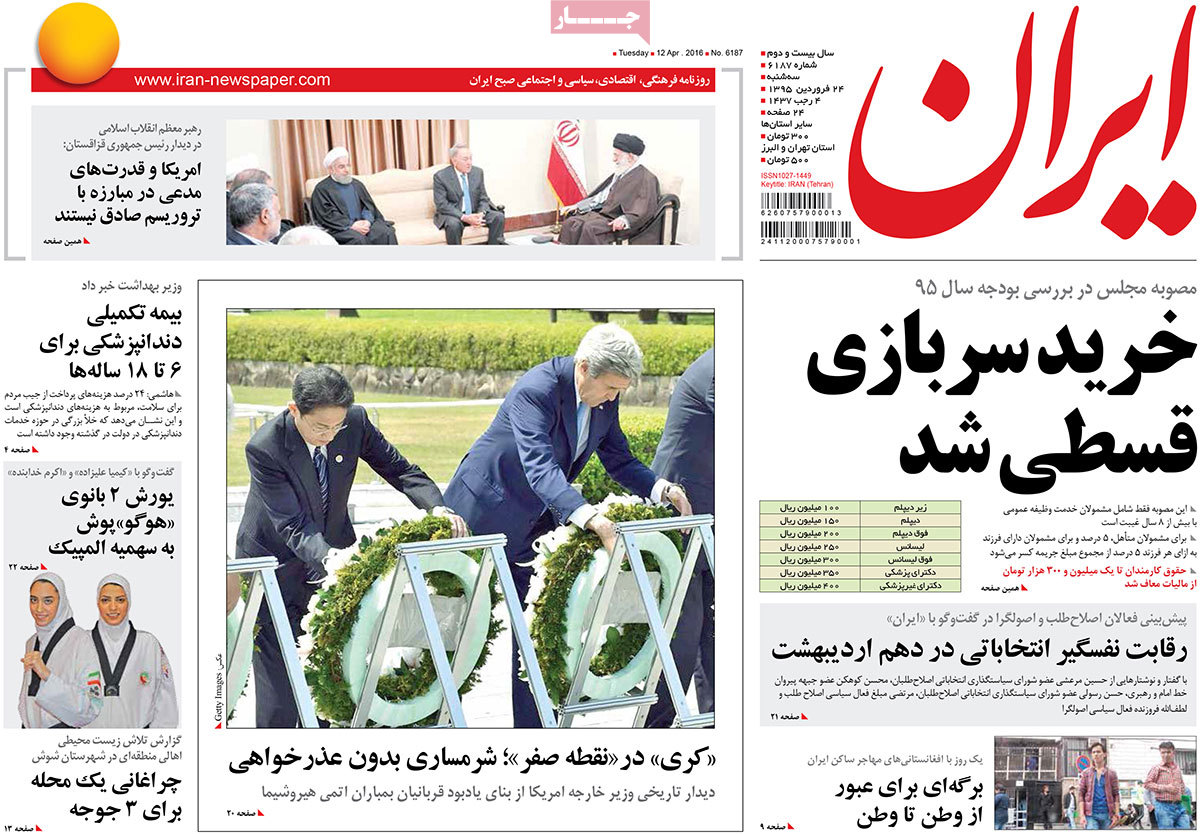
Iran:

1- Kerry on zero point: ashamed but not apologetic

2- Tight election competition next month

3- Two Hugo athletes work hard to find their way to Olympics 

4- Ecological campaign by local people in southern city of Shush
 

A look at Iranian newspaper front pages on April 12


Payame Zaman:

1- Health Minister: People are hopeful for health scheme implementation
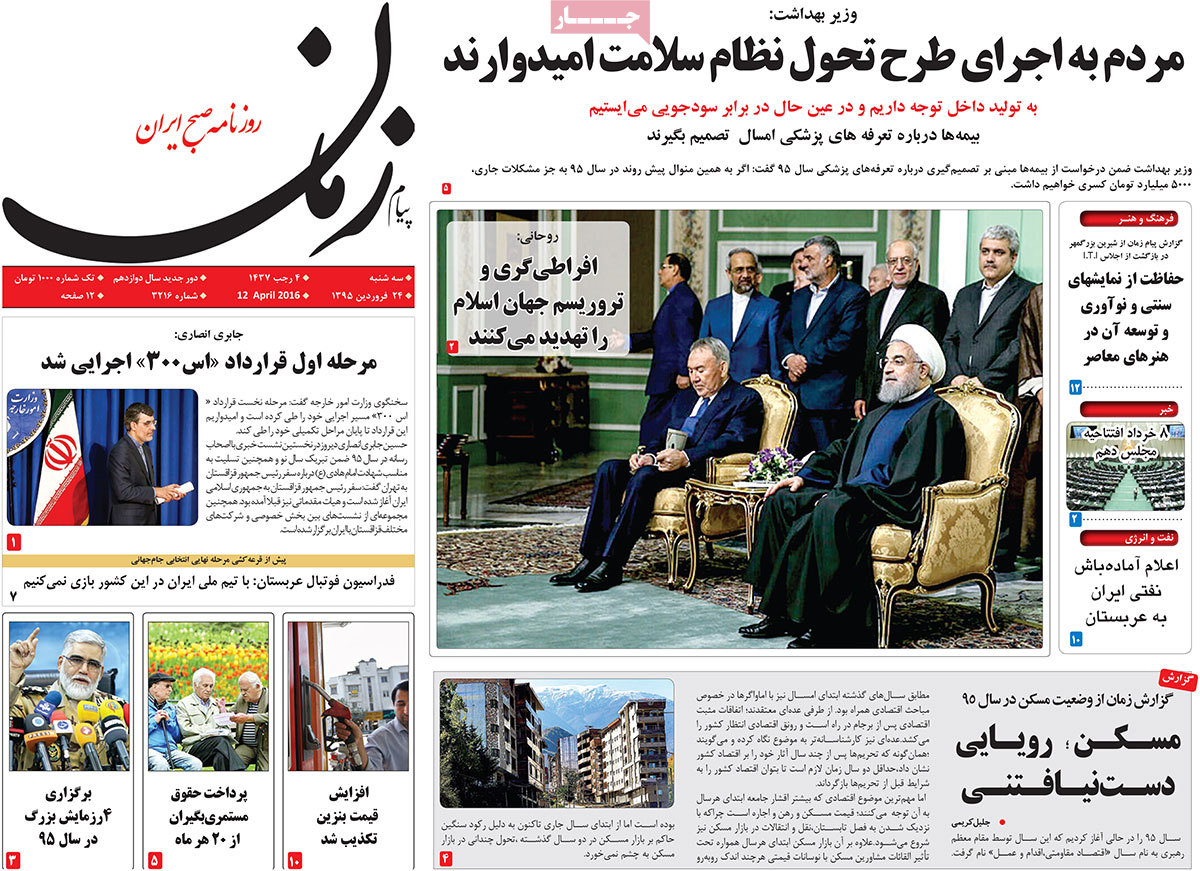
 

A look at Iranian newspaper front pages on April 12


Javan:

1-Supreme Leader and Kazakh President: West divides terrorism into good and bad

2-S-300 agreement has entered implementation phase

Kremlin has not denied delivery of first shipment of S-300 system to Iran

3-Insecurity in Turkey: 1300 hotels up for sale
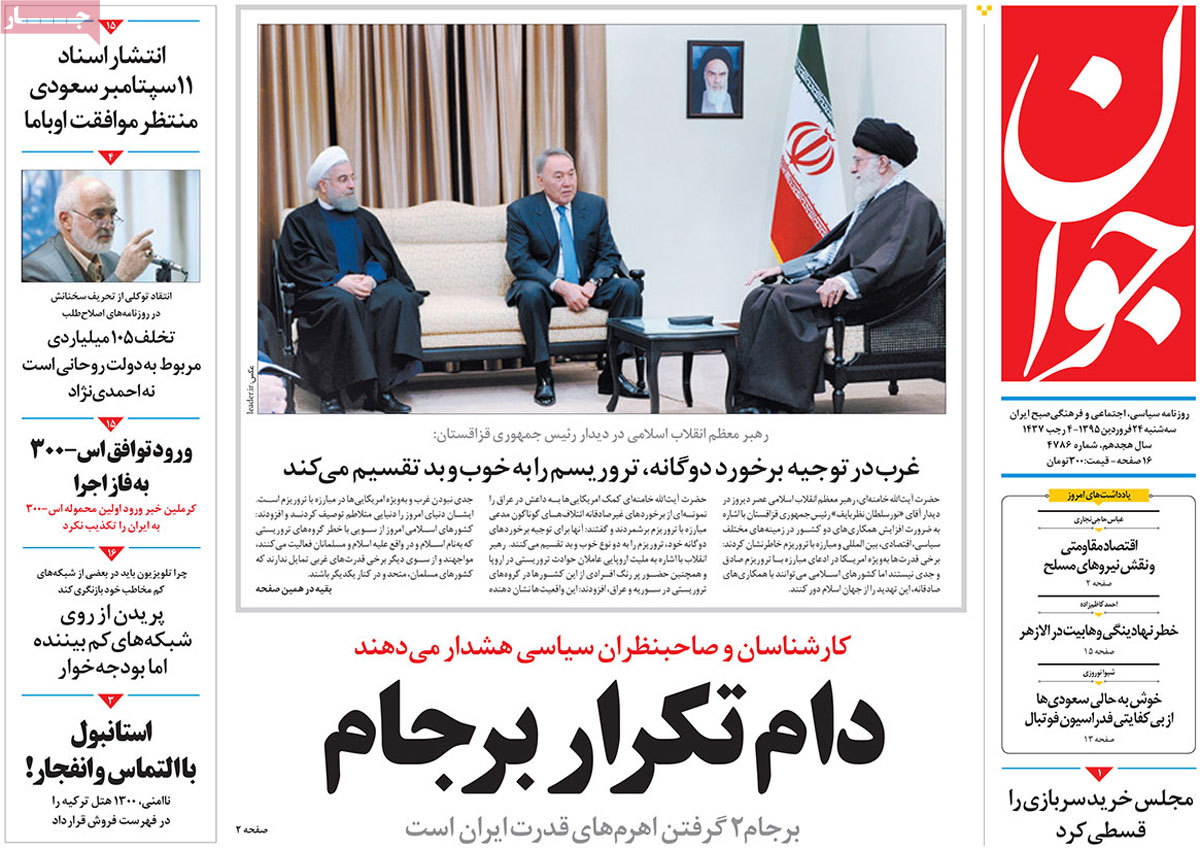
 

A look at Iranian newspaper front pages on April 12


Jomhouri Eslami:

1-India to invest $20bn in Iranian energy industry
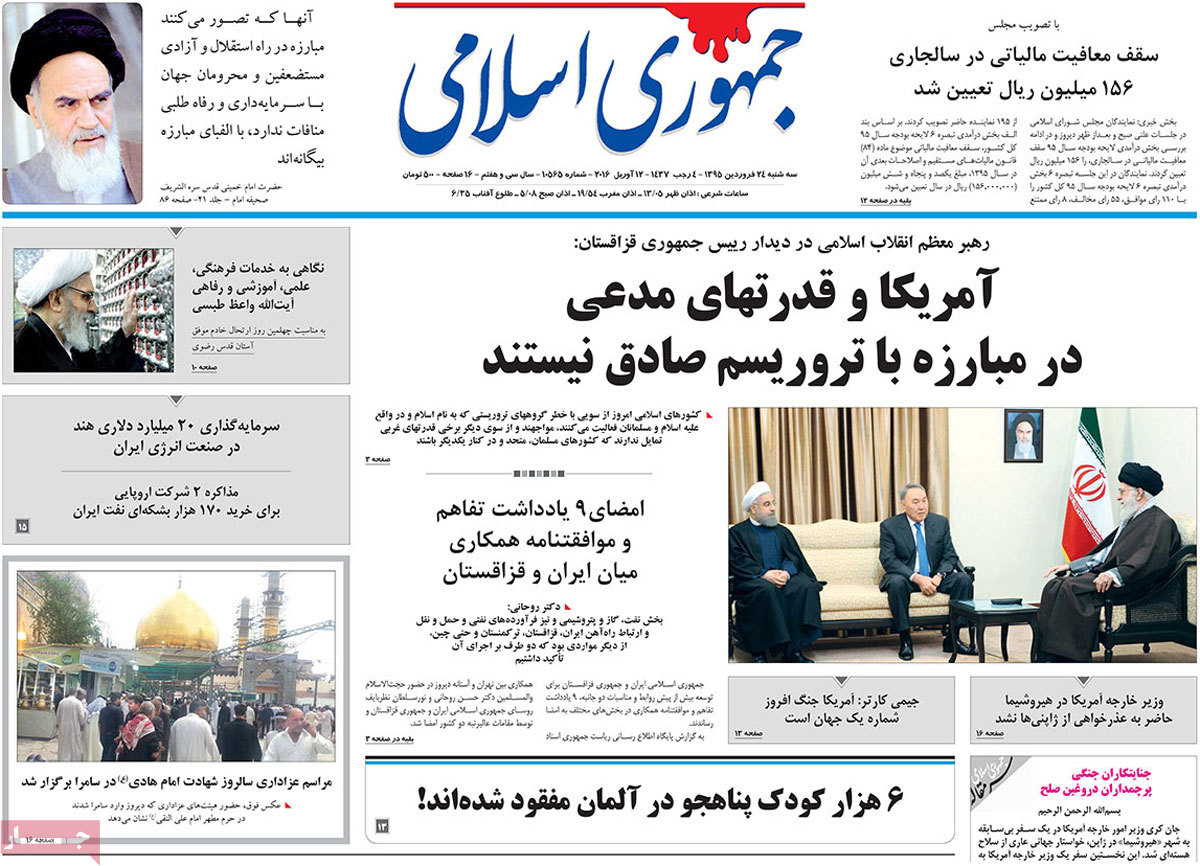
 

A look at Iranian newspaper front pages on April 12


Hosban:

1-462 sport facilities in Tehran are allocated for women
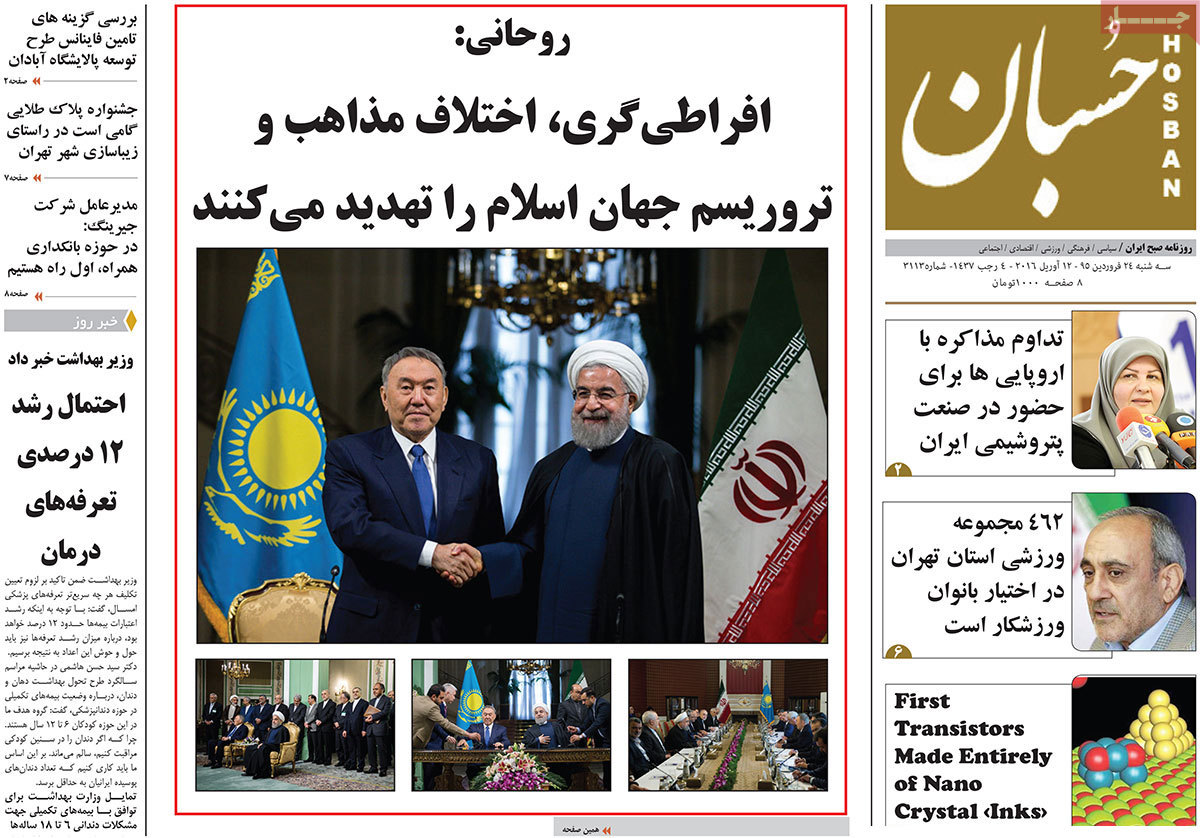
 

A look at Iranian newspaper front pages on April 12


Hemayat:

1-Head of Judiciary: Americans can not alter the essence of the Iranian system of government with new JCPOA

2-Chief Prosecutor: Labelling Iran a human rights violator because of its anti-drug trafficking policy is regrettable
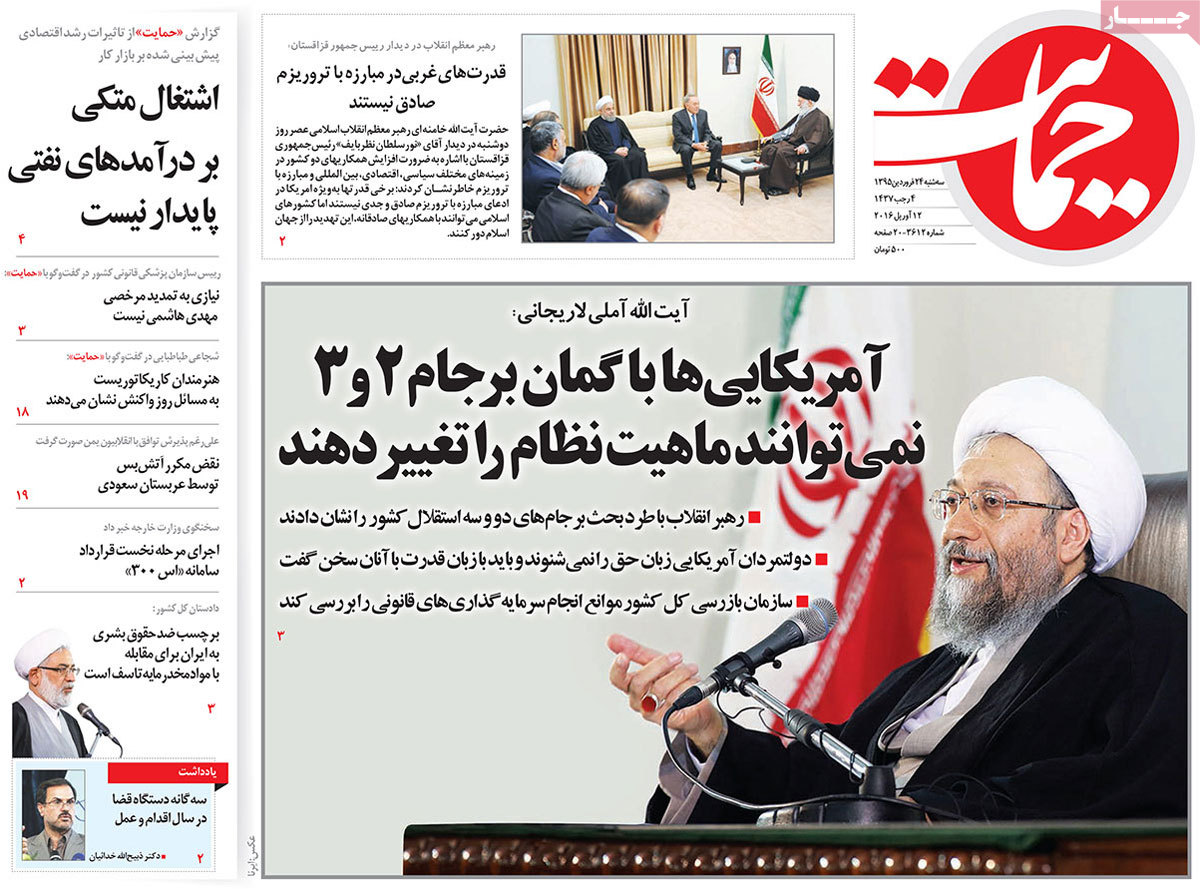
 

A look at Iranian newspaper front pages on April 12


Khorasan:

1-Zarif exclusive: Not getting swallowed by global systems is one of the attributes of our power
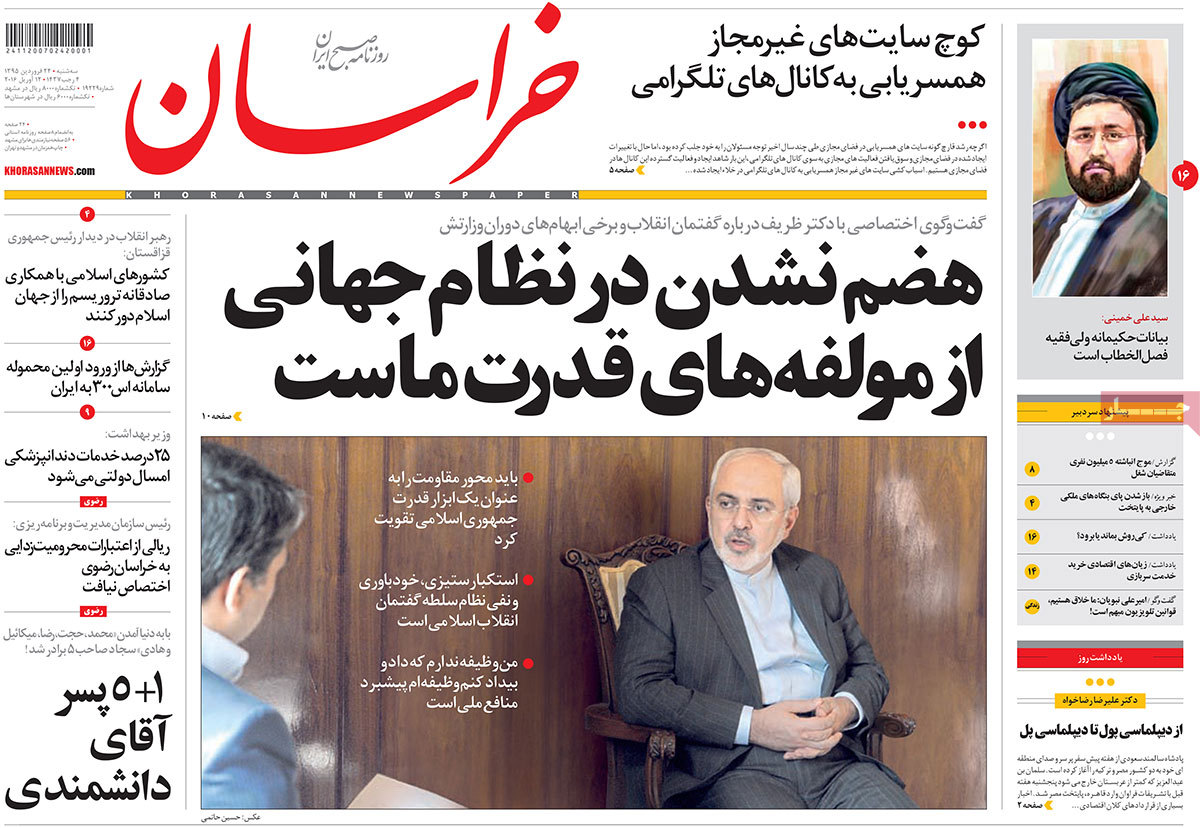
 

A look at Iranian newspaper front pages on April 12


Resalat:

1-Grandson of Imam Khomeini, Seyyed Ali Khomeini: Judiciary’s words are definitive – there should be no quarrel

2-Leader: West does not want to see Muslim nations united

3-Kazakh President: We should show the world Islam is progressive
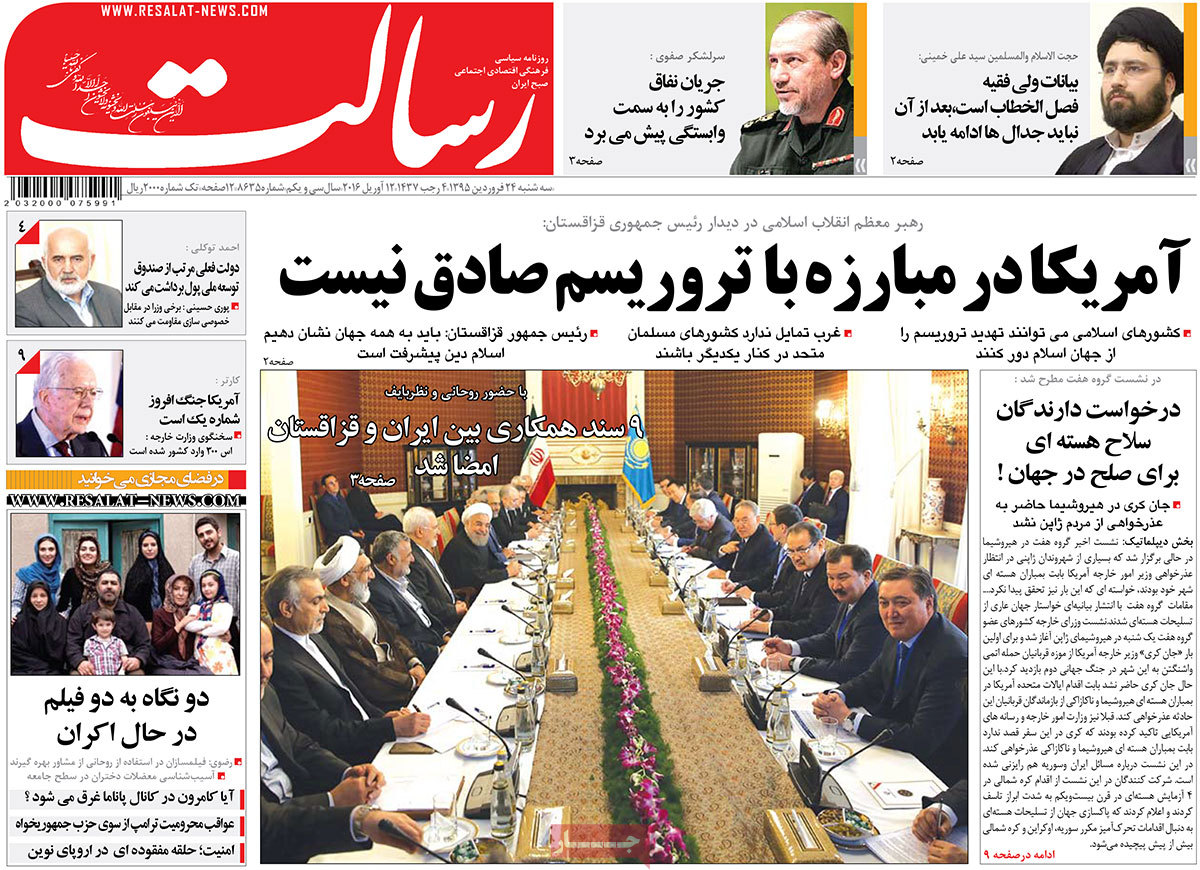
 

A look at Iranian newspaper front pages on April 12


Sharvand:

1-Boats return to Urmiye Lake

2-Turkey has plans to attract Iranian tourists

special report on the tourism crisis in Iran’s western neighbour
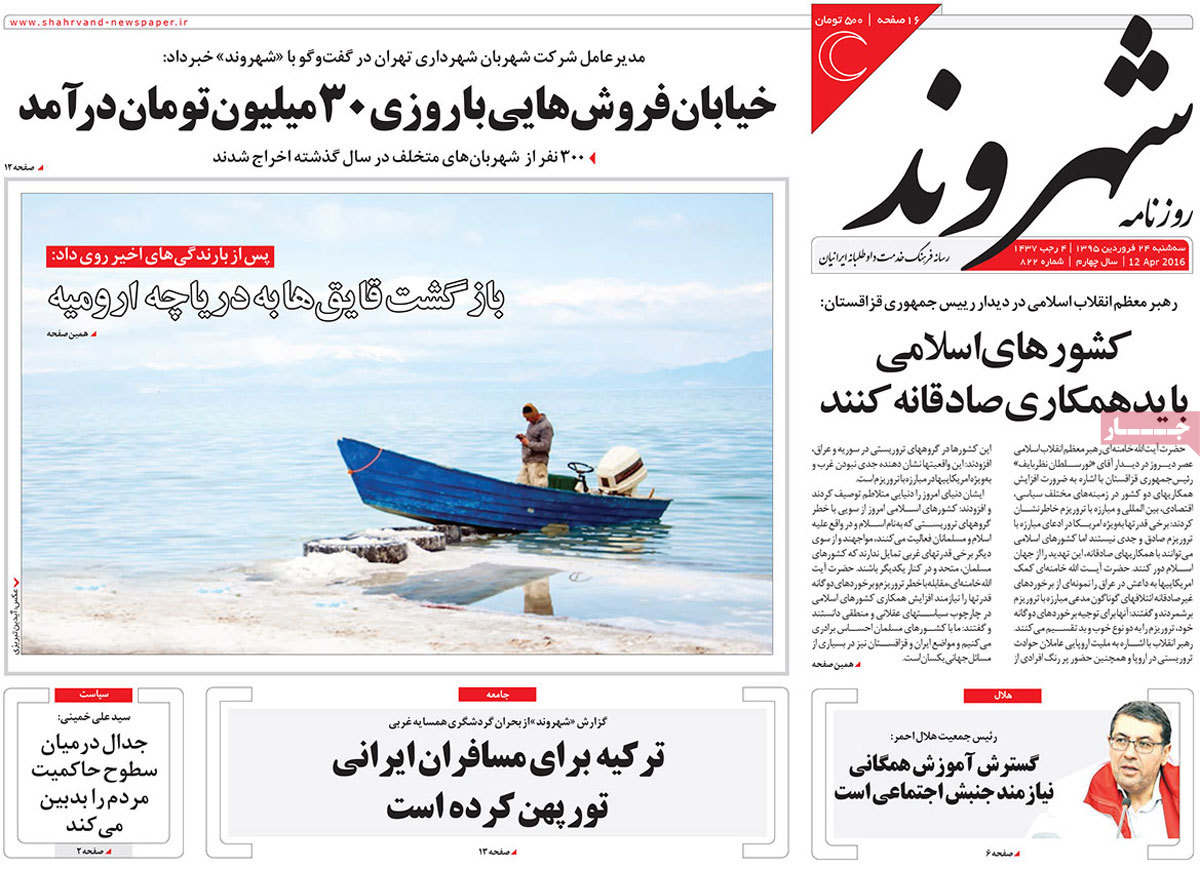
 

A look at Iranian newspaper front pages on April 12


Saheb Ghalam:

1-Iran and Italy to invest €6.2bn jointly in Iranian mine industry

2-Countdown starts for International Fajr Film Festival

3-Total to enter Iranian petrochemical sector
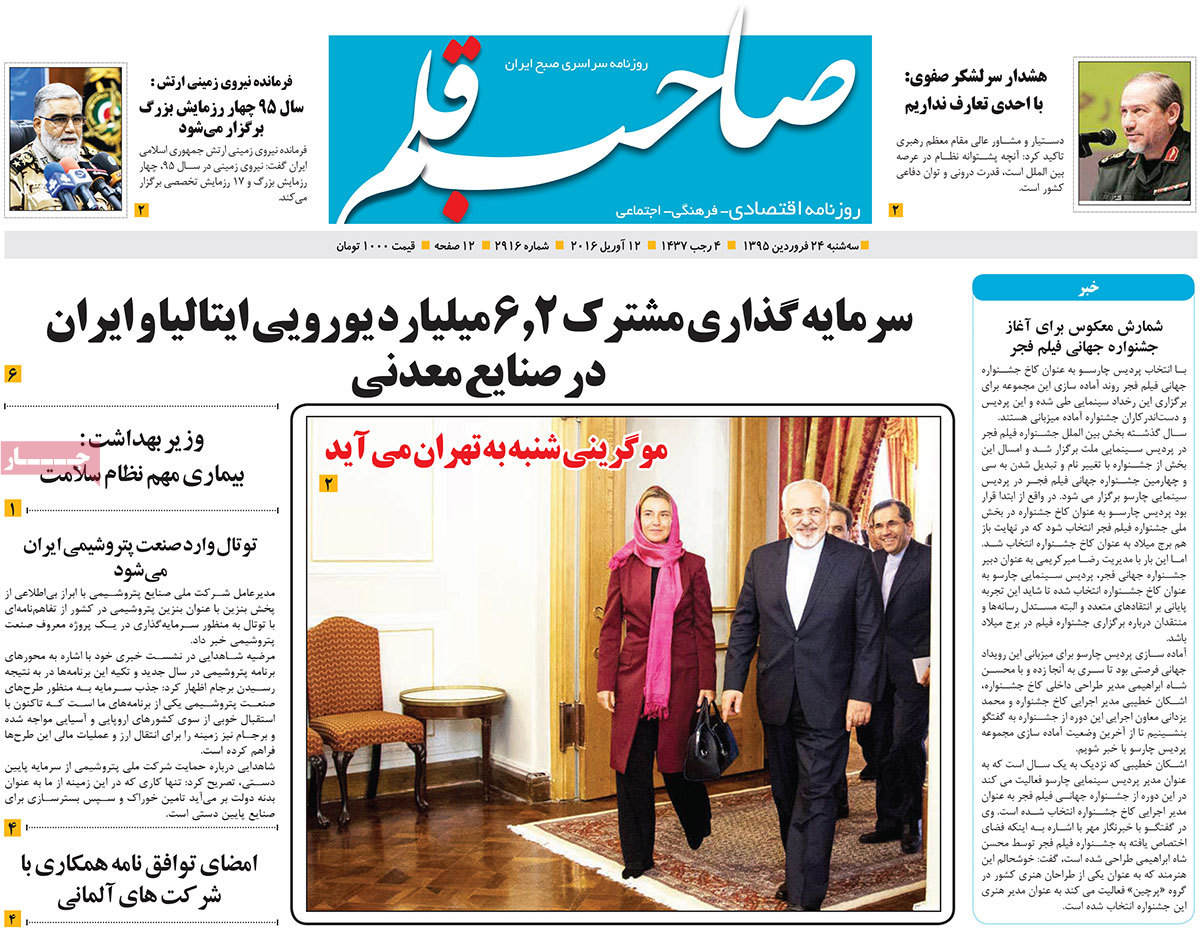
 

A look at Iranian newspaper front pages on April 12


Asre Iranian:

1-Failed infiltration by Daesh [ISIS] through Iranian eastern borders last March

2-Saudis violate ceasefire and bomb two towns in Yemen

3-One ton of narcotics was seized during armed clashed with drug traffickers
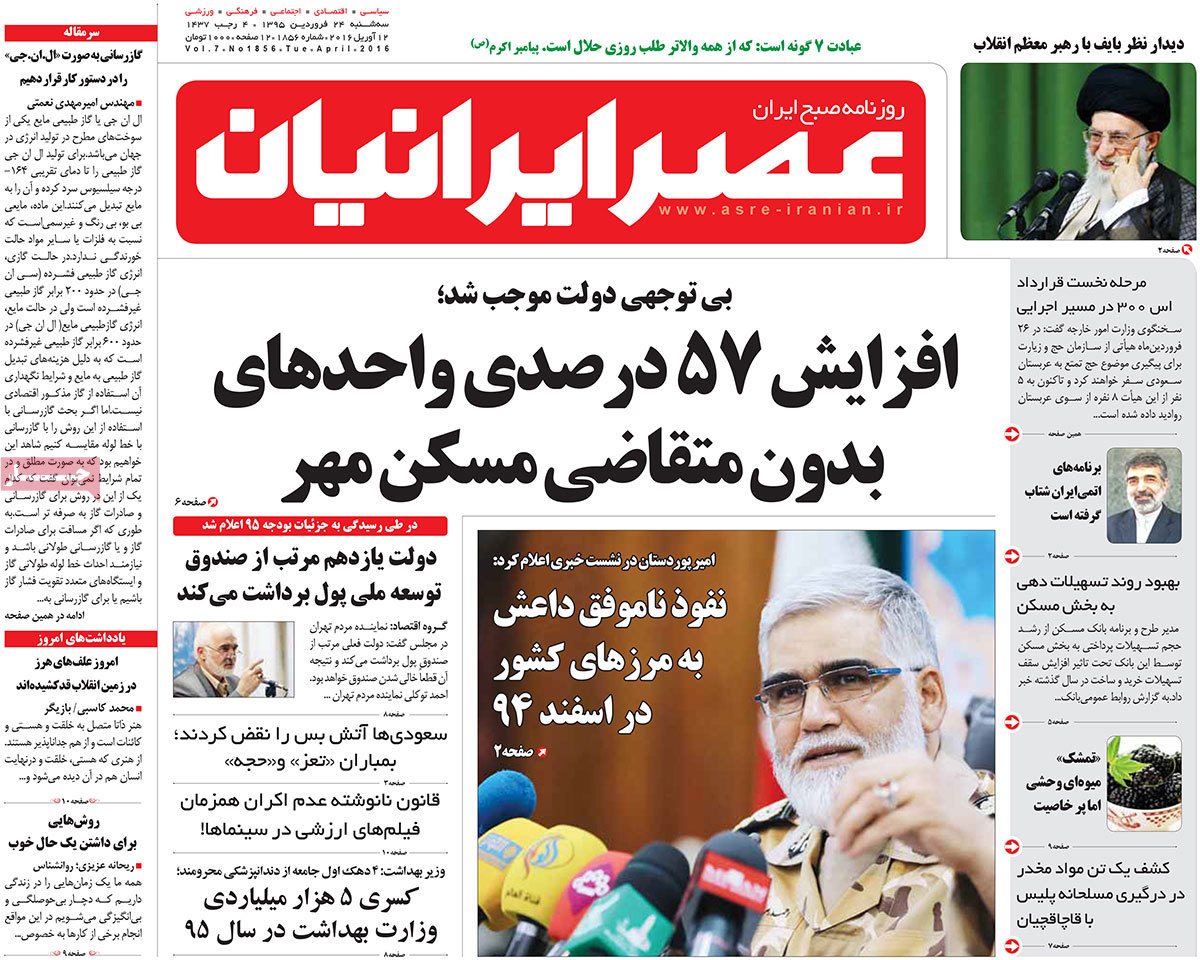
 

A look at Iranian newspaper front pages on April 12


Kar va Kargar:

1-Commander of Iranian Ground Forces: Iranian Army has no military presence at unit level in Syria

2-Ayatollah Hashemi Rafsanjani with Estonian Foreign Minister: Negative publicity by foreign media about Iran is politically motivated  exaggeration
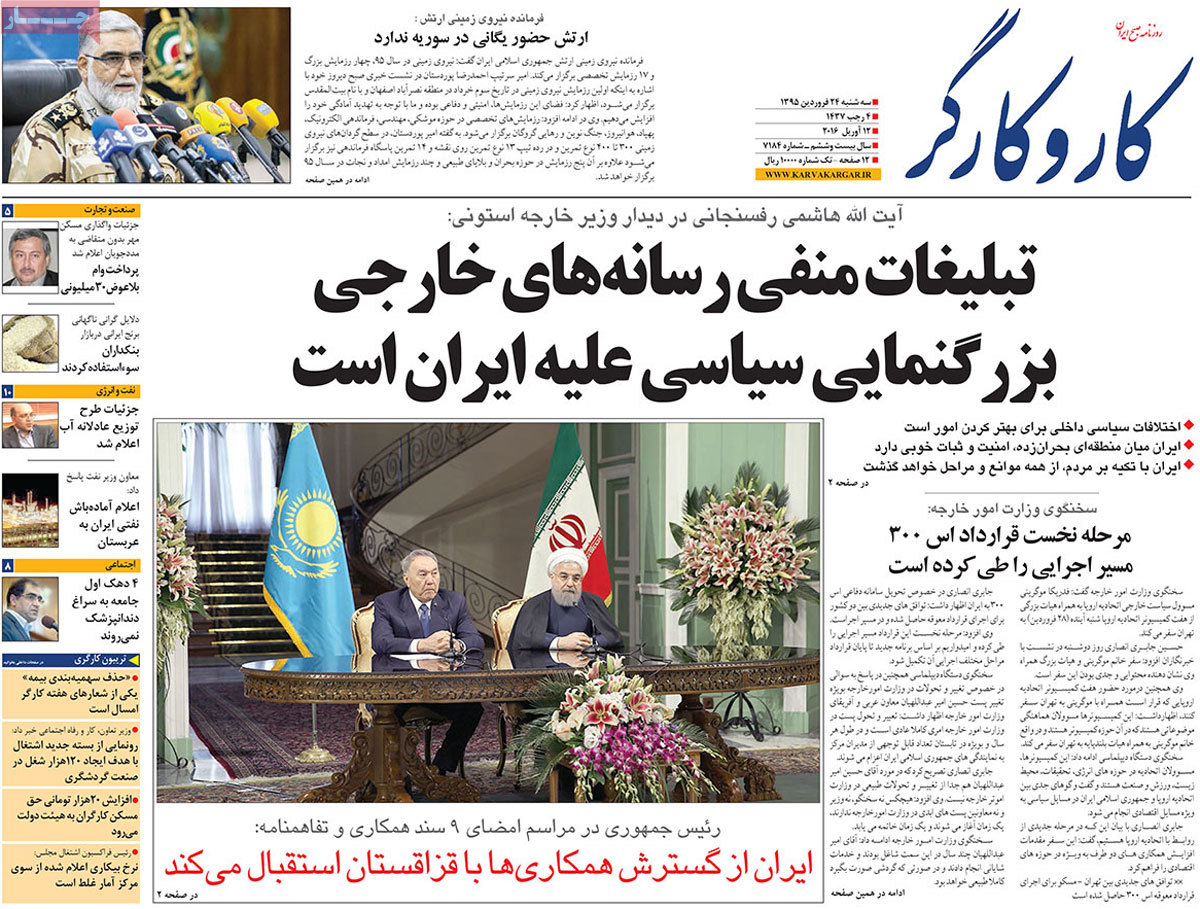
 

A look at Iranian newspaper front pages on April 12


Hamdeli:

1-Iran gives oil warning to Saudis
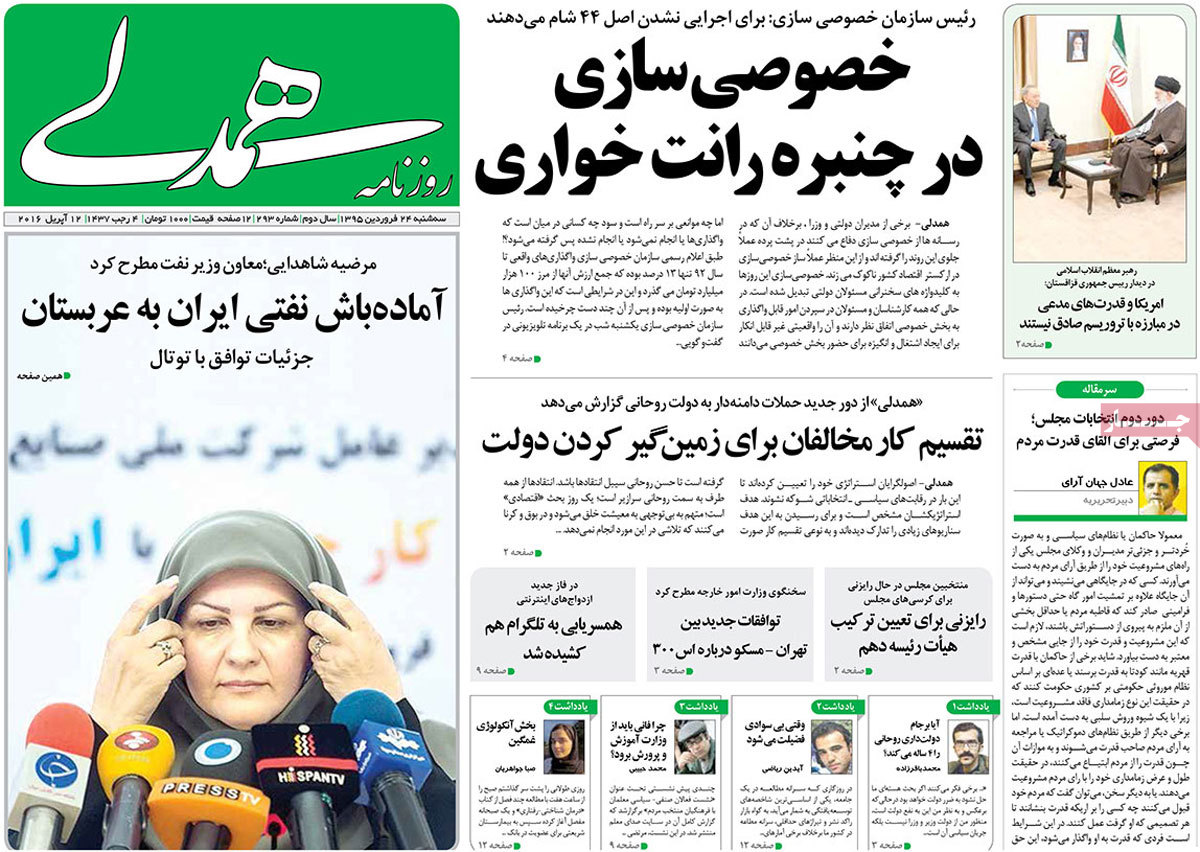
 

A look at Iranian newspaper front pages on April 12


Honarmand:

1- Tehran Municipality supports artists through its Spring Scheme

2-Hello Mumbai Director: I considered all Bollywood  elements in my movie
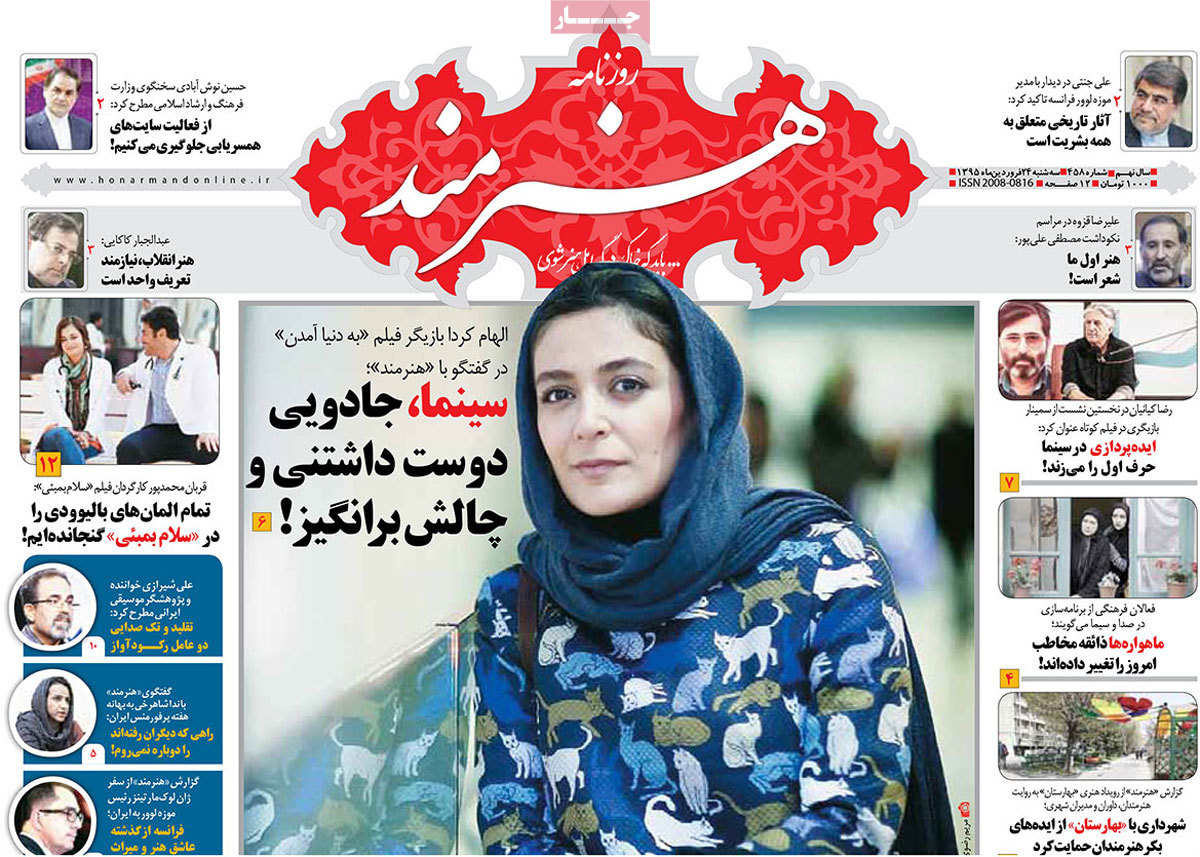
 

A look at Iranian newspaper front pages on April 12


Persian Gulf-Black Sea Corridor to be Launched

Mohammad Javad Atrchian, Director General of the Road Maintenance and Transportation Organization (RMTO), announced the establishment of a new transport corridor to connect Iran to Europe, explaining, “Representatives of Armenia, Georgia, Bulgaria, Greece and Azerbaijan have been invited to visit Iran on April 19 in order to finalize the Persian Gulf corridor to the Black Sea contract.”

Highlighting that the negotiations will be held in Iran and hosted by RMTO, the official said “During the session, the agreement drafted for the activation of a new Black Sea-Persian Gulf transport corridor will be finalized and signed by ministers of the five countries.”

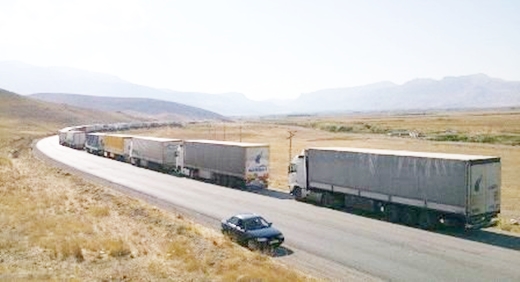
Atrchian stressed that Iranian trucks are currently commuting on the route, adding, “Upon signing the deal, the governments will be obliged to offer certain services to them.”

He noted that Georgia and Azerbaijan have alleviated the need to offer visas for the Iranian side, and said, “Iran’s Foreign Ministry is taking similar steps for the remaining countries, though the case of Bulgaria, as a member of the European Union (EU), seems to be more complicated.”

The RMTO also referred to the commute of Iranian and Turkish trucks between the two countries, noting that “Both sides hold interests in the route, and meetings with the Turkish side are being undertaken in order to alleviate existing obstacles.”

Atrchian went on to stress that “We would not choose to neglect the current Turkish road route to Greece; rather, we seek to have parallel paths for the trucks to have more options, in addition to passing through Turkey.”

Accordingly, the new corridor is meant for Iranian trucks to pass through Azerbaijan, Armenia and Georgia in order to reach the Black Sea, from which they can head to Bulgaria, Greece and even Italy using roll-on/roll-off (RORO) ships.

Recipe for Fesenjan stew

Recipe for Fesenjan
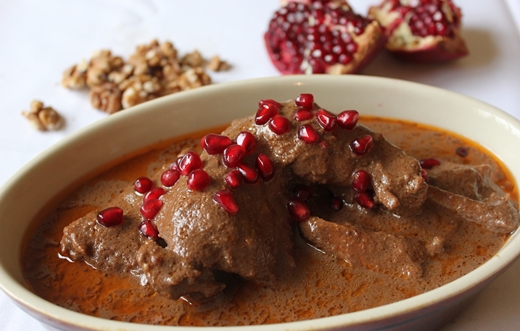
Fesenjan is an Iranian dish.

Iranian dishes excel at making people who have never tried them fall in love at the first bite. The unique combination of spices and flavorings with a wide range of vegetables, herbs, fruit, grains, nuts, meat and most importantly rice only needs the wand of Iranian cuisine to perform magic and leave an explosion of unforgettable tastes in the mouth. The delectable smell, delicious look and perfectly pleasant taste make it almost impossible to resist them. To share the gastronomic delights of Iran, IFP has decided to file a series of mouth-watering recipes for Iranian dishes.

Fesenjan is an Iranian dish you should not get off on the wrong foot with. Luckily, the recipe is open to change to suit different tastes. Since it can be served either as a sweet, sweet-sour or sour stew, it’s up to you to adjust its flavorings – pomegranate paste, sugar, and verjuice – and cook it as you see fit.

Ingredients

Serves 4-6

1. Four to six chicken pieces – You could use either chicken legs, chicken breasts or a combination of both. It is worth noting that in the north of Iran the fancy version of Fesenjan, served on festive occasions, is cooked with duck. The chicken can also be replaced with fried meat balls.

2. 250 grams ground walnuts – It is very important that you grind walnuts a couple of times to get walnut oil completely extracted later on during the cooking. Walnut is the most important ingredient of this dish and to get a final good look and taste, you should pay careful attention to the quality of it.

3. Pomegranate paste – The amount of the paste depends on your taste and the kind of paste you use. Pomegranate paste might taste sweet, sweet-sour or sour. The more you use it, the darker brown your final stew will become, so aside from being a flavoring, it plays an important role in the color of the stew. If the paste tastes sour and you like to have the stew on the sour side, you can go for two heaped tablespoons of paste.

4. One level tablespoon tomato paste –It is mostly added to enhance the color of the stew and is optional. The original recipe does not contain it.

5. Verjuice to taste –If you have a sweet tooth and don’t like sour dishes, you must exclude this ingredient. But for those who like acid taste, verjuice could be the highlight of the ingredients. The amount of verjuice you use depends on your taste and the acidity of the verjuice you are using. After adding it to the stew, let it simmer for a while and then adjust the sourness. If you add it all at once, your stew might turn sourer than you like.

6. Sugar –The amount of sugar like pomegranate paste depends on your taste. But many recipes suggest two or three tablespoons are enough.

7. Salt, ground black pepper and turmeric to taste

8. Cold water


How to cook Fesenjan

1. Place ground walnut in the pot [some prefer roasting ground walnut before starting to cook the stew to get a wonderful aroma out of it, but make sure you don’t burn it, because if you do, it will take a toll on the taste of the stew], pour some verjuice and about half a liter of cold water [water of low temperature will better get the oil out of walnut] on it and then spoon in the pomegranate paste. Give it all a good stir and bring it to the boil. Then turn down the temperature and let it simmer. A well-cooked stew usually takes about three hours to be prepared.

One of the key points in cooking Fesenjan is that it should be cooked over a very low heat. Also, from time to time, check the stew for its water content; if it has lost much of it, add some cold water to the pot. However, you do not want to add a lot of water at once, because if you do, you will face two problems. First, your final stew will turn out to be watery with a bad look. Second, oil won’t come out of walnut well. Those who want to exclude verjuice can replace it with water or simply omit it.

2. Chicken pieces can be lightly fried with onions and seasoned with salt, black pepper and turmeric in advance to be added later to the pot. But if you want to make it quick, you don’t have to fry them in advance, instead they can be simply added to other ingredients in the last one hour of the cooking along with salt, black pepper and turmeric. Basically, chicken is cooked in an hour or so. Therefore, if you find it well cooked while your stew needs more time to be prepared, you can take the chicken pieces out of the pot and put them aside. The pieces can be added to the stew in the last few minutes of the cooking.

3. When the mixture starts thickening, tomato paste can be added – in the last 30 minutes.  If you like your Fesenjan to be sweet or sweet-sour, you can add sugar in the last 15 minutes. Avoid adding it earlier so that you won’t end up having a burnt hard layer at the bottom of the pot.

4. You can place the fried eggplants in the pot in the last five minutes of the cooking or if they haven’t turned cold you can simply garnish the stew with them. Serve the stew with Iranian rice.

Bon Appétit.

Wrong Approach to Terrorism behind EU’s Troubles: Iranian Diplomat

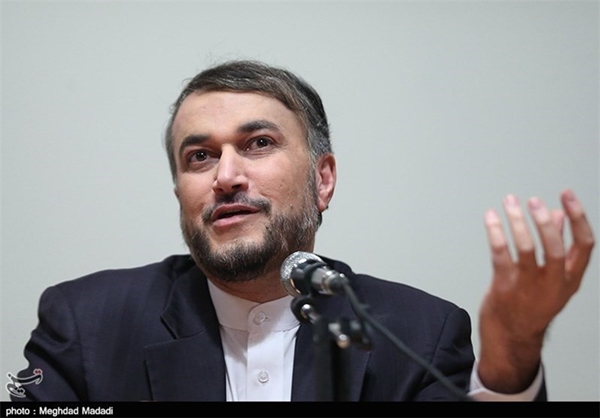
Insecurity in parts of Europe and the migration crisis result from the wrong policy of “instrumental use” of terrorism by certain countries, Deputy Foreign Minister for Arab and African Affairs Hossein Amir Abdollahian said in a meeting in Tehran with a delegation from France’s National Center for Scientific Research (CNRS).

The Iranian diplomat then emphasized the necessity for both pursuing political processes and fighting against terrorism given the delicate situation in the Middle East region.

On war-torn Syria, Amir Abdollahian reiterated Iran’s support for cooperation among the neighbors and for the international peace efforts.

He further slammed the Israeli regime for its policy of weakening the governments and disintegration of countries, stressing the need for respecting the regional countries’ sovereignty and territorial integrity.

Head of the French delegation, for his part, highlighted Iran’s influential role in the region, and called for stronger international cooperation with Tehran.

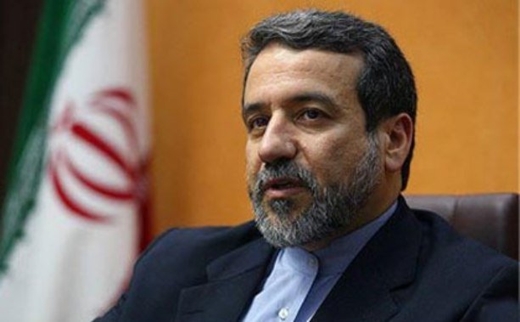
Araqchi: Iran Favours Solidarity among Muslim Nations

araghchii

He made the remarks while talking to IRNA on the sidelines of the two-day expert meeting of the Organization of the Islamic Cooperation (OIC).

He said that the experts participating in the event extensively discussed such issues as situation in Syria, Libya, and Yemen, as well as topics relating to Muslim minorities across the world.

According to the official, the meeting will also focus on ways of enhancing unity and Islamic solidarity, reconciliation within the Islamic world and finding ways to remove disagreements as well as a number of economic and cultural issues.

Araqchi said the OIC meeting will also produce a separate statement on Palestine which is to be offered to the foreign ministerial meeting.

Stressing the need for bolstering Islamic solidarity, the foreign ministry official stressed that Iran supported moves within the organization to foster unity and rejected attempts by some member states to turn issues between two countries into the main for the organization.

Saying that the Israeli government is the main threat and biggest enemy to the Islamic world, he said the experts also reviewed the topic of terrorism, extremism and Takfiri movements inside the Islamic world.

Netherlands Consultants Assist in Saving Energy and Environment

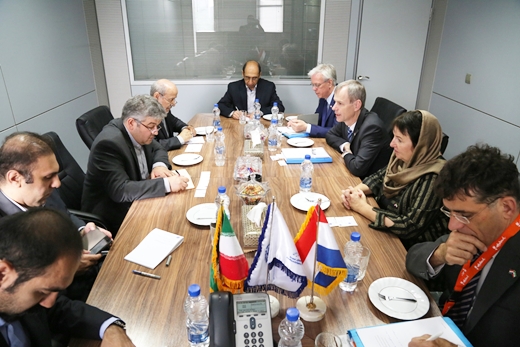
In this meeting, Farhad Sharif highlighted the diversifying economy of Iran, as well as the need for giving the private sector more chance to develop infrastructure projects and play more active roles in the Iranian economy and sustainable development. He said, “After the JCPOA, many delegations have come to Iran in order to find their counterparts for long term business relationships, in order to access the regional market.”

Mentioning the policy of a resistant economy, Sharif added, “The ground is well-prepared with well-educated human resources and security, in comparison with our neighbours, to work in fields such as renewable energy, water management and irrigation systems, healthcare, and the services related to these sectors.”

He continued, saying, “You should offer packages of services like educational and research besides selling your products to Iranian markets. In addition, you should find reliable partners to make joint ventures in order to access the regional market around our country.”

For his part, Marten C. van den Berg, the Dutch vice minister for foreign trade, mentioned that this was his second mission to Iran, due to the eagerness of the government and Dutch companies to expand economic relationships with Iran. He commented that some of the companies had had more than one trade trip to Iran after the JCPOA to develop their market and meet their counterparts.

Referring to the lifting of sanctions, Van den Berg said, “All the European Union sanctions have been lifted, but the primary sanctions of the USA prevented us from developing our relationships with Iran. Some private banks are trying to find a solution to connect with Persian banks to expand economic exchange between the two countries.”

Tehran, Riyadh to discuss resumption of hajj ties

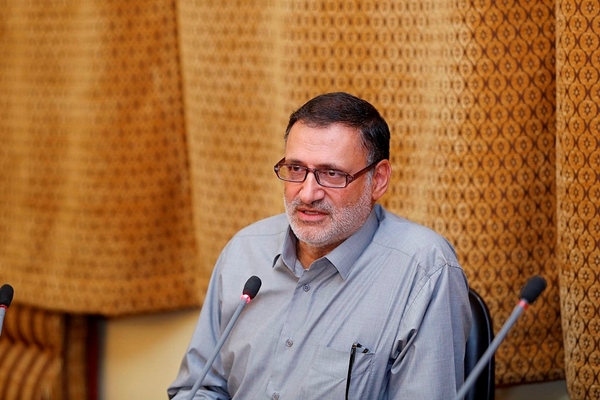
An Iranian delegation led by Saeed Ohadi, Head of Iran’s Hajj and Pilgrimage Organization is expected to hold talks with the Saudi minister of Hajj in a meeting scheduled to take place on Thursday.

Saudi official should guarantee a safe and secure pilgrimage for the Iranian pilgrims and protect their dignity, Mohammadi told the Islamic Republic News Agency on Tuesday.

He said that issues like visa requirements and security of the Iranian pilgrims are among topics due to be discussed.

The two sides will sign a joint memorandum of understanding upon reaching initial agreements, the Iranian hajj official said.

The case of the Iranian pilgrims killed in the Mina stampede is another topic to be addressed in the meeting, Mohammadi added.

Last year, 64,000 Iranian pilgrims were sent to Saudi Arabia.

The stampede in Mina took the lives of 461 Iranian pilgrims.

Relations between Tehran and Riyadh deteriorated following an attack on the Saudi embassy in Tehran.