Thursday, December 25, 2025
Home Blog Page 4513

Iran Plans $200bn Investment in Oil Sector

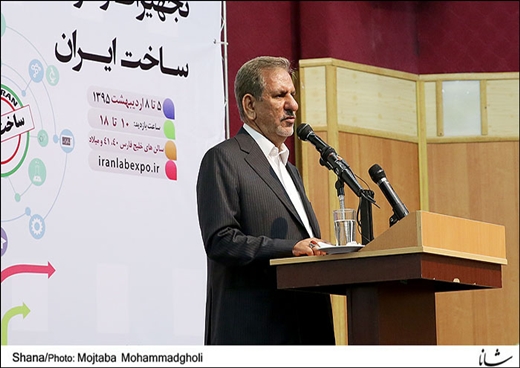
Addressing the opening ceremony of a laboratory equipment exhibition in Tehran, Jahangiri said the administration has been seeking the country’s industrial progress in sectors like steel and oil and gas recovery.

“We need to restore our status in technological development by focusing more attention on the elites and scientists so that they can play their role better in the country’s progress,” said the official.

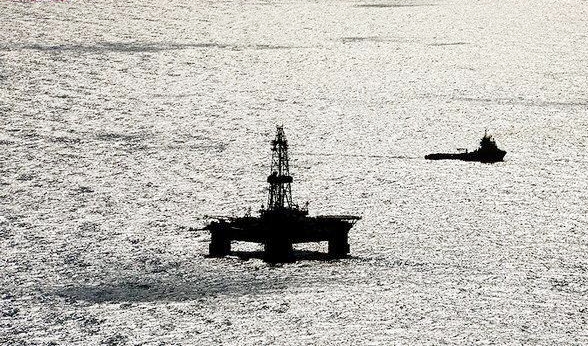
He said the Rouhani Administration has planned to invest $200bn in the country’s oil sector in a bid to develop the sector technologically.

Increasing Threat of Non-Communicable Diseases: Deputy Minister

70% of deaths are the unfortunate result of diseases such as diabetes, cancer, heart attack, asthma, and respiratory conditions, IRNA news agency quoted Sayyari as saying.

Almost all these conditions are rooted in a lack of movement, smoking, high blood sugar, high cholesterol, unhealthy diets, and drinking, he explained.

Sayyari lamented the fact that some 10 trillion Rials (nearly $3bn) is being spent annually on smoking, which is one of the leading causes of various diseases.

Salt and sugar consumption can also cause high blood pressure, diabetes, and high cholesterol, he said, adding that 5m Iranians suffer from diabetes, 15m from high cholesterol and 10m from high blood pressure.

Sayyari went on to say that currently there are 422m people with diabetes worldwide, of whom half don’t know they have it. “Every 20 seconds, one leg is amputated as a result of diabetes, even though one can prevent such a catastrophe by taking self-care measures,” he added.

The average amount of sugar intake is 25g per day while there is 30g of sugar in one bottle of cola, he warned, noting that in Iran, people consume some 65g of sugar per day on average.

He further pointed out that the amount of salt Iranians consume is 10-12g per day, whereas normally only 5g of salt is recommended for those under 50, and only 3 g for those above 50.

Consuming 500 calories fewer each day, along with a daily 30-minute walk would help people to lose 500g per week, he suggested.

Finnish Edition of Shahnameh Unveiled in Tehran

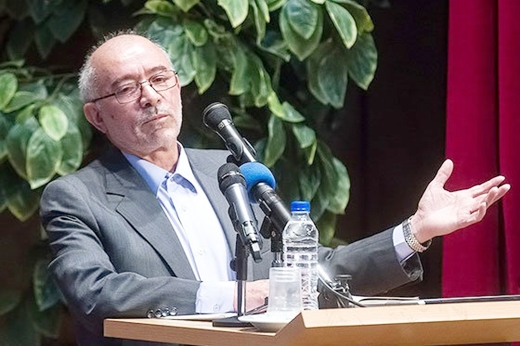
Anttila, Finnish Ambassador Harri Kamarainen, and some Iranian cultural officials attended the ceremony held in the Majlis Library, Museum and Documentation Center.

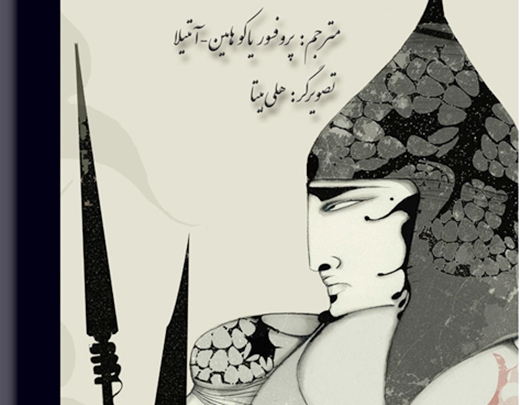
The professor said that he takes great pride in having translated the Book of Kings (Shahnameh) into the Finnish language, and having made it available for the people of his country.

“My own translation is a prose translation of Shahnameh from Persian into Finnish and it is not complete. I hope to add the second volume to the first to cover the entire book,” he told the participants.

“I chose the version of Shahnameh by distinguished (Iranian) researcher Jalal Khaleqi-Motlaq as my original source. However, I chose to render the selection into prose since I felt that translation into verse would be above my abilities,” he explained.

However, he said that he is planning to choose some short stories from Shahanmeh to translate into Finnish in verse at some other time.

The professor also noted that the book came out last week and he is not sure if the books have been distributed in bookshops across Helsinki yet.

“The epic of Ferdowsi is a window to see what Iranian people see and how they feel, and Finnish people will learn more about Iranians through this book,” he said.

The ambassador for his part called April 23rd a day of joy and celebration, and considered the translation a wonderful treasure to read.

“Through Shahnameh, the people of Finland will learn to know about the history and culture of Iran. Iran has given so much to the world’s civilization. Iranian poets have been the source of inspiration for Europeans, and now my Finnish countrymen will be able to read Shahnameh in their own language,” the ambassador added.

Shahnameh, which is known as the “Book of Kings” in English, is the celebrated work of the epic poet Ferdowsi, in which the Persian national epic found its final and enduring form. It was completed in 1010. The Shahnameh millennium was celebrated on UNESCO’s 2010 calendar of events.

The Majlis Library director Mohammadreza Majidi, and the National Library and Archives of Iran (NLAI) Director Seyyed Reza Salehi-Amiri were among the participating guests at the ceremony.

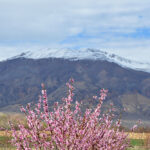
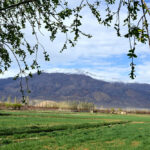
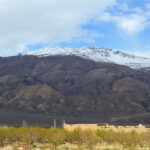
Green Slopes of Shahvar Mount

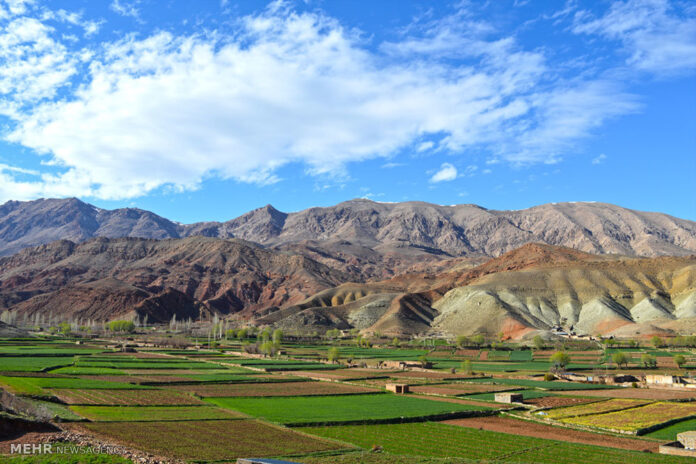
4000-meter Shahvar Mount is the symbol of glory in Shahroud of Semnan province. Shahvar is the highest peak of north east of Iran and the east of Alborz mountain range.


Iran Sets New Record in Steel Exports

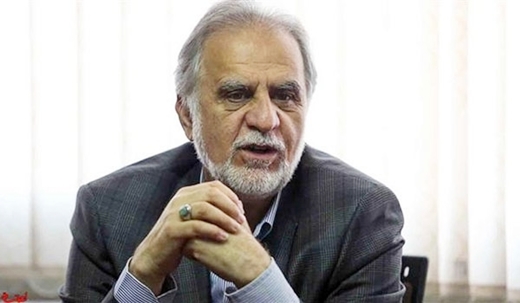
Speaking to reporters on Sunday Apr 24, Karbasian said the country exported 4.1m tons of steel in the past Persian calendar year, which ended on 22 March 2016, thus setting a new record in sales of the strategic product to international markets.

He said the total value of steel exports over the same period stood at $10 billion.

Karbasian added that the record rise in exports of steel had already helped pull many producers out of financial difficulties.

He said that the positive performance of Iran’s steel industry was the result of an intensive campaign by the government of President Hassan Rouhani to support industrial units and encourage their export activities.

Karbasian further said that Iran’s steel success came in face of poor market conditions, and at a time when China and Russia – two other leading international players – had started to adopt the policy of dumping due to a severe plunge in prices.

Iran is currently the largest steelmaker in the Middle East and North Africa, and the world’s 14th largest producer.  The country has serious plans to increase its steel production capacity to 55m tons per year, up from the current level of about 17m tons/year, by 2025. The country’s export capacity is also expected to rise to above 13m tons per year.

The country is pushing ahead with the development of several major provincial steel production plants and is already implementing plans to bring in foreign investors like Italy’s Danieli and South Korea’s POSCO to the same effect.

Shale – Iran Joins the Club

Mohammad Reza Kamali from the Research Institute of Petroleum Industry (RIPI) told reporters on Apr 25 that huge reserves of gas hydrates have been proven in the Sea of Oman, beneath which there are conventional layers of gas.

He also said the project exploring shale gas in Lorestan province in the west of the country is almost half-completed, with non-conventional gas reserves already having been found there.

The official said that Iran enjoys very large capacities in terms of oil and gas shale.

According to the official, the project is a joint venture with the German University of Aachen, during which the university is to transfer the technology and knowledge about shale gas and oil resources to Iran.

Kamali said another project is also underway in the Persian Gulf, in cooperation with prestigious world universities, to study its geological features.

In another project, the official said, the same feature is being studied in Arvadan Palin in the southern province of Khuzestan, which holds Iran’s biggest oilfields.

He said the geological features of Kopet Dag, near the Turkmenistan border, have also been studied, which highlights the link between the energy resources of Iran and Turkmenistan.

US Analyst Interview – How Would the Next US President Treat Iran?

“Europe would react very negatively to a US abandonment of the agreement, and continue to pursue expanded economic relations, as long as Iran continued to abide by its terms,” I.M. Destler told Tasnim.

Prof. Destler is a scholar who specializes in the politics and processes of US foreign policymaking. He is co-author, with Ivo H. Daalder, of In the Shadow of the Oval Office (Simon and Schuster, 2009), which analyzes the role of US presidents’ national security advisers, from Kennedy through to George W. Bush.

What follows is the full text of the interview.


Q: Do you think the outcome of the next presidential elections would change US foreign policy?

A: Foreign policy has not been the dominant issue in the campaign, for either party, and it is always uncertain how campaign rhetoric will translate into policy once a new president enters office. Between now and then, I don’t see the campaign as having a major policy effect.


Q: What will be the reaction of a potential Republican winner of the upcoming polls to the Joint Comprehensive Plan of Action (JCPOA) between Tehran and world powers?

A: Both Trump and Cruz have denounced the Iran deal, but what they would actually do is uncertain, since renunciation would leave the United States alone in its dealings with Iran.

In the (unlikely) event that either was elected, he might try to extract some further (at least symbolic) concession from Iran, or toughen the US posture towards Iran in some other way. As for general policy, each has talked of a tougher, more assertive foreign policy generally.

Either one would likely shelve the Trans-Pacific Partnership (TPP) trade agreement if it were not approved before he entered office.


Q: You mentioned Ted Cruz and Donald Trump. What about Hillary Clinton and Bernie Sanders? How would they receive the deal?

A: President Clinton would adhere to the deal. She would provide, for the most part, foreign policy continuity, but perhaps would be more ready to use US military force in the Middle East/Persian Gulf region. She would seek a way to amend the TPP so that she could say she improved it, if it went into force.

President Sanders would adhere to the Iran deal, abandon TPP, and otherwise be less aggressive in policy, I expect.


Q: What would be Europe’s reaction if a Republican takes the Oval Office?

A: Europe would react very negatively to a US abandonment of the agreement, and continue to pursue expanded economic relations, as long as Iran continued to abide by its terms.

IRGC: Bahrain’s Call for War against Iran More like a Joke

An official from the Islamic Revolution Guards Corps (IRGC) said that contemplating a war against Iran was “out of Bahrain’s league”, and suggested that they learn from the fate of Saddam Hussein, who attacked Iran in the 1980s.

Here are the remarks as reported by Mizan and translated by IFP.


Bahrain’s parliament recently called on the Persian Gulf island state’s government to declare war on Iran and the Lebanese Resistance Movement Hezbollah.

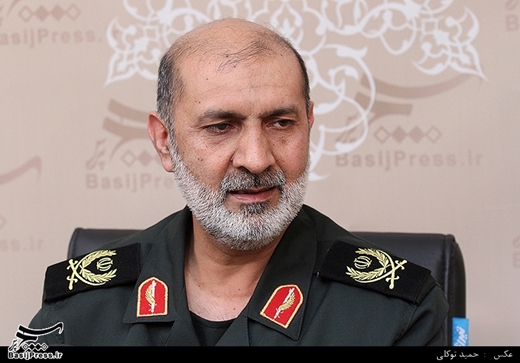
The move was described by the Deputy Head of IRGC for Political Affairs, Brigadier General Rasool Sanaei-Rad, as a “political joke”.

“It is out of Bahrain’s league to be so foolish as to wage a war against Iran,” he noted, suggesting that they learn from Saddam’s fate.

“It seems that the Americans, as another part of their regional policy, have assigned Saudi Arabia the role of anti-Iran bad cop in the post-JCPOA [nuclear deal] era, and Riyadh is now getting help from small Arab countries in playing this role.”

He further referred to Bahrain as a country that considers itself totally indebted to Saudi Arabia. “Everyone knows that the Al Khalifa regime [of Bahrain] has managed to survive thanks to Al Saud’s stick.”

Such a country, he added, is trying to play the role of anti-Iran bad cop.

“The Al Khalifa regime of Bahrain suffers from instability and needs Saudi Arabia’s intervention in order for its tenuous reign to survive.”

“Today, even in Arab countries, everyone knows that Hezbollah is a strong power against the Zionist [Israeli] regime, which is the main threat to the Muslim world.”

“The Bahraini parliament’s stance on declaring war against Iran and Hezbollah is totally indicative of the fact that they are acting under the flag of the US and Saudi Arabia,” he went on to say.

“Bahrainis consider their security as being dependent on the assistance of Britons and the direct presence of Al Saud forces. This is why the Al Khalifa regime tries to justify the status quo in Bahrain by exaggerating the threats of foreign enemies (Iran and Hezbollah).”

“We should not get involved in the games of our enemies. Making enemies and causing sectarianism in the Muslim world are not at all our objectives, because the hegemony and the Zionists [Israelis] are the main enemies of the Islamic Republic,” the IRGC official noted.

He concluded his remarks by emphasizing that Iran does not welcome any war, “But the Bahrainis know that if they do anything crazy, they would face heavy retaliation from Iran.”

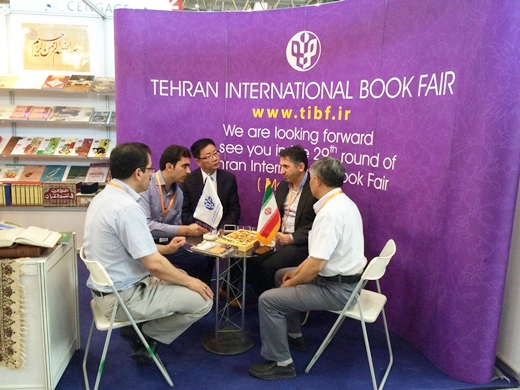
Over 60 foreign publishers to participate in Tehran Intl. Book Fair

The publishers are mostly from Mexico, Australia, Syria, Russia, Germany, Italy, China, Sweden, Lebanon, Denmark, Kazakhstan, Pakistan, France, Oman, Emirates and Algeria, the organizers announced on Sunday.

In addition, 27 top international cultural officials and many prominent authors will visit the TIBF, which is one of Iran’s major cultural events.

“Tomorrow Is Too Late to Read” is the motto of this year’s exhibition, which will be held from May 5 to 15 at Shahre Aftab, a newly-established cultural center in southwest Tehran.

Commander: Iranian Navy to Stage Massive Wargames in Int’l Waters

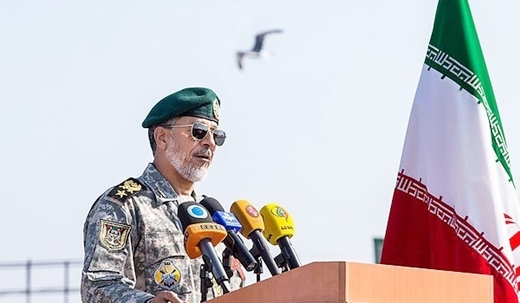
“The massive Velayat 95 wargames will be held in international waters by the end of the current (Iranian) year (started March 20),” Sayyari told FNA on Monday.

“This year, we also have specialized submarine, missile,… drills related to the Navy agenda,” he added.

Sayyari said that the Navy also plans to hold joint drills with other countries’ warships which berth at Iranian ports, and during reciprocal visits.

Elsewhere, he said that the Iranian Navy’s 40th fleet of warships, comprising Alborz and Tonb warships, is now present in the Gulf of Aden to protect the country’s cargo ships and oil tankers from pirate attacks.

Iran ran the major Velayat naval wargames in its territorial waters in the Persian Gulf late January.

The high-profile Velayat exercises are an annual event and all shipping lines and naval vessels in the region are informed of the area of the drills, according to international maritime and naval standards that require all foreign ships and vessels to keep some 5 nautical miles away from the wargame zone.

During the exercises in March, a US Navy warship received a serious warning from several Iranian destroyers to keep away from their drill zone near the Strait of Hormuz, an incident which could keep frictions high after Iran captured 10 US marines in the Persian Gulf in the same month.

Also, the Iranian Navy’s unmanned aerial vehicle (UAV) and a submarine recorded images of a US aircraft carrier on the third day of the main phase of the massive wargames along the country’s Southeastern Makran shore, on the rim of the Persian Gulf.

The Navy drone captured a video during the surveillance mission over the US aircraft carrier.

Meantime, a Qadir-class submarine, also belonging to the Iranian Navy, was deployed close to the US aircraft carrier with a mission to gather intelligence and capture video of the US vessel’s movements.

The Iranian submarine managed to take clear pictures of the aircraft carrier without catching the attention of the staff on board.