Thursday, December 25, 2025
Home Blog Page 4514

Iran Ready to Transfer Anti-Terror Expertise: Rouhani

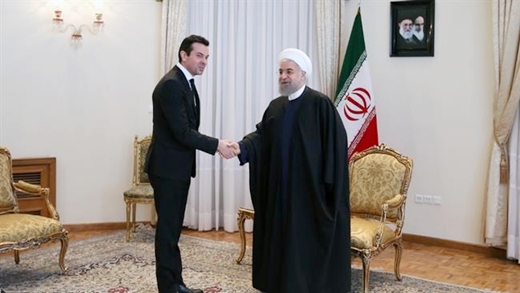
Rouhani made the remarks in a meeting with visiting Macedonian Foreign Minister Nikola Poposki in Tehran on Monday Apr 25.

He said that some people try to attribute deviant views to Islam and push young Muslims toward terrorism and extremist activities.The Iranian president emphasized that measures should be taken to immunize the youth to extremist views.

Elsewhere in his remarks, the Iranian president highlighted the bilateral relations between Tehran and Skopje, saying that there is great potential for developing and deepening cooperation between the two sides.

“There are no obstacles in the way of developing all-out ties between Tehran and Skopje,” Rouhani stressed.

The Macedonian foreign minister, for his part, referred to the issue of terrorism and the necessity of fighting it, and said, “Unfortunately, Europe ignored this scourge (terrorism) for a long period.”

Poposki also called on all countries to coordinate in the battle against terrorism, which has created “a common concern for the international community.”

He also stressed that Macedonia is willing to strengthen its bilateral ties with Iran, and will open an embassy in Tehran in the near future.

Velayati Raps US Supreme Court Ruling to Seize Iran’s Assets

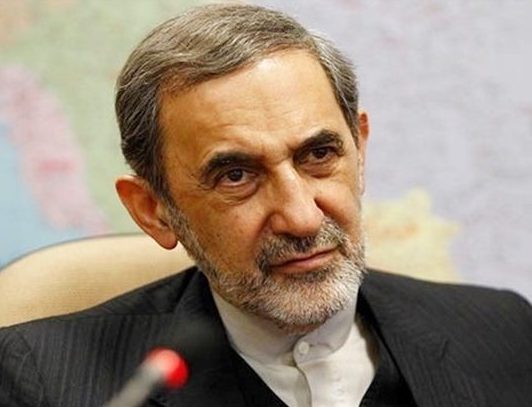
“The US government’s move to seize $2 billion of Iran’s blocked assets is totally condemned,” Velayati, who is also a top adviser to Leader of the Islamic Revolution Ayatollah Seyed Ali Khamenei, told Tasnim.

“It is indicative of the bullying approach of the Americans and their hypocrisy in the international arena,” he added.

Velayati further denounced Washington’s duplicity in talks with Tehran and US delegations’ anti-Iran remarks in meetings with some of their allies in the region.

On Wednesday, the US Supreme Court upheld the Congress and President Barack Obama’s actions to hold Iran financially responsible for the 1983 bombing that killed 241 Marines at their barracks in the Lebanese capital, Beirut.

The ruling allows the families of the Marines and victims of other attacks that courts have linked to Iran to seize some $2 billion in assets held in New York’s Citibank, belonging to the Central Bank of Iran (CBI), which had been blocked under US sanctions.

In 2012, the US Congress passed a law that specifically directed the American banks to turn over the Iranian assets to victims’ families. Obama also entered the battle in an effort to force the payments on Iran.

Iran and France Hold Cultural Soiree in Shiraz

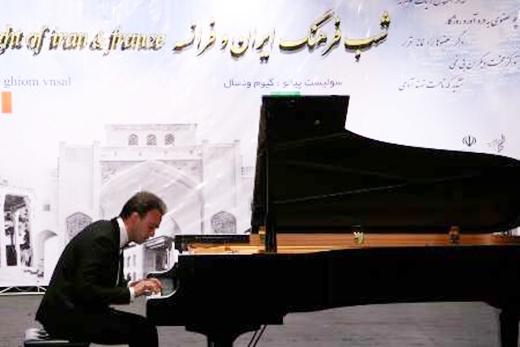
The theme of the cultural event – which attracted many tourists and artists from both countries – was the need for the exchange of friendship between the two nations.

The renowned French pianist Guillaume Vincent also performed at the ceremony.

Addressing the ceremony, the Head of the Provincial Association of Music Artists, Hedayat Rezaie, said that 140 French tourists had been invited to take part in the event.

He said 20 French artists had special performances during the event to introduce their art and culture to the Iranian nation.

Noting that France and Iran enjoy very rich cultures, he said culture is the common point that all nations share to exchange and enhance friendship in the world.

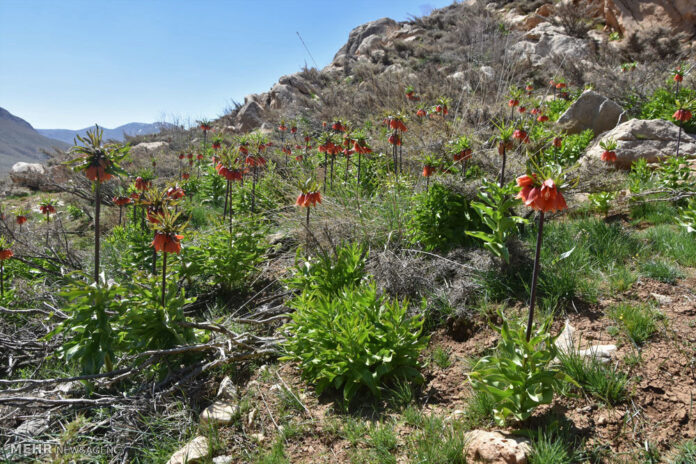
Beauty of fritillaria imperialis

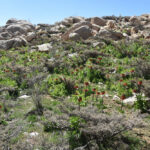
Dehaghan of Isfahan province is home to beautiful red fritillaria imperialis flowers during the spring.


Kerry’s Remarks Not Enough to Resolve Issue of Iran’s Int’l Transactions: Nuclear Expert

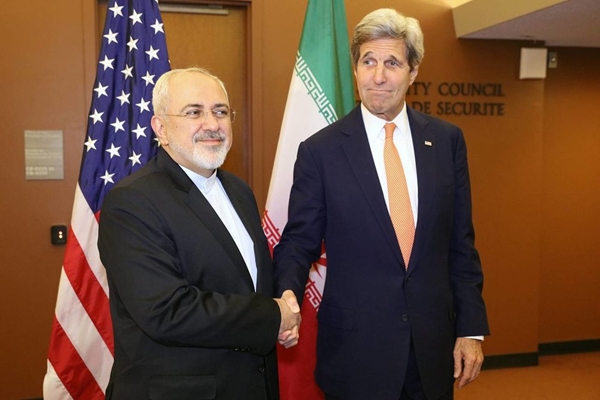
After Iran experienced problems with its financial transactions with foreign banks, particularly European ones, US Secretary of State John Kerry said in a meeting with his Iranian counterpart Mohammad Javad Zarif that European banks should not be afraid of making deals with Iran.

3_Untitled-1
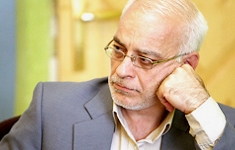
Hassan Beheshtipour

However, Hassan Beheshtipour, an expert in nuclear issues, believes that the US official’s remarks are not sufficient to allay the concerns of those willing to work with Tehran.

IFP has selected and translated parts of his interview with Fararu news website.


“Rhetorically, Mr. Kerry’s remarks are good and should be welcomed, but they are not enough,” Beheshtipour said.

“The US Secretary of the Treasury should also clearly explain the moves Washington has already made, or will make, to ensure other countries it will not punish them for cooperation with Iran,” he went on to say.

“Before the JCPOA [the nuclear deal between Tehran and world powers], the US Treasury used to monitor anti-Iran sanctions to tighten the controls, but the process stopped or at least slowed down after the deal. However, evidence indicates that the slowdown has not been as much as Iran expected, and the pace of the removal of anti-Iran sanctions or their repercussions has remained slow,” the expert said.

“Therefore, we should see whether or not the US Treasury, which was the department responsible for implementing the anti-Iran sanctions, will follow up Kerry’s remarks and make certain moves to put his words into practice,” he added.

“The US is losing an historic opportunity in relation to Iran,” Beheshtipour noted, adding that the US failure to comply with its JCPOA commitments would encourage Iran to revert to its pre-JCPOA situation.

“However, if the US shows good behaviour with regard to the JCPOA, the experience of the nuclear deal could be repeated in other fields. However, when they breach their commitments in this area and refuse to take the measures required, they are actually wasting these opportunities.”

“Of course, we should be patient and see what will happen in coming weeks after the negotiations between Kerry and Zarif, and the Vienna talks,” he noted.

“During the time of sanctions, officials from the US Treasury Department visited different countries to convince them to join the anti-Iran sanctions. If they cannot now travel to other countries to assure them of the end of sanctions, they can at least talk to them, and give them assurances that the US is not going to intensify or re-impose the sanctions against Iran, and that the other parties involved in deals with Iran will not be punished, as per the Joint Comprehensive Plan of Action,” Beheshtipour concluded.

On the Strong US Opposition to Brexit: Playing the UK Card in the EU

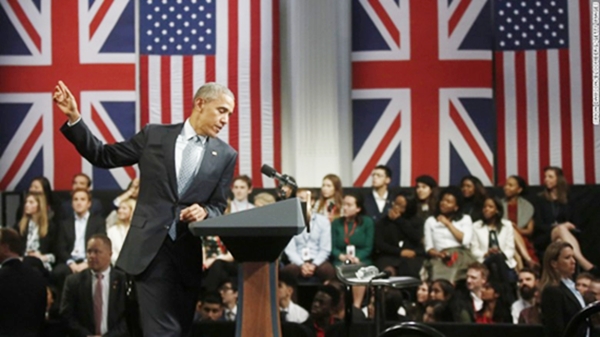
The United States insists that the United Kingdom should stay in the European Union. US President Barack Obama recently visited the country right after the 90th birthday of Queen Elizabeth II to tell Britons “You should stay with the EU”. Why does Washington want London to reject Brexit?

This is a question discussed by Mehdi Del-Roshan in a recent article in the newspaper Ghanoon. Here is IFP’s translation of the comment.


In less than two months, a referendum will be held in Britain to ask people whether they want the country to stay in the EU or not. Both the royal family and the government seem to be concerned about a possible vote of NO to Britain’s continued membership of the EU.

Although the Britons themselves suggested that the EU member states use a single currency, the Euro, they refused to adopt the new currency or replace their own one, the Pound Sterling.

However, they are still a member of Europe’s larger political family, and Brussels laws are binding in London.

Now, US opposition to Britain’s exit from the EU is an interesting topic. Some international analysts and observers say the US wants Britain to stay in the EU in a bid to wield the country’s power as a counter to the influence of Germany and France! This is something like the story of the famous film, The 51st State!

This means that the Americans want Britain inside the EU so they can pursue their own policies in Europe. In this view, Britain can prevent such leaders as Angela Merkel and François Hollande from opposing Washington.

During Obama’s visit to Britain, one interesting point was the unprecedented remarks by the Mayor of London. Boris Johnson launched an astonishing attack on Obama’s “ridiculous and weird” arguments for Britain to stay in the EU.

“It is very weird that the US should be telling the UK to do something they would not dream of doing,” he said, strongly criticizing the US president’s remarks.

He told the BBC the Americans “Wouldn’t dream of sharing [their] sovereignty” as the UK had done.

“I just find it absolutely bizarre that we are being lectured by the Americans about giving up our sovereignty and giving up control when the Americans won’t even sign up to the international convention on the law of the seas, let alone the International Criminal Court,” he further noted.

It could be true to some extent that Obama’s insistence on Britain staying in the EU is based on an economic “approach”; perhaps, that may only be half of the story.

This point can be seen in a warning by the International Monetary Fund (IMF) as well: Brexit could have harmful consequences for the fragile global economy.

On the other hand, the Transatlantic Trade and Investment Partnership (TTIP) is also an important factor here. This is a proposed trade agreement between the European Union and the United States, with the aim of promoting trade and multilateral economic growth.

Proponents of TTIP believe that it would help develop multilateral economic growth, while opponents say the treaty would increase the power of corporations and limit the power of governments to control the market in favour of society.

But what is Britain’s role in this game? The treaty has lots of critics. Which country should counter these criticisms? Which country is the number one ally and friend of Washington in Europe? The answer is clear: British friends!

Many believe that the US stands to benefit more than the EU if the TTIP is put into effect. Therefore, “a friend” should remove the obstacles!

Obama’s visit to the UK was definitely worth it, one that convinced the POTUS to make such a long trip to Europe in spite of all the domestic problems he faces in the last year of his presidential tenure.

US history might be proud of him in future for saving billions of dollars of profit for American citizens in the 51st State!

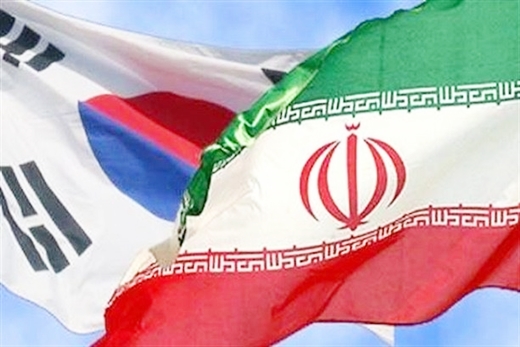
Iran and South Korea Confer on Expanding Nuclear Cooperation

The meeting was held in Tehran on Sunday with Behrouz Kamalvandi, AEOI legal and Parliamentary deputy-head, as well as a number of relevant officials. During the meeting, the two sides expressed interest and satisfaction with the increasing trend of nuclear cooperation between Iran and South Korea, highlighting the serious determination on both parts for the further expansion of bilateral cooperation.

The Korean official noted the development of cooperation between the two countries in economic, cultural and industrial fields, saying nuclear safety and issues related to safeguards can serve as the first steps toward accelerating nuclear cooperation between Tehran and Seoul.

He also expressed hope that Iran-South Korea’s nuclear cooperation will expand further in future.

Also on Sunday, Japan’s newly-appointed ambassador to Tehran held a meeting with AEOI Head Ali Akbar Salehi. In the meeting, the two sides conferred on the expansion of ties, and expressed a keen interest in developing cooperation in various nuclear areas, particularly in the field of nuclear safety.

According to Kamalvandi, the AEOI head is expected to visit the Czech Republic and Slovakia next week to step up cooperation on the construction of nuclear power plants.

South Korean President Park Geun-hye is slated to visit Iran from May 1-3 to discuss ways to promote business ties between the nations, leading a delegation of some 200 businesspeople from such areas as construction, energy and finance.

Portugal to Open Commercial & Investment Bureau in Tehran

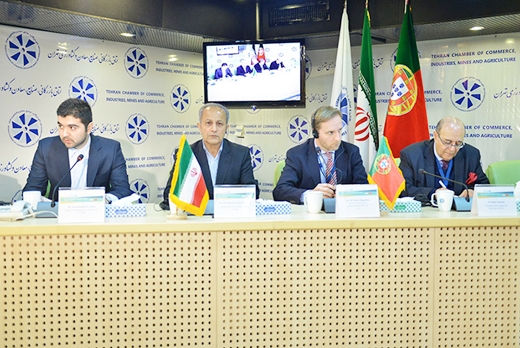
In a direct dialogue among Portuguese delegates from different sectors like health, medical equipment, electrical and electronic products, home appliances, information technology, visual media, transport, engineering and environmental consulting, office furniture and oil products, methods of joint cooperation and investment were considered.

Iran and Portugal have agreed to start a direct flight between Tehran and Lisbon, according to TCCIMA International Affairs Assistant, Mohamad Reza Bakhtiari.

Bakhtiari gave notice that a commercial and investment bureau will be opened in the Portuguese embassy in Tehran this summer.

In a speech at the forum, the General Manager of International Affairs from the Portuguese Chamber of Commerce, Pedro Magalhães, said Portugal can act as a gateway for Iran to access the markets of Portuguese-language countries of Latin America.

Kurdish Artist Buries His Sculpture of Renowned Poet

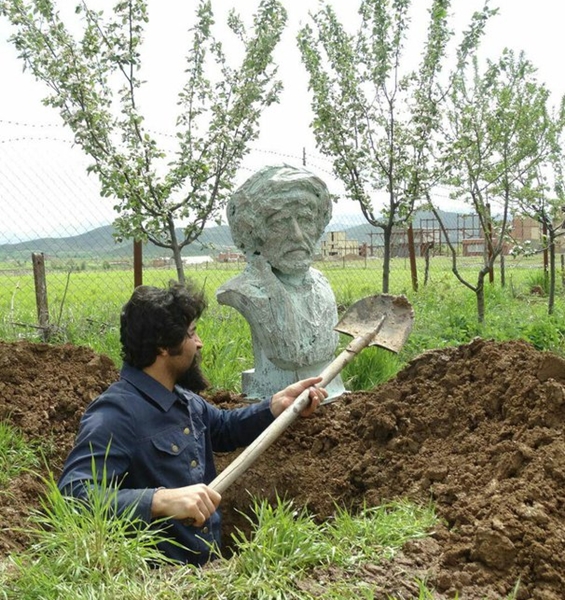
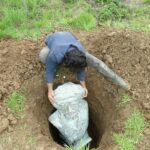
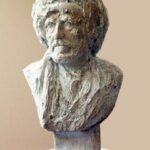
An Iranian-Kurdish sculptor buried a statue he had made of a famous Kurdish poet, after municipal officials refused to install it in the western Iranian city of Marivan.

Here is IFP’s translation of a report by ISNA.


Bashir Nasseri, the Marivan-based artist, created the sculpture of the poet “Ghaneh”, but says the city authorities do not value culture and art.

“I had been working on the statue for over two years, for it to be installed in Marivan, and I wanted to give it to the city and its people as a gift, but the city officials seemed not to care,” he told the Iranian Students’ News Agency (ISNA).

Nasseri said that the visual pollution of the city bothered him and there were lots of problems with the appearance of Marivan.

“Marivan has many artists, but I believe the municipality does not make good use of its authority, and assigns art projects to people with no expertise,” he noted.

“Such projects are built in an amateur way, without any expertise, and just make the city look ugly,” the Kurdish artist went on to say.

“The municipality and the city council were aware of the making of the sculpture. I repeatedly pursued its installation somewhere in the city, but the authorities did not respond, so I decided to give it to the soil of Marivan as a gift,” he asserted.

“I also planted a sapling on the sculpture in memory of Ghaneh,” Nasseri said.

Bashir is a graduate of painting in the Art University of Tehran. He has been working in different artistic fields, including painting and sculpture, for 20 years. Several of his statues and other artworks are already installed in different Kurdish cities, like Paveh.


Iran’s President Forms Committee to Reclaim Money Seized by US

Speaking at a television talk show on Sunday evening, Iran’s Deputy Foreign Minister Abbas Araqchi said the committee is also tasked with preventing similar cases of seizure of the country’s assets.

Last week, the US Supreme Court upheld the Congress and president’s actions to hold Iran financially responsible for the 1983 bombing that killed 241 Marines at their barracks in the Lebanese capital, Beirut.

The ruling allows the families of the Marines and victims of other attacks that courts have linked to Iran to seize some $2 billion in assets held in New York’s Citibank, belonging to the Central Bank of Iran (CBI), which has been blocked under US sanctions.

“There are ways to have that money back,” Araqchi explained, blaming the previous administration’s imprudence for the seizure.

He said the legal and political ways are being weighed to deal with the issue, noting that the Foreign Ministry has protested at the case via the Swiss Embassy in Tehran.

The top diplomat further slammed the US court ruling as “invalid”, describing the move as “an international banditry.”

He added that the hostile move is a reminder of continuing enmity between the US and Iran, stressing that the Joint Comprehensive Plan of Action (JCPOA) was not basically after ending the hostility.

JCPOA is a lasting deal on Tehran’s nuclear program, signed between Iran and the Group 5+1 (Russia, China, the US, Britain, France and Germany). The deal took effect in January.