Saturday, December 27, 2025
Home Blog Page 4487

Iran and Germany Promote Cultural Cooperation

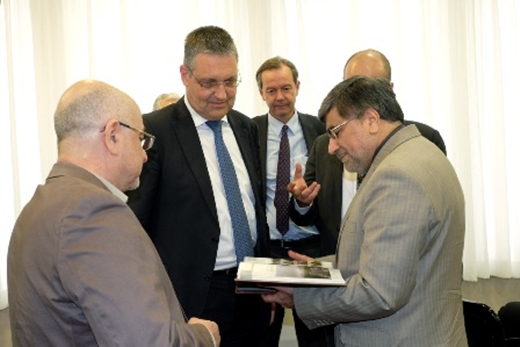
During their meeting, Jannati said that there are good grounds for cooperation between Tehran and Berlin in the fields of culture, arts, science and economics.

He urged the exchange of experience and signing cooperation documents between the two sides in the areas of language teaching, archeology, cultural heritage, cinema, theatre, and music, in order to boost all-out ties.

Iran is ready to teach German language in its schools, the Culture Minister said.

For his part, the German official hailed the expansion of cultural ties between Tehran and Berlin, and welcomed the signing of cooperation documents in the above-mentioned areas.

Iran Warns Saudi Arabia over Hajj Problems

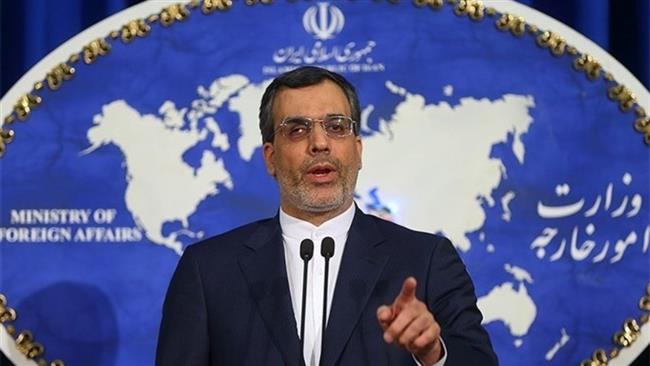
“If no agreement is reached on these issues, Saudi Arabia will be responsible for barring the way to Iranian pilgrims,” Foreign Ministry spokesman Hossein Jaberi Ansari said on Wednesday May 11.

The spokesman urged cooperation during a televised interview, advising Riyadh against letting political preferences affect the important Islamic tradition.

Jaberi Ansari said the Saudi government has refused to act on “Its repeated assertions that it would not let political disputes get in the way of the Hajj issue.”

Saudi Arabia severed diplomatic relations with Iran on Jan 3 following attacks on vacant Saudi diplomatic perimeters in Tehran and Mashhad by angry protesters. The attacks during otherwise peaceful demonstrations came in reaction to the Saudi execution of prominent cleric Sheikh Nimr al-Nimr. Iran arrested some 100 people over these acts, and also strongly condemned the attacks.

In the absence of diplomatic relations between Tehran and Riyadh, Saudi Arabia has been refusing to help streamline various procedural aspects of the pilgrimage.

“Performing the pilgrimage is contingent upon the host government’s fulfilment of its obligations,” Jaberi Ansari said. At issue, among other things, are the visa process and the pilgrims’ means of transportation. Riyadh says visas have to be issued by the Saudi diplomatic representations in third countries.

“Although Saudi Arabia does not have an embassy in Iran, Switzerland represents its interests,” Jaberi Ansari said. Tehran has said it is ready to swiftly issue visas for as many Saudi visa officers required to perform the procedure at the Swiss diplomatic mission or another venue in Tehran as necessary, he added.

Saudi Arabia has also insisted that third-country airlines have to transport the pilgrims, while the two countries would previously each share half of the responsibility for the air travels.

“It is obvious that a non-normal status is not acceptable to Iran,” the Iranian Foreign Ministry official said. “There is still time, however. We hope that Saudi Arabia changes its current policy.”

Purchase of S-300 System No Breach of UN Resolution: US

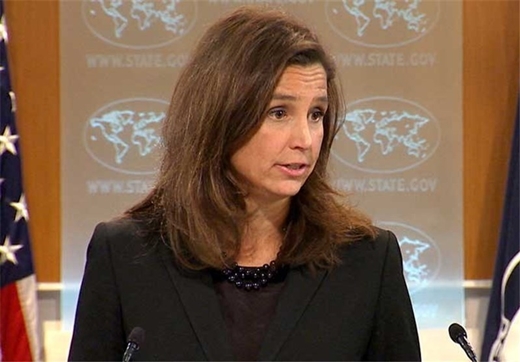
“…while we’re opposed to the sale (of the S-300 to Iran), it is not a violation of the JCPOA or UN Security Council Resolution 2231,” Trudeau said during a press briefing on Tuesday May 10, the official US State Department website reported.

On July 20, 2015, the UN Security Council adopted Resolution 2231, which bars Iran from developing missiles “designed to carry nuclear warheads.”

This is while Iran has repeatedly underlined that missile testing is an issue related to the defence of its territorial integrity, and that none of its missiles are designed to carry nuclear weapons.

Referring to the recent delivery of the S-300 surface-to-air missile defence system to Iran, Trudeau added, “We’ve been making clear our objections to any sale of the S-300 missile system for quite a while. The Secretary has raised it with Foreign Minister Lavrov repeatedly. We have long objected to the sale of such sophisticated defence capabilities. We continue to monitor it closely.”

Back in April, Iran displayed part of the Russian-made S-300 air defence missile system in a military parade in Tehran, held to mark the National Army Day.

The Life of Underage Refugees at the Idomeni Border: Report

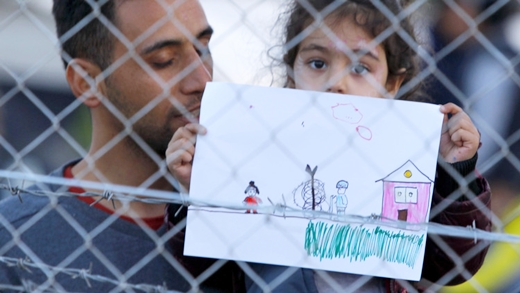
The migrant crisis facing Europe continues, with little end in sight, despite various pledges, schemes and commitments from governments, NGOs and civil society. Greece, with its many islands and its proximity to the Middle East, has been overwhelmed by refugees and is struggling to cope. Rozbeh Arash, reporting for Vaghaye Ettefaghieh, visited Idomeni, one of the camps in Northern Greece, near the Macedonian border, and reports on the conditions faced by many of the children there. Article translated by IFP.


He dreams of home in his own childlike way, holding a stone as a gun, sitting on a wooden horse. On the horse, he’s racing home, beyond the borders closed by the Turkish soldiers. With his gun, he kills the terrorists in his homeland. He finally arrives. He visits his friends and takes sweet bites of the fruits in his grandfather’s house.

In reality, however, he’s waiting for the borders to open. The border that stands between him and the happiness he has been promised. He’s 16 and his only hope is to join his brother in Germany. He has been waiting for two months in a dirty shelter in Idomeni in Northern Greece, depressed, praying that Macedonia won’t close its borders to Europe beyond.

Around 6 in the morning, he wakes up, and makes a sudden decision. Each and every cell in his body tells him that it’s his right, but he doesn’t know who to ask for it. Where should he claim it? In the morning twilight he crosses the barbed wire of the border and disappears into the green forest beyond.

No one saw Kusani after that. His mobile phone can’t be reached.  30-year-old Qaed, who knew Kusani in the camp for a while, says, “No one called for money or for help. None of the smugglers have any news about him. He’s disappeared, or been kidnapped.”

This is the world experienced by hundreds of underage people at the Idomeni border. They’re deprived of their childhood, and grow up just waiting. Since February, Macedonia’s government has closed the border to refugees. They make no exceptions. Europe has also abandoned them. They expect these children to be happy with the cartoons shown to them on the tiny camp TV. Life’s difficulties mean they’ve grown up not understanding such things. They only understand enough to not to fall into the trap that is Greece. One of the camp’s officials says, “These children play. They run here and there. They are not hungry, but they have forgotten happiness and smiles.”

The Greek authorities have offered official registration to these children, but the stories that they have heard of long detention periods, and poor treatment by Greek police has made them rather wait than live in Greece. The risk of entering Macedonia illegally is very high. The Macedonian guards beat them ruthlessly. Their only choice is to live here in the camp with 10,000 others, where they are threatened by bad conditions, violence and thousands of adults. Their young eyes and hopeful hearts still stare at the border. One day, that border will perhaps be opened, but until then, happiness and smiles remain a distant memory.

IAEA Reports Confirm Iran Implementing Commitments under JCPOA: Deputy FM

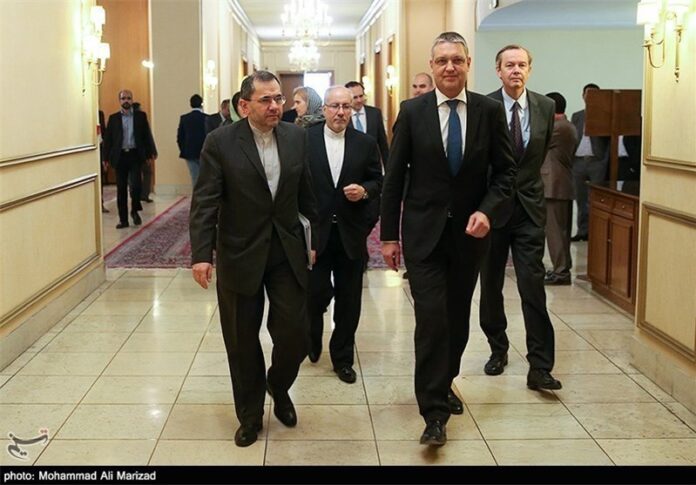
Speaking at a meeting with visiting German Deputy Foreign Minister Markus Ederer in Tehran on Tuesday evening, Iranian Deputy Foreign Minister for American and European Affairs Majid Takht Ravanchi highlighted the Islamic Republic’s adherence to the nuclear agreement, and called on the other parties to seriously fulfill their commitments, including those related to banking and financial issues.

“The implementation of Iran’s commitments has been confirmed by the IAEA,” said the diplomat, who was also a member of the Iranian nuclear negotiating team with the Group 5+1 (Russia, China, the US, Britain, France and Germany).

During the meeting, the two sides also exchanged views on other issues, including ways to promote Tehran-Berlin relations in diverse spheres and the latest developments in the Middle East and the world.

While the Joint Comprehensive Plan of Action (JCPOA), a 159-page nuclear agreement between Iran and the Group 5+1 came into force in January, some Iranian officials complain about the West’s failure to fully implement the accord.

Earlier in March, Leader of the Islamic Revolution Ayatollah Seyed Ali Khamenei said Americans have yet to fulfill what they were supposed to do as per the nuclear deal.

Iran still has problems in its banking transactions or in restoring its frozen assets, because Western countries and those involved in such processes are afraid of Americans, Imam Khamenei said, criticizing the US for its moves to prevent Iran from taking advantage of the sanctions removal.


A Look at Iranian Newspaper Front Pages on May 11

Iran Newspaper front pages

Iranian newspapers on Wednesday focused on President Rouhani’s remarks on the country’s determination to reclaim its rights in the legal dispute with the US.

They also covered an interview with MP Gholam-Hossein Mesbahi Moqaddam, who has revealed a controversial nuclear report made by former president Mahmoud Ahmadinejad to the Supreme Leader.

Another top story was about the statements made by Atomic Energy Organization of Iran (AEOI) Chief Ali Akbar Salehi, who said the country will proceed with caution in dealing with the US, particularly when it comes to selling heavy water to Washington.


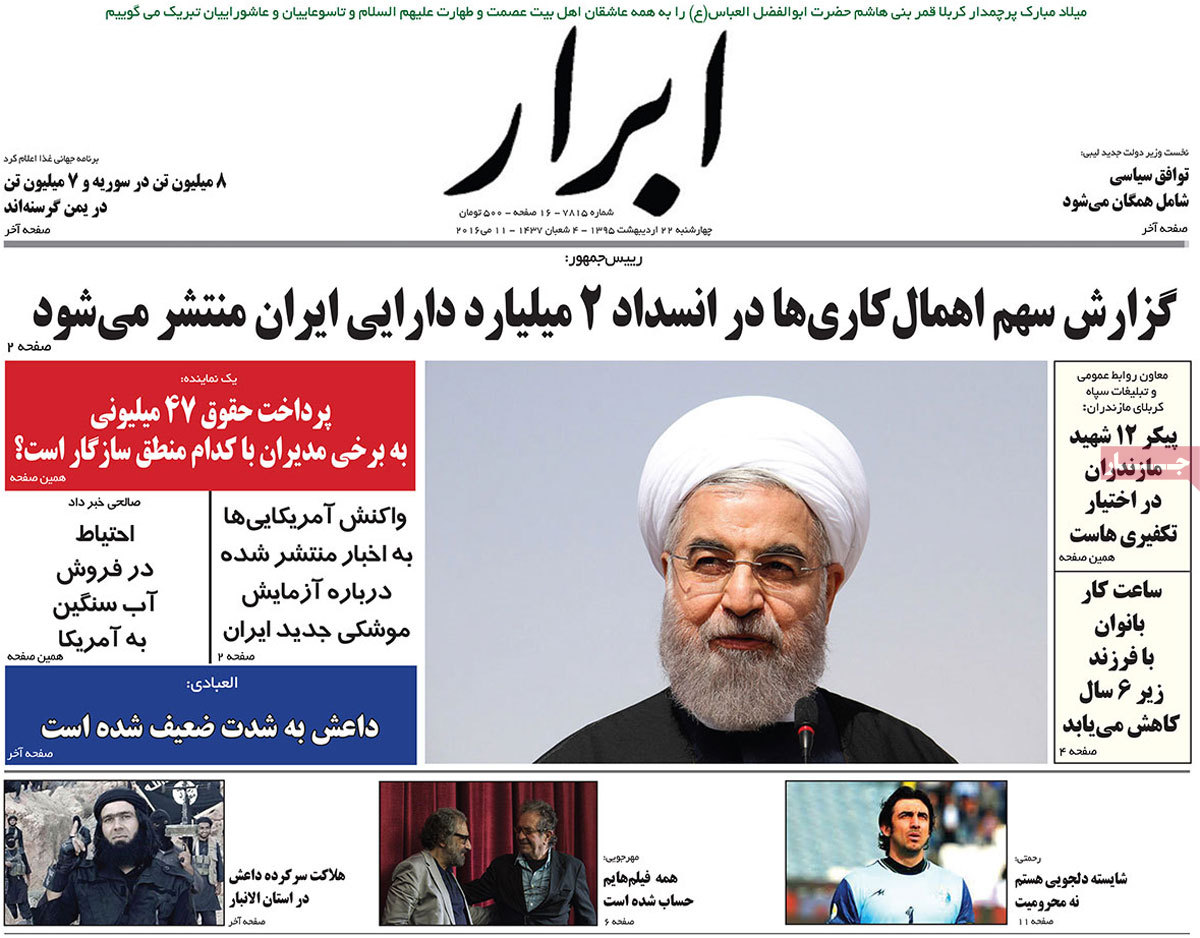
Abrar:

1- Rouhani: Report to Be Published on Negligence of Certain People in Seizure of Iran’s Assets

2- Iran to Exercise Caution in Selling Heavy Water to US: Salehi
 

A Look at Iranian Newspaper Front Pages on May 11


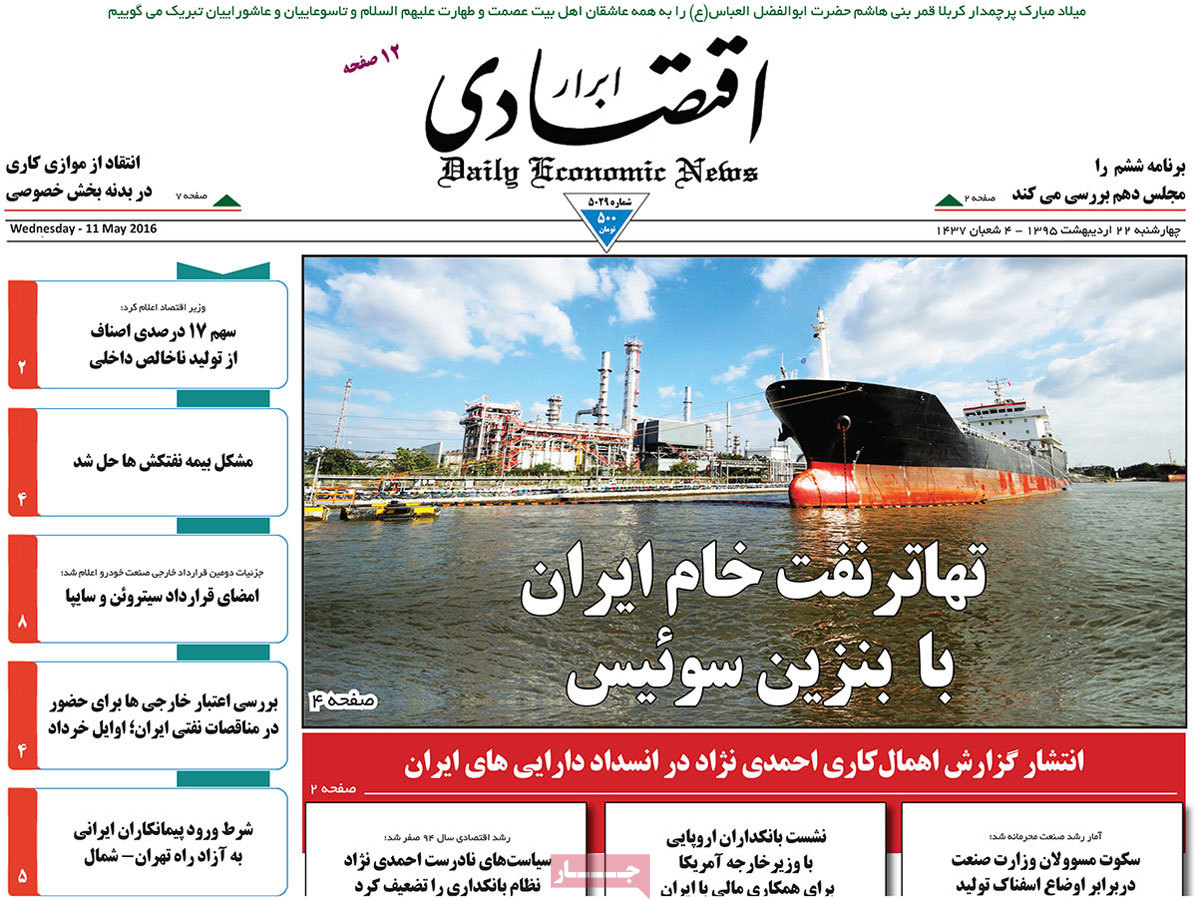
Abrar-e Eqtesadi:

1- Iran to Exchange Crude Oil with Swiss Petrol

2- [French automaker] Citroen and [Iran’s second largest car manufacturer] Saipa Sign Contract

3- Ahmadinejad’s Misguided Policies Weakened Iran’s Banking System
 

A Look at Iranian Newspaper Front Pages on May 11


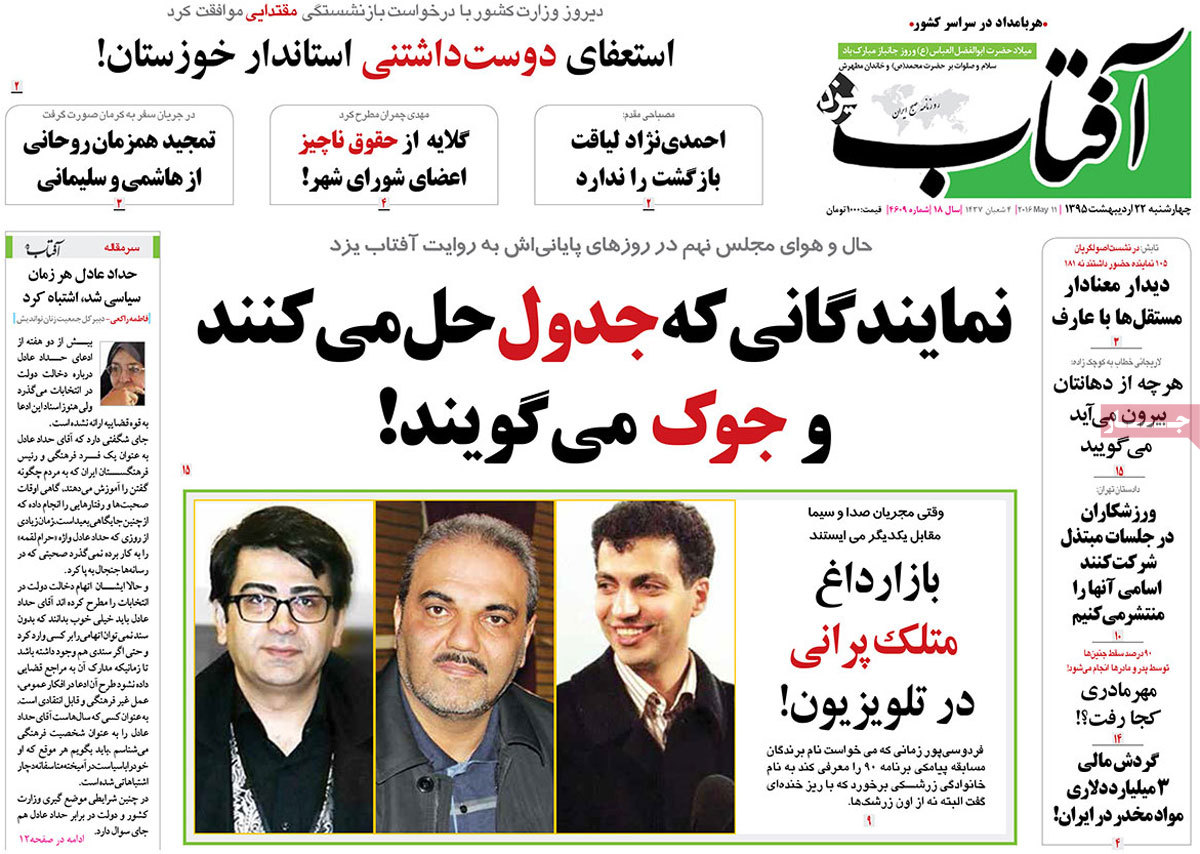
Aftab-e Yazd:

1- $3bn Illicit Drug Market in Iran

2- 10% of Abortions Performed with Parents’ Consent

3- Prosecutor-General: If Athletes Take Part in Inappropriate Gatherings, We’ll Publish Their Names
 

A Look at Iranian Newspaper Front Pages on May 11


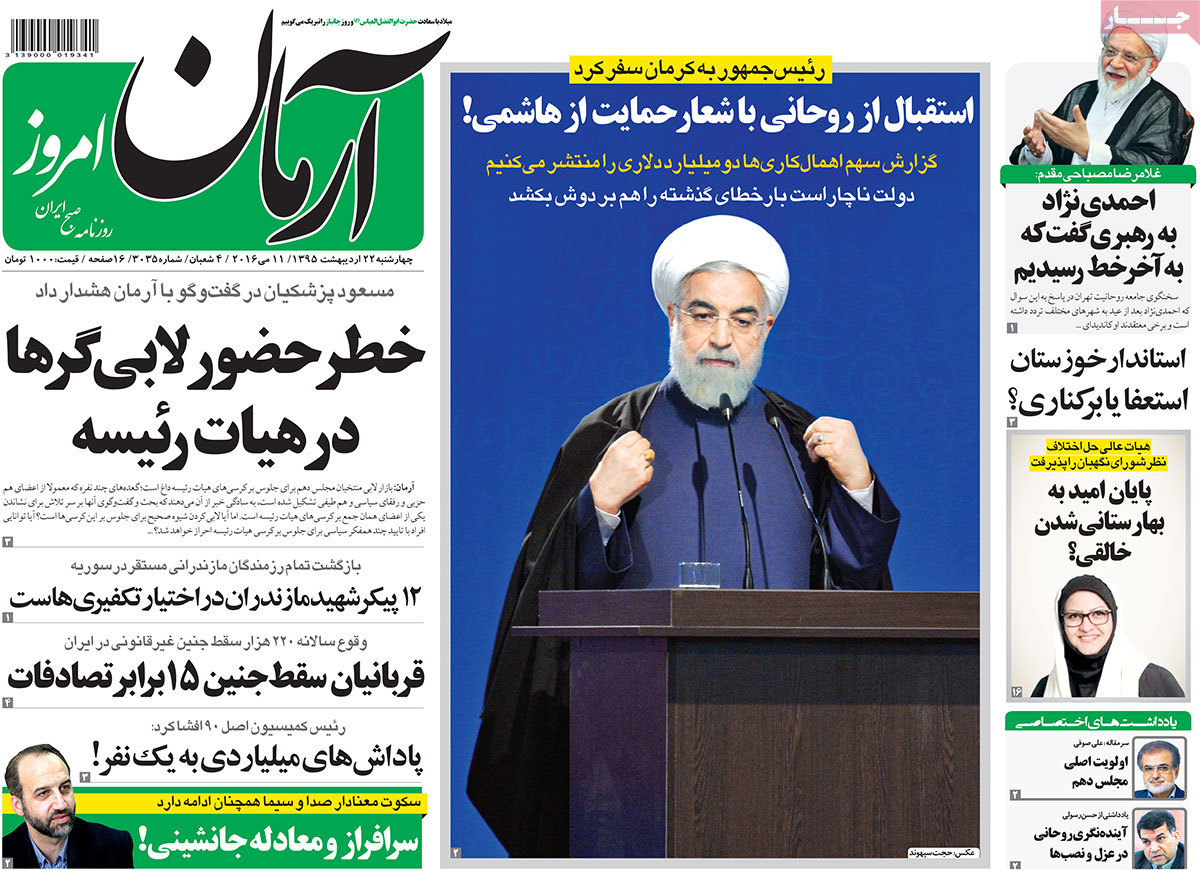
Arman-e Emrooz:

1- Victims of Abortion 15 Times More than Those of Car Accidents: 220,000 Illegal Abortions Yearly

2- IRIB Keeps Quiet over Speculations about Chief

3- Takfiri Terrorists Hold Bodies of 12 Iranian Advisors Killed in Syria
 

A Look at Iranian Newspaper Front Pages on May 11


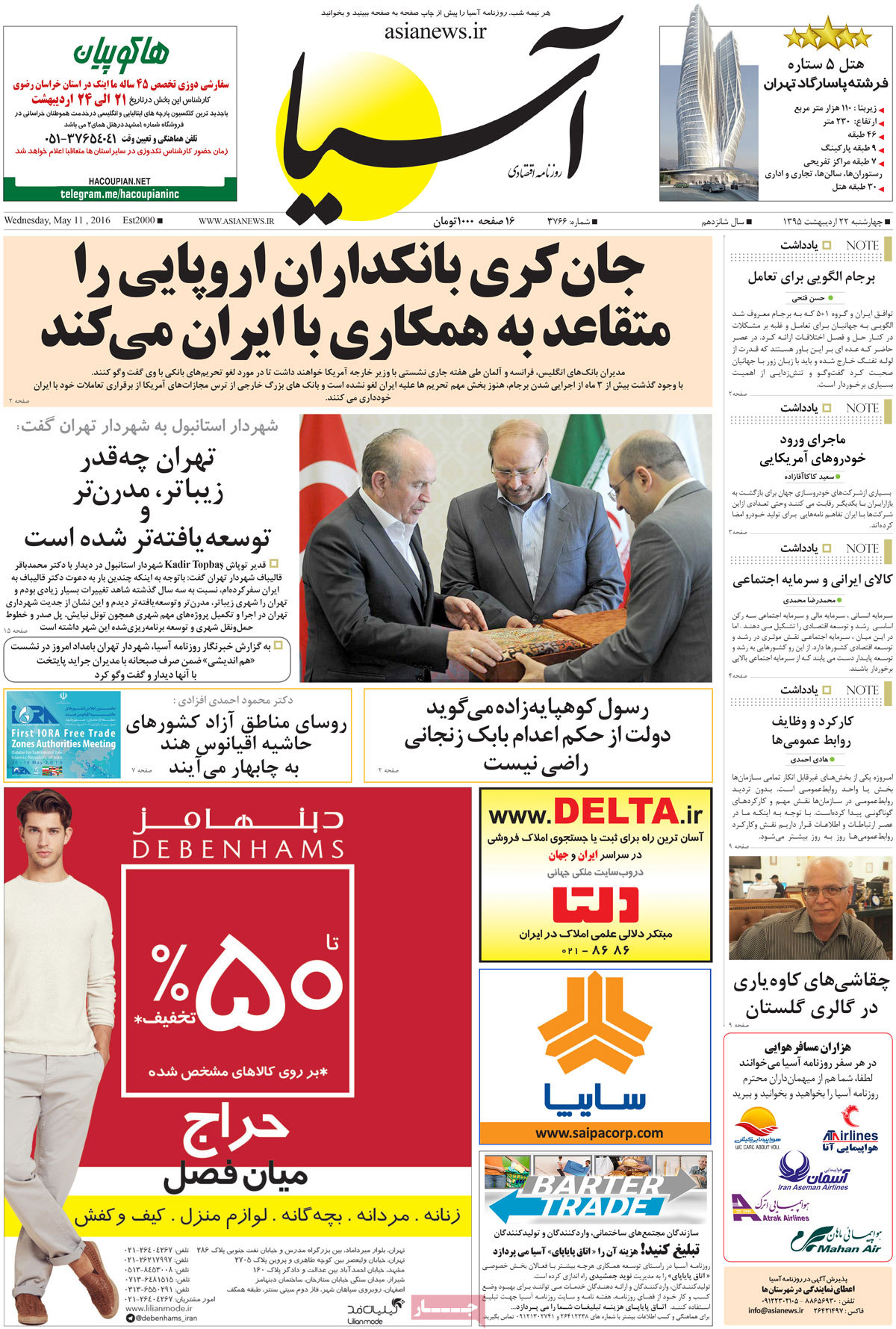
Asia:

1- John Kerry to Convince European Bankers to Cooperate with Iran

2- Istanbul Mayor Praises Tehran’s Beauty, Modernity, and Development

3- Gov’t Not Satisfied with Babak Zanjani’s Death Penalty: Lawyer

4- Heads of Indian Ocean Free Trade Zones to Convene in Iran’s Chabahar

5- The JCPOA, a Model for Interaction
 

A Look at Iranian Newspaper Front Pages on May 11


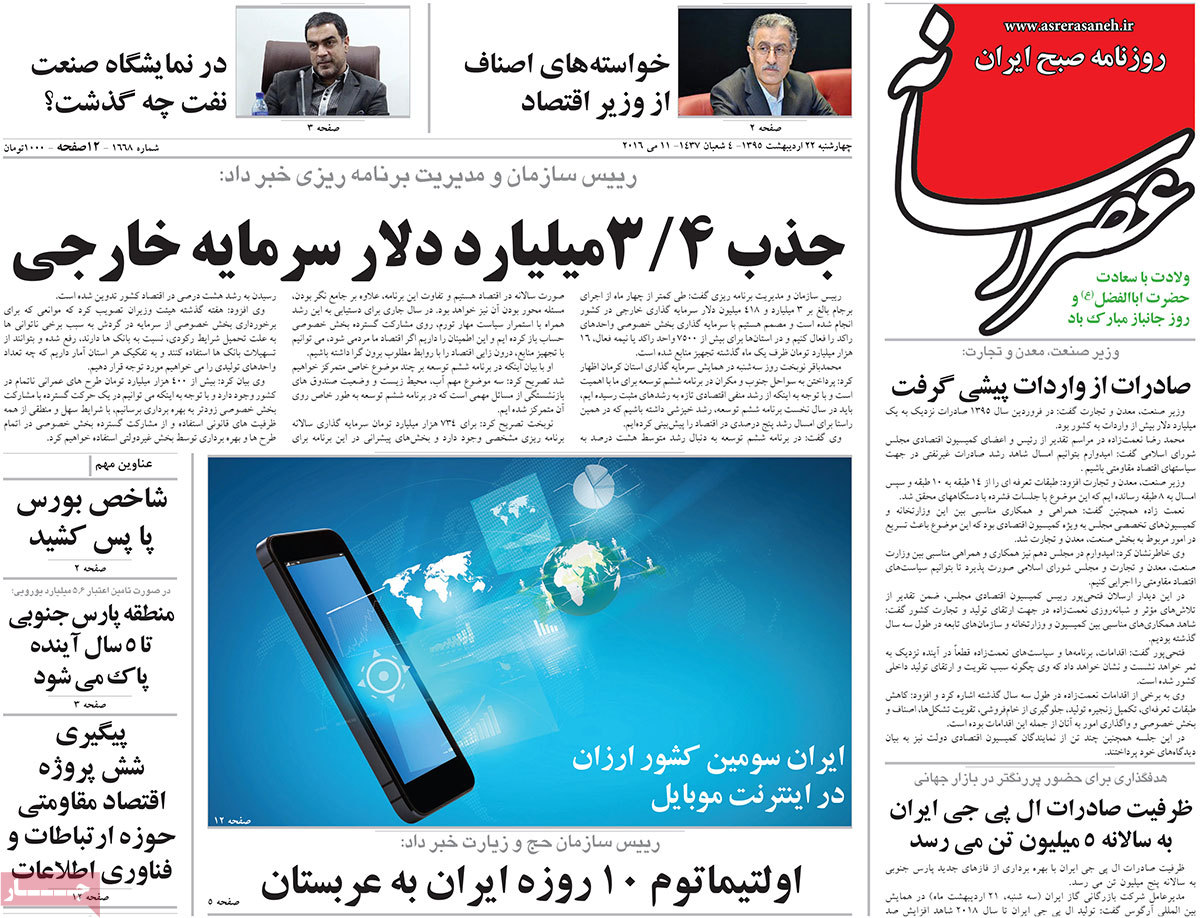
Asr-e Rasaneh:

1- Iran’s LPG Export Capacity to Reach 5m Tons/ Year

2- Iran Provides World’s Third Cheapest Mobile Internet

3- $3.4bn of Foreign Investment Attracted to Iran
 

A Look at Iranian Newspaper Front Pages on May 11


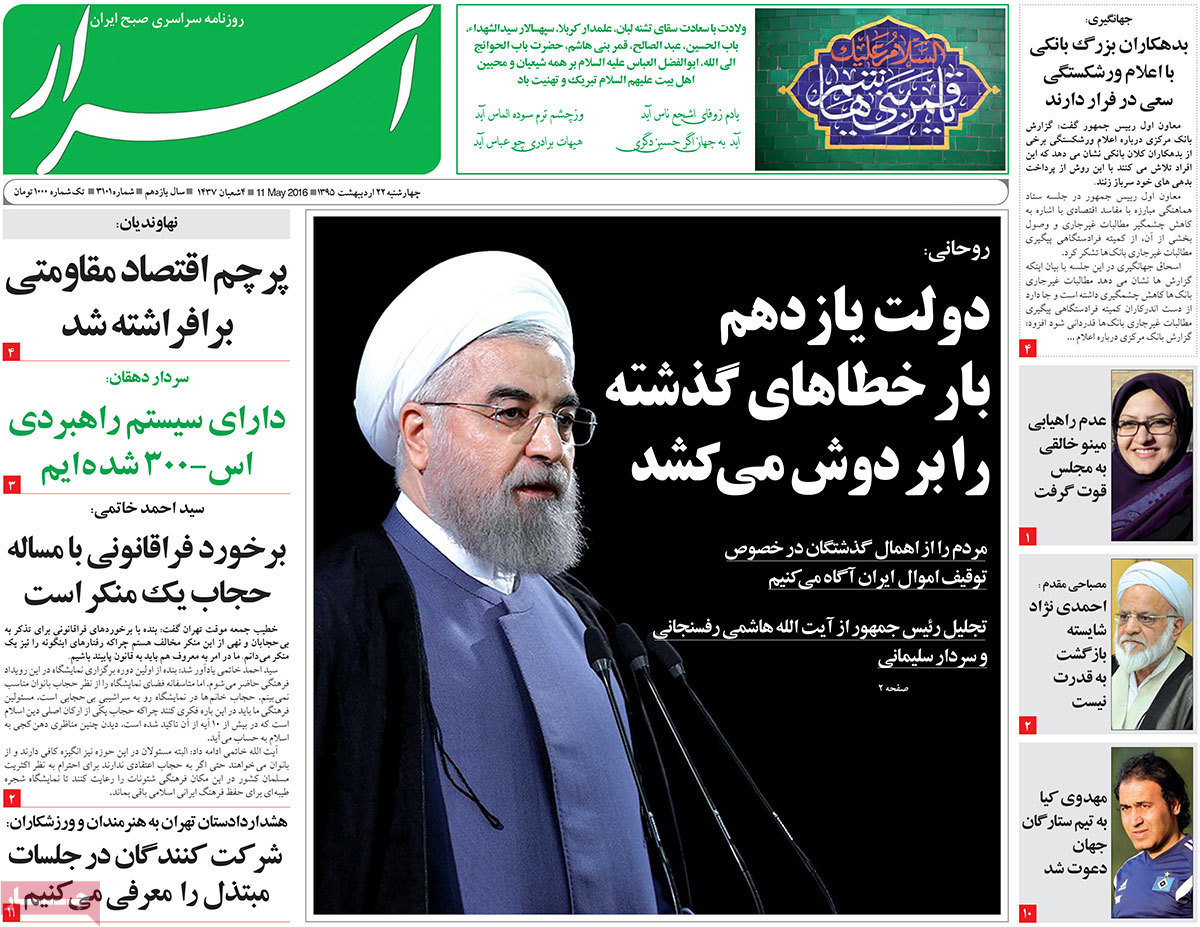
Asrar:

1- Ahmadinejad Does Not Deserve to Return: MP

2- Iran’s Mahdavikia Invited to Play for FIFA’s All Star Team
 

A Look at Iranian Newspaper Front Pages on May 11


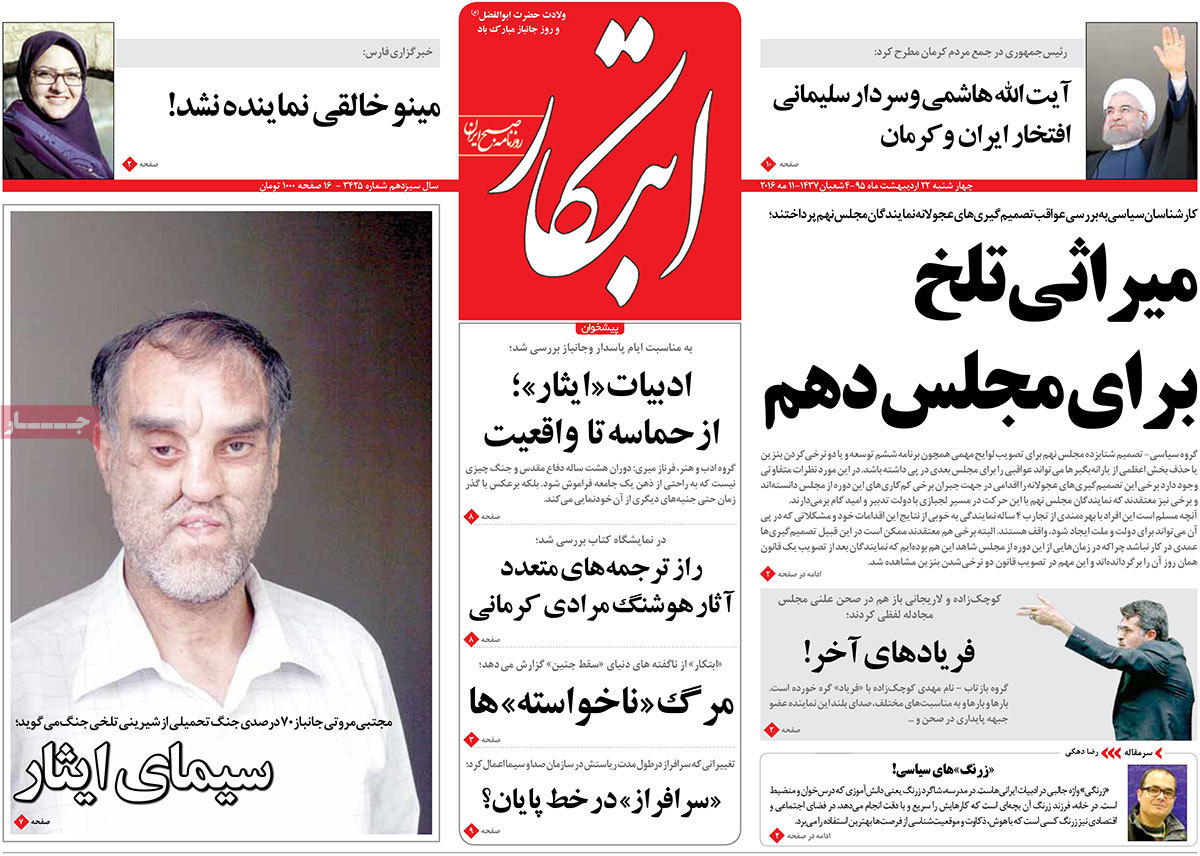
Ebtekar:

1- Ayatollah Rafsanjani and General Soleimani are the Pride of Kerman: President
 

A Look at Iranian Newspaper Front Pages on May 11


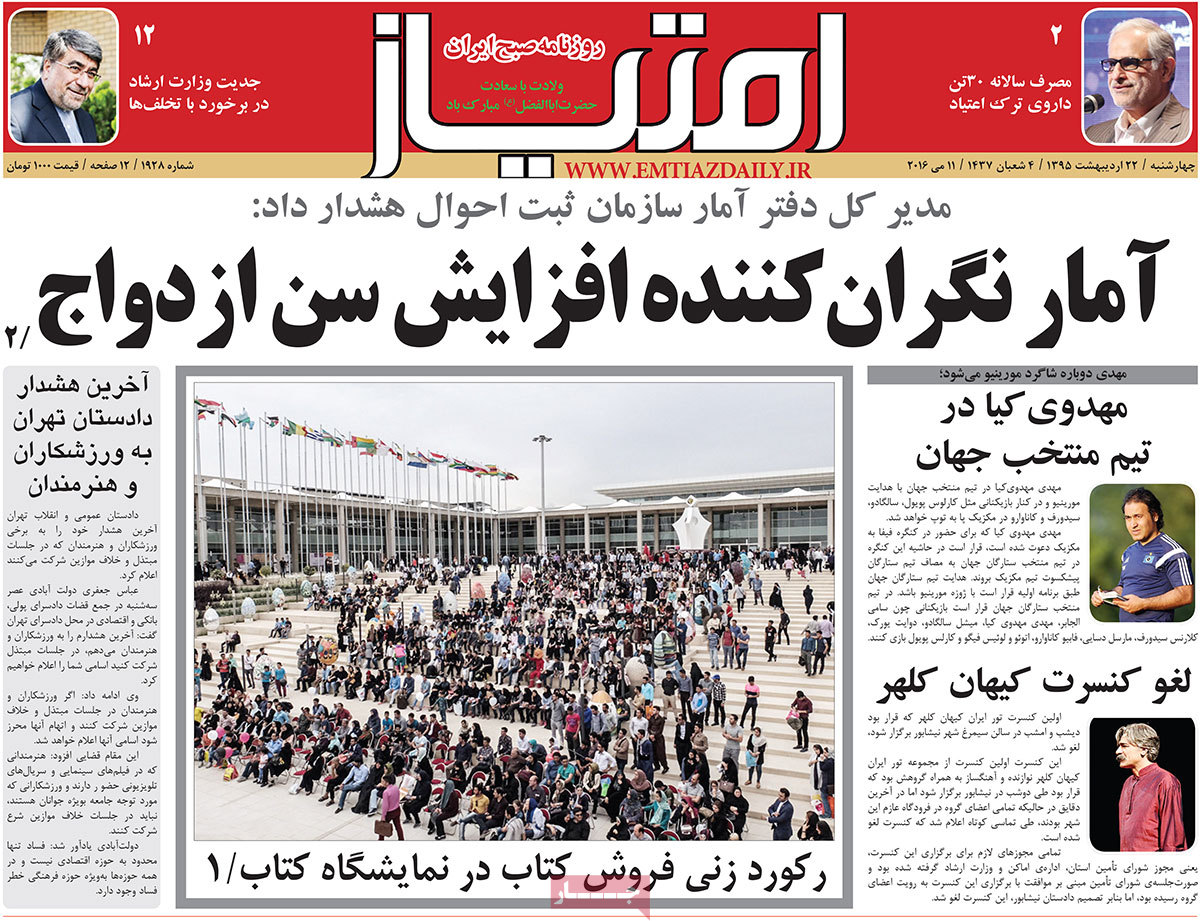
Emtiaz:

1- Worrying Statistics of Increasing Marriage Age

2- 30 Tons of Medicine Used Annually for Drug Addiction Treatment

3- Book Sales in Tehran Book Fair Break Records
 

A Look at Iranian Newspaper Front Pages on May 11


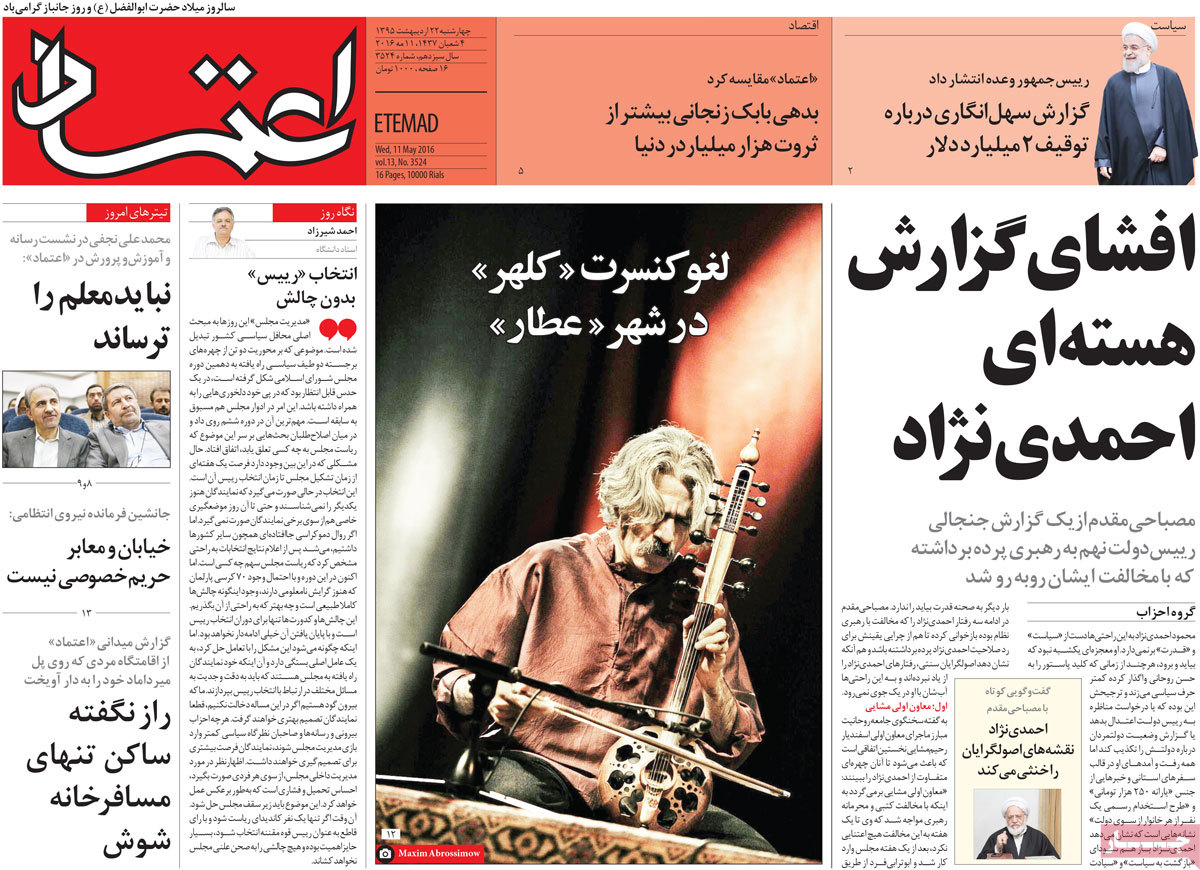
Etemad:

1- Babak Zanjani’s Debts More than Wealth of World’s 1,000 Billionaires

2- Cleric MP Exposes Ahmadinejad’s Controversial Nuclear Report to Leader
 

A Look at Iranian Newspaper Front Pages on May 11


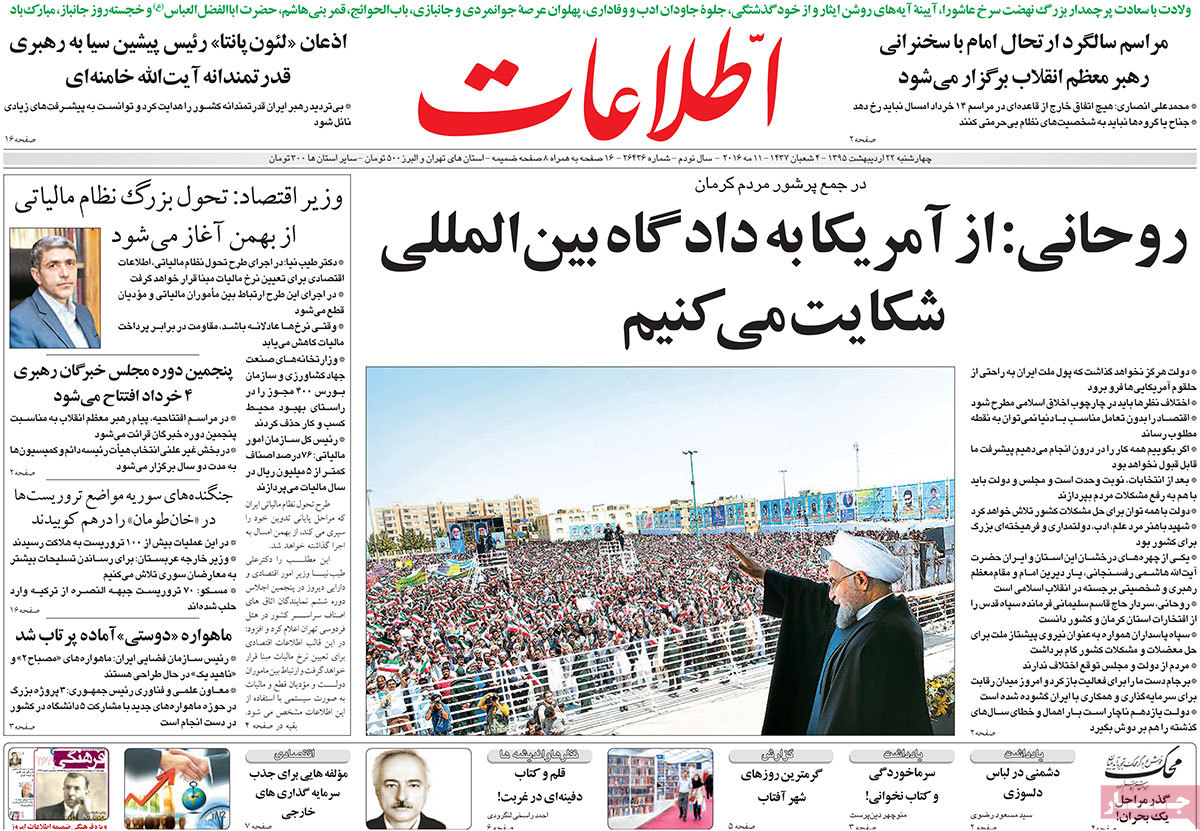
Ettela’at:

1- Iran to Sue US in International Court: President Rouhani

2- Big Change in Iran’s Taxation System to Begin in Early 2017: Minister

3- Syrian Jet Fighters Pound Terrorists’ Positions in Khan Touman

4- “Friendship” Satellite Ready to Be Launched
 

A Look at Iranian Newspaper Front Pages on May 11


Ghanoon:

1- Hush! Listen to Neda’s Silence! [A 9-year-old girl in a village in Zanjan had been harassed by her teacher several times. She finally informed her mother, and now the case is being pursued]

2- Iranians Have Become Kinder to Wildlife

3- President Rouhani Vows to Reclaim Iran’s Money from US: We’ll Spare No Effort in Restoring Our Rights
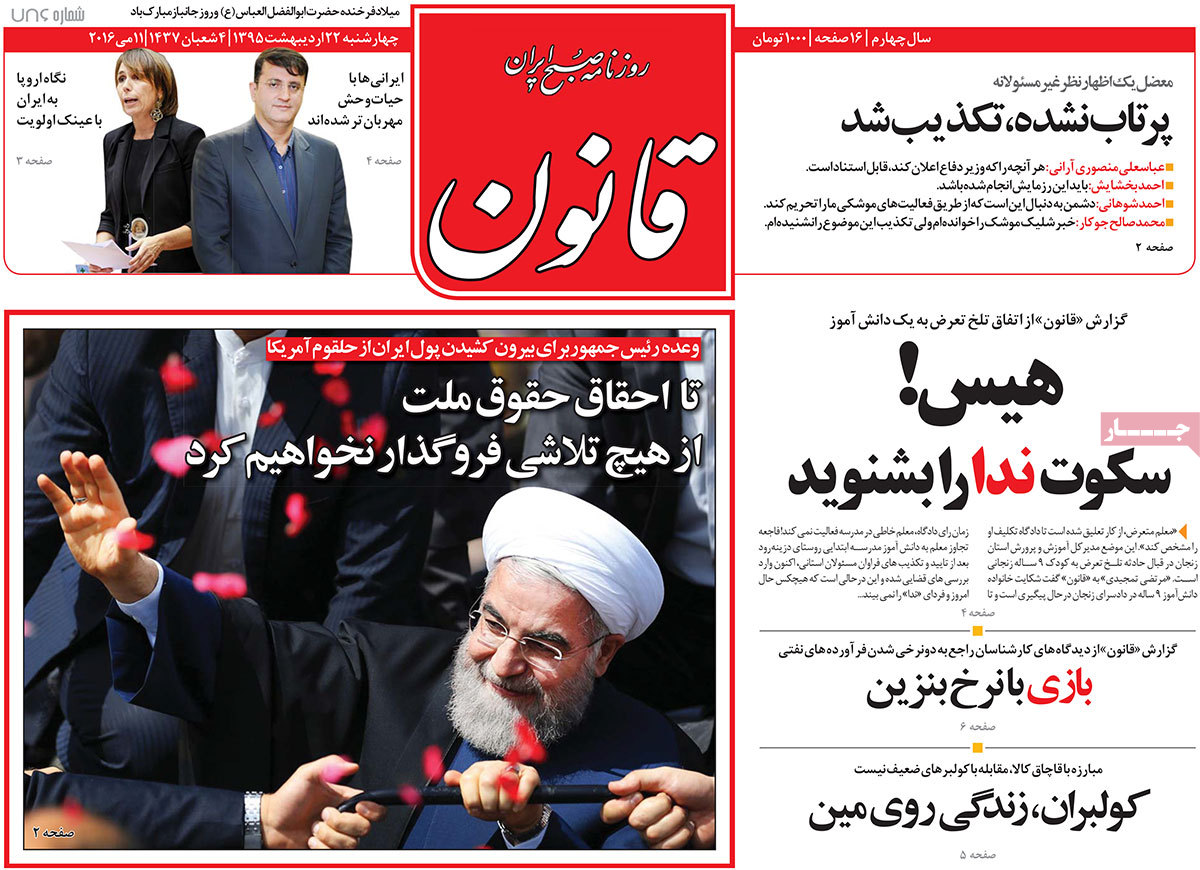
 

A Look at Iranian Newspaper Front Pages on May 11


Hamshahri:

1- Iran-US Dispute in The Hague

2- War of Words between Mayor of London Sadiq Khan and Donald Trump

3- Water Crisis in Tehran Still Serious

4- Secrets behind Khan Touman Plot
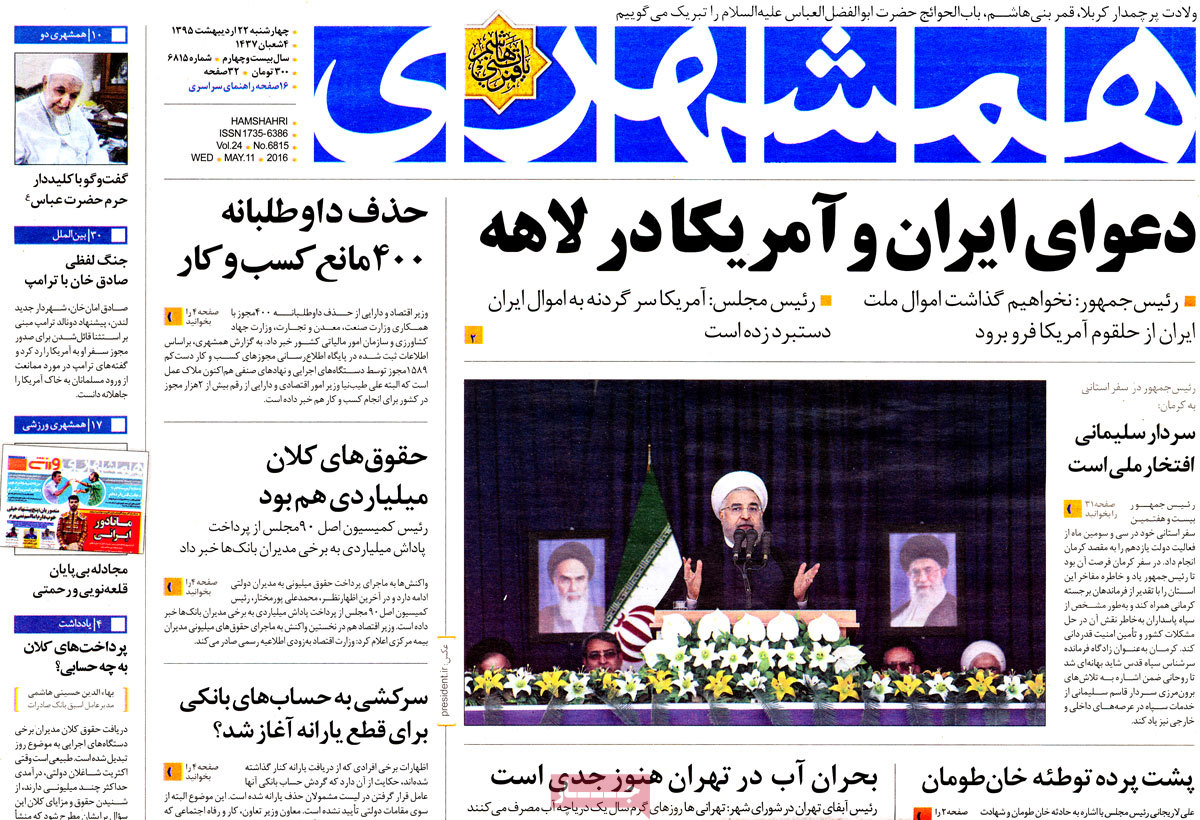
 

A Look at Iranian Newspaper Front Pages on May 11


Hemayat:

1- If US Makes Any Mistake [in Persian Gulf], Its Warships Will Be Sunk: IRGC Navy Commander

2- Iran Ready to Host Int’l Conference of Fight against Corruption

3- Increase in European Countries’ Willingness to Exit European Union
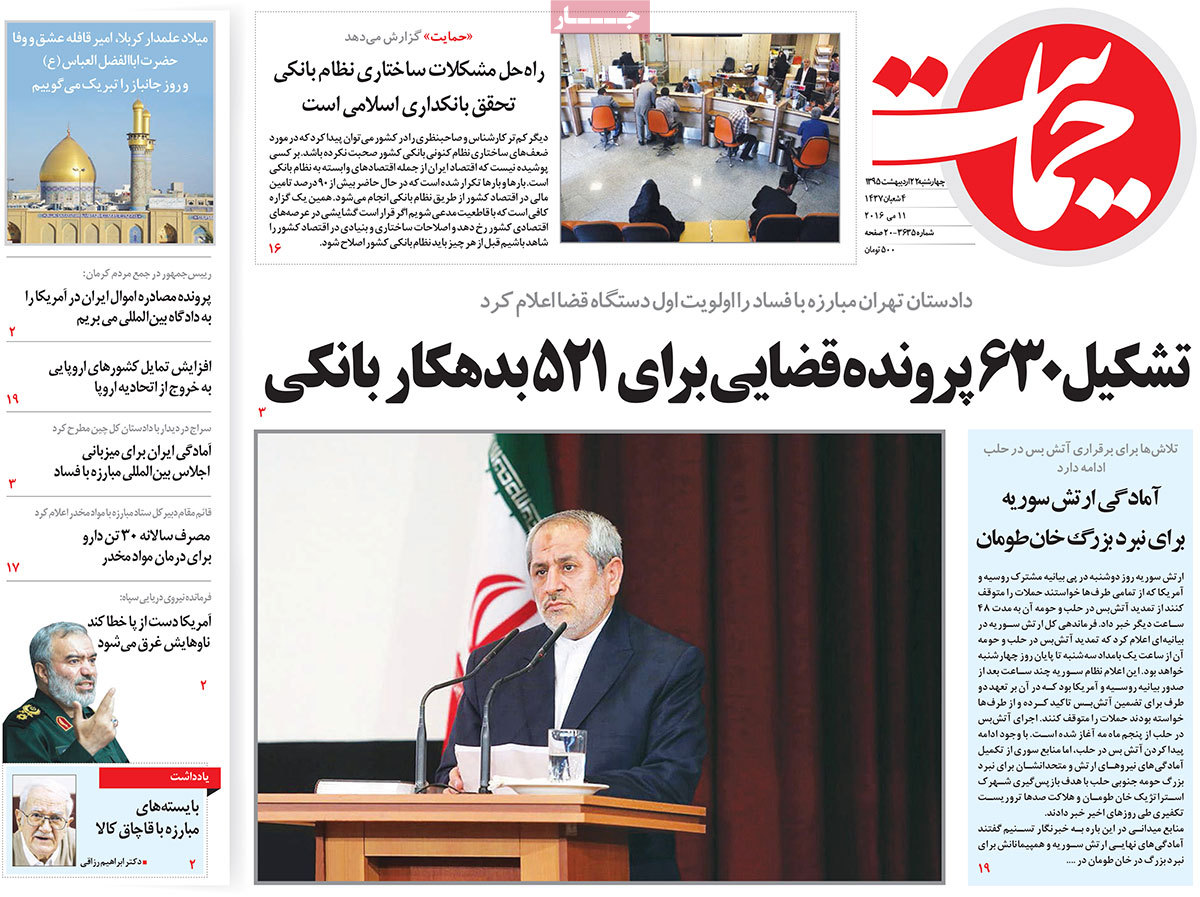
 

A Look at Iranian Newspaper Front Pages on May 11


Honarmand:

1- Asghar Farhadi’s Salesman Starts Competition with 20 Films in Cannes Festival
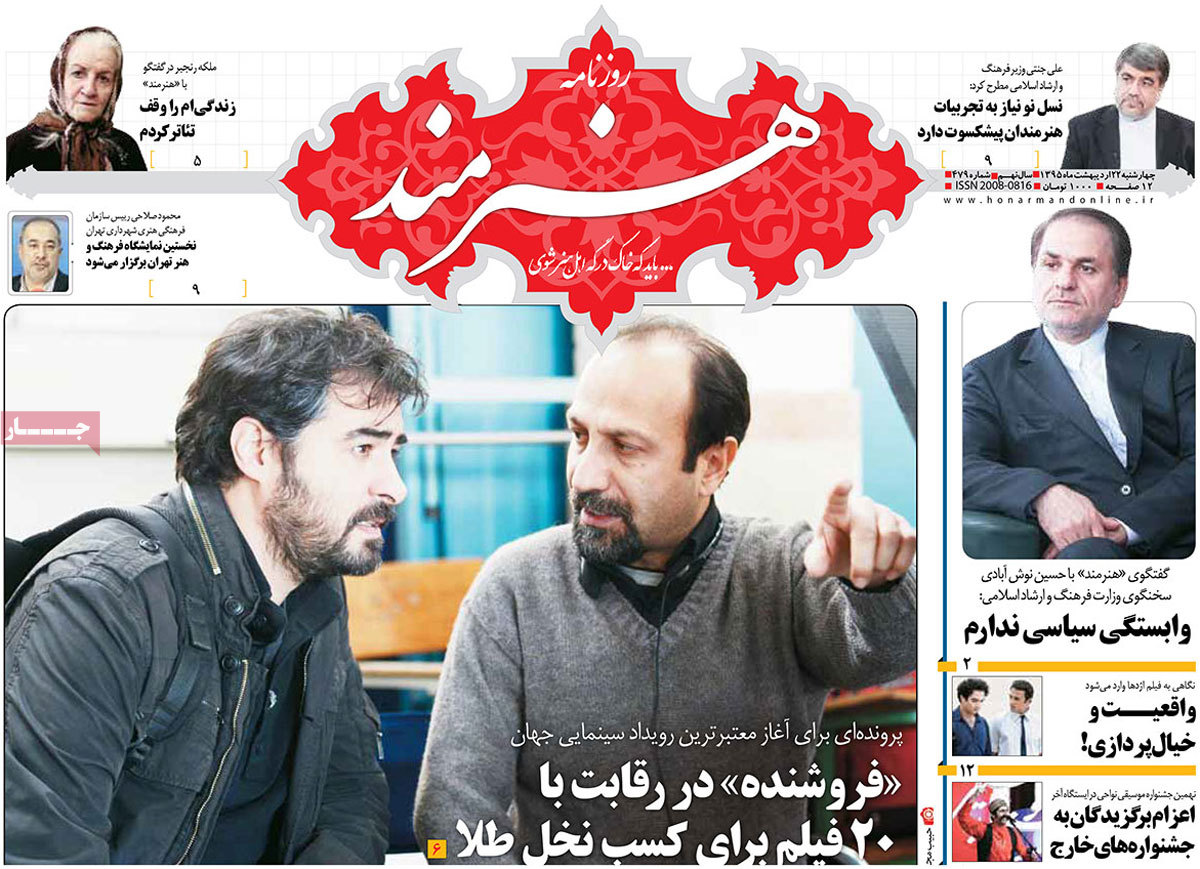
 

A Look at Iranian Newspaper Front Pages on May 11


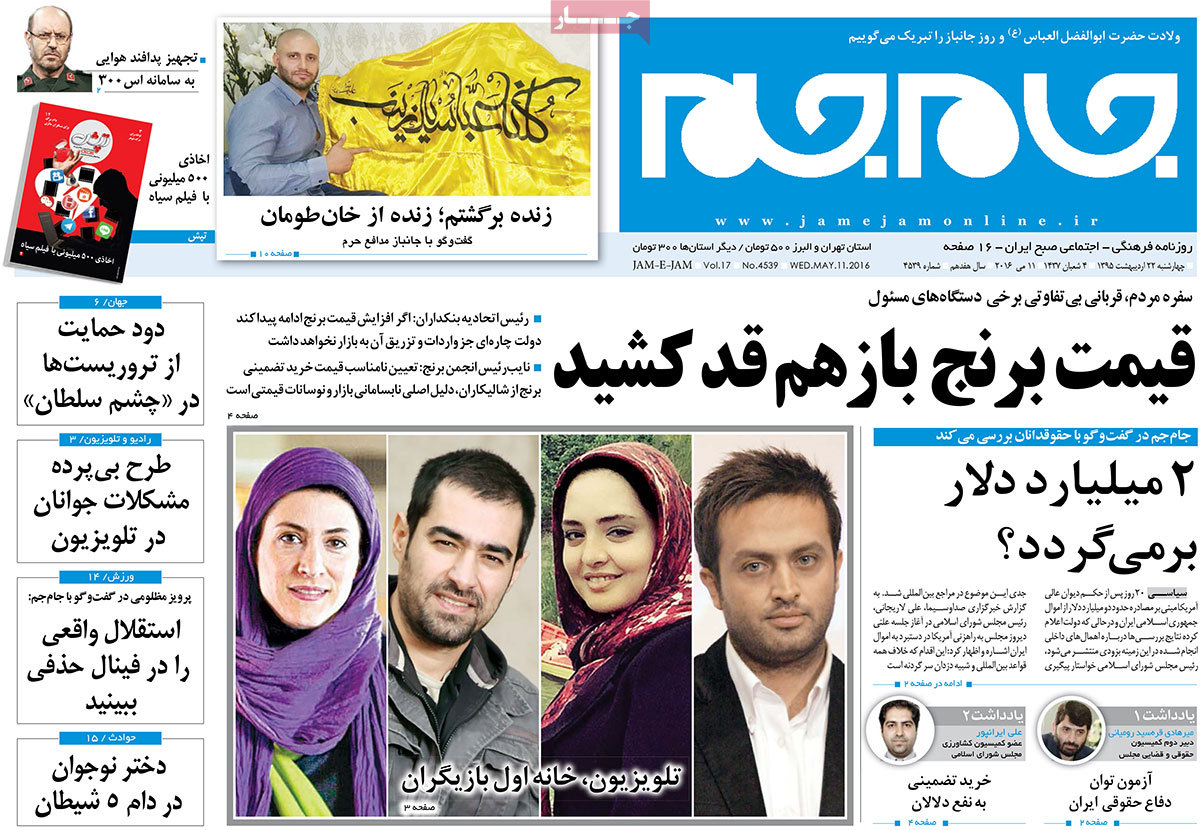
Jam-e Jam:

1- Test of Iran’s Legal Defence Capabilities: Will Iran Manage to Recover the $2bn?
 

A Look at Iranian Newspaper Front Pages on May 11


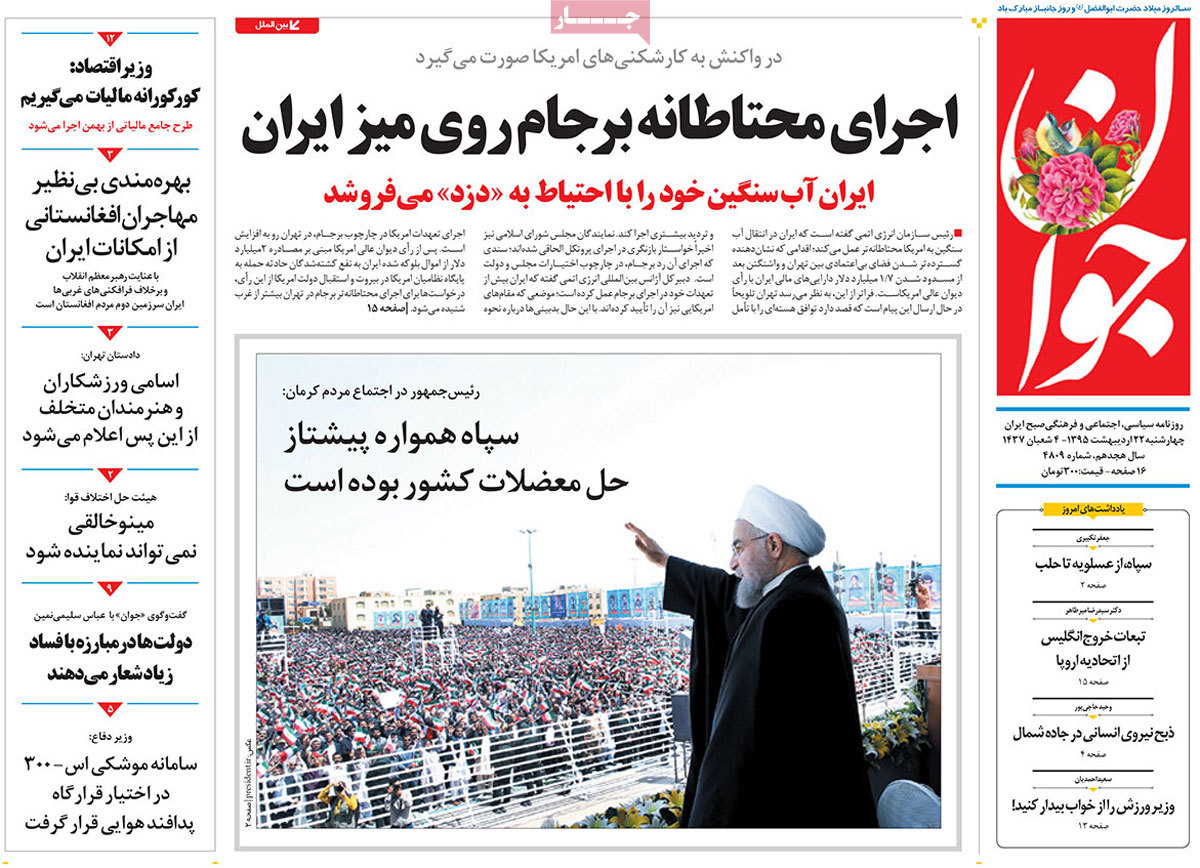
Javan:

1- In Reaction to US Stonewalling: Cautious JCPOA Implementation on Iran’s Agenda

2- Iran to Proceed with Caution in Selling Its Heavy Water to the “Thief”

3- Afghan Immigrants Enjoy Unique Facilities in Iran

4- IRGC Always a Pioneer in Solving Iran’s Problems:  President

5- The IRGC, from Assaluyeh [southern Iranian town, home to giant gas fields] to Aleppo [where Iranian advisors are helping the Syrian Army in their fight against terrorism]

6- Iran’s Arbitration Board Backs Guardian Council, Approves Minoo Khaleghi Parliamentary Disqualification
 

A Look at Iranian Newspaper Front Pages on May 11


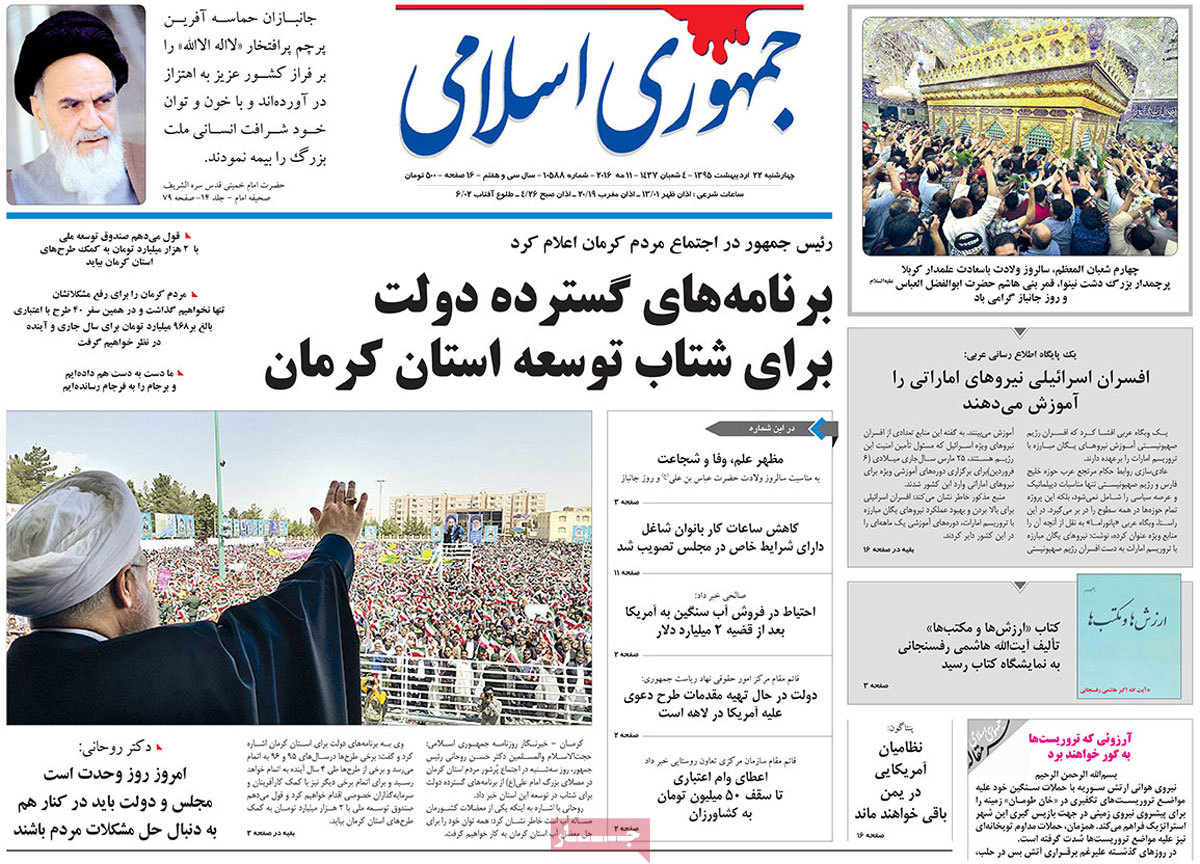
Jomhouri Eslami:

1- Government’s Extensive Plans for Accelerated Development of Kerman

2- Israeli Officers Train Emirati Forces

3- American Military to Stay in Yemen
 

A Look at Iranian Newspaper Front Pages on May 11


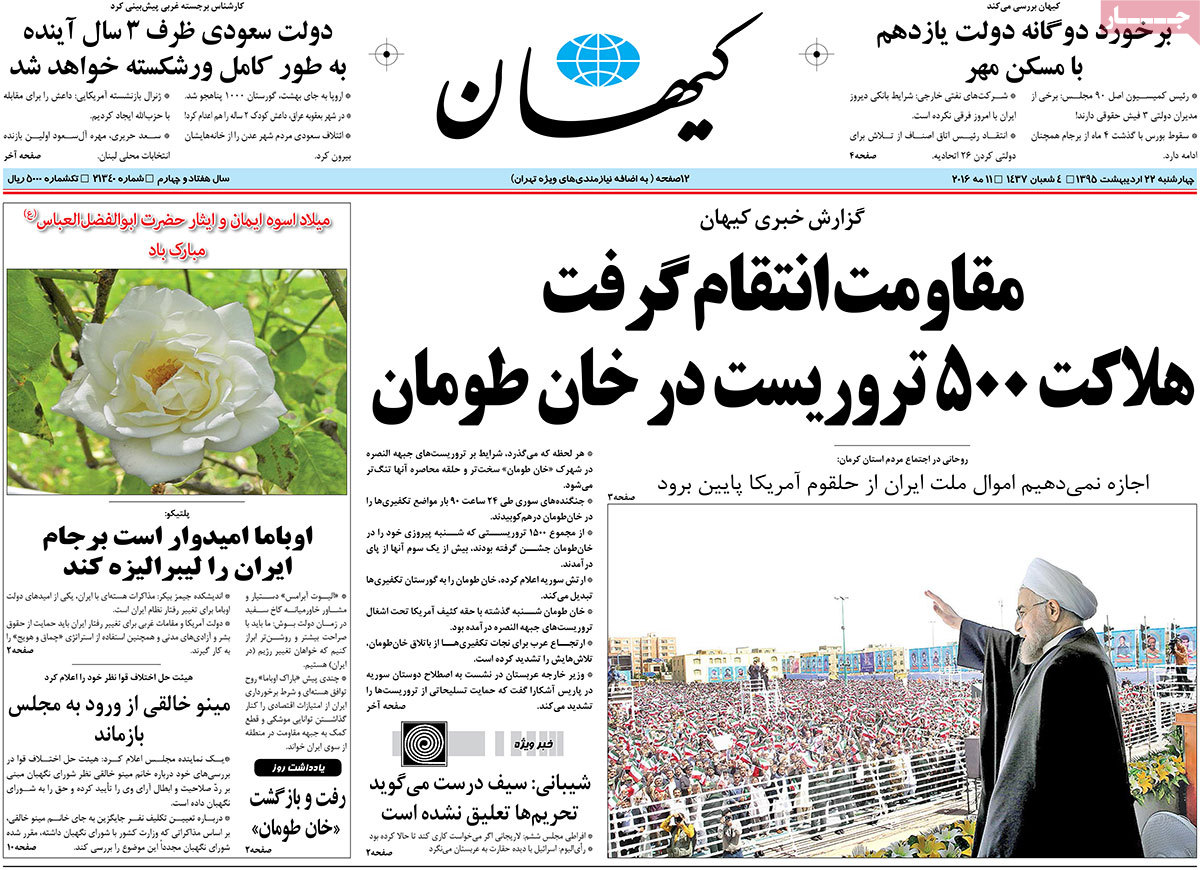
Kayhan:

1- Obama Hopes JCPOA Will Liberalize Iran

2- Resistance Front Takes Revenge: 500 Terrorists Killed in Khan Touman

3- Saudi Gov’t to Go Bankrupt in 3 Years: Western Analyst

4- Retired US General: We Created ISIS to Fight Hezbollah
 

A Look at Iranian Newspaper Front Pages on May 11


Khorasan:

1- Tehran’s Prosecutor-General Warns Celebrities against Attending Improper Gatherings

2- Iran Gives 10-Day Ultimatum to Saudi Arabia over Hajj Issue
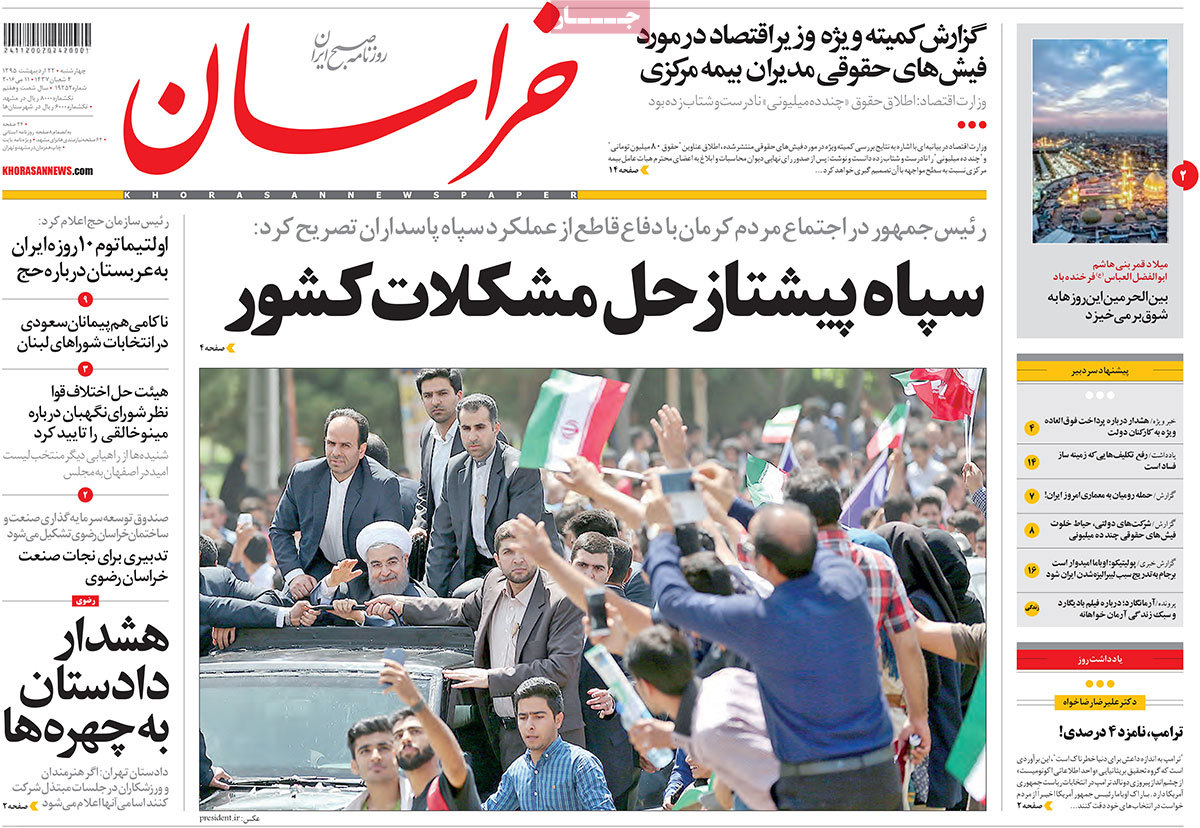
 

A Look at Iranian Newspaper Front Pages on May 11


Sayeh:

1- Internet Users Breaking Records: Iran Ranks 13th in World Internet Use
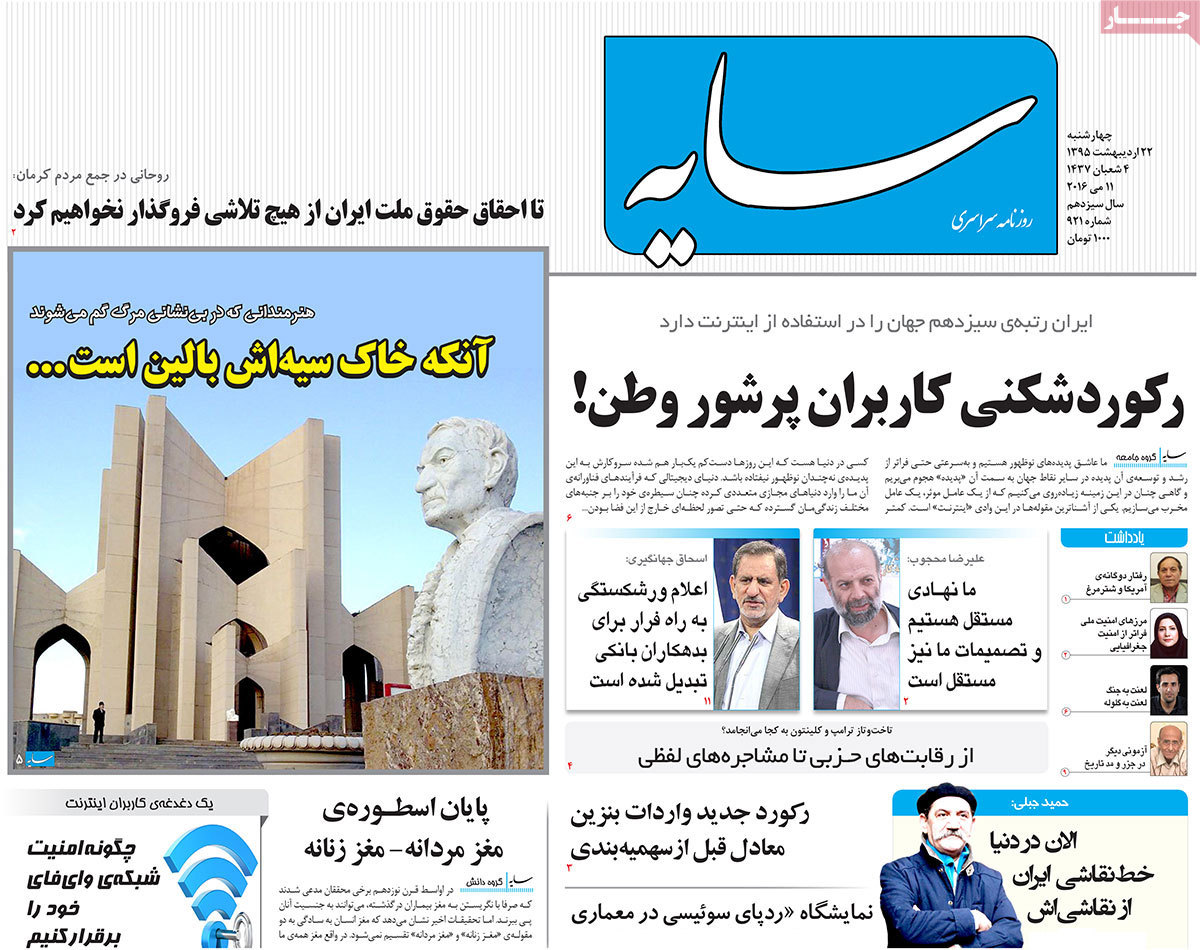
 

A Look at Iranian Newspaper Front Pages on May 11


Shahrvand:

1- Women and Children Die in Accidents 14 Times More than Men

2- Double-Standards of Brands for Iranians and non-Iranians
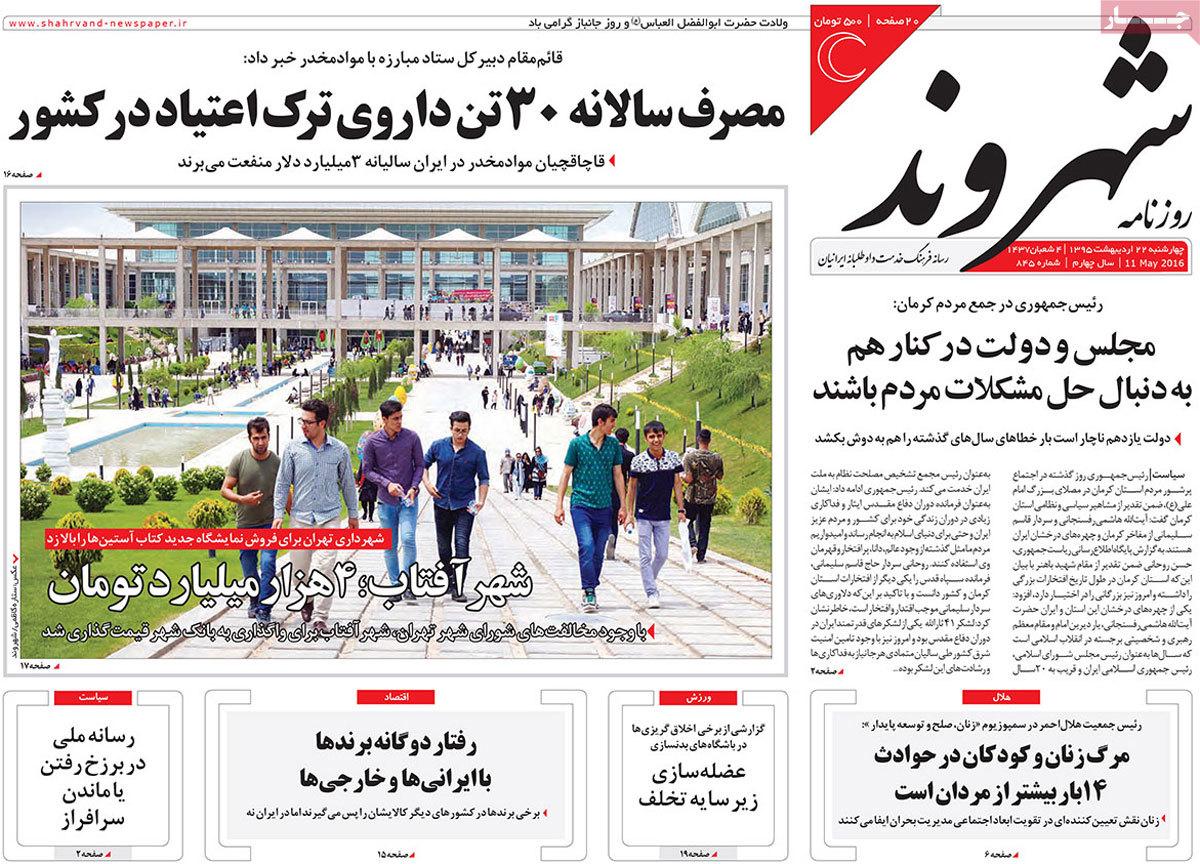
 

A Look at Iranian Newspaper Front Pages on May 11


Shorou:

1- [Afghan 6-year-old girl] “Setayesh” [who was recently raped and murdered] Was a Victim of Treating Immigrants Like 2nd-Class Citizens: Analyst
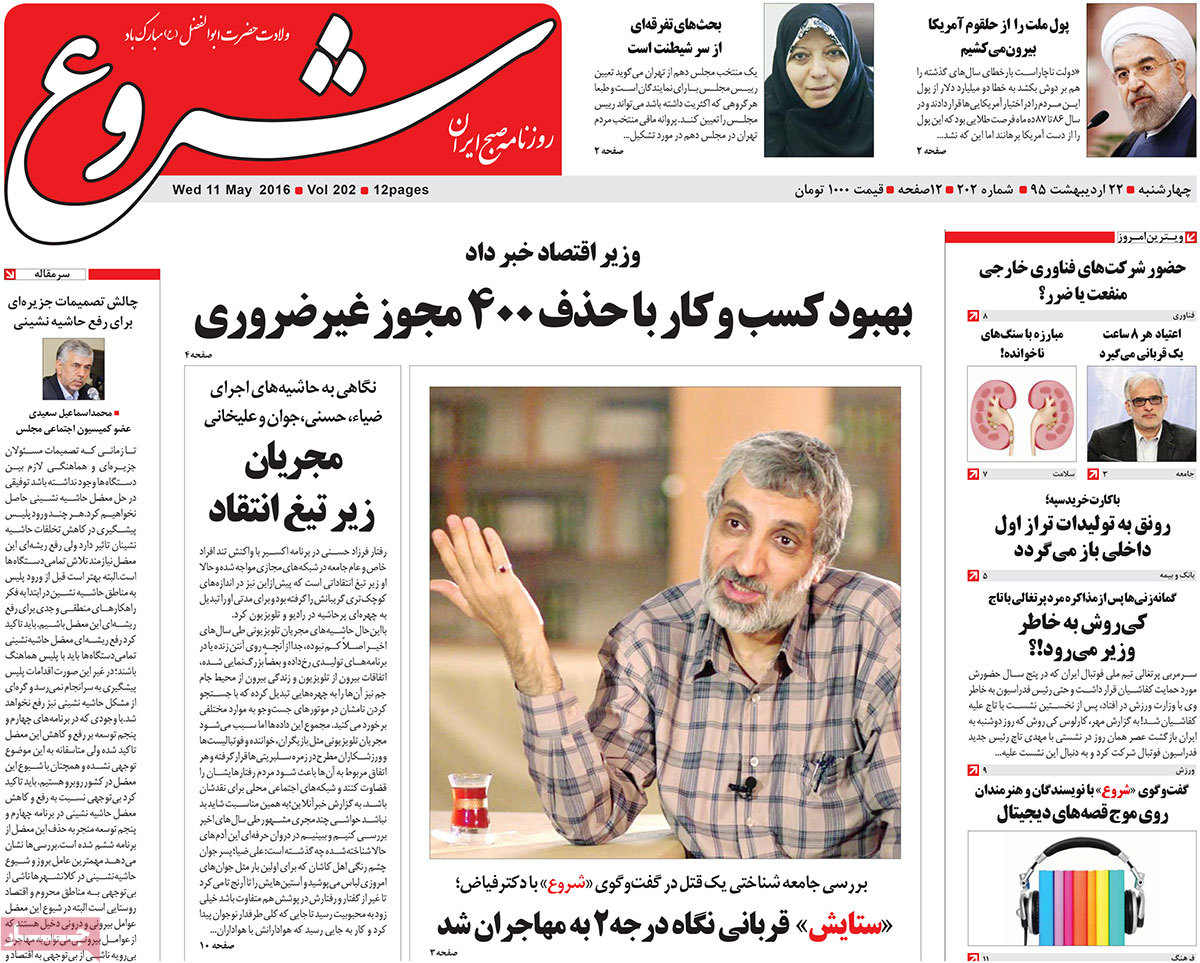

 

A Look at Iranian Newspaper Front Pages on May 11


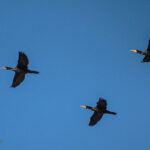
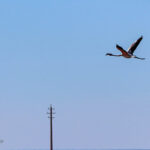
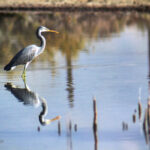
“Let’s Fight against Illegal Killing and Trade in Migratory Birds”


International Migratory Bird Day is an event held since 2006 by two international wildlife organizations: The Convention on the Conservation of Migratory Species of Wild Animals (CMS) and the Agreement on the Conservation of African-Eurasian Migratory Waterbirds (AEWA).

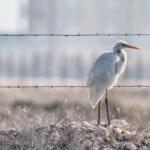
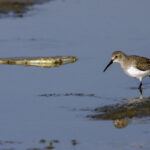
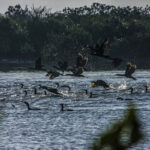
International Migratory Bird Day, with its current slogan of “When will the skies fall silent?”, highlights the steep decline in migratory birds. This loss is due to illegal activities like hunting, catching live birds and illegal trading.

Avian migration is a natural miracle. Migrating birds cross different countries with different social, political and environmental legislations during their migration. This means there’s a need for more international coordination between governments, NGOs, local societies and all stakeholders in protecting migratory birds.

For this reason, International Migratory Bird Day has been held annually on May 10th around the world with the purpose of raising public awareness and getting government support and attention in protecting migratory birds.

Iran is a stopover on many birds’ migration routes. It is a key point in annual migrations from China, Kazakhstan, Turkmenistan, Azerbaijan and Armenia in Asia, Siberia, Northern Europe as far as Scandinavia and Africa. This demonstrates the necessity of running far more protective projects in Iran regarding migratory birds.

Every year many migratory birds are illegally hunted in the north and south of Iran, especially in the lagoons of Mazandaran and Khuzestan provinces. Considering the high amount of infractions and the social conditions of those areas, we need a national and governmental commitment in preventing such activities.

With the emphasis on this year’s International Migratory Bird Day slogan, we hope that the government of Iran and the people of the country pay more attention to the matter of protecting migratory birds and stand together against illegal hunting and trading.

Text translated by IFP, photos from Mehr.


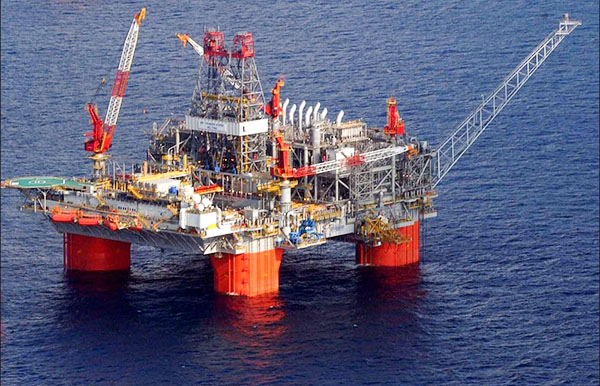
Tehran Cuts Crude Price amid Riyadh’s Surge Push

According to the Reuters report citing ‘an industry source with direct knowledge of the matter,’ Iran has set its June official selling prices (OSPs) for heavier crude grades it sells in Asia at the biggest discounts to Saudi and Iraqi oil since 2007-2008.

Iran on Tuesday set the June OSP for Iranian heavy crude at $1.60 a barrel below the Oman/Dubai average, up $1 from the previous month, the source said.

This still puts Iranian heavy at 30 cents a barrel below Saudi’s Arab Medium grade, the biggest discount between the two crudes since 2007, the report added.

This is while it said Saudi Arabia raised its June OSPs for all grades to several-month highs over claims of a rise in demand for the Saudi crude.

“We’re seeing a global increase in demand,” said Amin Nasser, head of Saudi Arabia’s state-owned energy company Saudi Aramco in a Tuesday press conference in Dhahran. “We are meeting that call on us.”

The Reuters report also noted that Tehran typically adjusts its crude price formulas to Asia at the beginning of each quarter following negotiations with its clients. However, this year it has changed at least some of its crude pricing formulas in March, April and June.

The changes helped boost its exports to Asia by 50 percent in March from a year ago.

Iranian light crude remained at 25 cents a barrel above Arab light in June, or $0.50 above the Oman/Dubai average.

Oil prices dropped to their lowest level in over a decade earlier this year as producers pumped more oil than the world needed. Yet, they have settled at around $45 a barrel.

Saudi Arabia has been widely blamed for plummeting oil prices over the past year as Riyadh has adamantly refused to cut its crude output in a bid to drive other players, including US shale producers, out of the market.

Iran to Launch Homegrown “Mesbah” Satellite into Orbit

Addressing a specialized meeting of high-ranking officials of Iran’s Space Organization in Karaj, west of Tehran, Bahrami said the Mesbah2 (Lantern) and “Nahid” satellites are under construction.

He added that the domestically-made Mesbah satellite is ready to be launched into the orbit.

Referring to Iran’s achievements in the fields of satellite and satellite carrier, Bahrami announced that “Amir Kabir”, “Zafar (victory)” and “Doosti (friendship)” are three other satellites which are also under construction and will be soon sent to the space.

Iran successfully launched into orbit its first indigenous data-processing satellite, Omid (Hope), back on February 2, 2009.

As part of a comprehensive plan to develop its space program, Iran also successfully launched its second satellite, dubbed Rassad (Observation), into the earth’s orbit in June 2011. Rassad’s mission was to take images of the earth and transmit them along with telemetry information to ground stations.

The country’s third domestically-built Navid-e Elm-o Sanat (Harbinger of Science and Industry) satellite was sent into orbit in February 2012.

In January 2013, Iran sent a monkey into space aboard an indigenous bio-capsule code-named Pishgam (Pioneer).

And later in December 2013, the country’s scientists successfully sent a monkey, called ‘Fargam’ or Auspicious, into space aboard Pajoheshan (Research) indigenous rocket and returned the live simian back to earth safely.

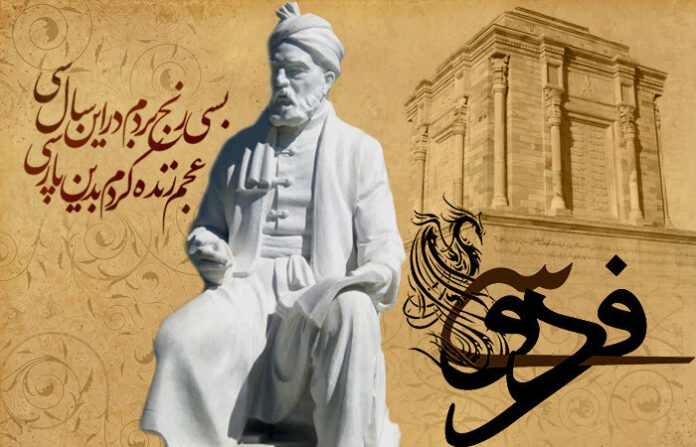
Iran Commemorates Poet Ferdowsi

Khorasan Razavi Farhangian University hosted the Seminar of Hakim Ferdowsi on Monday, during which Ferdowsi expert Nasser Kanaani delivered a speech. The university also hosted a meeting entitled “Ferdowsi and Shahnameh through the Eyes of the Orient” on Tuesday.

Tehran will continue the celebration on Wednesday by a pardehkhani (curtain-reading) performance by Shahu Salehi and a lecture by director of Ferdowsi Foundation Yaser Movahedfar at the Rostamabad Cultural Center in the Farmanieh neighborhood.

In addition, some Shahnameh experts, including Mir Jalaleddin Kazzazi, Qadamali Sarami and Mahmud Sadeqizadeh, will speak during a session at the Tehran International Book Fair on Friday.

Tehran’s City Theater Complex will also contribute to the Ferdowsi celebration on Friday with “The Path of Affection, Mystery of the Heavens”, a performance by director Shokrekhoda Gudarzi.

The celebration will end on Ferdowsi National Day on May 14 with a speech by ECO Cultural Institute President Iftikhar Husain Arif, and a performance of naqqali, a style of storytelling dedicated to epic stories from the Shahnameh.