Monday, December 29, 2025
Home Blog Page 4485

China Sets Sights on Buying 50% of Iran’s Oil Exports

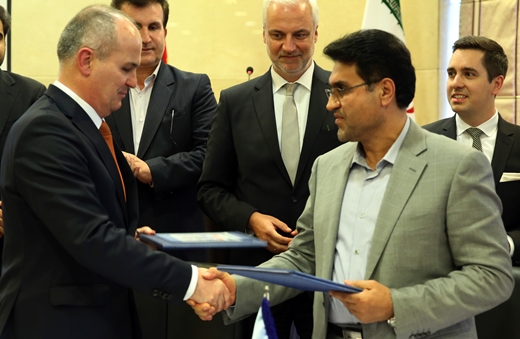
Chinese oil companies can easily outstrip all their European rivals following the removal of anti-Tehran sanctions, Yuqing said on Sunday May 15, following a ceremony during which Tehran and Beijing penned a long-term memorandum of understating (MoU) on oil cooperation.

The signing ceremony in Tehran was attended by Iran’s Deputy Oil Minister for Commerce and International Affairs Hossein Zamaninia, Yuqing and number of Iranian and Chinese officials, Shana reported.

Yuqing further said that Chinese firms are using the state-of-the-art technology and have managed to maintain the highest level of international standards.

He added that they are now prepared to buy half of Iran’s oil exports following the removal of anti-Tehran sanctions.

International interest in ties with Iran has been growing since Tehran and the Group 5+1 (Russia, China, the US, Britain, France and Germany) on July 14, 2015 finalized a comprehensive deal on Tehran’s nuclear program and implemented it on January 16.

Iranian Minister Meets Massoud Barzani, Reiterates Tehran’s Support for Erbil

Alavi promised his country’s support for Kurdistan Region to continue in the future, BasNews reported. Barzani, for his part, stated that further serious international cooperation and collaboration is required to defeat ISIS.

He reasserted that completely defeating ISIS in Iraq and Syria needs the international community to combat terrorist ideologies and financial resources.

The pair also discussed relations between Erbil and Tehran, the long-promised liberation of Mosul, as well as Erbil-Baghdad disputes.

Alavi previously met with the Kurdistan Regional Government (KRG) Prime Minister Nechirvan Barzani, and discussed the current political, security and economic situation in the region.

The Iranian official had arrived in Baghdad earlier this week and met with a number of senior Iraqi officials before visiting Erbil.

Italy to Build Hospital in Iran’s Isfahan

The agreement was inked by Italian healthcare company ‘San Donato’ and Isfahan University of Medical Sciences on Sunday May 15.
It was signed on the sidelines of the 1st International Forum for Investment Opportunities in the IRI Health System, which opened in Tehran on May 15 in the presence of the Minister of Health and Medical Education, Hassan Hashemi.

At the two-day forum, 16 agreements on health cooperation between Iran and foreign investors have been signed. Most of those agreements were related to cooperation in hospital construction.

Azerbaijan President Calls for Expansion of Tehran-Baku Agricultural Ties

Iran and Azerbaijan are “brothers” and “friends,” and should increase their cooperation in agriculture and farming industries, Aliyev said in a Sunday May 15 meeting with Iran’s Agriculture Minister Mahmoud Hojjati in Baku.

Expressing satisfaction over the good relations between the two neighbours, he said the political leadership of the two nations has been making efforts to further enhance mutual ties.

Hojjati, for his part, welcomed the measures taken in the past years to bolster the relations between the two neighbours. He also submitted the Iranian President’s message of greeting to his Azerbaijani counterpart.

During the meeting, the two sides also exchanged views on investment in the agricultural sector, and in construction of joint production units.

Iran and Azerbaijan have accelerated efforts in recent years to forge closer partnerships in various areas.

Back in February, the Azeri president paid an official visit to Tehran, during which the two sides signed eleven Memorandums of Understanding (MoUs) and agreements to promote mutual cooperation in a range of fields.

Iran and Russia’s Cultural Ties Much Deeper Than You Think

Russian literature, with its frequent themes of suffering and sadness, has always been widely read by Iranian book-lovers. Leo Tolstoy, Fyodor Dostoevsky, Anton Chekhov and Alexander Pushkin are as familiar to Iranian readers as Hafez, Ferdowsi or more contemporary Persian novelists such as Sadegh Hedayat or Simin Daneshvar. Perhaps, though, Russian contemporary literature has been largely eclipsed and neglected in Iran’s intellectual circles. Tehran International Book Fair 2016 sought to remedy that.

Now in its 29th edition, Tehran International Book Fair chose Russia as the guest of honour, a country whose vast reservoir of rich literature has long fascinated Iranian readers with tales of human alienation, great suffering, and philosophical and psychological questions.

Iran-Russian relations date back to the 16th century. Such historical ties are intertwined with a long-standing tradition of cultural, political and social interaction, giving both countries even more reason to step up cooperation in as many fields as possible. It may come as a surprise to know that Russian President Vladimir Putin listed a book of poetry by Persian poet and mathematician Omar Khayyam among his top nine favourite books. In 2008, Russia even published the first edition of Khayyam and Putin, a book containing Putin’s favorite Khayyam quatrains and interviews with news networks around the globe regarding his admiration for the Persian poet.

“…the history of our countries [Iran and Russia] and the interaction of our cultures goes much deeper and has much stronger roots than specialists sometimes think. This is a guarantee that we will always find a way of solving any problems that arise, because we understand each other,” he said in a 2007 interview.

To find more about Russia’s involvement in TIBF, I had a discussion with the Director-General of Russia’s International Book Exhibitions and Fairs, Sergey Kaykin, who believes that Russia’s presence can serve as a turning point in bilateral relations, helping them reach a better common understanding on cultural grounds.


Russia was chosen as the guest of honour for the 29th Tehran International Book Fair. How did that decision come about?

Officials of the two countries held several rounds of talks for nearly one year until they arrived at the decision to further boost cultural ties between Tehran and Moscow by giving the publishers more room to introduce their works, and allow the two nations a chance to get better acquainted with each other’s culture. As a result of the negotiations, Iran attended Moscow’s International Book Fair 2015 as a special guest, and now it was our turn to bring snippets of Russian culture to this ancient land.


What did you think of Iran’s presence at 2015 Moscow Book Fair?

Iran had a very interesting presence at the fair. It had a very organized schedule with various interesting cultural programs. They compiled a list of Iranian contemporary writers and their literary works for the specialists interested in this field. Furthermore, they had a list of foreign works translated by Iranians as well.

Iran’s programs were not limited to books, however. There were a number of special programs designed for visitors interested in Iranian culture. Some symbols of Iran were put on display. Perhaps the most praise was lavished upon the Iranian traditional music that was performed during the four-day event. Other interesting programs included a traditional performance of Persian marionettes, or Kheimeh-Shab-Bazi, and Naqqali, an epic narration inspired by Ferdowsi’s Shahnameh (Book of Kings).

During the fair last year, Iran and Russia signed an agreement on exchanging stands in one another’s exhibitions. That is, every time there is an international exhibition in Moscow, Iran’s stand will be secured and in turn, Russia can have a stand in Iran’s international exhibitions, all without any costs.


What about Moscow’s special programs at Tehran’s Book Fair for introducing Russian culture to Iranian visitors?

We came to the festival with a full schedule of programs running for ten days. We held several lectures on Russia’s contemporary literature, introducing a number of key authors and books, as well as several round-tables for discussing issues of mutual translations, and the two countries’ prospects in the publishing industry. In order to have a permanent program for introducing Russia to Iranian people, a centre was recently opened in Iran called ‘Visit Russia’ which gives useful information about the country’s culture. If visitors at the fair plan to visit Russia, they can coordinate their trip through this cultural centre.


What do you think the biggest current challenge facing the publishing industry is in Russia?

The number of active publishing houses and bookstores in Russia has declined in recent years, and people have become less invested in reading.


Why the decline in interest, though? What is to blame?

Well, that question is not very easy to answer. I think people nowadays have less time for reading. Either that, or even when they do get some free time, they have now more options on how to spend it, such as going to the theatre, the cinema or surfing the internet. All these factors may lead to a decline in interest in book-reading. I think the decreasing number of bookstores is more to blame, though. Last year, the Russian government implemented a plan in support of promoting book reading and started constructing bookstores in parts of the country where there was a shortage of stores, so that people’s interest in books would be rekindled.

Interview by: Marjohn Sheikhi 

Green Film Official Hails DiCaprio’s Reaction to Lake Urmia Crisis

Farhad Tohidi, director of the 5th Green International Film Festival, which is underway in Iran from May 13-20, said that DiCaprio’s recent Instagram post “was a sign of attention, and of the importance of this happening on an international scale.”

Tohidi said that Dicpario’s mention of the dying lake, which was once the largest saltwater lake in the Middle East, was “really good.”

On his official Instagram account, Leonardo DiCaprio, the UN representative for Climate Change, reposted a photo by The Weather Channel, showing a dock on an apparently dry surface of Lake Urmia.

According to media reports, the post garnered 307,000 likes and earned him a ‘climate change hero’ status in Iran. His repost was also called one of the famous ‘regrams’ of Instagram.

The lake started to shrink and dry up due to climate change and drought.

After the photo was ‘regrammed’ by DiCaprio, Twitter was flooded with thanks and gratitude from Iranians and foreign environmentalists alike, expressing their appreciation towards the Oscar-winning actor, who paid attention to the problem.

Meanwhile, Representative of the UN Food and Agriculture Organization (FAO) to Iran and to the Economic Cooperation Organization, Serge Nakouzi, told IRNA in March that the body had signed a contract with Japan’s International Cooperation Agency to revitalize Urmia.

He added that the plan would be implemented within the context of the Integrated Program for Sustainable Water Resources Management in the Lake Urmia Basin.

Additionally, Iran’s Vice-President and Head of the Department of Environment, Masoumeh Ebtekar, has said that a revival of Urmia Lake is high on the agenda of President (Hassan) Rouhani’s government.

To see recent photos of Lake Urmia, please click here.

Iranian MPs Express Support for Hezbollah in Letter to Nasrallah

Parliament

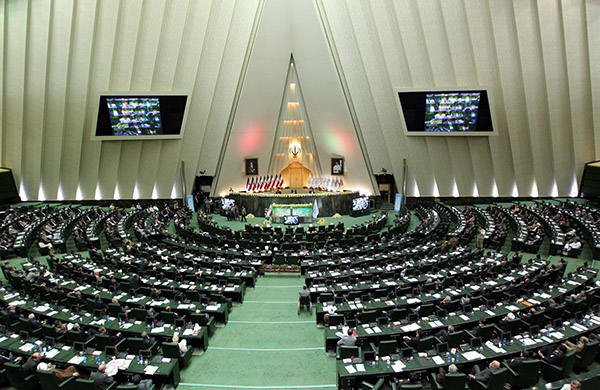
The letter to Sayyed Hassan Nasrallah was read aloud at the end of an open parliamentary session on Monday May 16, according to a report by Mehr, as translated by IFP.

“Fighting simultaneously against the Zionist [Israeli] occupiers and hostile Takfiri groups is the art of great men,” Iranian parliamentarians said in the letter.

“Today, Hezbollah shines like a sun in the sky of jihad and resistance under your (Nasrallah’s) command,” they went on to say, expressing their hope that one day the light of resistance will cover the entire world.

“We, representatives of the Iranian nation, offer our congratulations and condolences over the martyrdom of the great fighter of the Resistance Front, Seyyed Zulfaqar, Seyyed Mustafa Badreddine, who spent part of his life in horrible prisons of the Zionist regime [Israel].”

They also expressed the country’s preparedness to provide the Resistance Front with any type of support.

Badreddine was martyred in a massive explosion near Damascus International Airport on Thursday, May 12, in an attack Hezbollah later said had been carried out by “Takfiri groups”.

He was the commander of Hezbollah’s military arm, its chief of intelligence, and advisor to the movement’s Secretary-General.

Lake Urmia

IRGC Commander: Iran to Stage More Drills after US Opposition

“We will not cancel any drills and will improve them and make them more frequent,” Hajizadeh told reporters in Tehran on Monday May 16.

He underlined that, with the US failure to comply with its undertakings under the nuclear deal, Iranian officials now attach more importance to making progress in different fields, including military areas, to defend the country.

In relevant remarks on Saturday, Hajizadeh stressed Iran’s continued progress in developing its missile industry, and said any weakness in this regard will make the US more arrogant in making excessive demands from Tehran.

“The Americans merely understand the language of power and force. They don’t understand logic and cannot be trusted. We should stand against them decisively, otherwise we will witness their excessive and cruel demands every day,” Hajizadeh said, addressing a gathering in the central city of Qom.

He referred to the US scenario of pressures and threats against Iran’s missile program, and warned that any compromise in this field will further embolden the Americans to eventually demand Iran to dismantle its missile industry.

“Of course they have miscalculated, and this will never happen,” he stressed.

Yonhap CEO Highlights Prospects for Yonhap-IRNA Cooperation

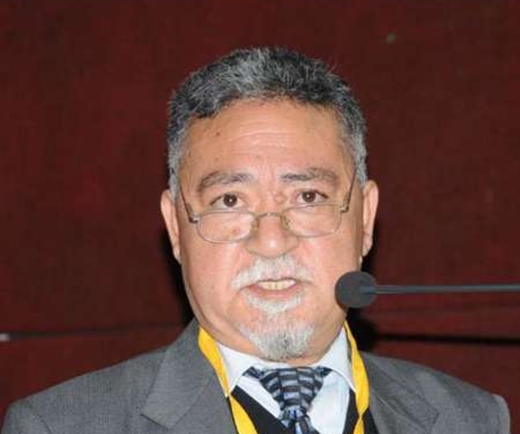
Yonhap’s Chief Ececutive Officer made the remarks on May 16 while he was on a short tour to the news room of the Islamic Republic News Agency (IRNA) in Tehran. He is in Iran by the invitation of the Managing Director of IRNA, Mohammad Khodaddi.

Referring to a previous agreement between IRNA and Yonhap in the 1980s, Park expressed hope that the two news agencies would try to take advantage of the agreement, which he believed has not been completely fulfilled so far, and will promote bilateral ties in the field of media cooperation.

Stressing that Yonhap is an independent news agency, Park said the agency prefers to have direct access to news and reports about Iran without referring to Western news agencies. Therefore, he added, the South Korean news agency welcomes an exchange of correspondents between IRNA and Yonhap.

Noting that the South Korean news agency dispatches many correspondents interntionally, Park said his visit to IRNA made it possible to boost media relations between IRNA and Yonhap, especially in terms of exchanging video clips.

Yonhap inaugurated its Tehran office two weeks ago. This is the first South Korean media to be present in Tehran.