Sunday, January 18, 2026
Home Blog Page 4434

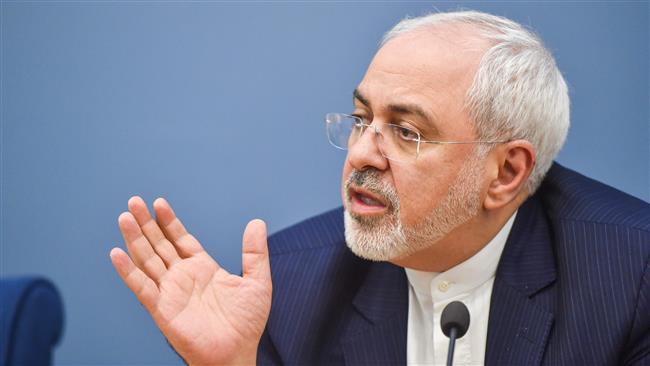
Iranian Analysts Warn Obama: Protect JCPOA or Risk Mistrust

635820723594212167

The article was published with the title Obama Needs to Protect the Iran Deal. Here is the original text, as covered by Fararu.


The United States, along with France, Germany, Britain, China and Russia, reached a historic deal with Iran last July that lifted most sanctions in return for curbs on Iran’s nuclear program. The deal, codified in the Joint Comprehensive Plan of Action and endorsed by the United Nations Security Council Resolution 2231, specifically includes allowing non-American banks to operate in Iran.

But European banks are still reluctant to enter Iran because they have no solid legal assurance from Washington that its enforcement agencies would not later sue them for violating residual American sanction laws that predate the nuclear negotiations. These laws are complex and ambiguous even to sophisticated legal departments in European banks. So the banks, understandably, have been unwilling to do business with Iran and risk fines in the billions of dollars if they unwittingly violate the rules.

That reluctance has made some critics of the historic nuclear deal question its ultimate value as a stabilizing factor in international relations and an enduring barrier to nuclear proliferation.

So far, political commitments by Secretary of State John Kerry and his Western counterparts not to pursue the banks have not had their intended confidence-building effect.

In Brussels recently, Kerry, along with the European Union’s foreign policy leader, Federica Mogherini, and their counterparts from France, Germany and Britain, pledged that their governments would encourage investments in Iran by European Union banks. They even issued a joint statement that they would “not stand in the way of permitted business activity with Iran.”

Nevertheless, European banks remain uncomfortable relying on mere words. And there is no vigorous action from the American administration to better facilitate Iran’s access to the global financial system.

One result is that a narrative is emerging in Iran that the United States has failed to live up to a key commitment under the nuclear agreement. Ayatollah Ali Khamenei, Iran’s supreme leader, recently warned that “anyone who has ever trusted America was eventually slapped by it,” and many other officials — some of whom one of the authors, Mousavian, recently met in Tehran — are increasingly upset with the United States’ performance.

If this narrative gains momentum and wipes out the sense of hope and optimism that the nuclear deal brought to Iran’s business community and its general public, we risk re-entering the tired old path of mistrust and antagonism — a lose-lose paradigm for Iran, the United States, the Middle East and beyond. It would be difficult for the two countries to cooperate on other global, regional or bilateral issues. And if Iranian public opinion turned despondent, that alone would constitute a major obstacle to any foreseeable rapprochement.

To avoid that outcome, and allow full implementation of the nuclear deal, European and other non-American banks want concrete legal assurances from the United States government that they would not be punished if they entered Iran.

We firmly believe that Obama has the power to provide such assurance, and that he should use it now.

To be specific, he should officially instruct his attorney general, and all subordinate American enforcement agencies, to refrain from prosecuting non-United States banks that wish to work with Iran. In other words, he should call a moratorium on American prosecution of foreign firms, sending the clear message that prosecution would not be the norm, but an improbable exception.

Such action would not be far-fetched. In fact, we believe that a strong case can be made that it would have precedents in the foreign-policy and constitutional history of the United States. For example, in 1831, Andrew Jackson’s attorney general, Roger B. Taney, issued a legal opinion in a case known as “Jewels of the Princess of Orange,” stating that the president, in his constitutional roles overseeing the execution of laws and conducting foreign affairs, also had the power to decide not to prosecute.

Since then, there have been other instances of presidential uses of executive power over law enforcement that have gradually consolidated the principle that the president, not courts or prosecutors, makes foreign policy. In 1981, for example, the Supreme Court in Dames & Moore v. Regan supported Ronald Reagan’s power to redirect a private claim against Iran to an independent claims tribunal in the Netherlands.

In sum, if the president finds that Washington politics make it impossible for him to work with Republicans to adapt domestic laws to the United States’ foreign-policy needs (and, at this point, to American obligations under international law), we believe that he can, and should, at least use his authority over law enforcement and foreign policy to protect the achievements of the nuclear deal.

The Iranian leadership, and with it the Iranian public, strongly believe that the American president has enough power and authority to solve the banking problem, and expect Obama to act accordingly. We believe that European countries share this expectation.

But time is running out, and nobody can be sure of the outcome of the coming presidential election. So Obama must act as quickly as possible. Prompt and specific reassurances from the administration that foreign banks would not be punished for conducting legitimate business with Iran would give financial institutions enough time to shape and sufficiently develop their business ties with Iran. That, in turn, would make it difficult for any new administration to reverse Obama’s policy of constructive engagement.

In other words, we believe that the remaining days of the Obama administration should be devoted to consolidating and stabilizing the post-agreement international order, and the numerous economic, political and security benefits it could bring everyone.

In the same vein, it is also said in Tehran that a few serious and sizable American investments in Iran — in fields allowable under current American laws — would send a very positive message to America’s allies, and allay the fear of other Western actors who might still be reluctant to enter the Iranian sphere.


Seyyed Hossein Mousavian, a scholar at Princeton, is a former head of the Foreign Relations Committee of Iran’s National Security Council, and the author of “Iran and the United States: An Insider’s View on the Failed Past and the Road to Peace.”

Reza Nasri is an international law expert at the Graduate Institute of International and Development Studies in Geneva who specializes in charter law, comparative law and legal aspects of Iran’s nuclear dossier.

Japan’s Ambassador: High-Ranking Trade Missions to Visit Iran

82120834-70811370

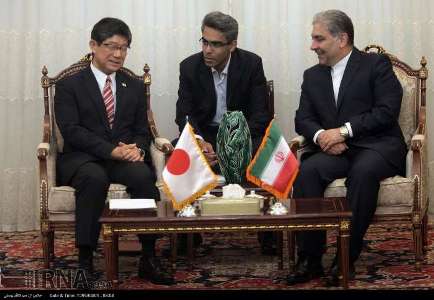
Speaking in a visit with the East Azarbaijan Governor-General, Hiroyasu Kobayashi said that all Japanese offices in Iran have increased their staff two-fold or three-fold. He added that signing investment agreements and opening a $10bn credit line brings hope for big plans to be materialized.

Referring to both countries’ cooperation in protecting the environment, especially in reviving Lake Urmia, he said that there is hope that the joint plans will protect the environment and people of East Azarbaijan.

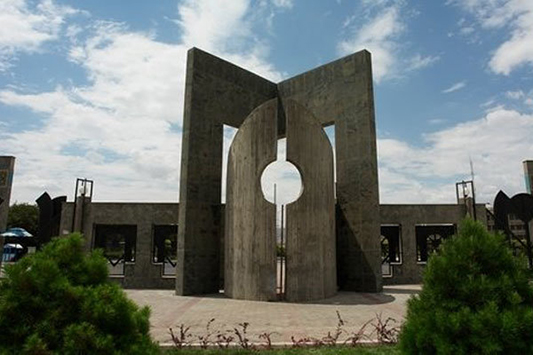
Regarding the East Azarbaijan Governor-General’s request on holding scientific conferences by Japanese professors in Tabriz University, he said that holding conferences is the best step to start cooperation.

Qeshm Locals Offer Homestays to Ecotourists

Qeshm Locals Offer Homestays to Ecotourists

The affable and hospitable people of Qeshm have established several homestays for ecotourists in different parts of Qeshm. The island is 135 km long and comprises 59 towns and villages.

On a hot spring morning, I and some of my friends accompanied the head of Qeshm cultural heritage office Abdorreza Dashtizadeh, and ecotourism instructor and inspector Ashkan Boruj on their visit to homestays in Qeshm.

Rural tourism is the main type of tourism on Qeshm Island, Dashtizadeh told the Tehran Times while visiting Shafei homestay in Kani village, located in the westernmost part of the island near Salt Dome, the longest salt cave in the world.

In the homestay, the Shafei family offers traditional dishes and handicrafts to tourists who stay there.

Due to the scattering of tourist attractions on the island, the rural tourism encompasses natural, coastal and maritime and historical tourism, he said.

The homestays located in the suburbs or villages, which are near historical and tourist sites, should be empowered, he added.

“We aim to decentralize tourism from Qeshm’s centre but we are concerned about the local culture,” he added.

He said that the office holds several courses on the principle of ecotourism. It includes the preservation of local culture, and warns about social anomalies caused by tourists.

Unfortunately more travellers rather than tourists visit Qeshm. “So they don’t have any economic benefit for the villages of the island,” he lamented. By establishing homestays, villages also benefit from tourism, he added.

The shortage of infrastructure on the island, such as roads, intensifies the problem for expanding ecotourism on the island, he said.

“Homestays are a way to help the local economy. Qeshm locals are very kind and honest people and it means a lot for a tourism site,” Dashtizadeh concluded.

German Official: Iran’s Debt Clearance Opens Path for Future Activity

TCCIMir_en_160621_7518

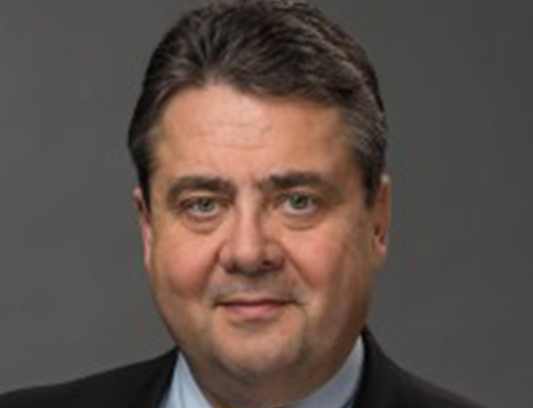
“This is a further important step to revive our economic relations,” Sigmar Gabriel, the German Economy Minister and vice chancellor, said in a statement.

Gabriel said the payment will allow Germany to re-establish credit guarantees that support exports to Iran. The Iranian government had declined to fulfil all its credit obligations while it was subject to sanctions, some of which were lifted in January, the ministry said.

Clarifying the outstanding debt was a key element in re-establishing trade links with Iran as German businesses pushed to increase ties. The Economy Ministry had previously said Iran owed about €500m ($567m). German export credit guarantees last year supported €25.8bn in exports worldwide.

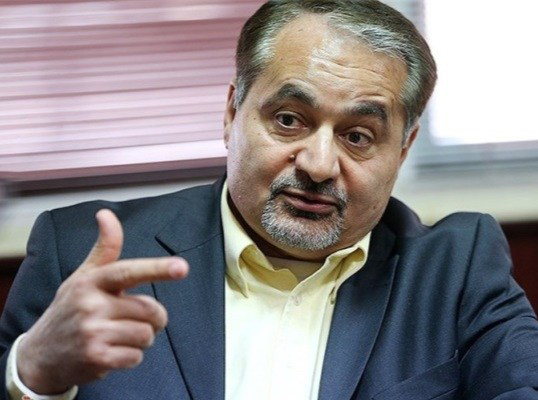
Foreigners Want to Invest in Iran: Rafsanjani

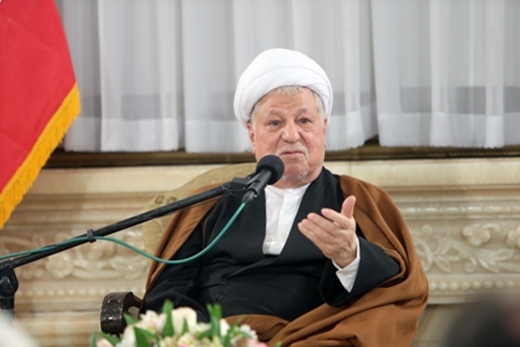
“From the conditions where all countries were competing with each other to impose sanctions and approve resolutions against Iran, we have reached a situation that they are welcoming investment in Iran,” Ayatollah Hashemi Rafsanjani said in a meeting with the faculty members and managers of the scientific groups of the Centre for Research and Higher Education of Iran Management Development on Monday June 20.

He elaborated on the ups and downs of the first years after the 1979 Islamic Revolution, saying, “After the war (1980-88 Iran-Iraq war), when we decided to reconstruct the country, the first effective measure was proper foreign policy management on the basis of détente, which paved the way for the presence of modern countries in Iran and foreign investment, as well as the implementation of big projects, which were mostly done through financing.”

Rafsanjani also reiterated that on the basis of the same détente policy, Iran improved its relations with most Arab countries, which had been tainted during the war due to their support for former Iraqi dictator Saddam Hussein.

Boeing Confirms Sale Agreement with Iran Air

Boeing

In a statement on Tuesday, Boeing said it had signed the agreement “under authorizations from the US government, following a determination that Iran had met its obligations under the nuclear accord reached last summer,” AP reported.

Tehran and the Group 5+1 (Russia, China, the US, Britain, France and Germany) finalized the deal, known as the Joint Comprehensive Plan of Action (JCPOA) on July 14, 2015 and started implementing it on January 16.

The statement by Boeing came after Iran Air confirmed on Monday that it had reached a deal with the American carrier and that it wants to buy new generations of the Boeing 737, as well as the 300ER and 900 version of the Boeing 777.

Head of Iran’s Civil Aviation Organization (CAO) Ali Abedzadeh also said on Sunday that Tehran and Boeing had reached a deal for the purchase of 100 aircraft, stating, “Both sides (Iran and Boeing) have reached a written agreement for buying Boeing airplanes.”

Turkey Arrests 3 Renowned Press Freedom Campaigners

c469f7d05977482b8bf8bc41cd32f489_18

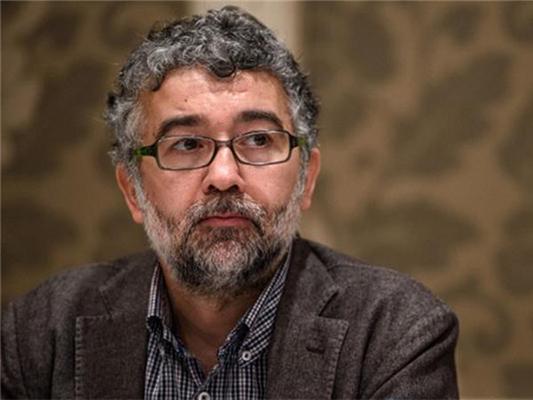
According to regional media reports covered by IRNA, in addition to RSF representative Erol Onderoğlu, author Ahmet Nesin and Sebnem Korur Fincanci, president of the Human Rights Foundation of Turkey, were also arrested on Monday June 20.

A court ordered they be held in pre-trial detention after they guest-edited a newspaper on Kurdish issues and campaigned against efforts to censor it, said RSF and another group, EuroMed Rights.

A statement from EU Foreign Policy Chief Federica Mogherini and Enlargement Commissioner Johannes Hahn said the court decision “goes against Turkey’s commitment to respect fundamental rights, including freedom of the media”.

“The EU has repeatedly stressed that Turkey, as a candidate country [for EU membership], must aspire to the highest possible democratic standards and practices,” read her statement.

Onderoğlu was arrested for his work on three articles about security operations in Turkey’s largely Kurdish southeast and infighting among security forces, which appeared in the May 18 edition of the Özgür Gündem magazine, said Johann Bihr from RSF.

Bihr described Onderoğlu, who had worked for RSF for two decades, as a “victim of the abuses he always denounced,” Al Jazeera reported.

It was unclear how long the three would be held in custody or when they would face trial.

617 Tons of Drugs Seized in Iran in Single Year: Interior Minister

139407051413495326183194

Addressing an event in Tehran on Tuesday, June 21, Rahmani Fazli, who is also head of Iran’s Anti-Narcotics Headquarters, said the country remains committed to continuing its extensive and costly war on drugs, despite insufficient international support.

The event was held to mark the upcoming International Day against Drug Abuse and Illicit Trafficking, observed every year on 26 June since 1988.

According to the minister, 3,017 gangs of smugglers were busted in 2,522 operations in the previous Iranian year (March 21, 2015 – March 19, 2016) and more than 220 methamphetamine-producing laboratories were also raided.

Iran is on a major transit route for drugs being smuggled from Afghanistan to Europe, the Middle East and Africa.

Despite high economic and human costs, the Islamic Republic has been actively fighting drug trafficking. The war on drug trade originating from Afghanistan has claimed the lives of more than 4,000 Iranian police officers over the past three decades.

Iraqi Gov’t to Approach Saudi Arabia to Replace Its Ambassador

d211414a-6275-4710-987c-e42c6448c723

According to a report by Russian news agency Sputnik, as covered by IRNA, the source said that the Saudi ambassador’s statements and positions are planned to be discussed in the Iraqi Cabinet meeting, scheduled for Tuesday June 21.

Iraqi Foreign Minister Ibrahim al-Ja’afari told IRNA on Saturday that Saudi Ambassador al-Sabhan’s comments represent “flagrant meddling in Iraq’s domestic affairs,” and run counter to standard diplomatic duties.

In a Twitter post, Sabhan wrote that Iranian military advisers were in Fallujah to incite sectarian violence and change the demographic composition of the city. The Saudi ambassador made the remarks after Iraqi troops retook Fallujah from ISIS militants on Friday and trained their sights on Mosul, the last Takfiri bastion in the country.

The Iraqi Foreign Ministry summoned Sabhan “to inform him of its official protest regarding his divisive statements.” The ministry said Baghdad would not allow anyone to stoke divisions in the country through making sectarian comments. Baghdad also said it would not allow Riyadh to draw Iraq into the kingdom’s conflict with Tehran.

Iraqi officials have at times stated that Iranian military advisers are in the Arab country at the request of Baghdad.

Ja’afari further pointed to Baghdad’s policy of détente vis-à-vis world countries, adding that his country does not seek to cut diplomatic ties with any state.

Former Iraqi Prime Minister Ayad Allawi, a regular critic of the government, also condemned Sabhan’s comments as “meddlesome, alarming and unacceptable.” Allawi said in an interview with al-Sumaria satellite television network late on Saturday that the battle in Fallujah was against Daesh [ISIS] terrorists, and not sectarian in nature. He said he would have demanded a replacement for Sabhan if he had been in charge, as reported by Press TV.

Several Iraqi officials have accused Saudi Arabia of supporting Takfiris and remnants of the former dictator Saddam Hussein. This is not the first time that the Saudi envoy to Baghdad has made such remarks about Baghdad’s campaign against terrorists.

Back in January, Sabhan claimed that sectarianism and tribalism were the driving force behind the Iraqi government’s arming of volunteer forces, known as Hashd al-Shaabi. He had also alleged that the Iraqi volunteer forces were not popular among Iraqi people.

The comments drew angry reactions among senior officials, who called for the Saudi envoy to be expelled. Baghdad summoned Sabhan at the time and denounced his remarks as, “A breach of diplomatic protocols and based on inaccurate information.”