Saturday, December 27, 2025
Home Blog Page 4417

Independent MPs Will Play Vital Role in Forming Parliament Majority

Iran Parliament

Tabnak’s reports came as other news outlets [e.g. KhabarOnline or Entekhab] claim that the reformists have won the elections with a large difference. The important point mentioned by almost all websites, however, is the role of the independents in the next parliament.

This is the translation of two separate reports by Tabnak, as translated by IFP.


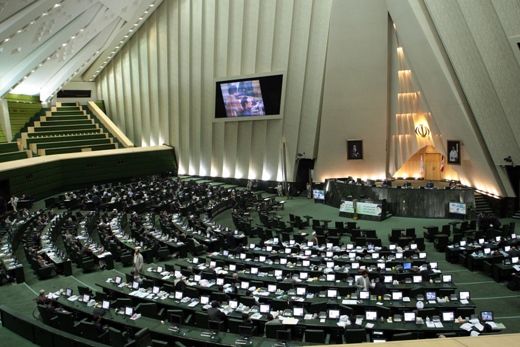
The final formation of Iran’s next parliament was finalized in the run-off elections held on Friday, April 29, in several Iranian cities. The results indicate that both factions, the reformists and the conservatives, will have the same number of seats in the parliament, and the influence of the independent lawmakers will be more than ever.

The formation seems to be a balanced one, but some self-declared independent politicians may change their position and join one of the two factions. Overall, however, neither the reformists nor the conservatives have managed to gain a majority in the next parliament.

Conservative candidates booked 102 seats [in some sources near 80 and even 60] in the first round and 18 seats in the second one. They will thus have 120 seats [in other sources between 83 and 90] in the new parliament.

On the other hand, the reformist candidates, who achieved 83 seats in the first round, managed to have a more effective performance in the second round and gain another 37 seats. Thus they also have reserved 120 seats in the final formation of Iran’s parliament. Therefore, other active political movements will have a more important role in the decision-making process in the 10th legislature.

The candidates who did not join the conservatives or reformists and termed themselves “moderates” gained 7 seats in the first round and 1 seat in the second. The independent candidates, however, will have a great influence in the Iranian parliament with the 29 seats [in some sources 55] earlier reserved in the first round and the 12 seats [in some sources 10] in the second. In a parliament with no majority party, the independents with 41 seats will play a key role for the first time in the Islamic Republic.

Given the Guardian Council’s decision to disqualify Minoo Khaleqi, the reformist member-elect of Isfahan, the constituency’s seat will be decided by a midterm election, and thus, the next parliament will start its work with 289 members, as illustrated by Tabnak’s info-graph.
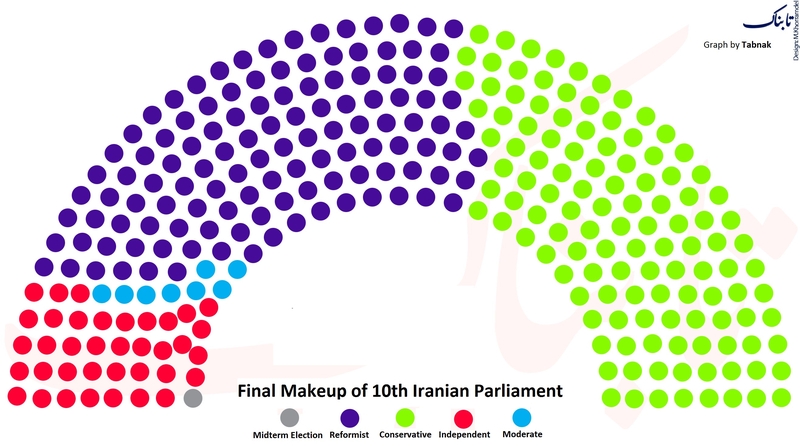
 

Iran Parliament-Graph-Tabnak news


The graph demonstrates that neither the reformists nor the conservatives will have the final say in the parliament. The reformists will need the independents’ votes to achieve their goals, and in what seems to be a high priority after the elections, they will have to negotiate with them to increase their standing after 12 years of silence in Iran’s politics.

The conservatives will also start negotiations with those who have declared themselves independent. Their goal will be to prevent the reformists from gaining a majority, and also to create a balance in the struggle with the other faction in the next parliament.

There are also certain independent candidates in some constituencies who might originally have been reformists, but were not selected by the faction in the final list. These members could join the conservatives to demonstrate their worth to those who passed them over.

There is no doubt that, in the coming days and months, there will be lots of bargaining and negotiating as to the final composition of the parliament. We should wait and see whether the independents will stabilize the reformists’ majority, or prepare the conservatives for a balanced confrontation.
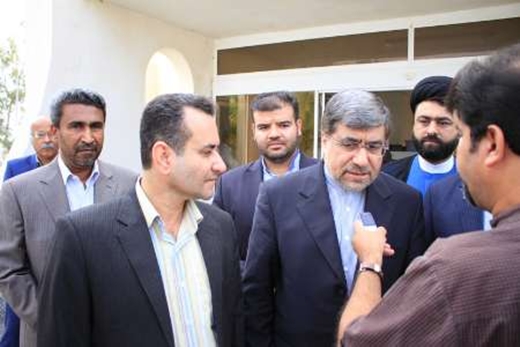
Jannati: Establishing Persian Gulf Foundation is Historical Necessity

Talking to IRNA on Friday, Jannati added that the foundation can become a major centre for cultural, historic, political, economic and social documents and data.

Music, dialect and historic traditions and documents are among the issues to be addressed by the foundation, with the ministry extending its full support to the new entity.

Describing the most important features of the International Persian Gulf Festival as being its popular approach and its cultural diversity, he said that after five editions of the event, the people have become the main organizers of the event, and that it has become a national and international movement.

Jannati arrived in Bandar Abbas to attend a ceremony marking Persian Gulf Day, which falls on April 29 when the Portuguese were expelled from the Straits of Hormuz and the Persian Gulf.

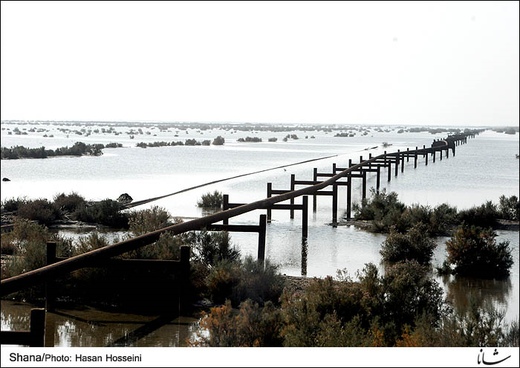
30% Rise in North Azadegan Oil Deposits

Mohammad Reza Asadi, director of engineering at Petroleum Engineering and Development Company (PEDEC), told Shana that finalization of the field’s MDP is one of the company’s agendas for development of the field.

Based on the master plan, North Azadegan field will be developed in 2 major phases, he said.
Asadi said the latest estimates show that the field holds 30% more crude oil than it was previously presumed in the MDP that was developed in 2008.
Drilling operations over 100 wells have started nearly a year ago and 60 of the wells are finalized with some being productive. 
The field was first decided to be developed by a Chinese developer, CNPCI, but Iran expelled the contractor from North Azadegan for its failure to respect its obligations.

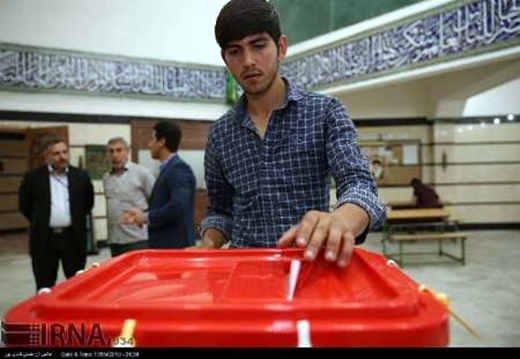
Run-off Election Turnout at 59%: Interior Ministry

Amiri stated that the figure indicated a 3% increase in comparison with the run-off of the 9th parliamentary elections.

He added that the winners of the second round of the 10th parliamentary elections have been announced in 51 constituencies, and that the results of four remaining constituencies will be announced, after some legal formalities, as soon as possible.

He also noted that 47% of the winning candidates were women, and the rest men.

Iranians voted in the run-off parliamentary elections in which 68 seats were up for seize in the 290-seat Majlis.

Polls opened at 8:00 local time (0430 GMT) on Friday (April 29) in 55 cities and towns in 21 provinces across the country. According to the Elections Headquarters, 136 nominees ran for 68 seats. About 17 million voters were eligible to go to the ballot boxes for the run-off elections across the country.

There was no run-off vote in the capital city, Tehran, as candidates close to the President Hassan Rouhani gained all the 30 seats on February 26.

The new parliament will begin its session on May 27.

Iran Getting Close to South Korea Rather than North

An upcoming visit by South Korean President Park Geun-hye to Iran (May 1) is the topic of an opinion piece published by Asr-e Iran.  The author, Mehrdad Khadir, tries to use the distance between the two Koreas (North and South) as a yardstick to measure the distance between the pre-JCPOA (nuclear deal) and post-JCPOA eras in Iran. Khadir expresses satisfaction with the finalization of the nuclear deal between Tehran and world powers.

Here is the full text of the article, as translated by IFP.


The South Korean President’s upcoming visit to Tehran is both important and interesting in many regards. Park is the first South Korean president to visit Iran since the two sides commenced ties in 1962.

Meanwhile, her visit is regarded as the first by a female president of a non-Muslim state, and thus, many people are waiting to see how she will dress. In an earlier visit to a mosque in the UAE in March 2015, she wore traditional clothes and a veil to cover her hair.

Another interesting point about the South Korean head of state is that her father, General Park, ruled the country for 20 years. Those who prefer economic development to political development use her as an example to show that, for economic development to happen, powerful behaviour is needed first. The grounds should first be prepared, even if that means postponing the establishment of democracy.

In today’s world, however, South Korea is not known for President Park. It is instead known for such brands as Samsung, which has outperformed Apple, and Hyundai and Kia, both of which have been serious rivals to Japan’s Toyota.

The most important aspect of Park’s trip to Iran, however, is the huge value of contracts planned to be signed in her three-day visit. The deals will cover such fields as the construction of dams, railways, petrochemical facilities, hospitals, and other infrastructure projects, and are said to be worth $17bn.

We can better understand how huge the amount is when we look at how the volume of Iran’s trade exchange with Turkey was $22bn before sanctions and $11bn after them.

Many years back, the current First Vice-President Eshaq Jahangiri said the most important business street in Seoul is named Tehran. However, as the distance increased between the East Asian country’s economy and that of a war-stricken and sanctions-hit Iran, a number of proprietors and landlords in the street asked the mayor of Seoul to change the street’s name. This request was very bitter and weighty for Iranians.

As a matter of fact, Iran and Korea started working on many industries, including auto-manufacturing and home appliances, at the same time, but for a number of reasons beyond the scope of this article, the Koreans greatly outpaced Iran.

However, Koreans are very interested in developing their trade and economic ties with Iran because of their rivalry with Japan, as well as their previous experience of trade with Tehran. The South Korean president’s visit falls within this framework.

There are two points that should be considered in this regard:

One, we should remember that Park is the first South Korean President to visit Iran. The trip is an outcome of the JCPOA and termination of anti-Iran sanctions. If it was not for the JCPOA and sanctions were still in place, we would be hosting North Korea’s Kim instead of Park from the South!

To those who question what President Hassan Rouhani and the JCPOA have done, one could say that Iran is moving towards South Korea rather than North.

The second point is, that if the nuclear deal had not been finalized yet, we would be hosting the Venezuelan president, as well, in addition to tolerating the sanctions, isolation, censor, and corruption.

However, the successor of Hugo Chávez would not visit Iran to make $17bn of contracts, but to ask for donations to pull his country out of their current misery. In Chávez’s era, they splashed their petrodollars around, instead of investing in their infrastructure and power plants, and now they are faced with shortages of both power and water.

To sum up, if we are now receiving the South Korean president in the post-JCPOA era, we should not forget that we were preparing to host the leaders of Venezuela and North Korea before the removal of sanctions.

Naturally, we should maintain our ties with all countries. If anything, North Korea stood by us in the hard days of the Iraqi-imposed war, and now can help us in the military industry. However, even symbolically, having close ties with South Korea is not at all comparable with getting close to its northern neighbour. The same is true when you compare signing contracts with South Korean brands instead of negotiating with Venezuela’s Nicolas Máduro.

Even if Iran wants to help the Venezuelans, it should first shake up its closed economy before shaking hands with Máduro to please the soul of the late Chávez.

Italy Ready to Upgrade Iranian Anti-Drug Police Equipment: Official

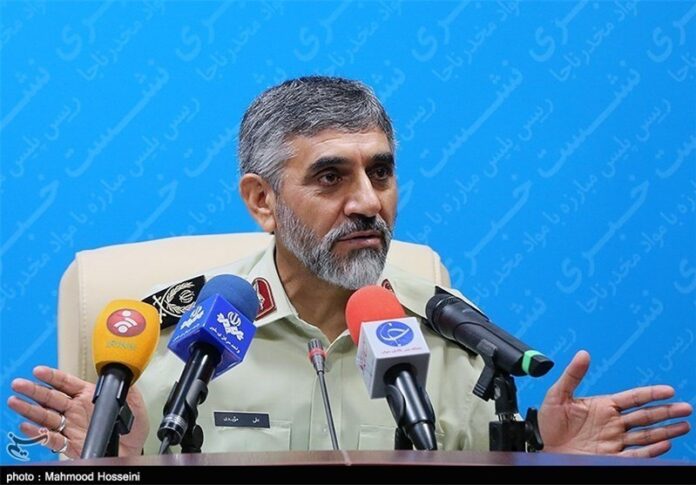
“In their latest negotiations (with Iran), Italian officials voiced their readiness to help Iran in supplying equipment and facilities required to combat illicit drugs,” Brigadier General Moayyedi told Tasnim.

He further hailed Italy’s anti-drugs campaign, saying that it has a good approach to interaction with Iran in the fight against drug trafficking, unlike some other European countries.

In relevant remarks earlier this month, Iranian Interior Minister Abdolreza Rahmani Fazli criticized some UN member states, which are duty-bound to contribute to the global fight against illicit drugs, for not taking any measure to support countries like Iran that are on the front line of the war against narcotics.

Rahmani Fazli, who was in New York to attend the United Nations General Assembly Special Session (UNGASS) on Drugs, also highlighted Iran’s all-out efforts to combat illicit drugs originating from neighbouring Afghanistan.

The Islamic Republic of Iran is standing against the huge influx of illicit drugs as “a strong barrier”, he said, adding that many countries are benefiting from the fruits of these efforts by Iran.

In recent decades, Iran has been hit by drug trafficking, mainly because of its 936-kilometer shared border with Afghanistan, which produces more than 90% of the world’s opium.

According to the UN Office on Drugs and Crime, the Islamic Republic is netting eight times more opium and three times more heroin than all other countries in the world combined.

The war on drug trade originating from Afghanistan has claimed the lives of nearly 3,700 Iranian police officers over the past 30 years.

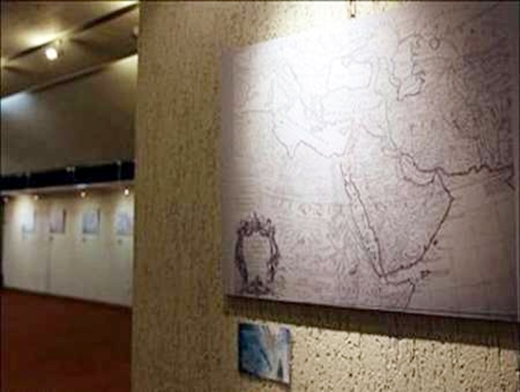
Museum of Persian Gulf Maps Opens in Hormuz Island

Addressing the inaugural ceremony, Jannati said that the museum will display credited historic maps of the Persian Gulf.

Historic maps drawn by Europeans from 500 years ago up to now are on show in the museum, he said, noting that the major international waterway is referred to as the Persian Gulf by all the maps.

The minister also said that Persian Gulf is a section of Iran’s civilizational identity and the historic maps reveal a great empire, with the Persian Gulf as a key part of it.

Some 32 historic maps featuring the Persian Gulf from different eras are currently on public display in the museum.

Britain-Iran Chamber of Commerce: Serious Negotiation with Banks to Ease Work with Iran

In a meeting with Masoud Khansari, Chairman of Tehran Chamber of Commerce, Industries, Mines & Agriculture (TCCIMA), Lord Lamont talked about the serious will in his country for expanding trade ties with Iran.

Referring to the nuclear deal between Iran and the G5+1, he confirmed that Iran has fulfilled its commitments and said it is now the West’s duty to maintain theirs.

In this regard, he said he had been talking seriously with big British banks, even European ones, to encourage them to interact with their Iranian counterparts.

Lord Lamont is a special trade affairs representative of the British Prime Minister, and is currently the Chairperson of the Britain-Iran Chamber of Commerce. He has been a prominent figure in Britain’s Conservative Party in Parliament and a former British finance minister.

On the sidelines of the meeting, TCCIMA’s chairman objected to the low trade volume between two countries. “It seems that for the British authorities, political issues are a higher priority than economic issues” he stated.

Shiraz to Display Gunther Uecker’s Paintings Inspired by Hafez

Entitled “Tribute to Hafez” (“Huldigung an Hafes”), the collection will be unveiled at the mausoleum of Hafez, but it will later go on display in a month-long exhibit at Tar-o-Pood Gallery, the director of Iran’s Office for Visual Arts, Majid Mollanoruzi, said in a press conference on Thursday.

“The paintings inspired by ghazals of Hafez will be displayed in the exhibit to portray the two-year efforts of the artist on works by Hafez,” Mollanoruzi added.

He said that Uecker has donated the works to the Tehran Museum of Contemporary Art, but first, they will be showcased in Shiraz.

“The collection will later be shown in the Imam Ali (AS) Religious Arts Museum in Tehran for one month,” he asserted.

A number of Iranian and German officials are expected to attend the opening ceremony.

The 82-year-old Uecker is a member of the ZERO movement, best known for his signature use of nails arranged into tactile, sculptural paintings.

Uecker’s oeuvre includes paintings, art objects and installations as well as stage designs and films. He is mainly interested in the eastern European avant-garde of the 1920s and 1930s, but he is likewise fascinated by Asian cultures and their ideas.

His works can be seen in collections and at large fairs in both the West and the East. Uecker’s artistic creativity reached a climax in 2000 with the prayer room he designed for the rebuilt Reichstag building in Berlin.


Iran Produces High-Energy-Storage Supercapacitors

The growing popularity in these new technologies and the industrialization of everyday lives have both highlighted the need for energy storage systems with higher capacities, at lower weight and cost, so that electronic equipment can be used at any place and time.

Today, extensive research is underway to produce new compounds to replace expensive materials such as ruthenium oxide, which is a common supercapacitor material internationally.

The project manager, Ali Ehsani, said the research work seeks to build affordable ceramic nanoparticles, in order to produce polymer-ceramic nanocomposites in supercapacitors with better efficiency.

Ehsani explained the achievements of the project, noting that the synthesis of yttrium and aluminum garnet (YAG) powders nanoparticles by an electrochemical method. This creates an advanced, ecological ceramic material which can be used to make simple and cost-effective supercapacitors.

“High mechanical stability, high energy storage capacity, low weight and high flexibility are among the other benefits of supercapacitors produced with these nanoparticles in their design,” Ehsani added.

Given the energy crisis, Ehsani noted, the use of nanocomposites can be very important to expand the use of non-fossil and clean energy systems.

Nanocomposites are used in the production of supercapacitors, Ehsani stated, adding that these supercapacitors have high energy storage capacity, low cost and are simpler to manufacture.