Friday, January 16, 2026
Home Blog Page 4404

Iran Denounces Dissolution of Bahraini Opposition Group

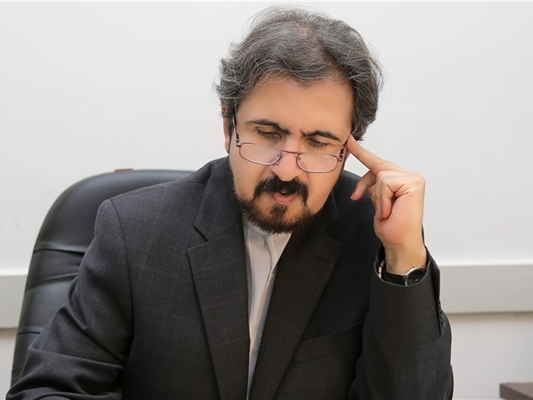
Bahram Ghasemi- FM Spoksman

“Such measures (dissolution of opposition group) by Bahrain’s government indicate that they (Manama rulers) are not after settling the existing dilemma and problems, and such conducts will further complicate the situation,” Foreign Ministry Spokesman Bahram Qassemi said on Sunday.

His comments came after the so-called administrative court in Manama ordered the dissolution of Shiite opposition group al-Wefaq and the seizure of its assets almost a month after the regime suspended its activities.

Slamming the new punitive action as “unconstructive”, the Iranian spokesman argued that such moves are aimed at “mounting organized pressure” on the moderate figures and movements.

Qassemi further noted that dissolution of moderate opposition groups and stripping the popular political and religious leaders of their Bahraini citizenship would not be in the Manama regime’s interests, adding, “Such behavior paves the way for those seeking non-peaceful approaches.”

He further called on the Al Khalifa officials to avoid adopting mere security measures, urging them to opt for confidence-building moves instead to prepare the ground for serious and constructive dialogue and increase unity in the Bahraini society.

The Bahraini justice ministry had suspended the opposition group’s activities on June 14.

Al-Wefaq’s secretary general, Sheikh Ali Salman, has been in prison since December 2014 on charges of attempting to overthrow the regime and collaborating with foreign powers, charges he has denied.

Tokyo Tehran’s Close Friend: Iranian FM

139504271734592048156524

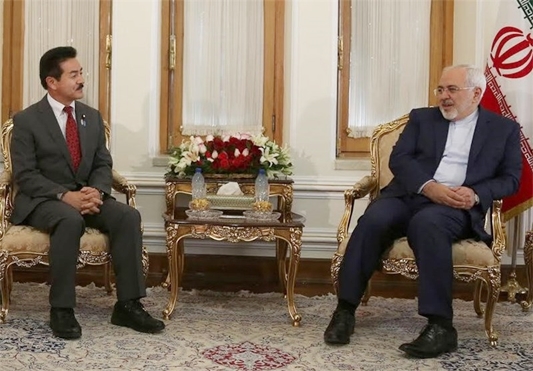
“Japan is considered one of the Islamic Republic of Iran’s close friends,” Zarif said in a meeting in Tehran with Chairman of the Japanese Parliament’s Foreign Policy and Defense Committee Masahisa Sato.

“There are many grounds for cooperation between the two countries,” he said, adding that Tokyo can become one of Tehran’s major economic partners.

Iran’s top diplomat also hailed Japan’s concern for peace, stability and security in the region.

Elsewhere in his remarks, Zarif referred to Iran’s condemnation of a recent attempted coup in Turkey and a terrorist attack in Nice, France, saying that Tehran attaches importance to peace and stability in neighboring Turkey and to the fight against terrorism all over the world.

The Japanese lawmaker, for his part, stressed his country’s keenness for expansion of ties with the Islamic Republic.

He referred to the Japanese parliament’s recent approval of the Iran-Japan Joint Investment Agreement and hoped that Iran’s parliament will also give its approval to the agreement as soon as possible to pave the way for development of bilateral economic relations.

Masahisa Sato further stressed the common views of Iran and Japan on issues like the recent incidents in Turkey and France, and said the two sides can deepen their cooperation in such fields as combating terrorism and helping to enhance regional security.

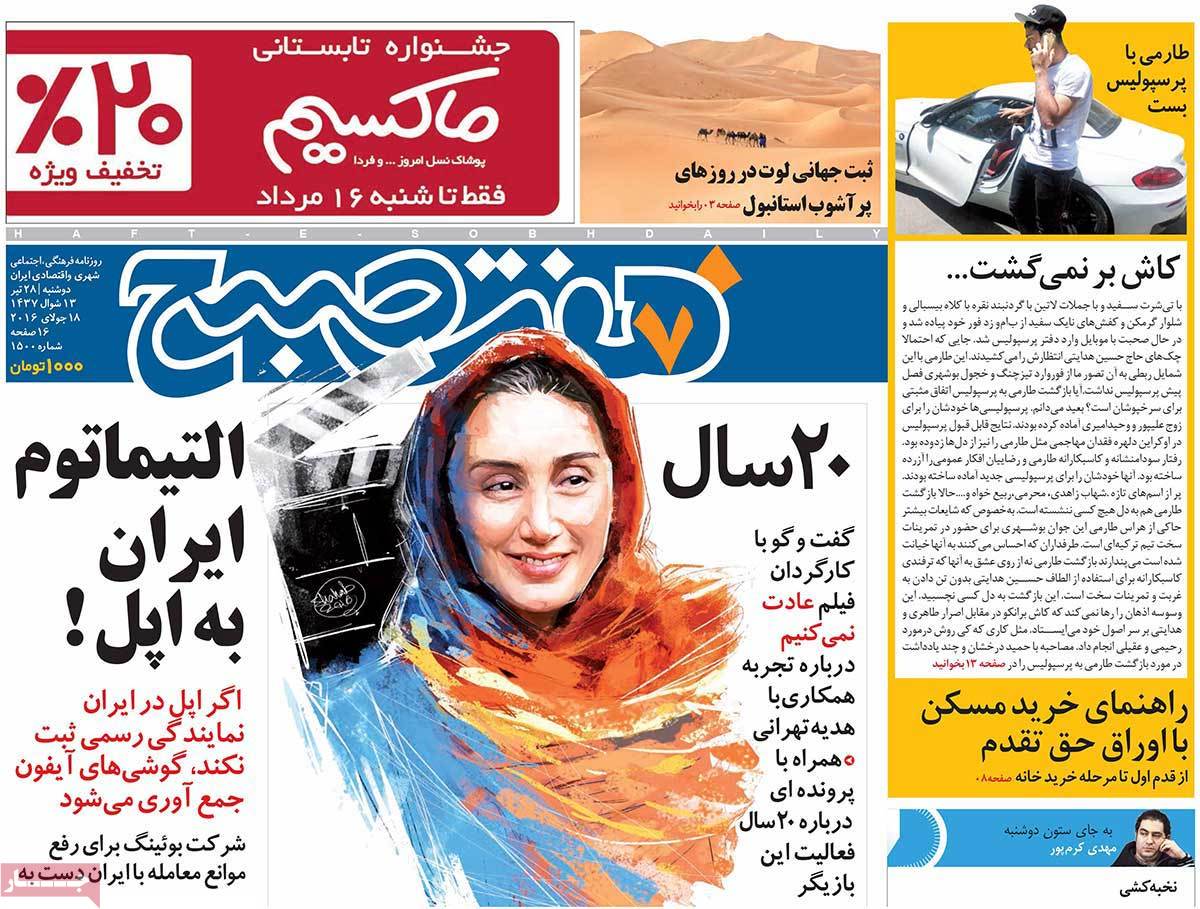
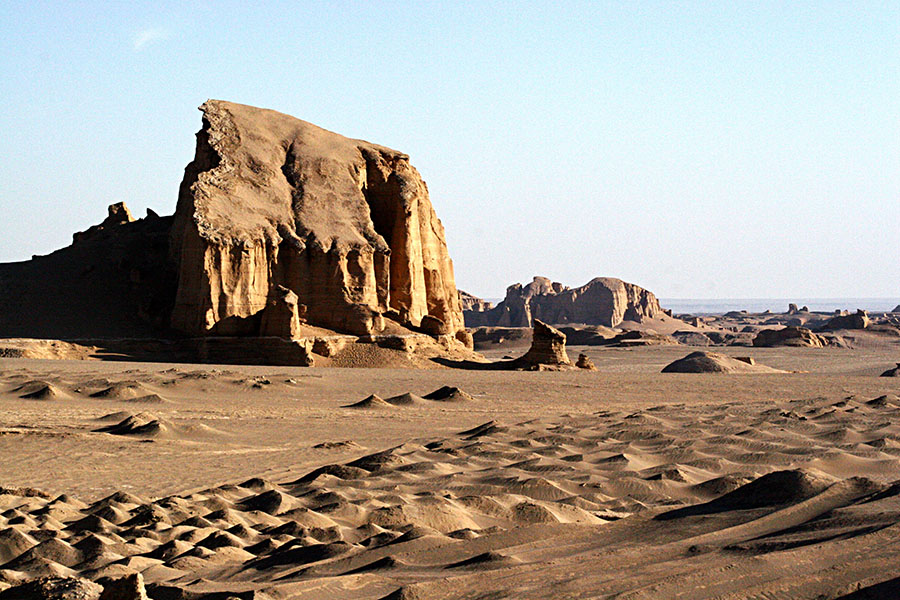
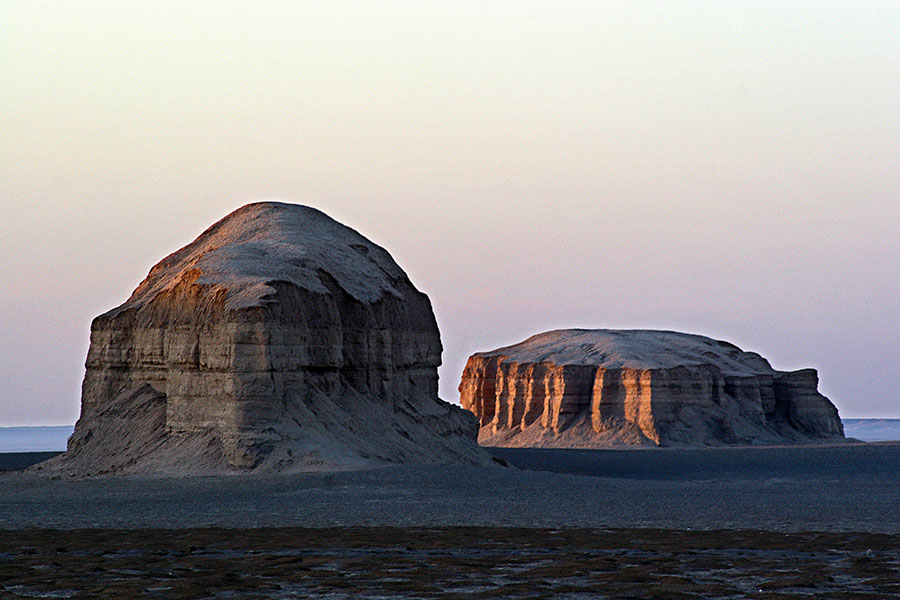
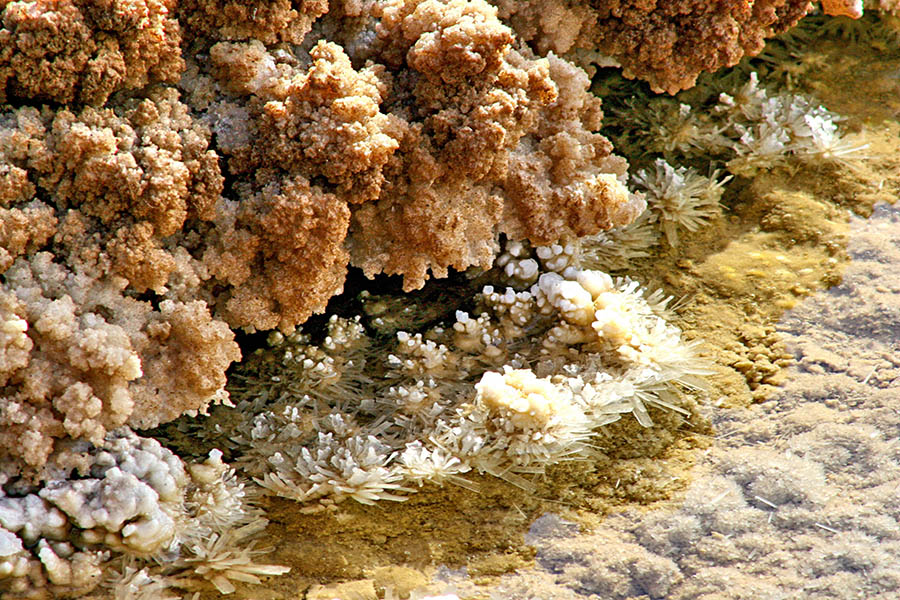
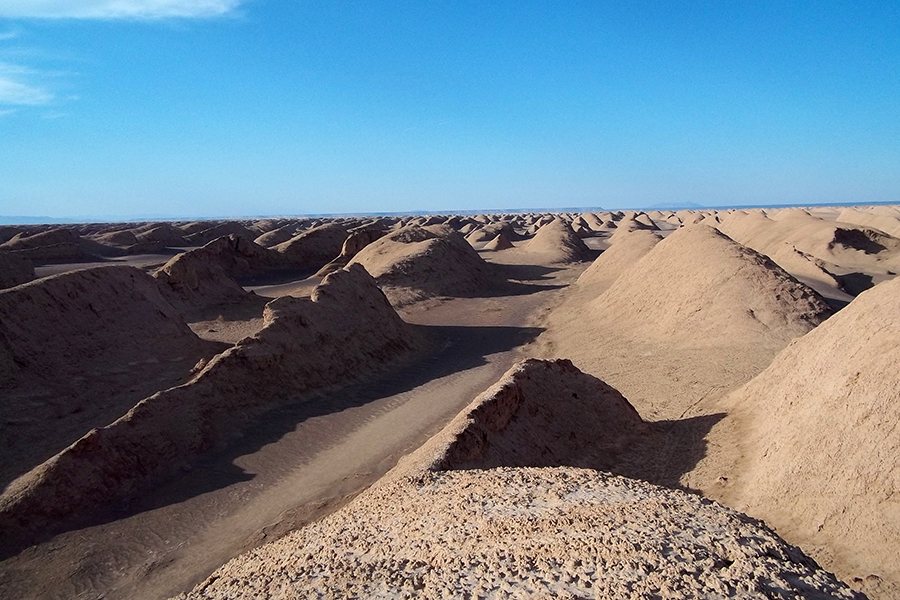
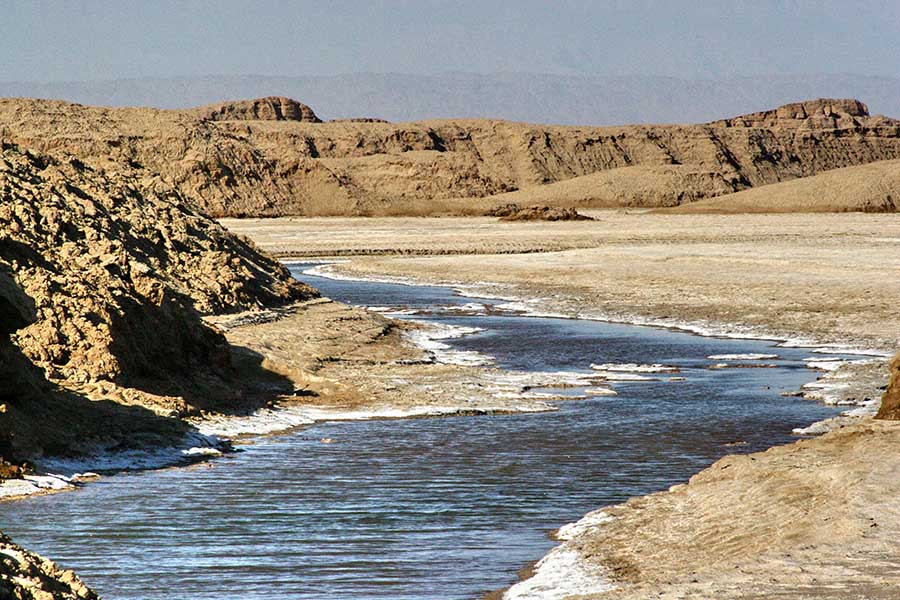
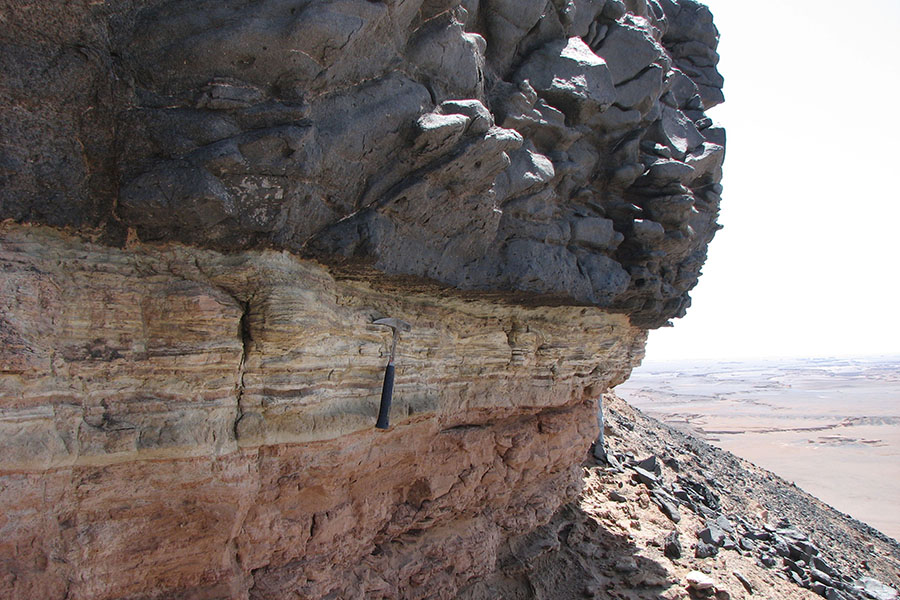
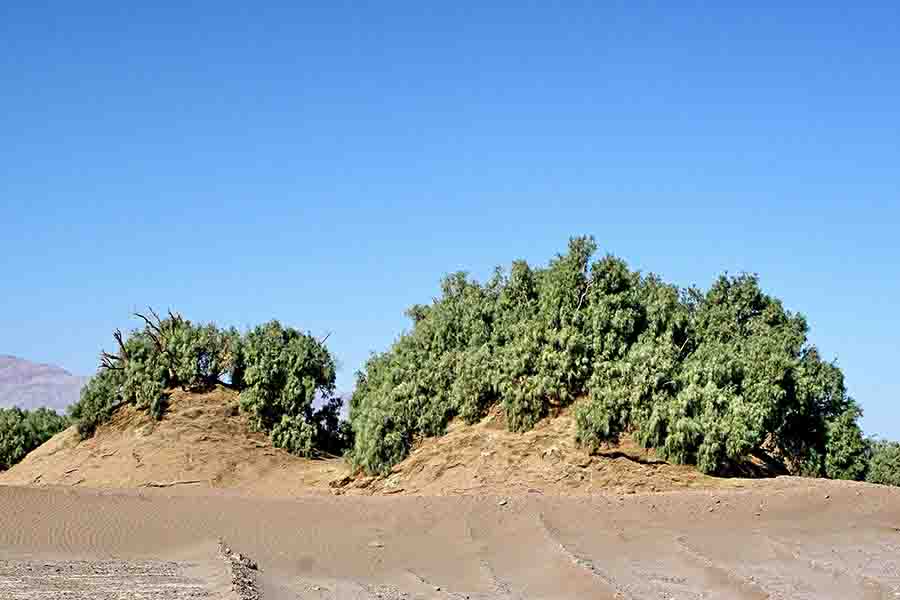
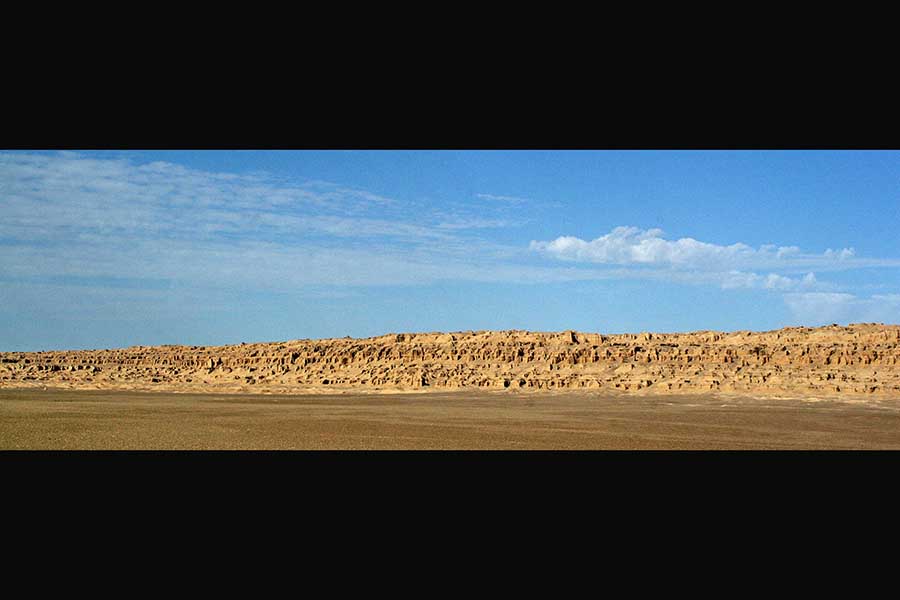
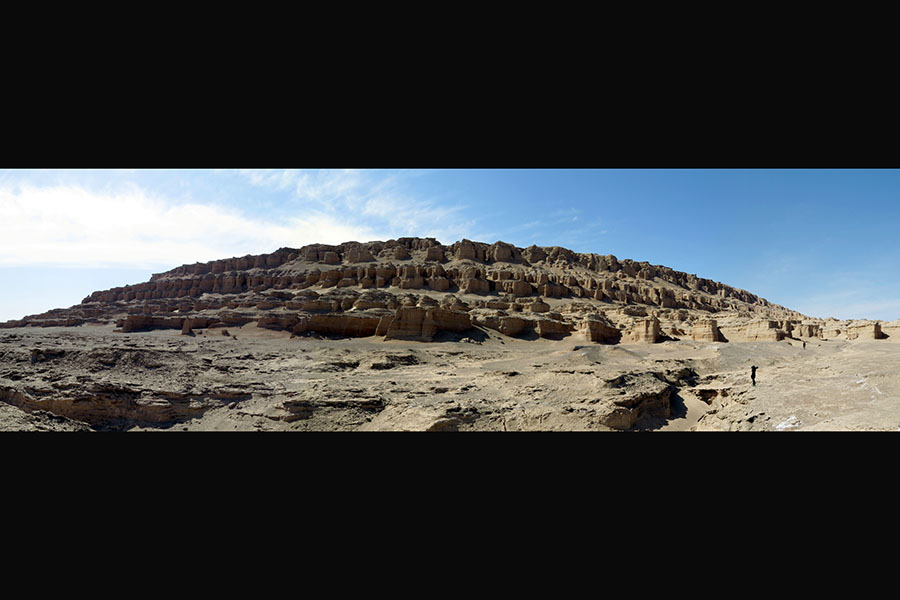
Desert of Lut, First Iranian UNESCO-Registered Natural Site

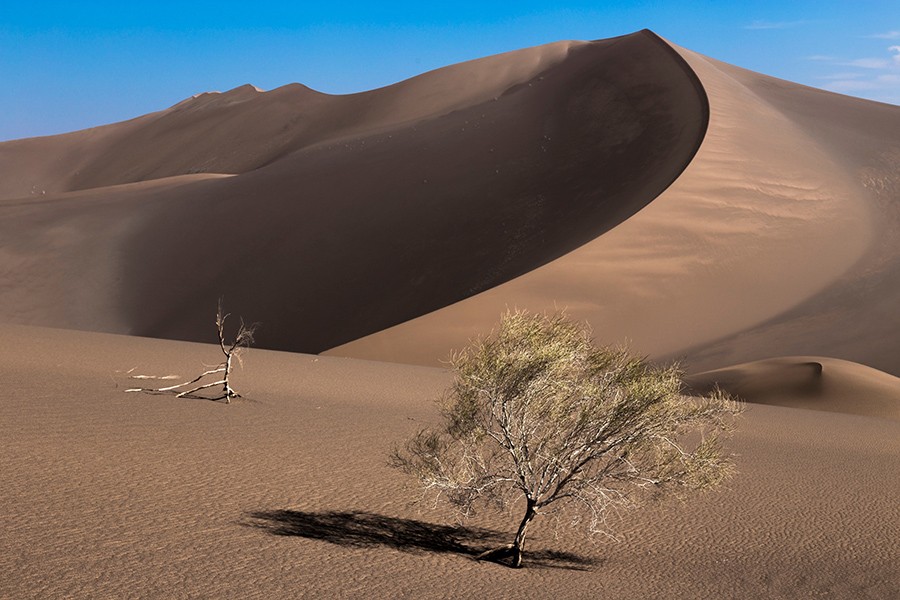
Lut Desert

The Desert of Lut, or Dasht-e-Lut, is located in the south-east of Iran.

Between June and October, this arid subtropical area is swept by strong winds; which transport sediment and cause aeolian erosion on a colossal scale.

Consequently, Desert of Lut presents some of the most spectacular examples of aeolian yardang landforms (massive corrugated ridges).

Desert of Lut also contains extensive stony deserts and dune fields. The property represents an exceptional example of ongoing geological processes.

Measurements of MODIS (Moderate-Resolution Imaging Spectroradiometer) installed on NASA’s Aqua satellite from 2003 to 2010 testify that the hottest land surface on Earth is located in Lut Desert. Land surface temperatures reach 70.7 °C (159.3 °F) in this place, though the air temperature is cooler.

Desert of Lut was inscribed on the World Heritage as Iran’s 21st item in the list. The inscription came a couple of days after the United Nations Educational, Scientific, and Cultural Organization (UNESCO) registered eleven Iranian qanats on the World Heritage List in its July 15 session.

UNESCO highlighted that the Persian Qanats provide exceptional testimony to cultural traditions and civilizations in desert areas with an arid climate, the UN’s website reported.

The first Iranian sites to be registered in the World Heritage List were Tchogha Zanbil in Khuzestan Province, Naqsh-e Jahan [or Imam] Square in Isfahan, and Persepolis in Fars Province, which were inscribed in 1979.

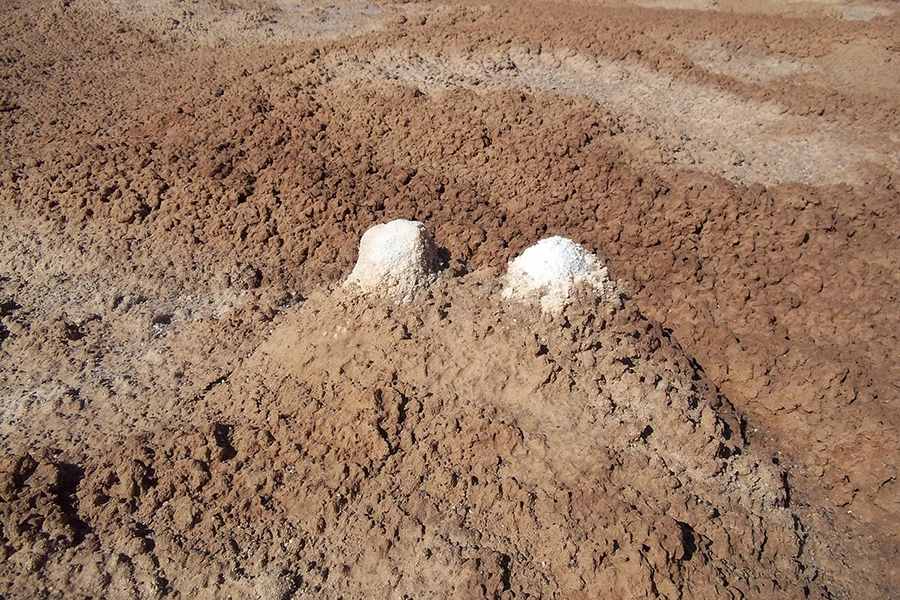
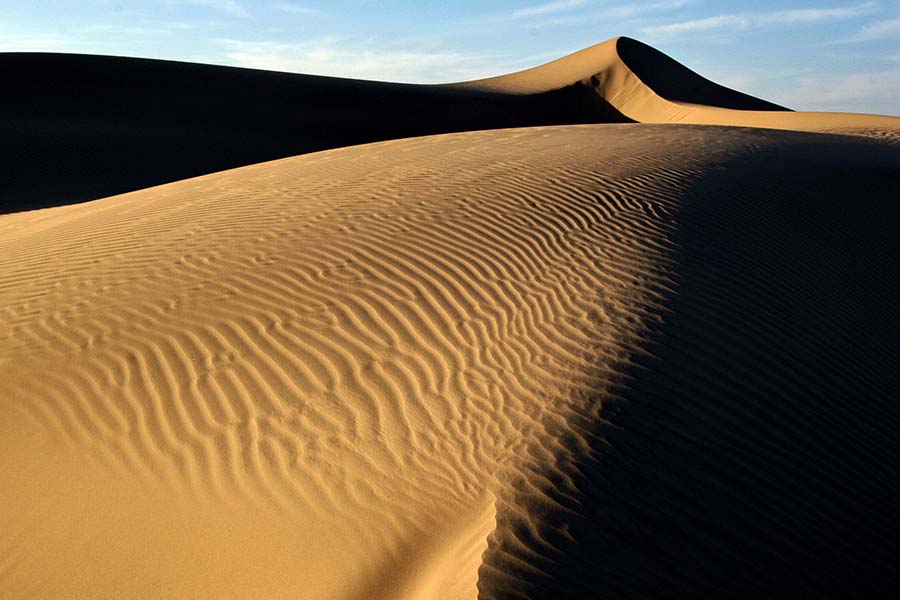
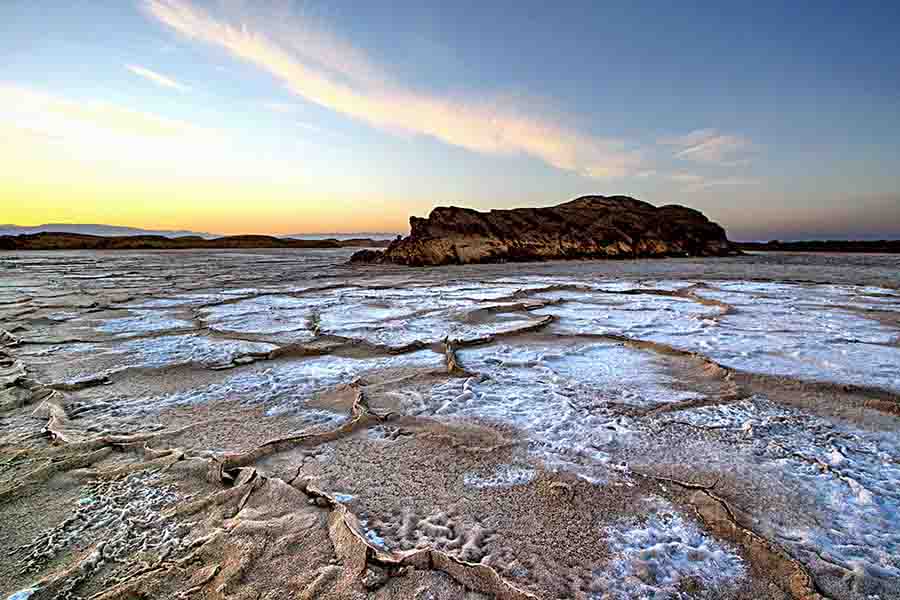
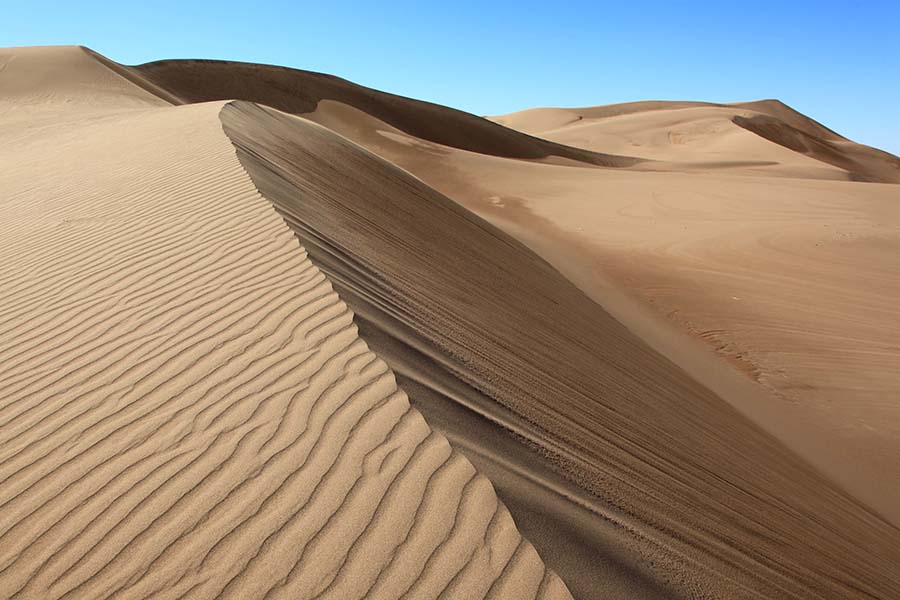
What follows are photos from Desert of Lut:


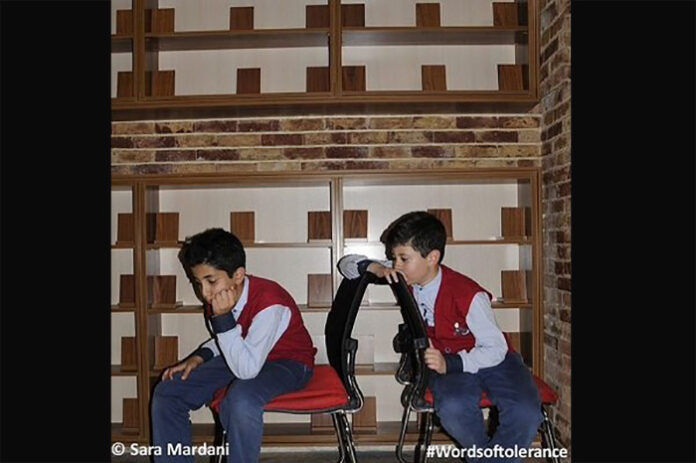
Iranian Woman Wins UNESCO Photo Contest

Sara Mardani-WordsofTolerance

The competition was launched alongside World Book and Copyright Day, annually celebrated by the United Nations Educational, Scientific, and Cultural Organization (UNESCO) on April 23.

Mardani’s photo of Tehran is amongst the top five entries. She illustrated a quotation from the Roman philosopher, politician, lawyer, and orator Marcus Tullius Cicero, who says “A room without books is like a body without a soul.”


Sara Mardani -WordsofTolerance

People from all over the world were invited to choose a quote from their favourite author and illustrate it in a funny and creative way, as reported by Tehran Times.

Over the course of the competition, more than 300 posts with the hashtag #WordsofTolerance were published in social media.


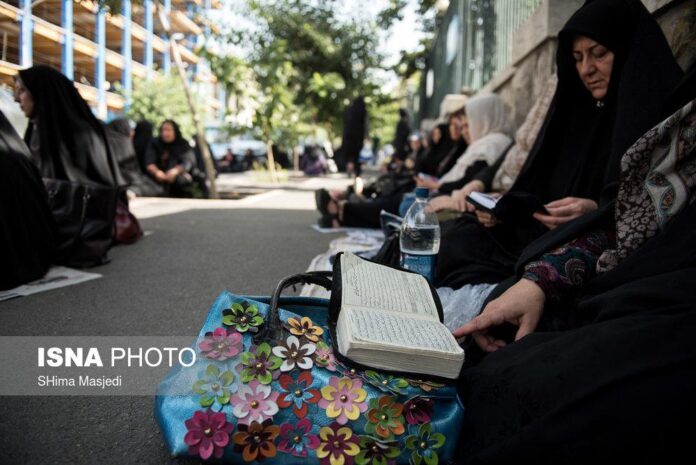
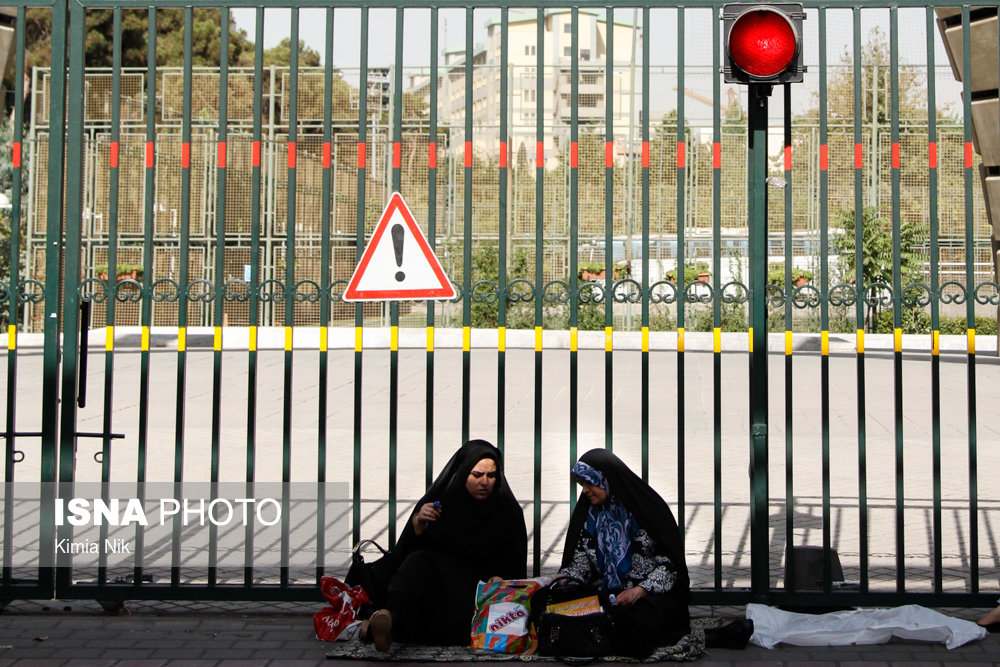
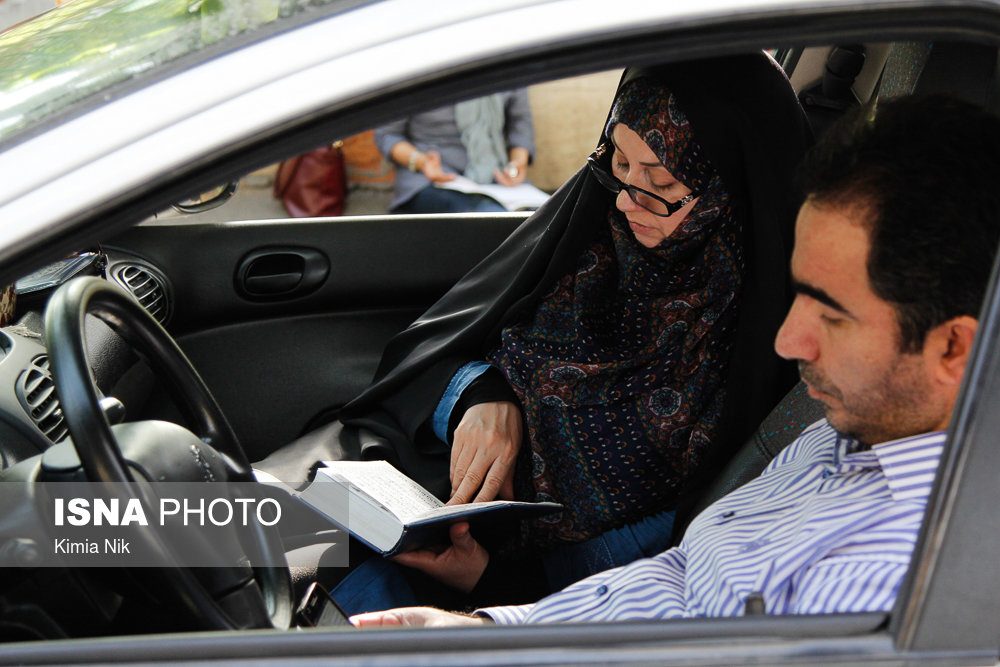
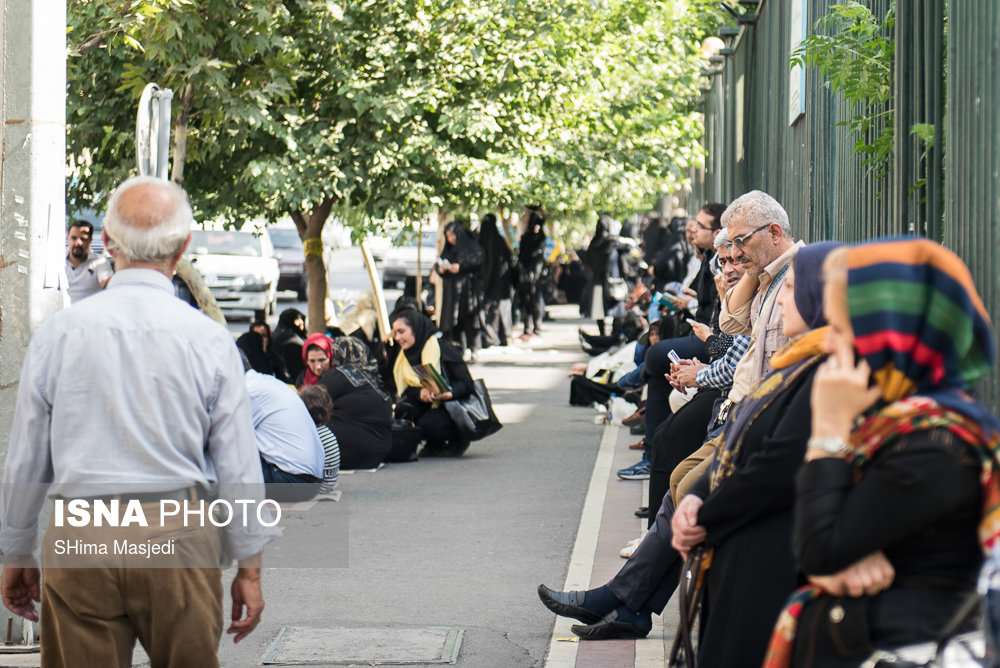
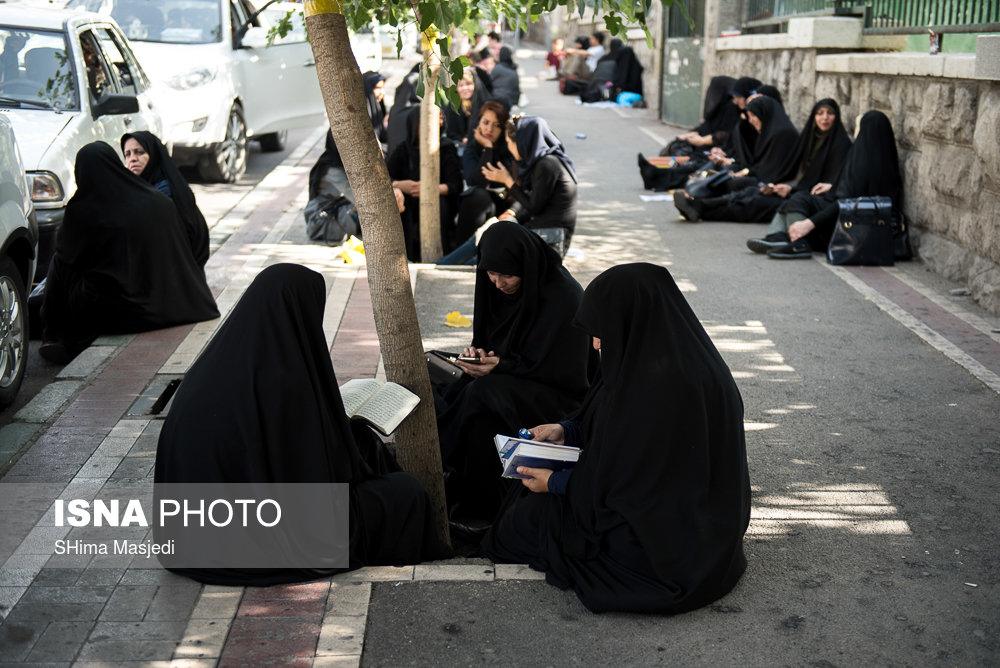
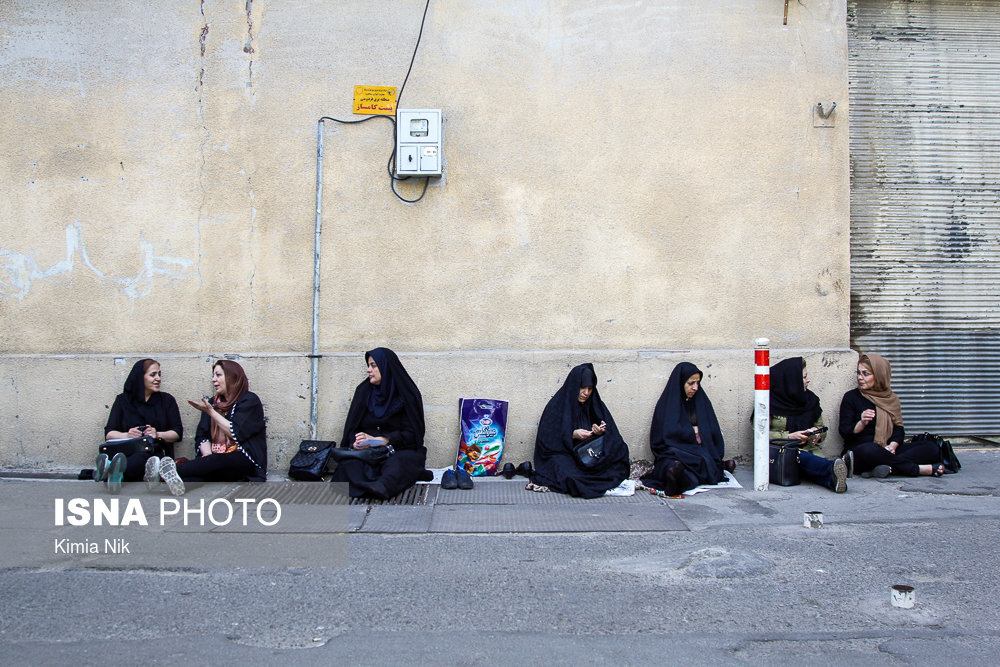
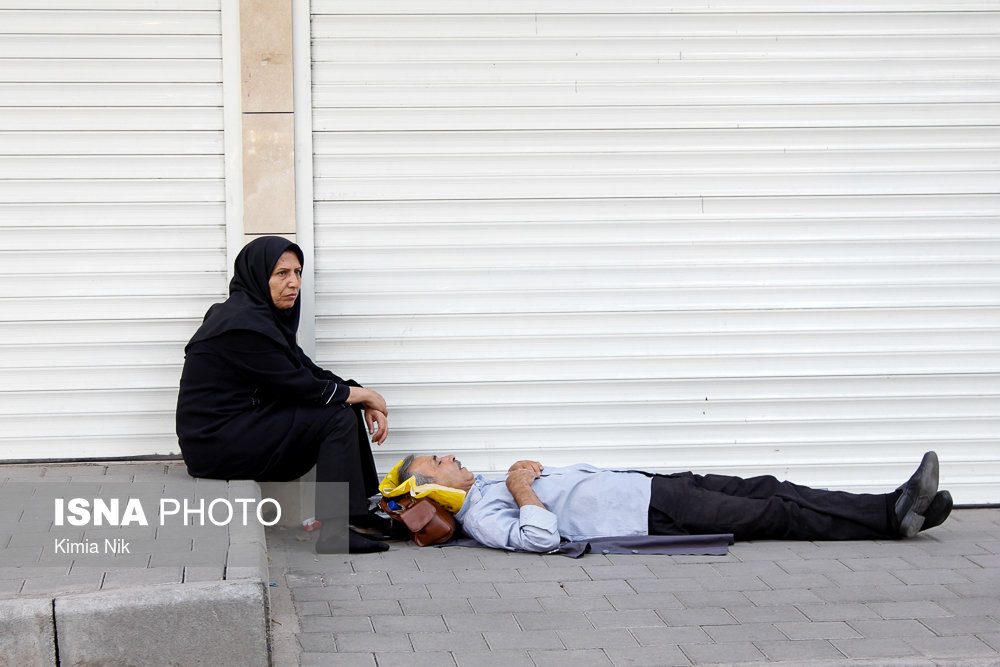
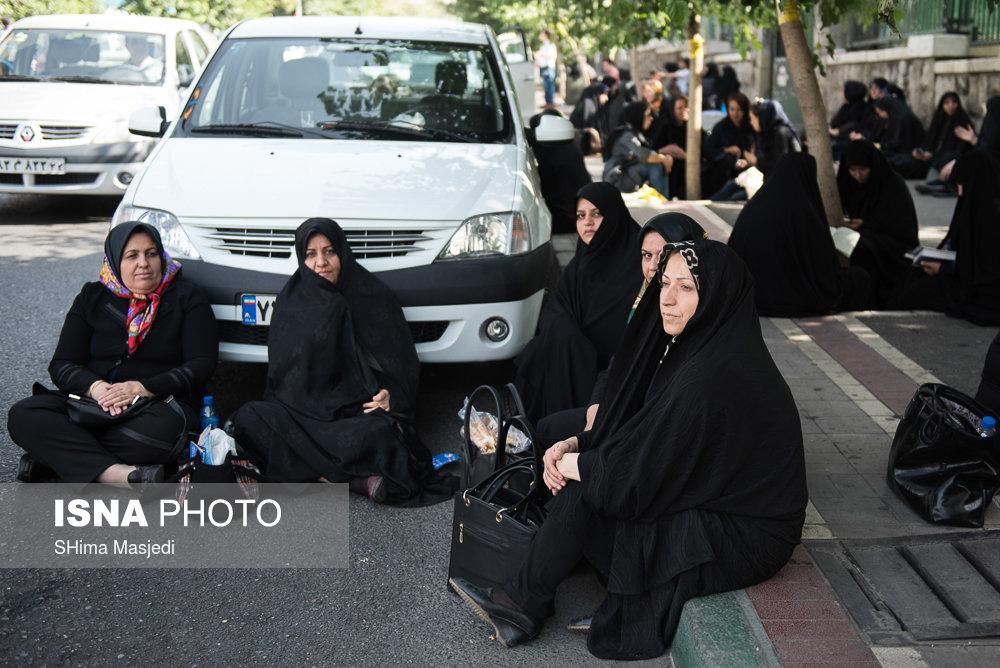
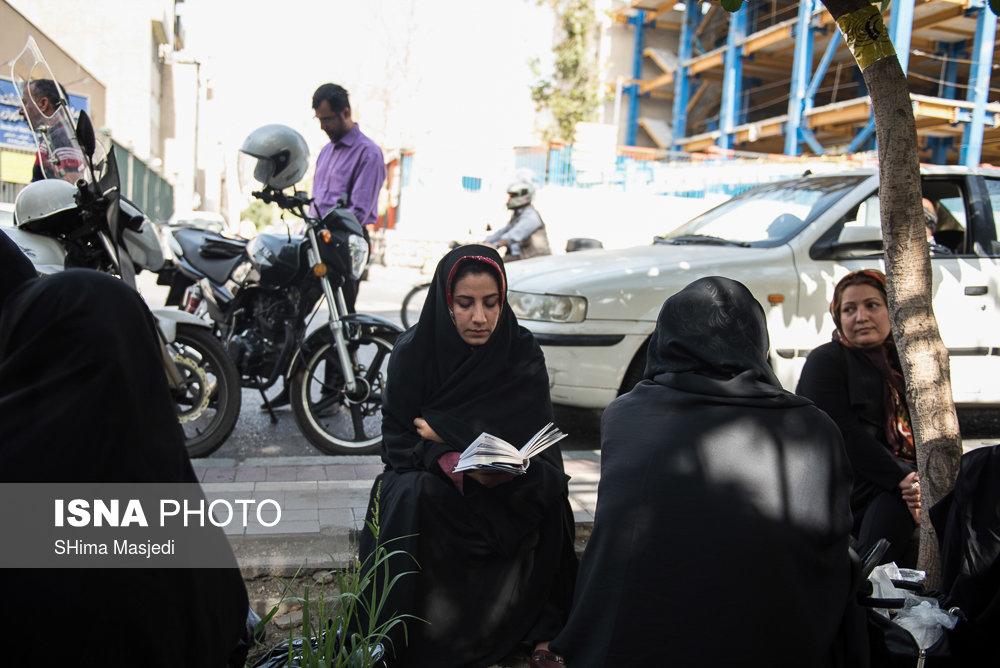
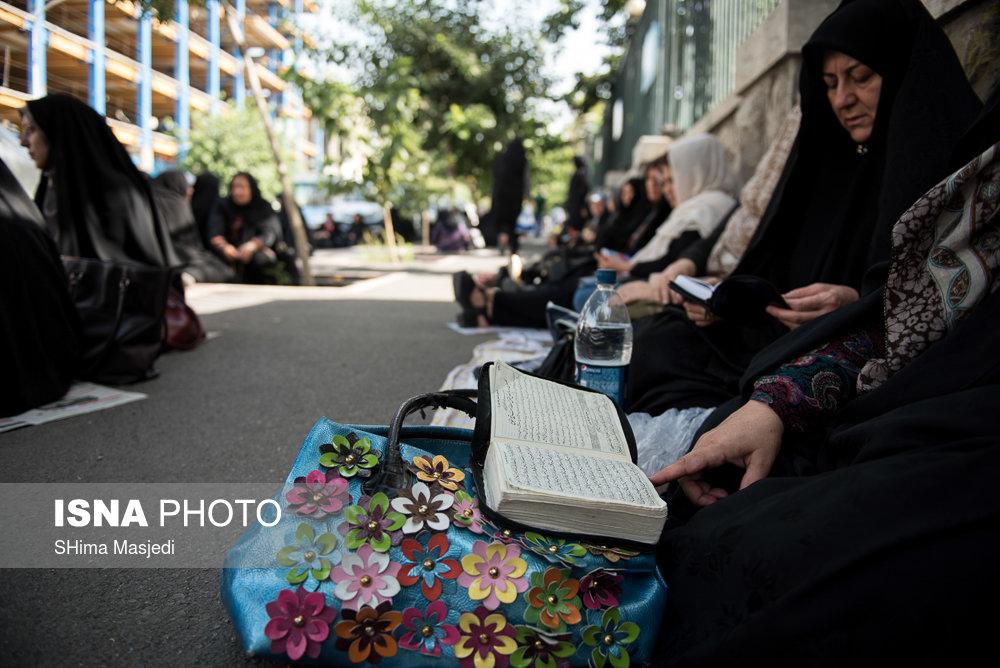
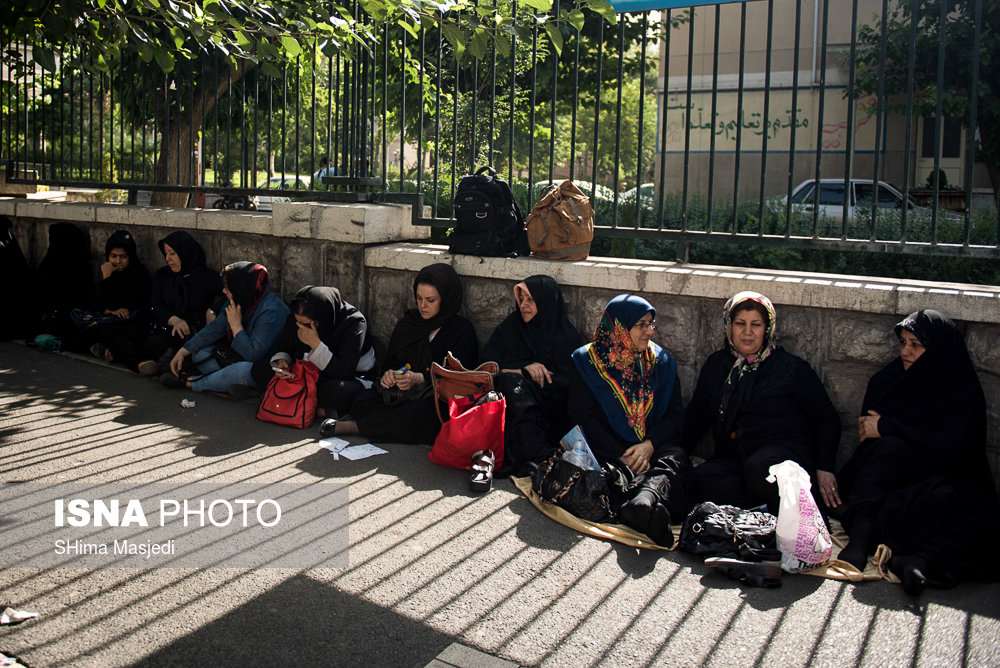
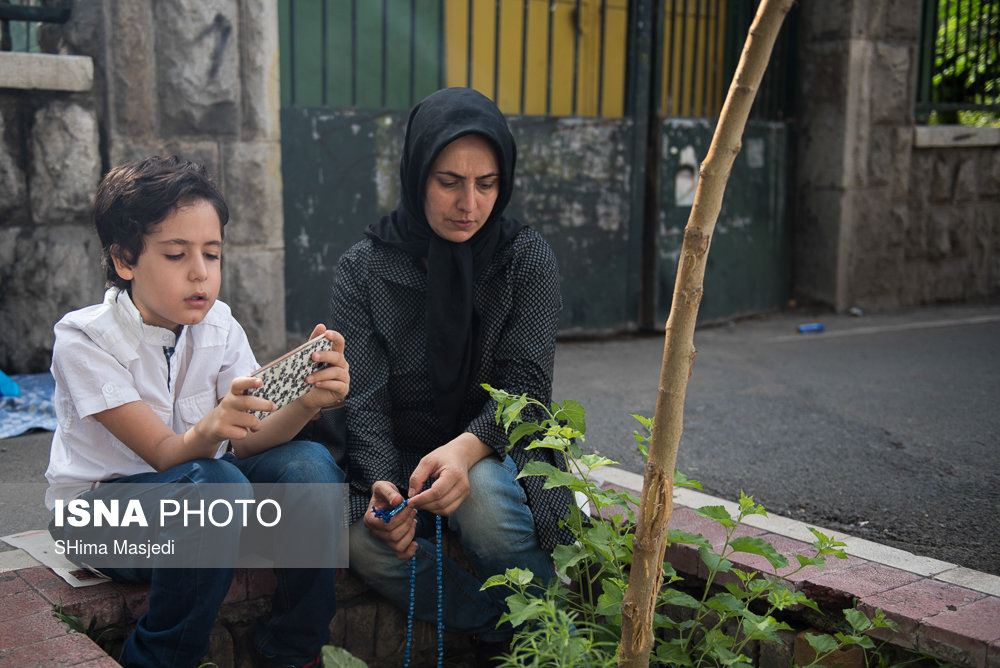
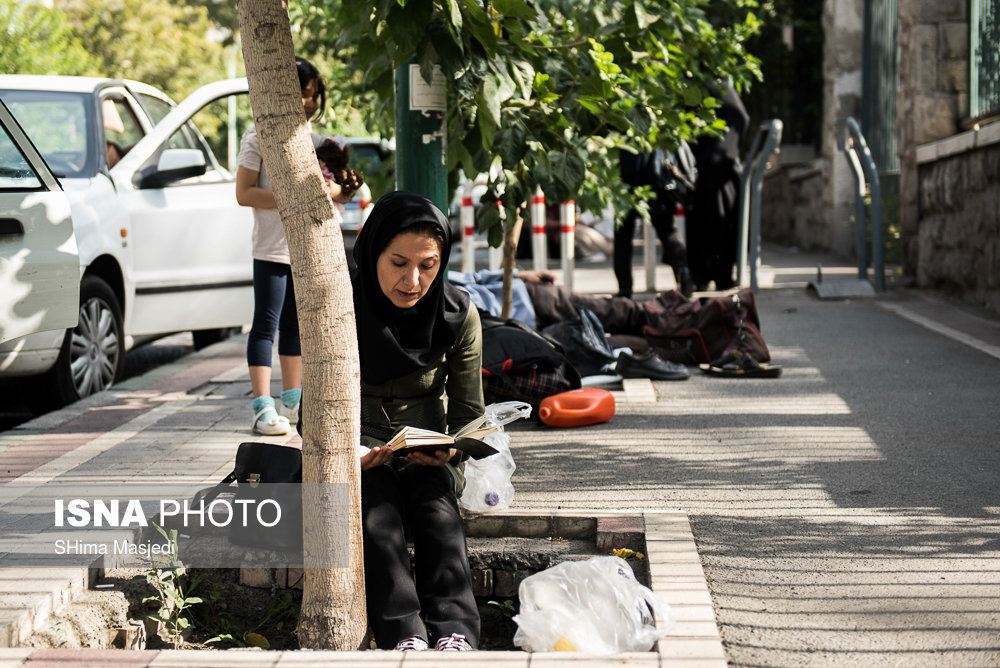
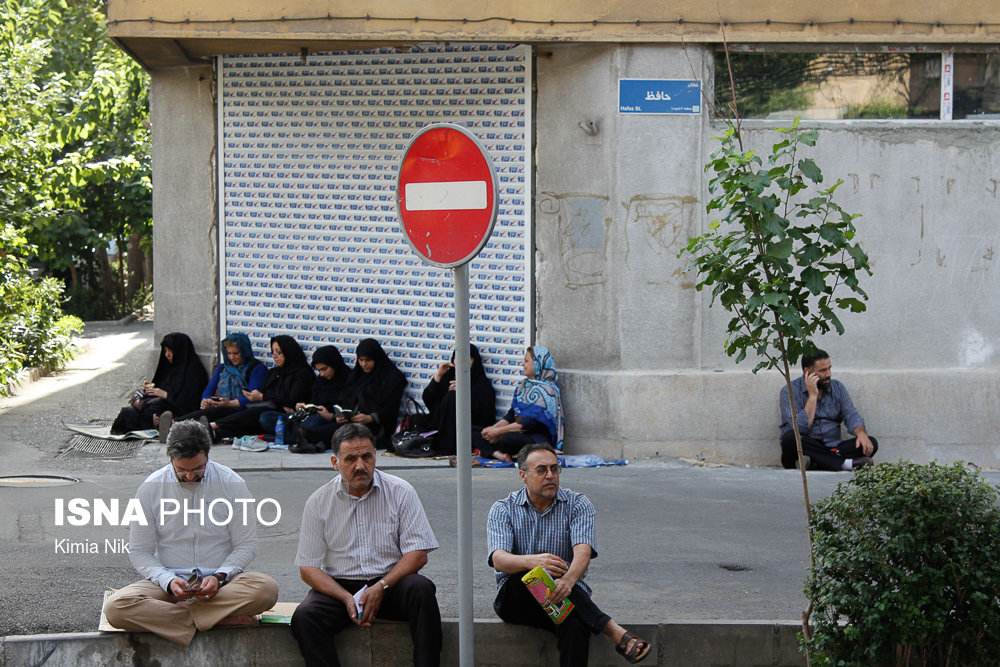
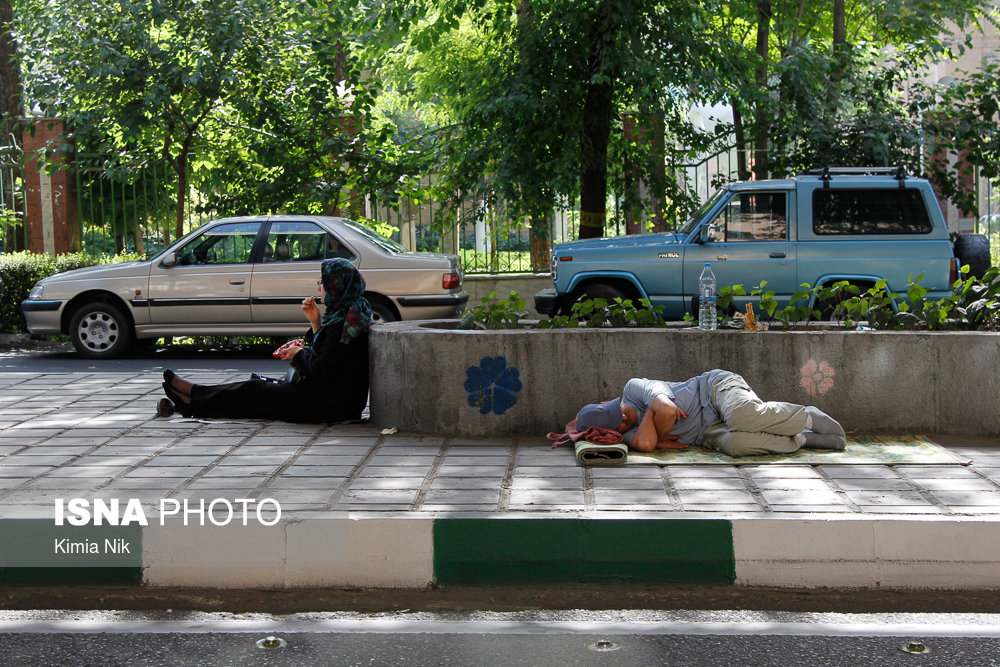
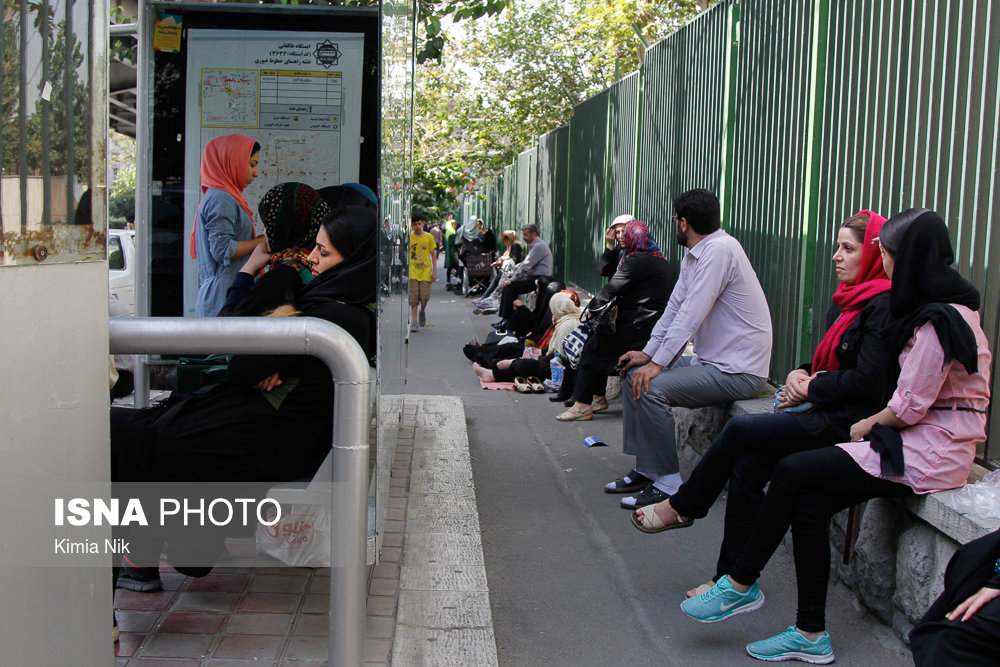
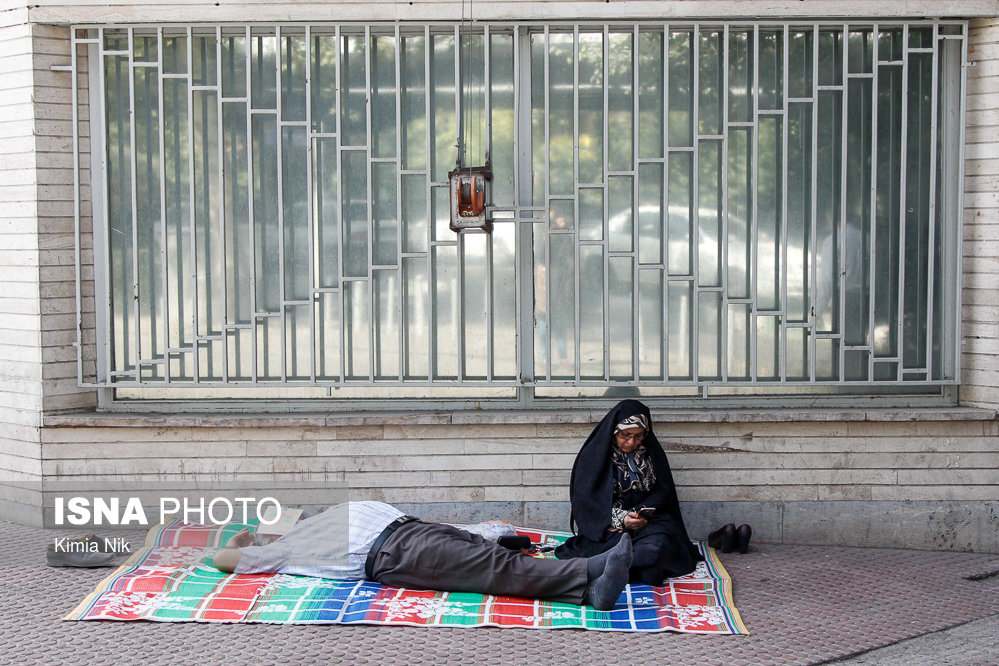
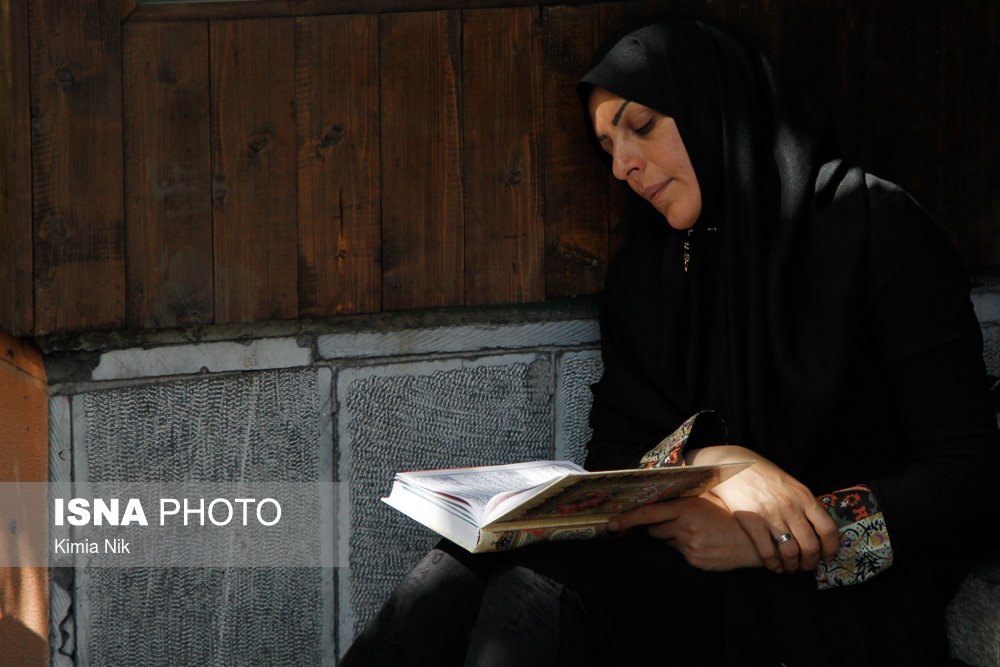
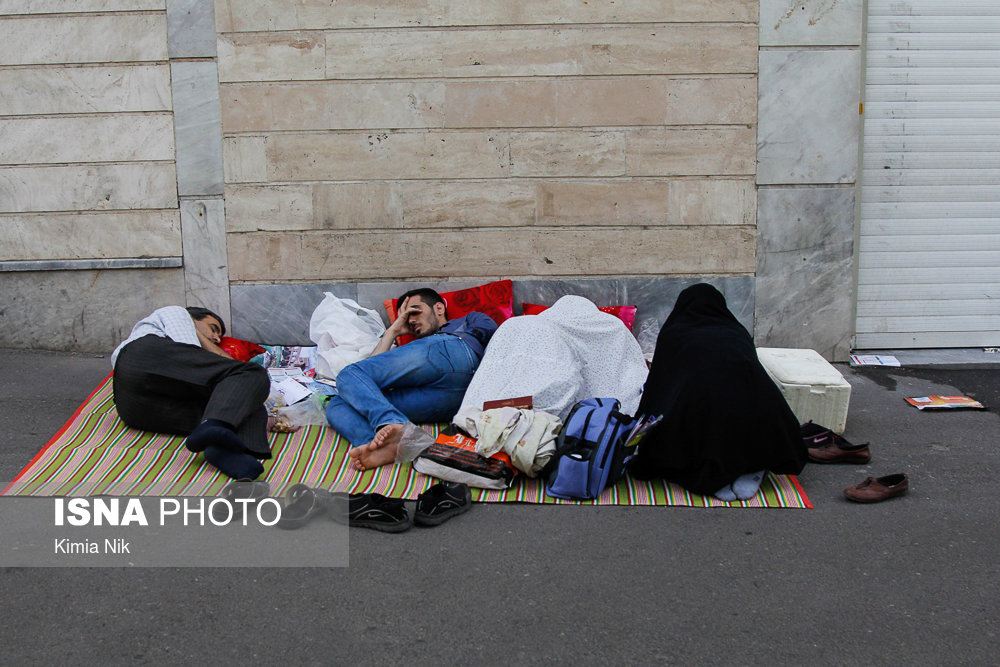
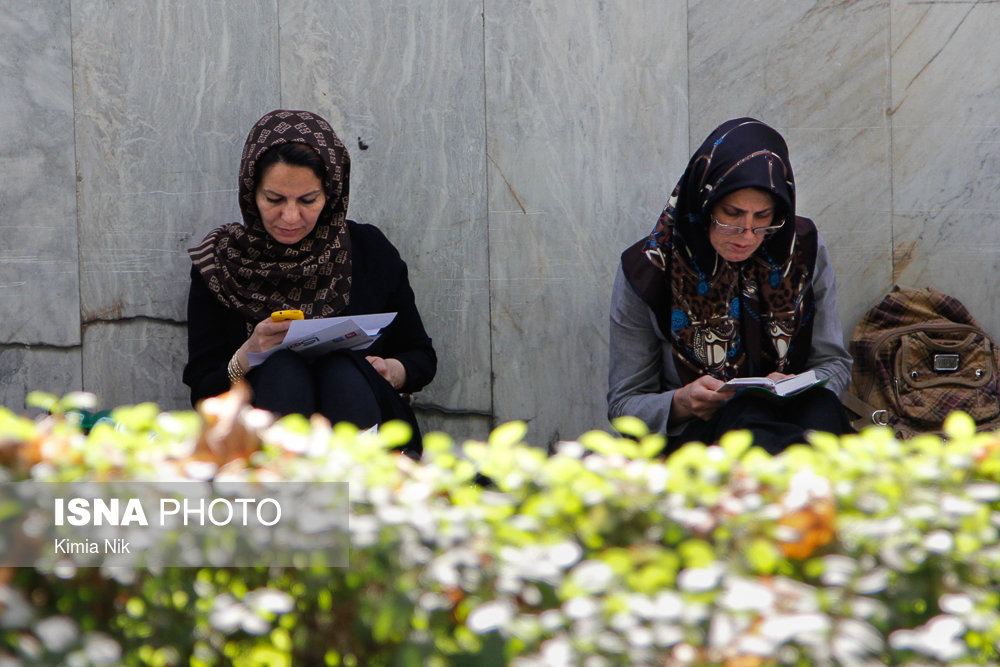
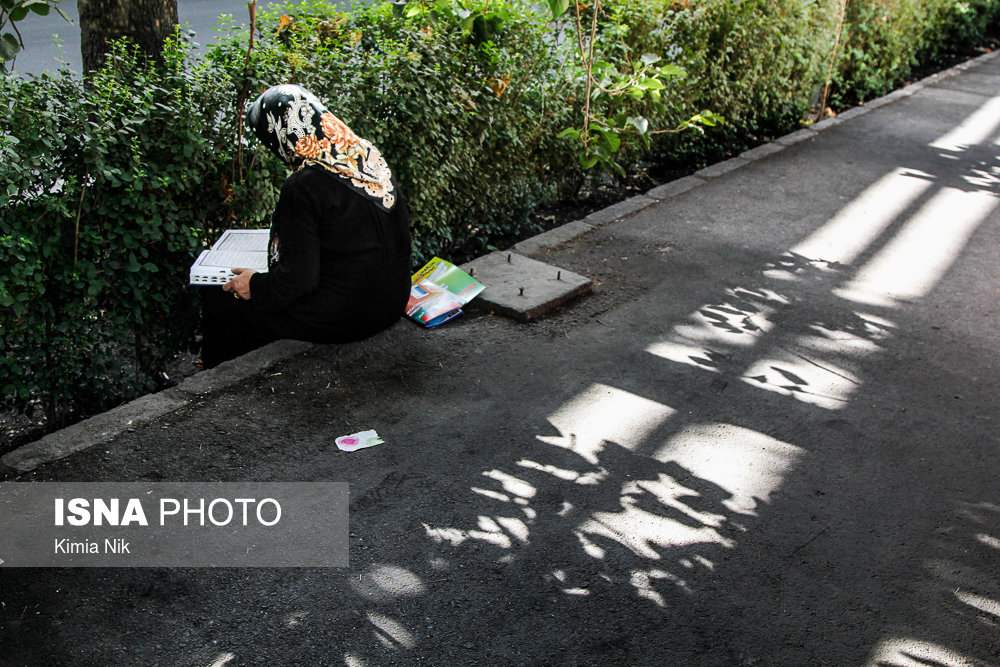
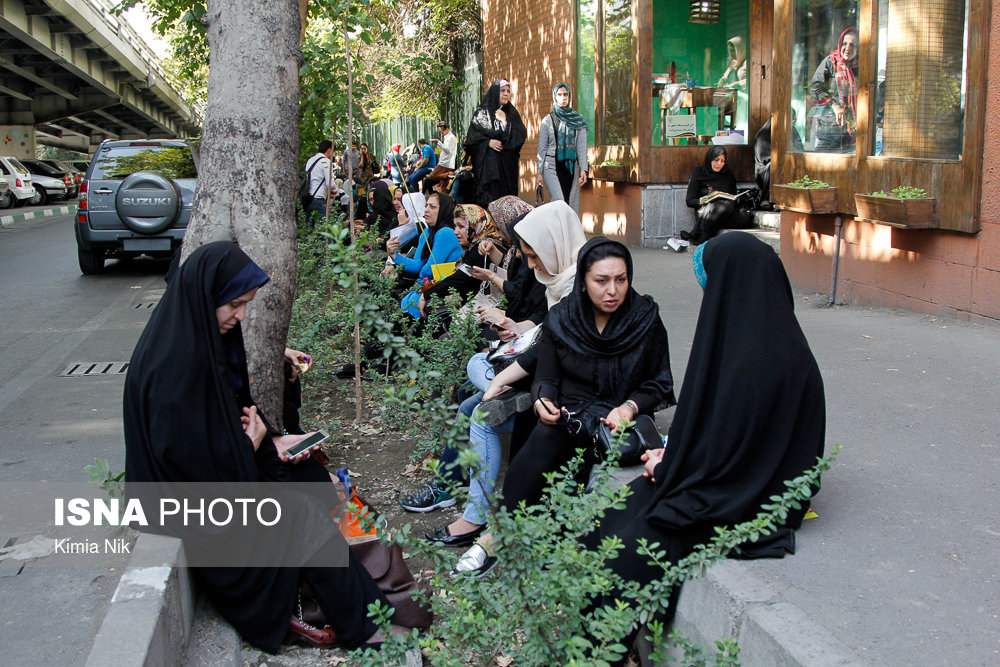
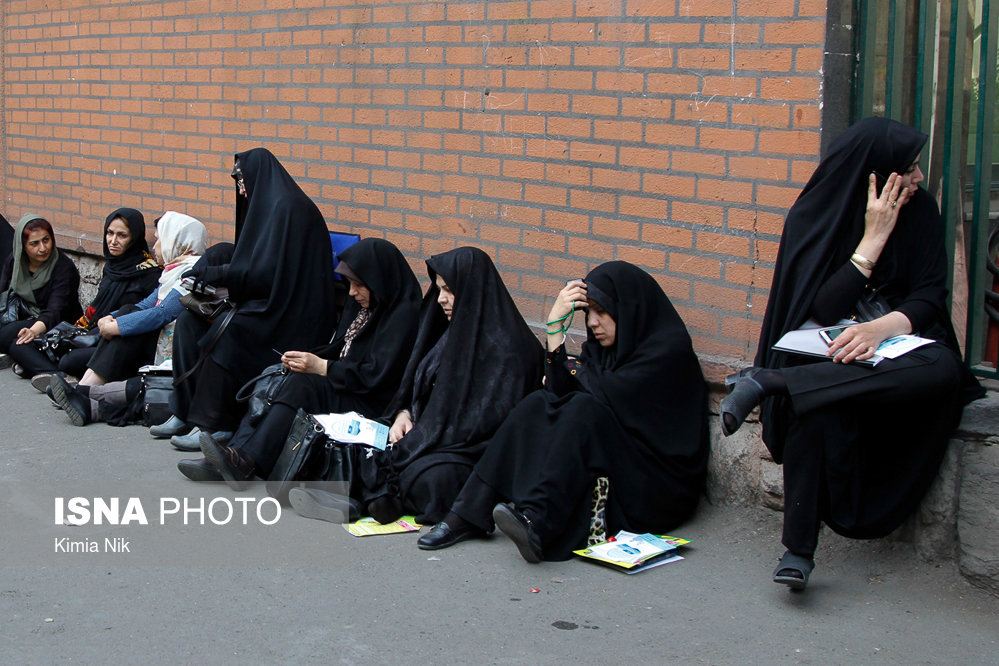
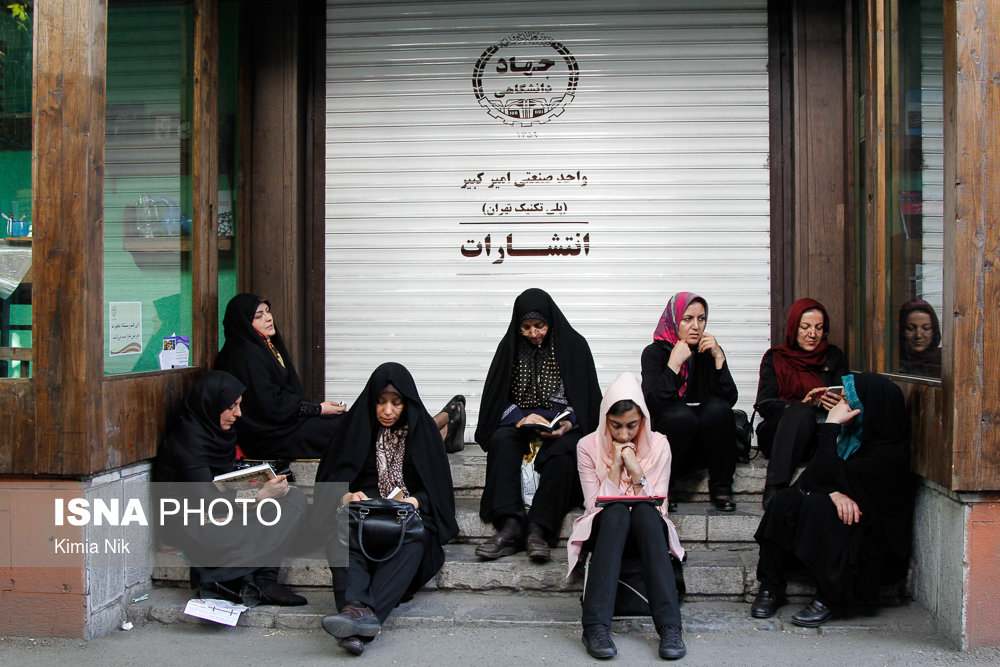
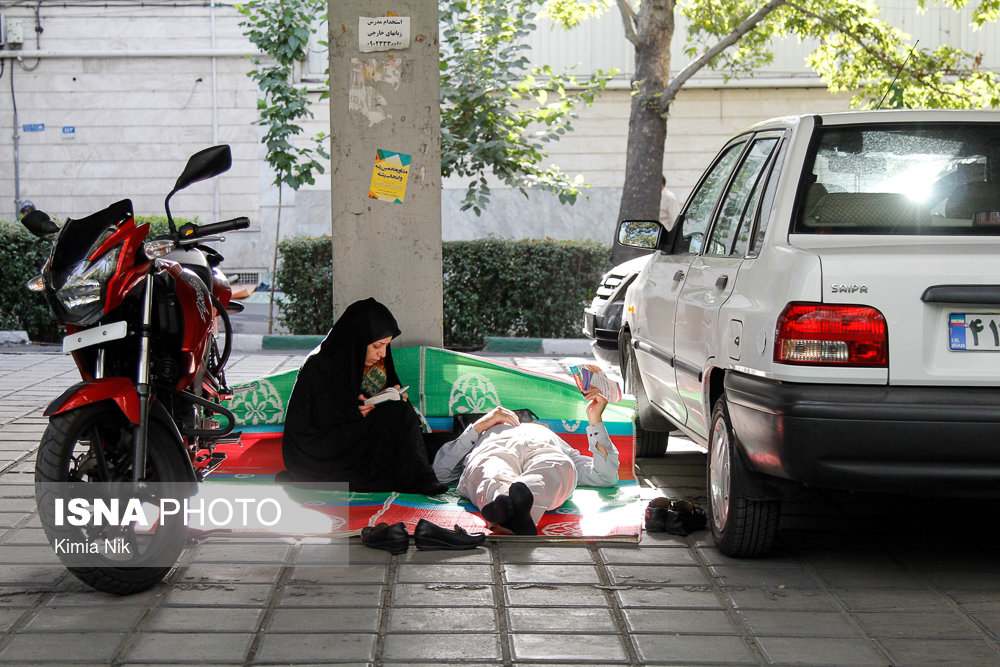
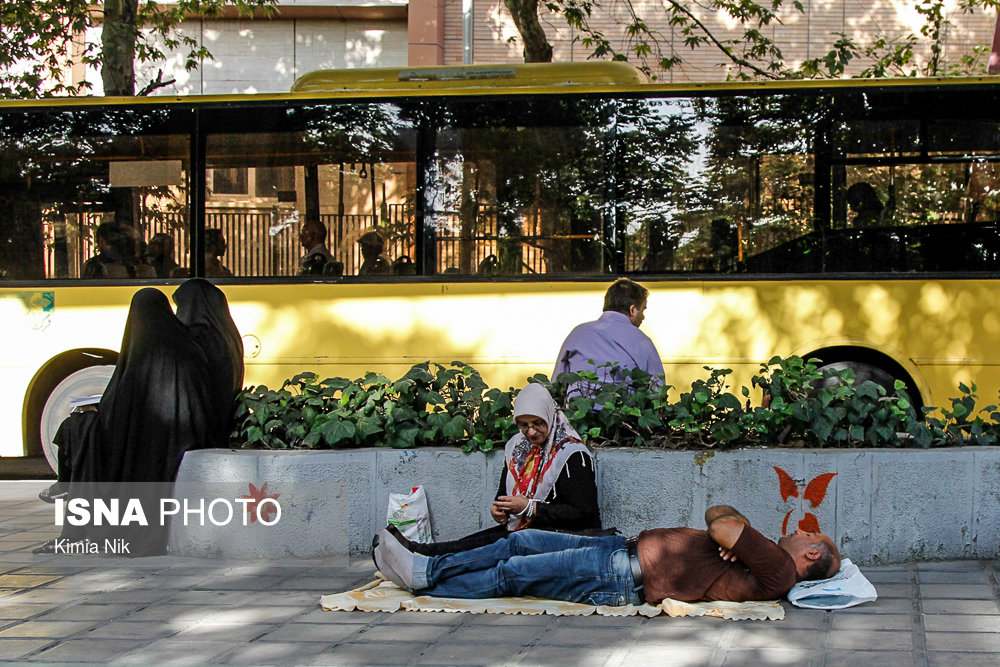
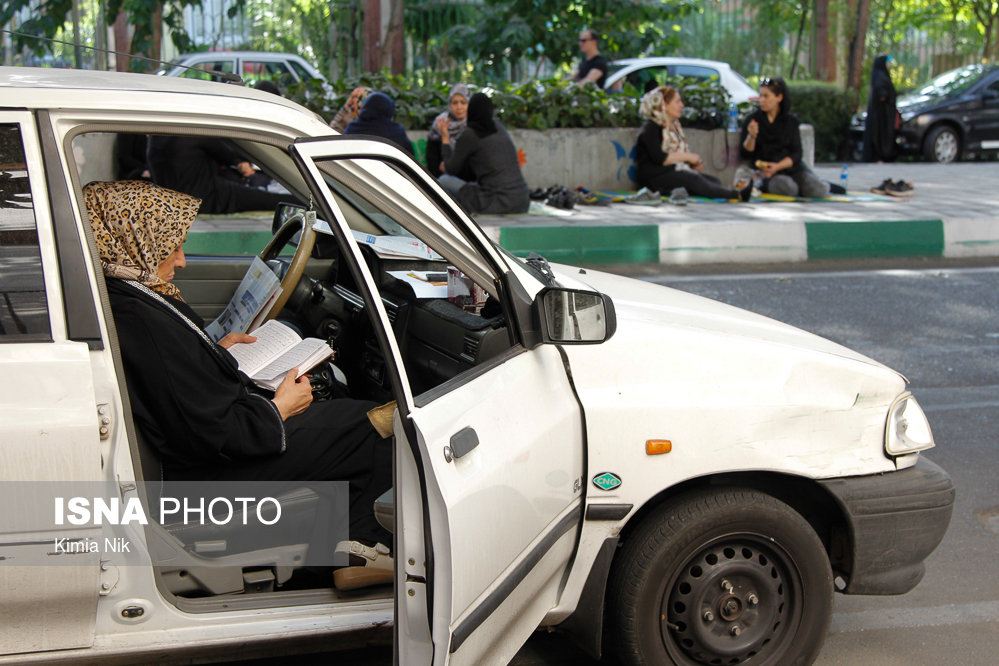
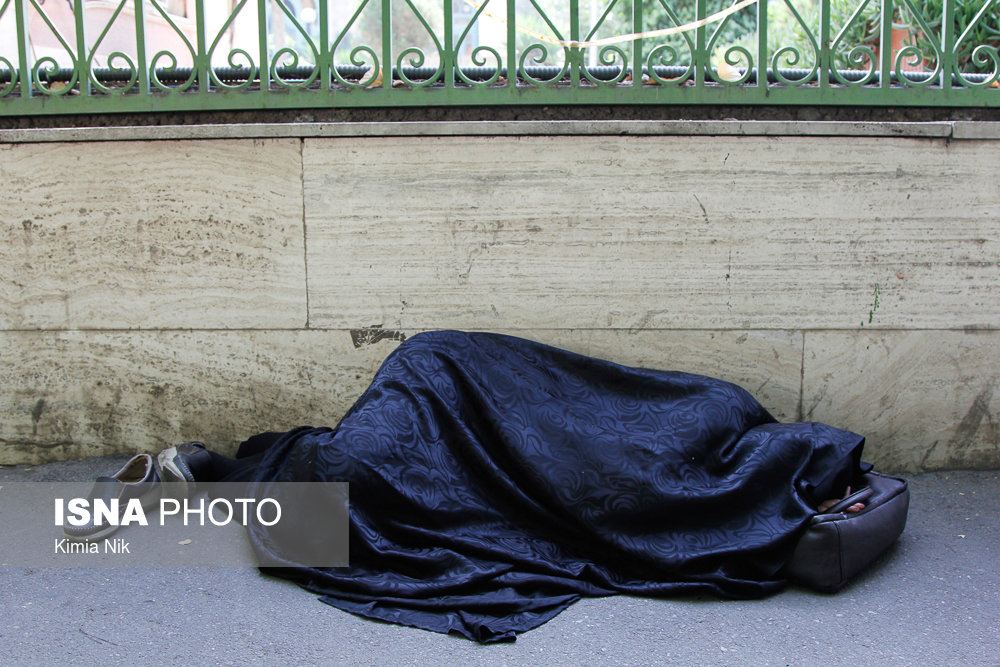
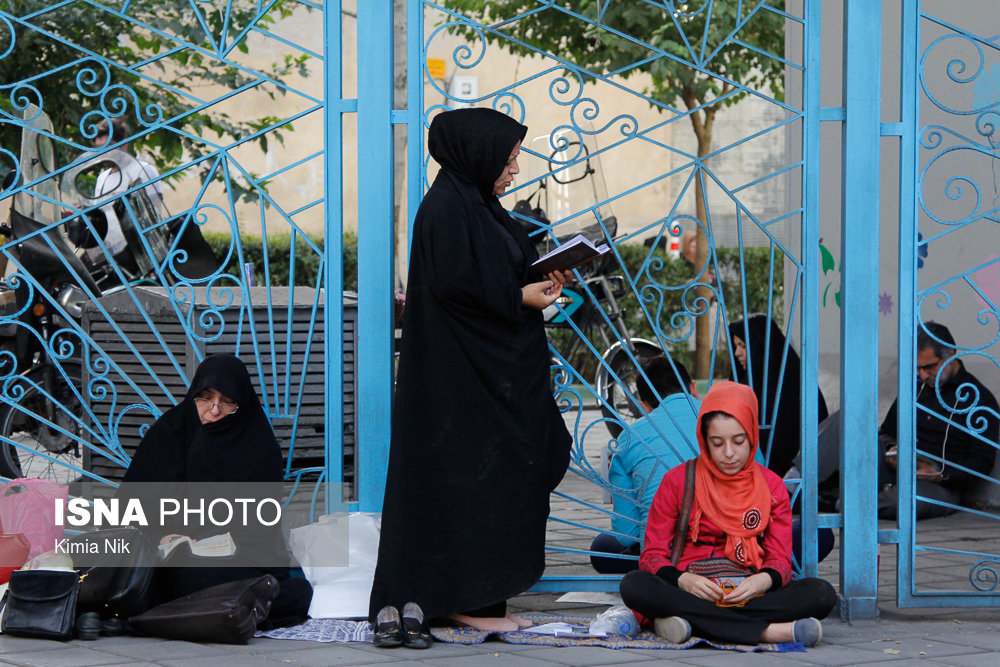
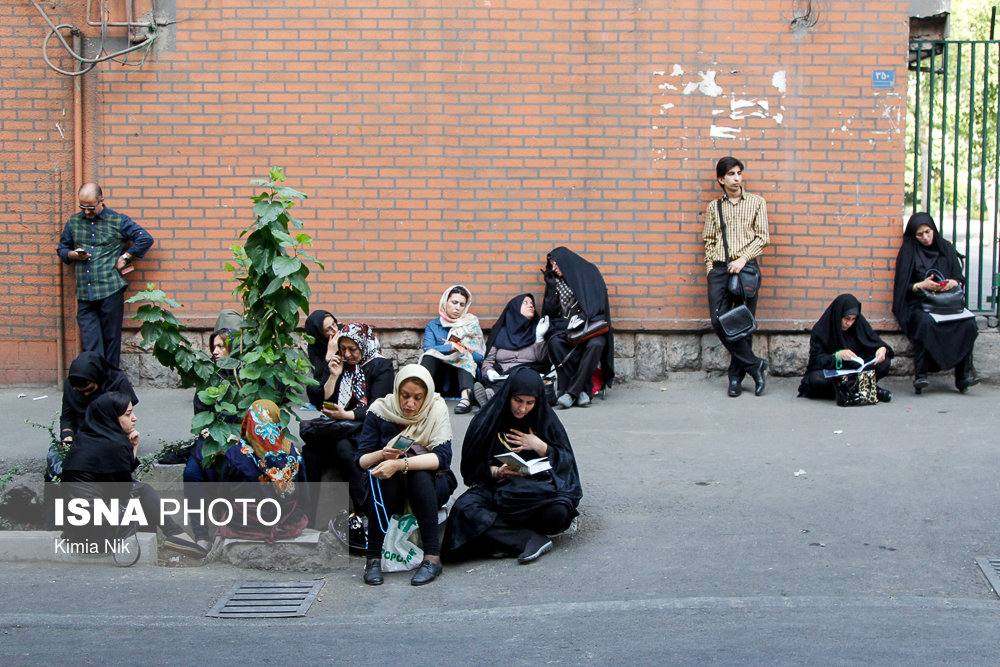
Iran’s National University Entrance Exam: Families Waiting for Their Children

The national university entrance exam, known in Iran as the Concours, was held on Thursday and Friday, July 14 and 15, in various Iranian cities and towns. 860,109 examinees, 60% of whom were female students, took the exam during the two days.

The results of the exam can have serious effects on the students’ fates. Therefore, not only the examinee, but also his or her parents and family members are worried about the student’s performance.

Many parents wait for their children behind the doors of the examination venues for long hours and pray for their success. Here are photos from ISNA, showing some of these families queuing up behind the doors of University of Tehran and Amirkabir University of Technology, both in the Iranian capital.


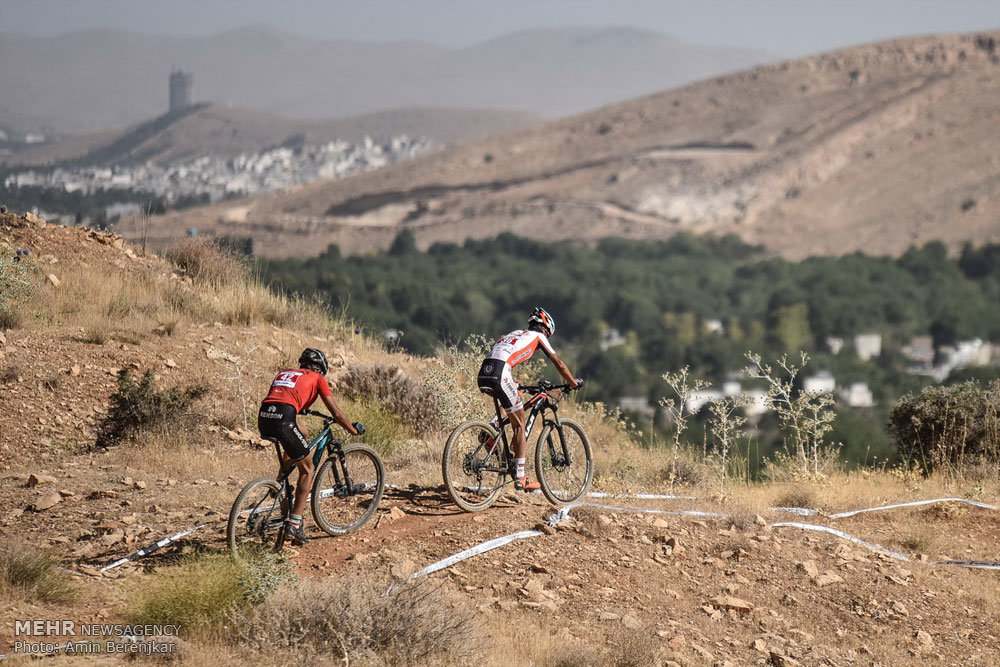
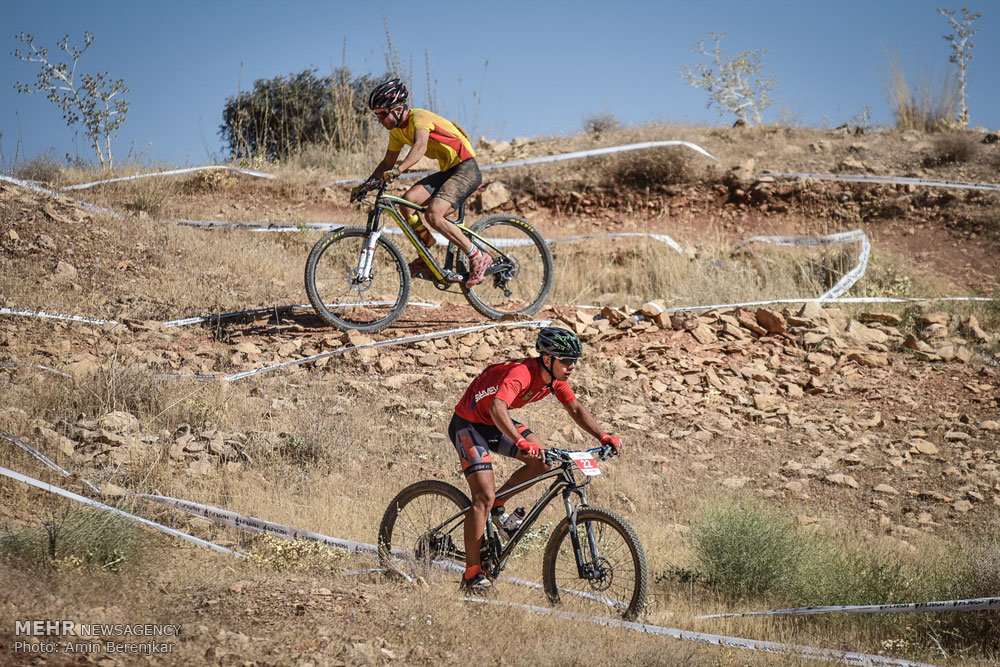
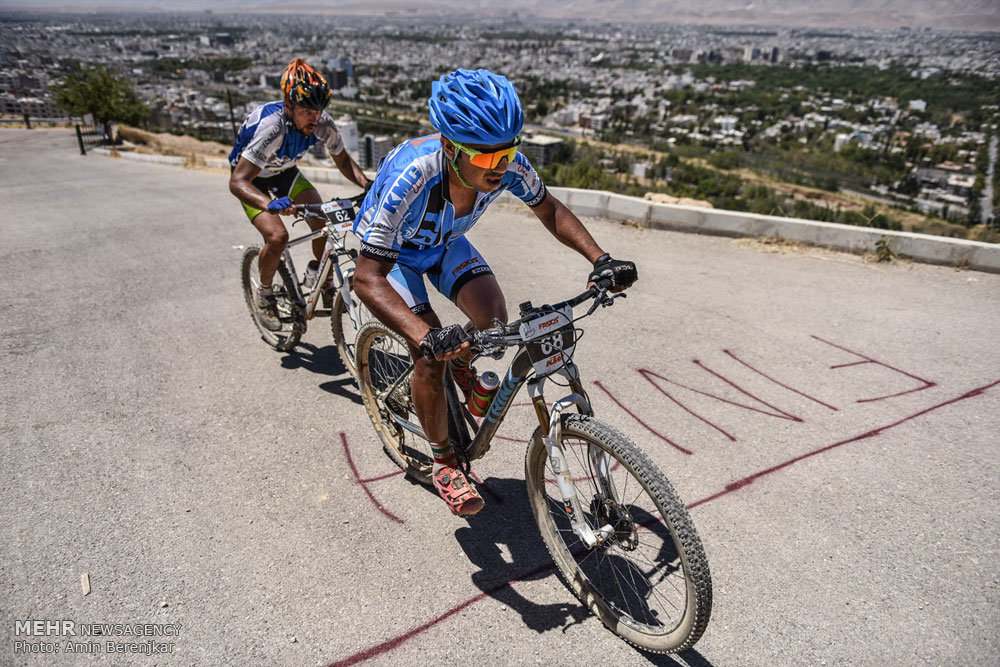
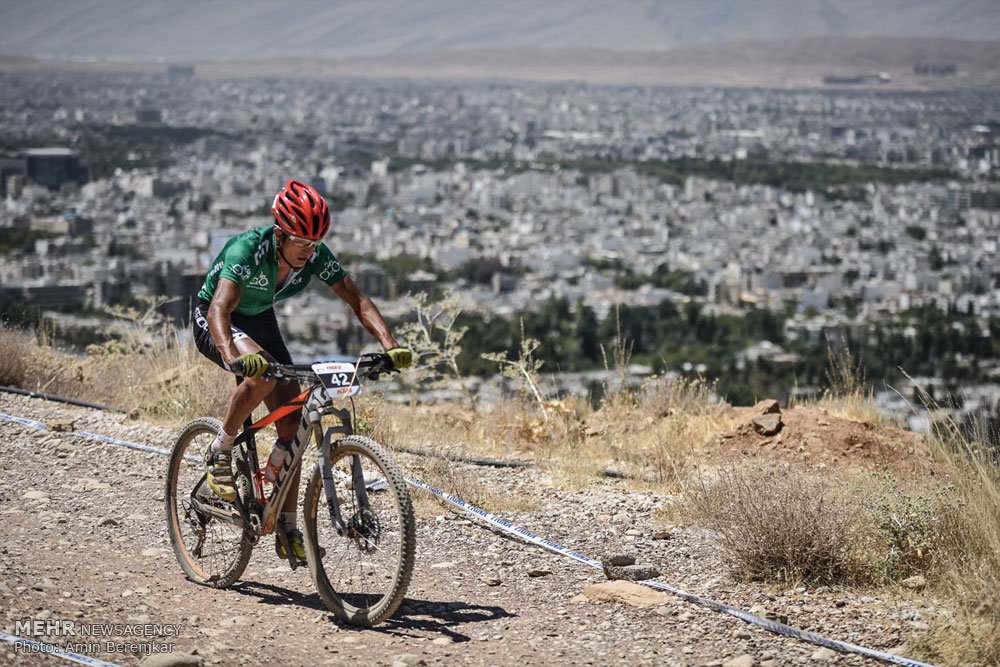
Mountain Bike National Championships in Shiraz

Mountain Bike National Championships were held on Saturday morning in Shiraz, Fars province.


Iran Resumes Flights to Turkey

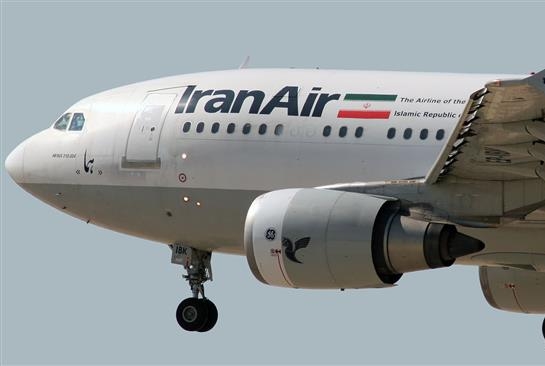
Iran Air

Reza Jafarzadeh, a spokesman for Iran’s Civil Aviation Organization, has been quoted by the media as saying that at least 12 empty planes had been sent by Iran to Turkey on Saturday to repatriate thousands of Iranians.

Officials at Tehran’s Imam Khomeini International Airport (IKIA) said on Saturday that no plane will fly from Iran to Turkey after news of a coup in the country came out.

Accordingly, Kurosh Fattahi, the deputy director of the IKIA, told reporters that a review of the decision about flights to Turkey will be made after the security situation in the country is clarified.

Iran earlier said it was deeply concerned about the crisis in Turkey after reports of an attempted military coup there.

“Stability, democracy and safety of Turkish people are paramount. Unity and prudence are imperative,” Foreign Minister Mohammad Javad Zarif said on his Twitter account.

Iran’s Foreign Ministry advised Iranian tourists in Turkey to stay indoors and refrain from visiting busy places or diplomatic missions.

Turkish cities attract tens of thousands of Iranians throughout the year. Officials in Ankara have already emphasized that Iranian tourists are among the top shopping groups in the country.

Nevertheless, very few Iranians have so far lost their lives in recent terrorist attacks in Turkey. Last month, an Iranian lost his life when three bombers attacked Istanbul’s main international airport.

Living Up to Some Preliminary Red Lines Was Impossible: Nuclear Negotiator

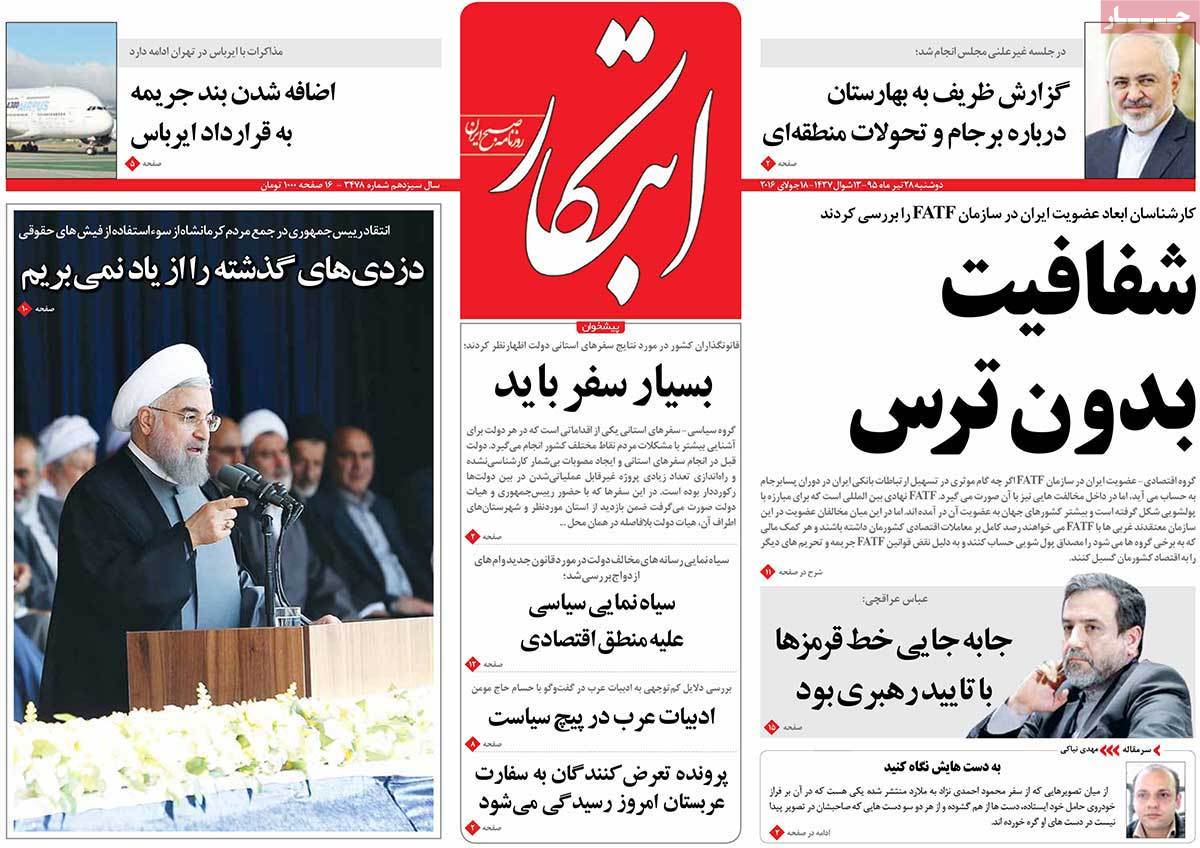
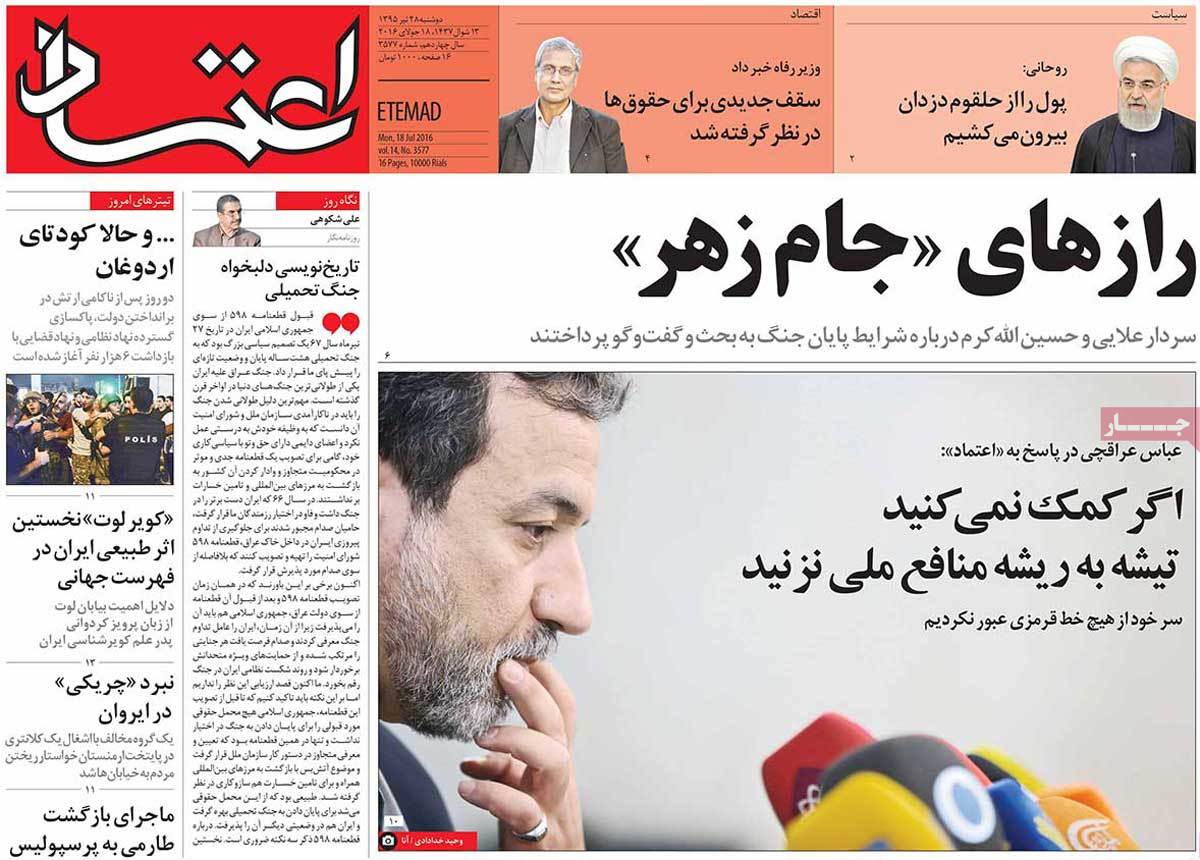
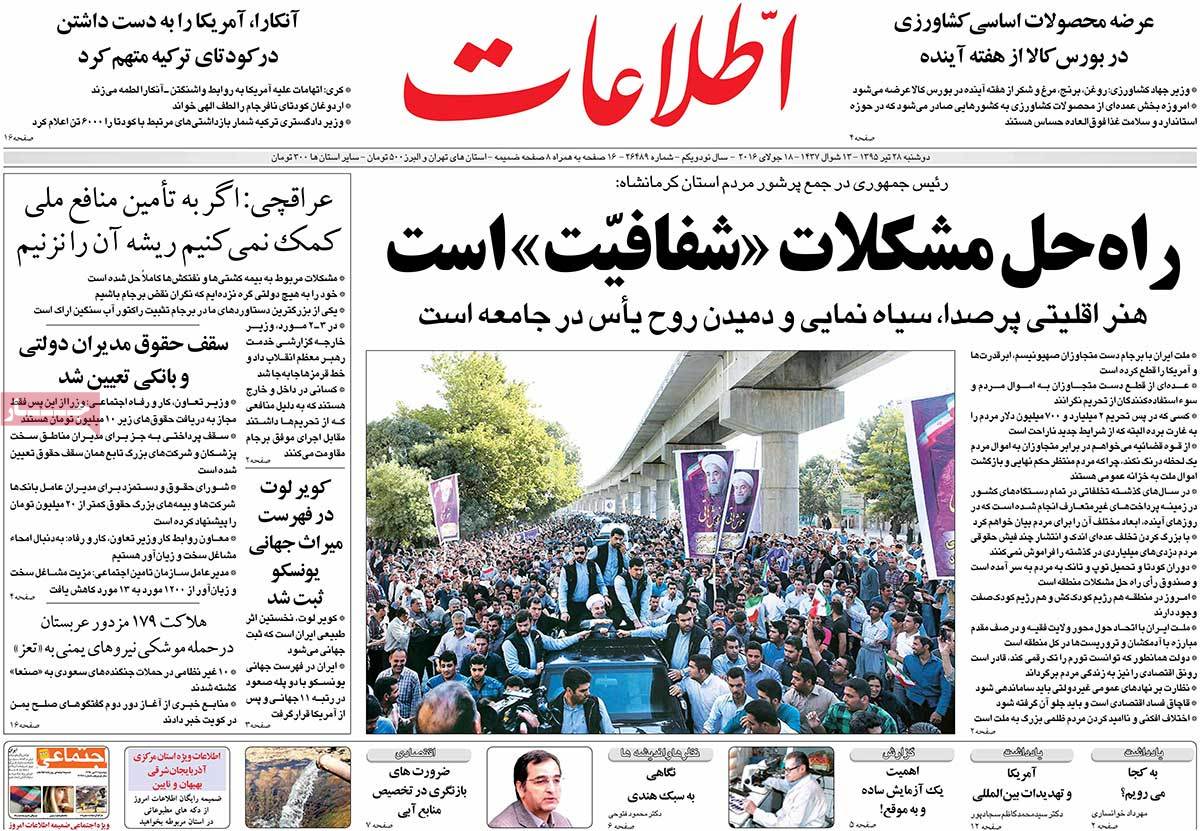
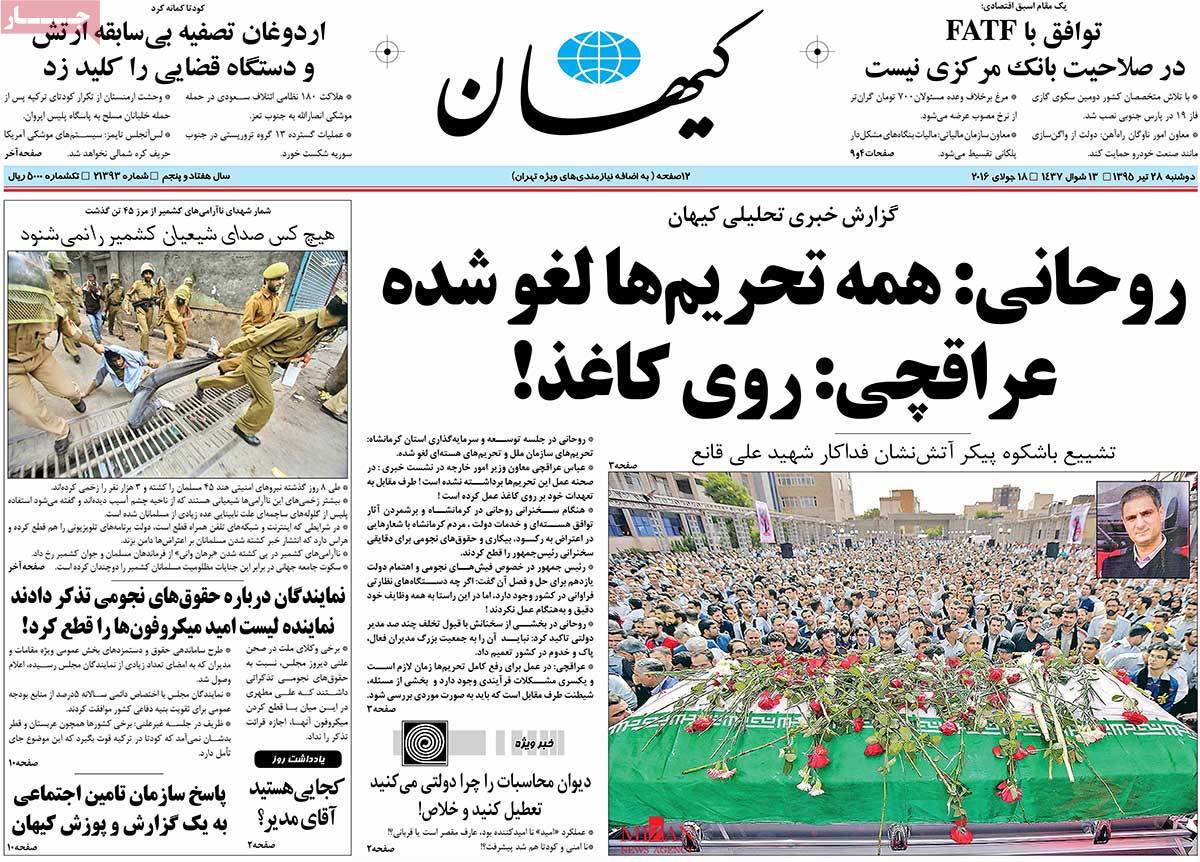
“Living up to some red lines outlined by the Leader of the Islamic Revolution was not possible, and we honestly informed the Leader of the issue,” Araqchi said in his press conference held in Tehran on Sunday, July 17.

“We cannot say we never crossed the red lines in any of the cases; we did cross them in two or three cases. For example, one of the red lines outlined for the negotiating team was that all sanctions imposed by the US Congress, the US President, the European Union, and the United Nations Security Council should be terminated. When we raised the issue with the American side, they said the sanctions imposed by the President can be removed, but the Congress cannot be convinced to lift the sanctions.”

Abbas Araghchi“Then we said there would be no deal if that is the case. The next order was that the sanctions imposed by the President, the EU, and the UNSC should be removed, and those of the Congress should be stopped,” he said.

Referring to the recent remarks by Ali Akbar Velayati, the International Advisor to the Leader, who said the Leader’s 9 red lines have not been observed in the JCPOA, Araqchi stressed that all 9 conditions were met, or else the deal would not have been implemented.


Full Removal of Sanctions Takes Time

“The other side of the deal has implemented its JCPOA commitments on the paper; however, the banking ties and economic collaborations have not been fully realized,” Araqchi admitted.

“The full removal of anti-Iran sanctions will take time. There is a series of procedural problems. The other side’s mischief is part of the issue, which should be discussed case by case,” Araqchi said.

“It should be examined in the fields of finance, banking, and insurance, oil, gas, petrochemistry, transport, industry, trade, and energy. In trade, industry, and transport, we have almost returned to the previous conditions, and we have made very good progress in the field of energy.”
Seyyed Abbas Araghchi 1“In the field of energy, if it was not for JCPOA, Iran’s oil exports would have decreased to zero, while it is 1.5 barrels per day now,” he noted, adding that the country plans to boost its oil output to 2 million barrels per day in future.

Araqchi further referred to the existing problems in the field of banking and financial ties with other countries, and said, “In spite of good openings in the field, it is a fact that major international banks do not start their ties with Iran, and this is something outside the nuclear deal, which is being abused by Americans.”

Araqchi, however, noted that small banks have started their relations with Iran, and the speed of financial transactions has considerably increased compared with the past.


FATF Deal a Prerequisite for Iran’s Cooperation with Major Banks

The Iranian diplomat further referred to the country’s deal with the Financial Action Task Force (FATF), and emphasized that Tehran’s interaction with the FATF is a prerequisite for the cooperation of major banks with Iran.

Seyyed Abbas Araghchi“During the time of sanctions, the FATF was not that much important, but it appeared as an obstacle after the lifting of anti-Iran sanctions. They said they will not have banking cooperation with Iran and North Korea, and if Iran wants to have cooperation with major banks, changes and progress should be made in this field.”

He also pointed to the US prohibition of Iran’s access to its financial system, or the access to US dollar, and noted, “Even if Iran was allowed to use the U-Turn system as per the nuclear deal, we should not have used it, because that would enable them to seize our assets with every dollar used in that system. We should separate ourselves from dependency on dollar and move towards the outlined principles of Resistance Economy.”


US Gov’t Should Prevent Any Move That Leads to JCPOA Violation

“We consider the US [administration] as being responsible for and committed to implementing the nuclear deal. The US should prevent any move that would lead to JCPOA violation. We do not pay attention to the moves made by the US congress and the country’s internal mechanisms; therefore, if the US is committed to the sale of Boeing and Airbus planes to Iran, it should remain loyal to its obligations; otherwise, it has violated the JCPOA,” Araqchi noted.

“One of the moves made by the Congress against Iran was the law based on which the visa-free regime will not apply to those who have visited Iran in the past five years. In our view, this is the US violation of its commitments as per the JCPOA. Extensive discussions were held at the time, and the US administration stopped the section that was related to economic visas.”

However, he added, the White House has yet to stop the section that relates to tourist and scientific visas, and the ones for those residing there.

“This is one of our demands and we believe that the US Congress will abuse the atmosphere,” he added.

IRGC Navy at Forefront of Encounter with Enemies: Commander

Brigadier General Hossein Salami

“The IRGC Navy makes up the edge in the global field of our confrontation with the enemy,” Brigadier General Hossein Salami said in a gathering of IRGC Navy commanders in the northeastern city of Mashhad.

Due to its presence in seas, the IRGC Navy is facing the arrogant powers head-on, the general noted, referring to the IRGC’s naval presence in the Persian Gulf, where the US has deployed forces.

Salami also lauded the IRGC’s capabilities, but underlined that progress should not stop at the current level.

Back in January, the IRGC Navy captured 10 US Navy sailors inside Iran’s territorial waters in the Persian Gulf, but released them a day later following an apology and after technical and operational investigations indicated that the intrusion into Iranian territorial waters was unintentional.

In December 2015, Leader of the Islamic Revolution Ayatollah Seyed Ali Khamenei underlined that security of the Persian Gulf region comes within the purview of the regional countries alone, and dismissed the US claim of seeking security in the region.

“The Persian Gulf security relates to the countries of the region which have common interests, and not to the US. So, security of the Persian Gulf region should be provided by the countries of this region itself,” the Leader said.

Bahrain Court Dissolves Main Opposition Group Al-Wefaq

Al-Wefaq

The so-called administrative court in the capital, Manama, on Sunday ordered the dissolution of al-Wefaq and the seizure of its funds.

The Bahraini justice ministry had suspended the opposition group’s activities on June 14.

The latest move, part of a wide crackdown on political dissent in Bahrain, is certain to prompt more protests in the country, whose embattled regime has faced an uprising since 2011, Press TV reported.

Various human rights organizations had condemned the suspension, labeling it is part of a new crackdown on dissent.

Al-Wefaq’s secretary general, Sheikh Ali Salman, has been in prison since December 2014 on charges of attempting to overthrow the regime and collaborating with foreign powers, charges he has denied. A court sentenced him to four years in prison in June 2015.

The spiritual leader of the group, Sheikh Issa Qassim, has also been stripped of his Bahraini citizenship over similar accusations. On Saturday, the public prosecutor in Bahrain said the cleric will go on trial early next month on charges of “illegal fund collections and money laundering,” without providing an exact date.

Since February 2011, thousands of anti-regime protesters have held numerous demonstrations on an almost daily basis, calling for the Al Khalifah regime to relinquish power.

In March that year, troops from Saudi Arabia and the United Arab Emirates — themselves repressive Arab regimes — were deployed to the country to help in the crackdown on peaceful protests.